Cacao Research Institute
 Facebook ad: “The #1 Cacao for Brain Health”
Ran for 7 days, from October 25 to November 1, 2026, the last day Crush saw it.
Run by Cacao Research Institute on Facebook. Crush is not the advertiser and does not verify its claims. See this ad in Meta's Ad Library(opens in a new tab)
Make your own version of this ad
Crush makes it, launches it in your own Meta ad account, scales the winners and pauses the losers.
About this ad
- Meta Ad Library ID
- 2085195492107908
- Platforms
- Facebook, Instagram, Audience Network, WhatsApp and Threads
- Relaunches
- 0
Ad text
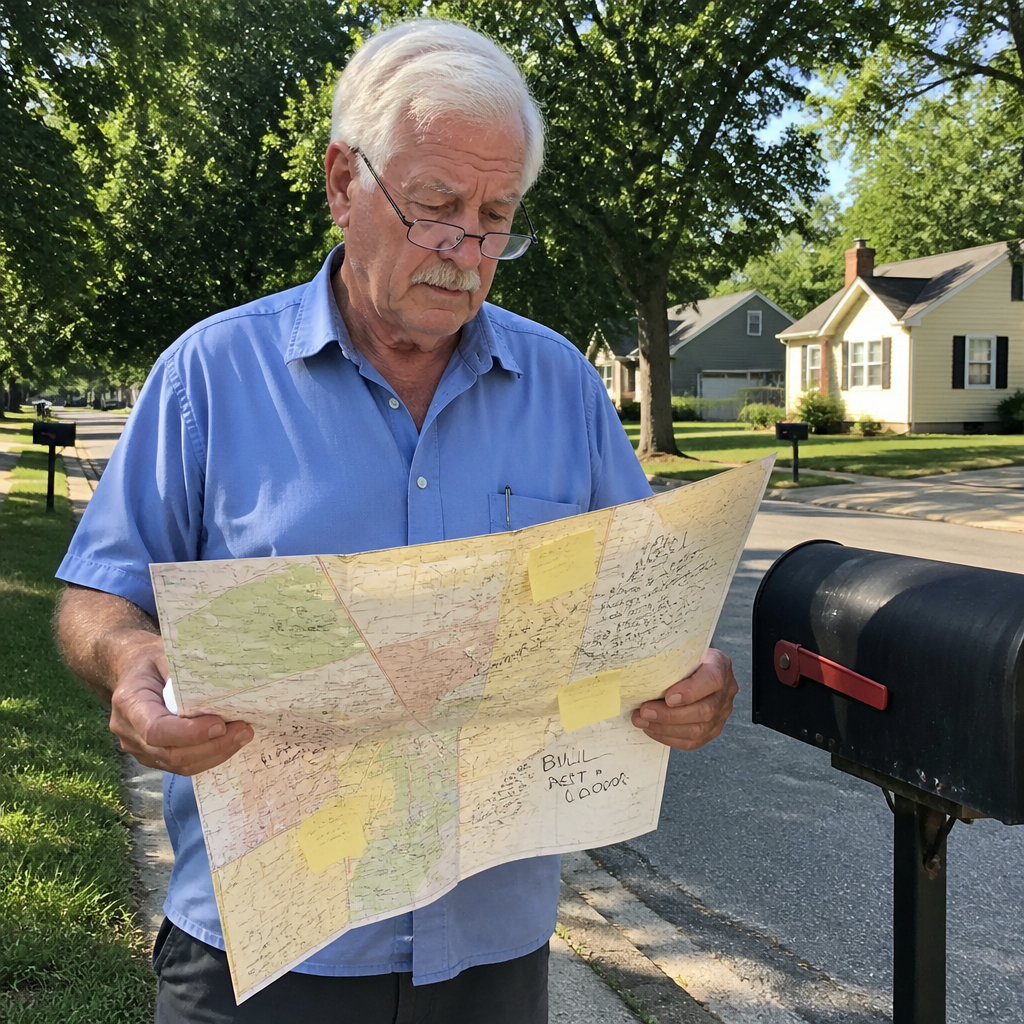
My daughter spent 4 months researching brain fog after I told her I'd "accepted" it was just getting old. She didn't accept it. I'm 64. Retired letter carrier. 31 years with the Postal Service walking routes in Columbus, Ohio. Rain, snow, August heat that'd melt the rubber on your shoes. I did it all without complaining. But the thing that finally got me wasn't my knees. Wasn't my back. It was my brain. Three years ago I started losing words mid-sentence. Not big words. Simple ones. I'd be talking to my wife Linda and I'd say, "Can you hand me the..." and just... stop. Stare at the thing I wanted. Know exactly what it was. Couldn't pull the word out. She'd wait. I'd snap my fingers like that was going to shake it loose. "The spatula, Gary." "Right. The spatula." It happened once a week. Then once a day. Then multiple times a day. Then the fog settled in. That's the only way I can describe it. Like someone draped a thin gray sheet over my brain. I could still think. Still function. But everything had this... delay. This lag. Like my mind was buffering. I'd read a paragraph and realize at the bottom I had no idea what the top said. I'd walk into the kitchen and stand there trying to remember why I came in. I'd forget the name of my neighbor of 19 years. NINETEEN YEARS. The man's name is Bill. I've said it ten thousand times. And one morning I stood at the mailbox and could not get "Bill" out of my mouth. That's when I got scared. Not the kind of scared where you go see somebody. The kind of scared where you DON'T go see somebody. Because you don't want to hear what they might say. My father had dementia. Diagnosed at 71. Gone by 76. I watched that man disappear. Piece by piece. Word by word. Until he didn't know my name, didn't know his own wife, didn't know the house he'd built with his own hands. So when the fog started closing in on me at 61, I didn't tell anyone. I just... adjusted. Wrote things down. Kept lists. Avoided conversations where I'd have to recall details. Stopped reading books because what was the point. Linda noticed. Of course she did. "You seem distant lately." "I'm fine." "You forgot our dentist appointment yesterday." "I'm fine." "You called the dog by your father's name, Gary." I didn't have an answer for that one. I tried the supplements. The ones you see everywhere when you start searching "memory support" at 2 AM. Ginkgo biloba. Four months. Nothing. Lion's mane mushroom capsules. Three months. Maybe a placebo effect for a week, then nothing. Omega-3 fish oil. "Good for the brain," they said. Eight months. My fish burps were spectacular. My memory was the same. Phosphatidylserine. Some compound I couldn't even pronounce. Two months. Zero change. Puzzles. Crosswords. Sudoku. Downloaded three different "brain training" apps. Did them every morning like a job. The fog didn't care. I spent over $3,200 in three years on things that did absolutely nothing for the gray sheet over my brain. Last Thanksgiving, my daughter Megan asked me how I was doing. Really doing. I said, "I'm fine, Meg. Just getting old." She looked at me the way she used to look at me when I'd come home soaking wet from a route in January and tell her it wasn't that bad. She said, "Dad. You asked me the same question three times at dinner. You couldn't remember the name of the movie we watched last week. You stopped doing your crossword. That's not 'getting old.' Something is happening and you just don't want to look at it." I told her it was probably just age. Nothing you can do about it. She said, "What if it's not your brain aging? What if your brain is just not getting enough blood?" I didn't understand what she meant. She left it at that. But Megan is the kind of person who doesn't let things go. She's a research analyst at a biotech firm in Boston. Not a neurologist. But she knows how to dig into clinical literature and find the thread most people miss. Four months she spent on this. Four months of reading papers, tracking citations, following research trails that led from one study to the next. She called me in March and said, "Dad, I need to tell you something." I said, "Megan, I'm not trying another supplement. I've tried them all. Ginkgo, lion's mane, fish oil..." She cut me off. "This isn't a supplement conversation. This is a blood flow conversation. Your brain isn't breaking down, Dad. It's suffocating." "What?" "Your brain uses 20% of all the oxygen in your body. Twenty percent. But it gets that oxygen through blood. Specifically through tiny blood vessels, capillaries, that feed every region of your brain. When you were younger, those vessels were flexible. They dilated easily. Blood flowed freely. Oxygen reached every corner." She paused. "After 50, those vessels start to stiffen. They lose flexibility. The lining of the vessels, something called the endothelium, stops producing enough nitric oxide. Nitric oxide is the molecule that tells your blood vessels to OPEN. Without it, the vessels narrow. Blood flow to the brain drops. Oxygen delivery drops. And your brain starts running on a fraction of the fuel it needs." She said she'd found multiple studies documenting this. How cerebral blood flow, the blood that feeds the brain, declines measurably with age. Not because the brain is diseased. Because the DELIVERY SYSTEM is failing. "Think of it like your mail route, Dad. The houses didn't disappear. The streets didn't close. But if the truck can't get down the road because the road is narrowing... the mail doesn't get delivered. The houses go dark." That hit me. "That's the fog," she said. "That's the word-finding problems. That's the forgetting. Your brain cells are perfectly capable. They're just not getting what they need. They're starving." I asked her why none of the supplements worked. She said, "Because they were all targeting the wrong thing. Ginkgo, lion's mane, fish oil... they're trying to 'boost' brain cells directly. Feed the houses. But the problem isn't the houses. It's the road. It's the delivery system. It's the blood vessels that feed your brain. Specifically, it's the nitric oxide your body stopped making enough of." She said there was more. "Most of what people take for circulation can't even reach the brain, Dad. Your brain has a barrier. It's called the blood-brain barrier. It's a filter. A security system. It decides what gets in and what gets blocked. Most supplements can't cross it. They circulate in the body, maybe help blood flow in your legs or your arms, but they never reach the tiny vessels inside your skull. They never touch cerebral blood flow." I asked what does cross it. "That's what took me four months to find," she said. "There's a specific class of plant compounds called flavanols. A particular one called epicatechin. It's found in raw cacao. Not chocolate bars. Not cocoa powder from the grocery store. Raw, minimally processed cacao." I almost laughed. "Cacao? Like chocolate?" "Not like chocolate. Chocolate has almost none of it left. This is different. Listen." She explained it slowly. Epicatechin, this flavanol found in raw cacao, is small enough to cross the blood-brain barrier. Once it gets through, it activates something called eNOS, an enzyme in the lining of cerebral blood vessels. That enzyme produces nitric oxide. The nitric oxide tells the vessels to relax. To open. Blood flow increases. Oxygen reaches brain tissue that's been running on empty. She said the research showed that people who consumed high-flavanol cacao had measurably greater brain oxygenation responses. Not in theory. Measured. Documented. Faster oxygenation. Better performance under cognitive demand. "It's the only natural compound I found in four months of research," she said, "that crosses the barrier, supports nitric oxide production inside the brain's own vessels, and has clinical documentation behind it." I said it sounded too simple. She said, "Dad, you let the fear of what happened to Grandpa convince you this was inevitable. You've been 'accepting' something for three years instead of asking one question: Is my brain actually getting enough blood? Just try this. If it's nothing, you've lost a few weeks. If it works, you get the fog to lift." But she wasn't done. "Here's the problem," she said. "You can't just buy any cacao. This is where it falls apart for most people." She explained that almost every cacao product on the market is processed in a way that destroys the flavanols. Dutch processing. Alkalization. It's done to remove bitterness and make the cacao darker and smoother. But it wipes out 60 to 90% of the flavanols. The very compounds that cross the blood-brain barrier. High-heat roasting. Standard practice. Degrades epicatechin even further. Sugar, dairy, fillers. Added to make it taste like dessert. Dilutes whatever's left to meaningless levels. "Most cocoa products have almost no active flavanols left," she said. "You'd have to drink 30 cups of standard hot cocoa to get what one serving of properly processed cacao delivers. And even then the sugar would cause its own problems." She said she spent weeks looking for a source that preserved the flavanols at clinical levels. Cold-processed. Minimal handling. No alkalization. No fillers. No sugar. No dairy. Single ingredient. With the flavanol content actually tested and disclosed on the label. She found one. A small company called MAÏA. They make a ceremonial-grade super cacao. Single ingredient. Cold-processed to preserve the epicatechin and the full flavanol profile. Third-party tested. Flavanol content verified on every batch. https://checkout.getmaia.co/psp-brain-blood-flow No capsules. No tablets. You mix it into hot water or warm milk. One scoop. Every morning. She sent me a pouch. I looked at it on my kitchen counter for three days before I tried it. Dark pouch. Gold and teal pattern. Aztec design on the front. It looked nothing like the supplements I'd wasted money on for three years. Day 4, I made the first cup. Mixed it with hot water. It tasted like dark chocolate. Real dark chocolate. Bitter and deep and not sweet. I actually liked it. Nothing happened the first few days. I told Megan. She said, "Give it time. The flavanols need time to support your body's own nitric oxide production. This isn't a stimulant. It's not forcing anything. It's giving your blood vessels what they need to function again." Week one. I noticed I was sleeping deeper. Not waking up at 3 AM staring at the ceiling. I didn't think much of it. Week two. I was reading the newspaper. Got to the bottom of an article about the Buckeyes and realized... I remembered the top. The whole article. Start to finish. Without re-reading. I sat there and stared at the page. That hadn't happened in over a year. Week three. I was in the kitchen. Linda asked if I could grab the colander from the bottom cabinet. The word came to me before she finished the sentence. No pause. No snap. No standing there with my mouth half open. Just... "colander." Like it had been sitting right there the whole time. Waiting for the road to clear. Week four. Linda and I went to dinner with our neighbors, Bill and Diane. (Bill. I said his name without thinking.) We talked for two hours. I told a story from my route, 2006, the year the lady on Elm Street started leaving me sandwiches in the mailbox. I remembered her name. Her house number. The kind of sandwich. Turkey and Swiss on rye with too much mustard. Linda grabbed my arm under the table. On the drive home she said, "You're back." I said, "What do you mean?" She said, "You. The way you talk. The way you tell stories. You've been gone for three years and I didn't know how to say it. But tonight you were back." I called Megan the next day and told her. She didn't say anything for about 10 seconds. Then she said, "I'm so glad, Dad. I'm so glad." It's been 9 weeks now. I drink the cacao every morning. It takes about 90 seconds to make. The fog is mostly gone. I won't say completely. I'm still 64. I still forget where I put my keys sometimes. But the gray sheet... the buffering... the lag between my brain and my mouth... that's different now. I'm reading again. Finished two books last month. First time in over two years. I'm doing the crossword again. In pen. I remember names. Conversations. Appointments. Not because I'm writing everything down. Because my brain is working the way it used to. My daughter spent 4 months researching because she refused to accept what I'd accepted. She was right. I've told three guys from my old postal station about this. Dave, 62, been dealing with fog for two years. He started the cacao five weeks ago. Called me last Tuesday and said, "I just rattled off my entire medication list to the pharmacist from memory. My wife's jaw dropped." Another guy, Tom, 67, said the first thing he noticed was his sleep. Then the clarity started coming back around week three. Same pattern. MAÏA does a 30-day guarantee. I didn't need it, but it matters if you're skeptical. You should be skeptical. I was. https://checkout.getmaia.co/psp-brain-blood-flow They're a small company. Not in stores. Not on Amazon. The only place to get it is through their website, and I will tell you honestly, twice when I've tried to send the link to someone it's been out of stock. They sell out. It comes back, but it's not like walking into a CVS and grabbing it off the shelf. Tap below and check if they have it right now. I want to say one more thing. I spent three years believing the fog was the beginning of the end. That I was following my father's path. That there was nothing I could do but write lists and avoid conversations and quietly disappear. My daughter asked one question no one else asked: "What if your brain isn't the problem? What if it's the blood that feeds your brain?" That question changed everything. Your brain might not be failing. It might just be starving. Give it what it needs. P.S. My buddy Dave, the one from the postal station, he sent me a text last Saturday. It said: "Gary. I just remembered my granddaughter's piano recital was on Friday. Didn't check the calendar. Didn't ask my wife. Just remembered. Drove there. Sat in the front row. She played Für Elise. I remembered every note." His wife called Megan to say thank you. I'm not making that up. https://checkout.getmaia.co/psp-brain-blood-flow
Where the ad sends people
checkout.getmaia.co
The #1 Cacao for Brain Health
Controversial "brain circulation breakthrough" is making ginkgo and fish oil look obsolete and may soon be pulled from shelves - adults over 55 who've discovered it are REFUSING to share their secret
Learn more: checkout.getmaia.co(opens in a new tab)