Dennis Callahan
Dennis Callahan Facebook ad: “Feel Like Yourself Again”
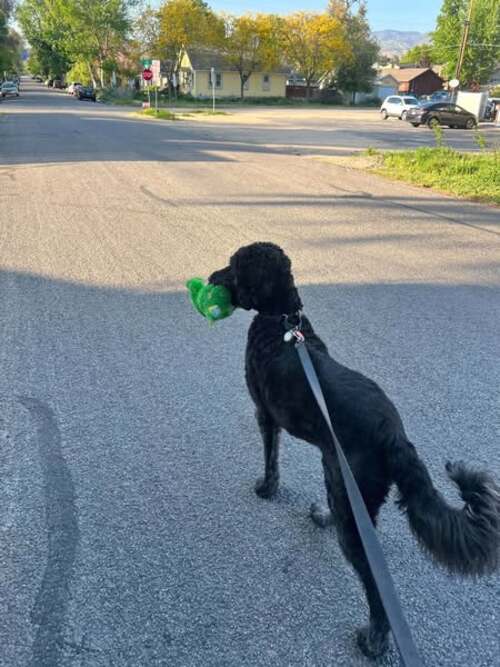
Ran for 1 day, from June 17 to June 18, 2026, the last day Crush saw it.
Run by Dennis Callahan on Facebook. Crush is not the advertiser and does not verify its claims. See this ad in Meta's Ad Library(opens in a new tab)
Want an ad like this for your product?
Crush makes new ad images for your product from this ad: your logo, your product photo, your offer.
Trials from $19.95 USD, then $79.95 USD a month. Cancel anytime.
About this ad
- Meta Ad Library ID
- 2089271745326978
- Platforms
- Facebook, Instagram, Audience Network, Messenger and Threads
- Relaunches
- 1
- EU reach
- 1
Ad text
I had a stretch of three good days in a row last spring and I almost forgot what was wrong with me. That's the part nobody warns you about. Not the bad days. The good ones. Because the good ones lie to you. They tell you maybe it's gone. Maybe you imagined it. Maybe you're fine. And then a labradoodle pulls you down a sidewalk in Connecticut and you end up crouched behind a stranger's hedges on Beach Road praying nobody drives past, and you remember. My name is Dennis. I'm 61. I live alone in a two bedroom on Beach Road, about a mile from the Sound, with a back porch that needs repainting and a kitchen window that looks out at a hydrangea I've been trying to kill for six years that refuses to die. My wife Carol passed in 2020. Heart. Sudden. She was eating a turkey sandwich at the kitchen counter and just sat down on the floor. The paramedics said she was gone before she hit the linoleum. I keep the spot where she sat covered with a small braided rug now because I couldn't stand looking at it bare. I work part time at the hardware store on Old Post Road. I do the weekend shifts. I fix things around the house when my back lets me. I have one brother, Frank, who lives in Westport with his wife and their dog Charlie about four times a year when they fly down to see her mother in Naples. Charlie is a labradoodle. Cream colored. 62 pounds. Four years old. The absolute sweetest animal you've ever met and dumb as a bag of doorknobs. This story is about Charlie. And it's about a set of hedges on Beach Road in front of a white colonial I'd walked past a hundred times without stopping. And it's about what I learned on a stranger's front lawn for 22 minutes that I think gave me the last third of my life back. But I'm getting ahead of myself. Let me back up. I started feeling off about three years ago. Nothing dramatic. Just little things. The urgency first. That hard sudden clench that felt like someone had reached inside and made a fist around my bladder. No warning. No negotiation. I started keeping a mental map of every men's room everywhere I went. Hardware stores. Gas stations. Every bar I'd walked into for thirty years. Before I left the house in the morning I peed three times. Not because I needed to all three times. Because I couldn't trust what would happen if I didn't. I went to my doctor. Dr. Halpern. He's been my doctor since Carol and I moved up here from Stamford in 2008. Nice man. Nearing retirement. Reads the chart, listens, runs the labs, sends you home. He did the standard evaluation at that first visit. He said, "Well, that's pretty common for a man your age. Let's check it again in three months." I said okay. Three months later things were the same. He said, "BPH is very common. A lot of men your age. Let's keep watching it." I said okay. Three months after that nothing had changed. Still the urgency. Still the interrupted nights. Still the flow that started and stopped and never felt finished. He said, "Are you taking the supplements I mentioned? Cutting caffeine after noon?" I said yes to both. He said, "Let's keep monitoring." Monitoring. That's what they do. They monitor. While the urgency keeps waking you up at two in the morning and you stand at the toilet feeling like you're trying to push water through a urethra that's been stitched shut, void two ounces if you're lucky, and lie back down and spend twenty minutes waiting for sleep that takes longer to come back every single time. I want to tell you what was happening to my body during those years of monitoring because nobody at the doctor's office ever asked me. They asked about the numbers. They never asked what it felt like to be the person attached to the numbers. It felt like my body was running its own schedule and I was just along for the ride. I'd wake up and that dull low weight would already be there in the lower belly. Like sitting on a golf ball that never moves and never lets you forget it's there. I'd go to work at the hardware store and clock the distance to the men's room before I clocked in. I'd drive to my brother's house in Westport and make him stop twice on a trip that should take forty minutes. He stopped asking why. That silence was worse than anything he could have said. I started avoiding situations I couldn't control. Long car trips. Movies. Dinners that went past two hours. I told myself I was just being practical. I was shrinking. That's what it was. Getting smaller to fit around a problem I couldn't fix. And every three months I'd sit in Dr. Halpern's office and he'd look at his chart and say the same thing. "Still within normal range. Let's keep watching." I started to think maybe this was just what 61 felt like. Maybe everybody felt this way and nobody talked about it. Maybe my brother felt this way. Maybe we were all just walking around with this thing running our lives, pretending it wasn't. I tried everything. Saw palmetto for six months. Nothing I could measure. Beta-sitosterol for eight weeks. The twelve-ingredient Advanced Prostate Formula with the clinical research in a font size I needed reading glasses to find. The German one a man on a men's health forum swore by — $58 a bottle, clinically studied, gone in a month, nothing. The Costco blend with the man hiking on the label. Four years. Eleven products. Over $1,100. Not one of them touched the problem. I want to tell you about the day with Charlie. Frank called me on a Sunday in late April. He and his wife were flying to Florida that Friday. Her mother had a cataract surgery and they'd be down there for nine days. Could I take Charlie? I said yes. Of course. I always said yes. I drove up to Westport on the Friday morning, picked up Charlie and his bed and his food bag and his ridiculous little raincoat, and I brought him home. The first three days went fine. I walked him in the morning around the neighborhood, did a short loop, came home. He was happy. I was managing. Day four was a Tuesday. April 23rd. Warmer than it should have been for April. Maybe 74 degrees. Sticky. The kind of day that feels like the air has weight. I clipped Charlie's leash on around 10:30. We started up Beach Road like we always did. He did his usual sniffing routine for the first quarter mile. Then he saw the cat. I don't know whose cat it was. Orange tabby. Sitting on a porch railing about 60 feet up the road on the left. Charlie went from a walk to a full sprint in half a second. He's 62 pounds. I'm 183. The leash was wrapped around my left wrist twice because I'd been switching hands. I went with him. I didn't fall exactly. But my body did something I can only describe as launching. My arm yanked forward, my chest jolted, my feet stumbled, and I half ran half stumbled about 30 feet up the sidewalk before I managed to plant myself and yank him back. I got him stopped. He was still barking. The cat was unbothered. And then I felt it. The jolt. The sprint. The adrenaline. All of it had hit the one thing in my body that didn't need any more pressure on it. That hard sudden clench that I knew better than I knew almost anything. I had maybe ninety seconds. I looked up the road. No gas station. No coffee shop. Nothing open at 10:30 on a Tuesday morning on a residential street on Beach Road. I looked at the nearest house. White colonial with green shutters. Hydrangea along the front. Tall hedges running along the left side of the property. I looked at the hedges. I made a decision I am not proud of. I got Charlie to the hedges. I looped his leash around the bottom of the hedge post. I ducked behind them. I will not describe what happened next in any more detail than necessary. I will say that I was crouched behind a stranger's hedges on Beach Road for approximately four minutes, and that Charlie sat on the sidewalk on the other side of the hedge looking at me through the branches with an expression I can only describe as deeply confused, and that the cat was still on the porch railing watching all of it, completely unbothered. When I came out from behind the hedges I was straightening my jacket and trying to look like a man who had simply been examining some interesting landscaping when I heard the screen door open. A woman came down the front steps. She was maybe 65. White hair pulled back. Glasses. Soft pink cardigan. She had a glass of water in one hand. She walked toward me without hurrying and without any expression on her face that suggested she was going to make this any harder than it already was. She held out the glass of water. She said, "I saw you from the kitchen window." I took the water. I could not look at her directly. She said, "I've been watching men walk this street for thirty years. You're not the first." She sat down on the front step. Charlie immediately trotted over and put his head in her lap. She looked at him. She said, "What's his name?" I said, "Charlie." She said, "He's beautiful." She scratched his ears. She looked at me. "How long has it been going on?" I told her. I don't know why. Maybe because she'd brought me water without being asked and hadn't made a face about what she'd seen from her kitchen window. Maybe because I was 61 years old and crouched behind a stranger's hedges on a Tuesday morning and I was done pretending it wasn't happening. I told her all of it. The urgency. The nights. The flow that never felt finished. The dull weight in the lower belly that never moved. Four years of supplements. Four years of a urologist who monitored everything and fixed nothing. The $1,100. The shrinking. She listened to all of it. She didn't say anything for a long time after I finished. Then she said, "Can I tell you something? And you don't have to take it as advice. You can take it as a story." I said okay. She said her name was Elaine. She'd lived in that house since 1987. Her husband Bob had passed four years before from a heart attack at 64. After he died she spent two years watching her own health slide while her doctor told her to keep monitoring. Then her niece who lived in Pittsburgh sent her a bottle of something in the mail. She hadn't even told her what it was supposed to do. She just said try this for two months. If you hate it throw it out. "What was it?" I asked. She said, "Pomegranate extract. Not the juice. A concentrated standardized extract. I'd never thought much about pomegranate before. But my niece had read something that I hadn't heard from any doctor in all those years of appointments." She looked at Charlie. "She told me that most of what men take for prostate problems works around the outside of the gland. Adjusts hormones. Works on flow mechanics. Things that sit downstream of the actual problem. None of it ever reaches the tissue directly. None of it ever gets inside the gland." I asked her what she meant. She said, "The actual problem is inflammation. Chronic low-grade inflammation sitting inside the prostate tissue itself. The tissue swells just enough to compress the channel. Just enough to send false signals to the bladder that the tank is full when it isn't. Just enough to make every bathroom trip feel incomplete and every night feel interrupted. The supplements you've been taking have never once gotten inside the gland to address it. They work on everything that sits outside of where the problem actually lives." She paused. "There was a clinical study. Men scheduled for prostate surgery. One group took pomegranate extract capsules for four weeks before the operation. Concentrated. Standardized. Not juice. When they analyzed the tissue afterward, the pomegranate compounds were physically measurable inside the gland itself. Not in the bloodstream. Not working at a hormonal distance. Inside the tissue. Where the inflammation actually lives." She looked at me. "No other supplement has shown that. Saw palmetto doesn't reach the tissue. Beta-sitosterol doesn't reach the tissue. The products you've been taking have been working on everything except the place where the problem lives." I sat there on her front step and thought about four years. Eleven products. All that money. All those mornings. Every supplement working on the wrong address while the inflammation sat inside the gland untouched. I'd been mopping the floor for four years while the pipe stayed broken. Elaine said, "I'm not a doctor. I'm a 65-year-old woman who stood where you're standing for two years while her doctor told her to keep watching. My niece sent me something that changed that." She went back inside. She came out two minutes later with a small piece of paper. She handed it to me. Two words. Her handwriting. Avoria. Pomegranate. She said, "But look into it before you order anything. Not all pomegranate extract is the same. My niece was very specific about that. Most of what you'll find isn't the right form." She shook my hand. She went back inside. I stood on her front lawn with a piece of paper in my hand and Charlie's leash in the other and the cat still watching from the porch railing across the street. I drove home and sat at the kitchen table that night after I put Charlie in his crate and I started reading. What I found explained four years of failure in about forty minutes. Your prostate is surrounded by sensitive tissue. When chronic low-grade inflammation takes hold — from years of oxidative stress, from diet, from the slow accumulation of damage that aging does to every part of a body — that tissue swells. Not dramatically. Quietly. Persistently. Just enough to squeeze the channel running through the center of the gland. Just enough to send false signals to your bladder that the tank is full when it isn't. Just enough to make every bathroom trip feel incomplete and every night feel interrupted. The inflammation is the leak. Everything I'd been taking for four years was mopping the floor. Saw palmetto works on DHT — a hormone connected to prostate growth. Doesn't touch the inflammation. Beta-sitosterol works on flow mechanics. Doesn't touch the inflammation. The twelve-ingredient blend hits every mechanism except the one that actually matters. The inflammation is still there the next morning. And the morning after that. That's why nothing moved in four years. I wasn't treating the wrong gland. I was treating the wrong thing inside it. The research Elaine had mentioned was a controlled clinical trial on men scheduled for prostate surgery. One group took pomegranate extract capsules — concentrated, standardized, not juice — for four weeks before the operation. When they analyzed the prostate tissue afterward, the pomegranate compounds were physically measurable inside the gland itself. Not circulating in the bloodstream. Not working on hormones at a distance. Inside the tissue. Where the inflammation lives. Saw palmetto never does that. Beta-sitosterol never does that. Every supplement I'd spent four years taking was working somewhere other than where the problem actually lives. Once pomegranate extract reaches the tissue it works on the inflammation directly. The swelling that's been compressing the channel eases. The false signals to the bladder quiet down. The flow stops fighting itself. That's not managing the problem. That's reaching the source of it. I thought about Elaine on her front step. About her niece sending a bottle in the mail. About two words on a piece of paper. But — and she had been clear about this before she went back inside — not all pomegranate extract is the same. Most of what I found when I started searching was cheap dried fruit powder. No standardization. No third-party testing. Processed at high heat that destroys the active compounds before the capsule is ever sealed. You could take the wrong version for months, feel nothing, and conclude pomegranate doesn't work. It works. The wrong version doesn't. What to look for: standardized for active compound content — not just "pomegranate extract" with no specification. Third-party tested for potency. Low-temperature extraction. No fillers. If a brand doesn't meet every one of those criteria you're buying the version that was always going to fail you. The only brand that hit every criterion was Avoria. Organic. Standardized for active compound potency. Third-party tested. Low-temperature extraction. No fillers. Made in the USA. Every box checked. I ordered a bottle that night. The first week I didn't expect much and I didn't change my expectations. The urgency was still there. The interrupted nights were still there. But by the eighth day the pressure — that dull sitting weight in the lower belly I'd been carrying so long I'd stopped registering it as a symptom — had eased. Not gone. Eased. Enough to notice. Week three something shifted in the mornings. I was getting through my first coffee without the hard urgency that usually hit around the forty-five minute mark. Week four I noticed the flow had changed. Not dramatically. But the stop-and-start that I'd accepted as permanent had smoothed out. I stood at the sink one morning and thought — that was different. I didn't tell anyone yet. I didn't want to make something of it before I knew it was real. By week six I knew it was real. The urgency was manageable. The kind where you notice it, respond to it, and it listens. The flow was consistent. Not fighting itself. I stopped peeing three times before leaving the house in the morning. Once was enough. Then once was plenty. At ten weeks I had my regular checkup with Dr. Halpern. He did the standard evaluation. He looked at his notes from the last two visits. He said, "Whatever you changed, keep doing it." I told him what I'd found. He wrote it down. That was seven weeks ago. I'm at seventeen weeks total on Avoria now. Last Tuesday I took Charlie for his walk up Beach Road. Same route. Same morning. Same cat on the same porch railing — I swear it hasn't moved in three weeks. I walked past the white colonial with the green shutters. The hydrangea along the front was coming back from winter. Elaine came out of the screen door when she saw me coming. She didn't ask how I was doing. She just looked at me the way she'd looked at me that first morning — patient, unhurried, like a woman who already knew the answer and just wanted to see it on my face. I said, "Seventeen weeks." She said, "I'm at fourteen months." Charlie trotted up her front path and put his head in her lap the way he always does now. She scratched his ears. She looked up at me and said, "I've been watching men walk this street for thirty years. You're not the last either." She went back inside. I walked Charlie the rest of the way home. Past the hedges. Past the spot where the cat had been sitting that morning ten months ago. Past all of it. I didn't stop once. If you've been through saw palmetto, beta-sitosterol, the Costco blend, the Advanced Prostate Formula with twelve ingredients — you are not crazy and you are not failing. That entire category was built around mechanisms that sit downstream of the actual problem. The inflammation was always there. The tissue was always compressed. Nothing you took ever reached it. Pomegranate extract reaches it. That's been confirmed in a controlled clinical study on human prostate tissue. No other prostate supplement has shown the same thing. But only the right extract. Standardized and tested. No fillers. Low-temperature processing. Avoria checks every box. Two capsules every morning with water. They offer a 30-day money-back guarantee. After $1,100 across four years on things that never reached the tissue, that guarantee is the first time the math has worked in my favor. Take it for 30 days. Give the inflammation somewhere to go. 👉 https://getavoria.com/products/pom-2 P.S. The reason saw palmetto and beta-sitosterol feel like they're doing something but never fully fix it: they're working on hormones and flow mechanics downstream of the inflammation. The tissue is still swollen. The channel is still compressed. Until something reaches the gland directly and addresses that, you're renting a temporary improvement, not fixing the problem. P.P.S. Most pomegranate supplements on Amazon will not do what Avoria does. Cheap powder with no standardization is not the same compound the researchers studied. If it doesn't specify what it's standardized to and doesn't have third-party testing and doesn't use low-temperature extraction — you're buying the version that was designed to fail you quietly. Put it back. P.P.P.S. The 30-day guarantee covers the window where most men first notice the shift — the pressure easing, the urgency becoming manageable, the flow starting to cooperate. After four years and $1,100 on things that bypassed the actual problem, 30 days with a full refund is the easiest decision I've made in this space. 👉 https://getavoria.com/products/pom-2
Where the ad sends people
getavoria.com
Feel Like Yourself Again
Avoria
Learn more: getavoria.com(opens in a new tab)