
Inactive· since May 29, 2026
- 46
- days it ran
- 0
- relaunches
- 16
- EU reach
Ad copy
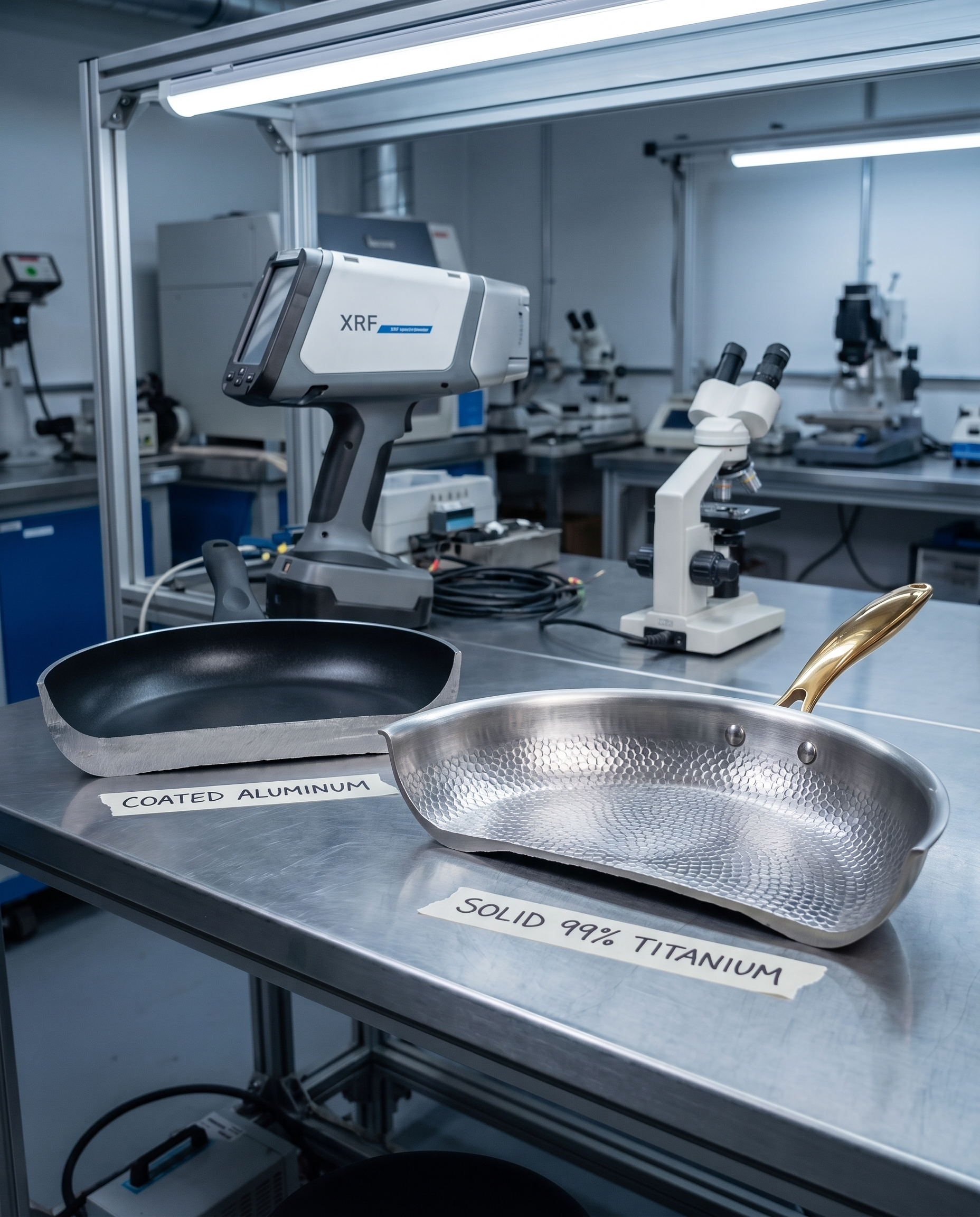
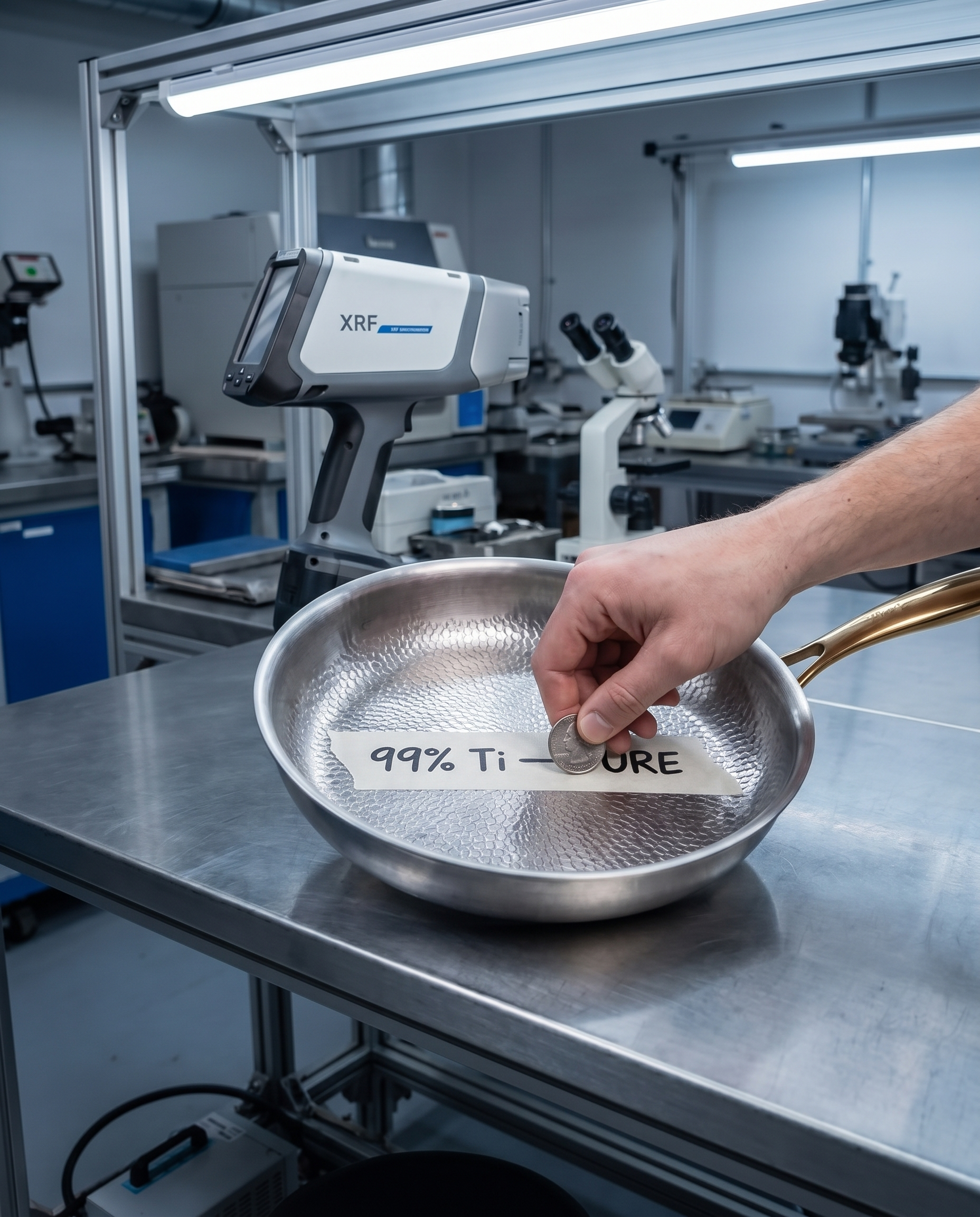
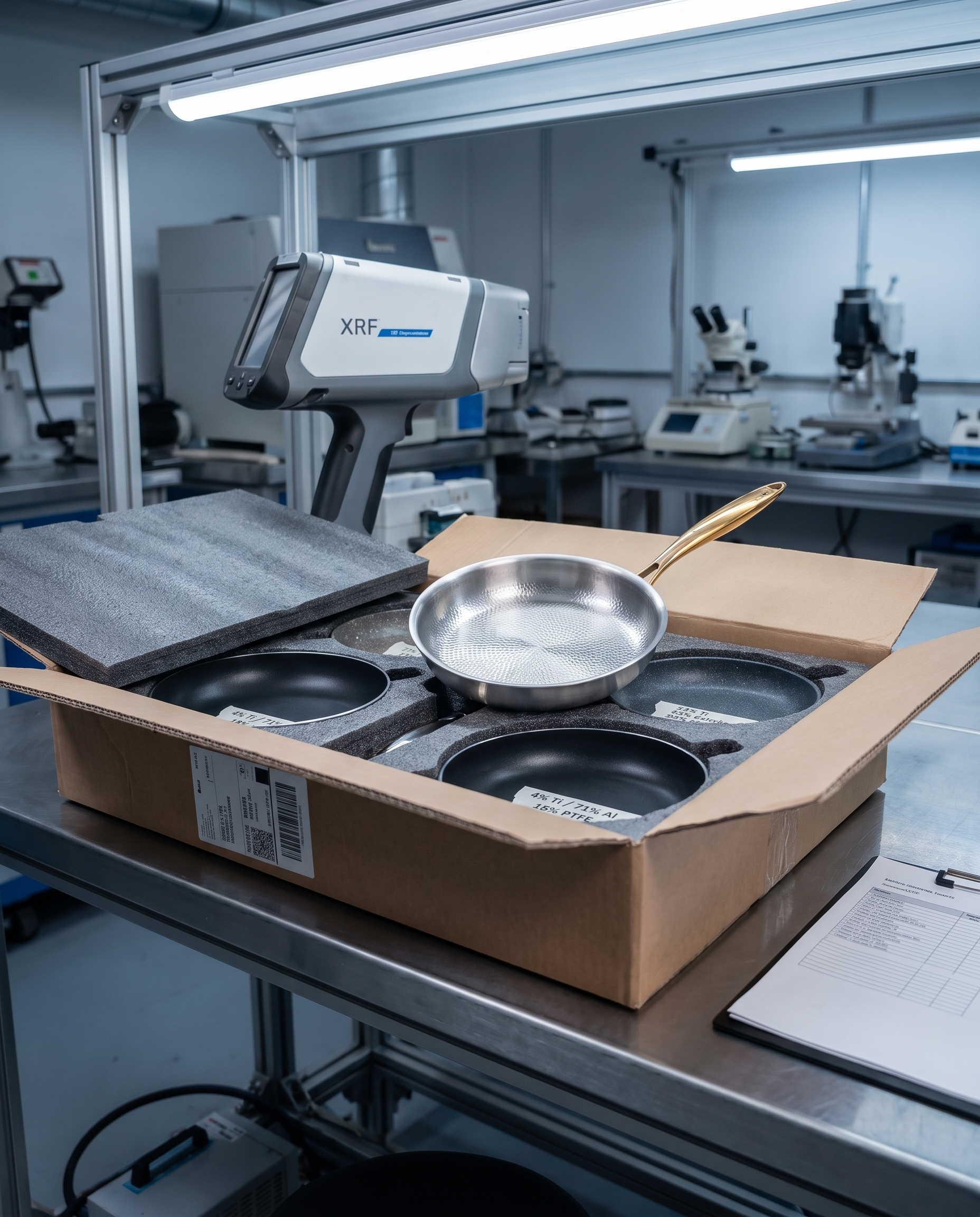
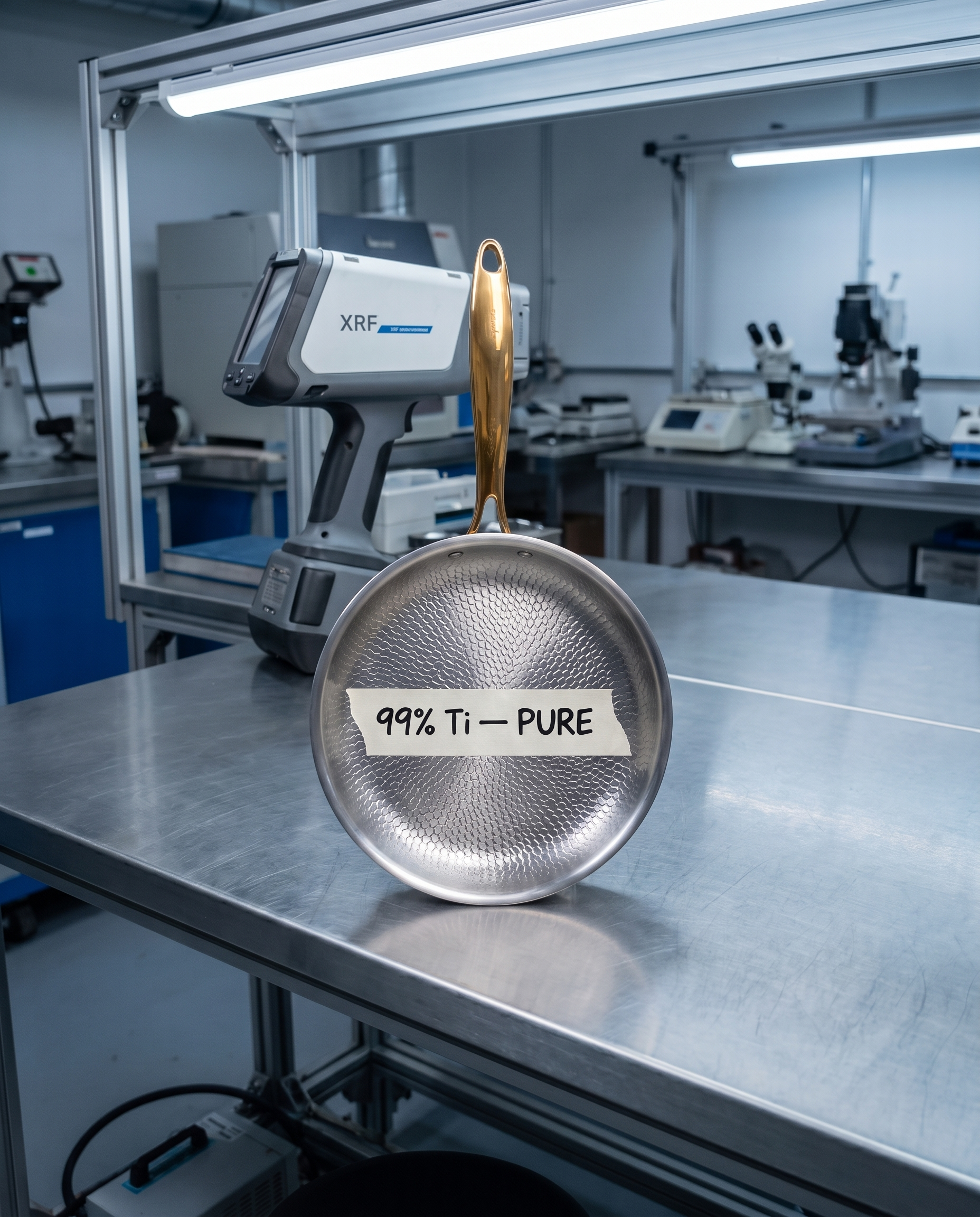
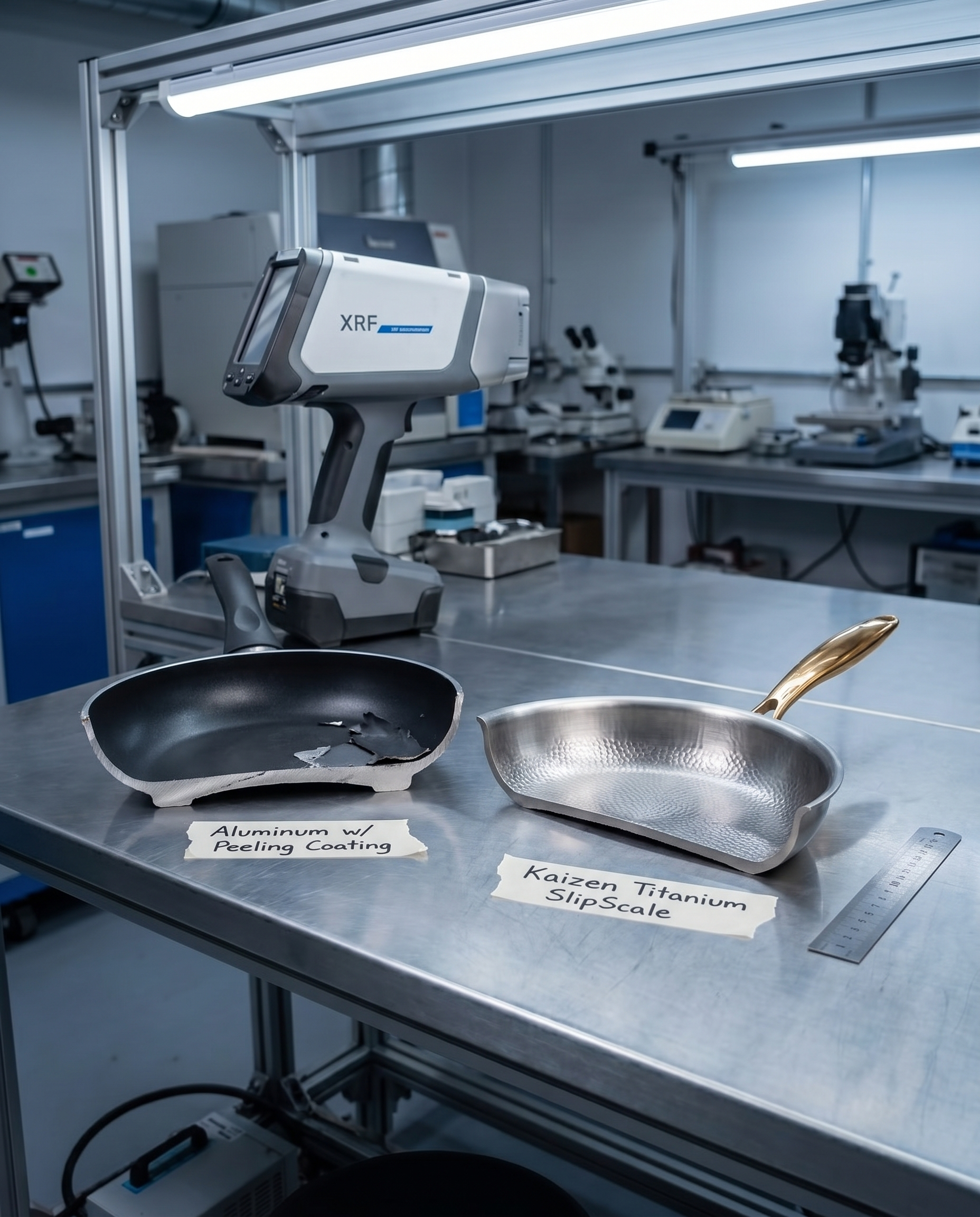
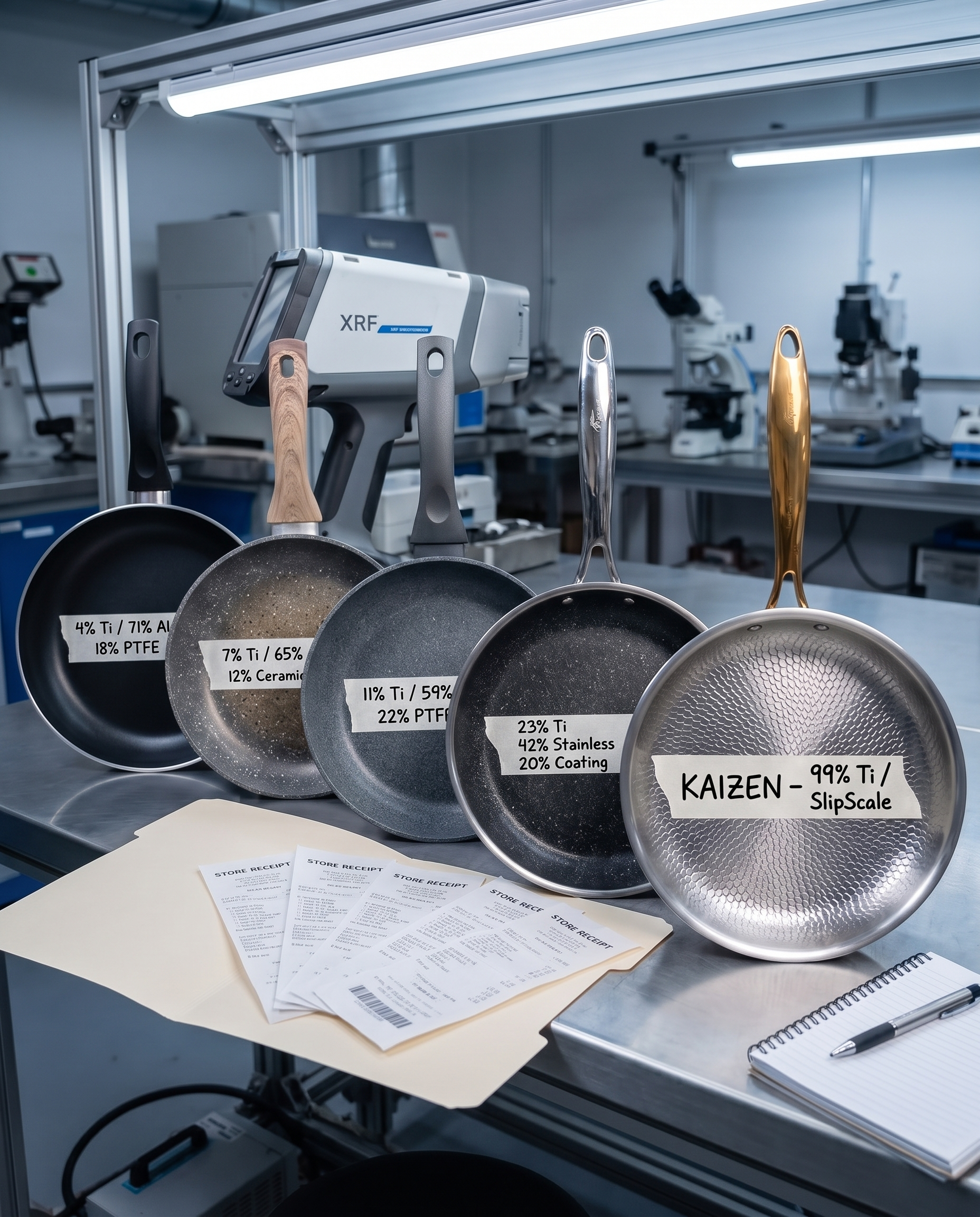
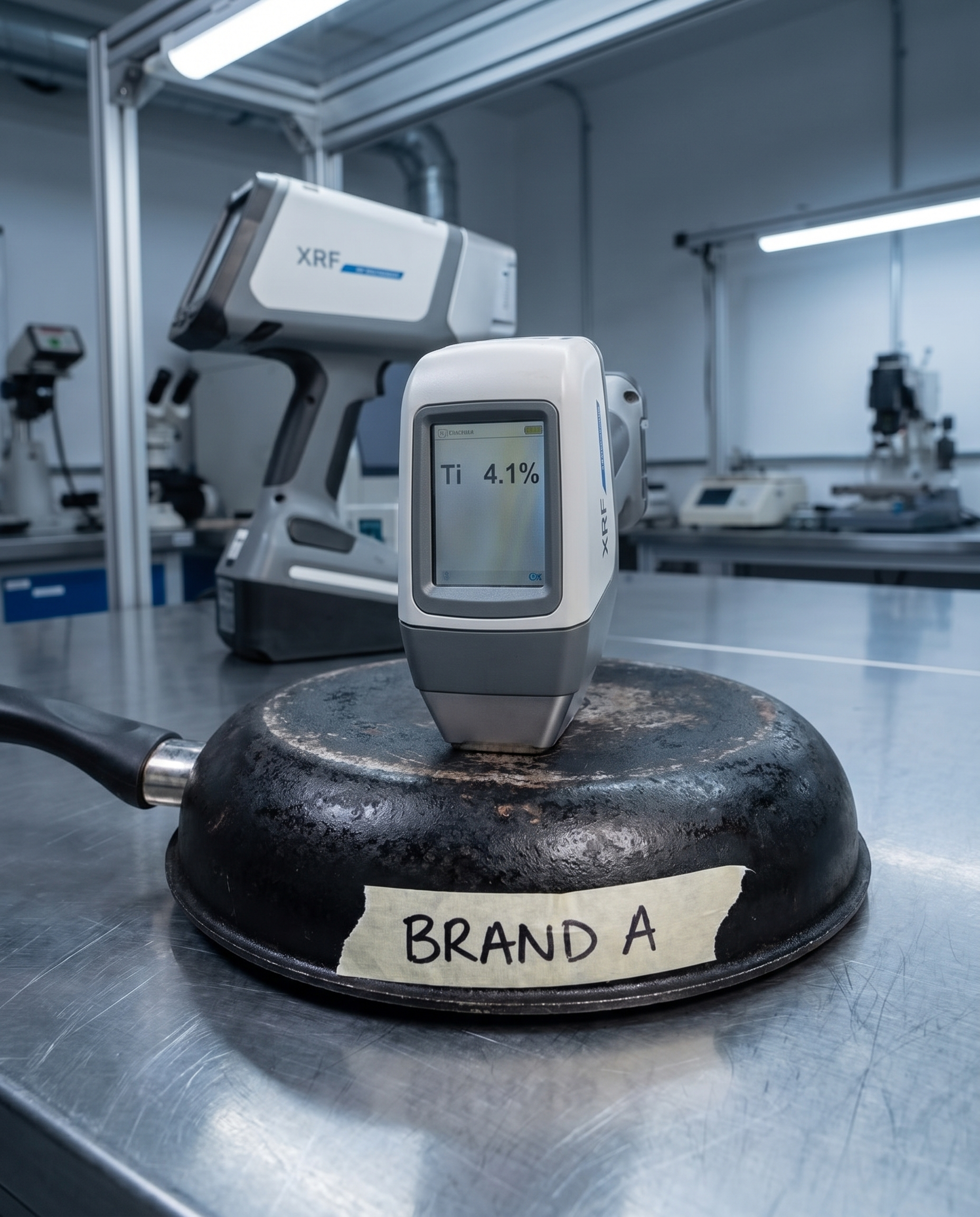
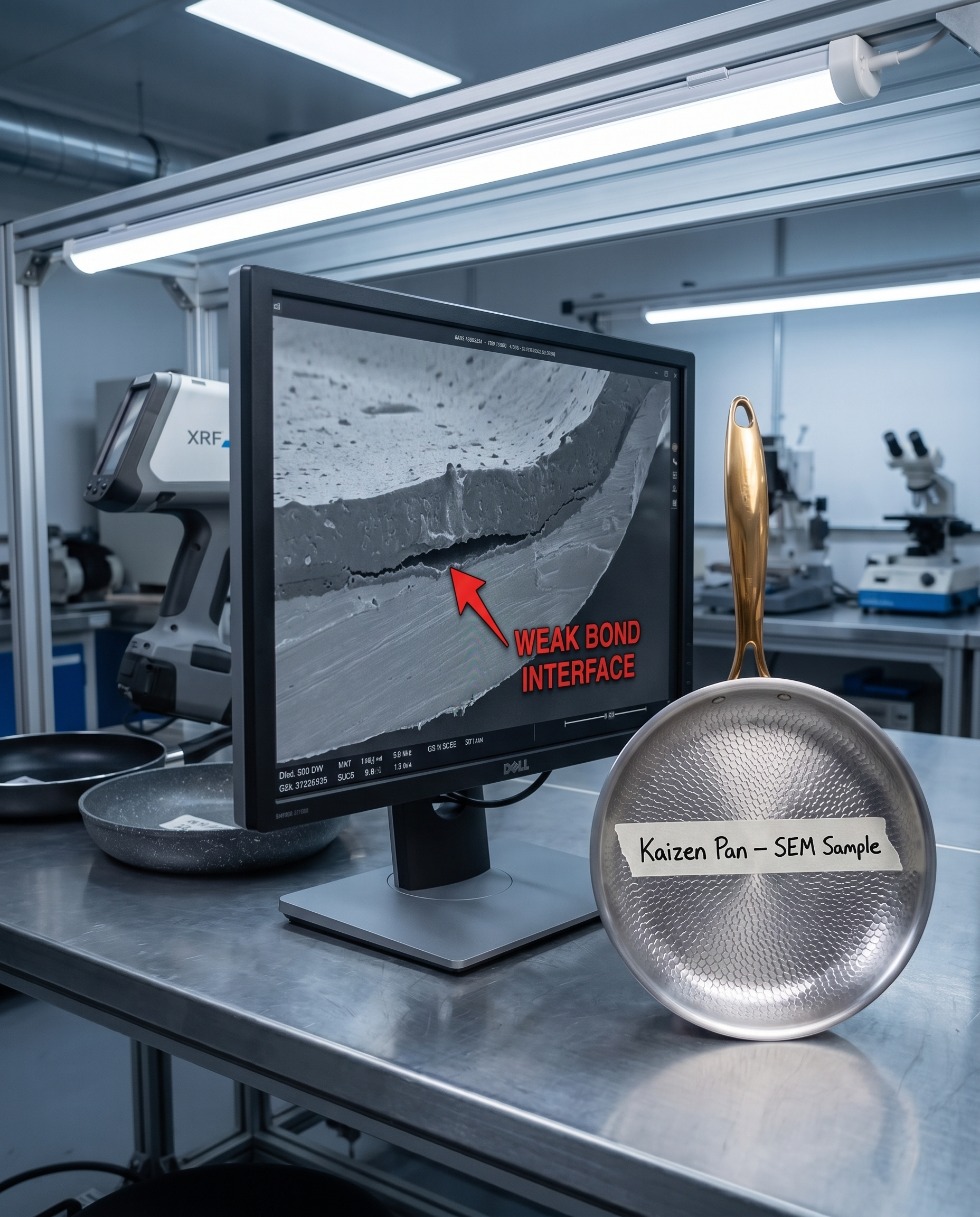
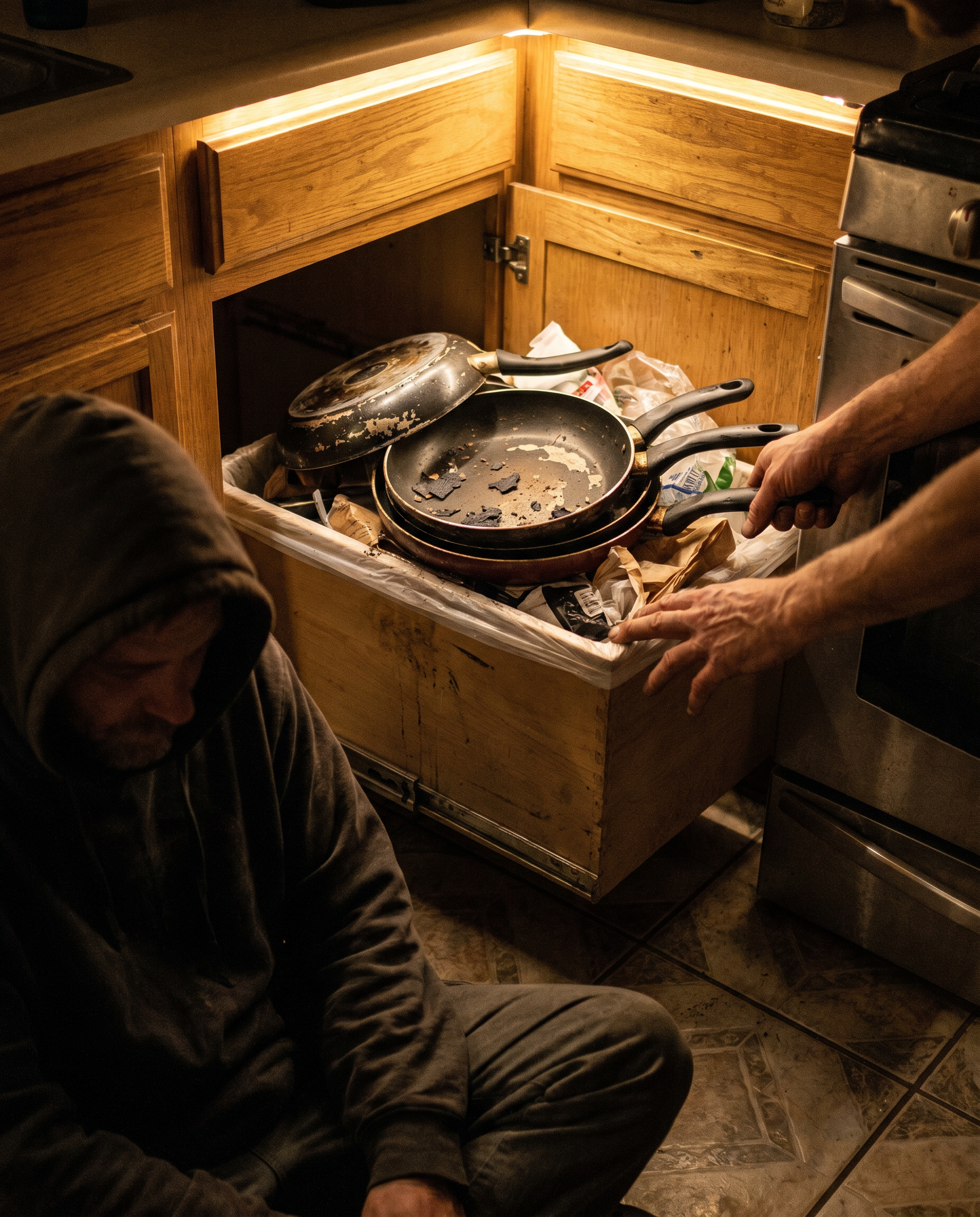
I was looking for the cake pan I knew was in the bottom drawer next to the stove. I had pulled the drawer all the way out, the way you have to when you have shoved too much in for too many years and the rolling track has started to bind. The cake pan was at the very back, exactly where I had left it the previous March when I had made my husband's birthday cake. In front of it, stacked in the rough order I had rotated them out of the daily cooking rotation across the past eight years, were six broken nonstick pans. Two ceramic. One 'titanium-reinforced.' One 'green' PFOA-free. One Insta-brand hex. One from a Costco roadshow. Every single one had visible coating damage. Every single one I had told myself, at some point during a January resolution, that I was keeping 'for camping.' I have not been camping. I do not own a tent. The pans were not for camping. The pans were in the drawer because I had not been able to bring myself to throw them out and I had not been able to bring myself to look at them. I sat down cross-legged on the kitchen floor at 11pm with the drawer open at my left elbow and the dog watching me from the doorway of the dining room. The kitchen was lit only by the under-cabinet halogen fluorescent, which I had installed myself the summer before because the overhead light had burned out and I had not yet been able to figure out which kind of bulb the fixture needed. I started a list on the back of a junk-mail envelope. Eleven pans in eight years. $612 across all of them, totaled from receipts I pulled from a shoebox in the closet, my Amazon order history on my phone, and the warranty cards I had stapled to receipts in a manila folder I keep for this kind of accounting. Three warranty claims filed across the eight years, all three denied with identical boilerplate language. Average lifespan twenty-two months. Hundreds of hours over the decade scrubbing dead nonstick that came off regardless of how soft the sponge was. The math hit harder than I had expected, partly because I had never put it on one page before, and partly because the drawer next to me was a miniature version of the landfill I had been contributing to without thinking. Cookware is one of the least recyclable consumer goods categories in the American economy. I learned this the following week when I called the municipal waste management office to ask about disposing of the pans in the drawer. The woman on the phone was patient with me. She explained that the coating-on-metal sandwich that constitutes a nonstick pan cannot be separated cleanly by mechanical recycling methods. The cooking surface fluoropolymer must first be chemically stripped before the underlying aluminum can be reclaimed, and the stripping process is itself environmentally hazardous and requires specialized facilities that exist in only three states. Most municipal recyclers, including ours, reject the entire pan. The pans go to landfill. The coating sits in the landfill for decades because the polymer chemistry does not degrade under standard landfill conditions. The chemistry that does eventually leach out of the coating layer migrates into the surrounding groundwater. The compounds that migrate are the same compounds that the CDC has been measuring in the national biomonitoring program as 'PFAS' for the past decade. Every pan I had thrown out had ended up in a hole in the ground that was slowly leaking the compounds I had been trying to keep out of my family's food. The math was bad. The implication was worse. The cookware industry has built its business model on the assumption that I, the consumer, would replace pans on a roughly 22-month cycle and would not notice that the cycle was deliberate. The coatings are engineered to fail at predictable intervals. The warranty fine print is engineered to deny every legitimate claim. The marketing is engineered to make me feel like the next pan will be different. The trade publications openly describe the strategy because the trade publications are read by industry insiders. The consumer is the last party in the system to learn how the system works. The system has been running, profitably, for half a century. The only mathematical exit from the cycle is to break the replacement loop. That requires a pan with no engineered failure mode. A pan that cannot fail at the bond between coating and substrate, because there is no bond. A pan that is one solid metal, edge to edge, with no chemical layer to peel and no interface to crack under thermal cycling. The metal that hits biocompatibility, light weight, and durability all at once is pure titanium. The same metal used in surgical implants because the human body does not react to it. Almost no consumer brand ships it actually pure. Most ship coated aluminum with titanium dust in the slurry and the word 'titanium' in the marketing. I sent five 'titanium' pans to a metallurgy lab in Texas to confirm. The invoice was $470. Four of the five came back as aluminum bodies with thin titanium-something coatings, ranging from 4.1% to 22.7% actual titanium by mass. The fifth came back as 99.1% titanium with no coating layer detected. The pan that came back as pure was the cheapest of the five at retail. The brand had the smallest marketing budget of the lot. The brand had no celebrity endorser. The brand had no Costco roadshow staffing. The brand had no TikTok shop integration. The brand spends its margin on the actual metal and on the third-party XRF metallurgy lab certificate that ships in every box, signed and stamped, confirming 99% titanium content. The brand is Kaizen. The pan that replaced the six in my drawer is a Kaizen 12-inch classic. Pure 99% titanium verified by independent XRF spectrometry. Lab cert in the box, with the spectrometry curve attached on the back page. Single-piece body. No coating layer to peel. The cooking surface uses a permanent SlipScale micro-pattern pressed directly into the titanium itself for nonstick release. The handle is bronze-toned hardwood, balanced perfectly, and stays cool during cooking. The pan has a projected service life of thirty years minimum based on independent metallurgy modeling. Two-exclusion warranty in one page of plain English. Two-and-a-half years later, scrubbed daily, used for every meal, the cooking surface looks indistinguishable from the day it arrived. The drawer next to my stove has been empty for two years. I took the six broken pans to one of the three specialized recycling facilities that accept coated cookware. The facility is in upstate New York, four hours from my house, and I drove the pans up there myself in the trunk of my car on a Saturday morning because I did not want to put them in a landfill. The facility manager was patient with me when I explained why I had driven four hours. He told me, gently, that most of the pans they receive arrive in batches from commercial accounts, and that individual consumers rarely make the drive. I felt better about the drive than about the pans. The chef's full breakdown of the disposable-cookware model is linked below. Read it before your next bottom-drawer cleanup.
Like this ad? Make it yours.
Crush rebuilds this exact creative around your product — your brand, your colors, your offer — in about a minute.