
Inactive· since Jul 28, 2026
- 16
- days it ran
- 2
- relaunches
- 583
- EU reach
Ad copy
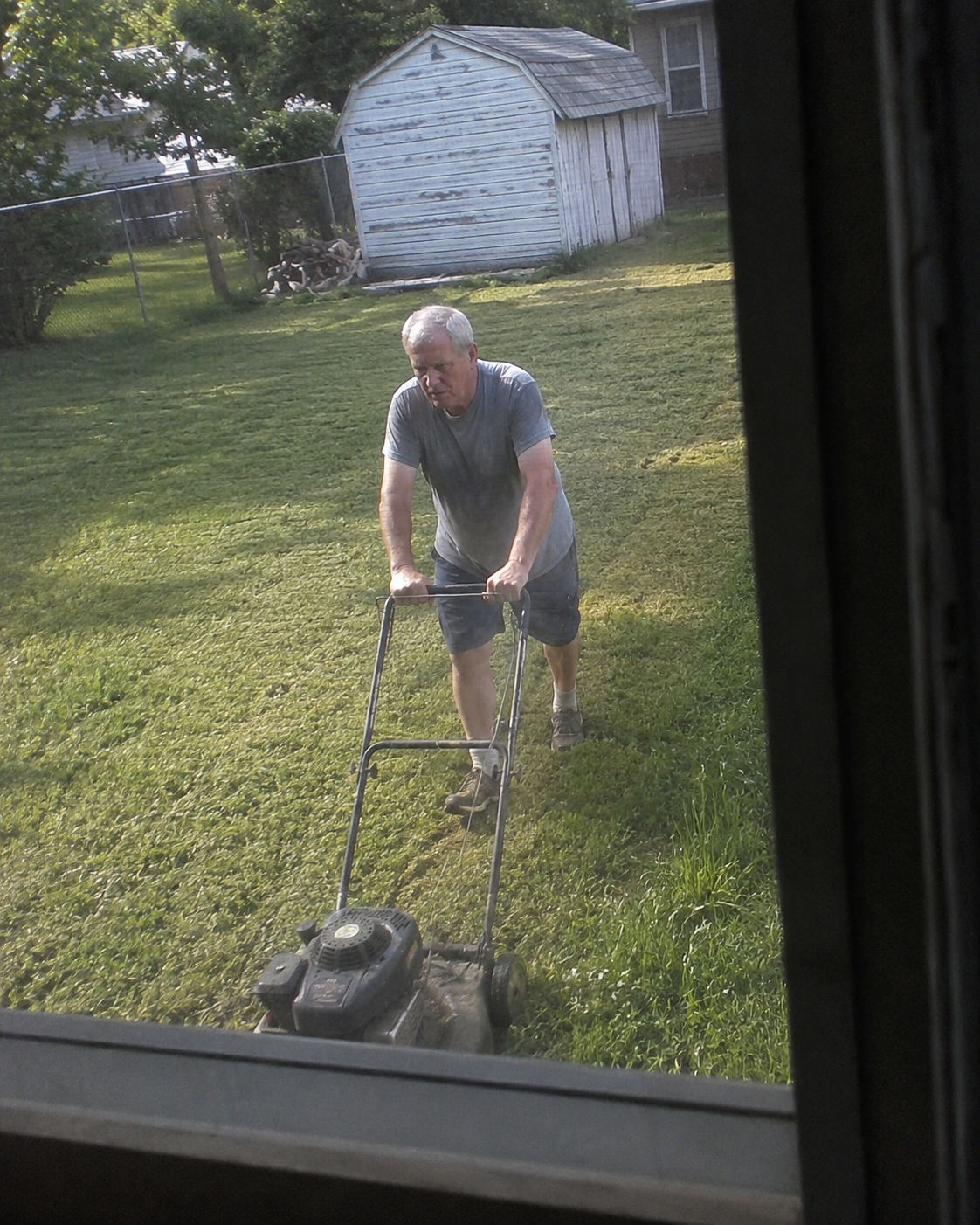
My Husband Used to Drive Us to the Lake Every Friday Afternoon in the Summer. Two Years Ago He Started Asking Me to Drive. A Woman in the Hardware Store Aisle Asked Me a Question Last June That Made Me See What Had Been Happening. I am writing this because my husband's older brother called me last weekend after he had been over for dinner. He had watched my husband walk in from the driveway with two bags of charcoal on his shoulder. He had not seen my husband carry two bags of anything in over a year. He wanted to know what we had been doing. I told him on the phone. I am writing the long version down now so I can send it to him on Monday. For him. For my husband. For the next wife who has been pretending she does not mind doing all the driving. I am Frances. I am sixty-two years old. I retired three years ago after twenty-eight years as a paralegal at a small law firm in our town. I am married to my husband Walter for thirty-six years. Walter is sixty-five. He retired four years ago from a long career as a regional sales manager for an industrial equipment company. We have one grown daughter. She is married. One grandson. We have a small lake cottage about an hour north of our house. We bought it in 1996 when our daughter was eight. We have been driving up to the lake every Friday afternoon in the summer for twenty-nine years. I want to tell you who Walter was for the first sixty-three years of his life. Because what happened over the last two years does not make sense without that. Walter was the driver. He was the driver of our marriage. The driver of our family. The driver of our weekends. For thirty-six years, when Walter and I went anywhere together, Walter drove. I drove on weekdays. I drove to and from work. I drove to the grocery store. I drove our daughter to her activities when she was growing up. But when Walter and I were in the car together, Walter drove. That had been our arrangement since 1989. It had been so automatic that for years I had not thought about it. The lake drive on Friday afternoons in the summer was the longest of the regular drives. An hour and ten minutes each way. Walter had driven it every Friday afternoon for twenty-nine summers. He drove our daughter up when she was a baby. He drove her up as a high school student. He drove her up with her boyfriend when she was in college. He drove her up with her husband after they got married. He drove the two of us up together when she had her own life. For twenty-nine summers, Walter drove the Friday afternoon lake drive. Two years ago, on a Friday afternoon in June, he asked me if I would drive. He said it casually. He said his shoulder had been bothering him from yard work. He said it would be easier if I drove that one. I drove. We made the drive. He napped a little in the passenger seat. The next Friday he asked me to drive again. He said he had been tired from the week. By the end of that summer, I was driving every Friday lake drive. I had not really noticed until the end of August when I realized I had driven every single Friday drive that summer for the first time in twenty-nine years. I had been pretending it had been about the shoulder and the tiredness. It had not been only about those things. It had been the beginning of something else. Once I noticed the driving, I started noticing other things. The grass. Walter had mowed our yard every Saturday morning at eight for thirty years. About a year and a half ago, he had started waiting until Sunday afternoons. Then he had started splitting it — half on Saturday morning, half on Sunday afternoon. Then he had started skipping weeks. By last spring, he had been paying the neighbor's teenage son fifty dollars to do the mowing. I had not made a thing of it. The neighbor's son had needed the money. Walter had earned the right to pay someone else to mow his yard. But Walter had loved mowing his yard for thirty years. The garage. Walter's garage workbench had been his Saturday morning project space for as long as I had known him. He had built bookshelves out there. A small rolltop desk for our daughter when she was in college. A rocking chair for our grandson when he was born. The garage had gone quiet around the same time as the mowing. The rocking chair for our grandson had been three-quarters done on the workbench for about a year. Walter had not gone out to finish it. I had been walking past the garage door for a year without going in. The dinner table. We had been sitting down to dinner at six thirty every weeknight for thirty-six years. Walter had been the one who set the table. He had been the one who poured the wine on Friday nights. He had been the one who got up at the end of the meal to clear the plates. By last spring, he had been sitting down at the table when I called him. He had not been setting it. He had not been getting up to clear his plate. He had been moving to the recliner in the den at the end of dinner and falling asleep in front of the news at eight. He had been going to bed at nine. He had been waking up at nine the next morning. He had been sleeping twelve hours a night. He had been tired anyway. I tried to talk to him about it last spring. I sat down with him on the back porch on a Sunday afternoon. He had been on the porch with the paper. I said: "Walter. Are you feeling okay?" He looked up from the paper. He said: "Frances. I am sixty-five. I am tired. I am supposed to be tired." I said: "Walter. I am sixty-two. I am not as tired as you are. I do not think this is just sixty-five." He folded the paper. He looked at me. He said: "Frances. I went to Dr. Halloran in March. Everything came back fine. Numbers all green. EKG fine. Bloodwork fine. He told me to keep walking and keep sleeping. He told me this is what sixty-five looks like for some guys." He said: "I am going to be okay. I just need to ride this out." He picked the paper back up. I sat with him on the porch for another twenty minutes without saying anything else. I let it go. I let it go for another three months. I let it go until a Wednesday morning in early June when I drove out to the feed and garden center to buy bags of mulch for the front beds. The feed and garden center is about twenty minutes from our house. A small family-owned place. Bagged mulch and bird seed and perennials in flats and terra cotta pots and the kind of tools you cannot find at the big-box stores. I had been driving out there since 1994. I had pulled up to the mulch yard at about ten in the morning. The yard was almost empty. I had pulled my car up next to the pallets of bagged mulch. There was a woman about my age at the end of the row of pallets. She was looking at a stack of bird seed bags. She had a small wagon next to her. She looked over at me and smiled. She said: "Do you happen to know if they have the safflower seed back at this lot, or do I need to go around to the main barn?" I told her I had no idea. I told her I had just come for mulch. She laughed. She said: "Mulch is simpler. I should have come for mulch." We started talking the way two women in their sixties start talking at a feed and garden center on a Wednesday morning. About the weather. About how the lot had not changed in thirty years. About how she and her husband had bought a small cabin two years ago and she was trying to figure out which feeder her cabin birds would actually use. Her name was Eileen. She was sixty-four. Her husband was named Jim. He was sixty-seven. There was a low concrete retaining wall along the side of the mulch yard. It came up to about knee height. The kind of wall that holds back the gravel from the parking lot. Eileen sat down on the wall. She said: "Frances — what is your name? Frances. Come sit. My hip has been bothering me from the drive. I want to sit for a minute before I head into the barn." I sat down next to her on the wall. I do not know why I told her what I told her. I think it was because she had the kind of face people tell things to. I think it was because I had been carrying it for two years and had not really said it out loud to another woman. I said: "Eileen. Can I ask you something about your husband?" She turned slightly on the wall. She said: "Of course." I said: "Does he still drive when you go places together?" She looked at me for a moment. Then she said: "Frances. Stay sitting. I want to tell you something." We sat on the low concrete retaining wall at the edge of the mulch yard for the next forty-five minutes. Eileen told me about Jim. Jim had been a high school principal for thirty-four years. He had retired five years ago. She told me that for about two and a half years after his retirement, Jim had been carrying his body around the way I had just described Walter carrying his. The asking her to drive. The shoulder that bothered him from yard work. The garage that had gone quiet. The dinner table he no longer set. The nine o'clock bedtime that had stretched into a twelve-hour sleep that had not actually rested him. She told me they had been to Jim's doctor about it. Standard cardiac workup. Clean. Standard advice. She told me she had been carrying it for two and a half years when she had finally said something to her own younger sister. Her younger sister was a nurse practitioner. Not a doctor. But she had spent thirty years in primary care and she had picked up things along the way. Her sister had said: "Eileen. This is the layer the standard tests are not built to capture. Jim's body has supports that have been quietly thinning since he was sixty. The standard panel does not see them." Her sister had told her she had been reading about something. Not a medication. A supplement. A small company called Rosabella that made a cold-pressed beetroot supplement. She had told Eileen that the active compound — the betalains, the deep red pigment in the root — had been studied for decades for cardiovascular wellness and the body's natural cellular energy. The pigment was delicate and sensitive to heat. Most processing methods damaged it. Rosabella cold-pressed at low temperatures, which preserved it. The capsules were a deep, dark crimson when you opened the bottle. That color was the pigment, intact. Her sister had said: "Eileen. I am not telling you it is a fix. I am telling you it is one thing in the additive layer. Have Jim's doctor bless it before he takes it. If the doctor agrees, add it to what Jim is already doing." Eileen had brought the bottle to Jim's doctor before he started. His doctor had said it was a sensible thing to add. Add it to what he was already doing. Don't change anything else. Jim had been taking it for about two and a half years when Eileen sat down on the wall next to me. She told me Jim was driving them places again. She told me Jim had been mowing his own yard for the last two summers. She told me Jim had a workshop project on his bench that he was working on most Saturday afternoons. She told me she was not making any claims. She was one wife telling me what had happened in her own house. She said: "Frances. Have Walter talk to his doctor. That is the most important step. I am one woman on a wall at the mulch yard. I am one story." She tore a corner off the back of a paint chip card she had in her purse and wrote the name down for me. She handed it to me on the wall. She said: "Frances. Will you tell me how it goes? My phone number is on there." I said: "Eileen. I will." We stood up from the wall. I hugged her at the edge of the mulch yard. She walked toward the main barn. I drove around to the side and loaded six bags of mulch into the trunk. I drove home with the paint chip card in my purse. I sat in my driveway for fifteen minutes before I went inside. I am going to skip the part where I read for three weeks. Most evenings at my kitchen table after Walter had gone to bed at nine. I had been a paralegal for twenty-eight years. I knew how to read a record carefully. Eileen had been telling me the truth. Beetroot had been studied for decades for cardiovascular wellness. The betalains were the active compound. Cold-pressing at low temperatures preserved them. Rosabella was a small company that did exactly what Eileen had described. The layer underneath the lifestyle layer that Eileen's sister had described to her — the body's natural antioxidant balance, the body's natural circulation, the body's natural cellular function — was the layer the supplement was meant to support. That layer quietly thins for men in their sixties. Not because anything is broken. Because the body that supported itself effortlessly at thirty does not support itself the same way at sixty-five. It was not a treatment for anything. It was support for a layer. I told Walter about it on a Saturday morning. I sat down with him at the kitchen table. I had the printed articles. I had Eileen's paint chip card. I told him about Eileen at the feed and garden center. I told him about Jim. I told him what I had been reading. I told him I was not trying to second-guess Dr. Halloran. He listened. When I was done, he was quiet for a long minute. Then he said: "Frances. Would you want me to call Dr. Halloran and ask him about adding this?" I said: "I would, yes." He called on Monday morning. The nurse called back on Wednesday. She said: "Dr. Halloran says it is a sensible thing to add. There is good research on antioxidant support for cardiovascular wellness for older men. Add it to what you are already doing. Don't change anything else. Come back at your next visit." Walter hung up the phone. He looked at me across the kitchen. He said: "Frances. Let's give it a try." I ordered the first bottle that afternoon. He started taking it the following Monday. Two capsules with a glass of water in the morning. He did not change anything else. I want to tell you what I noticed over the next eight weeks. I am not going to make a claim about what caused what. I am going to tell you what happened in the order it happened. The first thing was small. About two weeks in, on a Friday afternoon in late June, we were going to drive up to the lake for the weekend. I was at the kitchen counter packing a small cooler. Walter came into the kitchen with his keys in his hand. He said: "Frances. I am going to drive us up today." I said: "Walter. Are you sure?" He said: "I am sure. I have not driven us up to the lake in two summers. I want to drive." He drove the hour and ten minutes up to the lake. He did not nap. He listened to the radio. He talked to me about a memo our daughter had sent him during the week. He pulled into the cottage driveway at five thirty and got out of the car and stretched and walked down to the dock. I stood at the back of the car and watched him walk down to the dock. I had not seen my husband walk down to that dock at five thirty on a Friday afternoon in over a year. I did not say anything about the drive. I did not want to draw attention to it in case drawing attention to it broke something. I just started unloading the car. A week after that, on a Saturday morning, the lawnmower started up at eight in the morning. I had been in the kitchen making coffee. I went to the window. Walter was at the back of the yard pushing the mower. I had not heard our lawnmower at eight on a Saturday morning in over a year. I made him coffee. He came in at nine forty-five, sweating, smiling. He said: "Frances. I did the whole yard." I said: "Walter. Good." I gave him the coffee. He drank it at the counter standing up. He kissed me on the side of my face. He went out to the porch to look at the yard. The neighbor's teenage son did not come over that Saturday. He has not come over since. About four weeks in, on a Sunday afternoon, the garage light came on. I had been in the kitchen making lunch. I saw the light through the small window over the sink. I went out the back door and walked around to the garage. Walter was at his workbench. The rocking chair for our grandson was in front of him on the bench. It was three-quarters done. It had been three-quarters done for a year. He had a small jar of stain in his hand. He looked up when I came in. He said: "Frances. I am going to finish this for Henry. He is going to be three in September. I want him to have it before his birthday." I said: "Walter. Good." I went back into the kitchen. He worked on the rocking chair for three hours that afternoon. He worked on it the next four Saturdays. He finished it the second Saturday in August. He drove it down to our daughter's house himself in his truck on a Sunday morning. He set it up in our grandson's room. Henry was almost three. He did not know what it was at first. He sat on it. Walter pushed him a little. Henry laughed. Our daughter took a picture of Walter pushing Henry on the chair. She sent it to me. I had it printed at the drugstore. It has been on the front of our refrigerator ever since. About six weeks in, Walter set the dinner table. I had not asked him to. I came into the dining room with the casserole. The table was set. Two plates. Two glasses of water. Two napkins. The good salt and pepper from the sideboard. Walter was at the head of the table. He said: "Frances. Sit. I poured the wine." He had poured the wine. We had not had wine with dinner on a weeknight in over a year. I sat down across from him. I said: "Walter. Thank you for setting the table." He said: "Frances. Thank you for the casserole." He cleared his plate at the end of dinner. He cleared mine. He did the dishes. He went out to the back porch. He read for an hour. He came up to bed when I came up to bed. Walter went back to Dr. Halloran at the three-month mark. Dr. Halloran ran the bloodwork. Took his blood pressure. Listened to him describe the last few months. He sat back in his chair. He said: "Walter. Your numbers look as good as they have looked in years. Whatever you are doing, keep doing it." Walter told him about the Rosabella. About the lake drive. About the rocking chair. Dr. Halloran smiled. He said: "Walter. I am so glad." He did not say anything else. He did not need to. I want to be careful here. I am not a doctor. I am not in healthcare. I am one sixty-two-year-old wife who sat on a low concrete retaining wall at the edge of a mulch yard on a Wednesday morning in June and listened to a woman she had just met tell her about her own husband. I do not know for certain that the Rosabella was responsible for what changed. I know what Walter was doing before. I know what he added. I know what I have seen over the last few months. I know the timing. I also know Walter is sixty-five and he is going to keep aging, and there will come a day when no supplement will hold back the slow turning of the years. I am not pretending otherwise. What I am telling you is what we tried. What I noticed. What Walter's doctor said about it. That is all. Sometimes the changes a wife notices in her husband are the small ones. The keys in his hand on a Friday afternoon when he says he is going to drive. The lawnmower starting up at eight on a Saturday morning. The garage light coming on on a Sunday afternoon. If you have a husband — or you are a husband — who has been quietly handing his loads to his wife for a year or two, and the doctor has been telling him his numbers are fine, and he has been telling you this is what sixty-five looks like, here is what I would say. Have him talk to his doctor about adding one more thing in the additive layer. If the doctor agrees it is a sensible thing to add, add it to what he is already doing. Do not subtract anything. Do not change anything else. Give it a few weeks before you decide anything. Bodies are different. Some men notice something within the first week or two. For Walter, the first thing I noticed was him picking up the keys to drive us to the lake around the start of week two. That is the whole story. P.S. Eileen called me last week. I had texted her at the three-month mark to tell her about the lake drive and the rocking chair. She had been waiting on her own back porch for someone else's story to remind her of her own. She said: "Frances. Will you and Walter come up to our cabin this fall for a long weekend? Jim and I would like to have you." I said: "Eileen. We will." We drove up to their cabin in late September. Walter drove the three hours each way. Jim and Walter spent the long Saturday afternoon together on the dock. They had not known each other before that weekend. They sat on the dock for four hours. Eileen and I sat on the back porch and drank tea. She said: "Frances. I am so glad we sat on that wall at the mulch yard." I said: "Eileen. So am I." P.P.S. Here is what I would tell you to do if you are thinking about trying it. Have him check with his doctor or pharmacist first. That is the most important step. Then have him take two capsules with a glass of water in the morning. Do not change anything else. Just add this. Give it a few weeks before you decide anything. Some men notice something within the first week or two — a little more presence in the morning, a little more reach in the afternoon, a little more of himself at the end of a long week. Others take longer. Be patient with his body. P.P.P.S. Rosabella has a 90-day money-back guarantee. If you are not satisfied for any reason, every penny back. No questions asked. That is a sensible policy for a supplement. It gives you time to actually see whether it helps. P.P.P.P.S. Rosabella is a small operation. They harvest and bottle on their own schedule. I keep an extra bottle in the house just in case. Walter's older brother — the one who watched him carry the charcoal bags in from the driveway — started taking it about a month after Walter did. He called his own doctor first. His doctor said the same thing Dr. Halloran said. Sensible thing to add. He is sixty-eight. He told Walter on the phone last week that he had walked nine holes of golf with his son for the first time in two years. He said: "Walter. I do not know if it is the supplement or if it is just paying attention. But something has shifted." Walter told him: "I know." I started taking it myself about a month after Walter did. I called Dr. Halloran first too. He said the same thing he said to Walter. Sensible thing to add. I am sixty-two. I figured if it was supporting a layer of Walter's body that had not been showing up on his tests, it would not hurt me to support the same layer in mine. The picture of Walter pushing Henry on the rocking chair is still on the front of our refrigerator. I look at it most mornings while I am making coffee. I do not think about the supplement when I look at it. I think about the year I had been driving Walter up to the lake every Friday afternoon and pretending I did not mind. I think about the wall at the mulch yard. I think about the keys in Walter's hand on the Friday in June. That is what I want to tell you about. The supplement is one thing. The keys in his hand are the thing that matters. https://track.tryrosabella.com/8ae97cac-2146-42d6-af75-de0e59d15644 Individual experiences vary. These statements have not been evaluated by the FDA. This product is not intended to diagnose, treat, cure, or prevent any disease.
Support stamina and heart health every day
LEARN MORELike this ad? Make it yours.
Crush rebuilds this exact creative around your product — your brand, your colors, your offer — in about a minute.