
Inactive· since Feb 24, 2026
- 17
- days it ran
- 1
- relaunches
Ad copy
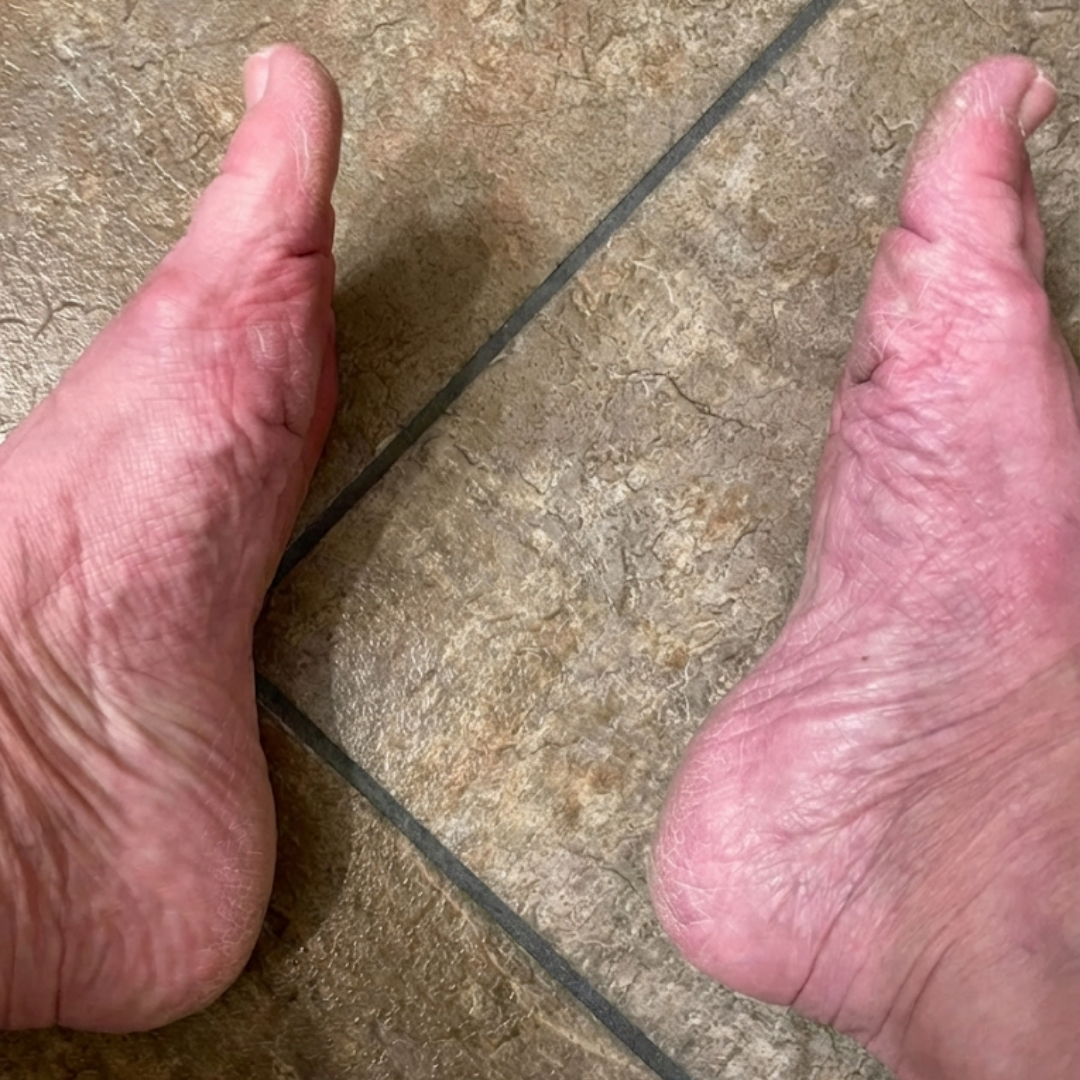
I wasn't going to share this publicly. But my husband convinced me. He said if my story could help even one person avoid what I went through, it would be worth it. Six months ago, I fell in my own bathroom and broke my wrist. Not because I slipped. Not because the floor was wet. Because I couldn't feel the floor under my feet. The neuropathy had taken everything from me so gradually that I didn't realize how bad it had gotten until I was on the tile, alone, unable to get up, waiting for my husband to come home from the hardware store. Forty-five minutes on that floor. Staring at the ceiling. Wondering if this was how it was going to be from now on. It didn't start that way. Five years ago, I noticed tingling in my toes. Just at bedtime. A little buzzing that would come and go. I mentioned it to my doctor during a routine visit. She said it was probably nothing. "You're 66. Circulation changes as we age." So I ignored it. Then the tingling turned into burning. Not a mild warmth — a deep, relentless burn across the soles of both feet that started every night around 8 p.m. and didn't stop until morning. I'd pull the sheets off. Hang my feet over the side of the bed. Get up and stand on the cold bathroom tile at 2 a.m. just for a few seconds of relief. My husband would wake up and find me sitting on the edge of the tub in the dark, running cold water over my feet. "Margaret," he'd say. "Come back to bed." But I couldn't. Because the bed was where it was worst. I went back to my doctor. This time she took it seriously. Nerve conduction test. Bloodwork. A1C check. Diagnosis: diabetic peripheral neuropathy. Her first move? Gabapentin. 300 milligrams, three times a day. I trusted her. I took every pill on schedule. The first two weeks, it dulled the burning. Maybe 25 percent. But by week three, something else was happening. I couldn't remember my neighbor's name — a woman I've known for 19 years. I walked into the kitchen and forgot why I was there. Three times in one morning. I gained 11 pounds in six weeks without changing a single thing about my diet. And the drowsiness. God, the drowsiness. I felt like I was living underwater. My grandchildren would talk to me and I'd just... stare. Like the words were reaching me through a wall of cotton. My husband said I looked like a different person. He was right. I didn't feel like me anymore. I told my doctor. She increased the dose. 600 milligrams Then 900. Then she added Cymbalta on top of it. The Cymbalta made me nauseous every morning for three weeks. And it messed with my blood sugar — which is the thing that caused the neuropathy in the first place. I was taking medication for neuropathy that was making the neuropathy worse. Nobody pointed out the irony. Over the next two years, I tried everything the internet told me to try. Capsaicin cream. Burned my skin so bad I had blisters. The pharmacist said "that means it's working." It wasn't. $19 for a tiny tube. Twenty minutes of mild cooling, then nothing. Frankincense oil from a Facebook ad. Smelled nice. Did nothing. Compression socks. Grounding mat. Barefoot shoes. A TENS unit that I used religiously for two months with zero improvement. Alpha-lipoic acid supplements. Three different brands. Four months. Nothing. I kept a spreadsheet. Because that's what I do — I'm a retired bookkeeper. I track everything. $3,400 in 27 months. Fourteen different products. Not one of them made a lasting difference. And while I was spending money on things that didn't work, the neuropathy kept progressing. The numbness crept up from my toes to the balls of my feet. Then to my arches. Then my ankles. The burning got worse, not better. And my balance — the thing nobody talks about — quietly disappeared. I started gripping countertops when I stood up. Holding the wall in the hallway. Taking the long way around furniture. My world got smaller and smaller. I stopped going to the grocery store because the fluorescent lights made me dizzy and I was afraid of falling in public. I stopped going to church because I couldn't stand for the hymns without swaying. I stopped gardening — the thing I loved most — because I couldn't kneel down and trust my legs to get me back up. Then came the fall. A Tuesday morning. 9:15 a.m. I was stepping out of the shower. My right foot touched the bathmat and I felt... nothing. No texture. No floor. No feedback. My ankle rolled. My knee buckled. And I went down. My wrist took the impact. I heard it crack before I felt it. I laid there and I didn't scream. I didn't cry. I just thought: This is what they warned me about. This is what "it gets worse" looks like. My husband found me 45 minutes later. The look on his face. I'll never forget it. Not anger. Not panic. Grief. Like he was already mourning the version of me that used to exist. At the ER, the doctor set my wrist and said, "You're lucky it wasn't your hip." Lucky. That night, after my husband helped me into bed — because I couldn't do it myself with the cast — he sat on the edge of the mattress and said something he'd never said before. "Maybe it's time we talk about... other arrangements." He meant assisted living. He didn't say the words. But I heard them. I'm 68 years old. I'm not ready for that. But laying there with a broken wrist and feet I couldn't feel, I didn't have a better answer. My husband is a quiet man. He doesn't do grand gestures. He does research. For the next two weeks, while I was in the cast, he was on his computer every night after I went to bed. I assumed he was looking at facilities. Pricing out assisted living communities. Preparing for the conversation I was dreading. Then one evening he came into the bedroom carrying his laptop. "Before you say anything," he said, "I need you to look at this with me. All of it. Before you decide." I expected a brochure for a retirement community. Instead, he'd found five clinical studies. Published in peer-reviewed medical journals. Indexed on PubMed. Conducted at real universities — Willamette, Brigham Young, Kyungdong. All on the same thing: whole body vibration therapy for diabetic peripheral neuropathy. My husband is an engineer. Retired from Boeing. He doesn't believe anything without data. "Margaret," he said. "I don't think your nerves are just damaged. I think they're starving." He showed me the research. The blood vessels in my feet had narrowed from years of diabetes. Less blood was getting through. Without oxygen, the nerves were weakening, misfiring, shutting down. "Everything you've tried," he said, "the pills, the creams, the supplements — they all treat the pain signal. Not one of them addresses the blood flow problem underneath." He pointed to a study from Brigham Young University. "A single session of whole body vibration significantly increased skin blood flow in neuropathic feet. Compared to sham. Published in the Journal of Diabetes Science and Technology." Then another from Willamette University. "Sham-controlled trial. Pain reduction at 2 and 4 weeks. Effects persisted 1 to 5 weeks after treatment stopped." Then another showing 21% improvement in nerve perception after 6 weeks. Then another showing improved balance, mobility, and quality of life. Five studies. Different universities. Different countries. All reaching the same conclusion. And across every single one: zero adverse effects. "Compare that," he said quietly, "to what gabapentin did to you." He closed the laptop and pulled out a box. "It's called the VibratingWell Harmonic Vibration Plate. It's the only one I found that's designed specifically for neuropathy. It has a shiatsu surface — raised nodules that stimulate the pressure points on the bottom of your feet. And it comes with a protocol based on the actual clinical studies." He looked at me. My quiet, careful, engineer husband who never buys anything without six months of research. "I've been looking at this for two weeks, Margaret. Not assisted living. This. I think this is the answer." I started crying. Not because of the device. Because he wasn't giving up on me. I said yes. That evening, he set it up in the living room. Took two minutes. I sat in my kitchen chair — because of the cast — and put my feet on the plate. Fifteen minutes. Lowest setting. And about seven minutes in, I felt something I hadn't felt in so long I'd forgotten what it was. Warmth. Not the fake warmth from capsaicin burning my skin. Not the temporary warmth from a heated sock. Real warmth. From inside. Like blood was actually reaching my feet again. I looked at my husband. "Feel my feet," I said. He touched them. And his face changed. "They're warm," he said. "Margaret, they're actually warm." We sat there in the living room, him holding my feet, both of us not saying anything. Because we both knew what it meant. Week one: The burning at night dropped by half. I went from waking up every 90 minutes to sleeping three and four hours at a stretch. My husband stopped checking on me in the middle of the night. Week two: I slept through the entire night. Seven hours. I woke up and the first thing I noticed was silence. No burning. No tingling. Just... quiet feet. I laid there for ten minutes just appreciating it. Week three: I stood up from my chair without grabbing the counter. Didn't realize I'd done it until I was already standing. My husband saw it from across the room. He didn't say anything. But he smiled. Week four: The cast came off. I started using the plate standing up, holding the back of a chair. The shiatsu nodules under my feet — I could feel them. Actually feel the texture. That hadn't happened in over a year. Week six: I walked to the end of the driveway to get the mail. By myself. Without holding anything. On the way back I stopped and looked at my garden — the one I'd abandoned — and thought: Maybe this spring. Week eight: I went back to church. Stood for every hymn. Didn't sway once. The woman next to me said, "Margaret, you seem different." I said, "I am." I went to my doctor for a follow-up. She asked about the neuropathy. I told her about the VibratingWell. About the studies. About the warm feet. About sleeping through the night. About standing up without holding the counter. She looked at me for a long time. Then she said: "I wish I'd known to tell you this before the fall." Me too. If I had found this three years ago — when the tingling first started — I might have avoided all of it. The gabapentin fog. The 30 pounds. The Cymbalta nausea. The $3,400 wasted on products that didn't work. The fall. The broken wrist. The 45 minutes on the floor. My husband's face when he found me. The assisted living conversation. All of it. That's why I'm sharing this. Because if you recognize ANY of what I described — the burning feet at night, the numbness spreading, the balance disappearing, the medication fog, the creams that wear off in 20 minutes, the doctor who says "we just manage it" — please don't wait. Before you go looking for a vibration plate, I need to warn you: Most of the ones on Amazon do NOT work for neuropathy. I know because after my results, four women from my church bought cheap ones. Two returned them within a week. The other two felt nothing after a month. Here's why: Most vibration plates are built for fitness. Flat surfaces. Frequencies designed for squats and weight loss. Standing on a generic fitness plate for neuropathy is like using a hammer to thread a needle. Wrong tool for the problem. The VibratingWell is different for two specific reasons: The shiatsu-textured surface. Raised nodules positioned to stimulate the nerve-dense pressure points on the soles of your feet — the exact areas where neuropathy kills sensation first. No other plate in this price range has a surface designed for neuropathic feet. It's the difference between a general multivitamin and a targeted treatment. The neuropathy protocol guide. Generic plates ship with a fitness workout poster. VibratingWell includes a protocol based on the actual published clinical studies — exact session timing, frequency, and intensity progression for neuropathic feet. You're not guessing. You're following the science. I've told every person I know who has neuropathy. My sister-in-law. Three women from church. Two people from my diabetes education class. Every single one has called me within the first two weeks. Same words, every time: "My feet are warm." My sister-in-law had neuropathy for seven years. She was using a cane. After six weeks on the VibratingWell, she left the cane at home for the first time. She called me sobbing. "I didn't realize how much I'd given up until I started getting it back." That's what chronic neuropathy does. It takes things from you so slowly you forget they were yours. The sleep. The balance. The confidence. The independence. You adjust to losing them one by one. Until something gives them back and you realize how much was stolen. The VibratingWell sells out regularly. I've watched it go out of stock three times since I got mine. Each time it was gone for weeks. Last month, a woman from my diabetes class finally decided to order one. It was sold out. She said she'd wait. Two weeks later she fell in her kitchen and fractured her ankle. She called me from the hospital and said: "I should have ordered it when you first told me." I don't want that to be you. If you're reading this and it's in stock — get it. Don't think "I'll do it later." Because here's the thing about neuropathy: It doesn't wait for you to be ready. The numbness spreads. The balance gets worse. The falls get more dangerous. And every week you wait is another week your nerves continue to starve. The VibratingWell Harmonic Vibration Plate comes with a 30-day money-back guarantee and a full 1-year warranty. If you don't feel a difference, you get every penny back. But I'm confident you will. Because I felt it. My sister-in-law felt it. Every person I've recommended it to felt it. Don't wait until you're on the floor wondering if you can get up. Don't wait until someone you love starts researching "other arrangements." Don't wait until a broken wrist becomes a broken hip. Don't wait until it's too late. Get it now. While it's in stock. While it's still 43% off. While you still can. 👉 https://www.vibratingwell.com/neuropathy — Margaret Callahan, 68 Retired bookkeeper Type 2 diabetic, 14 years Neuropathy survivor And someone who wishes she'd found this sooner
Like this ad? Make it yours.
Crush rebuilds this exact creative around your product — your brand, your colors, your offer — in about a minute.