

Inactive· since Apr 4, 2026
- 10
- days it ran
- 0
- relaunches
- 121
- EU reach
Ad copy
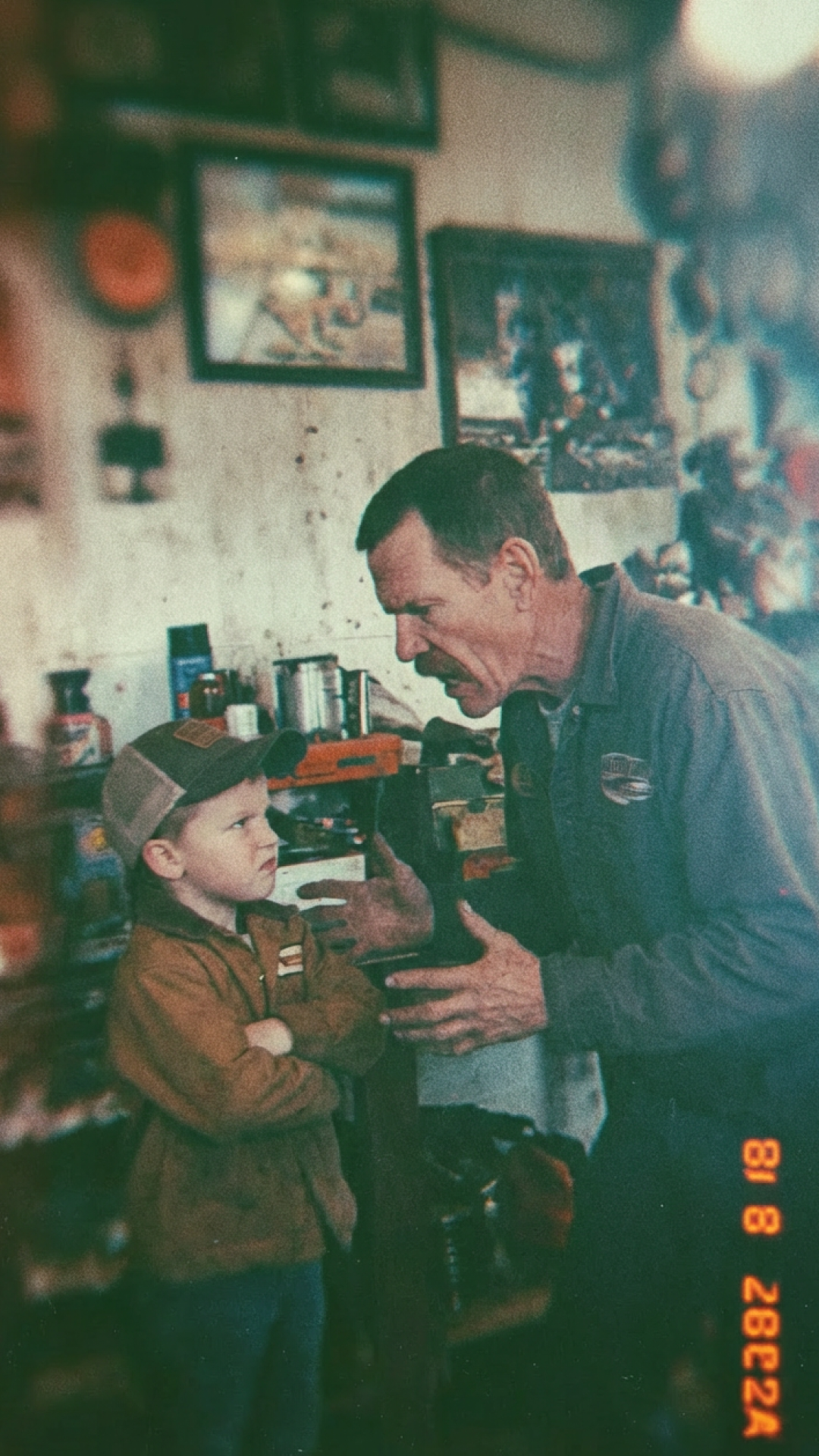
My wife asked me a question I couldn't answer. "Do you hear yourself when you talk to him?" Saturday morning. Garage. The conversation I'd been avoiding. At 48, I thought I was doing fine as a dad. Involved. Present. Not like my old man, who showed love through silence and showed anger through everything else. I coached Little League. I helped with homework. I showed up. But last month, my wife looked at me in the garage after the kids went inside and asked a question that stopped me cold: "Do you hear yourself when you talk to him?" I didn't say anything. Because I knew exactly what she meant. And I wasn't ready to hear it. Here's what happened. My 11-year-old forgot his cleats. Again. Third time this season. We were already running late, and when he told me, I felt that heat behind my eyes. That tightness in my jaw. "How many times do we have to go through this? What is wrong with your brain?" I didn't yell. Not technically. But the tone. The sigh before I spoke. The way I looked at him like he'd failed some basic test of being human. He didn't say anything. He just looked at the ground. And I watched his shoulders curl in. The same way mine used to when my father walked into the room. My wife saw the whole thing. She didn't say anything until the kids were inside. Then she turned to me in the garage and asked that question. Do you hear yourself? And the worst part? I did. I heard myself perfectly. I sounded like my dad. Same tone. Same disappointment dressed up as "teaching a lesson." Same way of making a small mistake feel like a moral failure. I swore I'd never be that guy. And there I was, forty-eight years old, becoming him anyway. I always thought patterns were things you could just… decide not to repeat. Like if you knew better, you'd do better. But knowing doesn't touch the part of you that reacts before you think. The part that floods with heat when something goes wrong. The part that speaks before you've chosen the words. That's not a decision. That's wiring. And my wiring was installed by a man who thought toughness was the same thing as love. I tried the stuff you're supposed to try. Counting to ten. Walking away. Reminding myself he's just a kid. But here's what nobody tells you: when your body is already in threat mode, your brain doesn't hear those reminders. It's too busy preparing for danger. Every time my son made a mistake, my nervous system treated it like a problem to solve immediately. Like something was wrong that needed to be fixed with force. I wasn't parenting. I was reacting. And the space between those two things? I didn't even know it existed. My wife sent me a link one night after the kids were asleep. "Just look at it," she said. "I'm not saying you're broken. I'm saying maybe there's a reason this keeps happening." I almost didn't click. Another app. Another thing promising to fix me in 30 days. Another reminder that I was failing at something I was supposed to figure out on my own. But I kept seeing my son's shoulders curl in. So I took the quiz. The questions weren't what I expected. Not "do you yell." But do you catch yourself reacting the way your parents did? Do you feel guilty about how you show up for your kids? Yes. And yes. Then this one: Does your child mirror your stress during tense moments? I thought about my son. How he gets quiet when I'm frustrated. How he disappears into his room when the energy shifts. How he's already learned to manage my emotions. He's eleven. And he's already learned that from me. The results explained something I'd never had words for: reactive parenting isn't a character flaw. It's a nervous system pattern. And patterns can be interrupted. Liven calls their method the Micro-Cycle Method. Five minutes a day. Not a program. Not a course. Just small interruptions that help you notice the moment before you react. I didn't expect it to work. Felt too simple. But by week two, something cracked open. My son forgot to take out the trash. I felt the surge start — that familiar heat. But this time, I noticed it before it became words. I took a breath. Not a forced one. Just… a pause I didn't know I had access to. "Hey bud, trash." That was it. No tone. No sighing. No look. He said "oh, right" and went to grab it. And then — I swear — he looked at me and smiled. Like he was relieved. Like he'd been bracing for something that didn't come. Week four: I apologized to him. Not for anything specific — for the pattern. For the times I made small things feel big. For the voice I didn't want him to inherit. He didn't say much. But he hugged me. And he doesn't usually do that. Week eight: My wife noticed I wasn't "powering up" before I talked to the kids. Her words. She said I seemed like I had more room. Week twelve: My son made a mistake at practice. Dropped an easy catch. And instead of going quiet, he laughed at himself. He laughed. He wasn't bracing. He wasn't curling in. He was just a kid who dropped a ball. That's when I knew the pattern was breaking. I'm not a perfect father. I still have hard days. The old voice still tries to come out, especially when I'm tired. But my son doesn't flinch when I walk into the room anymore. He talks to me now. About real stuff. Not just safe stuff. And I finally feel like I'm building something with him instead of just managing him. If you've ever caught yourself sounding like someone you swore you'd never become — if you've seen your kids adapt to your moods instead of feeling safe in them — You're not broken. You're not a bad dad. You're running on wiring that got installed before you had any say in it. But you have a say now. Not to fix you. To finally become the father your kids already think you can be.
THIS is what you need to do
LEARN MORELike this ad? Make it yours.
Crush rebuilds this exact creative around your product — your brand, your colors, your offer — in about a minute.


