
Inactive· since May 22, 2026
- 37
- days it ran
- 5
- relaunches
Ad copy
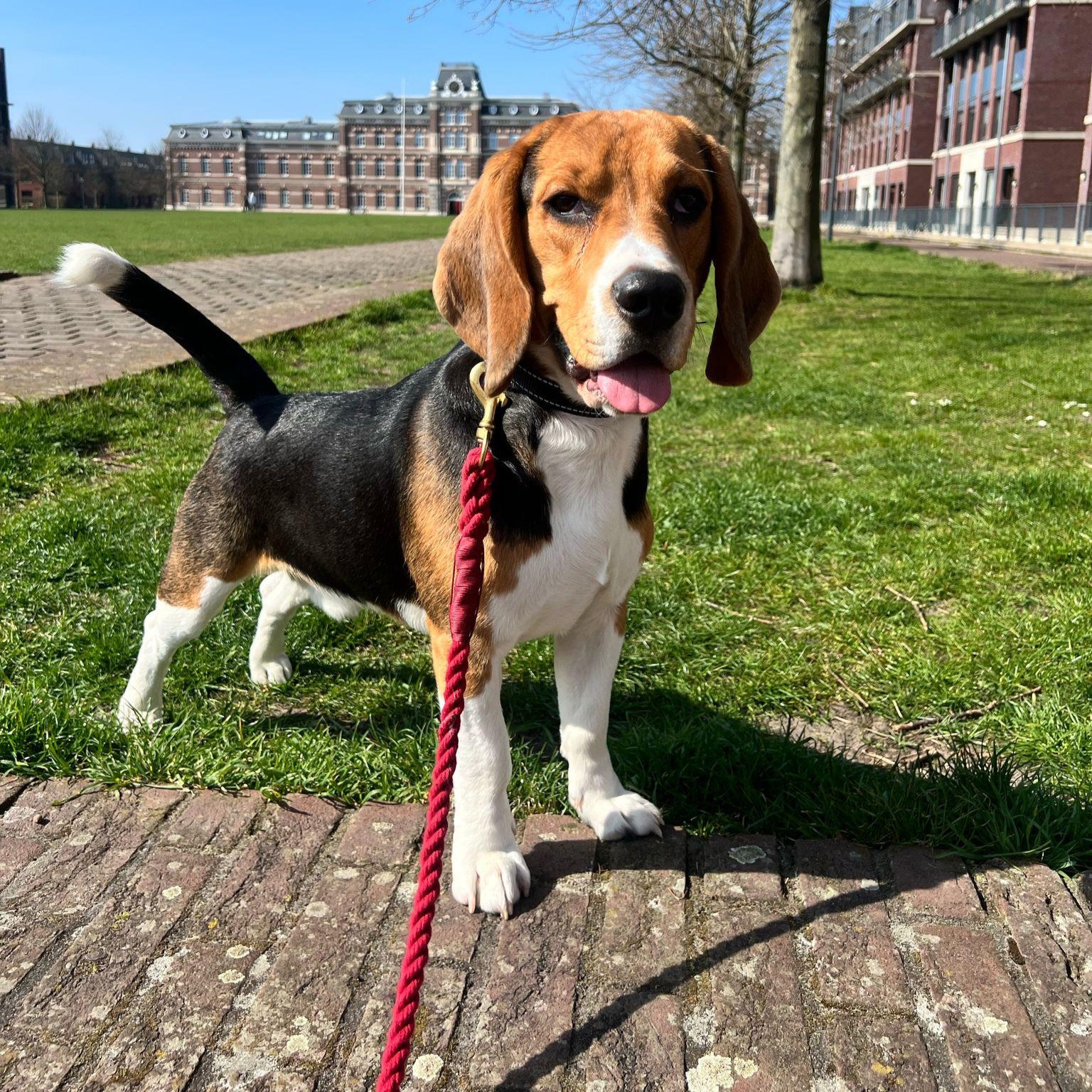
I had to hire a 19-year-old college kid to walk my own dog last March, and I'm still not over it. His name is Brendan. He's a sophomore at Duquesne. Lives in an apartment above the deli on the corner of Bellefonte and Walnut. Charges 15 dollars a walk. Has a Venmo handle that's just his first name and three random numbers. I found him on a flyer thumbtacked to the corkboard at the coffee shop on Murray Avenue, between an ad for a guitar teacher and a lost cat poster that had been up so long the tape was yellow. I took the flyer down. Walked it home in my coat pocket like it was contraband. Stood in my kitchen for 20 minutes before I made myself dial the number. Because the dog on the other end of the leash, the one Brendan was going to be walking, was Murph. And Murph is mine. I retired from the post office four years ago after 31 years carrying mail in Squirrel Hill. Same route. Same houses. Same dogs barking at me from the same porches. I walked an average of 11 miles a day in all weather for 31 years. My knees were the joke of the breakroom. People used to say I had the knees of a 30 year old at 50. I had the knees of a 50 year old at 60. And then somewhere in there, something changed, and the joke stopped being funny, and the knees stopped being mine. I'm Maureen, by the way. I'm 61. I live in a row house on a steep street in Pittsburgh that my husband Bill and I bought in 1989 for 47,000 dollars and a handshake. Bill died in 2018. Pancreatic. Eleven weeks from the diagnosis. He didn't suffer long and I'm grateful for that even when I'm not. Murph is a tri-color beagle I got six months after Bill died because the silence in this house was going to kill me before grief did. He was a year old when I got him from a rescue out in Beaver County. He'd been found wandering on a country road with a notched ear and a limp that healed on its own. He's eight now. Sixty pounds of stubborn nose and good intentions. For the first four years I had him, Murph and I walked the loop. The loop is what I call the route around the neighborhood that goes down Bellefonte, across the bridge, up the hill past the synagogue, and back along Wightman. It's about a mile and a quarter. It takes 25 minutes if Murph doesn't find anything interesting and 45 minutes if he does. We did the loop twice a day. Morning and evening. 7:30 in the morning, the streetlights still humming. 6:15 in the evening, the lights coming back on. For four years. That's around 2,920 walks, if you want to count it that way, which I do, because I have a lot of time on my hands now and counting is one of the things I do. I want you to understand what the loop meant to me, because the loop is the whole story. When Bill died, the loop was the thing that got me out of the bed every morning. Murph needed to go. So I went. Some mornings I'd cry the whole way around and Murph would just trot along like nothing was happening, which was the right thing for him to do. The loop was where I figured out what to do with the rest of my life. Where I made friends with my new neighbors. Where I learned which dogs on the block were friendly and which ones to cross the street for. Where I had a 20 minute conversation with a man named Howard who turned out to be the principal of the high school I'd graduated from in 1982 and didn't remember me. Where I watched four seasons turn into each other twice a year, every year, for four years. The loop was my life. It was the only part of my retirement that felt like something. And then about two and a half years ago, the loop started getting harder. It wasn't sudden. That's the part I want you to hear. Nothing about this was sudden. It started with the hill on Wightman. There's a stretch about three-quarters of the way through the loop where the sidewalk pitches up for maybe 200 feet. Steep enough to make you breathe through your nose. Not steep enough to call a hill, really. One morning, around two and a half years ago, I got to the bottom of that stretch and my knees said no. Not pain, exactly. Just no. A heavy, mechanical no. Like a door that won't open past a certain point. I stopped. Murph looked back at me. I told myself I was just having an off morning. Probably slept funny. Probably need to drink more water. I turned around. Did the loop the other way. Skipped the hill. The next morning I went the regular way again. The knees said no again. I turned around again. Within about six weeks I'd stopped doing the hill at all. Just looped the bottom half of the loop. Down Bellefonte, across the bridge, back along the flat part of Wightman. About 30 minutes less walking. Murph didn't seem to mind. I told myself he didn't mind because that's what I needed to tell myself. The knees kept getting worse. It wasn't always the same knee. It wasn't always the same kind of bad. Sometimes it was a deep ache that lived in the cap and didn't move. Sometimes it was a hot, sharp thing on the inside of the joint that made me wince when I stepped down off a curb. Sometimes it was a stiffness when I stood up from the couch that took 14 or 15 steps to walk off. I went to my doctor. She's a nice woman. Younger than me. Smart. She listened to me describe my knees and she nodded and she said the word I knew was coming. "Maureen, some of this is just wear and tear." Wear and tear. That's the phrase, isn't it. That's the phrase they reach for when they don't have anything else to offer you. As if your knees are a pair of shoes. As if you've worn them down with all that unreasonable walking. As if walking, the thing humans were specifically designed to do, was the problem. She gave me a prescription for an anti-inflammatory and told me to ice them at night and to consider losing 12 pounds. I left her office in the rain and sat in my car in the parking lot and I thought, "I am going to lose Murph." Not lose him. I knew he wasn't going anywhere. He was eight years old and healthy as a horse. But I was going to lose what I had with him. The loop. The walks. The mornings and evenings. The only structure my retirement had. I tried everything. I want you to know I tried everything. Glucosamine. Chondroitin. Turmeric capsules from the Whole Foods on Centre. A pair of compression sleeves I ordered off Amazon that looked like sock puppets. A heating pad. An ice pack. A neoprene knee brace that smelled like rubber and made my skin itch. I tried a thing called collagen powder that I put in my coffee for two months and tasted like the inside of a tackle box. I tried physical therapy at the place over by the dental school. The therapist was a nice young man named Anthony who had me do squats holding onto a railing and clamshells lying on a mat. After eight sessions my knees felt about the same as they did before, and the co-pay was 35 dollars a visit, and I stopped going. I tried a cortisone shot in the left knee in October of 2023. It worked for about five weeks. Then it didn't. Then I was right back where I started, plus 740 dollars poorer. By Christmas of that year, I was doing about a quarter of the loop. Just down to the bridge and back. By March of 2024, I wasn't doing the loop at all. I was opening the back door, letting Murph into the yard, and standing on the porch with a coffee while he sniffed around the chain link fence for ten minutes and then came back inside. That's not a walk. That's a urine break. Murph knew the difference. He'd look at me with those long brown beagle eyes from the bottom of the porch steps, and I would feel something I cannot describe to you in any way that does it justice. I felt like I was failing him. That sounds dramatic. I know. He's a dog. He doesn't keep score. But I knew. I knew what I'd promised him when I picked him up from that rescue six months after Bill died. I'd promised him I would walk him. I'd promised him a life. I had walked through three decades of Pittsburgh weather for strangers' mail and I could not walk my own dog around a single block. That's when I called the flyer. Brendan came over on a Tuesday. He was tall and skinny and had the kind of polite hesitancy that 19 year olds have around women old enough to be their grandmother. He shook my hand. Said he'd been walking dogs since high school. Loved beagles especially. Had a Lab back home in Erie. I gave him Murph's leash. The good leather one with the brass clip that I'd bought five years ago from a leather shop in Sewickley. I handed it to a teenager. And then I stood at my own front window with my hand on the curtain and I watched a college sophomore walk my dog around my block. That was March 4th. I cried for an hour after they came back. Brendan didn't know. He'd already left. Took his Venmo payment and walked back up the street toward his apartment with his earbuds in. I sat on the bottom step of my staircase and I cried until I'd given myself a headache, and then I called my sister Bernadette in Erie and I told her what had just happened. Bernie is 64. Three years older than me. She's a retired ER nurse. She does not put up with self-pity from anyone, including herself. She listened to the whole thing. She let me cry. She didn't interrupt. And when I was done, she said, "Maureen. Can I tell you about something I started taking nine months ago that I think you should look into." That was the turn. I want to tell you what Bernie told me because this is the part where the whole story changed, and I want to give you the same chance I got. Bernie had been having problems with her hands. Specifically her right thumb and her index finger. She's a nurse. She'd spent 38 years jamming IV's into people and writing chart notes and doing the thousand small motions of nursing, and her hands by 62 were paying the bill. She told me she'd tried everything I'd tried. Glucosamine. Turmeric. The shots. The braces. The whole drugstore aisle. She'd been told it was wear and tear by three different doctors. And then her hairdresser, a woman named Jeena who'd been doing Bernie's hair for 11 years, mentioned a fruit her grandmother had used in India for joint pain. Bernie laughed when she told me she laughed when Jeena said it. A fruit. For 38 years of nursing damage. But Bernie is a nurse. She doesn't dismiss things. She goes home and reads. And what she read about amla changed how she thought about her hands. Here's what she told me, and here's what I went home and read for myself that night, and here's what I think might be the most important thing you read this week if you're in any version of my story. The cells in your joints, the ones that maintain cartilage, the ones that keep the joint lubricated, the ones that manage inflammation when things flare up, those cells need cellular energy to do their job. Cellular energy is made by your mitochondria. Your mitochondria are little power plants inside every cell in your body. When you're young, your mitochondria work great. The cells in your joints get all the cellular energy they need. They keep your cartilage healthy. They keep the inflammation managed. The joint stays the joint. But over decades, modern life wears mitochondria down. Processed food. Stress. Pollution. Bad sleep. The plain old grinding of aging. Mitochondria don't work as well at 60 as they did at 30. They produce less cellular energy. And the cells in your joints start running on a deficit. When the cells in your joints can't keep up, the cartilage starts to thin. The lubrication drops. The inflammation that should resolve in 48 hours starts to linger for weeks. The joint starts breaking down. That's not wear and tear. That's an energy problem. And every single thing I'd tried, every single supplement and brace and powder, was addressing the joint from the outside. Trying to patch the cartilage. Trying to numb the inflammation. Trying to wrap the knee. None of them did anything for the mitochondria. Bernie said it to me like this. "Maureen, you spent 31 years delivering mail to houses. Imagine you were trying to deliver mail to a house with no electricity. You can keep showing up. You can keep dropping off envelopes. But nothing inside the house is going to work, because the power is out." That hit me in the chest. The power was out in my knees. Amla, Bernie told me, supports a pathway in your body called AMPK. AMPK is one of the master switches your body uses to support mitochondrial function. When AMPK is active, mitochondria can produce cellular energy more efficiently. The way they used to. The way they did when I was 30 and walking 11 miles a day in the snow. And when the mitochondria are working better, the cells in your joints get the cellular energy they need to do their job. They can work on maintaining cartilage. They can manage inflammation the way they used to. They can keep the joint lubricated. The joint isn't being "fixed." That's not the word. The joint is being supported by cells that finally have the power to do what they're built to do. That was the moment something cracked open in my head. I'd been treating my knees like they were the problem. The knees weren't the problem. The knees were the symptom. The cells inside the knees were running on empty. Bernie told me about Alevia. She'd been taking Alevia's Amla for about six months at that point. She told me, in her flat ER-nurse voice, that her thumb had stopped clicking. That she'd started knitting again, which she hadn't done since 2019. That she'd done a 14-hour drive down to Charleston in October without her right wrist seizing up at the wheel. She told me to go to alevia.com/amla/33 and order it. I did. I ordered two bottles. Bernie told me to order two because shipping was free past a certain amount and because I was going to want a backup. The bottles came on a Thursday. I started taking it Friday morning. Two capsules with my coffee. Week one, I didn't notice anything. Bernie had warned me. She said the mitochondria don't turn back on overnight. They have to be supported into doing it. Week two, I noticed I was getting up from the couch without doing that little brace-against-the-armrest thing I'd been doing for two years. Just standing up. Week three was the first time I made it to the bridge and back without stopping. About a quarter of the loop. The first walk I'd done with Murph in nine months. Murph knew. He knew before I knew. He started bringing me the leash again every morning around 7. He'd stopped doing that two years ago, around the same time I stopped being able to do the loop. He just knew. Week five was the first time I went up the Wightman hill in 22 months. I stopped at the top. Not because my knees stopped me. Because I needed to cry for a minute and I didn't want to cry while I was walking. Murph sat down next to me. Looked up at me with those long brown beagle eyes. Like, "took you long enough." I'm 14 weeks in now. I do the full loop twice a day. I haven't called Brendan since April. He sent me a friendly text in May asking if I needed him to start back up for the summer, and I told him no, that I was doing better, that I hoped his finals had gone well. He sent back a thumbs up and a beagle emoji. I want to tell you something now that I want you to think hard about, because I think this is the part most women like me need to hear. If you are watching yourself shrink, if you've gotten used to the smaller version of your life, if you've quietly stopped doing things you used to love because the body that used to do them stopped cooperating, please listen to me. Your body is not broken. Your cells are running out of power. That's a different problem than "wear and tear." A very different problem. Because wear and tear sounds permanent, and that's the lie we've been sold for 40 years by doctors who don't know what to tell us at the end of a 12 minute appointment. The cells in your joints can still do what they were designed to do. They just need the power back. They need the mitochondria to come back online. And mitochondria can come back online when you support them properly. That's what Alevia's Amla does. It supports AMPK. AMPK supports mitochondria. Mitochondria support the cells. The cells support the joints. The joints support you. It's a chain. And every link in that chain is something your body already knows how to do. You just had to start the chain again. You're not too old. I was 61 and walking down the steps sideways like a crab. I'm 61 now and I do 2.5 miles a day with a beagle who forgives me for the 14 months I let him down. If you've got a Murph, if you've got a loop, if you've got something you've quietly given up on because your knees or your hips or your hands stopped showing up for you, please. Go read about Alevia. alevia.com/amla/33 They have a 90 day money-back guarantee. Take it for 90 days. If your body doesn't come back online, send it back and get every penny back. Every one. No questions. Think about what that says. Nobody offered me a refund on the cortisone shot. Nobody offered me a refund on physical therapy. Nobody offered me a refund on the 22 months I lost with my dog. Alevia does refunds. That tells you who's standing behind their product and who's just standing behind their copay. You're risking nothing. Murph is sleeping on the rug behind me as I type this. He's snoring like a small lawnmower. We did the loop this morning. We're going to do it again at 6:15. Don't lose your loop. 👉 alevia.com/amla/33 P.S. With me, it was small things first. Standing up from the couch without the brace. Going down the steps without sideways crab walking. Squatting to clip the leash without the deep ache. Then bigger things. The bridge. The hill. The full loop. You won't notice it all at once. You'll notice it the way you notice the days getting longer in February. Not the change itself. The fact that the change has been happening, and you didn't realize until you stopped to look. P.P.S. Alevia's Amla has a 90 day money-back guarantee. 90 days. Three months. That's longer than most of us made it with glucosamine before giving up. If your hands or your knees or your hips haven't started coming back online in 90 days, every penny back. The cortisone shot didn't come with a guarantee. The physical therapy didn't come with a guarantee. The brace from Amazon didn't come with a guarantee. Alevia does. Confidence shows up in policies. P.P.P.S. Alevia is a small American company and they sell out. Bernie told me this and I didn't believe her until I went to reorder my second bottle and there was a note on the page saying their last batch had moved faster than expected. I keep two in the cabinet now. One open, one waiting. Because I'm not going back to standing on my porch watching a 19 year old walk my dog. I'm not going back to the smaller version of my life. If you've been considering this for any length of time, go now. They currently have a buy 3 get 2 free deal that I used to stock up. The cells in your joints have been running on a deficit for years. Every week you wait is another week the deficit gets deeper. P.P.P.P.S. Do not forget about the 90 day money-back guarantee. You're risking nothing. I was risking the rest of my life with my dog. 👉 alevia.com/amla/33
Like this ad? Make it yours.
Crush rebuilds this exact creative around your product — your brand, your colors, your offer — in about a minute.