Linda Morrison
Linda Morrison Facebook ad: “Feel Like Yourself Again”
Ran for 2 days, from August 7 to August 9, 2026, the last day Crush saw it.
Run by Linda Morrison on Facebook. Crush is not the advertiser and does not verify its claims. See this ad in Meta's Ad Library(opens in a new tab)
Want an ad like this for your product?
Crush makes new ad images for your product from this ad: your logo, your product photo, your offer.
Trials from $19.95 USD, then $79.95 USD a month. Cancel anytime.
About this ad
- Meta Ad Library ID
- 2155665918393056
- Platforms
- Facebook, Instagram, Audience Network, Messenger, WhatsApp and Threads
- Relaunches
- 0
- Niche
- Hair Care
Ad text
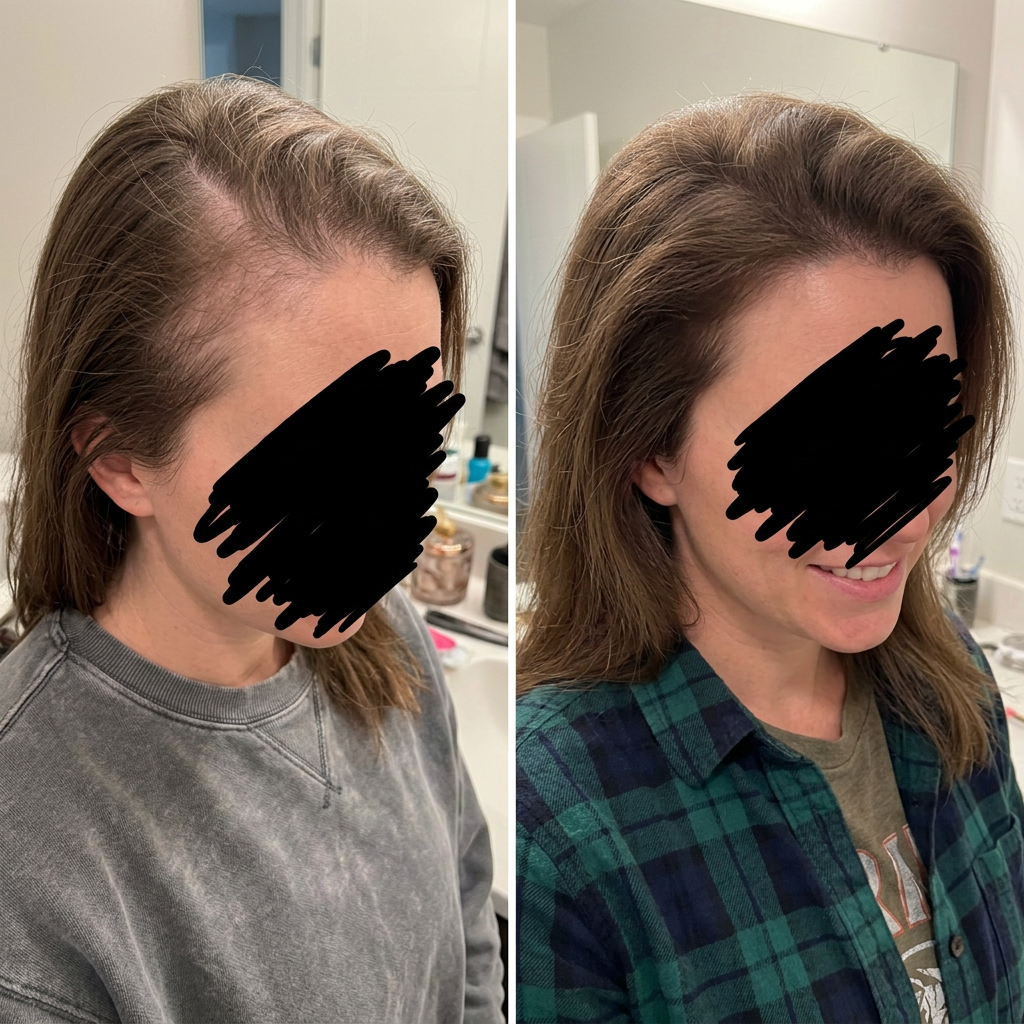
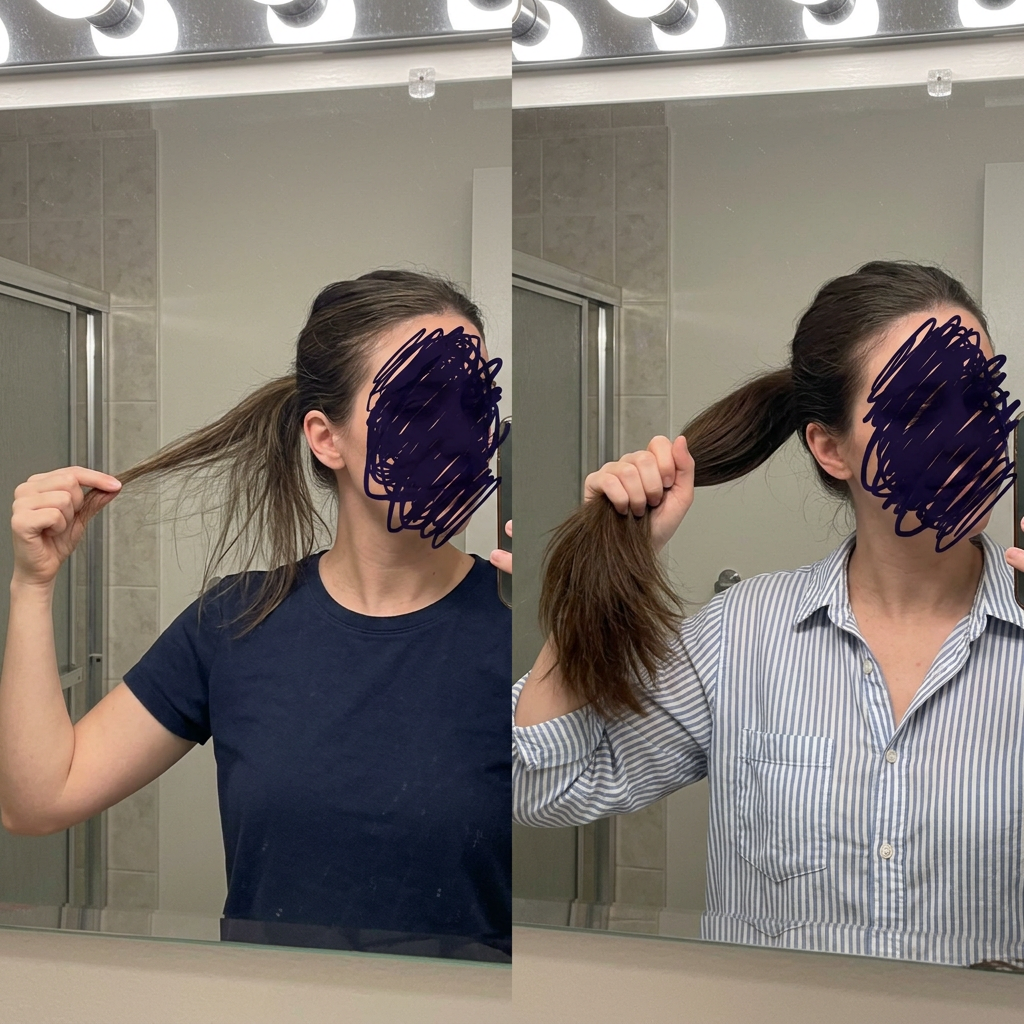
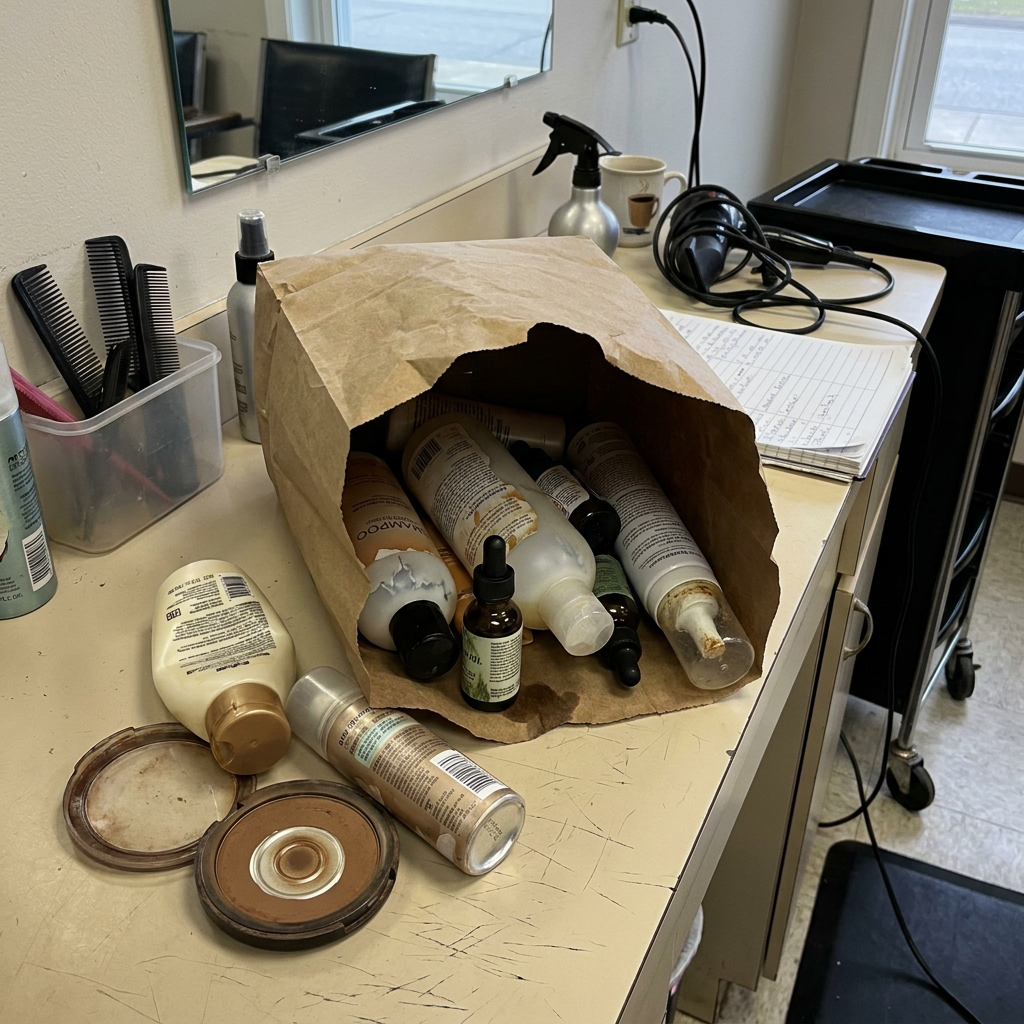
One of my clients brought 9 half-used hair products into my salon in a grocery bag and asked which one was making her hair look thinner. The bottom of the bag was dark from leaked rosemary oil. One shampoo bottle had a peeling label. The cap on the scalp serum was crusted shut. There was root powder pressed into the corner of the bag and a fine brown dust across everything inside it. Ruth placed the bag on my counter and started removing the products one by one. Two shampoos. Rosemary oil. Scalp serum. Volumizing mousse. Dry shampoo. Thickening conditioner. Root powder. Clarifying scrub. Hairspray. Technically, that was 10. She had forgotten the hairspray was still in there. She lined everything up beside my register, looked at me and asked: “Which one of these is making it worse?” I had been cutting Ruth’s hair for nearly 20 years. I had never heard fear in her voice like that. My name is Linda Morrison. I am 61 years old, and I have been doing hair since I was 19. I own a small 2-chair salon beside a florist in a town outside Columbus, Ohio. There is nothing glamorous about it. The cabinets are older than some of my clients. The styling chairs squeak when I turn them. There are 3 mismatched seats in the waiting area and a coffee machine that has made terrible coffee for 14 years. I keep peppermints beside the register. An oldies station plays near the shampoo sink. The wall calendar comes free every January from the insurance office across the street. Most of my clients have been coming to me long enough that I know their children, medications and divorce history before I know what haircut they want. I have watched women get married. Have babies. Lose parents. Become grandmothers. Recover from surgeries. Go gray. Stop coloring. Start coloring again. Hairdressers notice changes people do not always say out loud. We notice when someone moves her part farther to one side. We notice when she asks for shorter layers even though the shorter layers are no longer helping. We notice when she begins arriving with root powder already pressed into the scalp. We notice when she asks whether the light above the chair has always been that bright. We notice when she keeps the cape fastened while looking at the floor beneath her chair. And we notice when a woman who checked every angle of every haircut for 20 years suddenly refuses to look at the back. Ruth was 64 that spring. She had worn nearly the same chin-length haircut for as long as I had known her. Soft brown hair that gradually turned silver around her face. A slight bend at the ends. A side part that used to fall into place without much effort. She was never somebody who wanted a complicated style. Wash it. Blow it dry. Use a little spray. Get on with the day. But her appointments had changed over the previous few years. First, she asked me to move the part. Then she wanted shorter layers around the crown. Then more teasing. Then more mousse. Then stronger hairspray. Some appointments, the roots felt coated before I even turned on the water. I would shampoo once. Then twice. Sometimes a third time around the crown. The lengths felt dry, but the scalp still felt covered in something. Powder. Oil. Dry shampoo. Mousse. Hairspray. Sometimes all of them together. I asked what she had been using. She always laughed. “A little of everything.” I thought she meant she liked experimenting. The grocery bag showed me what “a little of everything” actually looked like. Ruth pointed to the rosemary oil first. “I started with this.” She said she had read that rosemary could support the scalp. She massaged it into her roots before bed. But by morning, her hair looked greasy and separated. The oil made the strands near her part group together into narrow sections. That exposed more pale scalp between them. So she bought dry shampoo. The dry shampoo helped absorb some of the oil, but it left a dull coating around the roots. Then the crown looked flat. So she added volumizing mousse. The mousse gave temporary lift, but it dried stiff. Then she noticed more scalp showing through the part. So she bought root powder. The powder darkened the exposed skin, but it collected where the hair had separated. Then she added hairspray to keep everything from moving. After several days, the roots felt heavy and coated. So she bought a clarifying scrub. The scrub removed the buildup, but the lengths felt rough afterward. So she bought a thickening conditioner. The conditioner softened the hair, but it made the crown sit flatter. Then she used more mousse. More powder. More spray. Then the roots felt coated again. She looked at the products across my counter. “I feel like I am making it worse every time I try to make it better.” That was exactly what was happening. Not because Ruth was careless. Not because every product inside the bag was automatically bad. Because none of them belonged to one clear routine. Each product was treating the problem created by the one before it. The rosemary oil made the roots look greasy. The dry shampoo covered the oil but added more material around the scalp. The mousse created lift but dried stiff. The powder hid the scalp but collected where the hair separated. The hairspray locked everything in place, including the coating. The clarifying scrub removed the coating but left the strands feeling rougher. The conditioner softened the lengths while making the crown sit flatter. Then the whole cycle started again. Ruth reached into the bag and pulled out a small brown compact. The plastic hinge was cracked. The center of the powder had been worn down to the metal base. She carried the same compact in every purse she owned. One in her church purse. One in the beige handbag she used for errands. One in the woven summer bag. One beside the bathroom sink. She said she checked her part in the passenger mirror before getting out of the car. She checked it beneath restaurant lights. In store windows. In the dark screen of her phone. In photographs taken from above. She knew which chair at church sat beneath the brightest fixture. She knew which seat at her daughter’s table kept the ceiling light behind her. She knew how far somebody could stand behind her before she felt exposed. I asked how long she had been doing all of this. She gave me the answer people give when the truth feels too vulnerable. “A while.” A while meant almost 5 years. It began after menopause with small changes. Her ponytail became thinner. The hair around the crown stopped holding volume. Her part looked brighter beneath overhead lights. The roots became oily faster, while the lengths felt increasingly dry. Some mornings, her hair looked reasonably full. Other mornings, the same amount of hair separated differently and seemed to reveal twice as much scalp. Those unpredictable days frightened her most. She could handle knowing exactly what her hair would look like. What she could not handle was getting ready for church, lunch or a family photograph and suddenly feeling like she had lost another month of ground overnight. “I do not expect the hair I had when I was 30,” she said. “I just want to stop losing ground.” I had heard versions of that sentence from women for years. They were not asking to become young again. They were asking why each month seemed to require a little more camouflage than the month before. More powder. A different part. A shorter cut. A darker color. Another bright light avoided. Another photograph deleted. Another product purchased. Another half-used bottle pushed beneath the sink. That is the emotional part of thinning hair people do not always understand. A woman can still have hair. She can look completely normal to everybody around her. And still be planning her entire day around what might expose the top of her head. Ruth had become trapped between 2 problems. The scalp underneath. And the increasingly fragile strands above it. When roots become oily, coated or weighed down, they separate into smaller sections. More scalp becomes visible between those sections. The part can look wider even when nothing dramatic changed overnight. At the same time, the strands around the crown can become finer, rougher and harder to manage as women get older. Those strands may tangle more easily. Sit flatter. Lose movement. Provide less visible coverage over the scalp. Then fear enters the routine. More scalp becomes visible. More powder gets added. More spray. More teasing. More oil. More washing. Stronger cleansing. More friction. More manipulation. The roots become coated again. The strands become harder to manage. The crown sits flatter. More scalp appears visible. The cycle tightens. I looked at the grocery bag and said the sentence I wish I had said to Ruth years earlier. “You keep adding things because you are scared. But the more you add, the harder it is for the hair you still have to move naturally.” Ruth stared at the bottles. Then she started crying. Not loudly. She wiped beneath one eye before the tear reached her cheek. She told me she had spent hundreds of dollars trying to solve one problem at a time. Something for the oil. Something for the dryness. Something for the scalp. Something for breakage. Something for volume. Something for the visible part. Something to remove everything else. But her bathroom shelf kept getting more crowded while her hair routine kept becoming harder. I had been doing hair for more than 3 decades. I knew how to cut around thinning. I knew how to create temporary lift. I knew how to blend color so a part looked softer. I knew how to tease a crown high enough to survive a church service. But the more I looked at Ruth’s bag, the clearer something became. She did not need another emergency product. The weak point was happening before the styling even began. The wash step underneath everything. I went home that evening and started reading. I read about scalp buildup. Oil balance. Product coating. Fragile strands. The way rough hair behaves compared with smoother, more flexible hair. The way coated roots stick together and expose more scalp between them. The way aggressive cleansing can leave aging hair feeling harder to manage. I was not looking for a miracle. I was looking for a routine that did not force Ruth to choose between coated roots and stripped-feeling strands. That was how I found Lunavo. I almost dismissed it when I saw rosemary. Ruth already had rosemary oil leaking through the bottom of a grocery bag. But this was different. It was not another oily layer she needed to add at night and disguise the following morning. It used rosemary water inside the cleansing step she was already doing. Then I read the rest of the formula. Zinc PCA. Piroctone Olamine. Arginine. Silk Amino Acids. Hydrolyzed Silk. A sulfate-free cleansing blend. What interested me was not one magical ingredient. It was that the formula made sense for both sides of the cycle I had been watching. The scalp needed to feel properly cleansed and balanced without being scrubbed aggressively. The strands needed to feel smoother, less rough and easier to manage. A cleaner-feeling root area could help the hair remain looser instead of collapsing into coated sections. Smoother, more manageable strands could create better-looking movement and coverage without as much teasing and spray. It was not promising to turn Ruth into the woman she was at 25. It looked like a more sensible foundation for the hair she had now. I ordered it. When it arrived, I called Ruth. She came into the salon the following morning. The grocery bag was still beneath my counter. I placed the Lunavo pouch beside the products. Ruth looked at it and said: “I already tried rosemary.” “I know,” I said. “This is not another oil.” I explained what I had been reading. I told her I did not want her adding Lunavo on top of everything inside the bag. I wanted her to simplify. Use Lunavo as her regular shampoo. Stop using the clarifying scrub for a while. Use less oil. Reduce the powder, mousse and spray when possible. Do not judge the routine after one wash. Do not photograph her part every morning. Do not count everything on the shower floor. Just notice how the scalp and hair behaved over time. She was skeptical. She had every right to be. Every bottle in the grocery bag had once felt like a fresh start. She took the pouch anyway. The first wash did not produce a miracle. Ruth called me the following morning. Her scalp felt clean. Her hair did not have the dry, squeaky feeling she normally noticed after clarifying. The brush moved through the lengths more easily. That was all. I told her to keep going. Two weeks later, she came in for a wash and blow-dry before her sister’s anniversary dinner. The first thing I noticed was that the roots did not feel as coated. Normally, I needed to shampoo twice before the crown felt properly clean. That day, one thorough wash was enough. The strands around the top moved more freely beneath my fingers. I dried her hair. Reached for the teasing comb. Ruth watched me in the mirror. Then she said: “Maybe not as much this time.” I used less. The crown still held its shape. At her next haircut, about 6 weeks after she started, I noticed another change. The hair around the crown felt smoother while I brushed it. Not thicker in some dramatic overnight way. Not transformed. Just easier to handle. The brush moved without catching repeatedly in the same sections. The roots were not separating as quickly while I worked. I used less mousse. Less spray. When I finished, Ruth looked at the front. I reached for the small hand mirror. She shook her head. “Not yet.” But she smiled when she said it. That mattered. At the following appointment, she arrived without root powder packed into her part. She still carried the compact inside her purse. She had used a little before church the previous Sunday. But she no longer felt like she needed it every morning. Her roots stayed fresher longer. The crown did not collapse as quickly. The strands felt less rough. The hair she still had was behaving more predictably. That was the real change. When hair becomes unpredictable, fear fills the gap. A woman wakes up wondering whether today will be the day her part suddenly looks wider. Whether the overhead light at lunch will expose it. Whether the wind will move the wrong section. Whether a photograph will reveal something the mirror did not. Predictability gives some of that control back. Ruth still had thinning. She still had gray roots. There was still hair in my brush and on the salon floor. But she was no longer responding to every normal strand like it was an emergency. By her third appointment, the grocery bag beneath my counter had been there so long that I nearly forgot about it. I pulled it out and asked whether she wanted the products back. Ruth sat in the styling chair and looked through them. She removed the root powder. The hairspray. One conditioner. Then she pushed the bag toward me. “You can throw away the rest.” I held up the rosemary oil. She laughed. “Especially that one.” I folded the top of the bag down and placed it beside the trash. That should have been the end of it. But I could not throw it away yet. That bag represented 5 years of fear. Every bottle had been purchased on a day Ruth believed she had finally found the thing that would stop her hair from getting harder to hide. Every half-used container was a small abandoned hope. I kept it beneath my counter for another month. Four months after Ruth first carried it into my salon, she came in for her regular appointment. It was a quiet Tuesday morning. The florist next door had left a bucket of sunflowers outside. The coffee machine was making the same terrible coffee. An oldies station played near the shampoo sink. Ruth sat beneath the brightest light in the salon. She did not ask me to move the chair. I washed her hair once. Trimmed the ends. Added soft layers around the crown. Used a small amount of mousse. Almost no teasing. A light mist of spray. Then I removed the cape. I began turning the chair slightly away from the mirror out of habit. Ruth placed her hand on the armrest. “You can turn me around.” I stopped. Then I rotated the chair until she faced the mirror directly. Ruth looked at the front. Touched the sides. Moved one section near the part. Then she picked up the small hand mirror herself. For the first time in months, she held it above her shoulder and checked the crown. She did not ask me to tease it higher. She did not reach for the powder inside her purse. She did not look down at the floor. She studied her hair for several seconds. Then she said: “That looks like my hair again.” I had to turn toward the counter because I did not want her to see my face. Hairdressers are supposed to stay calm. We are supposed to act like everything is routine. But I had watched this woman slowly disappear from her own reflection. I watched her stop checking the back. Stop sitting beneath bright lights. Stop trusting the hair she had. Stop looking at herself because she was too busy looking for evidence that things were getting worse. That morning, she looked. That was the result. Not perfection. Not a promise that every lost strand returned. Not the hair she had at 30. The freedom to turn toward the mirror again. After Ruth left, I picked up the grocery bag from beneath my counter. The rosemary oil had stained the bottom permanently. Brown root powder coated one corner. The peeling shampoo label had finally fallen off. I carried the bag to the trash. This time, I let it go. I have done hair for 31 years. I have seen products make hair shiny. Products make hair stiff. Products create temporary volume. Products cover gray roots until the next wash. But the biggest difference is often not what a product adds. It is what a better routine finally allows a woman to stop doing. Less powder. Less teasing. Less aggressive scrubbing. Less coating. Less fear. Ruth still comes every 6 weeks. She still asks for soft layers around the crown. She still carries root powder for special occasions. Some days her hair looks fuller than others. That is real life. But she no longer brings a grocery bag filled with emergency products. And she checks the back at every appointment. The routine Ruth uses is here: [https://trylunavo.shop/products/lunavo%C2%AE-renewal-shampoo](https://trylunavo.shop/products/lunavo%C2%AE-renewal-shampoo) I’ll leave it there for anyone whose bathroom shelf keeps getting more crowded while her hair becomes harder to manage. You may not need another product to place over the problem. You may need a better foundation beneath everything you have been using to hide it. Love, Linda Morrison Hairdresser for 31 years P.S. The first change Ruth noticed was not dramatic growth. Her roots stayed fresher and separated less quickly, while the strands felt smoother and easier to arrange. P.P.S. At Ruth’s last appointment, I handed her the small mirror before she asked. She checked the crown, smiled and said: “Perfect, as always.”
Where the ad sends people
trylunavo.shop
Feel Like Yourself Again
7 Reasons Women Are Obsessed with Lunavo's Rosemary Shampoo (Besides the Baby Hairs Coming Back) Struggling with thinning hair? Whether you're watching your part get wider, finding more strands in the shower drain every morning, or finally done with treatments that never delivered. Here's why thousa...
Learn more: trylunavo.shop(opens in a new tab)