Dr. Megan Foster
Dr. Megan Foster Facebook ad: “Elvarim Aged Garlic Extract - 7500mg Odorless Softgels”
Ran for 3 days, from September 4 to September 7, 2026, the last day Crush saw it.
Run by Dr. Megan Foster on Facebook. Crush is not the advertiser and does not verify its claims. See this ad in Meta's Ad Library(opens in a new tab)
Want an ad like this for your product?
Crush makes new ad images for your product from this ad: your logo, your product photo, your offer.
Trials from $19.95 USD, then $79.95 USD a month. Cancel anytime.
About this ad
- Meta Ad Library ID
- 2158709538048701
- Platforms
- Facebook, Instagram, Audience Network, Messenger and Threads
- Relaunches
- 0
Ad text
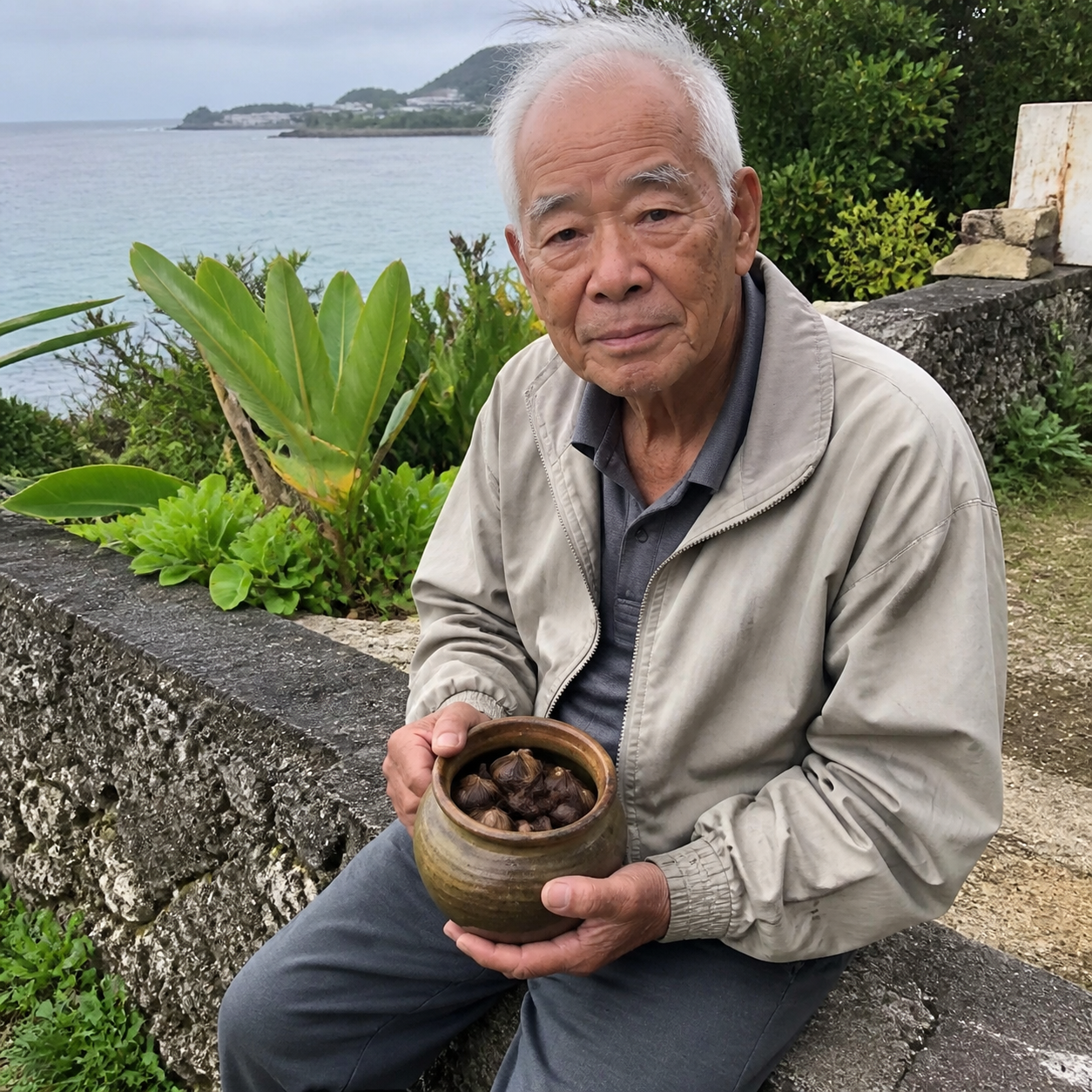
There is a village on the island of Okinawa where men forget to die. Not a saying. A fact researchers have been staring at for years. Men in their nineties still walking hills. Hundred-year-olds with boring blood pressure readings. Grandfathers carrying baskets while Western men half their age are frightened of the cuff. I flew there because I wanted to know what modern cardiology had missed. What I found was not a drug. It was a form. I'm Dr. Megan Foster. I spent twenty-four years in cardiology before I understood the one lesson modern medicine keeps stepping around. Old medicine was not always primitive. Sometimes it was patient. It knew how long things had to sit. It knew when heat ruined a compound. It knew when a plant had to be aged before the body would accept it. It knew the difference between an ingredient and the correct form of that ingredient. Modern medicine is brilliant at emergencies. It is brilliant at crisis. It is brilliant when someone is already in the ambulance, already on the ward, already attached to a monitor, already at the point where nobody is pretending the problem is small. But long before that point, most patients live in the quiet middle. Their blood pressure is creeping. Their hands are cold. Their energy is fading by three. Their GP says, "We'll keep an eye on it." Their prescription list grows politely. Their cuff becomes part of the furniture. And they are left with the private fear that they are not preventing anything. They are simply waiting to find out how bad it gets. That was the fear that sent me to Okinawa. Three years before I went, I had become one of the patients I used to warn. Blood pressure: 156 over 96. Cold hands at my desk. A tight, heavy feeling after climbing the stairs to my study. The kind of afternoon crash that makes you read the same paragraph four times and still not know what it said. My GP was calm about it in the way British GPs are calm when the numbers are not yet dramatic enough to make the room change. "We should keep an eye on this," he said. Then he talked about the next step if the readings stayed there. I knew exactly what the next step meant. I had written about it. I had taught it. I had defended it. And still, when it was my arm inside the cuff, the room felt smaller. I left the surgery with a printout, a plan, and the same quiet terror I had seen on patients' faces for years. Because I knew that managing the number was not the same thing as understanding why the number had started climbing. That is when I went back to the old texts. Not the romantic parts. The repeated parts. The parts different cultures kept discovering in different language. Garlic for the blood. Garlic for the pulse. Garlic for the hardening of the channels. Garlic not as a flavour, but as a daily vascular food. And almost every serious reference had the same buried instruction. Do not use it raw and harsh. Age it. Soften it. Change the form. Because the numbers were too strange to ignore. Men in their eighties still walking uphill after breakfast. Women in their nineties carrying shopping through streets that would exhaust half my patients. Families with blood pressure readings that looked almost boring. The kind of boring every cardiologist wants for the people they care about. I went there after reading the same pattern across old records again and again. Ancient Chinese physicians writing about ageing garlic before winter. Japanese household records describing dark, softened garlic kept in clay jars. European medical texts treating garlic as a circulation food long before anybody had a blood pressure cuff. And then modern papers pointing back to aged garlic extract, not raw garlic, when the conversation turned to circulation, oxidative stress, endothelial support, and healthy blood pressure. The same lesson kept appearing. Garlic was never the whole story. The form was. That was what I was still trying to understand when I met Takeo. He was a hundred and one years old. Thin, upright, stubborn in the way very old men become when they have outlived nearly everyone who once told them what to do. He walked faster than I did. That annoyed me more than I expected. He took me past stone walls, narrow gardens, low houses, and the kind of hills that make you aware of every year you have spent sitting at a desk. I asked him what his doctor said about his health. He shrugged. "The doctor says I am boring." I asked what he meant. "Blood pressure. Heart. Walking. All boring." Then he laughed. "Boring is good when you are old." His blood pressure was 114 over 72. He had never taken a blood pressure tablet. He had never taken a statin. He had never owned one of those plastic pill boxes with the days printed across the top. I had spent most of my adult life reading about men like him. I had almost never met one. That evening, he took me into his kitchen and opened a clay jar from the back of a cool shelf. The smell hit me immediately. Sweet. Earthy. Garlic, but not the sharp raw stink Western patients complain about. This was darker. Softer. Almost balsamic. "Ninniku," he said. Garlic. But not raw garlic. Aged garlic. The cloves had been kept slowly, patiently, until the bite had changed into something his family could use every day without punishment. He told me his mother had made it. Her mother had made it. Every winter, every year, before he was old enough to understand why. I asked him what it was for. He looked at me like I had asked what breathing was for. "For the blood." That was all he said at first. For the blood. Then he tapped his wrist. "If the blood moves easily, the heart does not have to fight." I have heard professors take forty minutes to say less than that. What Takeo was describing in kitchen language was the same mechanism I had spent years seeing in the literature. Blood vessels are not pipes. They are living tissue. They have a lining. The endothelium. That lining helps the vessel relax, respond, widen, and handle pressure without forcing the heart to push through rigid walls. When age, oxidative stress, poor diet, years of elevated pressure, and modern living wear that lining down, the system changes. The vessels become less flexible. The heart pushes harder. The cuff number rises. The patient gets told to monitor it. Then to medicate it. Then to add something else when the first thing is not enough. But the old cultures were not waiting for the cuff. They were feeding the vessel story before the number became frightening. That is what modern patients lost. And that is why so many of them try garlic and get nothing except disappointment. They buy raw garlic powder. They swallow harsh capsules. They get reflux. They get breath. They get burps that make every meal feel like a punishment. Then they say, "Garlic does not work." But Takeo's family was not taking raw garlic powder. The old physicians were not writing about garlic dust stuffed into a capsule. The research I kept returning to was not built around supermarket garlic tablets. It was aged garlic extract. That difference is not cosmetic. It is the whole mechanism. When garlic is aged properly, the harsh unstable compounds change. They become gentler, more stable compounds. The one that matters most here is S-Allyl Cysteine. SAC. That is the compound that kept showing up in connection with circulation support, antioxidant activity, endothelial support, and healthy blood-flow support. In other words, the old jar and the modern research were pointing in the same direction. The form changes the conversation. I thought about every patient I had seen in Britain who told me they had tried the natural route. Beetroot. Magnesium. CoQ10. Fish oil. Raw garlic capsules from Boots. Walking every morning. Less salt. Less wine. More water. Still, the cuff kept climbing. Still, the cold hands. Still, the afternoon heaviness. Still, the private fear every time the GP said, "Let's review it again in three months." They were not missing effort. They were missing the right target. And when they tried to target it, they used the wrong form. After Okinawa, I stopped treating aged garlic extract like an old wives' tale. I started treating it like one of the few traditional ideas that modern science had finally learned how to explain. Not raw garlic. Not garlic breath. Not cloves chewed before breakfast. Aged garlic extract. SAC. The vessel lining under the number. That is the chain. I know because I made the same mistake my patients made. Before Okinawa, I bought ordinary garlic capsules from the chemist. Raw garlic powder. Three weeks. Every morning. I got breath. I got reflux. I got the kind of burps that make you stop speaking halfway through a sentence. My cuff did not give me any reason to keep going. So I nearly wrote garlic off. That is the embarrassing part. I was a medical historian, and I still confused the ingredient with the form. After meeting Takeo, I stopped guessing. I found a proper aged garlic extract. I checked for S-Allyl Cysteine. I stopped chasing raw garlic smell and started looking for the stable compound. I took it every morning with breakfast. As the one missing support layer I had never taken seriously enough. The first thing I noticed was not a dramatic number. It was my hands. They were not freezing on the keyboard by noon. Then the afternoon heaviness changed. Changed. The day stopped feeling like it was slowly closing in on me. By the second month, I was no longer avoiding the cuff. That mattered more than I expected. Because when a person stops being afraid to look at the reading, something has shifted under the fear. My GP noticed the trend at the next review. He looked at the home readings, looked back at me, and said, "Whatever else you are doing, keep doing it." That sentence stayed with me because it was the same sentence I had heard from colleagues when patients brought in logs that finally stopped moving the wrong way. A pattern. The right form, used long enough for the body to notice. The problem, of course, is that almost nobody is going to make aged garlic in a clay jar every winter. Takeo could. His mother could. His grandmother could. But my patients in Leeds, Manchester, Birmingham, Bristol, Glasgow, and London are not living that life. They are leaving early. They are sitting too long. They are eating too quickly. They are reading their NHS app at midnight and pretending they are not scared. They need the right form in a modern routine. That is why I point people toward Elvarim. Elvarim uses 24-month aged garlic extract. Not raw garlic powder. Not a harsh capsule that repeats on you until lunchtime. Not the kind of garlic supplement that makes your partner move away from you in bed. Twenty-four months of ageing. SAC-centred. Odourless softgels. One daily routine for cardiovascular, circulation, antioxidant, and healthy blood-flow support. That is the version that finally makes sense to me. Same ingredient family. Correct form. Better container. When I first saw the Elvarim spec, I thought about Takeo turning the softgel over in his hand. Twenty-four-month aged garlic extract. SAC-centred. Odourless. No raw powder. No harsh kitchen punishment. No pretending the smell is the benefit. He would not have cared about the marketing. He would have cared about the form. "Same idea," I imagine him saying. "Better container." Takeo would have understood that immediately. He did not care about branding. He cared about whether the form survived daily life. Can you take it every day? Can your stomach tolerate it? Can your wife sit next to you after dinner? Can the useful compounds stay stable? Can the routine last long enough to matter? That is where raw garlic fails. It asks too much and delivers the wrong signal. Elvarim fixes the form problem. And the form problem is the reason most people gave up too early. I have watched this misunderstanding cost people years. They say garlic failed. No. Garlic breath failed. Raw powder failed. Cheap capsules failed. The wrong expectation failed. The garlic did not fail. The form did. Once I saw that clearly, the whole category changed. The old cultures were not foolish. They were specific. They aged the garlic. They made it tolerable. They made it usable. They made it something the body could live with every day. Modern supplement shelves turned that into a smell and a label. Then people wondered why nothing changed. You do not need to fly to Okinawa. You do not need to build a clay-jar pantry. You do not need to chew cloves while your tea goes cold. You need to stop confusing the wrong form with the whole idea. If your blood pressure has been creeping. If the cuff ruins your morning. If your hands and feet feel colder than they used to. If your GP keeps saying "monitor it" while your confidence gets smaller every month. If you tried garlic before and wrote it off because it punished your stomach and embarrassed you in public. Then you have not tested the aged-garlic mechanism properly. You tested the wrong version. Elvarim is the version I would look at. Twenty-four-month aged garlic extract. S-Allyl Cysteine. Odourless softgel. Daily cardiovascular and circulation support. No raw garlic punishment. No old kitchen required. That is what the old man taught me. Not that men in one village had magic blood. That the body remembers the forms modern life forgot. And sometimes the difference between a failed supplement and a serious daily routine is not the ingredient. It is what happened to the ingredient before it reached your body. https://elvarim.com/pages/7-reasons-why-bp-uk P.S. If you have already tried garlic, I want you to understand this clearly. Most garlic capsules are raw powder. That is not aged garlic extract. P.P.S. Breath is not the mechanism. Burps are not proof. Stomach burn is not cardiovascular support. The useful conversation starts with the form. P.P.P.S. Elvarim uses 24-month aged garlic extract built around S-Allyl Cysteine for daily cardiovascular, circulation, antioxidant, and healthy blood-flow support. P.P.P.P.S. The reason this matters is simple: the cuff shows the number, but the vessel lining is part of the story underneath it. That is the layer most people ignore until they are frightened. P.P.P.P.P.S. Elvarim has a 30-day money-back guarantee. If you have been waiting for the next appointment to tell you whether to care, stop waiting for the number to get loud. https://elvarim.com
Where the ad sends people
elvarim.com
Elvarim® Aged Garlic Extract - 7500mg Odorless Softgels
Aged Garlic Extract (7,500 mg Garlic Equivalent) Derived from garlic aged for 24 months (730 days) Naturally rich in S-allyl-cysteine (SAC), a stable, well-studied garlic compound Odorless and gentle on digestion Used traditionally and in clinical research for cardiovascular support Aging transforms...
Learn more: elvarim.com(opens in a new tab)