Crysta Rollins
 Facebook ad: “You are reading the Bible wrong.”
Ran for 14 days, from November 3 to November 16, 2026, the last day Crush saw it.
Run by Crysta Rollins on Facebook. Crush is not the advertiser and does not verify its claims. See this ad in Meta's Ad Library(opens in a new tab)
Make your own version of this ad
Crush makes it, launches it in your own Meta ad account, scales the winners and pauses the losers.
About this ad
- Meta Ad Library ID
- 2161328494472158
- Platforms
- Facebook, Instagram, Audience Network, WhatsApp and Threads
- Relaunches
- 0
- Niche
- Education & Courses
Ad text
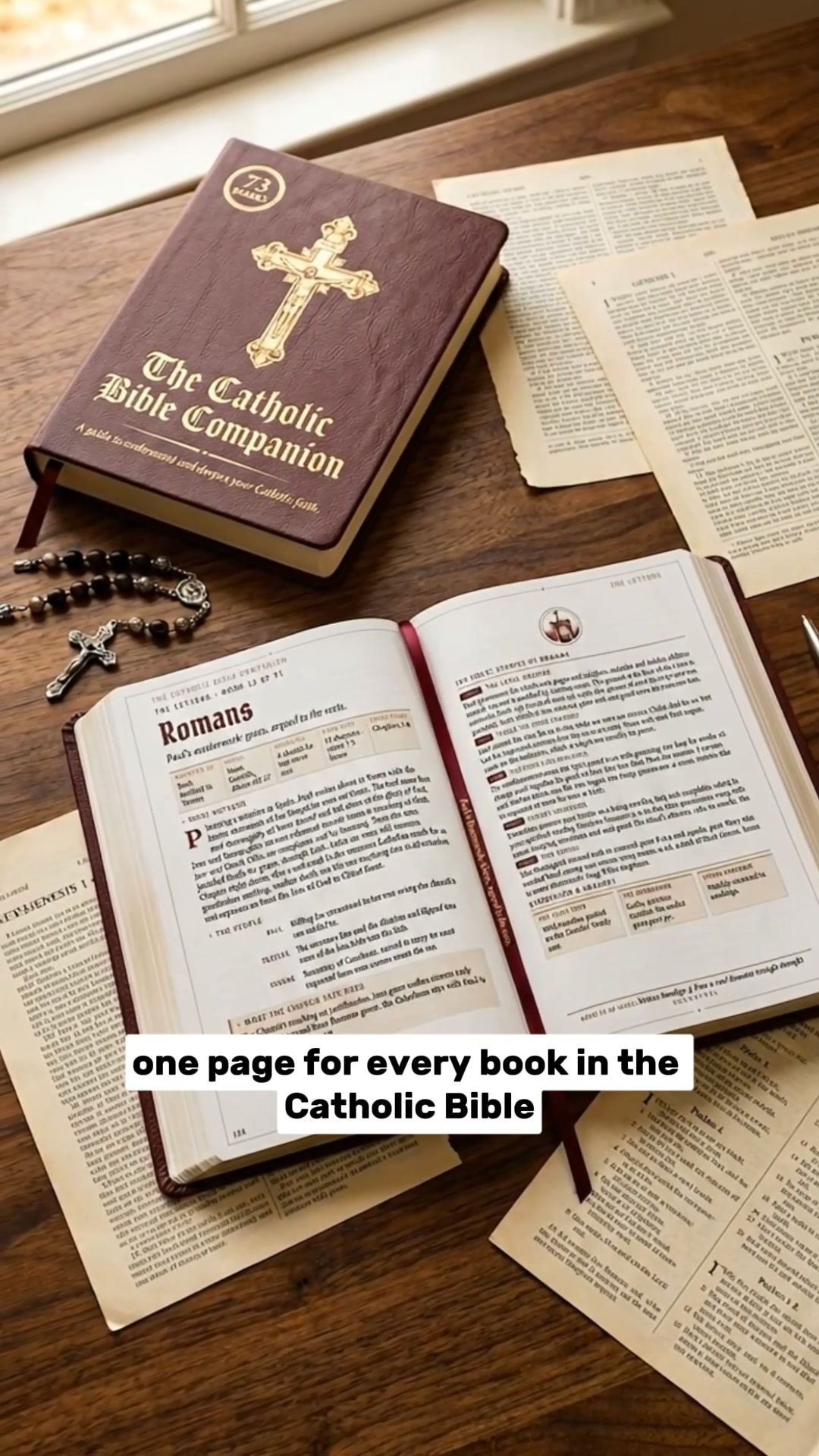
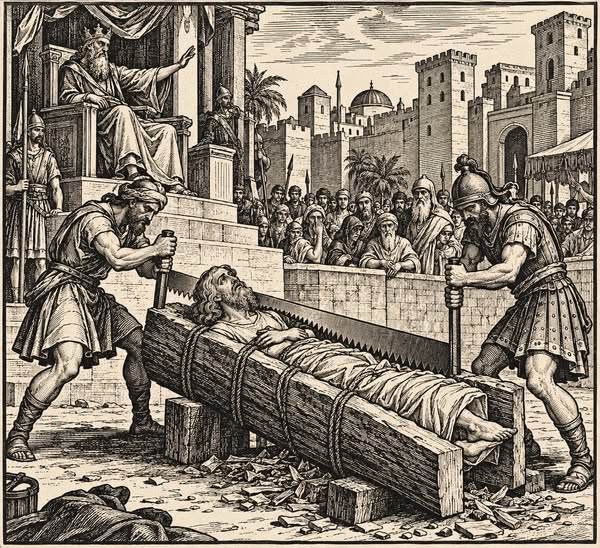
The most violent death in the Bible belongs to a man your priest has never preached about. A fourteen-year-old in my Confirmation class showed me that. And what I found looking for the answer led me to something in my own Bible that I had never been told existed. I have been teaching CCD at Saint Hyacinth's for twelve years. Wednesday evenings. A parish hall with fluorescent lights and a crucifix on the wall that has been hanging crooked since before I started. I am the person these kids' parents trust to prepare them for the sacrament of Confirmation. The one who is supposed to hand them a faith they can defend. For twelve years, I believed I was doing that. Then one Wednesday we landed in Hebrews 11. The chapter the Church calls the hall of faith. I had walked a Confirmation class through it at least ten times. We reached verse 37. The part where the writer lists how the faithful died. A girl named Adriana, sits in the back row, barely ever speaks, raised her hand. She read the line out loud. "They were sawn asunder." Then she looked straight at me. "Who was that? Which prophet was cut in half?" I started to answer. Nothing came. I had read Hebrews 11 more times than I could count. I had taught it. I had made handouts about it. And I had never once stopped long enough to ask myself who that line was about. I told her I would find the answer by next Wednesday. She nodded and wrote the verse number on the inside of her notebook cover in blue ink. --- I got home and sat down with my Bible. Then my study guide. Then my laptop. The writer of Hebrews puts that death between people he names. Abraham. Moses. David. Gideon. Samson. He lists them by name because his readers already knew the stories. Then he gets to the ones who were tortured, flogged, stoned, sawn apart. And he stops naming them. Not because the names were lost. Because his readers already had them. I did not. I checked every prophet in the Old Testament. Every king. Every death recorded in the historical books. Stoned to death. I could trace that. Zechariah, in Second Chronicles 24. Run through with a sword. I could find that. The prophets Jezebel killed, in First Kings 18. Sawn in two. Nothing. Four different Bibles on my shelf and not one of them could tell me who that prophet was. The last one had a footnote. Six-point type crammed into the bottom margin. It said: "Jewish tradition identifies this as the prophet Isaiah, executed under King Manasseh." Tradition. My Bible knew the answer existed. It just was not going to give it to me. The footnote pointed at Second Kings 21. I turned to it. Manasseh's reign. The text says he "shed very much innocent blood, till he had filled Jerusalem from one end to another." Verse 16. So the blood was real. The Bible recorded that Manasseh murdered the faithful. It just never told me which faithful, or how. --- That could have been where I stopped. One obscure question. One footnote. But I could not stop. Because if Hebrews 11 assumed I already knew a story my Bible never actually told me — what else was it assuming? And here is where being Catholic changed everything. Because my Bible has seventy-three books. Not sixty-six. And the seven books that the Protestant Bible does not have are filled with exactly the kind of background that the rest of Scripture assumes you already know. I had been looking for answers in the sixty-six books. I had never looked in the seven that are only mine. --- I opened to the Book of Wisdom. Chapter 2. Verses 12 through 20. "Let us lie in wait for the righteous man, because he is inconvenient to us and opposes our actions." "He professes to have knowledge of God, and calls himself a child of the Lord." "Let us test him with insult and torture." "Let us condemn him to a shameful death, for, according to what he says, he will be protected." I put the book down. A passage describing the persecution and execution of a righteous man in exact detail — the mocking, the testing, the insult, the torture, the shameful death, the enemies saying God will protect him — written approximately 50 BC. A hundred years before Calvary. The most vivid description of the Passion in the entire Old Testament. More specific than Isaiah 53. Closer in time. More detailed. And it is in one of the seven books I had never opened. Hebrews 11 assumed I knew the stories of the faithful who suffered and died. The Book of Wisdom gives me the most detailed description of HOW the righteous suffer — written a century before the most righteous man who ever lived suffered exactly that way. And it had been in my Bible my entire life. In a section with pages I had never turned. --- I kept going. I turned to Second Maccabees. Chapter 12, verse 46. "It is therefore a holy and wholesome thought to pray for the dead, that they may be loosed from sins." Every year a student asks me where praying for the dead comes from. Every year I say: "It is a teaching of the Church." Twelve years. And the verse was right there. In a book I had never opened. I turned to Judith. Chapter 13, verse 18. "Blessed are you, daughter, by the Most High God, above all the women on earth." The words of the Hail Mary. Spoken centuries before Gabriel. In a book separated from most Bibles in 1534. I have taught Confirmation students to pray the Rosary. I have never told them where the words came from. Because I did not know. I turned to First Maccabees. The Maccabean revolt. Soldiers who fought and died to protect the Word of God. The purification of the Temple. The origin of Hanukkah — the Festival of Dedication that Jesus Himself celebrated in John 10:22. I turned to Tobit. The archangel Raphael defeats a demon named Asmodeus by name. The only full angelic mission narrative in the Old Testament. Fragments found among the Dead Sea Scrolls. I turned to Sirach. Chapter 38. "Honor the physician with the honor due him, for the Lord created him." The earliest theological defense of medicine in Scripture. I turned to Baruch. The scribe of Jeremiah. The passage read at the Easter Vigil every single year — from a book I could not have identified if someone had handed it to me. Seven books. Twelve years of teaching CCD. And I had never opened a single one. --- I went to Father Nowicki. I told him what Adriana had asked. I told him about the prophet sawn in half. I told him about the six-point footnote. Then I told him what I found when I finally opened the seven books. He was quiet. Then he said: "You are not the first CCD teacher to tell me this. And it is not your fault. We were taught the prayers. We were taught the sacraments. But nobody sat us down with Wisdom or Tobit or Maccabees and said: here is what is inside. We passed down the faith without passing down the roots the faith grows from." --- I needed something that could give me those roots. One page per book. All seventy-three. Something I could read before Wednesday. I found the Catholic Bible Companion from Selinary. Seventy-three pages. One for every book of the Catholic Bible. I read the page on Hebrews first. It told me the letter was written to Jewish Christians being pressured to abandon their faith and return to the old sacrificial system. That the entire book is an argument that Christ is greater — greater than the angels, than Moses, than the high priests, than the sacrifices. And that Hebrews 11, the faith chapter, is the closing argument: look at everyone who held on before you. Now hold on. The list of deaths in verse 37 is not trivia. It is the writer saying: these people were tortured to death for the faith you are thinking about walking away from. Do not walk away. Twelve years of teaching that chapter and I had missed the whole point of it. Not because I am unintelligent. Because nobody had ever handed me one page of background. Then I read the seven pages on the deuterocanonical books. Thirty-five minutes. And I understood more about my own Bible than twelve years of CCD and fifty-three years of Mass had given me combined. --- The next Wednesday I walked into the parish hall and told Adriana I owed her two answers. The first: the prophet who was sawn in two. Jewish tradition says it was Isaiah. King Manasseh killed him. Second Kings 21:16 records the blood. The writer of Hebrews expected his readers to already know. The second: what is inside the seven books that make our Bible ours. I had them open to Wisdom chapter 2. I read verses 12 through 20 out loud. Silence. A boy in the front row said: "That sounds like the Passion." "Written a hundred years before the Passion," I said. "In a book that was separated from most Bibles in 1534. In YOUR Bible. Since the fourth century." Then Judith 13:18. A girl whispered: "That's the Hail Mary." Then Second Maccabees 12:46. The verse behind every Mass offered for the dead. Then Adriana, from the back row: "Mrs. Kowalski. That has been in our Bible this whole time. How come nobody just teaches us that from the start?" I still do not have a good answer for that. But I have the Companion now. And the next week I started over from Genesis. --- The Catholic Bible Companion from Selinary. Seventy-three pages. One for every book of the Catholic Bible. It is 50% off right now. Buy two, get your third one free. And it comes with the 60-day Selinary Guarantee. 👉 selinary.com/pages/list Get one for yourself. Get one for every CCD teacher and Confirmation instructor in your parish. Get one for every Catholic parent who wants their child to know what is inside the Bible they are about to stand in front of the Bishop and confirm. Because when a fourteen-year-old asks you what is in those seven books — and she will ask — you should have an answer that starts with a description of the crucifixion written a hundred years before it happened, includes the verse behind praying for the dead, and ends with the words of the Hail Mary spoken centuries before Gabriel said them. That answer has been in your Bible your entire life. Seventy-three pages is all it takes to find it. --- EDIT: Link again: 👉 selinary.com/pages/list One question from a fourteen-year-old. "What's in those seven books?" Twelve years of teaching CCD and I could not answer it. The pages in that section of my Bible had never been turned. Seventy-three pages changed that in one evening. Do not let another Confirmation class leave your parish without knowing what is in their own Bible. P.S. — Adriana still sits in the back row. She still barely talks. But last month she brought her own Bible to CCD for the first time. With the Companion tucked inside the front cover. When I asked the class to turn to Wisdom, she was already there. She did not say anything about it. She did not need to. P.P.S. — I gave a copy to my mother. Sixty-one years of Sunday Mass. She called me that evening. "I just read the page on Wisdom. I had no idea that was in our Bible." She had been hearing it read from the ambo for sixty-one years. She just never had the one page that explained it. ---
Where the ad sends people
https://selinary.com/pages/list
You are reading the Bible wrong..
Selinary
Learn more: selinary.com(opens in a new tab)