Dr. Jeffrey Carlsson MD
 Facebook ad: “Scandinavian Hydrogen Tablets, Backed by 2000+ Studies.”
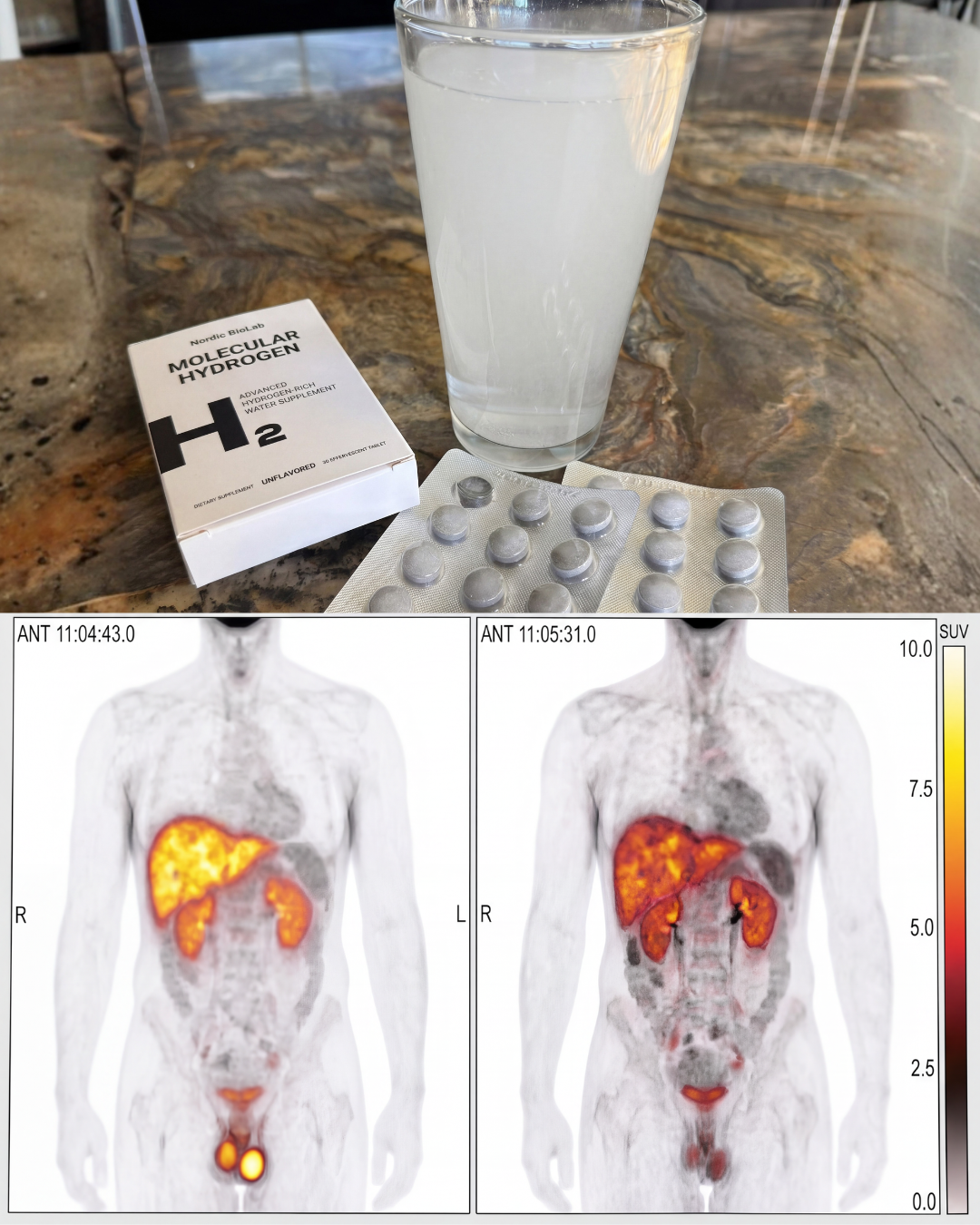
Ran for 3 days, from October 31 to November 3, 2026, the last day Crush saw it.
Run by Dr. Jeffrey Carlsson MD on Facebook. Crush is not the advertiser and does not verify its claims. See this ad in Meta's Ad Library(opens in a new tab)
Make your own version of this ad
Crush makes it, launches it in your own Meta ad account, scales the winners and pauses the losers.
About this ad
- Meta Ad Library ID
- 2191074995180169
- Platforms
- Facebook, Instagram and Audience Network
- Relaunches
- 0
Ad text
Men who tell me they “only have a couple beers” are often surprised by the first question I ask. Not how many. What size and what percentage? One of my patients was 52, had a dull pressure under his right ribs, and genuinely believed he drank less than almost every man he knew. When we did the math together, his face changed. Because his “two beers” were not really two drinks at all. Let me back up. One of my patients was 52 years old. He had run a drywall crew for more than two decades, worked long days, rarely missed work, and almost never came into my office unless he absolutely had to. He wasn't there because of his liver. He came in for a routine blood-pressure refill. Toward the end of the appointment, almost as an afterthought, he mentioned a dull pressure beneath his right ribs. Nothing dramatic. Not sharp pain. More like someone pressing a thumb into his side and forgetting to let go. He'd felt it on and off for nearly three years. First, he blamed his mattress. Then his work truck. Then getting older. Some mornings he also felt unusually full before eating. By mid-afternoon, his energy would disappear. His wife kept telling him he seemed tired and irritable. He thought all of it was normal. At 52, he figured this was just what getting older felt like. But when I examined his abdomen and pressed beneath his right ribs, his whole body tensed. That was enough for me to look further. I ordered blood work. Then imaging. And the results showed something he wasn't expecting. Fat accumulation in the liver, together with signs of inflammation consistent with early alcohol-related liver injury. When I explained it to him, he immediately shook his head. “Alcohol?” Then he laughed. “Doc, there's no way.” I asked why. He said: “I only drink two beers.” Two beers. Four evenings a week. Eight beers total. Less than most of the men he knew. At least, that's what he believed. So I didn't ask him how many beers he drank. I asked something else. “What kind?” IPA. “What size?” Usually 16 ounces. Sometimes the larger 19-ounce cans from the gas station. Then I asked the alcohol percentage. Seven percent. Sometimes eight. That's when I took out a piece of paper. A standard U.S. drink is roughly equivalent to 12 ounces of regular beer at around 5% alcohol. His beers were larger. And stronger. So one of his “beers” wasn't always one standard drink. Some were closer to two. The larger ones could contain even more. Suddenly, his “two beers” didn't look like two drinks anymore. And his eight beers a week weren't really eight standard drinks. The actual alcohol exposure was much higher than he thought. He stared at the numbers for a few seconds. Then said something I hear more often than you might expect: “Nobody ever showed me the math.” That was the problem. For almost 20 years, he thought he'd been following a reasonable rule. Two beers. Never a six-pack. Never drinking in the morning. Never showing up to work drunk. So in his mind, he wasn't somebody who had an alcohol problem. But your liver doesn't measure alcohol the way your social circle does. It doesn't ask whether your friends drink more. It doesn't care whether you feel drunk. It simply has to process what you give it. And that's the next thing I explained to him. When your liver metabolizes alcohol, alcohol doesn't simply disappear. It is converted first into acetaldehyde, a toxic compound your liver then has to break down further. At the same time, alcohol metabolism can increase the production of reactive oxygen species. I gave him a simpler analogy. Think of them like sparks flying from a grinder. Your body has its own antioxidant-defense systems designed to deal with those sparks. A few sparks? Usually manageable. But if you keep producing them repeatedly, week after week, year after year, you can begin overwhelming those defenses. Oxidative stress rises. Mitochondria become stressed. Fat can start accumulating inside liver cells. Inflammatory signaling can increase. And over time, those cells can become injured. Then I told him the part that surprised him most. You do not have to feel drunk for any of this to happen. The biology begins long before you feel intoxicated. Your liver still has to metabolize the first beer. And the second. Even on a Tuesday night when you feel completely normal. He looked at me and asked: “Is it too late?” Fortunately, early fatty liver changes can improve substantially when the underlying cause is removed. So I gave him the most important advice of the entire visit. Stop drinking alcohol. Not find a “detox” that allows you to keep drinking. Not take something the next morning to cancel out the night before. Remove the thing causing the repeated stress in the first place. That was the foundation. But writing “stop drinking” on a medical chart and actually changing a 20-year habit are two very different things. Thursday evenings were especially difficult for him. For years, Thursday meant the same bar near the lumber yard. The same men from his crew. The same seat. The same first beer. Weekends meant football. The grill. The garage. Beer wasn't just alcohol. It was tied to relaxation. Routine. Friendship. The end of the workday. So a few weeks later, when he came back, he asked me another question. He'd stopped drinking. But now that he understood what years of alcohol exposure had been doing inside his liver, he wanted to know: “Is there anything I can do to support my liver while I'm doing this?” That's when molecular hydrogen came up. And there was a reason the science caught my attention. Remember those “sparks”? A significant part of alcohol-related oxidative stress involves what is happening inside and around the mitochondria. Those are the tiny structures inside your cells responsible for producing energy. And this is where molecular hydrogen is unusual. H₂ is the smallest molecule in existence. Because of its extremely small size and neutral charge, it can diffuse rapidly across biological membranes and reach areas of the cell that many larger compounds have more difficulty reaching. Including the mitochondria. Researchers have been studying molecular hydrogen for its potential effects on oxidative stress, redox balance and inflammatory signaling. And that distinction matters. Hydrogen isn't simply another massive “antioxidant dose” designed to wipe out every reactive molecule in sight. Reactive species also have useful biological functions. The research around H₂ is more nuanced. Scientists have investigated whether molecular hydrogen may help modulate excessive oxidative stress and influence the body's own antioxidant-response pathways. And there was another piece that was directly relevant to our conversation. Molecular hydrogen has been studied in experimental models of alcohol-related liver injury. In preclinical research, hydrogen-rich water has been associated with things such as: lower oxidative-stress markers, less fat accumulation in the liver, reduced inflammatory signaling, and improvements in some of the body's own antioxidant-defense systems. Now, I need to be very precise here. That does not mean hydrogen tablets are proven to treat alcohol-related liver disease in humans. Animal and laboratory research is not the same thing as clinical proof. And I would never tell a patient otherwise. But from a mechanistic standpoint, the research was looking at several of the same biological pathways we had just spent an appointment discussing: Alcohol metabolism. Oxidative stress. Mitochondrial stress. Inflammation. Fat accumulation. So when he asked whether molecular hydrogen made sense as something he could use alongside reducing alcohol exposure, rather than instead of doing it, I understood why he was interested. That's eventually how he found a Scandinavian formulation from Nordic BioLab. He liked the tablet format for another reason. Hydrogen is a gas. Once dissolved in water, it can gradually escape. Which means there's a meaningful difference between water that has been sitting in a bottle and hydrogen generated immediately before you drink it. With the Nordic BioLab tablets, he could prepare it fresh. Drop one into a glass of water. Let it fizz. Drink it shortly afterward. According to the company, the formulation has been independently tested for dissolved molecular hydrogen. No sugar. No calories. And no complicated cabinet full of “liver detox” supplements. He started with one glass in the morning. Then another around 6 PM. And that second glass ended up helping him in a way neither of us initially expected. Six o'clock was when he used to open the refrigerator and crack his first IPA. For years, his brain had learned the same sequence: Finish work. Get home. Open fridge. Beer. So instead of simply removing the habit and leaving an empty space behind, he replaced the ritual. Glass. Water. Tablet. Fizz. Drink. A few weeks later, he told me: “It sounds stupid, Doc, but having something to make at six made it much easier not to reach for the beer.” It doesn't sound stupid at all. Habits are heavily tied to cues. Sometimes replacing the action associated with a cue is much easier than trying to eliminate the cue entirely. And over time, something changed. He stopped thinking about drinking every evening. Then he started having entire weeks where alcohol simply wasn't part of his routine. The hydrogen water became normal. The beer became unusual. And that's an important distinction. Not because hydrogen somehow “blocked” alcohol cravings. And certainly not because it made drinking safe. It simply gave him something else to do at the exact moment his old habit usually took control. But he continued taking the tablets for another reason too. Now that he understood the biological side of alcohol exposure, he liked having something in his routine that was being studied in connection with the very pathways he had become worried about: oxidative stress, mitochondrial function and inflammatory signaling. Over the following weeks, he began noticing changes. First, the afternoon crash became less noticeable. He stopped reaching for coffee just to get through the last few hours of the workday. Then he told me he felt less heavy and sluggish. Several weeks later, while loading his truck, he realized something else. He hadn't thought about the pressure beneath his right ribs in days. His wife noticed a difference too. She told him he seemed more like himself. More energy. Less irritable. Less likely to collapse into the couch at the end of the day. Now, could I tell him the hydrogen tablets caused those improvements? No. That would not be medically responsible. He had also drastically reduced his alcohol exposure. And that was by far the most important intervention. So I told him exactly that. “Don't confuse support with the solution.” The tablets were not permission to keep drinking. They weren't replacing medical care. They weren't magically detoxifying his liver. And they were not an antidote to alcohol. The foundation was still removing or substantially reducing the alcohol according to his medical plan. But the hydrogen tablets gave him two things at the same time. A biologically interesting way to support pathways associated with oxidative stress. And a practical routine that helped him break a habit he'd repeated for decades. Months later, something else had changed too. His relationship with alcohol was no longer all-or-nothing. At first, he thought the only options were: Drink like before. Or never touch alcohol again. That made every social event feel like a test. And every slip feel like failure. Eventually, once he had a stable routine and was following his medical plan, there were rare occasions when he chose to have a drink socially. A wedding. A birthday. Dinner with old friends. And what surprised him was that one drink no longer automatically became four nights of drinking that week. He could make the choice. Enjoy the occasion. Go home. And return to his usual alcohol-free routine the next day. He told me: “I don't feel like one drink means I've ruined everything anymore.” That is psychologically important. But medically, I made sure he understood the distinction. The hydrogen tablets did not neutralize the alcohol. They did not make alcohol harmless. And they did not give him a free pass to drink. What had changed was the habit. The hydrogen water had become the default. Alcohol had become the exception. And most of the time, he preferred it that way. At his next follow-up, his overall clinical picture was moving in the right direction. He told me he was still using the hydrogen tablets. I told him: “Good. Just remember which part matters most.” He smiled. “Not going back to how I was drinking.” Exactly. And that's why I'm telling you his story. Because I see men make the same mistake all the time. They compare themselves with their friends. They count cans instead of alcohol. They ignore symptoms because they're still working, still driving, still functioning. And they assume liver damage only happens to somebody who drinks all day. It doesn't. So if you regularly drink alcohol and something feels different, get checked. A dull pressure under the right ribs does not automatically mean liver disease. And liver problems can exist without obvious symptoms. Don't diagnose yourself from an ad. Talk to a healthcare professional. But tonight, before you open your usual beer, do one thing. Look at the can. Not just the brand. Look at the ounces. Then the alcohol percentage. And ask yourself whether your “two beers” are really two standard drinks. You may be surprised by the answer. And if you're already trying to reduce or stop drinking, molecular hydrogen may be something worth discussing with your healthcare professional as part of the bigger picture. Not as a cure. Not as protection against alcohol. And not as a reason to keep drinking. For my patient, Nordic BioLab's Scandinavian Hydrogen Tablets became part of the routine that helped him move in the opposite direction. Less alcohol. More consistency. And something he felt made sense biologically given what he'd learned about oxidative stress. Nordic BioLab currently offers a 90-day money-back guarantee, which made it easier for him to try without feeling locked into it. https://nordicbiolab.com/pages/molecular-hydrogen-5-reasons-for-liver He eventually chose the larger pack because it had become part of his daily routine. A few months later, he told me something that summed up the whole experience better than I could: “I'm still the same guy sitting at the same table. I just don't need the same drink in my hand anymore.” And most nights now, he doesn't.
Where the ad sends people
nordicbiolab.com
Scandinavian Hydrogen Tablets, Backed by 2000+ Studies.
Third-party tested, Liver-friendly formula, No fillers.
Learn more: nordicbiolab.com(opens in a new tab)