Living With Hypertension
Living With Hypertension Facebook ad: “My husband packed three blood pressure monitors for our…”
Ran for 52 days, from July 13 to September 3, 2026, the last day Crush saw it.
Run by Living With Hypertension on Facebook. Crush is not the advertiser and does not verify its claims. See this ad in Meta's Ad Library(opens in a new tab)
Want an ad like this for your product?
Crush makes new ad images for your product from this ad: your logo, your product photo, your offer.
Trials from $19.95 USD, then $79.95 USD a month. Cancel anytime.
About this ad
- Meta Ad Library ID
- 2196327450953103
- Platforms
- Facebook, Instagram, Audience Network, Messenger and Threads
- Relaunches
- 0
- EU reach
- 25
Ad text
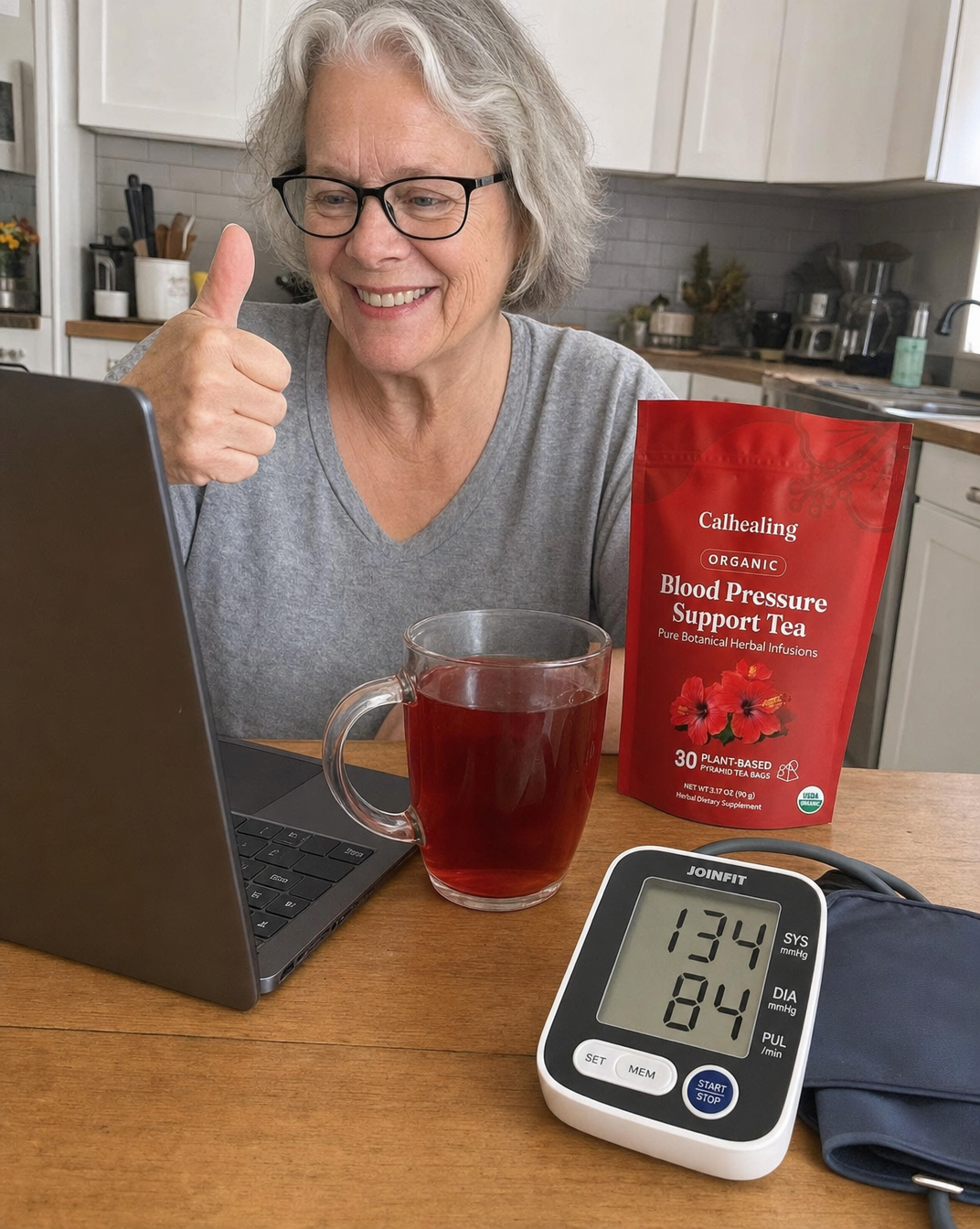
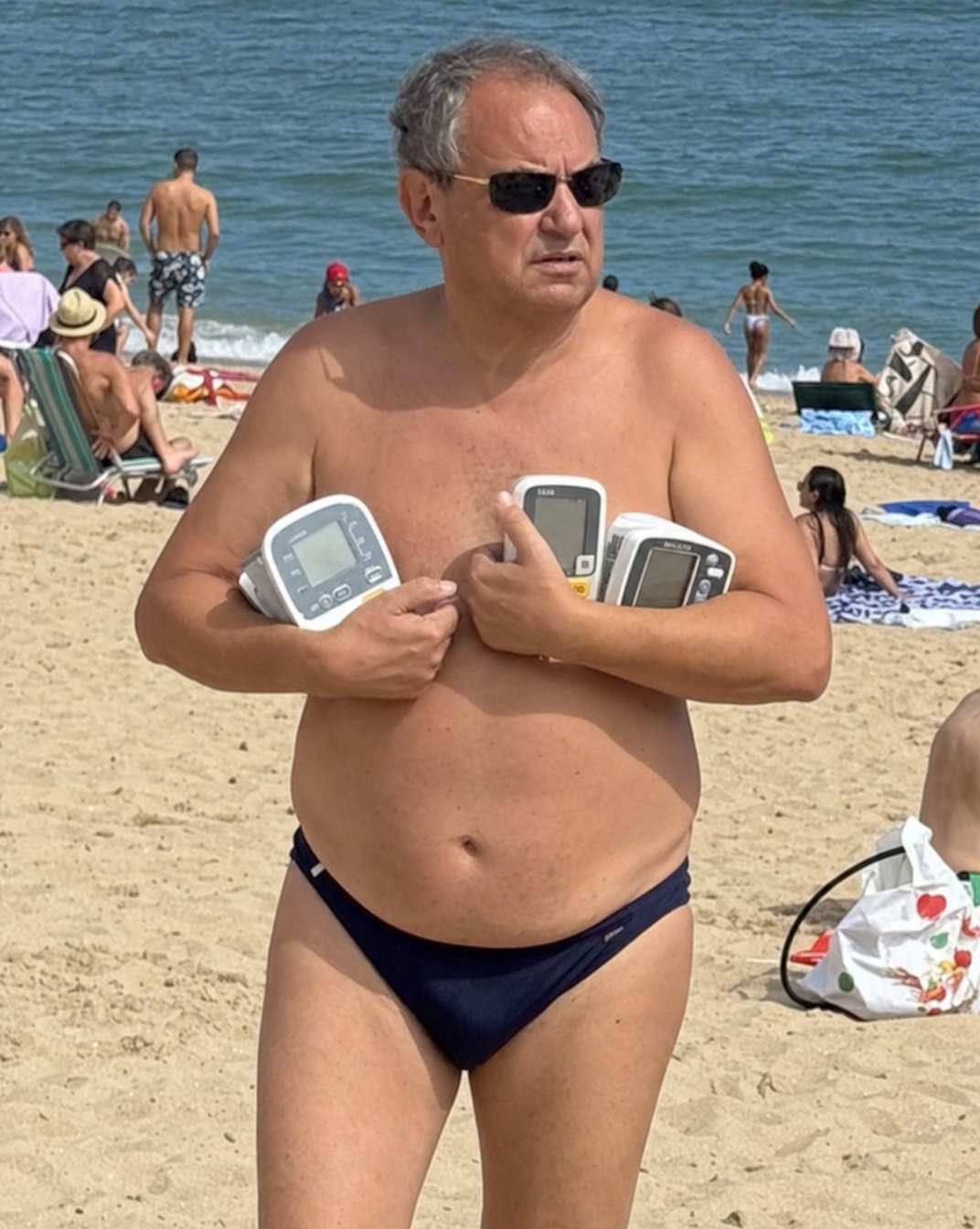
My husband packed three blood pressure monitors for our beach holiday. Three. Not socks, not enough sun cream, but three separate blood pressure machines, wrapped carefully in towels in his half of the suitcase, while I tried to remember if anyone had packed the children's swimming things. I am writing this, honestly, because of how that holiday ended, and because somewhere out there is another woman watching her husband slowly disappear into a little screen, and I would like her to have what we got back. My husband's name is Roger. He is 61, he is the kindest man I have ever met, and for about two years he was, very quietly, being eaten alive by his own blood pressure. Not by the condition. By the watching of it. It started sensibly enough. A high reading at the doctor's, the usual gentle "let's keep an eye on it," and Roger, being thorough, bought a monitor to check at home. If he had stopped there, this would be a very short story. But Roger does not stop. The first monitor gave him a number he did not like, so he decided the monitor must be faulty, and bought a second one to check it against the first. When the two disagreed, as two cheap machines on a kitchen table always will, this did not reassure him. It horrified him. So he bought a third, to act as the deciding vote. And that was how my husband came to own a small parliament of blood pressure monitors, which he would consult, one after another, like a man asking three slightly different fortune tellers the same terrible question and hoping one of them would lie to him kindly. He gave them names eventually, which I found both hilarious and quietly heartbreaking. The accurate one, the optimistic one, and the one he did not trust at all, which he kept only so that he had something to be cross at. He would announce the three readings at the breakfast table like a newsreader delivering the morning headlines, and I would nod along over my tea, and this became, for the better part of two years, simply how we lived. I want to be clear that I loved him through all of this, but it was exhausting to watch. He measured before breakfast and after breakfast. He measured before we left the house and the moment we got back. He measured after any argument, which meant he became strangely reluctant to ever finish one. Our evenings developed a rhythm: dinner, television, and then the soft mechanical wheeze of a cuff inflating on his arm, three times over, while I pretended to read. He kept the numbers in a notebook. The notebook had a second volume. There was a wedding that year, our nephew's, a lovely day, and I lost Roger for twenty minutes during the speeches. I found him out in the hotel corridor with his sleeve rolled up and a small travel monitor he had smuggled in inside his jacket, taking a reading, because he had felt his heart "do something" during the champagne toast. He came back, and sat down, and squeezed my hand, and was in every way that a machine cannot measure a wonderful husband. But a part of him had been out in that corridor. And a part of him, I was beginning to understand, was always out in that corridor, listening to himself, waiting for the bad news he was certain was coming. The children noticed, of course. Our daughter gently asked me one day if Dad was "all right," in the careful voice you use about someone who has started talking to the radio. They had begun to find excuses not to be in the room for the evening measuring. My once funny, present, engaged husband was becoming a man who experienced his own life slightly from behind glass, always half-listening for his own pulse. I do not want to make him sound foolish, because he was not. He was frightened, and he was responsible, and over two years the two had got tangled up together into something that looked from the outside like a hobby but felt, if I am honest, far more like grief. He was mourning a version of himself he was certain was about to be taken away, and he was checking, five and six times a day, to see whether it had happened yet. You cannot argue a person out of that. I had tried, gently, for two years, and all I ever got for my trouble was a reading. So you can perhaps imagine the suitcase. And you can certainly imagine the beach. We had gone away for a proper family holiday, the sort that is supposed to be relaxing. And there was my Roger, on a beautiful beach, on a beautiful day, sitting bolt upright on his towel with three blood pressure monitors lined up in the sand beside him like a little control panel, taking his reading on all three and frowning at the disagreement, while a hundred other people simply lay in the sun and were happy. He had sand in at least one of the machines. He measured after a swim, certain the cold water had done something. He measured after the children buried his feet, and I think genuinely believed the weight of the sand might be relevant. He was the only tense man on the entire shoreline, and he was tense because he could not stop checking whether he was relaxed. At one point an ice-cream van started up its little tune behind the dunes, and every child on that beach, including ours, went thundering off across the sand. Roger called after them to be careful, and then, almost without thinking, reached for a cuff. Our son, who is fourteen and at the age where a father is a source of pure mortification at the best of times, turned around and said, "Dad. We are at the beach," just loudly enough for the next few towels to hear. Roger put the cuff down. And then he picked it up again about ten minutes later, when he thought none of us were looking. That is the thing nobody tells you about high blood pressure. The silent killer does not just sit there quietly inside you. For a certain kind of careful, responsible man, it gets into his head and it takes over the whole house, and the holidays, and the marriage, without ever once giving him a symptom he could point to. And then a stranger changed everything, which is the part I still can hardly believe. A few towels down from us there was an older man, perhaps seventy, who was, without question, the most relaxed human being I have ever seen. He had been watching Roger and his parliament of machines with a small, kind smile for most of the afternoon. And eventually he wandered over, crouched down by Roger's little control panel, and said, "Three of them. I had two, once. I understand completely." Roger, who does not warm to strangers quickly, looked up. And this lovely man told him, simply, that he had spent years exactly like Roger, a prisoner of the number, measuring and re-measuring and never once feeling any better for it. Until his daughter, tired of watching it, had started him on a particular hibiscus tea. He was very specific about it. Not the fruit tea from the supermarket, he said, which is mostly apple and flavouring and does nothing, but the proper whole-flower kind, at the real dose. He told us the name. Calhealing. He said it the way you pass on something that genuinely mattered to you. Then he said the thing that actually reached my husband. "The tea brought my number down," he said. "But that is not really why I am telling you. It is that I stopped needing to check it five times a day. I got my mornings back. Get the number down properly, son, and you can finally put the machines in a drawer." He sat down properly in the sand then, uninvited and entirely welcome, and told us a little of his own story. A heart scare in his sixties. A wife who had quietly started leaving the room. And a daughter who had finally sat him down, the way daughters do, and told him she was not going to stand by and watch him spend whatever years he had left taking his own blood pressure instead of actually living it. She had found him the tea, and more or less stood over him until he drank it. "She was right," he said, looking out at the water. "She usually is." I liked him enormously. I wanted to fold him up and put him in my suitcase and take him home. I ordered it that night, from the hotel, before Roger could talk himself out of it. The proper Calhealing whole-flower hibiscus, the deep red kind, Hibiscus sabdariffa, the full three gram dose in a pyramid sachet, the real thing rather than the supermarket dust the old man had warned us about. I will tell you the little I came to understand about why it works, because Roger needed to know and so, then, did I. It works on three things at once, from the one flower. It relaxes and opens the vessel walls, the way one of the standard tablets does. It helps the body make nitric oxide, which keeps the arteries soft and open instead of stiff. And it gently helps the body shed a little excess fluid, easing the pressure, without stripping out the potassium the way water tablets can. One flower, doing three jobs, in a mug every evening. So Roger started drinking it, deep red and a little tart, every night after dinner. And I would love to tell you he immediately relaxed, but he is my Roger, so for the first couple of weeks he simply added the tea to the measuring and did both. Then, around the third week, something shifted. He took his reading one evening, on only one machine I noticed, and went quiet, and showed me the screen. 149. He had not been below 150 in longer than either of us could remember. He had started, that summer, at 155. It kept going. By around the ninth week it was reading 138 over 86. But the number, in the end, is not the part of this story I most want to tell you. The part I want to tell you is that one evening I realised the house was quiet. No wheeze of the cuff. No frowning at three screens. Roger was just sitting next to me, present, finishing a crossword, with a mug of red tea going cold at his elbow, being my husband again. We went out for dinner not long after that, the two of us, the first proper dinner out in a very long time. And the whole evening went by, the starter and the main and a shared pudding neither of us needed, and somewhere over the coffee I realised that he had not once excused himself, not once rolled up a sleeve, not once gone quiet to listen to his own chest. He had simply been with me, the entire evening, telling a long and not remotely true story about a man from his old job, and laughing at his own punchline before he reached it, the way he used to before all of this. I had not lost him after all. He had just been somewhere I could not follow him, and he had finally come back. The following summer we went back to the same beach. And this time Roger lay on his towel, in the sun, and read an entire paperback novel from cover to cover. The three monitors were at home, in a drawer, where they have stayed. I spent a good part of that afternoon just watching him be relaxed, properly relaxed, for the first time in years, and I had to put my sunglasses on so the children would not see me getting silly about it. On the drive home from that second holiday, with the children asleep in the back and the sun going down ahead of us, Roger said, out of nowhere, "I'm sorry about the last couple of years." I told him there was nothing at all to be sorry for, which was mostly true. We did not make a big thing of it. But I have thought about it a great deal since, about how quietly close we came to letting a number take the very best of him, and about how the whole thing turned, in the end, on one relaxed stranger on a beach being kind enough to get up off his towel and walk over. I am telling you all of this, a stranger on the internet telling you about my husband's blood pressure, because a kind old man on a beach did exactly that for us, and it gave me my Roger back. So if you are watching someone you love slowly vanish into that little screen, measuring and re-measuring and never feeling any better, please let me be your version of that man on the beach. Get the number down properly, with the real thing, and you can put the machines away. This is the one he was given, and it is the one that worked for us. You can see how it works, and how to get the proper whole-flower dose instead of the supermarket version, right here: See the whole-flower Calhealing hibiscus, at the dose the studies used -> https://calhealing.com/products/natural-hibiscus-vitality-herbal-tea P.S. We did not throw the three monitors away. Roger uses one of them now, once a week, on a Sunday, and that is all. The other two sit in the drawer as a sort of monument. Every so often, when he is being particularly relaxed about something, I catch his eye and nod toward that drawer, and we both start laughing, and neither of us has to say a single word.
Where the ad sends people
calhealing.com
My husband packed three blood pressure monitors for our beach holiday. A stranger on that beach changed everything.
"He measured on all three, in the sand, while everyone else just relaxed. I'd lost him to that little screen." - a very grateful wife
Learn more: calhealing.com(opens in a new tab)