Living With Hypertension
Living With Hypertension Facebook ad: “At 61, I asked an AI how to lower my blood pressure. Its…”
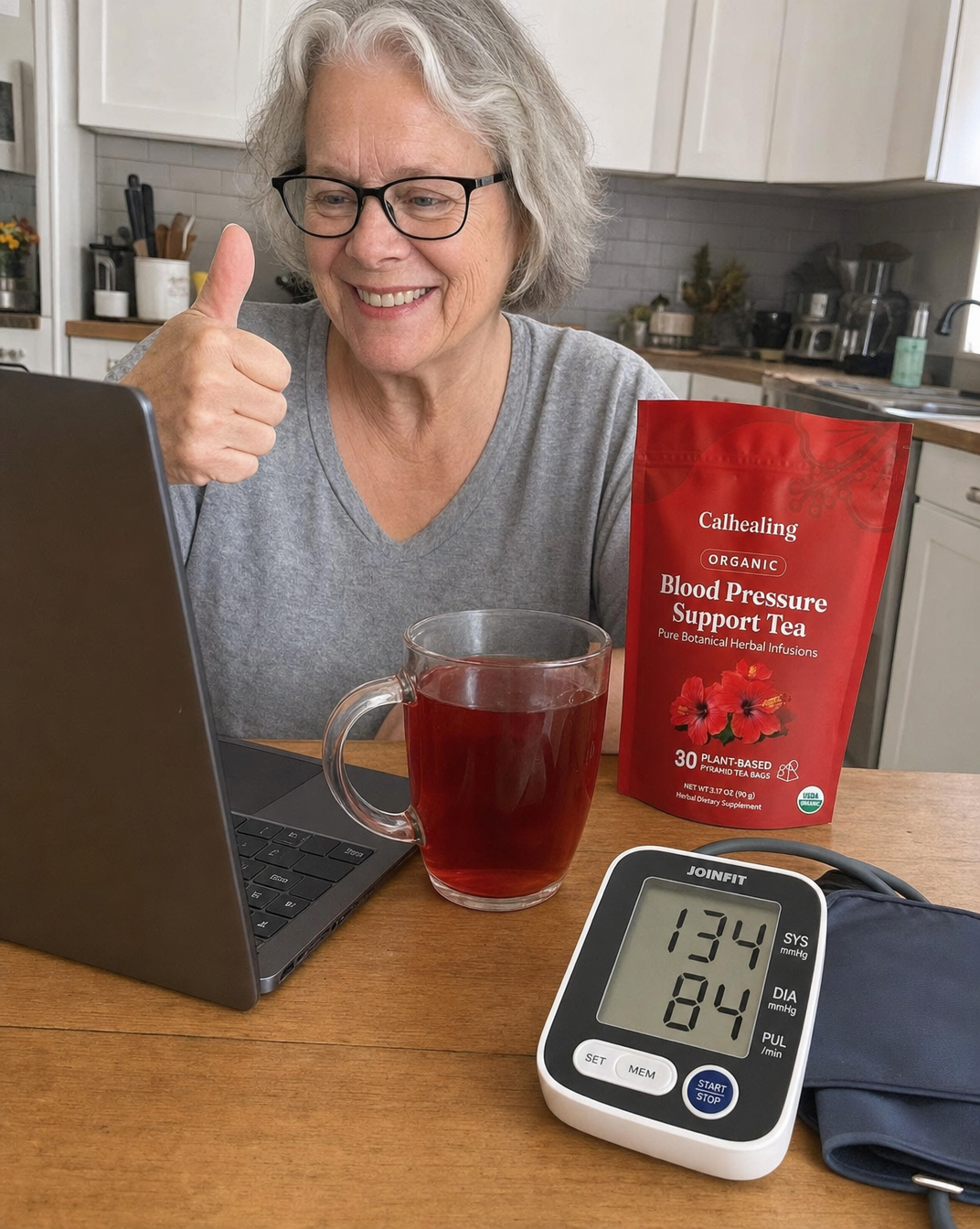
Ran for 54 days, from July 11 to September 3, 2026, the last day Crush saw it.
Run by Living With Hypertension on Facebook. Crush is not the advertiser and does not verify its claims. See this ad in Meta's Ad Library(opens in a new tab)
Want an ad like this for your product?
Crush makes new ad images for your product from this ad: your logo, your product photo, your offer.
Trials from $19.95 USD, then $79.95 USD a month. Cancel anytime.
About this ad
- Meta Ad Library ID
- 911952031166894
- Platforms
- Facebook, Instagram, Audience Network, Messenger and Threads
- Relaunches
- 0
- EU reach
- 7
Ad text
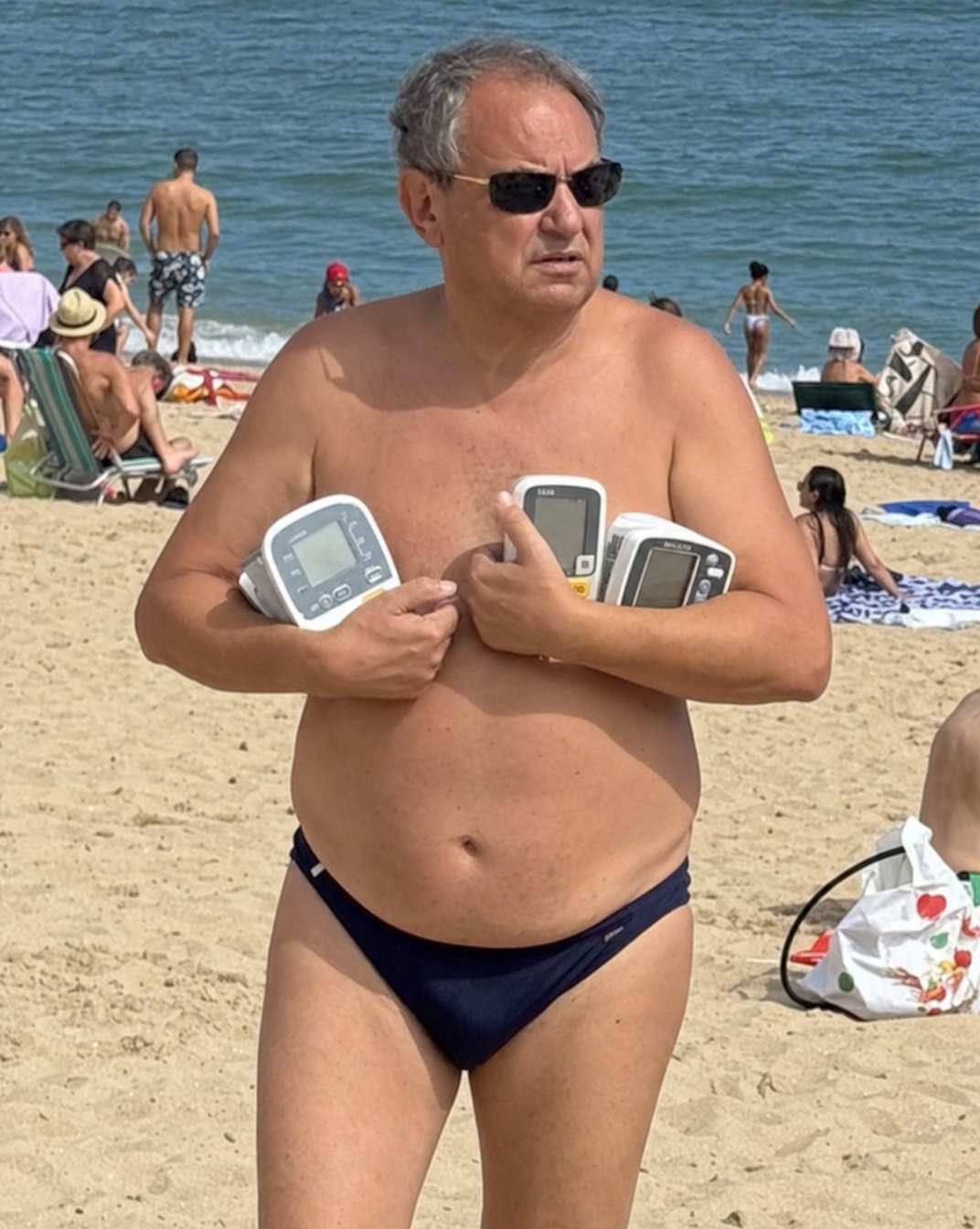
At the age of 61, after a lifetime of not trusting computers any further than I could throw them, I have fallen completely in love with one. My family finds this hilarious. My husband finds it slightly threatening. But that machine did in ten seconds what two years of doctors, diets and worry could not, and I am no longer too proud to say so out loud, at length, to anyone who will stand still. My name is Pam. I am the woman in my family who, until quite recently, needed her granddaughter to turn the television to the right channel. I did not trust the internet. I certainly did not trust the robots everyone had suddenly started talking to. So the fact that I am now writing a public thank-you note to an artificial intelligence should tell you how genuinely desperate I had become about my blood pressure. I am not exaggerating for effect, either. I have, in my time, unplugged the router because I was fairly sure it was "listening." I keep my important numbers in a paper book, in pencil, like a sensible person. When the family talked about these AI things over Sunday lunch, all a bit breathless about it, I would nod along and quietly think that the whole world had lost its mind and would be very sorry indeed when the machines took over, which I was fully expecting them to do any day now. That was the woman who ended up being rescued by one. The universe, I have decided, has a sense of humour, and a great deal of it is at my expense. Because I had become very desperate indeed. It had been creeping up for two years. My doctor had given me the usual talk, "a bit high, Pam, keep an eye on it," and I had done everything a sensible woman is told to do. I walked. I cut the salt until my food tasted of nothing. I tried the beetroot juice that stained my whole kitchen. I bought supplements with names I could not pronounce. And the number sat there, stubborn, in the low 150s, refusing to move for any of it, while I got quietly more frightened. I want you to understand that I was not lazy about it. I was terrified, and terror makes you very obedient. I gave up the small pleasures one by one, the salt on my eggs, the cheese I loved, the biscuit with my afternoon tea, and I stood in my own kitchen feeling like a woman being slowly subtracted. The beetroot phase alone nearly ended the marriage. There is deep pink grouting in that kitchen to this day. And after all of it, all that grim discipline, the machine at the pharmacy would beep out another number in the 150s, and I would drive home feeling as though I had failed an exam I had studied desperately hard for. The turning point came one evening when I was at my wits' end, and my grandson, who is nineteen and lives on his phone, was round for dinner. He watched me fret about it for the hundredth time and said, in that offhand way they have, "Grandma, why don't you just ask the AI?" I did not know what the AI was. He sighed the sigh of a teenager explaining fire to a caveman, took my old laptop, typed something called ChatGPT into it, and slid it across the table to me. "Just ask it like a person," he said, and went back to his phone. I looked at that glowing box on my kitchen table the way you might look at a stranger who has just been left in your care. My grandson, sensing that his work here was done, ate the rest of my biscuits and let himself out. And I sat there alone with the machine, and my fear, and a little cursor blinking at me, patient as anything, waiting for a frightened old woman to work up the nerve to type. So, feeling deeply foolish, alone in my kitchen after he had gone, I typed out a real question to a computer for the first time in my life. I asked it, more or less, how a frightened 61 year old woman might lower her blood pressure naturally, when she had already tried the obvious things and was tired of being afraid. And the machine answered me. Not with a wall of nonsense. Not with an advert. It answered me like a very calm, very well-read friend who had all the time in the world. It explained, gently, that one of the most studied natural options for blood pressure was hibiscus. The proper kind, it was careful to say, Hibiscus sabdariffa, the deep red flower, which had more than sixty studies behind it and could bring the top number down by somewhere between 7 and 23 points. Then it told me the thing that no doctor, no diet plan and no supermarket had ever bothered to tell me, the thing that I now believe is the whole reason nothing had worked before. It warned me, without my even asking, that most of the hibiscus tea sold in shops is barely hibiscus at all. Mostly apple and flavouring, it said, ground to a dust, with hardly any real flower in it. The studies that got results used around three grams of the whole dried flower. The dose, the machine told me, patiently, was the entire point. And when I asked it where on earth a woman like me was supposed to find the proper whole-flower kind at that dose, it pointed me, plainly and without fuss, to Calhealing. I did not simply believe it, of course. I did what I do to any salesman, which is to become deeply suspicious and ask a great many pointed questions. I asked it whether it was being paid to say that. It said it was not. I asked whether hibiscus was safe alongside the little water tablet my doctor already had me on. It told me, carefully, to check that with my doctor, which is exactly what an honest answer sounds like and not at all what an advert sounds like. And I asked it, finally, half hoping to catch it out in a lie, why on earth my own doctor had never once mentioned any of this to me. It gave me a kind, sensible answer about busy surgeries and ten-minute appointments that was, frankly, a great deal more generous to my doctor than I was feeling at that particular moment. I sat back in my chair. I had just cross-examined a computer, and the computer had been reasonable, and honest, and considerably more patient with me than most human beings manage to be. I sat there in my kitchen and I actually laughed out loud. Two years of expensive human worry, and a free computer program had just calmly handed me a clear, specific, research-backed answer in the time it took to boil the kettle. I did not know whether to be delighted or deeply annoyed. I settled, over the following weeks, on delighted. Because of course my first thought was that this was ridiculous. A robot had told me to drink flower tea. I nearly closed the laptop and went to bed. But it had explained itself so calmly, and cited so much, and asked nothing of me, that some stubborn hopeful part of me thought, well, Pam, you have tried worse things on worse advice. So I ordered the proper Calhealing whole-flower hibiscus, the full three gram dose in the pyramid sachets, exactly as the machine had described. I will tell you what I understood about how it works, because the AI, when I asked it to explain like I was not a scientist, actually did. The flower works on three things at once. It relaxes and opens the vessel walls, the way one of the standard tablets does. It helps the body make nitric oxide, which keeps the arteries flexible instead of stiff. And it gently helps the body shed a little excess fluid, easing the pressure, without stripping out the potassium. Three jobs, one flower, one cup in the evening. Even I could manage that. I ordered it that same night, from the laptop, which felt like a small act of rebellion against my entire previous personality. It arrived a few days later, and I remember standing in the kitchen holding the pouch, this deep red flower, feeling faintly ridiculous and quietly hopeful all at once, and thinking that if my mother could see me taking medical instructions from a talking computer she would have had me committed on the spot. Then I put the kettle on. So I drank it. Deep red and a little tart, every evening after dinner. For the first two weeks, nothing much, and the old cynic in me muttered that this was what I got for taking medical advice from a machine. Then, in the third week, it moved. 146. I measured again, sure I had done it wrong. 145. I had not done it wrong. It kept going. By around the ninth week, the monitor read 134 over 84. I had started, two frightened years in, at 152. Eighteen points off the top number, from a red flower that a computer program recommended to a woman who, a month earlier, could not have told you what an AI was. I sat with that reading for a long time. Two years of fear, of grim discipline, of driving home from the pharmacy feeling like a failure, and here at last was a number I actually wanted to look at, handed to me by the one source in all the world I had spent my whole life refusing to trust. I did not know whether to laugh or cry, so I did a little of both, alone in my kitchen, at a small machine, like a madwoman. And then I got up and put the kettle on again, because some celebrations, at my age, are simply a second cup of tea. And this, I am afraid, is where my family says I became insufferable. Because I could not stop thanking it. I went back to that laptop and I typed out a genuine, heartfelt thank-you to a piece of software, which I am aware is not a normal thing to do. I told my friends about the robot at every opportunity, whether they had asked or not. My daughter made me a t-shirt, as a joke, that says "THE ROBOT WAS RIGHT," and the joke rather backfired, because I now wear it with enormous pride. I have been known, on a good day, to give the laptop a small pat, the way you would a clever dog. My husband caught me doing it and said he had never felt so replaceable in forty years of marriage. It got worse, socially, before it got better. I tried to teach my book club how to ask the machine things, and turned a pleasant afternoon about a novel nobody had actually finished into a ninety-minute technology seminar delivered by the least qualified person in the room. I told the woman at the post office. I told my hairdresser, at length, under the dryer, where she could not escape me. My husband has taken to warning new acquaintances in advance, the way you would warn someone about a dog that jumps up. "She'll tell you about the robot," he says, with the weary love of a man who has heard it three hundred times. He is right. I will. He held out the longest himself, for the record. He is a stubborn man who does not take advice from people, let alone from software, and he watched me drink my red tea every evening with the patient expression of a man waiting to be proven right. Then, about two months in, I came down early one morning and caught him at the laptop, typing away with two careful fingers, very quietly, a question of his own about his knee. He closed it the instant he heard me and pretended he had been reading the news. I have said nothing about it. I am a bigger woman than that, most days. But I did quietly buy a second mug. I understand that it is only a program. I understand it does not know me and cannot care about me. But here is the honest truth of it, and it is the reason I am telling you all of this. I had spent two years surrounded by people who loved me and who all had opinions, and I was still frightened and still stuck. And then one plain, patient, unhurried machine listened to my actual question, gave me one clear, specific, research-backed answer, told me the exact catch that everyone else had left out, and pointed me to the real thing. It asked for nothing. It just helped. So if you are where I was, tired and frightened and going in circles, let me pass on what the robot passed to me, the specific thing, not just "try hibiscus," but the proper whole-flower dose that the studies actually used. You can see it, and how it works, right here: See the whole-flower Calhealing hibiscus, at the dose the studies used -> https://calhealing.com/products/natural-hibiscus-vitality-herbal-tea You do not need a clever grandson or a laptop to find it now. I have done that part for you. All you have to do is be a little braver than I was about trying something that sounds, at first, slightly too simple to be true. P.S. My grandson, who started all of this, has asked me to stop introducing him to people as "the boy who saved my life with the robot." I have told him I will consider it. I will not. It is the single most useful thing anyone in this family has ever done, and I intend to keep saying so until the day the machine and I both wear out.
Where the ad sends people
calhealing.com
At 61, I asked an AI how to lower my blood pressure. Its answer did in ten seconds what two years of trying could not.
"I didn't even trust computers. Then a chatbot handed me the one clear answer two years of doctors and diets never did." - Pam, 61
Learn more: calhealing.com(opens in a new tab)