Hannah Mitchell
Hannah Mitchell Facebook ad: “Read this if your blood pressure is worrying you”
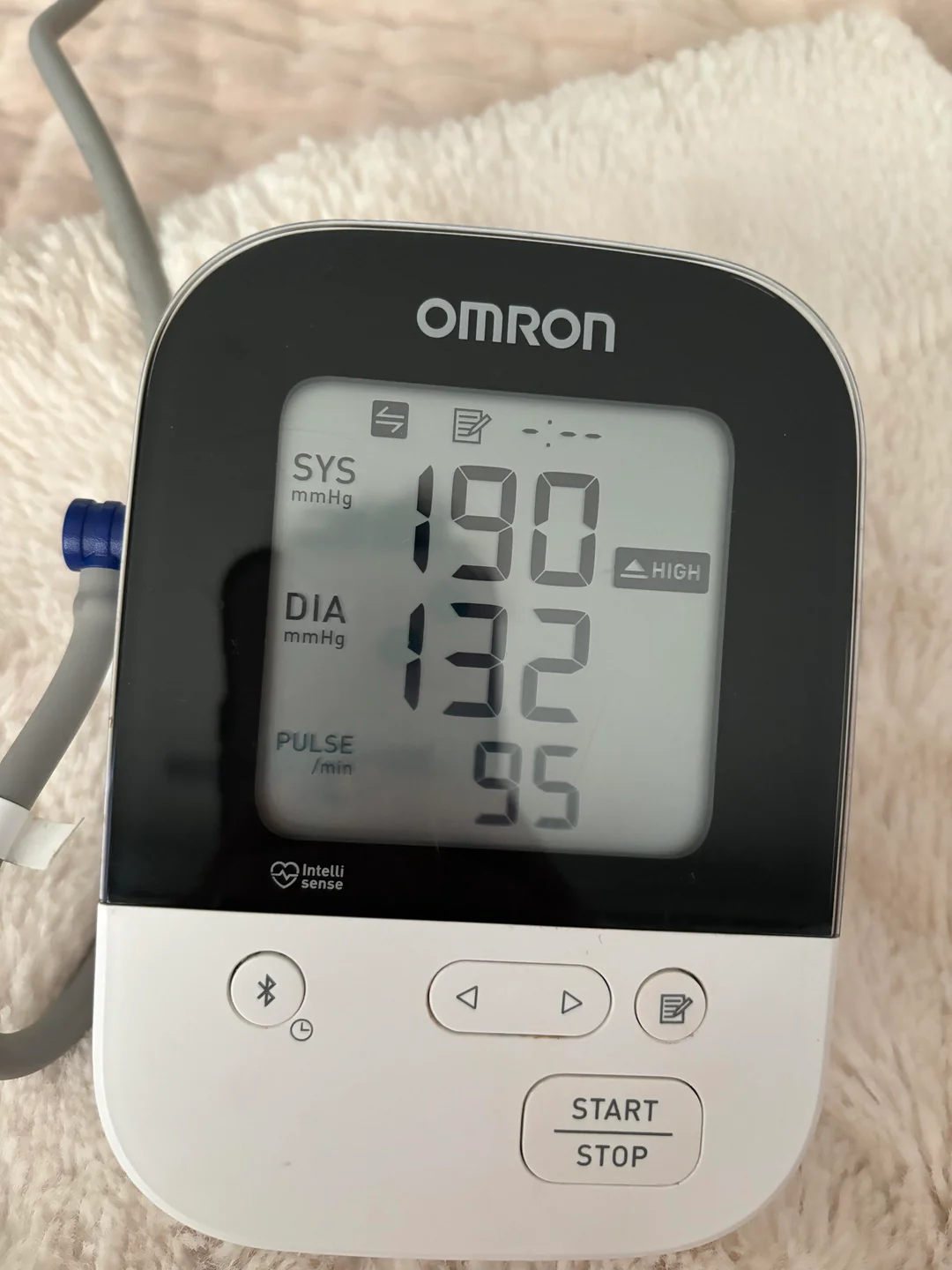
Ran for 1 day, from June 20 to June 21, 2026, the last day Crush saw it.
Run by Hannah Mitchell on Facebook. Crush is not the advertiser and does not verify its claims. See this ad in Meta's Ad Library(opens in a new tab)
Want an ad like this for your product?
Crush makes new ad images for your product from this ad: your logo, your product photo, your offer.
Trials from $19.95 USD, then $79.95 USD a month. Cancel anytime.
About this ad
- Meta Ad Library ID
- 2205825900265661
- Platforms
- Facebook, Instagram, Audience Network, Messenger and Threads
- Relaunches
- 0
- Niche
- Food & Beverage
Ad text
If your husband has been through SuperBeets, Force Factor, generic beet powder, three rounds of the DASH diet, sodium tracking apps, home cuffs from three different brands, doing everything his cardiologist says, spending everything you have, and still waking up every morning to check his blood pressure before his feet even hit the floor, still rearranging the whole day around what his first reading was, still swearing he'll relax about the numbers and white-knuckling through a normal dinner until the anxiety gets so bad he's checking it at the table... I'm about to tell you exactly what they're hiding from you and why they'll NEVER tell you the truth. And by the end of this, you're gonna be pissed. Because there are three things happening right now: One — His blood vessels are screaming at him that something is physiologically broken Two — The supplement industry is gaslighting him into thinking it's a compliance problem And three — There's a billion-dollar natural health industry that profits every single day he stays on products that scientifically cannot do what the label implies So let me tell you what happened with my husband, because his story is gonna open your eyes to how broken this really is. For YEARS, and I mean like three straight years, my husband was trapped in a blood pressure spiral. Not like "oh his numbers are a little elevated sometimes" kind of thing. I'm talking it started with a routine physical. The doctor measured him. Told him it was borderline. Said watch the sodium and come back in three months. And within a year he couldn't get through a single morning without checking that cuff. Not because he was weak. Because every reading told him something was wrong and nobody could tell him how to actually fix it. He was checking before breakfast to get a "baseline." Checking again after coffee to see if the caffeine spiked it. Taking three readings in a row because he didn't believe the first number. Carrying the cuff in his bag to restaurants. And when the numbers came back high? It was like watching him shut down. Not like a bad mood. I'm talking the whole day was gone. He'd sit there calculating whether the sodium in his lunch caused it. Whether he'd slept wrong. Whether stress was the culprit this time. Obsessing over whether he should take his pill now or wait to see if it came down on its own. Lying awake at 2am rechecking, because surely it would be lower now that he'd been horizontal for six hours. He'd sit across from me at dinner and I could see it. He wasn't there. He was somewhere between his last reading and his next one. Present on the outside. Completely held hostage inside. And I watched him hate himself for every number that wasn't 120/80. Every single day. So obviously, we do something about it, right? Cardiologists. Naturopaths. A functional medicine clinic. A nutritionist who specialized in heart health. We're talking thousands of dollars in consultations, DASH diet meal plans, blood pressure monitoring programs, supplement protocols, the whole nine yards. And you know what every single one of them told him? "It's hypertension." "Reduce your sodium. Limit alcohol." "Take your lisinopril. It's first-line for a reason." "Try SuperBeets. The nitric oxide helps." "Exercise. Thirty minutes a day." "Your numbers aren't THAT high. Manage it with lifestyle." "This is just aging. You'll need to manage it long-term." MANAGE IT LONG TERM. This man's blood vessels are under pressure every single hour and they're telling him to just learn to live with it. But here's where it gets worse, and this is the part that made me start digging into what the hell is actually going on. They put him on three different protocols over eighteen months. Lisinopril first. Then a higher dose of lisinopril plus DASH diet compliance. Then lisinopril plus SuperBeets plus magnesium plus CoQ10. And their logic was "oh, we just need to find the right combination of lifestyle and support to bring the numbers down." Those protocols made everything worse. I'm talking six months on lisinopril where he developed a cough that wouldn't stop and dizziness that made him afraid to drive. Completing a three-month DASH diet overhaul and watching his numbers drop four points and then plateau at 149/91, which felt like nothing after everything he'd given up. Three bottles of SuperBeets — three months of faithfully taking it every single morning — and his systolic was still hovering between 145 and 158, which meant his cardiologist's response was to increase the lisinopril dosage. And the anxiety? Still there. Now with medication side effects on top of it. So at this point, I'm fucking furious. Because I'm watching my husband do everything the system tells him to do, spend everything, try every protocol, and get NOWHERE. Not better. Nowhere. And that's when I started asking questions that nobody wants you to ask: Why are cardiologists so quick to prescribe medication that treats the number on the cuff without ever asking why the vessels can't dilate? Why does SuperBeets run TV commercials showing dramatic results when his three months of taking it produced almost nothing? Why does every supplement label say "supports healthy blood pressure" when the clinical trials that actually showed 8 to 14 mmHg drops used amounts of dietary nitrates that these products don't come anywhere close to? And why the fuck does nobody ever talk about what's actually in these products, or how much of what actually works is in there? So I went down a rabbit hole. And I mean a DEEP rabbit hole. I started researching why someone would take beet supplements faithfully, follow the DASH diet, reduce sodium obsessively, and still not hit 120/80. Every mainstream health site gave me the same bullshit answers. "Lisinopril. Amlodipine. DASH diet. Exercise. Potassium. Manage it for life." But then I found this article from a functional nutrition researcher — someone who actually studies WHY natural interventions work in clinical trials and fail in supplements. And she mentioned something I had literally never heard of in my entire life. Dietary nitrate deficiency. Now pause for a second. You know what's insane? We learned about blood pressure in health class. Systolic. Diastolic. 120/80. But nobody, and I mean NOBODY, ever taught us that the reason blood vessels relax and lower blood pressure is because of nitric oxide — and that nitric oxide requires a specific, minimum amount of dietary nitrates to produce — and that most beet supplements contain less than 2% of that amount. And that's not an accident. Because once you understand what dietary nitrate deficiency actually does to blood vessel function, you realize that 90% of the "I tried beet supplements and they did nothing" stories the supplement industry can't explain? It's ALL connected to the gap between the dose in the bottle and the dose in the clinical trials. A gap they know about. A gap they profit from hiding. Here's what nitric oxide actually does: It's your blood vessel's relaxation signal. The molecule that tells the smooth muscle in your artery walls to let go — to widen the channel so blood flows with less resistance and pressure drops naturally. It's what allows your cardiovascular system to self-regulate instead of straining against itself all day. Think of it like this: if your arteries are a highway, nitric oxide is the signal that orders extra lanes to open. When the signal is strong — when you have adequate dietary nitrates converting into nitric oxide — traffic flows. Pressure drops. The heart doesn't have to work as hard. When the signal is weak because you're not getting enough nitrates, the lanes stay narrow no matter how hard your heart works to push blood through. When your nitric oxide production is adequate? Your blood vessels can actually respond to demand. Pressure stays stable. You handle a stressful meal, a bad night's sleep, a hard day at work without your systolic spiking into the 160s. The reading in the doctor's office doesn't fill you with dread because you know your baseline has genuinely shifted. But when your dietary nitrate intake is below the clinical threshold? That's when nothing works. Your blood vessel walls can't generate the vasodilation signal on their own. The supplement on the counter looks like it should help, and biochemically the mechanism is real — but the dose is so far below what the physiology requires that the effect is invisible. So you eat right, take the supplement, and still watch the cuff read 152/94. Not because you're a non-responder. Because no one told you what dose actually moves the needle. And here's what nobody tells you: this isn't about taking a supplement or not taking one. Nitric oxide production declines about 10% per decade after the age of 40. By 60, most people are operating at roughly half the NO production they had at 40. That's why "eat more beets" worked when he was in his 40s and barely registers now. The decline is progressive. And the minimum effective dose of dietary nitrates is not 10 milligrams from a scoop of dehydrated beet powder. It's not 15 milligrams. Clinical trials showing real blood pressure reductions use 230 to 1,000 milligrams of dietary nitrates per dose. So you get: Checking blood pressure before your feet even hit the floor every single morning Taking the reading, not believing it, taking it again, watching the second number be higher because now you're anxious about the first number Avoiding restaurants because you can't control the sodium and that'll spike things for sure Skipping the glass of wine at dinner because what if it pushes the numbers tonight Sitting at the table calculating whether the sauce had too much salt rather than being present for the meal Refusing vacations because the unfamiliar sleep and diet will throw everything off Lying awake at 2am rechecking "just to make sure" and then not being able to fall back asleep because the reading was 139 and that feels like danger Carrying the blood pressure cuff in your bag because you might need it Rearranging the whole morning routine around whatever the first reading was Watching 120/80 become a number that feels like a verdict rather than a goal A cardiologist who shrugs and increases the dose of a medication that gives him a cough he can't get rid of Supplements that looked promising and delivered four weeks of mild improvement followed by a plateau that nothing breaks through And here's the CASCADE EFFECT that makes it worse: When dietary nitrates are below the clinical threshold, blood vessels can't dilate in response to ordinary stressors like a bad night's sleep, a salty meal, or fifteen minutes of traffic. So ordinary life events that shouldn't spike pressure start spiking it anyway — which convinces him that the problem is worse than it is, which creates more anxiety, which further raises cortisol, which further constricts blood vessels, which makes the next reading worse. The spiral feeds itself. When dietary nitrates are below the clinical threshold, the endothelium — the inner lining of the blood vessels — can't maintain its own nitric oxide production over time. It atrophies from disuse. So the longer the gap persists, the harder it becomes to restore function even when you do finally get an adequate dose. When dietary nitrates are below the clinical threshold, effects from the inadequate supplements last only two to three hours before fading back to baseline. So he takes his SuperBeets at 7am, sees a slight improvement at 8am, and by noon the reading is right back where it started. Reinforcing the belief that natural solutions don't work for him. His blood vessels are stuck. And they cannot unstick themselves without a dose of dietary nitrates that crosses the clinical threshold. And here's the part that made my blood boil: The supplement industry KNOWS about this. They know the clinical trials used 230 to 1,000 milligrams of dietary nitrates per dose. They know their products typically contain 5 to 12 milligrams. ConsumerLab tested twelve leading beet supplements and found a 100-fold difference in nitrate content — from 4.3 milligrams to 495 milligrams per serving. They know which end of that range their products are on. Why? Because you can't put 400 milligrams of verified dietary nitrates in a serving of supplement and sell it for the same price as dehydrated beet root powder. You can't cold-extract a concentrate that preserves nitrate content through the processing chain for what it costs to spray-dry beet juice and call it "superfood powder." There's no money in admitting that the reason your three bottles of SuperBeets "didn't work" is that they never had the dose to work. Because that answer requires honesty about what's actually in the product — and the supplement industry's entire business model depends on vague "supports healthy blood pressure" claims that require no specific dose. There IS money in keeping him cycling through multiple products, each one vaguely promising "nitric oxide support," while the real clinical data sits in journals that nobody in the supplement aisle ever reads. See how that works? So I kept researching. I'm reading studies now. PubMed. The British Heart Foundation. Hypertension journal. Talking to a functional medicine doctor who actually understands how the nitrate pathway works in real physiological terms. And I found out there's actual RESEARCH on what specific dose of dietary nitrates produces measurable blood pressure reduction — and on what concentration process preserves enough nitrate content to hit that dose in a supplement form rather than requiring a full cup of beet juice with every serving. The finding is straightforward. The clinical trials showing 7 to 14 mmHg drops in systolic blood pressure used dietary nitrate doses of 400 milligrams and above. The Kapil et al. 2015 study published in Hypertension — the American Heart Association's own journal — showed an 8.1 mmHg reduction in systolic and 3.8 mmHg in diastolic using beetroot juice. That's more than the reduction typically achieved by hydrochlorothiazide, one of the most commonly prescribed first-line BP medications. But you'll never hear your cardiologist recommend a specific milligram dose of dietary nitrates in a supplement form. Why? Because there's no prescription to write for it. No referral to generate. No follow-up appointment it necessitates. No insurance billing code for "tell your patient to find a beet supplement with a verified Certificate of Analysis showing 400mg+ nitrate content per serving." The information exists. The clinical proof exists. The mechanism is textbook physiology — not alternative medicine. It's in the British Heart Foundation's literature. It's in forty-three randomized controlled trials summarized in a 2017 meta-analysis. But the gap between what the research says and what ends up in a supplement bottle has made the entire beet category look like it doesn't work. When the real answer is: it works exactly as described. At the clinical dose. Which almost no product provides. So my husband finally finds a functional medicine doctor who actually knows what she's talking about. And this woman literally validates everything I'd been researching. She says: "The nitrate content in standard beet powder supplements is clinically insignificant. The mechanism is real — the dose is the problem. You need a product with verified dietary nitrate content at or above the threshold the RCTs used. Cold-extracted concentrate, not dehydrated powder. And you need to know what's actually in the bottle — not what the label implies." She hands us a list of criteria and tells my husband to find a product that actually matches them. And for the first time in three years, someone gave him a physiological explanation instead of a compliance one. But here's the problem. The functional doctor told us exactly what to look for — but not which brand to trust. Because most beet supplements don't disclose nitrate content at all. And the ones that do are all over the place. The difference between 4 milligrams and 495 milligrams per serving is the difference between theater and medicine. There's no way to know which side of that gap you're on without a published third-party test. My husband had to research brands himself. Going through supplement sites, lab testing databases, health forums, Amazon pages hunting for any brand that would actually tell you what was in the bottle. Because, surprise, most of them won't. And when he tried to bridge the gap himself? He bought a three-month supply of SuperBeets because it was the most recognized name in the space. And he took it faithfully every morning. After three weeks? The readings dropped from 152 to 147. He was encouraged. Something was moving. But it wasn't 120/80. It wasn't even close to feeling like the mechanism was working the way the research described. After a month? 148/93. The dip had stalled out. His cardiologist called it "modest lifestyle benefit" and suggested they increase his medication dose. So we were relieved by the initial drop, right? But here's what bothered me. When I dug into the actual nitrate content of what he was taking, I found ConsumerLab's independent testing. SuperBeets didn't disclose its nitrate content. Other brands in the test ranged from 4.3mg to 495mg per serving. The clinical trials used 400mg and above. He was almost certainly getting somewhere in the single digits to low teens. He wasn't a non-responder. He was starving the mechanism. What I actually needed to find: A brand that discloses verified dietary nitrate content — a specific milligram number, confirmed by third-party lab testing, not a "proprietary blend" label that tells you nothing Cold-extraction processing — not spray-dried dehydrated powder, which destroys nitrate content in the drying process A published Certificate of Analysis you can actually look at — not "GMP certified" marketing language that doesn't tell you what's in the serving No antibacterial additives that would eliminate the oral bacteria responsible for the first step of the nitrate-to-nitric oxide conversion pathway — a detail almost no brand addresses at all An honest price — not the $60-80/month premium brands charge for the same underdosed powder with better packaging And I'm scrolling through a health forum about natural blood pressure management one evening, just looking for anyone who had actually solved this, and I see someone mention a company called Clarive. BeetWise Root Formula. So I go to their website, ready to be disappointed like I had been with the twelve other companies I'd looked through. And I almost fell out of my chair. They published their verified dietary nitrate content per serving. Right on the product page. And I could pull the third-party Certificate of Analysis. An actual number. Not "concentrated beet extract." Not "nitric oxide support blend." An actual verified nitrate milligram count per serving — sitting in the range the clinical trials used. That was the first thing. But that's not even the part that got me. When I dug into what makes the BeetWise formulation different? They use a cold-extraction process that preserves nitrate integrity through processing — the detail that separates a genuine clinical-dose product from dehydrated beet powder in a capsule. And they'd done the work on bioavailability specifically — including formulating without the antibacterial components that block the oral bacteria step, which is the part of the pathway that almost every other brand completely ignores. They weren't just putting beet root in a bottle. They'd addressed the actual mechanism. Every step of it. And here's where my jaw hit the floor: When my husband was hunting through Amazon brands? $45 to $80 a month for products with no disclosed nitrate content and no way to verify what was actually in the serving. BeetWise Root Formula? A fraction of that. Already a completely reasonable ask for something with an actual clinical rationale, right? But THEN — and I'm not making this up — check the bundle options on the page. The multi-month pricing makes it even more affordable per bottle. Go look at the price right now. I'm serious. It's not what you'd expect for a product that publishes its Certificate of Analysis. And my husband has been taking it for five months now. The number-checking obsession? Not gone, but transformed — he checks twice a day like his doctor recommended instead of fifteen times. Because the readings are actually moving in a direction that doesn't require constant surveillance. After four months, the readings had shifted enough that his cardiologist reduced his lisinopril dose. First time in four years. After two weeks: the first morning where the cuff reading didn't determine the emotional tone of the entire day. After a month: his first doctor visit where the in-office reading came in at 136/84. Not 120/80. But genuinely, actually, measurably moving in the right direction for the first time since this started. After two months: he took his reading at the airport during a stressful travel delay. 129/81. He texted me from the gate. "Babe. Look at this." After five months: his cardiologist looked up from the chart and used words I genuinely didn't expect to hear: "Whatever you've been doing, the trend is real. Let's talk about reducing the medication." This is the protocol they don't want you to know about. Because the second you give your blood vessels the actual clinical dose of dietary nitrates — the dose the research used, not the dose that fits in a cheap capsule — they start doing what blood vessels are supposed to do. Relaxing. Dilating. Generating nitric oxide on their own through restored endothelial function. His blood pressure didn't drop because of magic. It dropped because his physiology finally had the raw material it needed to run the pathway. He doesn't need their Lisinopril revolving door to be his only option anymore. He doesn't need their "lifestyle modification" that produces four-point drops and then stalls. His blood vessels are starting to RESTORE THEIR OWN CAPACITY — producing nitric oxide the way they're supposed to when the endothelial function improves with consistent clinical-level nitrate intake. Now here's the thing I need you to understand: The longer you wait, the more his endothelial function continues its age-related decline and the harder it becomes to restore adequate nitric oxide production. Nitric oxide production drops roughly 10% per decade after 40. In your 60s, you're running at half the NO production you had at 40. That decline is real, it's progressive, and it compounds. The blood vessel walls that were supposed to be producing NO on their own become increasingly dependent on dietary sources — which means the clinical dose matters even more, not less, as time goes on. Right now, if your husband is dealing with treatment-resistant blood pressure numbers, readings that won't move despite doing everything right, a supplement regimen that produces mild improvement and then stalls — he can reverse this by getting the actual clinical dose of dietary nitrates to the mechanism that controls vascular resistance. But if you wait six months? A year? The endothelial function decline continues. Nitric oxide production capacity drops even lower. His blood vessel walls lose more of their ability to respond to the signal even when you give them adequate dietary nitrates. And then it takes longer to recover. Every month that goes by, his vascular tissue's ability to heal itself decreases. He's been on protocols that don't provide the dose, and the answer has been sitting in the clinical research the entire time while the supplement industry kept selling him underdosed powder and calling it nitric oxide support. So if your husband is dealing with ANY of this — readings that won't hit 120/80 despite months of effort, the morning check that rules the whole day, the anxiety spiral when the number comes back wrong, taking it fifteen times because the first reading can't be right, avoiding the foods and situations that might spike things, the cardiologist who keeps adjusting medication without addressing the underlying mechanism — this is literally the time. Not next month when his endothelial function has declined further and the pathway is even harder to restore. Right now. I put the link below. And honestly? Even if you're skeptical — especially if you're skeptical, because you've tried beet supplements before and gotten nothing — grab one bottle. Try it for a month. Check his blood pressure before the first serving and after two weeks. Watch what happens when the mechanism finally gets what it needs. Because the supplement industry isn't coming to fix this. They profit too much from selling him the category while withholding the dose. You have to solve it yourself. Go get it. And use the stable readings he gets back — the 120-somethings he stopped believing were possible, the morning where he picks up the cuff and then puts it down without his whole day depending on the number — to finally let him show up for his life again. https://clarive.co/products/clarives-beetwise-root-formula
Where the ad sends people
clarive.co
Read this if your blood pressure is worrying you
Clarive Beetwise, 400mg verified nitrates per serving not 5mg like most brands. Cold-extracted beetroot supplement with published lab results. 90-day guarantee. Try BeetWise today.
Learn more: clarive.co(opens in a new tab)