
Inactive· since Aug 31, 2026
- 11
- days it ran
- 0
- relaunches
- 6,455
- EU reach
Ad copy
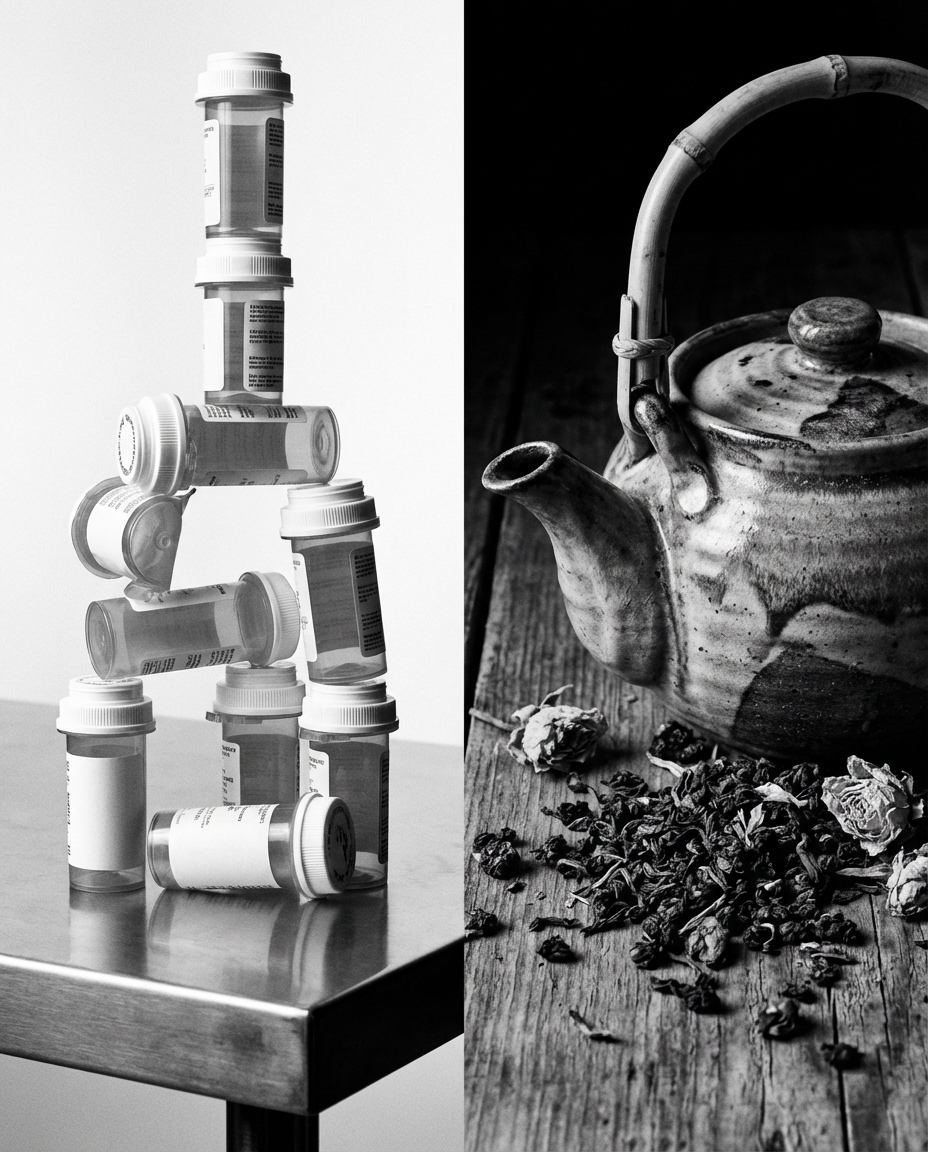
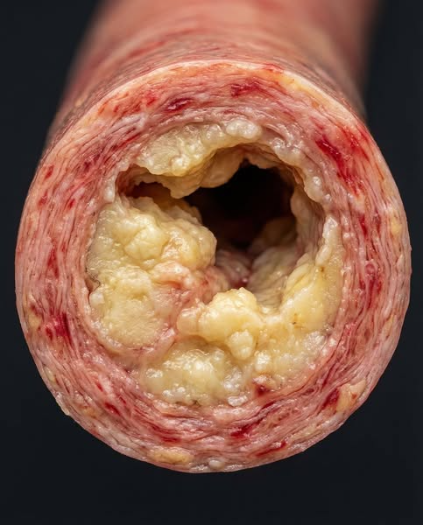
I Called The Police On The Man Next Door At Midnight. Then The Officer Walked Back Across The Yard And Took His Hat Off. The Larkins moved onto Fairlawn Street in February. I had the man figured out inside a week. I'd like to tell you it took longer than that. It didn't. He was big through the shoulders and he wore a heavy black vest most days, even in weather that didn't call for it. There was a scar on the left side of his face that ran from his ear down to his jaw, white and raised and old. He didn't wave. I've had 14 months to think about that week and I still can't make myself look good in it. He didn't wave, and I decided that meant something. He'd start his motorcycle in the dark and let it run in the driveway while he pulled his gloves on. Early, before the sky changed, when the whole street was still asleep. I'd lie there listening to that engine idle and I'd build a whole man out of it. I called the town about the noise ordinance in April. Renata told me to leave it alone. I told her somebody had to say something. Nothing came of the call and the mornings didn't change. By summer I'd stopped looking at that house at all. That was my version of being the bigger man. So that's who I was in August. A 67-year-old man who'd decided about a stranger and then spent 6 months collecting evidence for a verdict he'd already reached. Now the night. I don't sleep much anymore. I haven't in 10 years, and I've made a routine out of it. I go down, I sit in the kitchen with the light off, and I wait until it's late enough that going back up feels like a decision instead of a failure. That's what I was doing when I saw the light. It was a work light on a folding stand, and it was in the Larkins' backyard. I put my glasses on. Boyd Larkin was digging. He had a spade and he was working steady. The pile beside him was already up past his knee. And the hole looked long. It was long. It was in a shape I recognized without wanting to. Then I saw what was lying on the grass next to it. Something wrapped in a blanket. Green. Faded. In that light it was about the length of a person, and narrow. I was frightened, and underneath the fright there was something worse, and the worse thing was that I was glad. Glad I'd been right about him. I went to the phone in the hall so the light from the screen wouldn't show in the window. The dispatcher asked me to describe what I was seeing, and I heard my own voice say the words, and they sounded insane and also completely obvious. She asked if he had a weapon. I said, "He has a shovel." She asked me to stay inside. They came without sirens. That's the detail I didn't expect. 2 cruisers, no sirens, and no headlights. Renata came down in her robe because she'd heard me on the phone. I told her to stay back from the glass and she didn't. She stood next to me and put her hand flat on my back and we watched it happen without a word between us. An officer went up the Larkins' driveway on foot. Another went through the side gate. I could see slices of the yard through the fence slats. The work light. A shoulder. Boyd standing up straight with the spade laid down on the grass beside him and his hands out where they could be seen. Nobody shouted. I kept waiting for somebody to shout. It went on a long time. Long enough that Renata sat down at the table. Long enough that the coffee maker clicked over on its timer and neither of us moved to touch it. Then the officer came out of the gate and walked across the grass toward our side. His name was Vega. I found that out later. He was maybe 40 and he had a notebook in his hand and he stopped about halfway across, in the open, where I could see him. He stood there a second. Then he reached up and took his hat off and pressed it flat to his chest, and he stayed like that. A police officer standing in a dark yard with his hat in his hands, at a hole in the ground, at midnight. You already know I got it wrong. I didn't know it yet. Officer Vega came to the door. He asked if I was the caller. I said I was. He said, "Sir, there's no crime here." I said something stupid. I think I said, "There's a hole." He said, "Yes sir. There is." Then he told me. Boyd Larkin's wife had died 9 days earlier. Her name was Netta. The thing on the grass was her ashes, in a wooden box, wrapped in a quilt she'd made herself. Faded green with white stitching all over it, hand stitching, done small. It was a box the size of a bread tin, and I had stood at a window and built a grave around it. She'd asked to be put in the ground behind the house. The county allows it. You file for it. There's a setback you have to keep from the well, and there's a form that goes on the deed so that whoever buys that house someday knows what's in that yard. Boyd had the paperwork in a folder on his kitchen table. He'd had it for weeks. He'd had it since before she died, because she'd made him get it while she could still read it over. Vega said, "I went out there with my hand near my belt." He came back with his hat off. He'd read that form, and then he'd looked up at a man standing in a hole in the dark, alone, at midnight, doing a legal thing. I asked him why midnight. He said, "You'd have to ask him." I did ask him. It took me until the next afternoon to work up to it, and the answer was so plain it took the legs out from under me. Boyd said, "I didn't want an audience." He said, "Around here somebody's always in a window." There was another thing, and it landed on me that night. Renata was still at the kitchen table when Vega left. She hadn't moved. I said her name and she didn't look up, and then she said, "Cliff. I've been going over there." Tuesdays and Thursdays. Since March. She'd taken a pie over the week they moved in. She said, "Netta answered the door holding onto the frame with both hands, because she couldn't stay upright without it." So Renata started going. And then she started staying. For 5 months my wife had been walking next door to sit with a woman who was dying, and she had never once told me, and the reason she never told me was me. She said it straight out. She said, "You'd made up your mind about him and I didn't want to hear you say it in front of her house." She'd known for 9 days that Netta was gone, and she'd heard me on the phone saying the shape of that hole. She stood in the hallway and couldn't find a place to start, because the start was March. I asked her later why she hadn't taken the phone out of my hand. She said that stopping me would have meant starting, at midnight, standing next to that phone, with 5 months of it coming out at once. She said, "There was no short way to say it, and there never was going to be, because of the way you talked about him." 38 years married and my wife had a whole second life that ran on Tuesday and Thursday afternoons. She was protecting a woman who was dying from having to hear what her neighbor thought of her husband. I sat down in the chair across from her and I couldn't look at her. I called the police on the funeral. There was one mourner and one dead woman and one hole in the ground, and I called the police on it. He had to stop and go get the folder. That's the piece I can't put down. He was standing in a hole he'd dug for his wife, and a stranger's phone call made him climb out of it, walk into his own kitchen, and produce a document to prove he was allowed to bury her. Then when they'd gone he went back out and finished, because it was still only half done. The next day I walked over. I don't know what I was going to say. I got about as far as the end of his driveway and he came out the side door and stood on the step, and I ran out of road. I got out something about being sorry. He let me finish. Then he said, "She told me people would think what they think." He said, "She said if anybody ever called, I wasn't to hold it against them." And then he put his hand out. I took it. His hand was bigger than mine and there were 2 fingers on it that didn't straighten all the way, and he shook my hand like it was nothing. I found out later what the early mornings were. He'd taken a shift at a warehouse out on the county road so he could keep her at home instead of putting her in a facility. The noise I called the town about was a man going to work. None of the rest of this makes sense without my brother. Sam died in 2018. He was 59. Heart attack, in his own driveway, on a Saturday morning, with the car door open and the keys in his hand. His doctor had seen him 7 weeks before that and had told him his numbers were fine. The word he used was fine. Sam came out of that appointment and called me from the parking lot and said, "He cleared me." He was pleased about it, and I could hear he was pleased. Sam walked. He'd quit smoking in his 30s and never went back to it, not once, not at a wedding. He ate like a man who'd read the pamphlet and believed it, and he'd been doing all of it for 20 years before he died. He got a chart that said he was fine, and 7 weeks later he was on the concrete. So I stopped going. Here's the logic, and it isn't stupid logic. If a clean chart didn't save my brother, a chart doesn't save anybody. And if it doesn't save anybody, then getting one is just paying to be worried. I hadn't had blood drawn since 2018. Renata brought it up maybe twice a year and I had a laugh I did about it, a whole little routine, and eventually she stopped bringing it up. That was where I stood in August. 67 years old, no numbers, no intention of getting any, and a settled private theory that the whole business was theater. Netta Larkin had been a nurse for 30 years. She'd done cardiac work first and then hospice, which means the last stretch of her career was spent sitting in rooms with people who were dying and with the families who were watching it happen. Renata told me most of this after the burial, in pieces, over about a week, because she'd been carrying it alone. Boyd told me the rest across the fence. I asked Renata what they talked about, all those afternoons. She said, "Her patients, mostly." Netta had a thing she came back to. Renata said she brought it up more than once, near the end, when she was tired and less careful about what she said. She used to say that the charts of the men she'd nursed on the cardiac floor were so often fine. Not always. But so often. She'd been in the room, she'd read the file, and the file said the man was in acceptable shape, and the man was dying anyway. She said it bothered her for 30 years and nobody ever gave her a straight answer for it. And then Renata told me the other thing, and that one took the top of my head off. Netta's bed had been moved into the front room, because that's where the window was, and the window looked out at our porch. She watched me. She was a woman in a bed who couldn't do much else, and there was a street out there, and I was on it. And what she noticed, and mentioned to my wife more than once, was the stairs. I've got 4 steps up to my porch. That's all. 4. And she'd noticed that when I came up them with anything in my arms, I stopped at the top. Not for long. A couple of seconds. I'd get to the top step and I'd stand there with the bag or the mail or whatever it was and I'd wait, and then I'd go in. I did not know I did that. I can find it in my memory now that somebody's pointed at it, but I didn't know I did it, and Renata says she didn't either. Renata told me the words. She said Netta looked out the window one Thursday and said, "Get him seen." A woman I had never met, whose husband I'd reported to the town, was dying in a rented hospital bed 60 feet from my mailbox. She spent some of the attention she had left on me, and used it to tell my wife to get me to a doctor. I never spoke a word to her in my life. Renata got me an appointment for the middle of September and she didn't ask me. She told me at supper, and when I started up with my routine about it she put her fork down and said, "Cliff. She's in the ground and she was right about your steps." So I went. Dr. Soltis is on Beech Street and I hadn't been in that building since before Sam died. They took blood. I sat in the chair and watched the tube fill and thought about my brother in a parking lot, pleased. The call came 3 days later. My LDL was 181. Dr. Soltis read it off to me over the phone. He said, "One eighty-one," and then he waited. I said I understood. He talked about diet. He talked about walking. He said we'd draw it again in 3 months, and if the number was still sitting there we'd have a conversation about medication. I hung up and sat in my kitchen and felt exactly nothing, because I already knew a man with better numbers than that who was dead. I know how it sounds, a man who phoned the police on a funeral telling you what he learned from the widower. Boyd Larkin put in a garden that fall. Over her. Right over the plot, a raised bed, timbers and screws, and he filled it with the good soil from the far end of the yard. I'd be out at my fence and he'd be out at his, and we got into the habit of it, because neither of us wanted to be in the house. There were casseroles all that month. People from her old unit kept turning up with dishes, and Boyd couldn't eat a tenth of it, and he started handing them over the fence to us and I started taking them. He told me one afternoon that Netta had done a lot of reading about her own field once she was too sick to be in it. "She didn't have anything else to do but be right," he said. I asked him what took her, because I hadn't been able to ask before. He said, "Her heart was the last thing in her to quit." Then he asked me if I'd gotten my number. I told him 181, and I told him about Sam, and I told him my theory, the whole thing, the paying-to-be-worried theory. He didn't argue with it. "She'd have agreed with you about the chart," he said. Then he told me what she thought the chart was doing wrong, over about 3 weeks, at a fence, with a spade in his hand. The first part was hers, and Renata heard it too, so I've got it from both sides. He said, "The number on that panel is a count of how many LDL particles are moving through you." "Nobody at that lab looked at a single one of them to see what condition it was in," he said. Netta's version was blunter. She said she'd spent 30 years reading files that told her how many, and standing in rooms where the answer clearly wasn't how many. Second part. A particle like that can get damaged on the trip. The inside of it is fat. Around the outside of it there's a single protein that goes right round the whole thing, and it has a name, ApoB-100. There are reactive molecules moving through your blood at all times, and when they hit one of these particles they damage both halves. "They burn the fat inside and they chew on the wrapper," he said. Boyd said his wife used the word rancid about it, and then apologized for using it, because she said people hear rancid and picture something in the back of a cupboard. She said that's about right, though. Fat sitting somewhere warm with air getting at it, going off slowly, and the wrapper around it going off with it. He said, "A count doesn't know the difference." "It counts the rancid one and the clean one exactly the same and hands you one number for both." Third part, and this part is hers word for word, because Renata made her say it twice and wrote it down at the kitchen table. "The damage leaves fingerprints." "The burnt fat can be measured." "The wrapper protein can be looked at directly." "You can see where it's broken apart, and you can see where it's been chemically scarred, and where something's been tagged onto it that shouldn't be there." I said to Boyd, "I gave a year of my life to antioxidants once." He said, "It's a molecule with a name, doing a job somebody measured. Call it what you want." Here's where it turned into his part instead of hers. He drove a truck for 22 years and then he stacked pallets so his wife could die at home. He said the answer she'd landed on was tea, and he watched my face while he said it, and then he said, "Yeah. I know." I told him that year had been green tea. That's true. After Sam, for a year, I drank green tea every morning like it was a prescription, because it was the thing I could do that didn't require going into a building and being told a number. "Then you know the famous one," Boyd said. "EGCG." I said I'd seen it on the box. "Oolong," he said, "isn't green tea that got left out." "They oxidize that leaf on purpose," he said. That's the whole difference. Somebody takes the leaf and lets it oxidize under control, and stops it where they want it, and that process builds molecules the green leaf doesn't have. One of them is 2 EGCG units welded together into a single bigger molecule. He went in the house and came back with his wife's folder, and he found the page and held it out where I could read the word off it myself. Oolonghomobisflavan A. I laughed at him. I said, "That sounds made up." And then he told me the part I've since repeated to about 9 people. He said, "The controlled oxidation of the leaf is what builds the molecule that stands up to oxidation in the particle." "You oxidize the leaf on purpose so it can go do something about the oxidation you didn't ask for," he said. I asked him how anybody would even know that. He turned to the next page in that folder, because his wife had been the kind of woman who kept a folder. Some researchers took human LDL. Actual human particles, in a dish. They attacked them 3 different ways, on purpose, to be thorough about it. Peroxyl radicals first. Then peroxynitrite, which is one the body cooks up itself when there's inflammation. Then copper. Into all of it they put the oolong molecule. Then they went looking for the fingerprints. Fewer burnt fats inside. And the wrapper held. It came through with less of the breaking apart and less of the scarring, and the tagging was down too. Same answer down all 3 attack routes. That was 2017. Then Boyd said something I didn't expect, and he said it before I could. He said, "A dish isn't a person." He said it looking at the garden, not at me. He said his wife had been very firm about that. She'd watched 30 years of things that worked fine in a dish. And a dish has no liver in it, and no gut, and no 40 years of habits. I said, "So what good is it?" "It tells you the molecule can do the job," he said. "It doesn't tell you it does the job in a person." Then he told me about the people. Researchers put oolong catechins into 60 adults for 12 weeks. Blinded, placebo controlled, run properly. What they were measuring moved in the right direction. Nobody in that trial was handed a grocery teabag. They gave them a drink built to carry the catechins, at a level a mug of whatever's in your cupboard is never going to reach. So the trial isn't a promise about your kitchen. And then he closed the last gap himself. "None of it says a thing about the box in your own cupboard with the word oolong printed on the front," he said. Because the molecule is made by the processing. "Whole leaf, grown high, oxidized under control and stopped at the right place," he said. That's a manufacturing question. Dust in a paper sack with oolong on the front is a different product wearing the same word. He said, "Draw your own blood twice and stop taking my word for it." I got it wrong twice first. First I did the diet. 3 months of it, and I wasn't lazy about it. Red meat down to almost nothing, and I'm a man who'd cooked on a grill every Sunday since the kids left, so Renata will tell you what that cost the household. I walked a mile most days on the flat stretch by the school, and when it got cold I walked it anyway. I even gave up the 2 beers, which felt like the kind of sacrifice that ought to buy you something. The recheck came back and Dr. Soltis read it and it was sitting right up against 181 where I'd left it. He didn't even write it down while I was there. He said, "Some people just don't move much on diet," and he started in on medication again. I told him I wanted a little more time. He said, "Fine," and there was a lot loaded into it. He wrote it anyway, and I filled it that week, because I didn't have a reason not to. Second thing I did wrong. I went to the market and bought the cheapest box on the shelf with the word oolong on it. Drank it every morning through January. Nothing changed, and I told Boyd about it like a joke. He didn't laugh. He said, "What's in it?" Here are the numbers he gave me. The research level people are aiming at is somewhere around 150 milligrams a day. A supermarket bag of tea dust runs about 12 milligrams a cup. The ones with premium on the front, about 25. A decent whole leaf runs about 44. So the box I bought was delivering about 8 percent of what the research was built on, and I'd been drinking it like it was medicine and then using its failure as proof the whole idea was nonsense. Then Boyd told me how to do the thing he'd already told me to do. He said, "You can have your oxidized LDL drawn." Not the count. The condition of it. There's a walk-in out past the fairgrounds and they'll do it without a doctor's order. "You don't need anybody's permission for it," he said. I went the following Tuesday. The result came back 69 U/L. Under 60 is where they want you. I read it standing at the bottom of my own 4 steps with the mail still under my arm, and 2 things came at me at once. I'd looked at a man's scar and his vest and the hour he started his engine, and I'd built a whole person out of the outside of him, and I'd been wrong the entire time. And I'd looked at a number that counts how many and decided that was the whole of what could be known about me, and my brother had done exactly that and it buried him. I asked. Nobody ever drew that second number on Sam. It was available and nobody drew it, and his chart said fine. I ordered the good tea that night. Whole leaf, grown at altitude, 4 grams of it in the bag instead of the sweepings. It comes in at 187 milligrams of EGCG in a cup and 340 milligrams of polyphenols all in. That's nothing like 12. It clears the decent bag too. That's more leaf in the bag than a bag usually holds, grown higher, and left in the water longer. 1 cup, every morning, water hot but not boiling, 3 to 5 minutes. That's the whole protocol and it's boring. There's no ceremony to it. I make it while the dog eats. https://shop.pipitea.com/ppch/sp-nm I gave it the winter and then I did both draws again on the same morning, the panel at Dr. Soltis's and the oxidized one out past the fairgrounds. LDL came back 155. Oxidized LDL came back 57. 57 is under 60. That number had been sitting under the cover the whole time, and I'd spent 67 years reading covers. I brought both papers to Dr. Soltis because I wanted to watch him. He looked at the panel first and said, "The pill's doing its job." He'd already decided where the result came from before he read it. Then I put the other sheet in front of him. He read it. He read it again. He asked me who ordered it. I said, "I did." And then he did the shrug. You know the one. Shoulders up and his hands out a little. He said, "Well. Keep doing whatever you're doing." That's the closest thing to a blessing I'm going to get and I've decided it's enough. He's a good doctor. He was trained on the count, and the count is what he goes by. I stayed on what he had me on. I didn't stop anything and I didn't ask to. The pill works on the count, and I've got no argument with the count getting smaller. It only ever had something to say about how many, and now I've got a number for the other half. But the number is the smaller part of this. Renata told me in April that I'd stopped stopping. I said, "Stopped stopping what?" She said, "The steps. You come up with the groceries and you come straight in." I made her tell me twice because I didn't believe her. Then I went out to the truck and got a bag and came up my own 4 steps and got to the top and kept walking, and I stood in my own hallway feeling like somebody had taken something off my back that I'd never known was on it. A dead woman found that from a bed she couldn't get out of. I couldn't tell you which of the things I changed took the pause off my steps. She never met me. She had every reason to think poorly of me, and she was right about my steps anyway. Boyd's garden came in. Tomatoes mostly, and garlic he'd put in over the winter, and it sits where it sits and neither of us calls it anything. This spring I took a spade to my own side of the fence and dug a bed against it, and I put in asparagus crowns. You can't cut asparagus the first year. Or the second. Boyd came over and looked at it and said, "That's optimistic." I said, "That's the idea." Renata still goes out on Tuesdays. She takes soup to a woman on Marbury Avenue now, and she comes home and tells me about it at supper, and she doesn't have to hide where she's been. So here's what I've got for you. I read a man by his cover and I read my own risk by its cover, and both times I was sure, and both times I was wrong. Open the actual thing. Go knock on the door. And then go get your oxidized LDL drawn, which you can do at a walk-in without anybody's order. The number you already have was only ever a roll call, and my brother's roll call was beautiful. The tea I drink every morning is here, and it's the same one I started on that winter. https://shop.pipitea.com/ppch/sp-nm P.S. There's a 90 day money back guarantee on it. Which means trying it costs you nothing. If the number doesn't move for you, you get your money back and you'll still be holding the 2 results, which is more than I had a year ago. P.P.S. A woman who never spoke to me got me seen. That was Netta Larkin. She could barely get across a room by the end, and what she had left she spent on noticing that a man next door paused at the top of 4 steps. Then she said 3 words to my wife, and my wife ignored my whole routine about it and made the appointment without asking me. I'd been ungracious about being nagged for 8 years. I had a bit I did. I was good at it, and I used it to end the conversation every single time, and it worked, and it almost worked all the way. So if you're watching a man who won't go, and he's got a laugh he does about it, understand that the laugh is the defense. He built it so the conversation would end. Stop waiting for him to agree with you. Put a date on the calendar and tell him at supper. My wife is the reason I'm writing this instead of being written about. P.P.P.S. Keep taking whatever your doctor has you on. I did. I'm not asking you to stop a single thing. If this ever turns into an argument between you and your doctor, bring him the second sheet of paper and let the numbers do the talking. That's all I did. P.P.P.P.S. They're running buy 2 get 1 right now, which is what I do, because the whole thing only works if there's a bag in the cupboard on the morning you don't feel like it. https://shop.pipitea.com/ppch/sp-nm
Natural Relief in Weeks
LEARN MORELike this ad? Make it yours.
Crush rebuilds this exact creative around your product — your brand, your colors, your offer — in about a minute.