Herbavera
Herbavera Facebook ad: “I Watched My Mother Ask For Help Getting Dressed Every…”
Ran for 49 days, from May 26 to July 14, 2026, the last day Crush saw it.
Run by Herbavera on Facebook. Crush is not the advertiser and does not verify its claims. See this ad in Meta's Ad Library(opens in a new tab)
Want an ad like this for your product?
Crush makes new ad images for your product from this ad: your logo, your product photo, your offer.
Trials from $19.95 USD, then $79.95 USD a month. Cancel anytime.
About this ad
- Meta Ad Library ID
- 2231565377655804
- Platforms
- Facebook, Instagram, Audience Network, Messenger and Threads
- Relaunches
- 0
Ad text
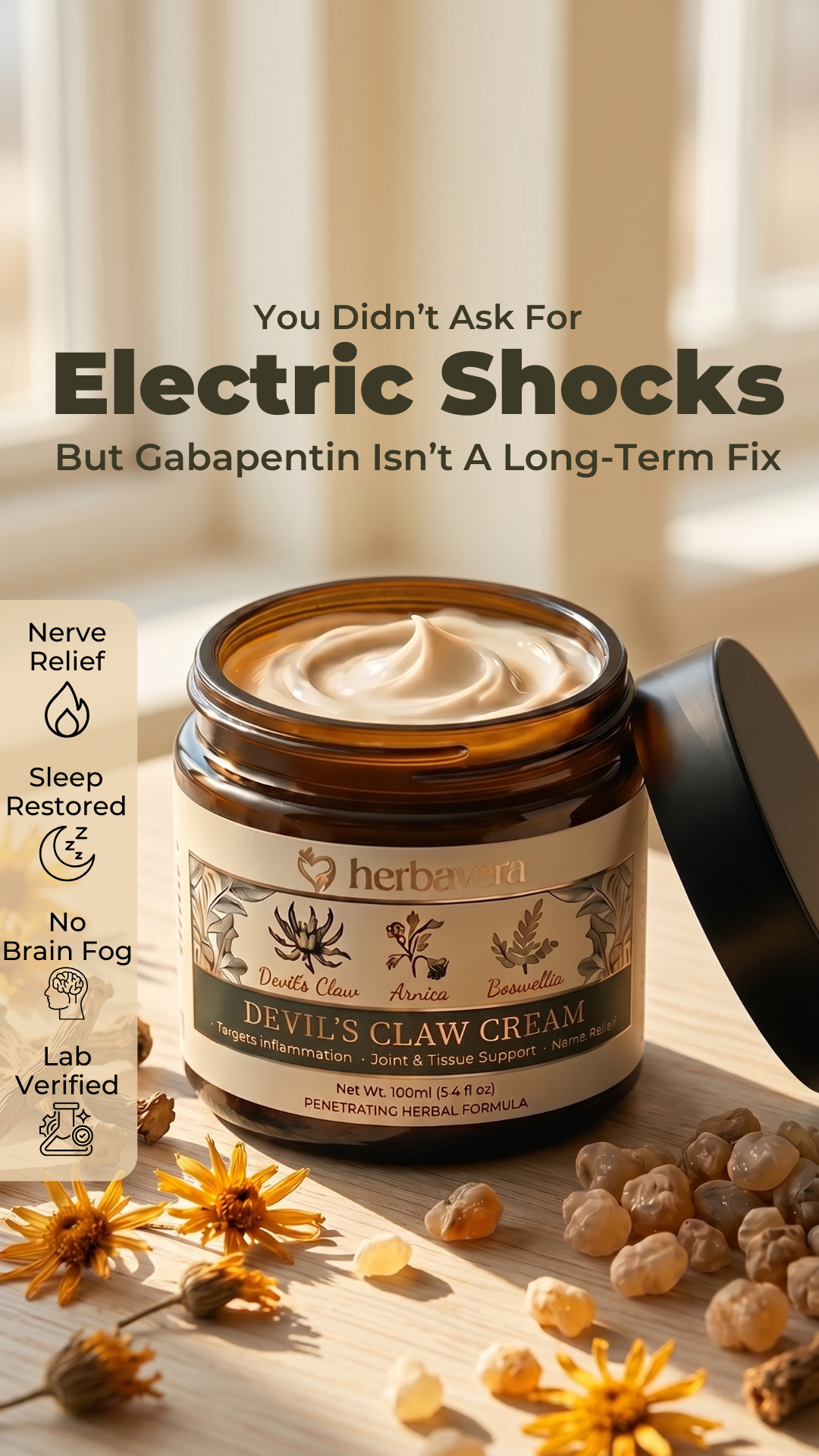
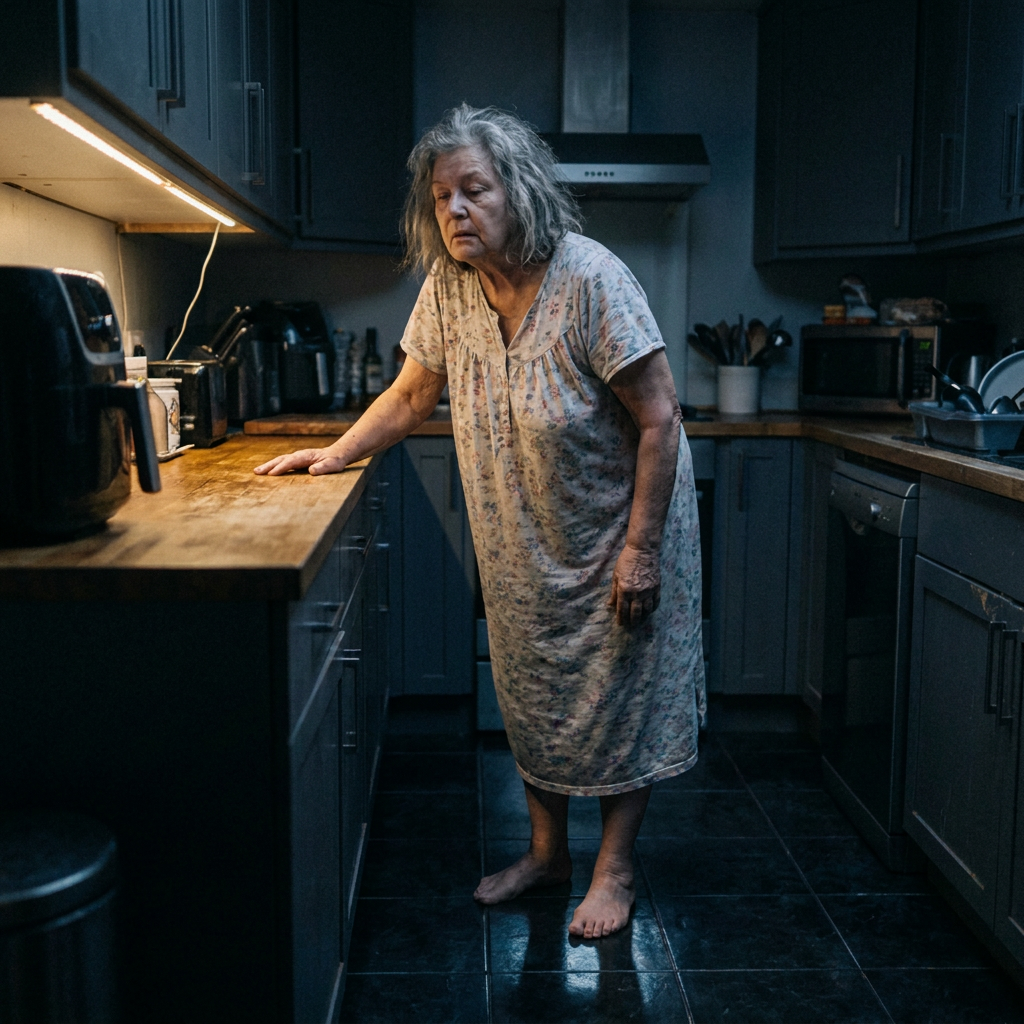
My mother survived breast cancer. The fingers that went numb during round three and stayed that way. The 2am burning that no medication touched. The dropped mugs, the abandoned blouses, the railing she white-knuckles going downstairs. The oncologist who wrote a prescription and called it management. The woman who raised me reduced to asking for help getting dressed. I refused to call that recovery. And by the end of this, you're going to be furious. Because there are three things happening right now that nobody in her oncology practice ever explained to us. One — The nerve damage chemo left behind isn't just a symptom of something that already happened. It's an active biological process still running inside her nerve fibers that her medication was never designed to reach. Two — The medical system has exactly one answer: pills that sedate your brain to quiet the signal while the actual damage continues underneath. Managed. Forever. Three — There is published clinical evidence for a different approach. It's cited in guidelines her oncologist has access to. Nobody mentioned it. Not once. Not in fourteen months. Let me tell you about my mother. Because her story is why I spent four months reading oncology research at midnight instead of just accepting what we were told. Her name is Patricia. She is sixty-six years old. She was a high school biology teacher for twenty-eight years before she retired. She found the lump herself in October. Called her doctor the same day. Was in surgery within three weeks. Six rounds of carboplatin and paclitaxel. Eight months of treatment. The cancer is gone. We cried in the parking lot of the cancer center on the day of her last infusion. We went to her favorite Italian restaurant. We ordered a bottle of wine and I watched my mother laugh for the first time in eight months. I thought the hard part was over. It wasn't. The numbness started during round three. She didn't tell us. She said later she didn't want to give us something else to worry about when we were already scared about whether the chemo was working. By round five it had spread from her fingertips to her palms. By the end of round six it was in her toes. After her last infusion she described her feet as feeling like leather stuck to the bottom of a shoe. Thick. Wrong. Like wearing two pairs of socks she couldn't take off. At night the leather feeling turned into burning. Not sharp pain. More like a permanent deep sunburn on the soles of both feet. She started sleeping with a pillow between her feet and the sheets because even fabric contact made it worse. Her husband told me she was getting up two or three times a night and sitting in the dark kitchen with her feet on the cold tile floor. In the mornings her hands were the problem. The first hour after waking her fingers felt stiff and unreliable. She started leaving her favorite blouses in the closet because the buttons had become a twenty-minute ordeal that sometimes ended with her sitting on the edge of the bed, hands in her lap, unable to finish getting dressed. She put the necklace my father gave her for their fortieth anniversary in the top drawer of her jewelry box. She could no longer fasten the clasp. She started gripping the staircase railing with both hands. Not because she was unstable. Because she couldn't fully trust the information her feet were sending her about the floor beneath them. She dropped a coffee mug. Then a glass. Then a plate that had been in our family for thirty years. Each time she looked at the pieces on the floor with an expression I had never seen on my mother's face before. Not frustration. Resignation. She had survived cancer. She felt she wasn't allowed to complain about what was left. Her oncologist had a name for it at the follow-up appointment six weeks after treatment ended. CIPN. Chemotherapy-induced peripheral neuropathy. He said it affected between thirty and fifty percent of patients who received her regimen. He said symptoms often improved over time. He said there were medications that helped manage the discomfort. He wrote a prescription for gabapentin. 300mg, three times daily. Common starting dose. He said most patients found it helpful. He said to come back in eight weeks. I sat in that appointment and watched my mother fold the prescription into her purse. She had spent eight months trusting this man with her life. She wasn't going to start questioning him now. I drove her home. That night I started reading. Gabapentin for CIPN specifically. Not for nerve pain generally. This drug, this condition, this population. What I found made me angry. Not at her oncologist. He was following the standard of care. Doing exactly what his training told him to do. At the information that exists in published oncology literature — information that changes everything about how you understand this problem — that never gets mentioned in a standard twenty-minute follow-up appointment. Gabapentin works by reducing neurological excitability in the central nervous system. It turns down the brain's reception of pain signals. It does not go to the peripheral nerve fibers in the hands and feet. It does not address what carboplatin and paclitaxel did to them. It quiets the alarm from above while the broken sensor keeps firing. My mother was on it for four weeks. Week one: she described feeling slow. Not her word. She said foggy. Like the thoughts were there but arriving late. She had always been sharp, quick, the one in our family who did the crossword in pen. On gabapentin she sat quietly at Sunday dinner and didn't finish her sentences. Week two: the burning had reduced maybe twenty percent on good nights. Some nights no change. She mentioned it carefully, like she was afraid to admit it wasn't working because that would mean going back for a higher dose. Week three: she called me on a Wednesday. She had tried to button her blouse that morning for twenty-five minutes before giving up. She said it quietly, the way she had learned to report CIPN things. Like they were administrative updates rather than losses. Week four: she nearly fell getting out of bed in the night. Her balance was off. She was dizzy in a way she hadn't been before the medication. Gabapentin was making her foggy, unsteady, and slow. The burning in her feet was still there. The numbness in her fingers was still there. I drove to their house that Sunday. She was in the kitchen when I arrived, feet up on a stool, slippers on even though it was warm. The recliner had a permanent indentation where she had been spending her evenings. I sat across from her and told her I needed more time to research before she went back and asked for a higher dose. She looked at me with the expression she used to give me when I came home with a half-finished homework assignment. "Then find something," she said. I went back to the research. Not supplement blogs. Not wellness forums. The primary clinical literature. The peer-reviewed journals. The guidelines her oncologist had access to and that I had to find myself through a cancer survivorship community at 11pm on a Tuesday. I searched: "why gabapentin fails CIPN patients" And: "what actually happens inside nerve fibers during paclitaxel treatment" And: "CIPN treatment guidelines 2020 topical" Most results gave me the same information I already had. Manage the symptoms. Adjust the dose. Consider Lyrica. Consider duloxetine. Give it more time. But then I found something different. A document called the ESMO-EONS-EANO Clinical Practice Guidelines on the Management of Peripheral Neuropathies in Cancer Patients. Published 2020. Used by oncologists to guide treatment decisions. Forty-seven pages of research synthesis that my mother's oncologist almost certainly has on his computer and almost certainly has never read cover to cover. Inside it was a citation I had never seen in any forum, any survivorship group, any follow-up appointment. A Phase II clinical trial. Published in the Annals of Oncology. Researchers applied a topical compound directly to the hands and feet of post-chemotherapy CIPN patients. The same burning. The same numbness. The same failed medication history. Seventy-five percent of patients showed measurable pain reduction. Fifty percent showed greater than thirty percent decrease in pain scores. I read it three times. Then I looked up why nobody had mentioned it. Here is what I found. And here is what made me furious. The peripheral nerve fibers responsible for sensation in the fingertips and the soles of the feet are not buried somewhere deep in the body. They run millimeters beneath the skin surface. In the hands. In the feet. In the calves. That is where they are. That is where the damage from carboplatin and paclitaxel actually lives. And every treatment my mother received had to travel an enormous distance before it could even attempt to reach them. Gabapentin enters through the stomach. The liver processes it. It dilutes into five liters of blood and gets distributed across every tissue in the body. Whatever fraction survives that entire journey and arrives at the peripheral nerve endings in her fingertips is a fraction of what she swallowed. Chemically transformed. Systemically diluted. Arriving at the last stop on a very long supply chain at a fraction of therapeutic concentration. It's like trying to water one specific plant in the corner of your garden by flooding the entire neighborhood and hoping some of it finds the roots. Her B12 supplement: same problem. The form in most capsules — cyanocobalamin — requires liver conversion before it becomes neurologically usable. Delivered orally into systemic circulation, what arrives at the peripheral nerve fibers in her fingers is a fraction of a fraction. The CBD balm and the Nervive: sit on the skin surface. Create surface sensation. Do not penetrate to the peripheral nerve tissue millimeters below. It was not that the treatments were wrong. It was that they were being asked to reach a target through a route that filtered most of them out before they arrived. A topical compound applied directly over the nerve territory crosses the skin barrier and reaches the peripheral nerve fibers directly. No gut. No liver. No systemic dilution. The concentration that arrives at the nerve is incomparably higher than anything delivered orally. That is why the compounded prescription cream from the pain clinic — the one that required a five-month referral wait — had worked better than anything else she'd tried. Not because of its specific ingredients. Because it was being delivered to the right place. The research had known this. The guidelines had cited this. My mother's gabapentin prescription was not built around this. Nobody told us. I kept reading until I understood the three things chemotherapy does to peripheral nerve fibers simultaneously. Because this was the part that explained why a single ingredient was never going to be enough. The first: chemo drugs — especially platinum compounds like carboplatin and taxanes like paclitaxel — destroy the mitochondria inside the nerve fibers. The tiny energy generators that keep the nerve alive. When those generators collapse, they don't go quietly. They leak toxic byproducts that corrode the nerve fiber from the inside. A self-amplifying destruction loop that keeps running. Here is the part that stopped me cold when I read it. This process does not stop when chemotherapy ends. My mother had her last infusion fourteen months ago. The oxidative damage loop triggered inside her peripheral nerve fibers was still active. Nobody told her this. Nobody offered her anything to address it. The second: chemo disrupts the internal delivery system that keeps the far ends of the nerve fibers — the fingertips, the toes — supplied with proteins and survival signals from the nerve cell body. Cut off from their supply line, those nerve endings begin dying back from the tips inward. This is why CIPN always starts at the fingertips and toes. It is not random. It is a supply chain failing at its most distant point. When the supply failure becomes severe enough, the nerve activates its own self-destruct sequence. It shreds its remaining fuel reserves from the inside. Physically fragments. Not slowly. The switch gets flipped and the process is immediate. The third: the nerve fibers that survive come out misfiring. Chemo reprograms their electrical switches. The channels that broadcast pain signals get turned all the way up. The channels that tell the nerve to settle after firing get turned off. The result is a nerve fiber broadcasting constant random burning, tingling, and electrical sensations to the brain with no injury occurring. A smoke alarm with a completely fried sensor. Stuck in the ON position. Blaring all day and all night. That is what my mother was feeling in her feet at 2am on the kitchen tile. Not damage happening in that moment. A broken transmitter that couldn't stop broadcasting. I went back through everything she had been given. Gabapentin: addresses the misfiring partially, by sedating the brain's reception of the false signals. Does nothing for the oxidative loop. Does nothing for the supply chain collapse. Delivered by a route that couldn't reach the nerve fibers directly. B12 in a capsule: relevant to the supply chain problem in theory. Methylcobalamin — the neurologically active form — directly participates in rebuilding myelin, the protective sheath around nerve fibers. But the form in her supplement required liver conversion and was diluted into systemic circulation before reaching the nerve endings that needed it. Her blood B12 levels were normal. Her peripheral nerve fibers were a different story. Alpha-lipoic acid: has research behind it for some neuropathy types. For CIPN specifically, results are inconsistent. Works for some patients. Does nothing for others. Nobody can reliably predict which group you're in. The CBD balm, the Nervive, the lidocaine cream: surface sensation management. None of them reaching peripheral nerve tissue. None of them designed to. Every treatment had the same flaw. Working on the wrong mechanism, or being delivered by the wrong route. I kept reading until I found something designed differently. The Phase II trial in the ESMO guidelines had cited a specific mechanism. A receptor called TRPM8 that lives directly on peripheral sensory nerve fibers. When the right compound binds to TRPM8 at sufficient therapeutic concentration, it sends a specific controlled signal into the nerve fiber. A competing broadcast that overrides the spontaneous misfiring. Not sedating the brain's reception of the false alarm from above. Resetting the broken transmitter directly. The compound was menthol. Not the low-concentration menthol in a standard pain cream that creates a cooling sensation on the skin surface and nothing more. Menthol formulated at therapeutic concentration for transdermal delivery. Designed to cross the skin barrier and reach the peripheral nerve fibers millimeters below at a concentration sufficient to activate TRPM8 and produce the clinical effect documented in the trial. You cannot patent menthol. No pharmaceutical company manufactures it as a prescription medication. No drug representative brings samples to oncology practices. No medical conference features presentations on a compound that generates no revenue. There is money in gabapentin. In Lyrica. In duloxetine. In every nerve pain medication on the market. Every refill is revenue. Every follow-up to monitor side effects is billable. Every dose escalation when the first prescription isn't enough is another prescription. My mother had been a managed patient for fourteen months. The system is not designed to fix her. It is designed to manage her. Forever. I kept reading until I found a formula built around actually reaching the nerve. I found that most topical nerve creams were built around surface-level sensation management. Low-concentration menthol. Lidocaine that numbs the skin. Capsaicin as a counter-irritant. None of them formulated for transdermal delivery to peripheral nerve tissue. None of them designed to address all three mechanisms simultaneously. Then I found a forum thread in a cancer survivorship community — the kind that runs for years with hundreds of replies from patients comparing notes at 2am — where someone explained what to look for in a topical formula actually built for nerve fiber biology. The TRPM8 mechanism for the misfiring. PEA — palmitoylethanolamide, standardized to 95% — to interrupt the neuro-glial oxidative feedback loop. The fire in the walls that nobody told her was still burning inside her nerve fibers fourteen months after her last infusion. Benfotiamine — the fat-soluble form of vitamin B1 that crosses lipid cell membranes that standard thiamine cannot. Standard thiamine bounces off the cell wall. Benfotiamine gets inside. Methylcobalamin in its neurologically active form — not cyanocobalamin that needs liver conversion — delivered transdermally directly to the nerve territory rather than filtered through the bloodstream first. Arnica to support local microcirculation so the rebuilding compounds actually arrive at the fibers that need them. Devil's claw and boswellia attacking the neuro-inflammatory environment from two distinct pathways simultaneously, reducing the threshold that kept her surviving nerve fibers in a state of permanent hypersensitivity. Seven ingredients. Each with a documented function. Each standardized to a specific potency. Each formulated for transdermal delivery. Not a wellness cream. A formula built around the anatomy of where CIPN damage actually lives. I found one product built around all of it. Herbavera. I ordered it the same night. I brought it to my mother's house on a Saturday morning. She was skeptical. Four creams had already failed her. She had watched me research for weeks and she appreciated it but she was tired of trying things that didn't work. I showed her the Phase II trial. The ESMO guideline citation. I showed her what I had found about the three mechanisms and why everything she had been given could only reach one of them at best. She read it quietly. She has a science background. She asked questions about the TRPM8 receptor. About benfotiamine versus standard thiamine. About why transdermal delivery reaches higher concentrations at the peripheral nerve than anything oral. Then she looked at me. "Why didn't he tell me about this?" I didn't have a good answer. She started using it that night. Week one: she noticed the burning in her feet was less intense at night. Not gone. Reduced. She described it as the difference between a 7 and a 4. She slept through the night twice. The first consecutive nights of uninterrupted sleep in four months. She mentioned it almost in passing. Like she had learned not to trust good news yet. Week two: she called me on a Wednesday morning. She had buttoned her blouse herself. All the buttons. She said it had taken longer than it used to. She said she didn't care. Week three: the burning at night was down to what she described as a 2 on the worst nights. Sometimes nothing at all. She stopped putting her feet on the cold kitchen tile. She started sleeping with both feet under the covers. Week four: I came for Sunday dinner. She was in the kitchen when I arrived. She had cooked a full roast. She was wearing the blue blouse she had put in the closet months earlier. Around her neck was the necklace from my father. I stood in the doorway and I did not say anything for a long moment. She looked up and saw my face. She put her hand to the necklace. "I've been trying to do this for fourteen months," she said. Her voice was completely even. Her eyes were full. I want to be precise here. My mother's CIPN has not reversed. Her fingertips do not feel the way they did before chemotherapy. I am not going to tell you otherwise. What I will tell you is that in four weeks of applying a formula actually designed for the mechanism and the delivery route — she fastened her own necklace. She buttoned her own blouses. She slept through the night. She walks down the stairs with one hand on the railing instead of two. She is not cured. She is managing her own life again. For fourteen months those were not the same thing. Now they are. If you are reading this, you are probably where we were. The cancer is gone. The nerve damage isn't. You have been handed a prescription that sedates your brain to manage a problem in your feet. You have tried the B12 and noticed nothing. You have tried the creams that smelled like menthol and did nothing. You have been told to give it more time. You have watched someone you love survive the hardest thing imaginable and then slowly disappear anyway. One dropped mug at a time. One abandoned blouse at a time. One necklace in a drawer at a time. Or you are that person. And you are tired of being managed. Here is what I learned. The damage is in your peripheral nerve fibers. Millimeters under your skin. Every pill you have been offered — gabapentin, Lyrica, duloxetine, B12 in a capsule — has to survive your gut, your liver, and your bloodstream before whatever is left trickles down to the nerve ending. The system has exactly one solution. Medicate the symptom from above. Manage it forever. Come back every three months. There is published Phase II evidence for a topical approach that reaches the nerve tissue directly. It is cited in guidelines your oncologist has access to and almost certainly has never mentioned. It works through a specific receptor. It addresses all three mechanisms of CIPN damage simultaneously. And for anyone who had oxaliplatin and has avoided menthol because cold triggers the burning — menthol activates TRPM8. Oxaliplatin damaged TRPA1. They are completely separate receptors on completely separate pathways. Menthol does not touch the cold-danger receptor. This is documented. You are safe. You are at a crossroads. One path: Continue with what you have been given. Refill the prescription. Accept the fog and the dizziness as a reasonable tradeoff for partial symptom reduction. Accept that the burning in your feet or the numbness in your hands is simply something you live with now. Watch the necklace stay in the drawer. Another path: Address the actual damage. Reach the nerve fibers directly. Use a formula built around the anatomy of where CIPN damage lives, not the route that generates pharmaceutical revenue. I watched my mother put that necklace away. I refused to let it stay there. Try Herbavera for 90 days. Track the changes week by week. If you don't see improvement — for any reason at all — full refund. No questions asked. You risk nothing except staying on the path you are already on. 👉 https://tryherbavera.com/products/devils-claw-cream P.S. — The ESMO-EONS-EANO Clinical Practice Guidelines are a real document. The Phase II trial is published in the Annals of Oncology, 2020, Storey et al. The TRPM8 research is peer-reviewed and documented. Not one person mentioned any of it to my mother in fourteen months of appointments. The system is not designed to find this for you. That is why I am writing it down. P.P.S. — My mother put her necklace on this morning. The one from my father. She has worn it every day for the past three weeks. She is cooking again. She is sleeping through the night. She said last week she might go back to substitute teaching in the spring. Not because she needs to. Because she can.
Where the ad sends people
https://tryherbavera.com/
I Watched My Mother Ask For Help Getting Dressed Every Morning
I couldn't take it anymore, I refused to let her continue like that.
See details: tryherbavera.com(opens in a new tab)