Joint Insider
Joint Insider Facebook ad: “Before You Commit to Knee Replacement Surgery, Read This…”
Ran for 16 days, from February 10 to February 26, 2026, the last day Crush saw it.
Run by Joint Insider on Facebook. Crush is not the advertiser and does not verify its claims. See this ad in Meta's Ad Library(opens in a new tab)
Want an ad like this for your product?
Crush makes new ad images for your product from this ad: your logo, your product photo, your offer.
Trials from $19.95 USD, then $79.95 USD a month. Cancel anytime.
About this ad
- Meta Ad Library ID
- 2254199435066219
- Platforms
- Facebook, Instagram, Audience Network, Messenger and Threads
- Relaunches
- 1
Ad text
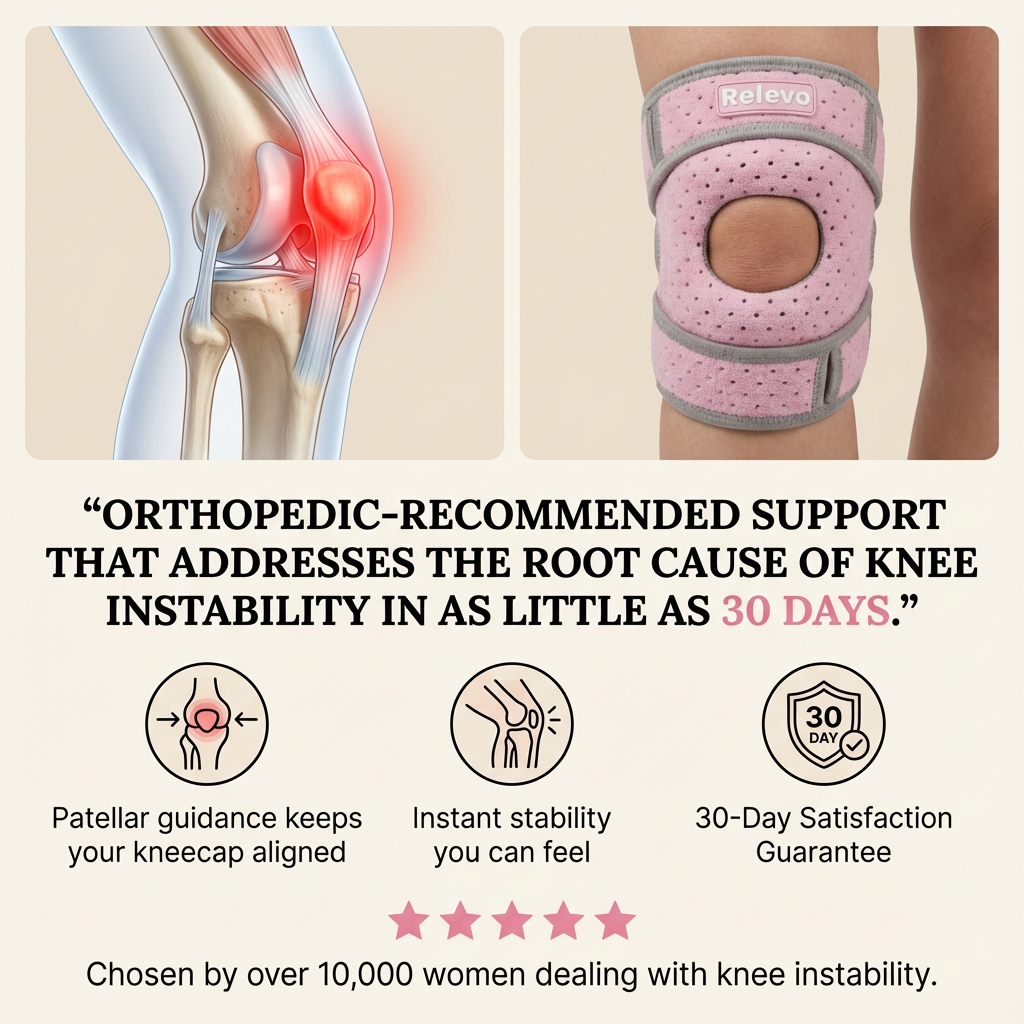
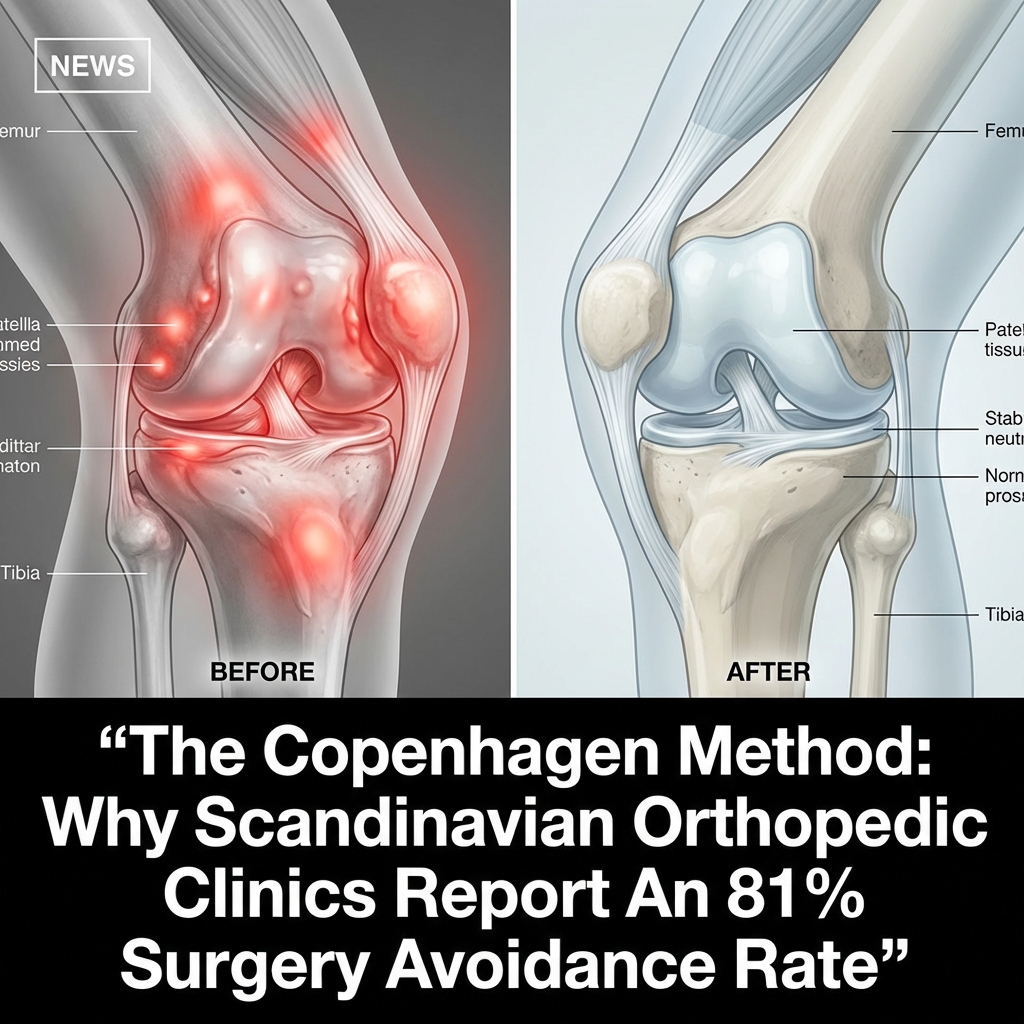
The Copenhagen Method: Why Scandinavian Orthopedic Clinics Report An 81% Surgery Avoidance Rate While American Patients With Identical Diagnoses End Up On Operating Tables Have you ever wondered why Denmark has one of the lowest knee replacement rates in the developed world? It's not genetics. It's not diet. It's not because Danes have "better knees" than Americans. It's because of something called the Copenhagen Method—a joint preservation protocol that's been standard practice in Scandinavian orthopedic medicine since 2008. Clinical data from 14 years of implementation shows 81% of patients diagnosed with "surgical-grade" osteoarthritis never require knee replacement when they follow this protocol. Eighty-one percent. Now compare that to the American approach: strengthen your quads, get cortisone shots every few months, wait until you "can't take it anymore," then schedule surgery. That's not a protocol. That's a holding pattern designed to keep you cycling through billable treatments until you inevitably end up in an operating room. And here's what nobody's telling you: there's a reason you've never heard of the Copenhagen Method. The $52 billion reason your doctor never mentioned this. Let me be direct with you. The American orthopedic device industry generates $52 billion annually. Knee replacement surgery alone accounts for $17 billion of that revenue. A typical knee replacement generates: $15,000-$35,000 for the hospital $3,000-$8,000 for the surgeon $4,000-$7,000 for the implant manufacturer $2,000-$4,000 for post-surgical physical therapy That's $24,000-$54,000 per knee. In 2019, American surgeons performed 790,000 knee replacements. That's $18.9 billion in a single year. Now here's the question nobody's asking: What happens to that $18.9 billion if patients discover they can preserve their natural knees using a $60 stabilization protocol? The Copenhagen Method threatens an entire economic ecosystem. It's not that your orthopedic surgeon is intentionally hiding this from you. It's that American medical training is built on American research, funded by American medical device companies, published in American journals, and taught in American medical schools. European orthopedic research—particularly Scandinavian joint preservation studies—simply doesn't make it into the American curriculum. Your doctor graduated from an American program. They learned American protocols. They prescribe American treatments. They cannot recommend a solution they were never taught exists. What Scandinavian researchers discovered about joint deterioration. In 2007, researchers at Copenhagen University Hospital's Department of Orthopedic Surgery began studying a peculiar pattern. They noticed that patients with identical MRI findings—same degree of cartilage loss, same "bone-on-bone" diagnosis, same pain levels—had wildly different surgical outcomes. Some patients deteriorated rapidly and required surgery within 18-24 months. Others remained stable for 8-10 years with minimal intervention. The difference wasn't age. Wasn't weight. Wasn't activity level. It was joint stability. Specifically, they discovered what they termed "sub-threshold instability"—microscopic joint movements that occur below the level of conscious awareness but trigger massive inflammatory responses. Here's what they found: When your knee joint shifts even 3-4 millimeters out of optimal alignment with each step, it creates what biomechanics researchers call "asymmetric load distribution." Instead of your bodyweight compressing evenly through the three compartments of your knee (medial, lateral, and patellofemoral), you're concentrating 70-80% of that force onto whichever compartment is already damaged. This creates a vicious cycle: Damaged compartment, instability, more force concentrated on damaged area, more damage, more instability Meanwhile, you're doing exactly what American physical therapy told you to do: strengthening your quads and glutes. But here's what the Copenhagen researchers discovered: strengthening muscles around an unstable joint is like building a more powerful engine for a car with misaligned wheels. The extra force just accelerates the wear pattern. The sequence error that's destroying your knee. American PT protocols follow this sequence: 1. Diagnose cartilage damage 2. Prescribe strengthening exercises 3. Build quad and glute strength 4. Hope the stronger muscles "support" the knee better 5. When that fails, recommend surgery The Copenhagen Method inverts this entirely: 1. Diagnose cartilage damage 2. Measure joint stability (not just strength) 3. Mechanically stabilize the joint structure first 4. Then strengthen muscles within that stable framework 5. Re-evaluate every 6 months The difference is profound. When you perform a leg extension with an unstable knee, each repetition creates micro-shifts in the joint. Those micro-shifts trigger inflammatory cascades. The inflammation undoes whatever strengthening benefit you gained from the exercise. You're running on a treadmill that's tilted backwards. But when you mechanically stabilize the joint first—when you eliminate those 3-4 millimeter shifts—suddenly those same strengthening exercises become effective. Because now you're building muscle around a structure that stays in proper alignment. This is why the Copenhagen Method reports 81% surgery avoidance while American PT reports 34% long-term success. It's not that European patients are more compliant. It's not that Scandinavian physical therapists are more skilled. It's that they're doing the steps in the correct order. The 12,000 daily inflammatory triggers you're creating right now. Let me quantify what's happening inside your knee. Average person takes 6,000-8,000 steps per day. Each step involves two joint loading events (heel strike and toe-off). That's 12,000-16,000 loading cycles daily. If your knee shifts even 3mm out of alignment during each cycle, you're triggering 12,000-16,000 inflammatory responses per day. Inflammation produces something called inflammatory cytokines—specifically IL-1β and TNF-α—which break down cartilage and prevent healing. You're essentially bathing your knee joint in cartilage-dissolving chemicals 12,000 times daily. This is why your cortisone shots stopped working. You've been treating the inflammation (chemistry) while the instability (mechanics) keeps regenerating it. No amount of anti-inflammatory medication can overcome 12,000 inflammatory triggers per day. You must stop the mechanical cause to eliminate the chemical effect. Why "bone-on-bone" isn't actually a death sentence. Your doctor showed you your MRI and said "bone-on-bone" like it was a terminal diagnosis. Here's what they didn't explain: "Bone-on-bone" means one compartment of your knee has severe cartilage loss. Typically the medial (inner) compartment. But your knee has three compartments. The lateral and patellofemoral compartments often still have functional cartilage. The Copenhagen Method focuses on load redistribution: mechanically shifting bodyweight away from the damaged compartment onto the healthy compartments. When you eliminate the instability and redistribute the load, that "bone-on-bone" compartment stops bearing 70-80% of your bodyweight. It starts bearing 30-40%. The pain doesn't disappear because cartilage regenerated. It disappears because you stopped crushing the damaged area with every step. Your knee isn't "too far gone." It's just loading incorrectly. The three patients your surgeon doesn't tell you about. Patient A: Robert, 59 Diagnosed with Stage 4 osteoarthritis. Bone-on-bone medial compartment. Surgeon scheduled him for total knee replacement. Robert found a conservative orthopedist who'd studied the Copenhagen Method during a fellowship in Denmark. Started the mechanical stabilization protocol. Six months later: canceled surgery. That was 4 years ago. He still hasn't needed the operation. Patient B: Jennifer, 61 Same diagnosis. Same surgeon. Didn't know the Copenhagen Method existed. Had the surgery. Six months of brutal recovery. At 18-month follow-up, reported "moderate dissatisfaction" with functional outcomes. Her other knee is now deteriorating and she's facing a second surgery. She wishes someone had told her about stabilization-first protocols before she went under the knife. Patient C: Michael, 64 Same diagnosis. Did American-style PT for 9 months. Quad strengthening, glute work, stretching. Pain got worse. Knee got more unstable. Had surgery at 18 months post-diagnosis. His surgeon said "conservative treatment failed." What actually failed was the sequence. Three patients. Same diagnosis. Three completely different outcomes based purely on which protocol they followed. The surgical candidacy window you're closing right now. Here's something your surgeon probably didn't mention: There's an optimal window for knee replacement surgery. Surgeons call it "the Goldilocks zone." Too early (when you still have greater than 70% function), and surgery is premature—you're sacrificing a knee that could have been preserved. Too late (when you're down to less than 40% function), and your surgical outcomes get significantly worse. Muscle atrophy, bone density loss, gait pattern changes—all of these make recovery harder and results less satisfactory. The problem with "waiting until you can't take it anymore" is that you're often waiting past the optimal surgical window. Every month you spend in unstable deterioration, you're: Losing more cartilage (can't be recovered) Developing compensatory movement patterns (harder to correct post-surgery) Atrophying muscles from pain-avoidance behavior (longer recovery time) Becoming a progressively worse surgical candidate But here's the strategic advantage of the Copenhagen Method: If you stabilize now and it works—you avoid surgery entirely. If you stabilize now and it doesn't work after 12 months of proper protocol adherence—you're still in the optimal surgical window, and you'll be a better candidate than you are today. The Copenhagen Method either eliminates the need for surgery or improves your surgical outcomes if you eventually need it. Waiting without stabilization just makes you a worse candidate with every passing month. How to access the Copenhagen Method in America. By now you're probably asking: how do I access this protocol if American doctors don't know about it? That's exactly why we created Relevo. Relevo is engineered specifically around the Copenhagen Method's mechanical stabilization principles. It's not a compression sleeve. It's not a drugstore knee brace. It's a biomechanical alignment system designed to eliminate sub-threshold instability. The complete Copenhagen Method protocol—including the specific stabilization techniques, the progressive strengthening sequence, and the 6-month re-evaluation framework—is included with your Relevo system. Here's what you receive: The Relevo Knee Stabilizer - Medical-grade tri-planar stabilization that eliminates medial-lateral shift and rotational drift. This is the mechanical foundation of the Copenhagen Method. The Complete Copenhagen Protocol Guide - The exact Scandinavian sequence: precise stabilization duration before strengthening begins, which exercises to perform within the stable structure, how to progressively reduce brace dependency as muscular stability develops. The Scandinavian Strength Program - The specific strengthening protocols designed for post-stabilization implementation. These are the exercises Copenhagen clinics prescribe after achieving mechanical stability, not before. Nordic Anti-Inflammatory Support Kit - European-sourced herbal protocols used alongside mechanical stabilization to support the healing environment. Everything you need to follow the stabilization-first sequence that's helped 81% of Scandinavian patients avoid surgery. The Investment: Single Knee Protocol: $49.99 (Save $450 compared to custom clinic fitting) For unilateral stabilization Bilateral Stability System: $79.99 (Save $950-plus) Orthopedic best practice for maintaining balanced muscle development Includes free shipping plus free Scandinavian Strength Program Complete Copenhagen System: $109.99 (Save $1,240-plus) Three stabilizers (wear one, wash one, spare available) Includes free shipping plus free Scandinavian Strength Program plus free Nordic Anti-Inflammatory Support Kit Why these price points? Because the alternative is $24,000-$54,000 for knee replacement surgery that has a 20-30% dissatisfaction rate. Or $2,000-$4,000 for American PT that has a 66% long-term failure rate. Or $600-$900 per cortisone injection that only masks symptoms for 8-12 weeks. The Copenhagen Method gives you access to the Scandinavian stabilization-first protocol for less than a single cortisone shot. Your Guarantee: 60-Day Copenhagen Protocol Trial Implement the stabilization-first sequence for 60 days. Follow the mechanical stabilization guidelines. Perform the post-stabilization strengthening as prescribed. If you don't measure a reduction in sub-threshold instability—if your knee doesn't feel more stable when walking—if the bone-on-bone pressure doesn't decrease—you receive a complete refund. Zero questions. Zero hassle. We assume all risk. The choice you're making right now. I can't give you the complete Copenhagen Method in this message. The Scandinavian researchers who developed it spent 14 years documenting the precise stabilization mechanics, the exact timing for transitioning to strengthening phases, the specific exercises that work within a stabilized structure. That complete methodology—the exact load redistribution technique, the week-by-week protocol progression, the post-stabilization strengthening sequence—is revealed inside the Relevo system. So here are your two paths: Path 1: Continue the American holding pattern Keep doing American-style PT that succeeds 34% of the time long-term. Keep getting cortisone injections that work for shorter and shorter periods. Keep heading toward surgery. Maybe you'll be in the 75% who report satisfaction at 2-year follow-up. But you'll never know if the Copenhagen Method could have saved your natural knee. Path 2: Try the Scandinavian stabilization-first sequence Get Relevo. Learn the Copenhagen Method. Follow the protocol that's helped 81% of Scandinavian patients avoid surgery for their entire lives. See if stabilizing first—eliminating sub-threshold instability, stopping the inflammatory cascades, then building strength within that stable framework—works for you like it's worked for tens of thousands of European patients for 14 years. $49.99 for single knee protocol. $79.99 for the bilateral system. 60-day money-back guarantee. If you stabilize for 60 days and don't feel measurably better—if the instability persists, if the inflammation continues—you get every penny back. But if it works—if the sub-threshold shifts stop, if the inflammation calms, if your knee finally feels solid again—you'll have access to something 99% of Americans don't know exists. A proven European protocol that could save your natural knee. P.S. — Knee replacements last 15-20 years maximum. If you're under 65, you're looking at revision surgery. But if you can delay surgery by even 10 years using the Copenhagen Method, you might only need one replacement instead of two. That alone is worth exponentially more than $49.99. And with the 60-day guarantee, there's zero risk in trying the Scandinavian approach first. P.P.S. — The difference between this and every other knee brace you've tried: those were compression devices designed to "support" your knee. Relevo is a biomechanical alignment system designed to eliminate sub-threshold instability—the root cause Copenhagen researchers identified 14 years ago. Different mechanism. Different sequence. Different results. Try it for 60 days and verify for yourself.
Where the ad sends people
versagoodz.store
Before You Commit to Knee Replacement Surgery, Read This First ☝️
RELEVO
Learn more: versagoodz.store(opens in a new tab)