
Active· since Jul 4, 2026
- 74
- days running
- 0
- relaunches
- 1
- EU reach
Ad copy
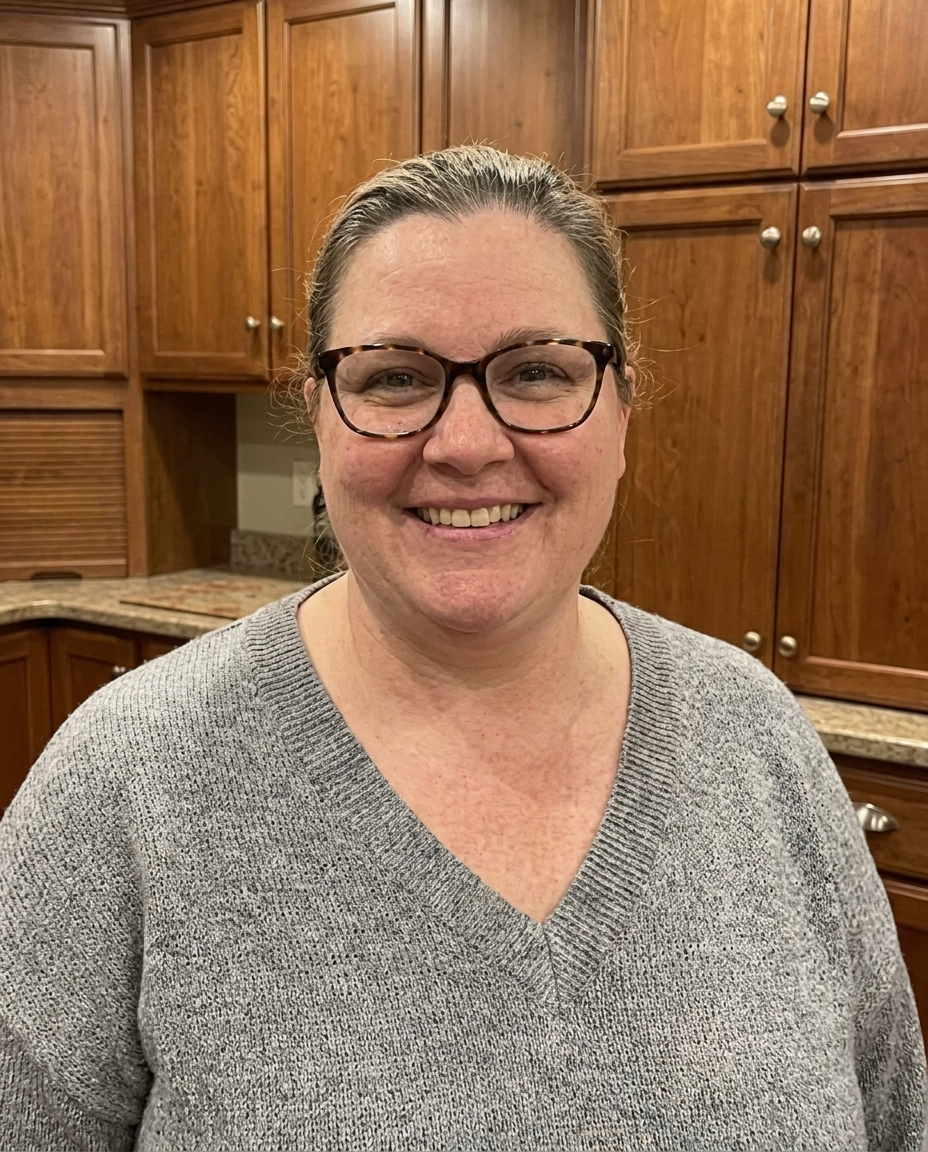
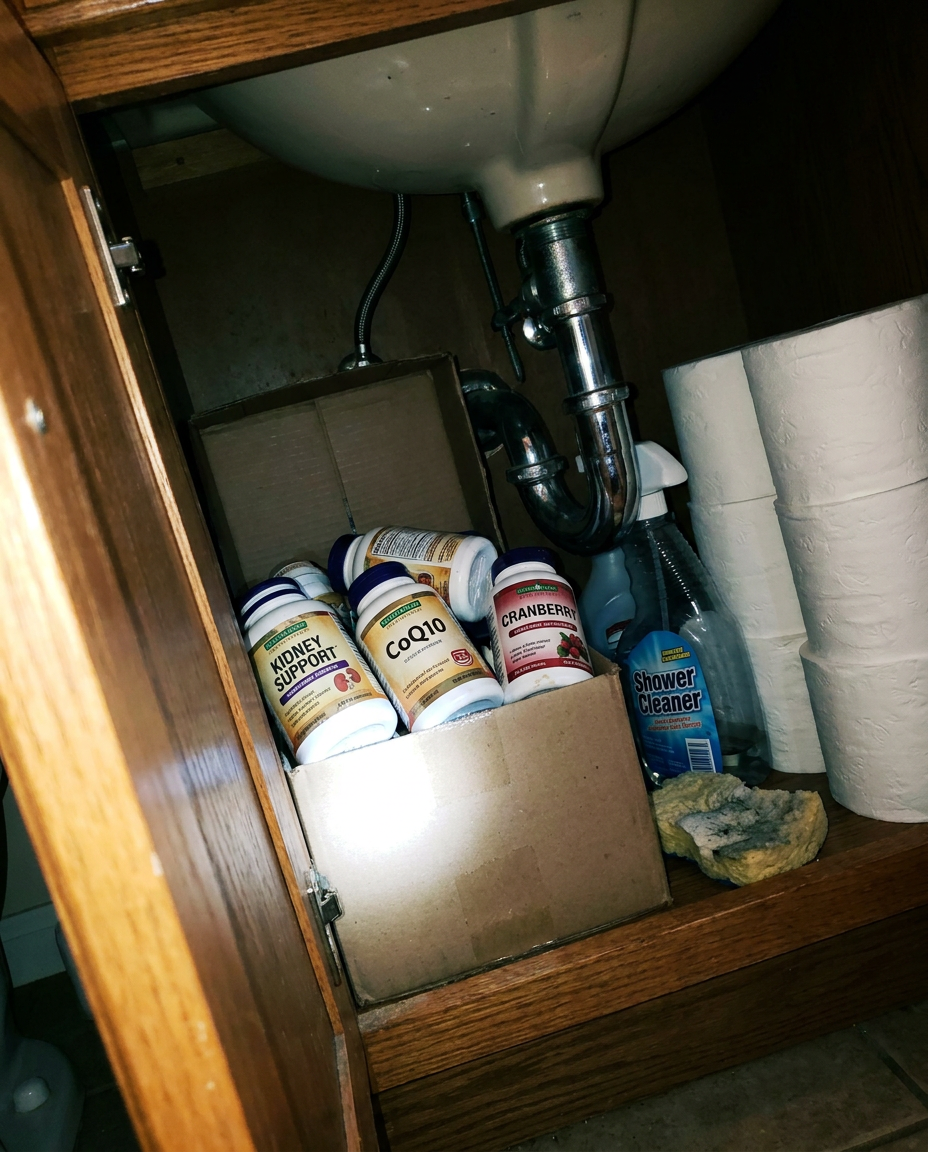
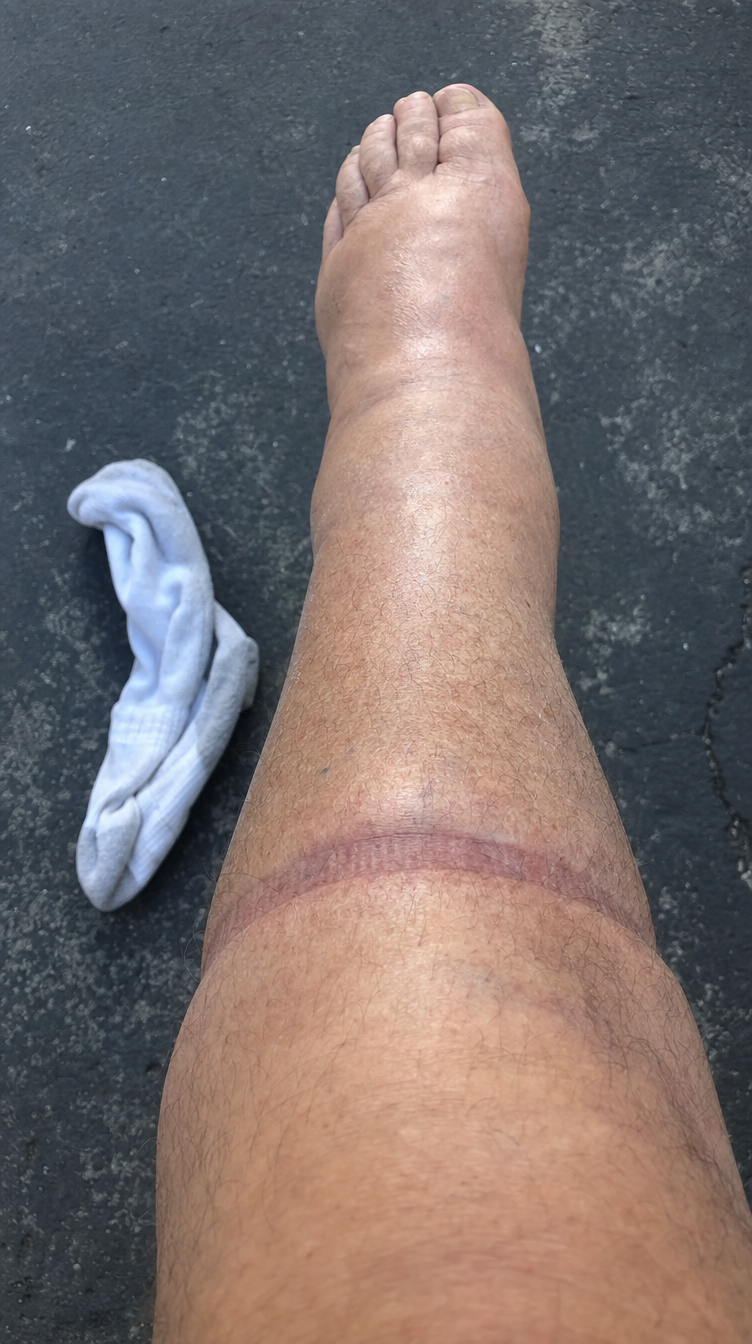
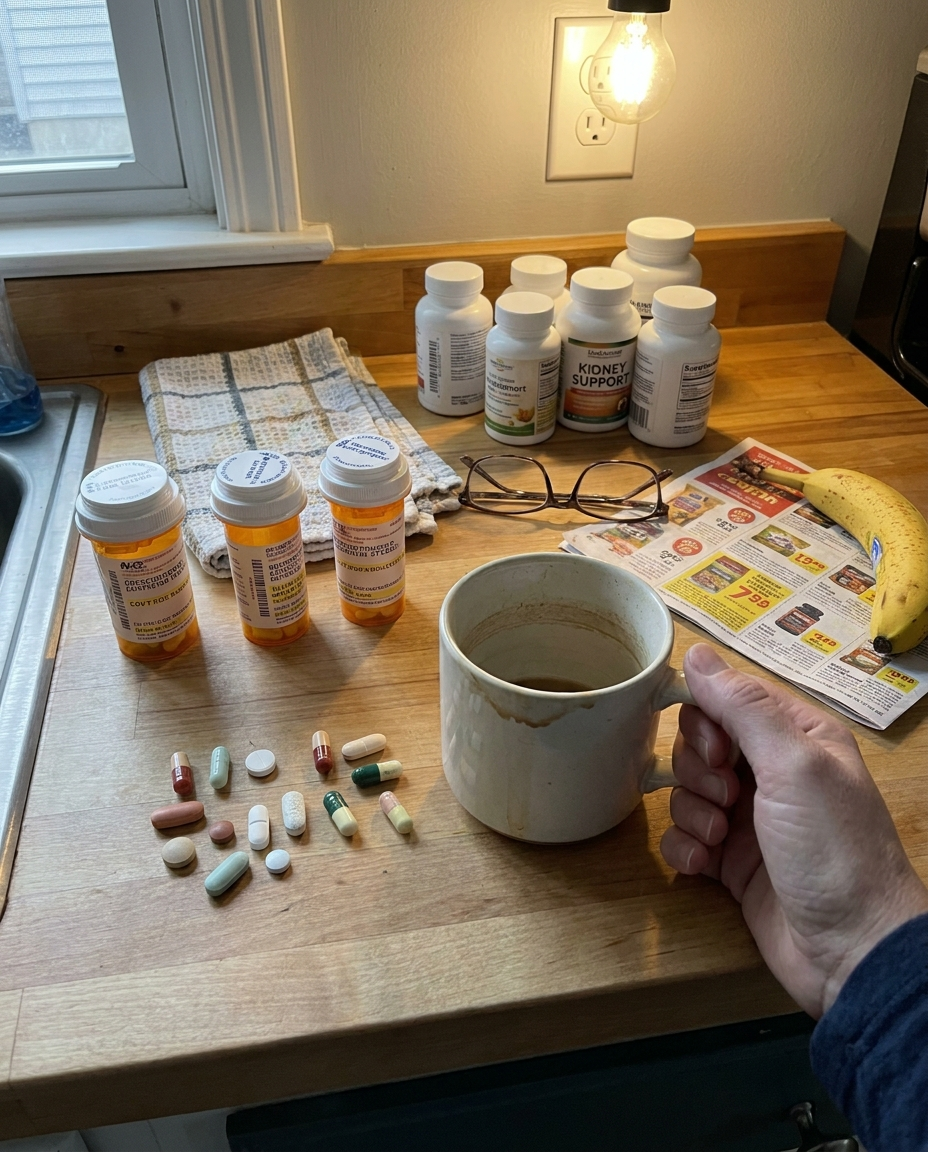
My pharmacist told me to stop taking six of my kidney pills. I thought she was crazy. She wasn't. My name is Patricia, and I'm 62 years old. Every morning, I line up my pills on the kitchen counter. ACE inhibitor. Phosphate binder. Diuretic. Iron supplement. Baby aspirin. Metformin. Six prescriptions. The reality of being 62 with declining kidneys. My nephrologist always stressed supporting my kidneys alongside the medication. "Especially with your level of decline, Patricia. Your body needs extra antioxidant support. You should be supplementing." So I became diligent about it. I went to Whole Foods and bought everything I could find for kidney health. Astragalus. CoQ10. NAC. Alpha lipoic acid. Cranberry extract. Omega-3 fish oil. The good brands. The ones every forum recommends. Not the cheap stuff. I kept bottles everywhere. Kitchen counter. Nightstand. Bathroom shelf. I took them all with breakfast. Six prescriptions plus six supplements. Twelve pills every morning. Never missed a day. I was getting all the kidney support my research said I needed. Forums recommended them. Health sites listed them. Complete kidney protection. Or so I thought. But my eGFR kept dropping. 64 → 59 → 55 → 52. "Probably just the natural progression," I told my husband. But the symptoms got worse faster than the numbers. The fatigue hit earlier and earlier. First it was 4 PM. Then 2 PM. Then I'd wake up already exhausted. My face was puffy in the mirror every morning, especially around the eyes. The swelling crept up my ankles until my shoes were useless by noon. Foam in my urine every morning — thick, lingering, impossible to ignore. Brain fog so heavy I'd lose words, forget appointments, stand in the grocery store unable to remember what I came for. At my six-month checkup, my nephrologist ran labs. "Patricia, your kidney function dropped again. eGFR 49. We're going to increase your ACE inhibitor dose." "Again? That's the second increase this year." "Your decline is faster than we'd like. But you're still in Stage 3. We have time." Time. That word made my stomach tighten. Time meant watching the number count down while everyone called it "managed." Three months later, same story. eGFR 47. "Are you taking your kidney supplements?" "Every single day. All six. With breakfast." "Good. Keep that up. Your kidneys need the support." But my kidneys didn't seem to be getting the message. Month fourteen. My nephrologist referred me to a kidney specialist at the university medical center. "I'm not satisfied with your rate of decline," she admitted. The specialist ran deeper tests. Inflammatory markers. An oxidative stress panel. She also tested my actual nutrient levels. "This is puzzling," she said. "Your CoQ10 levels are barely detectable. Your omega-3 index is low. Your antioxidant capacity is poor." "That's impossible. I take all of those. Every day. High-quality brands." She looked at my list. "These aren't bad products. But something isn't adding up." She increased my doses. Double the CoQ10. Add vitamin E. Try a different omega-3. More pills. More bottles. Fourteen pills every morning. I left feeling like I was building a fortress out of cardboard. That Tuesday, I went to Walgreens to pick up my adjusted prescription. Grace, my pharmacist for eleven years, was at the counter. I had my shopping bag full of bottles — prescriptions and supplements. "How are you feeling, Patricia?" "Honestly? Terrible. They adjusted my kidney medication again. eGFR keeps dropping. Nobody can figure out why the supplements aren't helping." She glanced at the bag. "Can I see what you're taking?" I pulled out the bottles. All twelve of them. Her expression changed as she examined each one. "Patricia, come with me. Right now." In the consultation room, she lined up all twelve bottles on the counter. "How long have you been taking all of these together?" "Over a year. Why?" "Patricia, I need to explain something nobody has told you. Your prescriptions stay — I'm not touching those. But your kidney supplements aren't helping you. And none of them can reach the thing that's actually wearing your kidneys down." My hands went cold. "Do you know what your kidneys actually do all day?" She didn't wait for an answer. "They push about 200 liters of blood through a million microscopic filters. Every day. Each filter is a membrane three cells thick, and blood is forced through it under pressure every second of your life." "All that pressure creates free radicals right at the membrane. Year after year, they erode it. The filters stiffen. Thicken. Lose their precision." "When that membrane erodes, protein that should stay in your blood leaks into your urine. That's your foam. And waste that should be filtered out slips back in. That's your swelling. Your blood pressure. Your fog." "It's not a hydration problem. It's not a sodium problem. It's filter erosion. Now look at your bottles." She pointed at each one. "Astragalus. General immune support. There is nothing in it that shields a filter membrane from free-radical erosion." "CoQ10. Good for cellular energy. But it's poorly absorbed, and what does get in doesn't concentrate in your kidneys' filter membranes. Your heart gets the benefit. Your filters get crumbs. That's why your blood levels are low despite high doses." "NAC. Raw materials for your body's own antioxidants. Supplies, not a shield. It doesn't sit at the membrane where the erosion is happening." "Alpha lipoic acid. A general antioxidant, spread thin through your whole body. Almost none of it ends up at the one membrane taking all the pressure." "Cranberry." She looked at me with visible frustration. "Patricia, cranberry is for your bladder. It helps keep bacteria from sticking to the walls. It has nothing to do with your filters. You've been paying $35 a month to protect your bladder while your filters erode." "Omega-3. Genuinely good for general inflammation. But it doesn't neutralize the free radicals being generated at the filtration membrane, under pressure, day and night." She let the silence sit. "You've been taking six supplements for over a year. Spending roughly $160 a month. And your eGFR dropped from 64 to 47 the whole time." I stared at the row of bottles. "None of them reach the filters?" "None of them. You've been improving everything around the filter and hoping some of it lands on the filter itself. It doesn't. It's like spraying a garden hose at a building and hoping the water reaches the fire on the third floor." "So what reaches the fire?" She pulled up something on her screen. "There's a marine compound researchers have been studying. It comes from a microalgae called Haematococcus pluvialis. When that algae is under attack — too much sun, not enough water — it floods itself with a deep red pigment called astaxanthin to survive what should kill it. It's the same pigment that turns salmon pink." "In lab tests, astaxanthin measures 6,000 times stronger than vitamin C as an antioxidant." "But that's not the important part. The important part is that it's fat-soluble. It accumulates in fatty membranes — including the lipid-rich membranes of your kidneys' filters. It goes where the erosion is. Early research shows it neutralizes free radicals right there at the membrane and lowers markers of oxidative stress in kidney tissue." "And it protects both layers of the cell membrane. Not one. Both." "Of everything on my shelves, it's the one antioxidant that actually embeds where your problem is. And it's not in your bag." "So which brand?" "That's the problem. Most astaxanthin on the shelf is 4 milligrams of synthetic astaxanthin dissolved in cheap seed oil. A third of the dose used in the research, in an oil that fights absorption." She wrote four lines on a slip of paper. Natural form, from the algae itself. The full 12 milligrams. Carried in a real fat. Third-party tested — published, not just claimed. "That's what has a chance of reaching your filters. Most of what's on my own shelves doesn't qualify." "One more thing. If it's reaching your filters, you'll notice it in a specific order. The morning puffiness eases first. Then the energy. Then the fog. The filters clear, and everything downstream follows." I left Walgreens in shock. Fourteen months. $2,240 on supplements. eGFR dropping the entire time. That night I told my husband. "Fourteen months," he said quietly. "And nobody caught it until the pharmacist?" I couldn't sleep. I kept looking at the row of bottles on my counter. The labels that said "kidney support" and "cellular health" and "antioxidant protection." Not one of them could reach the membrane doing the actual filtering. At 2 AM, phone in the dark, I went looking for Grace's four lines. That's how I found Rovina. Natural astaxanthin from Haematococcus pluvialis — the algae itself. The full 12 milligrams. Organic coconut oil softgels, so the fat it needs to absorb is already in the capsule. Third-party tested, and they publish the results. It matched every line on her slip. I ordered it that night. When it arrived, I changed everything. Morning: six prescriptions, plus two dark red softgels with breakfast. Two more with lunch. I stopped all six supplement bottles. Put them in a box under the bathroom sink. My prescriptions stayed exactly as prescribed. Nothing else about my routine changed. Ten pills instead of fourteen. And the four that replaced six were actually going where the damage was. Week three: my face in the morning mirror was less puffy. The first time in a year I noticed the ABSENCE of something instead of the presence. Week four: the foam was thinner. I'd been checking every morning for over a year — this was different. Bubbles dissipating faster. Ankles less swollen by evening. Energy lasting past 2 PM. Week six: the fog lifting. I held an entire phone conversation without losing the thread. Remembered my grocery list without writing it down. My husband said I seemed "sharper. More like you." Grace was right about the order. Week eight: follow-up labs. eGFR: 53. Up from 47. I checked the portal three times. 53. Six points. The first improvement in two years. I know my chart is mine. Labs move for a lot of reasons, and I can't promise you my numbers or my timeline. I can only tell you what mine did. My nephrologist pulled up the chart. Fourteen months of decline. Then this. "Patricia. What changed?" "I stopped taking six supplements that never reach the kidneys. I started taking one compound that embeds in the filter membranes." A long pause. She pulled up the research. "Continue what you're doing. If this holds, we can talk about your ACE inhibitor." I'll never be able to split the credit perfectly between my prescriptions and what I added. I just know what changed the month the line turned. Month three: eGFR 56. She reduced my phosphate binder. Month five: eGFR 59. ACE inhibitor lowered. Diuretic cut in half. Swelling gone. Foam barely visible. Brain working. That was six months ago. My eGFR stays between 58 and 61 now. Stable. I take four Rovina softgels every day. I'm down to four prescriptions from six — every one of those changes made by my doctor, not me. Please don't ever start, stop, or change a prescription on your own. That part is your doctor's job, always. No supplement bottles lining the counter. No confusion about timing or interactions. Last week at the pharmacy, I saw a woman filling her basket with kidney supplements. Astragalus. CoQ10. Cranberry. The whole lineup I used to take. I approached her carefully. "How many kidney supplements are you on?" "Five, plus my medications. My nephrologist said I need extra support." "Has your eGFR improved?" Her face fell. "No. It keeps dropping." "Has anyone explained what's eroding your filters?" "My what?" I showed her my numbers. eGFR 47 on six supplements. eGFR 59 without them. She took a photo of my screen immediately. If you're over 50 and taking multiple kidney supplements — especially astragalus, CoQ10, NAC, cranberry, or fish oil — and your eGFR is still declining: Your supplements aren't failing you. They were never designed to reach the membrane that's actually eroding. Free radicals are being generated at your filters right now, under all that pressure. General antioxidants float around your bloodstream. They don't embed at the membrane. What reaches the erosion is a fat-soluble compound that accumulates in the filter membranes — right where the pressure is. You don't need six bottles treating the perimeter. You need one compound that reaches the fire. Rovina. Natural astaxanthin from Haematococcus pluvialis. The full 12 milligrams a day, in organic coconut oil softgels. 90-day money-back guarantee — if you don't feel a meaningful difference, you get every penny back. Stop spending $160 a month on bottles your kidneys can't use. Start with the one compound that actually reaches the damage. Your kidneys don't need a bigger army. They need the right weapon aimed at the right target. 👉 https://tryrovina.com/products/rovina-sunglow-astaxanthin-12mg P.S. — Grace has had the same conversation with four other kidney patients since mine. Every one of them was on the same six supplements. Every one had declining eGFR. She told me last week: "The supplement industry sells kidney patients hope in bottles that can't reach their kidneys. It's the biggest gap I see across my counter." P.P.S. — I saved $160 a month by stopping six supplements. Rovina costs a fraction of that. My eGFR went from 47 to 59. The math is simple. The biology is simpler. Six bottles that can't reach the fire, or one compound that can. Check your own counter. Count your bottles. Ask yourself: has my eGFR improved? If the answer is no — the bottles aren't the answer either. 👉 https://tryrovina.com/products/rovina-sunglow-astaxanthin-12mg
Explore the Power of Astaxanthin Today!
The antioxidant 6,000x stronger than Vitamin C. Buy 1 Get 1 Free.
SHOP NOWLike this ad? Make it yours.
Crush rebuilds this exact creative around your product — your brand, your colors, your offer — in about a minute.