
Inactive· since Jul 3, 2026
- 25
- days it ran
- 0
- relaunches
- 7,681
- EU reach
Ad copy
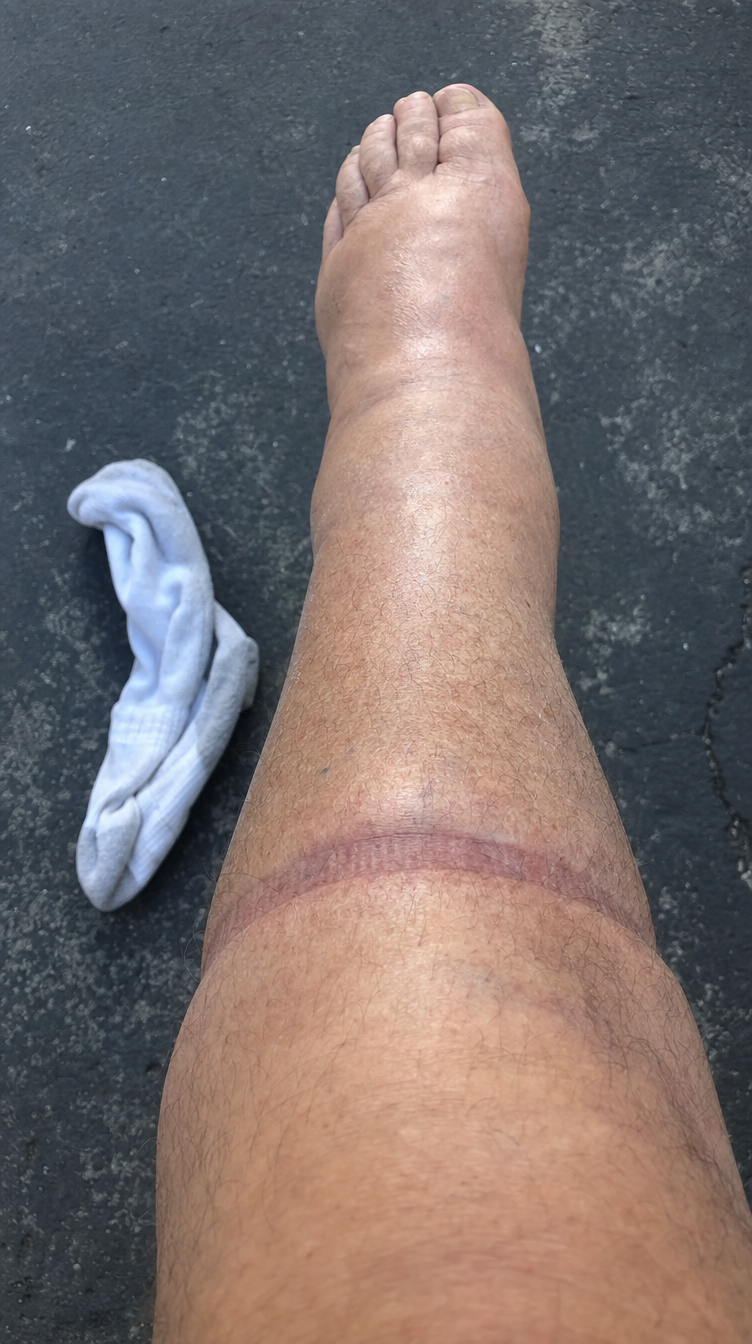
My friend Dale died three weeks ago. He was on the same blood pressure and cholesterol pills I'm on. His numbers were controlled. His doctor said he was doing fine. He was 62 years old. I need to tell you why he's gone and I'm still here. My name is Ray Bennett. I'm 59. I live in a small town outside Greensboro, North Carolina. I've been on blood pressure and cholesterol medication for the last five years. It started with a statin for the cholesterol and lisinopril for the blood pressure. My doctor said it was standard. "First-line treatment," he told me. "You'll barely notice it." I noticed it inside the first month. The cough came first. Dry. Hacking. It woke me at 2 AM most nights. It cut off my sentences in meetings. People would look at me across the table like something was wrong. I told my doctor. He said it was a known side effect of the lisinopril. "Let's switch you to amlodipine. Should clear up." The cough stopped. But within two weeks my ankles started to swell. By 3 PM my feet were so puffy I'd switched to looser shoes because nothing else fit. My hands felt thick by evening. And the tiredness. God, the tiredness. I was more worn out than before I ever started the pills. I'd drag through my afternoons in a fog. Asleep in my chair by 8 PM. Wake up feeling like I never slept. I mentioned it to my doctor. He said, "That's common. Your body is still adjusting. We can tweak the dose." Five years. Still adjusting. My blood pressure looked better. 133 over 88 on the last reading. My LDL was down to 141. Technically controlled. But I didn't feel better. I felt like I'd traded one problem for three. That's how I met Dale. Dale Merrick. He lived fifteen minutes from me. We'd gone to the same church for years but never really talked until we ended up next to each other at a men's breakfast about three years back. Inside twenty minutes we realized we were living the same life. He was 62. On amlodipine. Had been for six years. Also on a statin for his cholesterol. He'd had the cough first — lisinopril. Same as me. Got switched to amlodipine. Same as me. The swollen ankles that wouldn't go down. Same as me. The tiredness that settled on him like a weight. Same as me. The fog that made him feel like he was thinking through wet cotton. Same as me. Cholesterol numbers his doctor called "well managed." Same as me. He'd say, "I feel like I traded one problem for three." I'd say, "me too." We started golfing Saturday mornings. Slow, because neither of us had the energy we used to. We'd walk the back nine talking about our kids, our wives, our doctors. Dale had two grown sons and a grandson. Cole. Five years old, obsessed with dinosaurs, the kind of kid who makes every room louder and better. Dale lived for Saturdays. Those were the days Cole came over while Dale's son ran errands. We compared notes on the medication all the time. "My doctor says the swelling is normal," he'd say. "Mine said the same thing," I'd say. "He said my body is still adjusting." "Mine said the exact same words." We'd laugh about it. A tired, knowing kind of laugh. The kind where you're both pretending it's funny because the other option is admitting you're scared. Dale's blood pressure was 131 over 84 at his last checkup. His LDL was 138. Controlled. Fine. Good, even. I remember because he mentioned it at golf the week before he died. He seemed relieved. "Doc says the numbers look great," he said. He looked tired when he said it, but he smiled. That was nine days before he collapsed. The number said he was fine. The number was wrong. It was a Saturday morning. One of his Cole days. Dale's son told me what happened. I could barely get through the conversation. Dale had picked Cole up at 8 AM. They drove back to the house. Cole ran straight for the backyard — Dale had set up a little plastic dinosaur dig kit out there, a birthday gift from two weeks before. Dale stood at the kitchen window watching Cole dig in the sandbox. Making coffee. His wife came downstairs and found him on the kitchen floor. No warning. No clutching his chest. No calling out. One second he was standing at the counter watching his grandson play. The next he was on the floor. Cole was still in the backyard. He didn't know. He kept digging for dinosaurs while the ambulance came. Dale was pronounced dead at 9:20 AM. Sudden cardiac failure. He was 62. He'd taken his amlodipine and his statin that morning. Like every morning for six years. His numbers were controlled. He did everything right. And he died on his kitchen floor while his five-year-old grandson dug for dinosaurs twenty feet away. I found out that afternoon. I stood in my own kitchen holding the phone, staring at the wall, trying to make the words fit together. Dale was dead. Dale, who golfed with me every Saturday. Who complained about the same side effects I complain about. Who took the same pills. Whose numbers were controlled, just like mine. Whose doctor told him he was fine, just like mine tells me. Dale was me. Same medication. Same side effects. Same controlled numbers. Same doctor saying the same words. He was me. And he was dead. I sat at the funeral three rows back and listened to his son talk about him — the Saturday mornings, the dinosaur dig kit, the way Dale whistled while he made coffee. Cole wasn't there. Too young to understand. His son told me Cole still asks when grandpa is coming to watch him dig. And I couldn't stop thinking one thing. If it happened to Dale, what's stopping it from happening to me? I couldn't sleep after that. Not that night. Not the next. Every time I closed my eyes I saw Dale on the kitchen floor. And I saw myself. Same medication. Same side effects. Same controlled numbers. I'd lie awake at 2 AM thinking — am I next? That question followed me through every day. Every morning I took my amlodipine, I thought about Dale taking his. Every time my doctor said my numbers looked good, I thought about Dale's numbers looking good nine days before he died. I couldn't live like that. I needed to know what killed my friend. So I made an appointment with a cardiovascular specialist. Not my regular doctor. Not the one who keeps telling me my body is adjusting. A specialist. Her name was Dr. Reyes. I sat in her office and told her everything. About Dale. The amlodipine and the statin. The six years. The controlled numbers. The Saturday morning. And about me. Same medications. Same side effects. Same controlled numbers. Then I said: "Tell me what killed my friend. And tell me if it's going to kill me." She didn't rush to reassure me. She didn't say "I'm sure you're fine." She didn't tell me my body was adjusting. She listened. She asked questions. She took notes. Then she told me about the part of the picture my numbers were never showing. She said what clogs arteries builds for years — underneath the controlled numbers, underneath the medication. Growing quietly, while a man takes his pills every morning and his doctor tells him his numbers look great. I asked her: "So could that be building in me right now?" She paused. Looked at my chart. Looked at me. "Based on what you've described — same medications, same duration, same side effects — I can't tell you it isn't." I felt the room tilt. Because the danger isn't only how much cholesterol is in your blood. It's what happens TO that cholesterol inside your arteries — something the medication was never designed to touch. She called it oxidized LDL. I'd never heard the words in my life. Five years on cholesterol medication. Dozens of doctor visits. Nobody had ever said them. She explained it plain. Your LDL cholesterol, by itself, is not what clogs your arteries. LDL only becomes dangerous when free radicals attack it and chemically damage it. Oxidize it. Your immune system doesn't recognize the damaged version as normal cholesterol. It treats it like a foreign invader. White blood cells swallow the damaged particles, swell into "foam cells," and bury themselves in your artery walls. That's plaque. Not the number on my chart. The damage to the number. She said when you're young, your body has enough natural defense to neutralize those free radicals before they can do much harm. But as you age, that defense drops off. The damage outpaces the cleanup. The oxidized cholesterol builds up — layer on layer, year after year, like scale inside an old pipe. And as it builds, it narrows the passages your blood flows through. Your heart works harder. Your blood pressure climbs. The plaque grows. She looked at me steadily. "This isn't three problems," she said. "The blood pressure, the cholesterol, the plaque — it's one problem. Cholesterol being turned into something your body attacks. And nothing you're taking touches it." I asked her what the medication actually does then. She walked me through it. She said the statin lowers the AMOUNT of cholesterol in your blood. But it does nothing about the oxidation — the damage that turns the cholesterol you still have into plaque. The number looks better on paper. But if the thing that damages it is still running loose, the cholesterol that's left is still getting attacked. Still building toward a blockage. "You can lower the number all you want," she said. "But if you don't slow the damage, you haven't touched the part that builds the plaque." Then she explained the blood pressure pills. Lisinopril forces the vessels open. Amlodipine relaxes them. The number drops either way. But the oxidation keeps going underneath. And the cough, the swollen ankles, the fog — that's the price of forcing the system instead of supporting what's actually wrong with it. I asked about a higher dose. My own doctor had floated bumping up the amlodipine. She said more medication just means more forcing of the same system. None of it works on the oxidation. None of it addresses what's been building for years under the controlled numbers. "You're adding pressure to a pipe that's still narrowing," she said. "Nobody's addressing what's narrowing it." Then she looked at me and said the blood pressure pills and statins are built to manage the numbers — not to work on the oxidation itself. That's simply not what they were designed to do. I sat there and felt rage building in my chest. Not sadness. Rage. For Dale. For myself. For every man walking around with controlled numbers and no idea any of this was going on underneath. Then I wiped my eyes and asked her what I could actually do about it. She pulled her chair closer. She said the missing piece is an antioxidant — something that can neutralize the free radicals before they oxidize your cholesterol. Your body makes its own defense when you're young, but it drops off with age. By your 50s and 60s, most men aren't making anywhere near enough. The one the research keeps pointing to, she said, is a compound called astaxanthin. It comes from a microalgae. It's the same compound that gives wild salmon and shrimp their deep pink-red color. She said here's why researchers find it interesting. It's fat-soluble, and it binds directly to the lipoprotein — the exact particle that carries LDL through your blood. It rides alongside your cholesterol like a bodyguard in the same vehicle. Positioned right where the oxidation happens, before it happens. Protection at the point of attack. Not downstream damage control. I asked why not just take vitamin C, or the CoQ10 my buddy takes. She said the everyday antioxidants can't reach the fight. Vitamin C is water-soluble — it can't ride inside the fatty cholesterol particle where the damage happens. CoQ10 barely reaches the bloodstream. Fish oil lowers triglycerides but does nothing about oxidation. Astaxanthin is in a different league. It's been measured at 6,000 times the antioxidant strength of vitamin C, 800 times CoQ10, and 550 times vitamin E — and unlike them, it goes exactly where the oxidation happens, inside the cholesterol particle itself. She said the research on this compound points the same direction — lower oxidized LDL, a better ratio of protective HDL to harmful LDL, artery walls that stay flexible, better flow through the small vessels. I sat back in my chair. These weren't small things. These were the kind of findings that should have every cardiologist in the country talking about it. But they weren't. I asked her why. Why isn't every doctor telling men on cholesterol medication about this? She sighed. She said there's no patent on a compound that's been in salmon and shrimp since the beginning of time. No patent means no pharmaceutical profit. No profit means no sales force pushing it. No sales force means it never comes up in a thirty-second appointment. Not a conspiracy — just how the information gets funded and who it reaches. She didn't hand me a brand. She wasn't going to do that. She told me what to look for and said the rest was on me: the right dose, a source and a form that actually absorb, and testing you can read for yourself. So I went home and did the homework I should have done years ago. And that's when I found out why most astaxanthin on the shelf is a waste of money. Two reasons. First: dose. The research that shows those results uses 12mg a day. Most bottles on the shelf give you 4mg. A third of the dose. It's like trying to put out a fire with a garden hose turned to a trickle. Right idea. Nowhere near enough. Second: the carrier. Astaxanthin is fragile and fat-soluble — it needs the right fat to absorb. Most brands dissolve it in cheap safflower or sunflower oil that works against absorption. You end up with a capsule that says astaxanthin on the label and barely a trace of the working compound ever reaches your blood. The ghost of astaxanthin. The shape without the strength. So I put every brand I could find up against one checklist: the full 12mg, an organic coconut-oil carrier instead of seed oil, and third-party testing for potency you can actually read. Only one checked all three boxes. Rovina. I ordered it that night. I didn't wait. I didn't think it over. Dale was dead. His numbers were controlled. He did everything right. I was not going to sit around and hope I got luckier than he did. The bottle came two days later. I started that evening — two softgels with dinner, two the next afternoon. Alongside my amlodipine. Not instead of it. That part matters — I didn't change a thing about my prescription. Week one: nothing dramatic. Blood pressure still around 133. Everything I read said the same thing — give it time, this isn't overnight. So I took it every single day. Week two: the fog started lifting. That thick, heavy feeling I'd blamed on the amlodipine for five years — clearing. The afternoon crash that used to flatten me at 6 PM didn't come. And the swelling in my ankles seemed less. I looked down at 4 PM and my feet looked like my feet. I stood there staring at them, thinking about Dale. Week three: the tiredness that had dragged on me since I started medication was letting go. I walked the old golf loop Dale and I used to walk — the whole thing, no stopping, no heavy legs pulling at me. I stood at the ninth hole where we used to argue about whose shot was closer. And I stood there a long time. Now, I'll be straight with you. I can't tell you how much of that was the astaxanthin and how much was my own body finally getting some help. And I know my numbers won't be everyone's. All I can give you is what I tracked, week by week, on my own labs. Week four: back to Dr. Reyes for a follow-up. She ran the bloodwork and checked my pressure. Blood pressure: 121 over 77. LDL: down to 128 from 141. And for the first time in years, my HDL had come up. She pulled up my chart. Five years of readings on medication alone — always stuck in that controlled but stubborn range. Now both numbers had moved. She looked at me. "Ray, these are the best numbers I've seen from you. Whatever you've been doing — keep doing it." She paused. "If they hold like this at your next visit, that's a conversation worth having with your own doctor about where you go from here." A conversation about where I go from here. After five years of side effects. Five years of swollen ankles and fog and being told "that's normal" and "your body is adjusting." For the first time, something felt like it was moving in the right direction. I can't bring Dale back. I can't undo it for Cole, who still asks when grandpa is coming to watch him dig. I can't go back to that Saturday morning and hand Dale what nobody handed him in time. But I can tell you what I found. Because if you're reading this and you're on blood pressure or cholesterol medication — if your numbers are controlled and your doctor says you're fine — you might be looking at the same blind spot Dale and I were. Most men over 50 on this medication don't know their pills are only managing the number. They think a controlled number means the whole picture is handled. They think the side effects are just the price they pay. Dale thought that. For six years. Why am I telling a stranger all this? Because Dale never got the chance to look into any of it. No warning, no second opinion, no other option on the table. You're getting the chance he didn't. So if you're a man over 50 and you've been on blood pressure or cholesterol medication — living with the cough, the swollen ankles, the tiredness, the fog — here's what I wish someone had told me five years ago: Your medication is built to manage the number. The oxidation — the damage that turns cholesterol into plaque — sits in a blind spot your pills were never designed to cover. You might think the whole picture is handled because the number looks good. Dale thought so too. The part standard treatment leaves open is the oxidation itself. And the compound with the research behind it, at the dose that actually shows up in that research, is astaxanthin at the full 12mg. That means Rovina. Here's what makes it different. The Full Clinical 12mg — The Dose the Research Actually Uses Most bottles give you 4mg and wonder why nobody feels anything. The research is built on 12mg a day. Rovina gives you the real amount. Organic Coconut-Oil Carrier, Not Inflammatory Seed Oils Astaxanthin is fat-soluble — it needs the right fat to absorb. Most brands dissolve it in cheap safflower or sunflower oil that works against you. Rovina delivers it in organic coconut oil your body actually takes in. Third-Party Tested for Potency, Not Just Purity Anyone can test for purity. What matters is how much active compound is really in the capsule — verified by an outside lab, not just printed on the label. Rovina publishes it. A Fat-Soluble Antioxidant That Works Where the Others Can't This isn't a blood pressure supplement or a cholesterol supplement. It's an antioxidant that goes to work on the oxidation itself — supporting the body's own defense against the free-radical damage that standard supplements leave untouched. And here's what makes it simple. Rovina comes with a 90-day money-back guarantee. That means you can try it for 90 days. See if the fog lifts. See if the afternoon crash eases. See what your next reading looks like. And if for any reason you don't feel a difference, they refund every penny. No questions asked. 90 days. Zero risk. Dale never got the chance to look into any of this. You do. I don't know how your story goes. But I know I'd rather look into it now than lie awake at 2 AM wondering, the way I did. Dale didn't get a second chance. You still have one. Click below to check if Rovina still has stock: 👉 [https://tryrovina.com/products/rovina-sunglow-astaxanthin-12mg] I can't change what happened to Dale. But maybe I can hand you what nobody handed him in time — the information. That's all this is. What I wish we'd known. — Ray Bennet
Explore the Power of Astaxanthin Today!
The antioxidant 6,000x stronger than Vitamin C. Buy 1 Get 1 Free.
SHOP NOWLike this ad? Make it yours.
Crush rebuilds this exact creative around your product — your brand, your colors, your offer — in about a minute.