Artery Plaque Reset
 Facebook ad: “The #1 Cayenne for Artery Health”
Ran for 1 day, from October 6 to October 7, 2026, the last day Crush saw it.
Run by Artery Plaque Reset on Facebook. Crush is not the advertiser and does not verify its claims. See this ad in Meta's Ad Library(opens in a new tab)
Make your own version of this ad
Crush makes it, launches it in your own Meta ad account, scales the winners and pauses the losers.
About this ad
- Meta Ad Library ID
- 2268609203923433
- Platforms
- Facebook, Instagram, Audience Network, WhatsApp and Threads
- Relaunches
- 0
Ad text
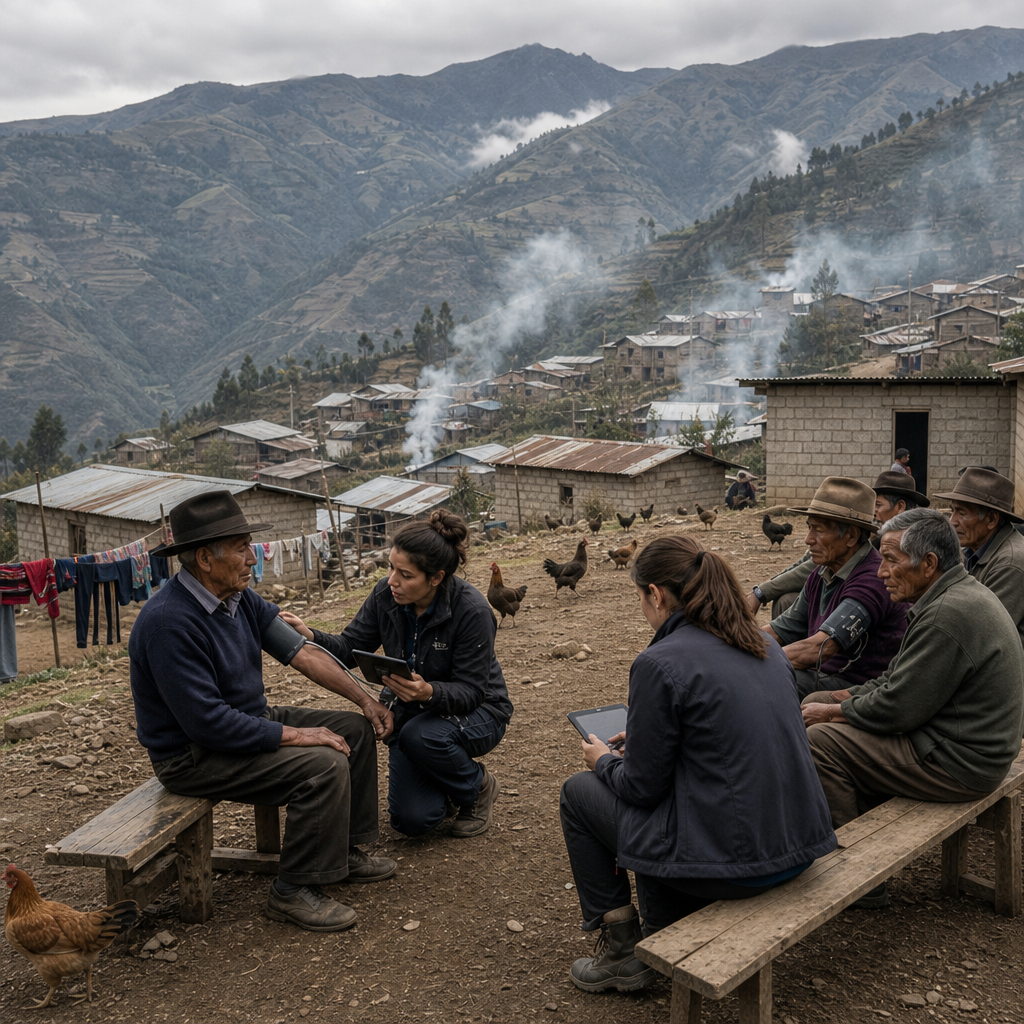
There's a place in the mountains of Guatemala where men don't die the way we die. Not a legend. Not something someone posted online to sell you something. A documented fact that's been frustrating western researchers for over twenty years. Men in their eighties and nineties with arteries so open a cardiologist's jaw would hit the floor. Vessels so soft and flexible they move like they belong to someone decades younger. And not one of them with a stent, a bypass, or a single pill. I know because I went there. My name is Sal Ferraro. I'm 62. Retired ironworker out of the Scunthorpe steelworks. Thirty-four years setting rebar and tying structural steel in the Scunthorpe heat before my body finally told me we were done negotiating. But it wasn't my back that scared me. It wasn't my knees. It was the scan. 60 percent blocked. Then 70. Then the appointment that made me sit in my truck in the car park for twenty minutes before I could drive home. Then 90 in the one they call the widowmaker. The cardiologist put in a stent. Then added a blood thinner. Then started talking about a second procedure on top of both. Two stents and a shelf of pills. For a man who used to carry 40kg bundles of rebar up scaffolding like shopping bags. I did everything they told me. Cut the salt until food tasted like a dare I was losing. Cut the red meat. Cut the beer down to almost nothing, which if you knew me before would've made you laugh. Walked my slow, careful, take-it-easy laps every morning. Took the garlic until my skin smelled like a kitchen. Took the nattokinase. Took the enzyme that was supposed to dissolve the cement. Bought a £45 tub of L-citrulline powder that gave me veins in my forearms I'd never seen before and didn't move the numbers a single point. Every three months I went back. Every three months the scan went up on the screen. And every three months the look on the nurse's face told me everything before she said a word. It wasn't working. My wife, Marie, stopped asking about the scans. That's how I knew she was scared. Marie asks about everything. When she goes quiet, it's bad. One night I'm sitting at the kitchen table reading on my phone. Can't sleep. 11:40 at night. And I come across an article about a population of indigenous Maya in the Guatemalan highlands who've been studied since the early 2000s. The findings were all the same. Virtually no age-related vascular decline. Arteries that stayed soft and open decade after decade instead of stiffening the way they stiffen in every industrialised country on earth. And when members of this same genetic population moved to Guatemala City and adopted a modern diet, they started showing up on the same scans we do. Same blood. Same genes. Different outcome. Which meant it wasn't genetics. It was something they were doing. Or something they were consuming. Or both. I read that article four times. Then I read every paper I could find linked from it. Then I did something my wife thought was certifiably insane. I booked a flight. "You're going to Guatemala," she said. Not a question. A statement. The kind that means she's already calculating how much this is going to cost. "I need to see it," I said. "You need to see a village." "I need to see what they're doing that we're not." She stared at me. "Sal." "Marie. I've got two stents and a fistful of pills and I'm still stuck in that chair. Nobody can tell me why. I'm going." She didn't argue after that. I think she was as tired of watching it as I was of living it. I landed in Guatemala City on a Tuesday in October. Rented a truck that had seen better decades. Drove north and west into the highlands on roads that would make a National Highways engineer weep. The elevation climbed. The air got thin and cool. The trees closed in. Four hours later I pulled into a village that doesn't show up on Google Maps. No pharmacy. No clinic. No vending machines. No neon. Just cinder block homes with corrugated roofs, cook smoke, chickens, and more vertical terrain than seemed survivable. I found a man named Don Emilio sitting on a wooden bench outside a little tienda. He was 87. I know because I asked, and because he laughed when he told me, like the number was a joke he never got tired of. He was lean. Steady. Clear-eyed. Hands that still worked. A posture that would've shamed half the guys I worked with at forty. Through a combination of bad Spanish and his granddaughter translating, I told him why I was there. He listened without interrupting. When I finished, he looked at me for a long time. Then he said, "You came a long way to learn something simple." He invited me to stay. That first morning, his daughter-in-law brought me a plate. Eggs. Black beans. Tortillas thick as my thumb. And a small cup of something warm and red that smelled like fire and earth. I tasted it. Warm. Sharp. A slow heat that opened my chest, not unpleasant. Nothing like the cayenne in a jar back home. Heavier somehow. Like it meant something. I asked what it was. She said one word. "Cayenne." I spent four days in that village. And what I watched didn't add up against anything I understood about ageing. I watched Don Emilio walk a mountain trail that had me doubled over and gasping in fifteen minutes. He didn't slow down. He didn't grab his chest. He didn't stop to rest. He walked it the way a man walks to the corner shop. I watched a woman who told me she was 83 haul a basket of wet laundry up a stone path so steep I used both hands to climb it. I watched men in their seventies and eighties working in the milpa, bent over rows of corn and beans in the midday heat, moving with a looseness I hadn't had since my forties. Nobody looked fragile. Nobody moved carefully. Nobody had the grey, stiff, benched walk that I see in every man my age back home. On my last night, I sat with Don Emilio by a fire and asked him the question I'd flown 5,000 miles to ask. "Why are you all still alive? Why aren't you broken the way we're broken?" He poked the fire. "Because we never stopped feeding the blood." He said it simply. Like it was obvious. Like the fact that it needed to be said was the strange part. "Every morning," he said. "Since before my grandfather's grandfather. The pepper. The real cayenne. Not what they sell in your stores. The whole fresh fruit. Pressed slowly. No heat that kills it. No dust that fakes it. Just the pepper. Every single day." He looked at me. "Your country took our pepper a long time ago. But you destroyed it. You dried it until it was dead. Ground it to dust until it was nothing. And then wondered why your men started sitting down at 55." He shook his head. "We never changed. We kept taking it the way it was meant to be taken. And our blood still moves the way blood is supposed to move." I sat there staring into the fire thinking about my scan and my two stents. My blood thinner and my statin. My cardiologist who never once, in two years of visits, asked me what I had for breakfast. And here was an 87-year-old man in the mountains of Guatemala who just handed me the answer while poking a fire with a stick. When I got home, I tore into the research. And everything Don Emilio told me was backed by published science. Here's what nobody in my cardiologist's office ever explained to me. Inside every blood vessel, there's a thin inner lining. It produces a molecule called nitric oxide. Nitric oxide is the signal. It tells the vessel walls to relax, to stay soft, to open when the body needs more flow. When you're young, that lining produces plenty of it. The vessels stay open. The blood moves the way it should. Everything works. But as you age, that lining starts producing less. Year by year, little by little. The vessels stiffen. They lose flexibility. They resist flow instead of accommodating it. The arteries constrict into smaller, stiffer passageways. This is the mechanism. Not the plaque on the scan. Not the salt. Not the stress. Those things show up later. But the root cause, the thing driving the whole cascade, is the lining losing its ability to make the one molecule that keeps everything open. And here's the part that made me want to put my fist through a wall. Raw, standardised cayenne pepper contains one of the highest natural concentrations on earth of a compound called capsaicin, and capsaicin hits a switch on the vessel wall called TRPV1. And this specific switch, the one a Nobel Prize was awarded for discovering, has been shown in research to support nitric oxide production in that lining. That's what Don Emilio's village had been doing for centuries. They weren't managing symptoms. They weren't forcing anything open with chemicals. They were hitting the switch itself. Every single morning. Before anything went wrong. The nattokinase I'd been taking? It has its place, but it doesn't touch this switch. The garlic? Fine enough. Doesn't wake the wall. The citrulline? Provides some nitric oxide from the outside. Doesn't support the body's own production the way capsaicin does. The stent? It props open one collapsed room in a whole city of pipe. It doesn't wake the wall, it patches it. Which is why the pills stack up and the list keeps getting longer. I'd spent two years treating the crime scene. Nobody told me the factory had shut off. But here's where it gets worse. You can't fix this by grabbing cayenne off the supermarket shelf. You can't shake hot powder on your eggs and expect anything to change. Because the cayenne sold in Britain is mostly dead by the time it reaches you. There's a standard industry shortcut called tempering. Heat-drying. It turns the fresh pepper into a shelf-stable powder that lasts for years. And it cooks off most of the living compound. The capsaicin that makes the pepper worth taking gets baked down until the jar is barely a ghost of the fruit. Then it sits in a jar on a shelf for a year. More degradation. More loss. Then they cut it with fillers. Anti-caking dust. Salt. Silica. Whatever keeps it pouring. By the time it's in your pantry, it's a completely different substance. Same colour. Same name. Zero function. And here's the tell. Almost no supermarket cayenne prints how much real capsaicin is left. Because if they did, you'd see the number is close to nothing. And you'd ask questions they don't want to answer. That's the trap. You think you're getting something real because the jar says "cayenne" or "ground red pepper." But the thing that actually flips the switch was cooked out before it was ever packaged. I almost gave up. I had the knowledge but no way to act on it. I couldn't move to Guatemala. Then Don Emilio's granddaughter sent me a message. She said her cousin had moved to the US years ago and started making the pepper the traditional way. Fresh heirloom peppers. Cold-pressed. Never heat-dried. Sealed into a liquid softgel that reaches the blood instead of sitting in your stomach like dust. The way Don Emilio's family had been taking it for generations. She sent me a link. The company was called GetJacked. https://get-jacked.co/products/cayenne-pepper-softgels I ordered it the same night. It arrived in a red zip-seal bag. I opened it and the warmth hit me right away. That same living bite from the clay cup in Don Emilio's kitchen. Not dull. Not dusty. Just real. Cayenne from thirty thousand fresh peppers. That's the heart of it. No dry powder. No capsule sitting in your gut. No heat-killed dust. No cheap filler dressed up as the real thing. And right on the bag, printed clearly: the cayenne per serving. Three hundred milligrams, from thirty thousand fresh peppers. In a liquid softgel that actually reaches the blood. Because if a company won't tell you what's really in the thing, you already know the answer. I started every morning. Three softgels. A glass of water. Ten seconds. I told Marie not to ask me about it. I didn't want to watch for results. I didn't want to hope and be let down again. I just wanted to take it and live. Week one. Nothing I could point to. Maybe a little warmer in the mornings. Maybe not. Week two. I noticed my hands and feet weren't cold the way they'd been cold for two years straight. The thing where you can't get the chill out of them. It had eased off. Week three. I woke up one Saturday and realised I felt different. Not fixed. Not cured. Just... lighter. Like something had loosened. Like the tightness across my chest that I'd been carrying for two years had backed off by half. Week six. I lifted the 40kg feed bag off the tailgate. I set it down and lifted it again. I did it a third time because I thought I'd imagined it. I sat down on the tailgate and I didn't move for ten minutes. Marie came out and saw my face and thought something was wrong. "It's not wrong," I said. "It's good. It's actually good." By month three, I walked into the cardiologist's office for the first time without dread sitting in my stomach. I came in on my own legs. I stood while I waited. And the nurse looked at me differently than she'd ever looked at me. "What have you been doing?" she asked. "The same thing they do up in the mountains," I said. She didn't know what that meant. That's okay. Someday she might. Listen. I'm not going to tell you to throw away your pills. I'm not going to tell you to skip your cardiologist. Keep every appointment. Do everything you've been told to do. But if you've done all of it. If you've cut the salt and swallowed the capsules and walked the slow laps and sat in the chair and done everything right and it still isn't enough. Then maybe the answer isn't another procedure. Maybe the thing that's missing is the thing an 87-year-old man in the mountains of Guatemala has been taking every morning of his life. GetJacked does it the real way. Fresh peppers. Cold-pressed. Sealed in a liquid softgel that actually reaches the blood. Three hundred milligrams of cayenne a serving, from thirty thousand peppers, printed right on the bag. A 120-day money-back guarantee. Made in small runs, because cayenne this fresh can't be mass-produced and still be real. https://get-jacked.co/products/cayenne-pepper-softgels If the link below is still active, they have stock. They sell out, and when they do, the wait can be weeks. Men in that village don't die the way we die. Now you know why. P.S. I sent a bag to my older brother in Wigan. He called me nineteen days later. Didn't say hello. Just said, "Sal. What is this stuff." That's how it starts. P.P.S. They genuinely sell out. Last time I waited three weeks for a restock. If the link works, don't bookmark it for later. Later is how we got here. https://get-jacked.co/products/cayenne-pepper-softgels
Where the ad sends people
get-jacked.co
The #1 Cayenne for Artery Health
Everyday support for healthy circulation, blood pressure, and heart health.
Learn more: get-jacked.co(opens in a new tab)