Thrive Through Menopause
Thrive Through Menopause Facebook ad: “Support stamina and heart health every day”
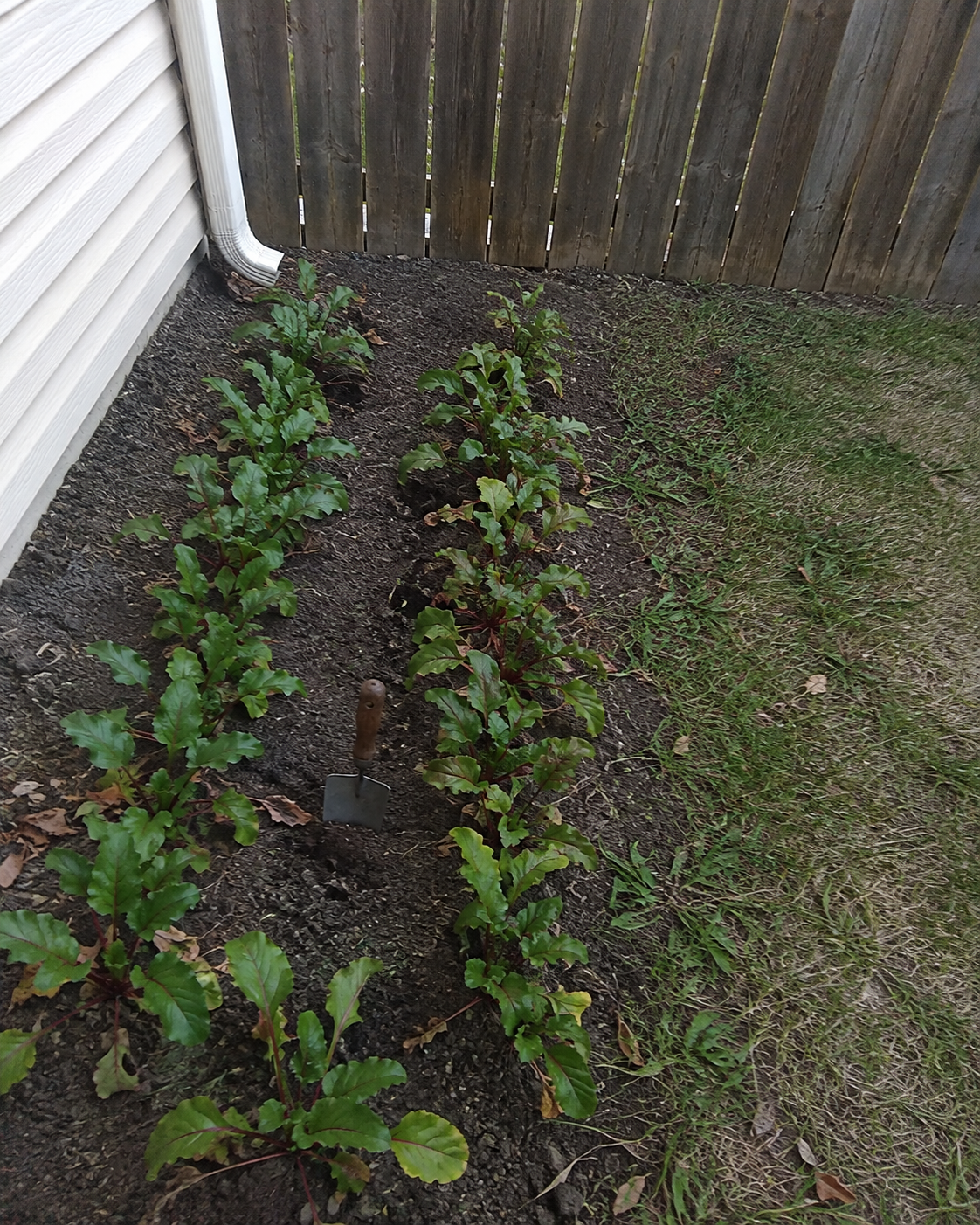
Ran for 22 days, from August 20 to September 11, 2026, the last day Crush saw it.
Run by Thrive Through Menopause on Facebook. Crush is not the advertiser and does not verify its claims. See this ad in Meta's Ad Library(opens in a new tab)
Want an ad like this for your product?
Crush makes new ad images for your product from this ad: your logo, your product photo, your offer.
Trials from $19.95 USD, then $79.95 USD a month. Cancel anytime.
About this ad
- Meta Ad Library ID
- 2273318320149308
- Platforms
- Facebook, Instagram, Audience Network, WhatsApp and Threads
- Relaunches
- 9
- EU reach
- 18,719
Ad text
Nine Words, a Gravel Lane, and a Cellar Wall of Crimson Jars. Picture a man in the passenger seat of his own truck, being driven east through the dark. Call him Walt. The night before, his wife said nine words to him. She said them in the dark, after the light was off, in the voice she saves for things she's only going to say once. Then she rolled over. And in the morning she told him to pack a bag. And now the interstate is unspooling under the headlights, and Walt is turning those nine words over the way you turn over a stone you found in your own driveway — a thing that was always there, that you never once picked up. I'm not going to give you the nine words yet. You'll have them before this is done, at the moment you can hear them the way Walt finally heard them — and that took him the whole story, so it can take you ten more minutes. Some sentences are thirty years in the making. They keep. Let me back up. None of this makes sense otherwise. Walt is fifty-eight. He sells commercial HVAC systems out of Dayton — has for twenty-six years — and he is genuinely good at it, in the way of a man who has found the exact size of his own gift. He can walk into any building in three counties, stand in the lobby for a minute with his hand on a wall, and tell you what the mechanicals are doing and what they're about to stop doing. Buildings talk to Walt. He'll tell you that himself, at a barbecue, holding a paper plate: buildings talk, you just have to have been listening for thirty years. He drives forty thousand miles a year. He knows every diner worth stopping at between Dayton and Lima and the name of the woman at the counter in most of them. He is a friendly man, an easy talker, a rememberer of kids' names and bad knees — and like most men who talk easily, there is a room in him where nothing gets said at all. His wife is Ellen. He met her thirty-one years ago at a county fair, at the produce-judging tables of all places, where he had wandered with a lemonade for no reason he could name and found a young woman standing in front of the ribboned vegetables with her arms crossed, quietly disagreeing with the judges. He asked her what they'd gotten wrong. She looked at him for a second — he says now it was the once-over you'd give a used truck — and then she told him. For twenty minutes. The onions were judged on size when they should be judged on the neck. The tomatoes that won would be mealy inside a week. And the beets that took the blue ribbon were the wrong beets entirely, pretty and pale and bred sweet for people who don't actually like beets. Walt did not, at that time, have a single opinion about beets.. He married her anyway, fourteen months later, which he has always maintained was the fastest good decision of his life. Thirty years of marriage have not produced a reason to revise the assessment. Ellen grew up on a farm at the end of a gravel lane, a farm her family has worked for four generations, and she left it at twenty with one bag. There was no falling-out — people always assume a falling-out, and there wasn't one. The door stayed open. She just stopped walking through it, the way grown children do, a Christmas missed for weather, then a summer missed for work, until going back became a thing that needed an occasion. In thirty years of marriage Walt has been up that gravel lane maybe nine times. Funerals, a wedding, one reunion. He has admired the barn. He has eaten the pie. He has stood in that farmyard being friendly at people, which is his gift, and learned absolutely nothing — which it took him until this year to understand. Now — here is what you need to know about a woman raised the way Ellen was raised. It took Walt three decades to learn it, so pay attention and save yourself the time. Every October of their marriage, for one week, her hands are stained crimson to the wrist. Beets. She grows a short row of them behind the garage — one row, in a suburban backyard in Dayton, between the downspout and the fence — and every year after the first cold snap she pulls them. For one week the kitchen smells like earth and vinegar and the stove doesn't stop, and jars go down into the basement. More jars than two people eat. Walt has teased her about it for thirty years — the farm habit that followed her out, he calls it — and eaten his share from those jars every winter, and never once, not one time, asked where it came from or why she keeps it. The stained hands every October were just weather to him. Part of the calendar of being married to Ellen. You don't ask about the things you married. That's the whole trouble with marrying well: the best of it becomes furniture. And there's a second thing about Ellen, and it matters more. She watches. Not the way that sounds. In thirty years she has never nagged him, never inventoried his failures at him, never once made a thing smaller than it was or made Walt smaller because of it. But she was raised in a household where you learn what a place keeps and what it has quietly stopped keeping. She can walk into anyone's kitchen and tell you, inside a minute, how the people in it are actually living — the way Walt reads a building from the lobby. It's the same gift, aimed at a different machine. He calls it her party trick. Called it. This story is about the year he stopped calling it that. Because for a while now, what Ellen has been watching is a cabinet. Their kitchen at home is a museum of Walt's era. The espresso machine with eleven settings, of which he uses one. The air fryer that was going to change everything and did, for a month. And the cabinet to the left of the sink — the second shelf specifically — which holds what can only be called the archaeological record of every January since 2011. Dig down through that shelf and you can carbon-date each layer. The powders in bright bags, each one the answer for about six weeks — greens, reds, mushroom something, a bag with a lightning bolt on it that cost real money. The juicer, used twice, boxed once, promoted to the garage in a ceremony nobody spoke at. The green thing from a podcast. Capsules the size of furniture. A shaker bottle with a spring in it, gone rusty at the seam. Every January, a new plan — and Walt wants this understood, every plan was researched. He'd come to each one the way he comes to a bid, with comparisons and reviews and a genuine intention that this, finally, was the sensible one. And every March, quietly, with no scene to point to, the bag went to the back of the shelf. Nothing was ever thrown away. Throwing it away would mean saying something out loud, and the room in Walt where nothing gets said has a shelf of its own. Understand: nothing was wrong. That has to be said plainly, because you'll want a crisis here and there wasn't one. Business good, marriage good, kids launched and calling home enough. Nothing was wrong. There was only the shelf, growing one layer a year — a man's good intentions, sedimenting. This January was the same as the others. A new powder, red bag this time, a promising write-up. It clumped by February. And one evening in early fall, Ellen came into the kitchen just as Walt was pushing the bag to the back of the shelf — not discarding it, you understand, just retiring it, with the little private funeral he'd gotten so smooth at that he no longer noticed himself conducting it. She stood in the doorway and watched the whole ceremony. He didn't hear her until the cabinet clicked shut. She didn't say anything then. She looked at him the way she looks — the once-over from the produce tables, thirty years on, aimed with love and no mercy — and she went up to bed. And that night, in the dark, after the light was off and they were both lying there pretending to be asleep in the way of long marriages, she reached over and took his hand, and she said the nine words. Then she rolled over. And in the morning, over coffee, she said: "Pack a bag. We're going home for the harvest." Walt had learned exactly one skill in thirty years of being married to her that he'd rank above all the others, and he used it now: he knew better than to ask. He packed the bag. He got in the passenger seat of his own truck — she drove, which told him something too, though he couldn't have said what — and the interstate unspooled east. And that is where this story started: a friendly man in a passenger seat, turning nine words over in the dark. They pulled up the gravel lane in the late afternoon with the light going gold. Her parents' anniversary was the occasion — fifty years, the whole family converging, three days of it. Her mother came off the porch drying her hands on a towel. Her father came out of the barn and shook Walt's hand and said it had been a while, which from him was a paragraph. The farm is not large and not picturesque and not a museum. It is a working place her brother runs now, with her father still in it every day. The house is the house Ellen grew up in: woodsmoke and coffee, a hallway of photographs going back past anyone alive, a kitchen table long enough to seat the field crews that used to eat at it. For three days that table filled up — brothers, cousins, a great-aunt with opinions, kids underfoot — and the rhythm of the place closed over Walt like water. And Walt, a friendly man with nothing to sell for the first time in years, did what he does. He wandered. He wandered into the garden — and stood there a while, because the garden made him quiet. It isn't a hobby garden. It's the size of a house lot, in full production, and it goes in the same week every spring and comes out on the same schedule every fall and has since before he was born. Nobody consults about it. It isn't a project. It's a fact, like the weather, except the weather changes. He wandered into the barn and found her brother mending something, and got the tour. And in the corner of the loft he found the thing that stopped him: a cabinet of small drawers, and in the drawers, seed. Saved seed, in labeled paper envelopes, hundreds of them, sorted by year and crop in four different generations of handwriting. He stood there reading labels like headstones. Some of the hands that wrote them belonged to people who were now photographs in the hallway. Her brother, watching him, said only: "You don't buy what you already have. You just keep it going." And went back to mending. And on the second morning, sent down to fetch potatoes for her mother, Walt wandered into the cellar. The stairs turn at the bottom, and the light is one bulb and a little window. And when his eyes adjusted, one whole wall of the cellar was crimson. Jars of beets. Floor to ceiling, wall to wall — this year's row and last year's behind it, pickled and plain, quarts and pints, the low light coming through the glass the color of stained glass in a country church. Hundreds of jars. More than any one family could sensibly eat — which was exactly, he realized, what he'd been not-asking about the basement in Dayton for thirty years, scaled up by four generations. Walt stood there holding a bowl of potatoes for a long time. And what he felt, before he could talk himself into a nicer word for it, was embarrassment. Not about the jars. About the shelf. The second shelf, to the left of the sink, with its bright bags and its layers and its little private funerals. He stood in front of a wall that a family had kept, without discussion, for a hundred Octobers, and thought about eleven Januarys of deciding, and he felt his ears go hot in a cold cellar. At supper that night he asked. First real question he'd asked up that lane in thirty years. He asked it badly, the way you ask when you've been saving a question too long — why the beets, why so many, who decided this — and the table went a beat quiet. Not offended. Just surprised, the way a table goes quiet when a guest asks why there's a floor. And then Ellen's father, who is old and spare with words and had said maybe forty of them to Walt across nine visits, set down his fork. "Nobody decided it," he said. "That's the part you're not getting, son. You're looking for the why like it's wrote down somewhere. There's no why you'd write down. "The garden goes in because it goes in. October is when the jars go down. The seed gets kept because you have it — so you keep it." He nodded toward the cellar door. "My grandmother put that wall up every year of her life. Her mother before that, in another cellar, that I only know from being told. Four generations, and I promise you not one of them ever asked your question." He was quiet a second, and Walt made the mistake of thinking he was done. "Keeping a thing isn't a decision," the old man said. "That's what you people got wrong, no offense meant. You made everything a decision. "Every year, every one of you, deciding your whole life over from scratch like the year before never happened. That's the new invention, right there — deciding. Wears a man out, I'd think." He picked his fork back up, and aimed it, briefly, at Walt, without heat. "Your world asks what's new. This table only ever asked the one question: what did we never stop doing?" And that was the speech. All of it. Nobody at the table added a word — her brother passed the potatoes, the great-aunt asked about the pie, the kids resumed being kids. No one had lived a philosophy at Walt. They had just lived, in front of him, for three days, the way they had for four generations, and left him to do the arithmetic in his own head like a grown man. He did the arithmetic on the drive home. Ellen drove again. Walt watched the interstate come at him, no radio, two hundred miles of it, and took the inventory a man only takes with that much windshield and that much quiet. Thirty-one years of Januarys — he went through them one by one, the way you'd read those seed envelopes. The rowing machine year. The juice year. The bag with the lightning bolt. Each one researched. Each one meant. Each one a decision — and that was the word he kept snagging on, all the way past Columbus. Decision. Every January he had re-decided his entire self from a standing start, like a man rebidding a job he'd already won. And at the end of his wife's gravel lane there was a wall of jars that had never once been decided. The same dark red answer, kept without a word, for a hundred Octobers. His cabinet asked what's new. That table asked what never stopped. Two different questions. Two different kinds of shelf. And one of the oldest continuous answers to the second question — in that cellar, and in root cellars and soup pots and pickle jars across half the world — is the beet. People have been eating beets for thousands of years. They were in the cellars and stews of half the world's grandmothers long before anyone could have told you why — kept and replanted and put up every fall on nothing more than the accumulated verdict of generations. Today the why is better understood: beetroot naturally contains dietary nitrates, and the body converts those into nitric oxide, a molecule that helps support healthy blood flow.* Beets also carry betalains — the deep crimson pigments that stain Ellen's hands every October and turn that cellar wall to stained glass. Nature did the formulating a long time ago. The families who never stopped growing beets didn't have the vocabulary for any of it. They just never stopped. Now comes the part of the story where Walt gets it wrong anyway. I'm telling it so you can skip being Walt. Because Walt came home a converted man — and then he did the most Walt thing imaginable. He turned the inheritance into a project. He bought a roasting pan. He printed recipes. He went to the good grocery store and bought fresh beets by the bunch, greens and all, and announced — announced — that this household would now be eating beets weekly, the way her people did. Ellen said that would be nice, in a voice he was too inspired to read. It lasted until March. Of course it did. You already know why, and so did she. The roasting runs an hour. The peeling stains the cutting board, the counter, one good dish towel, and the grout. The greens wilted in the crisper with a reproachful look. And Walt's actual life — the one where he's on the road to Lima at seven and home at eight, forty thousand miles a year — kept being his actual life. By the end of March the beet project had joined the archaeological record, one more layer. And the worst part was that this time he'd known better. This time he'd stood in the cellar. He sat with that a while. And here's where he finally got it — the last piece, the one the old man's speech had been pointing at the whole time. The wall of jars works because an entire household is built around the keeping. Four generations deep. The garden feeds the kitchen, the kitchen fills the cellar, the seed goes back in the drawer, and every hand on that farm is part of the machine. Ellen's people don't have better willpower than Walt. They have a life shaped like keeping. Walt has a life shaped like three counties of HVAC — and no amount of cellar-inspiration was going to reshape it by force of announcement. The beet was never the problem. The form of the beet was the problem. For her people, the jar is the form that fits the life. For a man with a windshield and a route, it had to be something else — something that asked his week for nothing his week didn't have. Which brings this story — through that door, and no other — to the capsules. Rosabella Beetroot exists for exactly the man doing arithmetic on the interstate. Two capsules, once a day. The oldest answer in the cellar, in the one form a crowded modern week can actually keep. What's in it reads in one breath, which is itself the point. 1,300mg of organic beetroot powder per serving — a serving being those two capsules. One active ingredient, with the dose printed plainly on the label, nothing to decode. Non-GMO, third-party lab tested, produced under GMP, made in the USA from globally sourced ingredients. It contains no caffeine. Sixty capsules in a bottle; thirty days. And now the part you don't usually read in something like this, so read it twice: nobody here is going to promise you a transformation. We're not going to tell you what you'll feel or when — bodies are different, and yours doesn't owe an advertisement anything. Walt's shelf was built by eleven years of products that promised him the moon in January and were sediment by spring. What can be promised is what's on the label, and a form of a very old food that doesn't ask your week for anything your week doesn't have. That's the whole pitch. It's short because the true parts always are. One thing before anything goes in a cart: talk to your doctor or pharmacist before adding any supplement, especially if you take any medication. This goes alongside the rest of it — the meals, the garden if you've got one, the walks — not in place of any of it. On Amazon, Rosabella Beetroot sits at 4.4 out of 5 across more than 14,000 ratings as of August 2026. And there's a 90-day guarantee: if you're not satisfied for any reason, return it within 90 days of delivery for a full refund. The ending of Walt's story is small. By now you know that's the point. The following October, there's a bottle standing on the kitchen windowsill in Dayton, next to the espresso machine with eleven settings. It's been there since January. In the archaeological record of that kitchen, this makes it the oldest surviving artifact by roughly eight months — a fact Walt has mentioned at two barbecues. Behind the garage there are two rows of beets, not one. The second row is Walt's. It's crooked. Ellen has walked past that crooked row all summer and never once said so, which he has decided is the single most loving thing that's happened to him in years. And in the basement there are more jars than the October before, because this year he helped — peeled and packed under supervision, ruined a dish towel, and had crimson hands for three days afterward, which he showed to everyone at work, holding them up like a license. The jars from the farm went back too, washed, in a box in the truck bed, because he has learned that returning the jars is how you get invited back. So. The nine words. That night in the dark, after she watched him conduct one more small funeral at the cabinet, Ellen took her husband's hand and said: "I didn't marry a man who keeps starting over." Walt heard it that night as a verdict, and it stung like one for two hundred miles of interstate. It wasn't a verdict. You know what it was, because you've now seen where she took him the very next morning. It was a plan. She had spent thirty years watching the man she chose re-decide himself every January — watching the shelf grow its layers, watching the little funerals get smoother — and she came from people who keep. So she stopped watching. She put him in the passenger seat and drove him up the one gravel lane on earth where nobody has ever had to start over, and she let a wall of jars and an old man's forty words do what thirty years of her silence had been too kind to do. Walt is not one of her family's keepers yet. Four generations is a head start you don't close in a year, and he knows it. But the bottle is still on the windowsill in October. The second row went in the same week as the first. The jars went back washed. That's how it starts, it turns out. You keep one thing. Then you keep another. P.S. If your own second shelf has an archaeological record — the bright bags, the six-week answers, the juicer used twice — nothing is wrong with your discipline, and you don't need a better January. Plans built on deciding get re-decided; that's what deciding is for. The old families ask the better question — not "what's new?" but "what did people never stop doing?" — and then they pick the form of it their actual life can keep. P.P.S. What it is, plainly: organic beetroot powder in capsules — 1,300mg per two-capsule serving, one active ingredient, dose on the label, no caffeine, non-GMO, third-party lab tested. Thirty days a bottle. That's the whole story. P.P.P.S. The guarantee is satisfaction-based: not satisfied, for any reason, return it within 90 days of delivery for a full refund. Enough time to find out whether it becomes one of the kept things — which is the only test that matters anyway. Individual experiences vary. These statements have not been evaluated by the Food and Drug Administration. This product is not intended to diagnose, treat, cure, or prevent any disease.
Where the ad sends people
get.tryrosabella.com
Support stamina and heart health every day
Learn more: track.tryrosabella.com(opens in a new tab)