Dr. Sarah Mitchell - Respiratory Researcher
Dr. Sarah Mitchell - Respiratory Researcher Facebook ad: “Stop Wheezing. Start Breathing.”
Ran for 21 days, from May 12 to June 2, 2026, the last day Crush saw it.
Run by Dr. Sarah Mitchell - Respiratory Researcher on Facebook. Crush is not the advertiser and does not verify its claims. See this ad in Meta's Ad Library(opens in a new tab)
Want an ad like this for your product?
Crush makes new ad images for your product from this ad: your logo, your product photo, your offer.
Trials from $19.95 USD, then $79.95 USD a month. Cancel anytime.
About this ad
- Meta Ad Library ID
- 2325651107926870
- Platforms
- Facebook, Instagram, Audience Network, Messenger and Threads
- Relaunches
- 0
- EU reach
- 486
Ad text
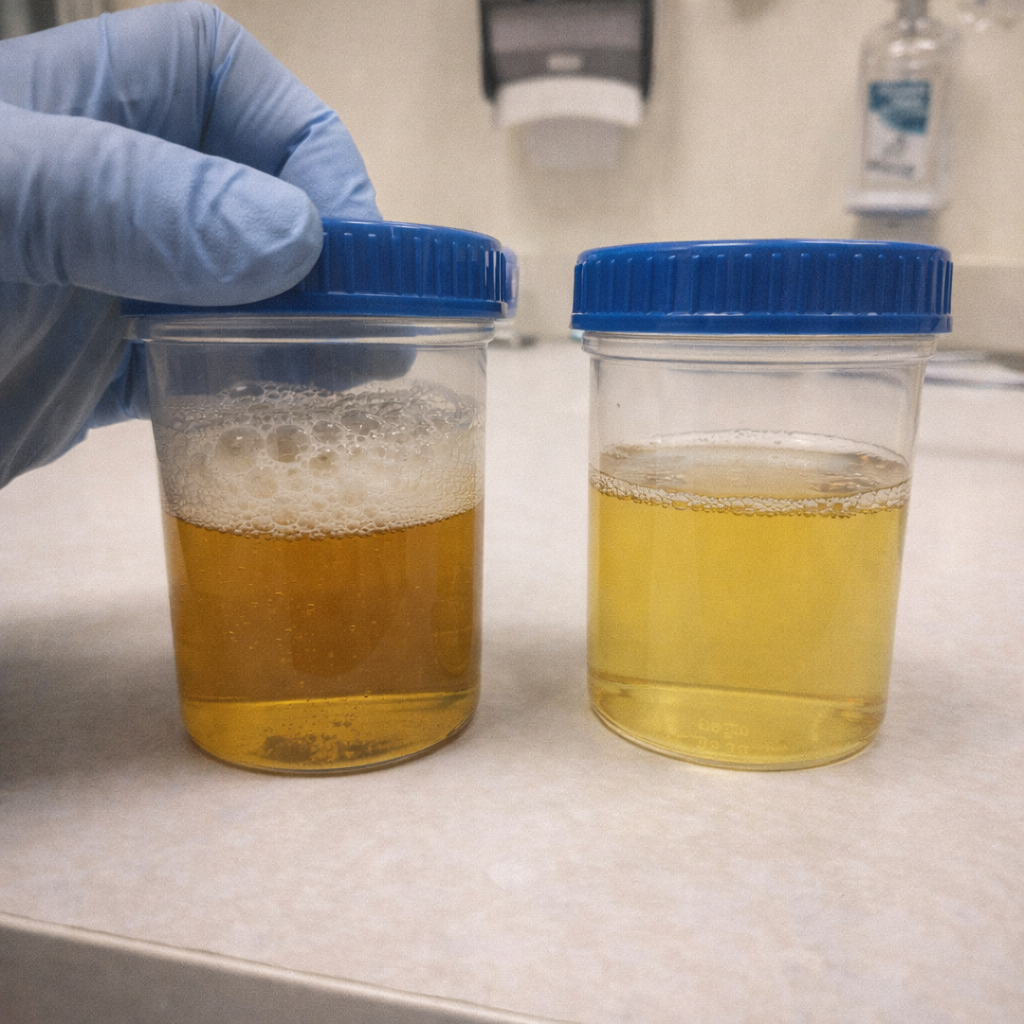
I'm going to show you something that will make you uncomfortable. But if you've ever looked down at the toilet and seen foam floating on top of your urine — thick, bubbly foam that doesn't go away even after you flush — you need to read every word of this. Because what you're seeing isn't a kidney problem. It's a lung problem. And almost every doctor will miss it. Three months ago, a 58-year-old patient walked into my office for a routine physical. Michael had been seeing me for two years. Always healthy. Active. No major complaints. But this time, something was different. He sat down. Avoided eye contact. Shifted in his seat. "Doc, I need to ask you something embarrassing. "I closed my laptop. "Go ahead." "My urine... it's foamy. Like beer foam. Every single time. For weeks now. "I nodded. Pulled up his chart. "Let's run a kidney panel. Protein in the urine can cause that. We'll check your kidney function. "He looked relieved. "That's what I thought. My kidneys. "The tests came back three days later. Kidney function: Perfect. GFR: 94. Creatinine: 0.9. Protein in urine: Negative. I called him. "Michael, your kidneys are fine. Completely normal. "Silence. "But the foam..." "I don't know what's causing it. Let's monitor it. "He hung up. I moved on to the next patient. Two weeks later, Michael called back. "Doc, it's getting worse. The foam. And now I'm exhausted all the time. I can't make it through the afternoon without feeling like I'm going to collapse." "Come in tomorrow." When he walked in, I noticed something I'd missed before. His color was off. Not pale. But... grey. Around his lips. Subtle. I checked his oxygen saturation. 91%. Not dangerously low. But lower than it should be. "Michael, are you short of breath?" "Sometimes. When I climb stairs. Or when I laugh. I just thought I was out of shape." I ordered a chest X-ray. The results came back that afternoon. Bilateral lower lobe opacities. Mucus plugging. Chronic airway inflammation. His lungs were drowning in mucus. I called him back in. Showed him the images. "Michael, your foamy urine isn't a kidney problem. It's a symptom of chronic hypoxia." He stared at me. "What's that?" "Low oxygen in your blood. Your lungs aren't getting enough oxygen to your tissues. Your body is compensating by breaking down protein for energy. That protein is showing up as foam in your urine — but your kidneys aren't the problem. Your lungs are." His face went white. "How long has this been happening?" "Based on your X-ray? Probably months. Maybe years. You just didn't notice until the foam appeared." After Michael's diagnosis, I started asking a question I'd never asked before. "Do you ever notice foam in your urine?" Patient after patient said yes. A 52-year-old woman with chronic fatigue. Foamy urine for six months. Kidney tests normal. Chest X-ray: mucus buildup. A 61-year-old man with morning cough. Foamy urine he'd ignored for a year. Kidney function perfect. Lung function: declining. A 47-year-old who thought she had allergies. Foamy urine. Normal kidneys. Lungs filled with trapped mucus. The pattern was undeniable. Foamy urine wasn't a kidney symptom in these patients. It was a lung symptom. And almost no one was connecting the dots. Here's what most doctors don't understand. When your lungs are clogged with mucus — when your airways are blocked and your oxygen levels drop — your body enters a state called chronic hypoxia. Low oxygen means your cells can't produce energy efficiently. So your body starts breaking down muscle protein for fuel. That protein breakdown creates nitrogen waste products that your kidneys filter out. When those nitrogen compounds hit your urine, they create foam. The same kind of foam you see when you shake a protein shake. It's not kidney disease. It's your body cannibalizing itself because your lungs can't deliver oxygen. And the foam is the warning sign no one taught you to recognize. If you have foamy urine, you probably have other symptoms too. You just didn't know they were connected. That constant afternoon exhaustion that hits around 2 PM and makes you want to collapse on the couch. That's not age. That's hypoxia. Your brain isn't getting enough oxygen. The brain fog that makes you forget words mid-sentence or lose track of what you were doing. That's not stress. That's oxygen starvation. The shortness of breath when you climb stairs or laugh too hard. That's not being out of shape. That's your lungs struggling to move air through mucus-clogged airways. The morning cough that produces thick phlegm you can't seem to clear. That's not allergies. That's trapped mucus your body can't expel. The tight feeling in your chest that never fully goes away. That's not anxiety. That's chronic airway obstruction. And the foamy urine you've been Googling at 3 AM, terrified it's kidney failure? That's your body screaming that your lungs are suffocating. After Michael's diagnosis, I did what I was trained to do. "Increase your water intake. Use this inhaler twice daily. Avoid dairy. Do breathing exercises." He followed every instruction. Two months later, the foam was still there. The fatigue was worse. His oxygen saturation had dropped to 89%. He tried cutting out gluten. Someone on a forum said it helped their breathing. No change. He bought a $300 air purifier for his bedroom. Still foamy urine. Still exhausted. He started taking NAC — the supplement everyone recommends for lung health. Eight weeks. No improvement. Foam unchanged. He called me, frustrated. "Doc, I'm doing everything you said. Why isn't it working?" I didn't have an answer. Because the truth is, I was treating his symptoms. I wasn't addressing the root cause. Six weeks after that conversation, Michael called me again. "Doc, I need to cancel my follow-up appointment." My stomach dropped. "Michael, you can't just stop treatment—" "No, you don't understand. I need to cancel because I don't need it anymore." Silence. "What do you mean?" "The foam is gone. Completely gone. My energy is back. I'm breathing normally. I feel... like myself again." "What did you do?" "I started clearing the mucus from my lungs. Actually clearing it. Not just managing symptoms." I sat forward in my chair. "How?" "A formula my brother told me about. Five herbs that dissolve mucus and restore lung drainage. I've been taking it for eight weeks." "And your urine?" "Clear. No foam. For three weeks straight." "Your energy?" "I made it to 8 PM last night without feeling exhausted. First time in over a year." I pulled up his chart. His last oxygen reading was 89%. "Come in tomorrow. I want to run your oxygen levels again." Michael came in the next morning. I clipped the pulse oximeter to his finger. The number on the screen climbed. 94%... 95%... 96%... 97%. It settled at 97%. I stared at it. Took it off. Put it back on. Still 97%. "How is that possible?" I said out loud. Michael smiled. "The mucus cleared. My lungs can breathe again." I ordered another chest X-ray. The bilateral lower lobe opacities were reduced. Significantly reduced. The mucus plugging was clearing. His airways were opening. I sat back in my chair. "What are you taking?" Michael explained it to me like he'd been studying it for months. "Your lungs have a drainage system called the mucociliary escalator. Tiny hair-like structures called cilia that sweep mucus and toxins out of your airways." I nodded. I knew this. Basic pulmonary physiology. "When those cilia get damaged — from smoking, pollution, chronic inflammation — they can't clear mucus anymore. Everything backs up. Toxins accumulate. Bacteria multiply. Your oxygen levels drop." "Right," I said. "That's why I prescribed the inhaler. To open the airways." "But inhalers don't clear the mucus. They just temporarily open the airways while the blockage stays there." He was right. "What I needed was to restore the mucociliary function. To actually dissolve the mucus cement clogging my airways and flush it out." "How?" "Five herbs. Mullein to break down the mucus. Bromelain to dissolve the protein chains that make it sticky. Ginger to open the airways. Cordyceps to enhance oxygen use. Lemon peel to protect the tissue while it heals." I pulled out my phone. Started taking notes. "It's called Pulmoria," he said. "Liquid drops. I take it every morning. Four drops under the tongue." "And that cleared your lungs?" "Week one, I was coughing up thick mucus constantly. Disgusting. But I knew it was working because stuff was actually coming out." "Week two, the foam in my urine started reducing." "Week three, completely gone." "Week four, my energy came back." "Week six, I could breathe deeply without that tight feeling." "Week eight, I felt normal again. For the first time in years." I wrote down the name. Pulmoria. "Where did you get it?" "Online. My brother uses it. So does his wife. Both had foamy urine. Both cleared up." I looked at his oxygen reading again. 97%. "Keep taking it," I said. "Whatever you're doing, don't stop." I'm not supposed to admit this. But I ordered Pulmoria that same evening. Not for Michael. For myself. I'm 54 years old. I don't smoke. I exercise three times a week. But for the past six months, I'd been noticing foam in my own urine. I'd run my own kidney tests. Twice. Both normal. I ignored it. Told myself it was nothing. But after seeing Michael's results, I couldn't ignore it anymore. The bottle arrived two days later. I took the first dose that morning. Four drops under the tongue before breakfast. By day three, I noticed something. The afternoon exhaustion I'd been blaming on long work hours... lifted. I made it to 6 PM without needing coffee. By day five, my morning cough — the one I'd blamed on "allergies" for two years — was less frequent. By week two, I looked down at the toilet after urinating. No foam. I flushed. Urinated again an hour later. Still no foam. For the first time in six months, my urine was clear. Week three: I took a deep breath while walking to my car. Actually filled my lungs. No tightness. Week four: A colleague stopped me in the hallway. "You look different. More energetic. What changed?" I didn't tell her. Not yet. Week six: I ran my own oxygen levels. 98%. It had been hovering around 93% for months. Week eight: I ordered a second bottle. Here's what I've learned after two months of researching this. Foamy urine from lung dysfunction isn't rare. It's common. And completely missed. When your lungs are clogged with mucus, your oxygen levels drop. Your body compensates by breaking down muscle tissue for energy. This creates excess nitrogen waste — blood urea nitrogen (BUN) — that your kidneys filter into your urine. High BUN in urine creates foam. The same foam you see when you add protein powder to water and shake it. Your kidneys are working fine. But your lungs aren't delivering oxygen, so your body is eating itself to survive. The foam is the visible proof. Most doctors see foamy urine and immediately think: kidney disease. They run a kidney panel. It comes back normal. They say, "You're fine." But you're not fine. Your lungs are suffocating. Your cells are starving for oxygen. Your body is cannibalizing muscle to compensate. And no one is connecting the dots. I've been prescribing inhalers for 20 years. They work. Temporarily. Inhalers open your airways by relaxing the muscles around your bronchial tubes. But they don't clear the mucus clogging those tubes. It's like opening a door to a room that's flooded. The door is open. But the flood is still there. Drinking more water doesn't fix it either. Water thins mucus. Slightly. But it doesn't dissolve the thick protein chains that make mucus sticky and cement-like. It doesn't restore the cilia function that sweeps mucus out. It doesn't address the chronic inflammation that keeps producing more mucus than your body can clear. You can drink a gallon of water a day. Your urine will still foam if your lungs can't deliver oxygen. After Michael's results, I started researching the herbs he mentioned. I read the studies. Looked at the mechanisms. Checked the safety profiles. Here's what I found: Mullein Leaf Extract — Used for centuries as a lung cleanser. Contains saponins that break down mucus at the molecular level. Helps expel trapped debris from deep in the airways. Cordyceps Mushroom — Studied for its ability to enhance oxygen utilization. Improves cellular energy production even when oxygen levels are low. Supports the cilia function needed for mucus clearance. Bromelain — A proteolytic enzyme from pineapple. Breaks down the protein chains that make mucus thick and sticky. Turns stubborn phlegm into liquid that can be easily coughed up and cleared. Lemon Peel Extract — Rich in antioxidants that protect lung tissue from free radical damage. Supports immune function to fight the bacterial overgrowth that thrives in trapped mucus. Ginger Root — A natural bronchodilator. Relaxes airway muscles and reduces inflammation. Opens constricted passages so air and mucus can flow freely. Not random herbs. Targeted compounds that address every stage of respiratory congestion. Mucus breakdown. Airway opening. Oxygen enhancement. Tissue protection. Inflammation reduction. And when they're combined in the right ratios — in liquid form for maximum absorption — they restore the lung drainage system from the inside. That's why Michael's foam disappeared. That's why his oxygen levels normalized. That's why my own urine cleared for the first time in six months. Based on my own experience and what I've seen in patients, here's the timeline: Week 1: You'll probably cough more. That's not a side effect. That's trapped mucus finally breaking loose. You might see thick phlegm — yellow, brown, even dark — being expelled. That's years of buildup leaving your lungs. Your chest will start feeling lighter. Week 2-3: The foamy urine starts reducing. You'll notice clearer urine some days, foamy other days, then consistently clear. The afternoon exhaustion lifts. You'll have energy past 2 PM for the first time in months. Week 4: Brain fog clears. Words come easier. You can focus. The tight feeling in your chest fades. You can take deeper breaths without that suffocating sensation. Week 6-8: Oxygen levels normalize. Energy stabilizes. The chronic cough that's been your constant companion... fades. You'll wake up breathing clearly. Sleep through the night without coughing fits. Week 8-12: You'll feel like yourself again. That person you were before the fatigue and the foam and the constant struggle to breathe. Not because your symptoms are masked. Because your lungs are actually clearing. The biggest mistake I see is people quitting too early. They take it for one week. See the increased coughing. Panic. Stop. They don't understand that the coughing means it's working. Your body is expelling mucus it hasn't been able to clear for months — maybe years. That has to come out. You can't clear your lungs without expelling what's trapped inside. The second mistake is not tracking their progress. Check your urine every morning. Notice when the foam reduces. Pay attention to your energy levels. Notice when 2 PM stops being a wall of exhaustion. Feel your breathing. Notice when that tight chest feeling fades. Track your oxygen if you have a pulse oximeter. Write it down. Because the changes are gradual enough that you might not notice day-to-day — but dramatic when you look back over eight weeks. I've recommended lung supplements before. NAC. Quercetin. Vitamin C. Magnesium. They support lung health. They don't clear mucus. There's a difference between supporting tissue and restoring drainage. Most lung supplements focus on antioxidant support — protecting cells from damage. But if your airways are drowning in mucus, antioxidants can't fix that. Pulmoria addresses the drainage system first. Mullein breaks down the mucus. Bromelain dissolves the protein bonds. Ginger opens the airways. Then Cordyceps enhances oxygen use and Lemon Peel protects the tissue. It's a complete system. Clearance first. Then healing. And it's in liquid form — which means it absorbs into your bloodstream in minutes, not hours. Pills have to dissolve in your stomach. Liquid hits your bloodstream immediately. That's why people notice results in days, not months. "How do I know if my foamy urine is from my lungs or my kidneys?" Simple test. Run a kidney panel. Check your GFR, creatinine, and urine protein. If those come back normal — and you still have foamy urine — it's not your kidneys. Check your oxygen levels. If they're below 95%, your lungs aren't delivering oxygen efficiently. Look for the other symptoms: Afternoon exhaustion Brain fog Shortness of breath with mild exertion Chronic cough Chest tightness If you have three or more of those symptoms plus foamy urine plus normal kidney function… It's your lungs. And you need to clear the mucus. If you're reading this at 3 AM because you Googled "foamy urine" and ended up terrified it's kidney failure… If you've run kidney tests twice and they keep coming back normal but the foam won't go away… If you're exhausted every afternoon and can't figure out why… If you're coughing every morning and your doctor keeps saying it's "allergies"... If your chest feels tight and you can't take a full deep breath… Try what Michael tried. What I tried. Clear your lungs from the inside. Give your body the compounds it needs to restore the mucociliary drainage system. Track your urine. Track your energy. Track your breathing. Give it eight weeks. You have nothing to lose except the foam. I've been practicing medicine for 20 years. I thought I understood lung disease. Turns out, I understood how to manage symptoms. I didn't understand how to restore function. Michael taught me that. His foamy urine wasn't a kidney problem I needed to monitor. It was a lung problem I needed to fix. And the fix wasn't an inhaler or more water. It was restoring his body's natural ability to clear mucus from his airways. When that happened, everything else resolved. The foam disappeared. The fatigue lifted. The oxygen normalized. The tightness faded. Not because we masked his symptoms. Because we fixed the underlying problem. That's what Pulmoria does. It doesn't mask. It clears. And when your lungs can breathe again, your body stops cannibalizing itself for energy. The foam disappears. The exhaustion lifts. You feel like yourself again. Pulmoria comes with a 90-day money-back guarantee. If your foamy urine doesn't reduce… If your energy doesn't improve… If your breathing doesn't feel clearer… Contact customer service. Full refund. No questions asked. You risk nothing. But if you do nothing — if you keep Googling your symptoms at 3 AM and hoping they'll go away on their own — your lungs will keep suffocating. Your body will keep breaking down muscle for energy. The foam will keep appearing. The exhaustion will get worse. And your oxygen levels will keep dropping until one day your doctor tells you what I almost had to tell Michael: "You need oxygen therapy." Don't wait for that conversation. Clear your lungs now. While you still can. 👉 https://pulmoria.com/pages/pulmoria-mucus P.S. I noticed less foam in my urine by week two. Complete clearance by week three. My oxygen went from 93% to 98% by week six. Your timeline might be different. But you won't know unless you try. P.P.S. Every morning you wake up and see foam in your urine is another morning your lungs are struggling to deliver oxygen. Every afternoon you collapse with exhaustion is another day your cells are starving. Every night you cough yourself awake is another night your airways are drowning in mucus. Don't wait. Order now. Your lungs are screaming for help. It's time to listen. 👉 https://pulmoria.com/pages/pulmoria-mucus
Where the ad sends people
pulmoria.com
Stop Wheezing. Start Breathing.
Clear your lungs from the inside out
Shop now: pulmoria.com(opens in a new tab)