Dr. Sarah Mitchell - Respiratory Researcher
Dr. Sarah Mitchell - Respiratory Researcher Facebook ad: “Stop Wheezing. Start Breathing.”
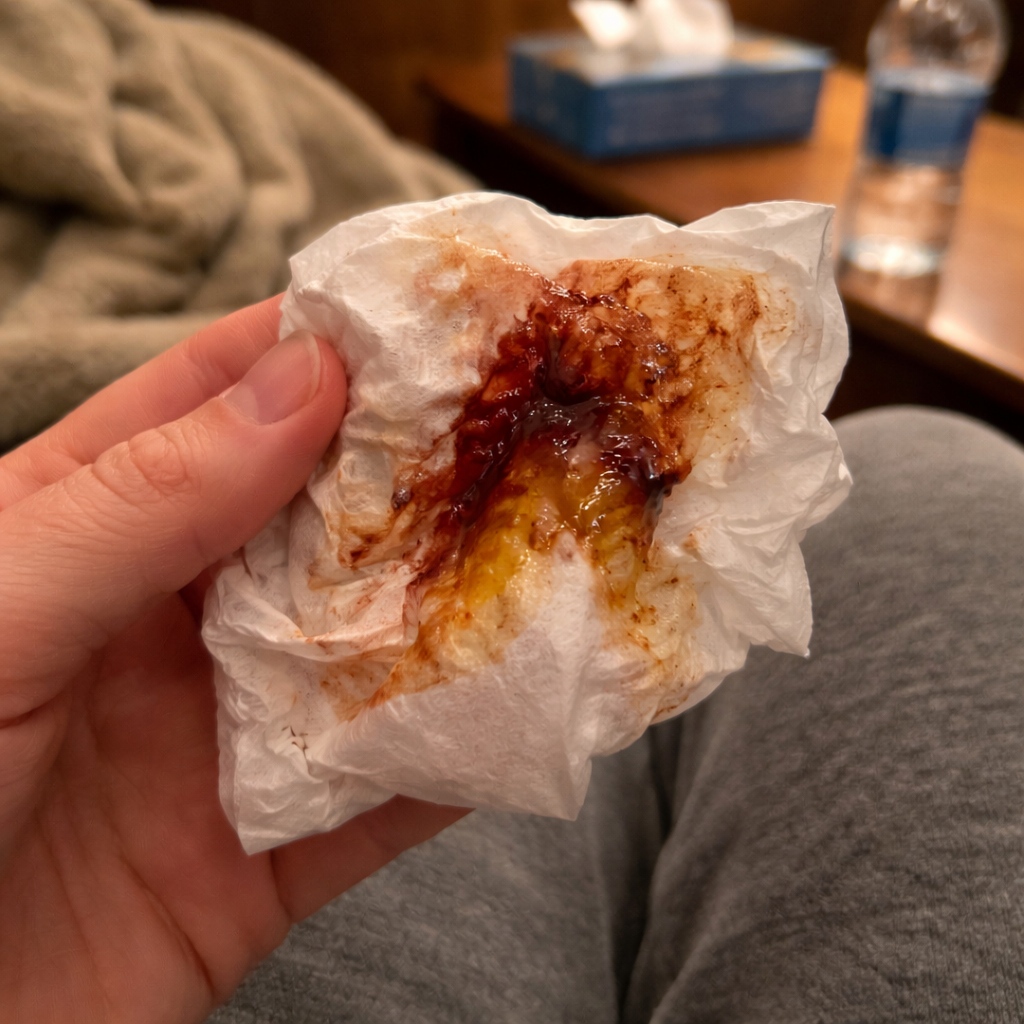
Ran for 41 days, from June 6 to July 17, 2026, the last day Crush saw it.
Run by Dr. Sarah Mitchell - Respiratory Researcher on Facebook. Crush is not the advertiser and does not verify its claims. See this ad in Meta's Ad Library(opens in a new tab)
Want an ad like this for your product?
Crush makes new ad images for your product from this ad: your logo, your product photo, your offer.
Trials from $19.95 USD, then $79.95 USD a month. Cancel anytime.
About this ad
- Meta Ad Library ID
- 3521940044626220
- Platforms
- Facebook, Instagram, Audience Network, Messenger and Threads
- Relaunches
- 0
- EU reach
- 293
Ad text
Look at the tissue after you blow your nose. Do you see it? That faint pink tinge. Those tiny red streaks. That rusty brown stain. You tell yourself it's dry air. Winter allergies. You blew too hard. It's not. That's blood mixed with mucus from your lungs. And it's trying to warn you about something serious. Two months ago, a 61-year-old patient named Frank walked into my office holding a crumpled tissue in a plastic bag. He sat down. Slid the bag across my desk. "I need you to tell me this is nothing." I opened the bag. Unfolded the tissue. Pink-tinged mucus. Small dark brown clots. Rust-colored streaks throughout. "How long has this been happening?" "Six months. Maybe longer. I kept thinking it was just... I don't know. Dry sinuses." "Do you cough every morning?" "Every single morning. For like twenty minutes. I cough up thick stuff until my chest clears." "Does it ever have color?" He looked down. "Yeah. Brown. Sometimes darker. I thought it was just phlegm." I checked his oxygen. 86%. "Frank, this isn't from your nose. This is from your lungs. And your oxygen is dangerously low." His face went pale. Here's what most people don't understand. Your airways are lined with tiny blood vessels. Capillaries. Delicate. When mucus builds up in your lungs and hardens—when it cements itself to your airway walls—those vessels get damaged. Every time you cough, you're tearing tissue. Every time you force air through blocked passages, you're rupturing capillaries. The blood mixes with the mucus. Turns it pink. Brown. Rust-colored. You blow your nose and see it on the tissue. But it didn't come from your nose. It came from your lungs. And it's a warning sign that your airways are being destroyed from the inside. Once we started talking, the full picture emerged. The morning cough that lasted 20 minutes every day. That's his body trying desperately to expel the mucus his lungs can't clear on their own. The bloody tissue he'd been ignoring for six months. That's tissue damage from chronic coughing and blocked airways. The afternoon exhaustion that hit him like a wall at 3 PM. That's hypoxia. His brain wasn't getting oxygen. The way he'd wake up at night gasping, sitting up in bed trying to catch his breath. That's his lungs failing to oxygenate blood while he slept. And the bloody mucus he thought was "just allergies." That was his airways literally tearing themselves apart trying to move air through cement-like blockage. All connected. All caused by mucus his body couldn't clear. And he had no idea. Frank's chest X-ray came back the next day. Severe mucus retention. Bilateral airway inflammation. Airways 75% obstructed. His lungs were drowning. I called him back to the office. "Frank, your airways are severely blocked. That's why you're coughing up blood. That's why your oxygen is at 86%. Your lungs are suffocating." "What do I do?" I pulled out my prescription pad. Albuterol inhaler. Twice daily. Mucinex to thin mucus. Prednisone for inflammation. "Use these. We'll recheck in six weeks." He left with three prescriptions. I moved on to my next patient. Frank came back for his follow-up. I asked the question before he even sat down. "Still seeing blood in the tissue?" "Yeah. Every morning. Sometimes worse." I checked his oxygen. 84%. It had dropped. "The inhaler isn't working?" "I use it twice a day like you said. But nothing's changed. I'm still coughing up the same stuff. Still see blood." I increased his doses. Added a steroid inhaler. "Try this for another month." But I knew it wasn't going to work. Because I was treating symptoms. Not clearing the blockage. Four weeks later, Frank called my office. "Dr. Harrison, the blood is gone." "What?" "The bloody tissue. It stopped. About ten days ago." "What changed? Did you start the new inhaler?" "No. I stopped using the inhalers completely. I started taking something else." I sat forward. "What are you taking?" "Something that actually dissolves the mucus. A liquid formula. Five herbs." "And the blood stopped?" "Completely. And I'm not coughing every morning anymore. I checked my oxygen with that thing you gave me. It's 94%." 94%. Up from 84% four weeks ago. "Come in tomorrow. I need to see this." Frank walked into my office looking different. His color was better. Not grey. Healthy. I checked his oxygen. 95%. I listened to his lungs. Clear breath sounds. No wheezing. No crackles. "How do you feel?" "I can breathe. I wake up and I'm not coughing for twenty minutes. I'm not seeing blood on the tissue. I have energy." "What are you taking?" He pulled out a small amber bottle from his jacket. "Pulmoria. Liquid drops. Four drops every morning." "What's in it?" Frank explained it like he'd researched it for weeks. "The inhalers open airways. But they don't dissolve the mucus blocking them. So the mucus stays there. Hardens. Damages tissue. That's why I was coughing up blood." He was right. "Pulmoria dissolves the mucus from the inside. It has five herbs." "Mullein—breaks down the mucus cement coating my airways." "Bromelain—dissolves the protein chains that make mucus stick to tissue." "Ginger—reduces the inflammation that was damaging my blood vessels." "Cordyceps—helps my lungs use oxygen efficiently even while they're clearing." "Lemon peel—protects the tissue and fights infections so new mucus doesn't build up." "How fast did it work?" "Week one, I coughed up more mucus than ever. Dark, thick stuff. But I knew it was clearing." "Week two, the blood stopped. Just... stopped." "Week three, I wasn't waking up coughing. My oxygen hit 93%." "Week four, I feel normal. For the first time in years." I wrote down the name. Pulmoria. "Keep taking it," I said. I didn't tell Frank this. But I'd been seeing bloody tissue after blowing my nose for three months. Not every day. But often enough that I'd started worrying. I told myself it was dry air. Allergies. Nothing serious. But after seeing Frank's results, I couldn't ignore it anymore. I ordered Pulmoria that night. The bottle arrived two days later. Four drops under the tongue before breakfast. Day three: I coughed up thick mucus in the morning. More than usual. Day five: I checked the tissue after blowing my nose. Still some pink. But less. Day seven: No blood. Clear mucus only. Week two: I wasn't waking up coughing. My chest felt lighter. Week three: I checked my oxygen. 97%. It had been hovering around 91% for months. Week four: I took the deepest breath I'd taken in years. No tightness. No restriction. Just air. The bloody tissue never came back. Here's what I learned. Inhalers open airways by relaxing the muscles around your bronchial tubes. But they don't dissolve mucus. So the mucus stays there. Hardened. Cemented to your airway walls. Every time you cough, you're forcing air through those blocked passages. Every time you breathe deeply, you're tearing tissue trying to move air around the blockage. The blood vessels rupture. The blood mixes with mucus. You see it on the tissue. The inhaler doesn't fix that. It just opens the airway temporarily while the damage continues. Pulmoria works differently. Mullein dissolves the mucus at a molecular level. Bromelain breaks apart the protein bonds holding it in place. Ginger reduces the inflammation damaging your blood vessels. The mucus clears. The airways heal. The bleeding stops. Not because you're masking symptoms. Because you fixed the problem. Based on Frank's timeline and mine: Week 1: You'll cough more. Thick, dark mucus will come up. You might still see blood on the tissue. That's normal. The mucus is breaking loose. Week 2: The blood stops. Your tissue is clear when you blow your nose. The morning cough gets shorter. Week 3: You're not waking up coughing. Your chest feels open. You can breathe deeply without that tight feeling. Week 4: No blood. No chronic cough. Clear lungs. Normal oxygen. You feel like yourself again. The bloody tissue disappearing is proof your airways are healing. Go blow your nose. Look at the tissue. Do you see pink? Rust-colored streaks? Small dark clots? That's not a nosebleed. That's blood from your lungs mixing with mucus your body can't clear. Now check these other symptoms: Do you cough every morning? Do you wake up gasping for air? Are you exhausted every afternoon? Do you feel a constant tightness in your chest? If you have bloody tissue AND two or more of those symptoms, your airways are blocked and tearing themselves apart trying to move air. And every day you ignore it is another day of damage. Order Pulmoria. Check your tissue every morning. Take four drops daily for four weeks. Track the blood. Week 1: Might still see blood—mucus is clearing. Week 2: Blood should stop. Week 3: Clear tissue. No blood. Week 4: No coughing. No blood. Clear breathing. If you still see blood after 90 days... if your cough doesn't improve... if you don't feel like your lungs are clearing… Full refund. No questions asked. But if you do nothing, the bleeding will continue. The tissue damage will worsen. Your oxygen levels will keep dropping. And one day, you'll cough up something that terrifies you enough to finally go to the ER. Don't wait for that day. 👉 https://pulmoria.com/pages/pulmoria-mucus P.S. I saw blood on my tissue for three months. By week two on Pulmoria, it was gone. My oxygen went from 91% to 97%. Check your tissue. If you see blood, you need this. Every morning you see blood on that tissue is another morning your lungs are being damaged. Every week you ignore it is another week of torn tissue and declining oxygen. Your bloody tissue is showing you the problem. Pulmoria is the solution. Order now. 👉 https://pulmoria.com/pages/pulmoria-mucus
Where the ad sends people
pulmoria.com
Stop Wheezing. Start Breathing.
Clear your lungs from the inside out
Shop now: pulmoria.com(opens in a new tab)