The Blood Sugar Journal
 Facebook ad: “Feel Like Yourself Again”
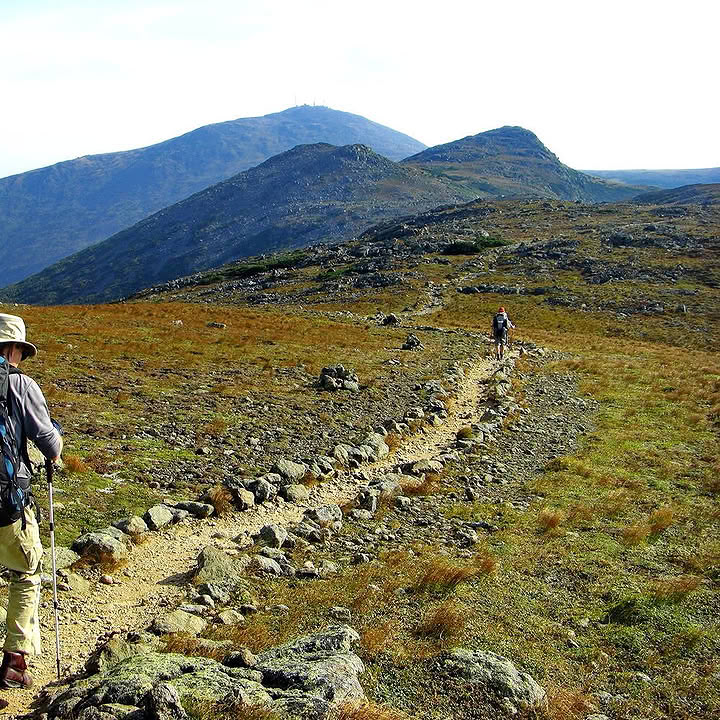
Ran for 11 days, from October 9 to October 20, 2026, the last day Crush saw it.
Run by The Blood Sugar Journal on Facebook. Crush is not the advertiser and does not verify its claims. See this ad in Meta's Ad Library(opens in a new tab)
Make your own version of this ad
Crush makes it, launches it in your own Meta ad account, scales the winners and pauses the losers.
About this ad
- Meta Ad Library ID
- 2392442611559628
- Platforms
- Facebook, Instagram, Audience Network and Threads
- Relaunches
- 0
Ad text
My daughter texted me a birthday photo and I put my phone face-down on the kitchen table. It was Jaxon's third birthday, back in April. My grandson. She'd taken about 50 pictures that afternoon and most of them were of Jaxon with blue frosting on his forehead, which is exactly how a 3-year-old's birthday should look. But she'd texted me one of me and Jaxon standing at the cake table together, and I happened to pull it up first thing on a Sunday morning, and I just turned the phone over and set it down. I didn't delete it. I didn't say anything to my daughter. I left it sitting there, screen-down, and I thought about it for a long time after. That is not a small thing for me. I don't tend to spiral over how I look. I'm 61 years old. I've been walking mail routes through Floyd County, Georgia, for 32 years in every condition that weather can produce. I've never been someone who stood in front of a mirror picking herself apart. I wore shorts in the summer. I didn't apologize for my arms. But that photo. I looked like I'd given up on something. That's the only way I know to put it. And the part that made it worse was I hadn't given up. I walk every single morning. I eat reasonably. And for the past 3 years I have been gaining weight while eating less than I ever have in my life, crashing hard every afternoon like clockwork, and craving sugar by 7 PM no matter what I had for dinner. Nobody had a real answer for any of that. This is what I found. My name is Sandra Holloway. I've lived in Rome, Georgia, right off Callier Springs Road, for most of my life. Thirty-two years with the postal service. I worked rural routes out of the main facility on East First Street. Eight to 12 miles a day on my feet, every day, in the summer heat and the January ice and the kind of afternoon thunderstorm that comes up fast off the Coosa River and soaks you straight through before you make it back to the truck. I walked a lot of miles in 32 years. I retired about 2 years ago. My feet were grateful. My lower back threw a small party. But the walking itself, that was never going away. I've done the trail at Lock and Dam Park along the Coosa River since 2004. Seven AM most mornings, rain or shine. I know every crack in that pavement. I know where the great blue herons show up in the spring. I know which stretch floods after a hard rain and forces you into the grass along the bank. I know the regulars by face, a few by name, most by the time they show up and which direction they take at the fork. For most of those 20 years, I did 2 laps. About 4 miles total. Not aggressive. Just consistent. I'd always thought of myself as someone who could do 2 laps without thinking about it. Somewhere around the fall of 2022, I stopped being that person. Let me tell you what was actually happening, because it took me a long time to understand it myself. It wasn't that I got tired on the second lap. My legs were fine. My breathing was fine. The problem was what happened after I got home. I'd finish 1 lap, come home, drink some water, make a sensible breakfast. Eggs, maybe some toast, a little fruit. And one hour later I'd be standing at the open refrigerator like I hadn't eaten anything. Not just a little hungry. Ravenous. The kind of hungry where you start eating crackers over the sink because you can't wait the 4 minutes it would take to make something real. Then I'd eat a full lunch and be fine for about 45 minutes. Then by 2 PM, every single afternoon, I'd hit a wall. Not sleepy exactly. More like someone had turned a dimmer switch on my brain. Heavy eyes. Slow thoughts. And a craving for something sweet that came on so fast and so insistent I had to physically talk myself out of the pantry. Some days I won that fight. Most days I didn't, or I won it but it cost me more energy than it should have. By evening, same thing. I'd have a reasonable dinner. An hour later I'd be back in the kitchen, opening cabinets, looking for something I couldn't quite name. I went to my doctor. He ran my fasting glucose, looked at the numbers, said they were "a little elevated but nothing alarming," and told me to watch my portions. I've been watching my portions for 3 years. That's the problem. I'd cut back on bread. On rice. On anything sweet. I was eating less than I'd eaten in my entire adult life. And I was gaining weight anyway. Seventeen pounds over 2 years. Slow and steady, like my body had made a private decision I wasn't consulted on. I asked my doctor how a person could eat less and exercise daily and still gain weight. He said, "Bodies change as we age. Focus on the quality of what you eat." I drove home and sat in the driveway for about 10 minutes. I want to tell you about Diane before I tell you what she told me, because the way I came to know her is part of why it landed the way it did. Diane is 63. Tall, thin build, silver hair she keeps in a long braid that reaches between her shoulder blades. She drives a white Subaru with a peeling hiking club sticker on the back bumper and she brings her coffee in a green thermos with a dent on the side. I'd been seeing her on the Lock and Dam trail for years, maybe longer than I'd been going, and for all of that time she stopped at the same place every lap. The second bench on the south loop. It's set back from the pavement maybe 10 feet, facing a gap in the trees that opens up over the water. Good bench, shaded in the early morning, just wide enough for two. I'd come around the south side of the loop and Diane would be sitting there, thermos between both hands, resting. We'd nod. She'd nod back. That was our whole relationship for years. The kind of acknowledgment that trail people give each other, which carries more warmth than it might look like from the outside. I started noticing, sometime last spring, that she wasn't on the bench anymore. At first I figured she'd stopped coming. Then I started seeing her further along, past the bench, moving differently than she used to. Steadier. Not stopping. By April she was lapping me. By May she was doing 3 full laps while I was still on my first, sitting on that second bench myself, resting. My bench now, I guess. I kept meaning to say something to her. But there's a rhythm to a trail and it doesn't invite you to just stop someone mid-stride to ask them personal questions. I let it go. Then one Tuesday morning in June she came around the south loop and there I was on the bench and she stopped. "You okay?" she said. "I'm fine," I said. "Just resting." She looked at me for a second like she was deciding something. Then she sat down on the other end of the bench and took the cap off her thermos. And that was the start of the only conversation that's mattered to me in the last 2 years. I don't fully know why I told her as much as I did. Diane was not someone I knew well. She'd been a middle school principal in the Floyd County school system for 22 years before she retired, which explained both the directness and the patience. She had a way of listening that made you feel like your words were being taken seriously, which is rarer than it should be. I told her about the hunger. About coming home after 1 lap and eating through the refrigerator like I was trying to set a record. About the 2 PM crash that came every single day without fail. About the cravings at night that I'd been white-knuckling through or losing to for 3 years. About eating less and gaining weight. About my doctor telling me to watch my portions and me wanting to put that advice somewhere that wouldn't bear repeating. She listened to the whole thing. Then she said, "That's exactly what I was going through." Diane talked the way she probably explained things to kids for 22 years, which is clearly and without a lot of extra words. She said the thing she'd come to understand was that the hunger and the crashes had the same root cause. They weren't separate problems. They were the same problem showing up twice a day. "Your body has a process that controls how fast the food you eat turns into sugar," she said. "Carbohydrates come in, your digestive system breaks them down, sugar enters your blood. When that process is running the way it should, it's regulated. The sugar comes in gradually. Your body keeps pace. You feel steady for a few hours, then mildly hungry when it's actually time to eat again." "But that process can be worn down. Stress wears it down. Years of processed food wear it down. The slow accumulation of oxidative damage that builds up in your body over decades wears it down. A little bit at a time, until one day the process can't control the speed the way it used to." She tapped her thermos. "Now the same breakfast that used to keep you steady for 3 hours sends your blood sugar up fast. Your body panics a little. It responds hard. And then the sugar drops. That drop is the crash at 2 PM. That drop is the ravenous hunger an hour after breakfast. Your body isn't asking for more food because you ate too little. It's asking for more food because the sugar that came from what you ate already dropped off a cliff, and now it's sending out an emergency signal." She looked at me. "The food isn't the problem," she said. "The process that's supposed to handle the food is what's worn down. And no amount of watching your portions fixes a worn down process. It just makes you hungrier while it keeps going wrong." I thought about 3 years of counting crackers. Three years of talking myself out of the pantry at 7 PM while my body screamed at me. Three years of being told the solution was discipline. "What did you do," I said. She reached into the small zippered pocket on the front of her jacket and pulled out a little orange bottle. I'll be honest. My first thought was: supplements. Which meant my second thought was: probably doesn't do anything. Diane smiled like she could tell. "I had the same reaction," she said. "But stay with me for a minute." It was pomegranate extract. Specifically, she said, peel extract standardized to compounds called punicalagins. Not ellagic acid, which is what almost every pomegranate product on a pharmacy shelf is standardized to. She made that distinction right away and I asked her why it mattered. "Most pomegranate supplements you can pick up at Walgreens or CVS are standardized to ellagic acid," she said. "Ellagic acid is a breakdown product of punicalagins. It also shows up in raspberries, walnuts, strawberries. It's not unique to pomegranate. And it's not what the research on blood sugar and carbohydrate metabolism actually studied." Punicalagins are what the research used. They're specific to the pomegranate peel, concentrated there, and what gives the peel its exceptional antioxidant activity. The studies that looked at how pomegranate affects the carbohydrate breakdown process used punicalagin-rich peel extract. Not juice. Not ellagic acid products. The peel. "The way they've looked at it," she said, "is that punicalagins may help support the regulation of specific enzymes in your digestive system that control how fast carbohydrates break down. When that regulation is better supported, the sugar doesn't hit your blood as fast. It comes in more gradually, more like it used to when the process was running the way it was designed to. The spike is less sharp. The drop is less steep. The crash at 2 PM starts to ease because the emergency wasn't as big. The hunger an hour after breakfast starts to quiet down because the cliff wasn't as tall." She paused. "And the punicalagins also have one of the highest antioxidant profiles measured in any food compound," she said. "Which matters because the oxidative stress was part of what wore the process down in the first place. You're not just addressing the symptom. You're helping address what caused it." She capped her thermos. "I've been taking it 7 months," she said. "Last Tuesday I did 4 laps." I looked at her. Four laps. I drove home and sat at the kitchen table with my laptop for the rest of that morning. I found the research she was describing. The specific pathway she'd mentioned, the enzymes involved in carbohydrate breakdown, and the studies on how pomegranate compounds interact with them. A large 2025 analysis that reviewed 34 randomized controlled trials across more than 1,500 people and found that pomegranate supplementation was significantly associated with improvements in fasting blood sugar, insulin levels, and markers of insulin resistance. Not a small study. Not one study. Thirty-four of them. I found the explanation for why the ellagic acid products don't deliver the same thing. Analytical research had found that the majority of pomegranate supplements standardized to ellagic acid were missing the key ellagitannins the clinical studies actually used. You can buy a bottle that says "pomegranate extract" and be getting almost none of what the research was testing. The standardization marker is everything. I found Auniva's Pomegranate. Organic peel extract. Standardized to punicalagins specifically. Two capsules a day. Made in the USA. I recognized the label. It was the same bottle Diane had shown me on the bench. I ordered it that afternoon. I started the first Monday of July. Week 1 was nothing. I didn't expect anything and I didn't get anything. The 2 PM crash showed up right on schedule. I came home from my walk and ate breakfast and was hungry again an hour later, same as always. I kept walking. I kept the capsules on the kitchen counter next to the coffee maker so I wouldn't forget. Week 2, a small thing on Thursday. I made breakfast, sat down, and 90 minutes later realized I hadn't thought about food once. I stayed at the table. I waited for the hunger to show up. It didn't. I went and got more coffee and came back and that was it. I wrote it in the notes app on my phone because I didn't want to make too much of it but I also didn't want to forget. Week 3, the afternoon crash was late. I sat through 2 PM without any trouble. It caught up with me around 3:15, and it was softer, more like regular tired than the shutdown I was used to. I had a glass of water and it passed. I did not go near the pantry. Week 4, 2 laps. I didn't plan it. I just got to the end of the first lap and kept going. My legs felt fine. My breathing felt fine. I hadn't felt any particular reason to stop. So I didn't. I came around the south loop and passed the bench where I'd been sitting for almost 3 years and I just walked by it. 4 miles. Home by 8:15 AM. Made breakfast, ate it at the kitchen table, and the refrigerator door stayed closed until lunch. I sat there with my coffee for a long time. The evening thing was the last to change and I want to be honest about that because it was also the one that had done the most damage. Seven PM had been my weakest hour for 3 years. Dinner behind me, day winding down, and something in my body would send up a signal that felt less like hunger and more like a craving without a target. Not hungry. Just driven. Toward the pantry. Toward the cabinet with the crackers. Toward the freezer. I'd had a whole internal negotiation with myself every single night and some nights I came out the winner and some nights I didn't. By week 5, that signal started showing up quieter. Not gone. But quieter. By week 7, most nights it didn't show up at all. I'd make it to 9 PM without the kitchen pulling at me, and I'd notice it the way you notice a noise that used to be constant and has finally stopped. The weight started moving around week 6. Slowly. Not dramatically. I'm not going to give you a number that I can't promise you'll match, because that's not how I talk and that's not how this works. But the scale started moving in the right direction after being stuck for 3 years, and the only things that changed were the 2 capsules and the fact that I was walking more because the crashes weren't pulling me down in the afternoons anymore. Everything worked together. I want to say one more thing and then I'll give you the link. I walked mail routes in Floyd County for 32 years. I know what my body feels like when it's working. I know the difference between tired and broken, between hungry and running on empty, between a bad week and something that's been slowly going wrong for a long time. For 3 years I was told the answer was discipline. Portions. Willpower. Try harder. I was trying. That was the whole problem. I was trying against a process that had been worn down to the point where trying wasn't enough. The pathway that was supposed to handle the food was running wrong, and no amount of eating less was going to fix a process. It was just going to make me hungrier on a system that wasn't doing its job. That's not aging. That's something you can actually address. Diane found it because she looked for something past "watch your portions." I found it because Diane sat down on a bench on a Tuesday morning in June. And I'm telling you because I don't know who else is on the bench right now, fighting the same daily fight, being told the same things, wondering why trying harder doesn't seem to be moving anything. The product is Auniva's Pomegranate. Organic peel extract, standardized to punicalagins. Not ellagic acid. The peel, not the juice. Two capsules a day. Made in the USA. That specific distinction matters more than anything else on the label. They have a 90-day money-back guarantee. Try it for up to 90 days, and if it's not working for you, send the bottle back and you get a full refund. Every penny. I'm on my 4th bottle. Diane passed me on the trail last Thursday doing her 5th lap. She held up 5 fingers as she went by. I held up 2. She nodded like that was exactly right. 👉 auniva.co/pom/5 P.S. — I found that birthday photo again last week. Jaxon at the cake table, and me standing next to him. I looked at it differently this time. Not better exactly, I'm still 61 and I'm still a work in progress. But I looked at it and I knew what that woman didn't know yet. I knew what was happening to her that nobody had been able to name, and I knew what she was going to find. That felt like something. P.P.S. — The difference between punicalagin-standardized extract and the ellagic acid products on the drugstore shelf is not a marketing claim. It is a specific chemistry difference that determines whether you're getting the compound the research actually used. Ellagic acid is a downstream breakdown product. It also shows up in pecans, walnuts, raspberries, and strawberries. If you're buying a supplement standardized only to ellagic acid, you may not be getting meaningful amounts of punicalagins. Auniva's is standardized to punicalagins because that is the compound the studies on carbohydrate metabolism and blood sugar regulation were actually studying. Check the label. It matters. P.P.P.S. — Week 1 for me was nothing. Week 2 was a small thing I almost talked myself out of noting. Week 3 was when I first felt it in my afternoons. Week 4 was when I got back to 2 laps. The research on pomegranate and blood sugar markers generally shows the clearest movement in the 6 to 8 week window, sometimes longer. This is not something you feel in 4 days. The 90-day window is there so you can give it real time. If it's genuinely not working after 90 days, send the bottle back for a full refund. But give it the time it needs first. 👉 auniva.co/pom/5
Where the ad sends people
auniva.co
Feel Like Yourself Again
"This actually worked, thank you so much." - Emily T.
Learn more: auniva.co(opens in a new tab)