Stirring our pot
Stirring our pot Facebook ad: “He didn't look like much.”
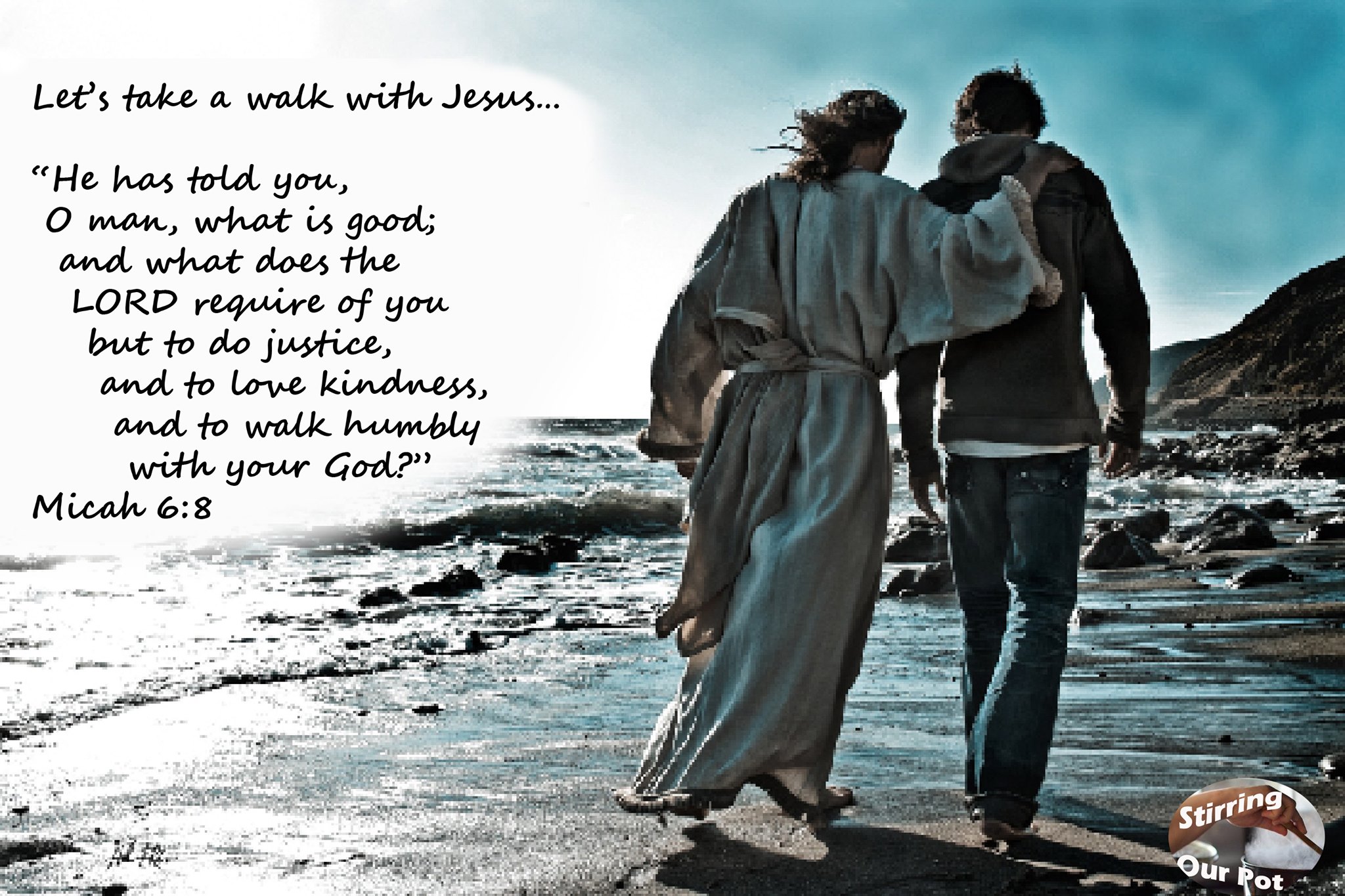
Ran for 2 days, from March 10 to March 12, 2026, the last day Crush saw it.
Run by Stirring our pot on Facebook. Crush is not the advertiser and does not verify its claims. See this ad in Meta's Ad Library(opens in a new tab)
Want an ad like this for your product?
Crush makes new ad images for your product from this ad: your logo, your product photo, your offer.
Trials from $19.95 USD, then $79.95 USD a month. Cancel anytime.
About this ad
- Meta Ad Library ID
- 2417067988745923
- Platforms
- Relaunches
- 0
- Niche
- Fashion & Apparel
Ad text
He didn't look like much. He was a farmer. He tended some sheep and watched over a grove of fig trees. It wasn't stimulating, but it was a living. And then—for some reason, only God knows—God told Amos to stop working and go to his northern cousins and deliver a message. "Amos… Take a walk with me..." "Just stop what you're doing. Go tell them how angry I am!!" It was the golden age of the Northern Kingdom of Israel: economic growth and affluence. They lived in large houses and had the financial margin to enjoy leisure activities previously unknown. They were prosperous; they figured God must be pleased with them. This sounds familiar, doesn't it? Amos showed up in Israel and wasted no time getting down to business. To read the details, go to the book of Amos. He delivered a scathing message that was intentionally designed to sneak up on his audience. He drew a circle around Israel on the map, naming all of Israel's major rivals. God was furious and was finally going to let them have it! They had a little pep rally going! Whatever skepticism the people of Israel may have felt toward this prophet must have melted away as they heard him rail against their enemies. Then it got even better: Amos started to speak out against his homeland, the Southern Kingdom of Judah. The people of this northern kingdom, Israel, never expected a prophet to come from the south, Judah, and pronounce judgment on his homeland. This was great! It confirmed what they thought: God was pleased with them and angry with Judah. Judah wasn't keeping the Law. God was going to destroy them. This was payback for the Northern Kingdom. Except the prophet wouldn't stop talking. If he had stopped right there, things would have been okay. But it turns out that all the stuff so far was mostly a setup for the actual message. The real message was that God was angry and disgusted with Israel. The gap between rich and poor was growing. Wealthy people learned how to work the system and keep the underprivileged in line. God had blessed the people in many ways, and they were using those blessings to indulge themselves rather than to be a blessing to others. Furthermore, they gave lip service to the idea of serving God while blending a lot of idolatry into their worship. It does sound a little familiar, right? Amos startled them by suggesting that God wasn't measuring Israel against the nations around them; He was measuring them with His plumb line: the Law He had given them. Compared to other nations, they might say, "We're not so bad." But compared to God's Law, it was easy to see how crooked they had become. The scariest part of the message from Amos was that while Israel was looking for God to punish the surrounding nations, God meant to punish them first. Of course, God gave them a chance to avoid punishment. Amos's message was a warning; there was still hope for them if they would heed it and straighten up. If they would listen, return to God, and do the right thing, they could live in peace. If not, destruction was inevitable. Amos never got any positive response. The priest at Bethel even told him to shut up and go home! So he finished up his message, and then he did. He returned home and wrote down his message for a future generation to read. And the crooked nation continued on its crooked walk toward judgment. The similarities between Amos's time and our own are startling. This book feels like it has been ripped from today's headlines, and its message carries a stinging rebuke for the mindset that has been rampant in our society for decades. Because of this, we can learn some vitally essential lessons from this little-known part of God's Story. The first and foremost is this: Don't mess with the people God loves. God's love for people—all people, but especially those who find themselves marginalized by society—is so fierce that mistreating them is something God cannot tolerate. He doesn't seem to be as bothered by people mistreating Him as He is with people mistreating others; He cannot let it go on for very long without intervening. Amos's message makes it sound like God values how we treat others as much as (if not more than) how we treat Him. And if it's that important, we'd better listen up! It also seems that the lower a person's social status, the more interested God is in how that person gets treated. Children, women, single mothers, foreigners, day-laborers, and migrant workers tend to be the people God stands up for most vigorously, those who cannot stand up for themselves. Amos delivers a message that sounds like God's people have become His enemies. The people of Israel are described in the same terms Amos uses to tell the rest of the pagans around them. It's almost as if Amos is saying that the Israelites are no better than anyone else. There's no "almost" about it. From God's perspective, the Israelites are just as bad as their neighbors—in some ways even worse, because they should know better. And God calls them on the carpet. It's not the manner or location of their worship. Although their worship has been corrupted, God seems not to mind that so much as He cares about the way they are treating people—particularly the widows, orphans, and foreigners that He loves. Hundreds of years later, an expert tried to test Jesus' knowledge of the Law by asking Him, "Which commandment is the greatest?" Jesus couldn't just offer one; He offered two: "Love God with everything you've got, and love other people as you love yourself" (see Matthew 22:34–40). Jesus didn't give two answers because He was looking for extra credit. He offered them because the two are inseparably linked in the mind of God. You cannot love God if you don't love others. The level to which you fulfill the second command is the level to which you can claim to have fulfilled the first (see 1 John 4:20). Justice or MISPHAT is Care for the Vulnerable. The Hebrew word for justice, MISPHAT, occurs in its various forms more than 200 times in the Hebrew Old Testament. Its most basic meaning is to treat people equitably. It means acquitting or punishing every person on the case's merits, regardless of race or social status. Anyone who does the same wrong should be given the same penalty. But MISPHAT means more than just the punishment of wrongdoing. It also means giving people their rights. Deuteronomy 18 directs that the tabernacle priests should be supported by a certain percentage of the people's income. This support is described as "the priests' MISPHAT," which means their due or right. MISPHAT, then, is giving people what they are due, whether punishment, protection, or care. Therefore, if you look at every place the word is used in the Old Testament, several classes of persons continually come up. Repeatedly, MISPHAT describes taking up the care and cause of widows, orphans, immigrants, and the poor—those who have been called "the quartet of the vulnerable." According to the Bible, the MISPHAT, or justness, of a society is evaluated by how it treats these groups. Any neglect shown to the needs of this quartet's members is not merely a lack of mercy or charity but a violation of justice of MISPHAT. God loves and defends those with the least economic and social power, and so should we. That is what it means to "do justice." Timothy Keller tells this story: 'I was a professor at a theological seminary in the mid-eighties, and one of my students was a young man named Mark Gornik. One day we were standing at the copier, and he told me that he was about to move into Sandtown, one of Baltimore's poorest and most dangerous neighborhoods. I remember being quite surprised. When I asked him why, he said, "To do justice." It had been decades since any white people had moved into Sandtown. For the first couple of years there, it was touch and go. Mark told a reporter, "The police thought I was a drug dealer, and the drug dealers thought I was a police officer. So, for a while, I didn't know who would shoot me first." Yet over the years, Mark and leaders in the community established a church and a comprehensive set of ministries that have slowly transformed the neighborhood. Although Mark was living a comfortable, safe life, he became concerned about the most vulnerable, poor, and marginalized members of our society. He made long-term personal sacrifices to serve their interests, needs, and cause. That is, according to the Bible, what it means to "do justice." Why should we be concerned about the vulnerable ones? It is because God is concerned about them. It is striking to see how often God is introduced as the defender of these vulnerable groups. Don't miss the significance of this. Realize, then, how significant it is that the biblical writers introduce God as "a father to the fatherless, a defender of widows" (Psalm 68:4-5). This is one of the main things He does in the world. He identifies with the powerless. He takes up their cause. We must have a strong concern for the poor, but there is more to the biblical idea of justice than that. We get more insight when we consider a second Hebrew word that can be translated as "being just," though it is usually translated as "being righteous." The word is TZEDAQAH, which refers to a life of right relationships. When most modern people see the word "righteousness" in the Bible, they tend to think of it in terms of private morality, such as sexual chastity or diligence in prayer and Bible study. But in the Bible, TZEDAQAH refers to day-to-day living in which a person conducts all relationships in family and society with fairness, generosity, and equity. It is not surprising to discover that TZEDAQAH and MISPHAT are brought together scores of times in the Bible. These words roughly correspond to what some call primary and rectifying justice. Rectifying justice is MISPHAT. It means punishing wrongdoers and caring for the victims of unjust treatment. Primary justice, or TZEDAQAH, is behavior that, if prevalent in the world, would render rectifying justice unnecessary because everyone would be living in the right relationship with everyone else. Therefore, though TZEDAQAH is primarily about being in the right relationship with God, the righteous life that results is profoundly social. "I rescued the poor who cried for help and the fatherless who had none to assist him. The dying man blessed me; I made the widow's heart sing. I put on righteousness [TZEDAQAH] as my clothing; justice [MISPHAT] was my robe and turban. I was eyes to the blind and feet to the lame. I was a father to the needy; I took up the case of the immigrant. I broke the fangs of the wicked and snatched the victims from their teeth." Job 29: 12-17 In the Bible, gifts to the poor are called acts of righteousness, as in Matthew 6:1-2. Not giving generously, then, is not stinginess but unrighteousness, a violation of God's law. In the book of Job, we see Job call every failure to help the poor a sin, offensive to God's splendor (Job 31:23). It then deserves judgment and punishment (v. 28). Remarkably, Job is asserting that it would be a sin against God to think of things as belonging to himself alone. To not share his bread and his assets with the poor would be unrighteous, a sin against God, and, therefore a violation of God's justice. "But let him who boasts boast of this, that he understands and knows Me, that I am the Lord who exercises lovingkindness, justice [mishpat] and righteousness [TZEDAQAH] on earth; for I delight in these things," declares the Lord. Jeremiah 9:24 When Jesus began his ministry, he stood up at a synagogue in Nazareth and announced: "The Spirit of the Sovereign LORD is on me because the LORD has anointed me to preach good news to the poor. He has sent me to bind up the brokenhearted, to proclaim freedom for the captives and release from darkness for the prisoners". Luke 4:17–18 He identified himself as the Servant of the Lord, prophesied by Isaiah, who would bring justice [MISPHAT] to the world (Isaiah 42:1–7). "He has told you, O man, what is good; and what does the LORD require of you but to do justice [MISPHAT], love kindness, and walk humbly with your God?" Micah 6:8 Micah 6:8 is a summary of how God wants us to live. To walk humbly with God is to know him intimately and to be attentive to what he desires and loves. And what does that consist of? The text says to do justice and love mercy, which seems at first glance to be two different things, but they are not. The term for mercy is the Hebrew word HESED, God's unconditional grace and compassion. WE calready learned that the word for justice is the Hebrew term "MISPHAT." In Micah 6:8, MISPHAT emphasizes the action, HESED puts it on the attitude [or motive] behind the action." To walk with God, we must do justice out of merciful love. "Defend the rights of the poor and needy" (Proverbs 31:9). "This is what the LORD Almighty says: Administer true justice [MISPHAT], show mercy and compassion [HESED] to one another. Do not oppress the widow or the fatherless, the immigrant or the poor." Zechariah 7:10–11 "He executes justice [MISPHAT] for the oppressed and gives food to the hungry. The LORD sets prisoners free, and the LORD gives sight to the blind; he lifts up those who are bowed down, the LORD loves those who live justly. The LORD watches over the immigrant and sustains the fatherless and the widow, but he frustrates the ways of the wicked." Psalms 146:7–9 The LORD your God … defends the cause [MISPHAT] of the fatherless and the widow, and loves the immigrant, giving him food and clothing. Deuteronomy 10:17–18 Back to Amos... It takes guts and a commitment to God to do what Amos did. He delivered a message that he knew would be unpopular, and he gave it with prophetic force. He called the people back to how things were supposed to be from the beginning. God's desire has always been for a community of people who can relate to one another correctly, and that means demonstrating compassion, justice, and righteousness. Throughout the centuries, however, some of God's people have demonstrated a remarkable ability to receive acceptance and grace from God while doling out immense portions of rejection and condemnation to their fellow humans. Let's take a walk with Jesus… We're supposed to be kind, but we're often among the most hurtful and apathetic people. Unfortunately, the need for justice is also found in many Christian circles. How does that honor Jesus? Amos railed against the people of Israel, who cared more about their comfort than others. He made no bones about it, using intentionally inflammatory language. In our day, we prefer a more diplomatic approach. While there's a time for diplomacy and be tactful, there is also a time to stand up and call people to stop going in the wrong direction. Amos was a simple man standing firm in the face of fierce opposition. We could use more folks like that, willing to deliver unwanted messages with boldness. Let's take a walk with Jesus… The way we deliver the message is so important because HOW the message is delivered is part of the message itself. God's message—especially through Amos—is fierce… but it's a message of compassion. Amos brings a sharp rebuke, but it's a rebuke directed toward people who have failed to look after one another, care for one another, ensure no one goes hungry or lonely, failed to bring orphans into families, and make sure widows aren't being taken advantage of. It would be terrible for the message of compassion to be negated by the lack of a compassionate messenger. And yet that is precisely what happens all too often. Somehow, we must strike that delicate balance between boldly stating our convictions and gently offering compassion to those most in need of hearing them. It will be tricky, but maybe you and I could start right now by asking God for a bit of chutzpah and a little gentleness at the same time. God told Amos to set out a plumb line and use it to judge the people. Plumb lines are interesting things. Tie a piece of string to a weight of some sort and let it hang down. Gravity works to create a straight line with no deviance. So simple a child could use it. Carpenters and construction workers still use plumb lines today because they're inexpensive, effective and completely reliable. There's no room for some relativist carpenter saying something ridiculous like, "Well, what's plumb for you isn't plumb for me." No carpenters say, "Let’s take a poll to see whose plumb is the real plumb.” Plumb is plumb. Gravity doesn’t lie. Christians are fond of using the analogy of the plumb line. And in an age of relativity, where objective truth is often downplayed for the sake of political correctness or popular opinion, we Christians should feel the need to advocate some standard of right and wrong. Usually, we equate God’s Word—the Bible—with the plumb line. Let’s take a walk with Jesus… Equating God’s Word—the Bible—with the plumb line is okay in most situations. But that’s not what this story tells us. According to Amos, plumb is something else. Plumb isn’t God saying, “Read My book.” Plumb is God saying, “Treat others the way you treat Me.” God even goes so far as to say, “The way you treat others is the way you treat Me” (see Matthew 25:31–46). So simple, a child could do it. Let’s take a walk with Jesus… Are there hungry people? Feed them. Sick people? Heal them. Lonely people? Befriend them. That’s how God plans to judge His people (and He refuses to judge on a curve like Israel hoped). You may have gained all the knowledge you can squeeze out of the Bible. You may attend many church services, volunteer on committees, and sell cookbooks for your women’s ministry. But do you have God’s heart for the poor and marginalized in your society? That’s plumb. One of Jesus’ closest friends writes, “If anyone has material possessions and sees his brother in need but has no pity on him, how can the love of God be in him? Dear children, let us not love with words or tongue but with actions and in truth” (1 John 3:17–18). Do we love people? Do we really, really love people? This isn’t about feeling warm fuzzies for them or getting choked up when we see late-night infomercials about hungry children. Let’s take a walk with Jesus… Does our love for them really show in our actions? Having the right beliefs and values are of little good until they begin to direct and change our behavior. What if everybody took God seriously on this one? What if God’s plumb line of compassionate behavior toward widows and orphans and strangers began to take root in you? In your small group or your whole church? What if everybody in your neighborhood or in your school began to plan and act to feed the hungry, heal the sick, visit the prisoner, clothe the naked? If everyone jumped in and started acting according to God’s plumb line, we might just see God’s kingdom come, His will being done on Earth as it is in heaven, the upside down turned right side up—the crooked set straight. Take that walk with Jesus.... Lord, you’ve already shown me what is good. You’ve told me what you want: to do justice, to love kindness, and to walk humbly by your side. And yet, I confess, I stumble over even the simplest of these. Help me, God, to really see what justice looks like, not as some distant ideal, but as something urgent and practical. Let my actions defend the rights of the poor and the needy. Give me courage to speak up for those who can’t speak for themselves. Don’t let me be a noisy advocate with an empty heart. Fill me with your HESED, your fierce, unconditional mercy, so that justice always flows from compassion, never from pride. I don’t want to be one of those people who talk about love but somehow forget to show it. Keep me from being the kind of messenger who ruins your message. Make my convictions bold, but my presence gentle. Give me chutzpah and tenderness, all tangled up together. God, hold up your plumb line beside my life. Show me where I’m crooked. Straighten out my actions and my motives. Let your gravity pull me toward what’s true and right. Jesus, let’s walk together. Open my eyes to the hungry, the sick, the prisoner, the ones everyone else has forgotten. Don’t let my faith sit quietly in my head or my heart, push it into my hands and feet. Let your love shape what I do, not just what I say I believe. What could happen if I really took you at your word? What if my small group, my church, my neighborhood, even my school, began to live this out? What if your upside-down kingdom started to break through, right here? God, make it real. Let your will be done, right here, right now, in me. Set what’s crooked straight. Teach me to walk humbly, do justice, and love with your kind of mercy.