The Wellbeing Note
The Wellbeing Note Facebook ad: “Bone-On-Bone Knee Pain? Read This”
Ran for 45 days, from March 3 to April 17, 2026, the last day Crush saw it.
Run by The Wellbeing Note on Facebook. Crush is not the advertiser and does not verify its claims. See this ad in Meta's Ad Library(opens in a new tab)
Want an ad like this for your product?
Crush makes new ad images for your product from this ad: your logo, your product photo, your offer.
Trials from $19.95 USD, then $79.95 USD a month. Cancel anytime.
About this ad
- Meta Ad Library ID
- 2419184788511160
- Platforms
- Facebook, Instagram, Audience Network, Messenger and Threads
- Relaunches
- 0
Ad text
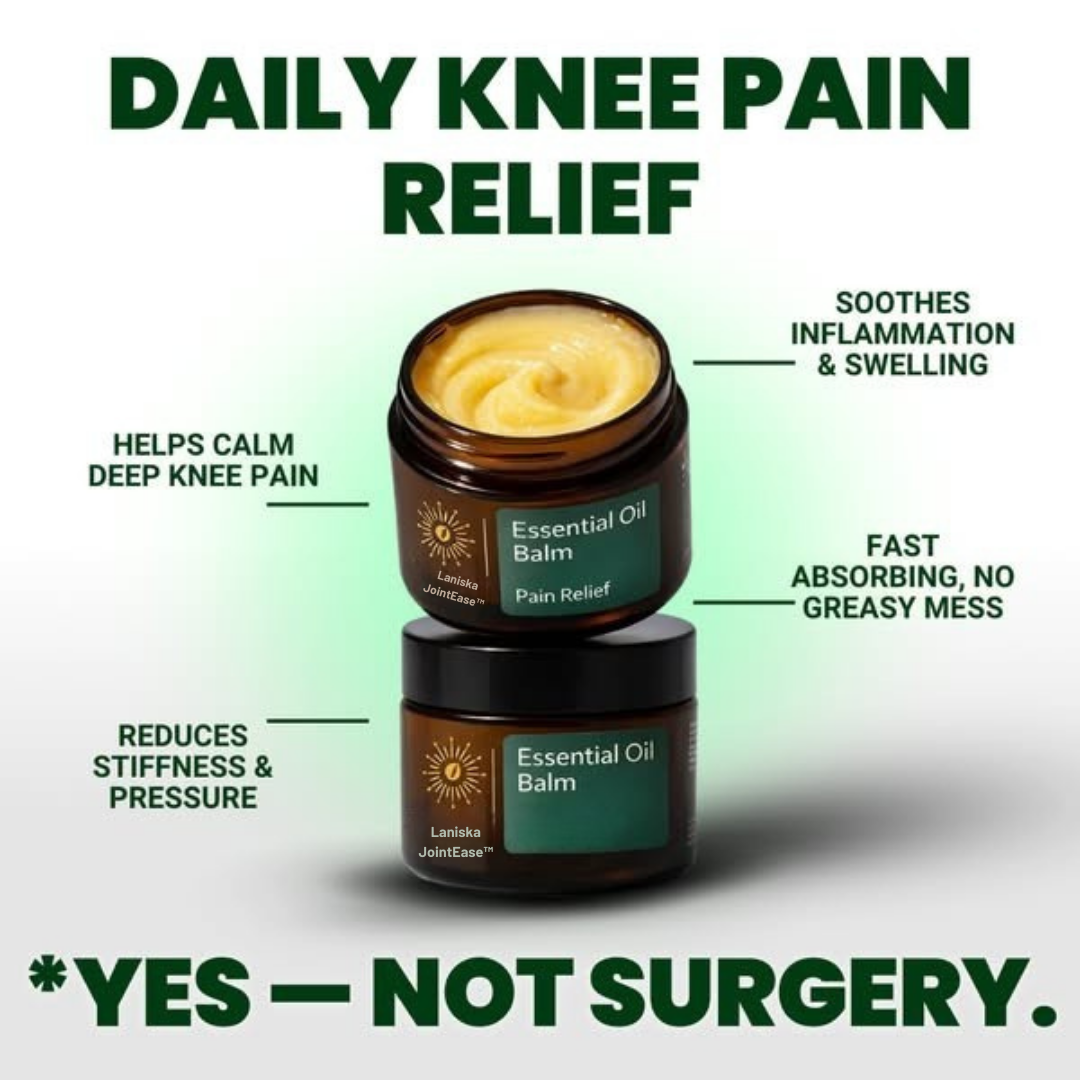
As a knee specialist for over 23 years, I'm about to tell you something that could get me blacklisted by every colleague I've ever worked with. Something the orthopedic industry doesn't want you to know. Something that explains why so many patients keep coming back to my clinic, month after month, year after year, still in pain. But I can't stay silent anymore. Not after what I've seen. Not after what I've discovered. And definitely not after watching hundreds of patients exposed to unnecessary procedures because we've been missing the real problem all along. Let me explain. For over two decades, I've performed thousands of knee procedures. Painkillers. Injections. Cartilage repairs. Even full replacements. And here's what I was taught in medical school: Find the structural problem. Fix the structural problem. Patient gets better. Sounds logical, right? Except there was always something that didn't add up. I'd perform a textbook procedure. Scans would look perfect. The knee would be "fixed" on paper. And yet... the patient would come back 3 months later. Still limping. Still swelling. Still in pain. "Give it more time," I'd tell them. But deep down, I knew something was wrong. I remember one patient in particular. Margaret. 68 years old. Former schoolteacher. Lovely woman. She'd had two procedures on her right knee over 5 years. Both "successful" according to the surgical reports. But when she walked into my clinic that Tuesday afternoon, she was using a walking stick. Her knee was swollen. Her face was exhausted. And her eyes... her eyes had that look I'd seen too many times. The look of someone who'd given up hope. "I've done everything you told me," she said quietly. "The procedures. The physio. The exercises. The injections. Why does it still hurt?" I didn't have an answer. And that haunted me. That night, I couldn't sleep. I kept thinking about Margaret. About the hundreds of patients like her. About all the "successful" procedures that left people still suffering. What were we missing? I decided to find out. I went back to the research. Not the textbooks I'd read in medical school. The new research. The studies that were being done in Germany, Japan, Korea. And what I found changed everything I thought I knew about knee pain. Here's the unspoken truth about what happens after a procedure. We fix the big problem. The torn meniscus. The damaged cartilage. The bone spurs. But we miss the hidden one. The chronic inflammation that's been silently destroying your joint for years. You see, by the time your knee hurts bad enough to need medical attention, inflammation has already taken root deep inside the joint. It's not just swelling you can see on the outside. It's a cascade of inflammatory compounds — cytokines, prostaglandins, interleukins — that have saturated the tissue surrounding your knee. And here's what nobody tells you: Surgery doesn't remove inflammation. Procedures don't calm it down. Painkillers just mask it. Even cortisone injections only suppress it temporarily and often make it worse long-term. So what happens? We "fix" the structural damage. The patient feels better for a few weeks, maybe a few months. But the inflammation is still there. Quietly simmering. Attacking the joint from the inside. And eventually... the pain comes back. That's why so many procedures fail. That's why so many patients end up back in my clinic. That's why the knee pain industry is worth billions, because we're treating the symptom and ignoring the cause. Once I understood this, everything changed. I became obsessed with finding a solution. Not another procedure. Not another injection. Not another painkiller that masks the problem while the joint continues to deteriorate. Something that actually addresses the hidden inflammation. I spent months digging through clinical studies. And that's when I found something that stopped me cold. There's a combination of natural compounds that have been studied extensively for their anti-inflammatory effects on joints. Ingredients like Frankincense — which contains boswellic acids shown in clinical trials to inhibit the inflammatory enzymes that destroy cartilage. Wintergreen — nature's aspirin, which penetrates deep into tissue and calms the inflammatory cascade at the source. Peppermint — which improves microcirculation and helps flush inflammatory waste products from the joint. Black Seed Oil — used for over 2,000 years and now backed by modern research showing it reduces inflammatory markers and supports tissue repair. I was skeptical. Deeply skeptical. I'm a surgeon. I've spent my entire career in operating theatres. The idea that a topical balm could do what procedures couldn't seemed... frankly, ridiculous. But the research was solid. Study after study showed these compounds working at the cellular level to calm inflammation, improve circulation, and support the body's natural healing process. So I decided to test it. I started recommending a specific formulation to patients who had "failed" other treatments. The ones who'd had procedures and were still in pain. The ones who'd tried everything. I told them I couldn't promise anything. That this was outside my normal recommendations. That I was as curious as they were. But the results I started seeing were undeniable. The first patient reported her swelling had reduced noticeably within 4 days. Another said the burning sensation at night had calmed down for the first time in months. By week two, I had patients telling me they were walking without that painful limp. Not masking the pain. Actually walking normally. I couldn't believe it. One woman — 63 years old, had been on the waiting list for a knee replacement — called my office in tears. "I don't think I need the surgery anymore," she said. "For the first time in 3 years, I can walk to my letterbox without stopping." A man who'd had two failed arthroscopies told me he was back hiking like he did in his twenties. The same man who 6 weeks earlier couldn't walk to the mailbox without his knee giving out. This wasn't a placebo effect. This was inflammation finally being addressed. Now, I wanted to create this formulation myself in bigger batches so I can help even more people. I looked into it. Sourcing clinical-grade Frankincense. Pharmaceutical-quality Wintergreen. Organic Black Seed Oil in the right concentrations. But the reality hit me quickly. The cost of getting these ingredients at the right doses was through the roof. Making it properly wasn't easy either. And as one specialist running a clinic, there was no way I could make enough for everyone who needed it. I was stuck. Until one of my patients mentioned a small company she'd found online. She said they made a balm with the exact ingredients I'd been talking about. I was skeptical. Most companies are underdosing their ingredients designed to maximise profit, not results. But I looked into them anyway. The company is called Laniska JointEase. And when I reviewed their formula, I couldn't believe it. They had everything: Frankincense — to inhibit the enzymes that drive chronic joint inflammation. Wintergreen — to penetrate deep and calm the inflammatory cascade. Peppermint — to improve circulation and flush inflammatory waste. Black Seed Oil — to reduce inflammatory markers and support repair. Organic Hemp Oil — a powerful natural anti-inflammatory that quiets the pain cycle. Vitamin E and Beeswax — to carry these active ingredients past the skin barrier, directly into the joint where they're needed. 8 ingredients. All third-party tested for purity and potency. Clinical concentrations across the board. This wasn't some cheap brand cutting corners. This was a small company that actually cared about joint repair. I've been recommending Laniska JointEase to my patients ever since. And if you read the thousands of reviews online, you'll understand why everyone who's tried it never goes back to anything else. Now, I have to be honest with you. Because Laniska JointEase is made by a small company, their supply is limited. Demand has been overwhelming. They sell out constantly. Some of my patients have had to wait weeks before stock came back. So if you click the link below and see it's sold out, I apologise in advance. It's not something I can control. But right now, they're running a limited-time offer with a significant discount for first-time buyers. And it comes with a 60-day money-back guarantee. Which means you have nothing to lose but the pain. People are reporting swelling down in days. Many are walking without that painful limp in under one week. If I'd known about this 10 years ago, I could have helped hundreds more patients avoid unnecessary procedures. I can't change the past. But I can tell you what I know now. Click the link below to check if they still have stock. Your knee isn't broken. It's inflamed. And it's ready to heal.
Where the ad sends people
thewellbeingnote.com
Bone-On-Bone Knee Pain? Read This 👉🏻
UPDATE – Laniska JointEase™ is currently sold out in shops nationwide. However, it may still be available on their website…
Learn more: thewellbeingnote.com(opens in a new tab)