
Inactive· since Mar 24, 2026
- 27
- days it ran
- 0
- relaunches
Ad copy
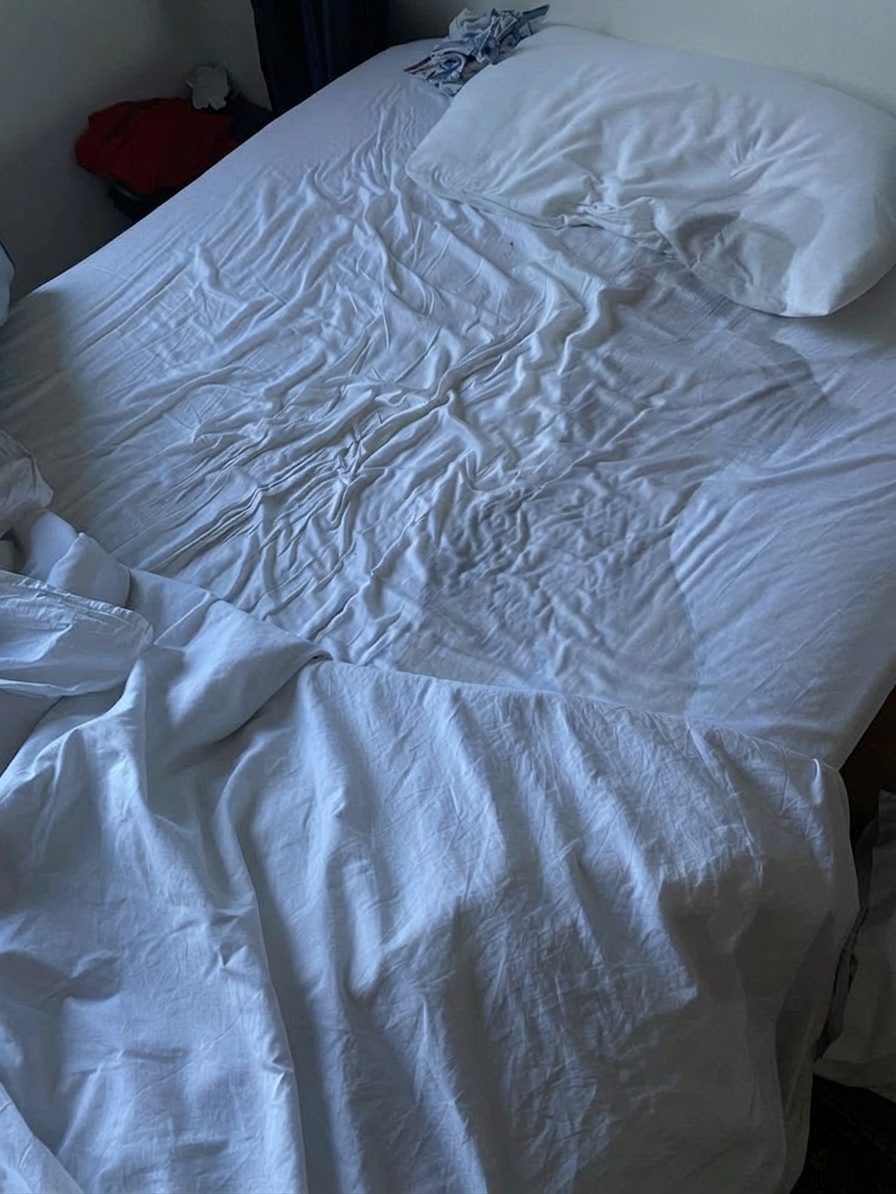
My best friend had a lump removed from her breast on a Tuesday. I moved into her house to take care of her. And what I found in her bedroom — while she was sleeping off anesthesia in the next room — changed my life more than hers. I haven't told Rachel this. I don't know if I ever will. Because how do you tell a woman who just had a cancer scare that sleeping in her bed for two weeks was the best thing that's happened to you in five years? You don't. You keep it. You carry the guilt of it. And you write it down at 2am because you can't sleep — not because you can't sleep the way I couldn't before, but because the gratitude is so heavy it presses on your chest and you need to put it somewhere. Here's what happened. Rachel called me on a Monday. Not the normal Rachel call — the chatty, what-are-you-doing, let's-get-brunch Rachel call. This was different. Her voice was flat. Controlled. The voice of a woman holding something carefully. 'They found something. In the mammogram. I'm having it removed tomorrow.' The floor dropped. 'What do you mean, "something"?' 'A lump. Left side. Small. They don't think it's — they said they won't know until they remove it and test it. But they want it out. Tomorrow.' 'Tomorrow.' 'Tomorrow morning. Tom's going to drive me. But after — Donna, I'm going to need help. Tom has to travel Thursday, he can't cancel, and I'm not supposed to be alone for the first week. Lifting restrictions. Pain meds. They said I'll need someone.' 'I'm coming.' 'You don't have to —' 'Rachel. I'm coming. I'll be at your house tomorrow afternoon. I'll stay as long as you need.' She was quiet. Then, in a voice I'd never heard from her — small, scared, the voice of a woman who is always the strong one asking someone else to be strong: 'Thank you.' I packed a bag. I told Michael I'd be at Rachel's for at least a week, maybe two. He said of course. Go. Take care of her. I drove to Rachel's house Tuesday afternoon. Tom was home — Rachel was out of surgery, resting, everything had gone well. The lump was out. Sent to pathology. Results in five to seven days. Five to seven days. The phrase that becomes the only phrase. The phrase that sits in the room like a third person, breathing loudly, taking up space. Tom walked me through the house. Medications on the counter — pain pills, antibiotics, anti-nausea. Discharge instructions on the fridge. Her follow-up schedule on a notepad by the phone. The organized aftermath of a woman who planned her own recovery the way she planned everything else — precisely, competently, with lists. 'She's in the guest room,' Tom said. 'She wanted to sleep there so she wouldn't have to climb stairs. The bed's set up. She's comfortable.' 'Where should I sleep?' 'She said to use the master bedroom. She said you'd be more comfortable there than the couch.' He paused. 'She was very specific about it. She said "tell Donna to sleep in our bed." I think she wants someone in it.' He left Thursday morning. Hugged Rachel — carefully, avoiding the left side. Hugged me. Drove to the airport with the face of a man who was leaving something he didn't want to leave. And then it was just us. Rachel in the guest room. Me in the house. Five to seven days of waiting and wound care and medication schedules and the kind of intimate, domestic closeness that only happens when one woman takes care of another. I need to stop here. Because I need to tell you about Rachel and me. Not the surgery Rachel. The before Rachel. The Rachel I've been comparing myself to for five years. Rachel and I have been friends since our kids were in kindergarten together. Twenty-two years. We've been through everything. She's the person I call when I can't call anyone else. But somewhere in the last few years, something shifted between us. Not a fight. A gap. Rachel looks incredible. Not in a "she got work done" way. In a "she sleeps eight hours and has the energy to live her life" way. She's 54. Same age as me. Same hormones, same everything. But she doesn't look like me. She shows up to brunch glowing. Orders a second coffee because she wants to, not because she needs it. Talks about books and hikes and Thursday night dinners. I show up in whatever I grabbed off the chair, ordering my third coffee because I was up at 2am again, bags under my eyes that have bags. I love Rachel. But sitting across from her at brunch started making me feel like I was looking at two versions of the same life — the one I was living and the one I was supposed to be living. I never said any of this out loud. I just smiled and sipped my coffee and wondered what she had that I didn't. And now she was in a guest room with a drain tube in her chest and I was standing in her kitchen holding her medication schedule and the gap between us had suddenly, violently, closed in the worst possible way. Not because I'd risen. Because she'd fallen. And I hated it. I hated that the first time in five years I didn't feel less than Rachel was because Rachel was lying in a bed with stitches in her breast waiting to find out if the cells were malignant. I hated that the universe's version of closing the gap was to bring her down instead of lifting me up. That first night — Tuesday — I took care of her. Brought her water. Gave her the pain medication on schedule. Changed the dressing on the incision — carefully, with gloves, the way the discharge nurse had shown Tom and me. Rachel lay there and let me do it. Rachel, who does everything herself, who runs her house like a small, elegant country, who has never once needed anyone to take care of her — lay there and let me change her bandage. 'Thank you,' she said. In the small voice. The one that wasn't hers. 'Go to sleep,' I said. 'I can't sleep on my left side. I always sleep on my left side.' 'Sleep on your right.' 'It feels wrong.' 'Everything feels wrong right now. Sleep on your right.' She closed her eyes. The pain meds did their work. She was out by 9. I went upstairs to the master bedroom. Rachel's bedroom. The room I'd imagined for years — every time I wondered what her life looked like when nobody was watching. The room of a woman who had energy. Who cared about her space. Who wasn't just surviving her nights. The room was beautiful. Not fancy — beautiful the way a room is beautiful when the person who lives in it is present in her own life. A big window. Soft light from a bedside lamp. A reading chair with a book and a throw blanket. A candle on the dresser, half-burned. Fresh lavender in a small vase on the nightstand. And the bed. It was unmade. The way Rachel's bed is always unmade — not messy, unmade in that way where the sheets are tossed back and it looks like a photograph. A pale, warm oatmeal color. Textured. Rumpled. Draped past the edges. The lamplight catching the folds. The bed of a woman who sleeps well. The bed of a woman who got into it three nights ago healthy and whole and didn't know that a phone call was coming that would put her in a guest room with a drain. I sat on the edge. My hand landed on the sheet. And everything — the fear about Rachel, the surgery, the pathology, the waiting — everything paused. Because the fabric under my hand was unlike anything I'd ever felt on a bed. Not smooth. Not slippery. Not the tight, polished surface of the cotton sateen on my bed at home. This had texture. Depth. A weave I could see and feel — open, natural, irregular. Tiny slubs. Channels between fibers. The fabric was heavy in a way that felt substantial, not oppressive. And soft — not new-soft, lived-soft. The kind of soft that comes from years of washing and sleeping and a body's heat breaking fibers down until they're better than they started. I pressed my palm flat. Under the weight — space. Air. An open structure. I could feel room in the fabric. Room for something to move through. The opposite of my cotton at home, which sealed against me like a second skin by midnight. Rachel had told me to sleep here. In her bed. In whatever these sheets were. I should tell you about my nights. Because without them, this is just a story about a woman touching her friend's bedding while her friend recovered from surgery downstairs. I hit menopause at 49. Hot flashes every night since. Five years. My body wakes me at 1 or 2am — furnace in my chest, heat climbing, skin drenching. Sheets seal against me. I rip them off. Soaked. Freezing. Pull them back. Too hot. Stare at the ceiling until the alarm. Eighteen hundred nights. Five years. Five years of that takes everything. Energy — gone. I'm on the couch by 5:30. Appearance — gone. Puffy, gray, the permanent look of a woman running on nothing. House — gone. No flowers, no candles, bed unmade because it's just the arena. Marriage — going. Michael on his side. Me on mine. Me flinching when he reaches because my skin is on fire. Three feet of hot, damp cotton between us. Roommates. For years. That's who was sitting on Rachel's bed at 10pm on a Tuesday night. A woman who hadn't slept in five years, who had come to take care of a friend, who was supposed to be the strong one for the first time in their friendship and wasn't sure she had the reserves. I pulled back the sheet and got in. And my body did something it hadn't done in five years. It stopped fighting. The fabric was cool. Not cold — cool. The way a breeze feels on a warm evening. The way the other side of a pillow feels at 2am. Against my arms, my legs, my shoulders — every point of contact said the same thing: you can rest here. The linen wasn't sealing against me. I could feel space in the fabric. Air moving through it. My skin could breathe. After five years of cotton pressing flat and suffocating by midnight, this was like stepping outside after being locked in a room. My shoulders dropped. My jaw unclenched. My fists — I didn't know I was making fists — opened. The nightly bracing, the anticipation of the 1am furnace, the whole-body preparation for suffering — it didn't engage. Because the fabric was telling my body a different story. Not the cotton's story of "brace yourself." A new story. One my body hadn't heard in so long it took a moment to recognize it: you don't have to fight tonight. I was asleep in minutes. I need you to understand. I was in a strange bed. In someone else's house. My best friend was downstairs with stitches in her breast and pathology results pending. I was stressed. I was scared. I was not in conditions conducive to sleep. And I slept. Because the conditions don't matter. The mattress doesn't matter. The stress doesn't matter. What matters is what's touching your skin. And what was touching my skin was flax instead of cotton. And flax let my body do what cotton had been preventing for five years. 2:15am. Hot flash. I surfaced. The furnace lighting. Heat in my chest. I braced — five years of reflex. The moisture left my skin before it pooled. The heat passed through the fabric instead of building. The linen breathed — I could feel air moving through the weave. The flash crested, peaked, and the sheet was still cool. My skin was dry. The cycle that had owned my nights for eighteen hundred nights — the drenching, the ripping, the freezing, the staring — didn't start. I pulled the sheet up. Cool. Fresh. Like the flash had never happened. I went back to sleep. 6:30am. I opened my eyes. Rachel's bedroom. Morning light through the window. The lavender on the nightstand. The book in the reading chair. Over eight hours. In a strange bed. Under stress. With a hot flash in the middle. I hadn't slept eight hours since my forties. I lay there running my fingers across the linen. Softer than last night — warmed from my body, broken in one degree further. Still breathing. Still that texture — the weave, the channels, the slight beautiful roughness of flax. And I felt — this is the part that carries the guilt — I felt good. My body felt like mine. My head was clear. My eyes didn't hurt. I had energy — actual energy, not the caffeine-propped imitation. At 6:30 in the morning, in a house where something terrible might be true, I felt more alive than I had in five years. Because I'd slept. On a fabric that let me sleep. The guilt hit immediately. Rachel was downstairs. In pain. Scared. Waiting for a phone call that would either end the fear or start a much bigger one. And I was upstairs in her bed having the best morning of my life. I got up. Went downstairs. Made coffee. Checked on Rachel. She was awake — the pain had woken her at 4am. She looked small in the guest bed. Pale. The drain tube visible through her button-down. Mortal in a way I'd never seen Rachel look. Rachel, who always looks incredible. Rachel, who glows. Rachel, who looks like she just walked off a terrace in the south of France. She looked like a woman in a guest bed at 6:30am who didn't know if she had cancer. I brought her coffee. Changed the dressing. Gave her the morning pills. Sat with her while she ate half a piece of toast. 'How did you sleep?' she asked. Because that's Rachel — lying in a guest bed with a drain in her chest, asking ME how I slept. 'I slept well.' 'In our bed?' 'In your bed. Rachel, those sheets —' 'The linen.' 'I slept eight hours.' She smiled. A real smile. The first one since Monday. 'I know,' she said. 'I know what they do.' 'You know?' 'Donna, why do you think I told Tom to put you in our bed? The guest room has cotton. The master has linen. I wasn't going to let you take care of me for a week on four hours of sleep.' I stared at her. 'You put me in your bed because of the sheets.' 'I put you in my bed because you haven't slept in five years and I need you functional. I need you to be able to change dressings and count pills and drive me to appointments and stay awake past 6pm. I need you HERE, Donna. Not the half-asleep version of you. The real you. The you that sleeps.' She said it plainly. Practically. The way Rachel says everything — as if the logic is so obvious it shouldn't need explaining. 'The linen gives you that,' she said. 'One night. You'll feel it. By day three you'll be different. By the end of the week, you'll understand why I look the way I look and you look the way you look and the difference was never genes or supplements or luck.' 'Rachel, you're lying in a bed with a drain tube and you're giving me a lecture about sheets.' 'I'm lying in a bed with a drain tube and I'm telling you the most important thing I've ever told you. I've been wanting to tell you for three years and I never found the right moment. This is the right moment. Because I need you. And the linen is how I get the version of you I need.' My eyes stung. Not because of the sheets. Because of the nakedness of it. Rachel — who never asks for help, who manages everything, who is the strong one in every room — was lying in a guest bed telling me she needed me. And in the same breath, telling me how to be enough to be needed. I stayed for twelve days. Every night, I slept in Rachel's bed. On her linen. Every night, the same thing — cool fabric, breathing weave, hot flash handled, seven or eight or nine hours of real sleep. And every morning, I woke up and I was the person Rachel needed me to be. I need you to understand what that meant. What it meant to wake up after years of being a diminished version of myself and suddenly have capacity. Day two: I drove Rachel to her follow-up appointment. I drove. Not Michael — he wasn't there. Not Tom — he was traveling. Me. Behind the wheel at 8:30am. Alert. Processing traffic. Reading signs. Turning where I meant to turn. Driving the way I used to drive, before five years of sleep deprivation made me dangerous behind the wheel. Day three: I cooked. Real food. Not the frozen meals Michael and I had been rotating for three years because I couldn't stand at a stove past 5pm. I made Rachel chicken soup from scratch because she couldn't eat much and soup was gentle and I wanted to make her something with my hands. I stood in her kitchen at noon chopping vegetables and I wasn't tired. I wasn't foggy. I was cooking. The way I used to cook when I was a person who did things instead of a person who watched things pass. Day four: Rachel's spirits were low. Waiting for pathology. The uncertainty was crushing her. She was lying in the guest bed staring at the ceiling and I recognized the stare — it was my 3am stare, except hers was at 2pm and the ceiling she was studying wasn't about hot flashes. It was about cells. I got her out of bed. Slowly. Carefully. Walked her to the patio. Sat with her in the sun. Made her tea. Read to her — out loud, the book from her reading chair, because she couldn't hold a book yet without pain. We sat there for an hour. I read three chapters. She fell asleep in the chair with the sun on her face. I could do this because I'd slept. Because the linen had given me eight hours of real sleep the night before, and eight hours of real sleep had given me the energy to read out loud for an hour and the patience to sit still while my friend slept and the cognitive function to track a plot and the emotional bandwidth to hold someone else's fear without drowning in it. Before the linen — before Rachel's bed — I couldn't have done any of that. I would have been on the couch by 2pm. I would have been too foggy to read. Too tired to cook. Too depleted to hold anyone's anything. The linen didn't just give me sleep. It gave me the ability to show up. For Rachel. For the first time in five years, I was the friend she needed instead of the friend who needed to sit down. Day five: The phone rang. Rachel was in the guest room. I was in the kitchen. I heard her phone buzz. Heard her answer. Heard the silence that comes when the other end is saying something important. Then — a sound. Not a word. A sound. Something between a gasp and a cry. The sound of a chest releasing what it's been holding. I walked to the guest room. Stood in the doorway. Rachel was sitting up in bed. Phone in one hand. Other hand over her mouth. Tears streaming. 'Benign,' she said. 'It's benign.' I crossed the room and held her. Carefully — the left side, the stitches, the drain. I held her the way you hold someone who just came back from somewhere terrible. The way you hold someone when the five-to-seven days are over and the answer is the good one. We cried together. In the guest bed. In the middle of a Tuesday afternoon. Two women who'd been waiting for a word and the word was the right one. And I was there. I was fully there. Not half-asleep. Not foggy. Not the diminished, depleted, four-hours-of-broken-sleep version of me that had been showing up for everything for five years. I was there the way you're supposed to be there when your best friend gets the news that she doesn't have cancer. Present. Clear. Holding on with arms that had the strength to hold because a fabric had given my body the sleep to build the strength. Day seven. Tom came home. Rachel was moving better. The drain came out. She was healing. And I was different. Not just rested — rebuilt. Seven nights on linen. Seven nights of seven or eight hours. The cumulative effect was visible. Rachel saw it first. We were sitting at her kitchen table — she was eating real food now, not just toast — and she stopped mid-sentence. 'Donna.' 'What?' 'Your face.' 'What about my face?' 'The puffiness is gone. Under your eyes. It's been there for — how long has it been there?' 'Five years.' 'It's gone. And your skin — you have color. You have actual color in your face. And your eyes are —' She leaned closer. 'Clear. Your eyes are clear. I haven't seen your eyes clear in years.' I went to her bathroom mirror. She was right. The puffiness that had been permanent — that I'd stopped seeing because I'd stopped looking — was lighter. Dramatically lighter. My cheekbones were visible again. My jaw had definition. My skin wasn't gray — it was warm. Pink underneath. Blood reaching the surface because I was sleeping and sleeping increases blood flow and blood flow is what makes skin look alive. Seven nights. Seven nights of real sleep and my face was coming back. I stood in that mirror and the woman looking back at me wasn't the woman I'd been seeing for five years. She wasn't Rachel — I wasn't suddenly glowing and radiant and ready for the south of France. But she was me. The actual me. The 54-year-old me that existed underneath five years of sleep deprivation's damage. Rested. Present. With a face that looked like it belonged to someone who was living, not just surviving. And for the first time — standing in Rachel's bathroom, seven days into linen, with my friend downstairs cancer-free and healing — I understood the gap. Not from the outside. Not from brunch, comparing her skin to mine. Not from the jealousy that had been eating me for years. I understood it from the inside. From living in Rachel's house. Sleeping in Rachel's bed. On Rachel's sheets. I understood it because I was becoming what Rachel was — not through effort or supplements or discipline, but through sleep. Through flax on my skin instead of cotton. Through a fabric that let my body repair at night instead of fighting at night. Rachel sleeps. That's it. That's the whole difference. The gap between us was never talent or luck or genes. It was a fabric. Cotton on my bed. Linen on hers. One traps heat. One releases it. One creates the conditions for suffering. One creates the conditions for sleep. And sleep creates the conditions for everything else — the energy, the skin, the patience, the marriage, the flowers on the table, the second coffee at brunch ordered for pleasure instead of survival. Rachel sleeps. And now, for twelve days, I'd been sleeping too. On her fabric. In her bed. And the gap was closing. Not because she'd fallen — she was healing, she was fine, the lump was benign — but because I'd been lifted. By flax. I told her on day ten. We were on the patio. She was stronger — walking laps around the garden, making her own tea, starting to look like Rachel again. The color returning. The composure returning. The quiet authority of a woman who runs her own life reassembling itself. 'I need to tell you something,' I said. 'And it's going to sound wrong.' 'What?' 'I've spent five years watching you and being jealous. Not of your house or your marriage or your life. Of you. Of your face. Your energy. The way you show up to things looking like a person. I've been sitting across from you at brunch feeling like the before photo. And I never said anything because I didn't know what I was jealous of. I just knew you had something and I didn't.' 'Donna —' 'It's the sheets. I know that now. I've been sleeping in your bed for ten nights and the gap is closing. Not because of willpower. Because of flax. Because the linen on your bed lets me sleep in a way the cotton on my bed hasn't in five years. And the sleep gives me everything else. The energy. The face. The ability to stand at a stove at noon and cook soup and drive to appointments and sit in a chair and read out loud for an hour without my eyes giving out.' 'I know,' she said. 'You knew?' 'Donna, I put you in my bed on purpose. I told Tom to put you in the master, not the guest room. Not because the master is more comfortable — the guest room has a perfectly good bed. Because the guest room has cotton sheets and the master has linen. And I knew — I KNEW — that if you slept on that linen for a week, you'd understand what I've been wanting to tell you for three years.' 'Three years?' 'Three years I've been watching you get worse. Every brunch. Every lunch. Every time we see each other — you're more tired, more gray, more absent. And I've known — because I went through the same thing before the linen — that the answer was fabric. But how do you tell your best friend "you look terrible and it's because of your sheets"? You can't. It sounds insane. It sounds like showing off. It sounds like the woman who has it all figured out telling the woman who's drowning that the answer was simple the whole time.' 'So you waited for me to need to sleep in your bed.' 'I waited for a situation where you'd spend enough nights on linen to feel the difference yourself. I didn't plan the surgery. I didn't plan the lump. But when it happened and I knew you'd stay — I knew this was it. This was the moment. Put her in the bed. Let the linen do what I can't do with words.' I stared at her. This woman. My best friend. Lying on her patio with healing stitches and a benign pathology report, telling me she'd been watching me disappear for three years and had engineered — not the crisis, but the response to the crisis — so that I'd end up in her sheets. 'You're telling me you used your cancer scare to fix my sleep.' 'I'm telling you I used my cancer scare to get you into my bed.' We looked at each other. And then we laughed. The way you laugh when the tension of weeks breaks and everything that's been serious gets to be absurd for one minute. Two women on a patio — one recovering from surgery, one recovering from five years of cotton — laughing about linens. 'Rachel, I need to buy my own.' 'I know. I have the website.' She told me everything. Her sister-in-law — the textile buyer for luxury hotels. How most bedding suffocates your skin. Tight weave, high thread count, seals heat against your body. How pure linen is the only fabric that thermoregulates. Hollow flax fibers. Open weave. Wicks moisture, lets heat through. The real thing. Not a blend. 'Small company,' she said. 'Pure European flax. Stone-washed — that's why they're soft from the first night. They make 200 sets at a time. When they sell out you wait months. I bought three sets the first time because I was terrified of being without them.' 'How did you find them?' 'My sister-in-law. She buys for hotels where guests steal the sheets. She said the only fabric worth sleeping on is pure linen. She gave me the website three years ago. I ordered one set. First night I slept seven hours. First night. I ordered two more sets the next morning before they could sell out.' 'The price?' 'Goes up after winter. The flax costs three times the raw material of cotton. Stone-washing takes months. Every batch more expensive than the last.' 'King in what color?' 'Natural oat. It's the softest — lighter tones are softer after the stone-washing.' I went to the website that afternoon. Small site. No flashy anything. Just photos of sheets draped across beds — tossed on, unmade, beautifully rumpled. Beds that looked like Rachel's bed. Beds that looked like a place where a life could start coming back. King in natural oat. 3 left. I thought about five years of brunch jealousy. Five years of wondering what Rachel had. Five years of sitting across from her watching the gap widen while the answer was on her mattress the whole time. I thought about twelve nights. The sleeping. The energy. The cooking. The driving. The reading. The face coming back. The moment I held Rachel when the phone call came and I was there — really there, not the ghost version of there — because a fabric had given me back the capacity to show up. I ordered two sets before they sold out. Natural oat and their limited edition driftwood. My sister Diane called that evening. I told her everything. The surgery. Rachel's house. The bed. The linen. The sleeping. The face. Everything. She was quiet for a second. 'Wait. Rachel had a cancer scare and your takeaway is SHEETS?' 'Rachel had a cancer scare and she PUT ME IN HER BED so I'd discover the sheets. She PLANNED it, Diane. While waiting for pathology results, she was orchestrating my sleep intervention.' 'She orchestrated your sleep intervention while recovering from SURGERY?' 'She told Tom specifically — "put Donna in the master, not the guest room." Because the master has linen and the guest room has cotton. She's been wanting to tell me about the linen for three years and couldn't find a way to say it. So she used the surgery to get me into the bed.' 'That's either the most generous thing I've ever heard or the most Machiavellian.' 'It's Rachel. It's both.' 'How long were you there?' 'Twelve nights. I slept seven or eight hours every night. On her linen. While taking care of her. And by day seven the puffiness under my eyes was gone and my face had color and Rachel looked at me across her kitchen table and said "there you are."' 'You look different?' 'I look like me. For the first time in five years. Not the depleted, gray, puffy me. The actual me. And I didn't do anything except sleep. On a different fabric. That's the whole difference between Rachel and me. She sleeps on linen. I've been sleeping on cotton. Same age. Same hormones. Same menopause. Different fabric. Different life.' Diane was quiet. 'I look like that too,' she said. Softly. 'The puffy. The gray. I've been looking like that for three years.' 'It's the cotton, Diane. It's sealing heat against your skin every night. Every hot flash, the cotton traps it. You can't sleep through a hot flash on cotton because the cotton turns the flash into a four-hour event. Linen lets the heat through. The flash comes and goes. You stay asleep. You get deep sleep. Your body repairs. Your face comes back.' 'Send me the link.' I sent it. She called back in eight minutes. 'Sold out in king. Already.' 'They only make 200 at a time.' 'Of course they do. Because nothing that actually works is ever easy to get.' 'Rachel told me the price goes up after winter. The flax costs three times cotton and the stone-washing takes months.' 'Rachel told you this from her RECOVERY BED?' 'Rachel told me this from her patio while healing from surgery. She had stitches in her chest and she was explaining flax processing timelines. That's who Rachel is.' 'She's insane.' 'She's the best friend I've ever had. She used the worst two weeks of her life to fix the worst five years of mine. And she did it with bedding.' 'I can't decide if that's beautiful or unhinged.' 'It's Rachel. That's all I can tell you.' 'Get me on the waitlist.' 'Get on the waitlist.' I went home on a Sunday. Twelve days at Rachel's. Twelve nights on linen. Rachel was healed enough to be alone — Tom was back, the drain was out, she was walking without help. Benign. Everything benign. I drove home. Carried my bag inside. Went straight to the bedroom. Our bed. Cotton sheets. The tight, smooth, sealed-by-midnight fabric I'd been fighting for five years. I looked at it the way you look at something you've finally identified as the enemy. I stripped it. Threw the cotton in the trash. Not the donation bin. The trash. I put Rachel's sheets on — my linen, the sets that had arrived while I was at her house. Michael had signed for them. He'd left the box on the bed. I unfolded the fitted sheet. Let the top sheet fall. Soft, rumpled, golden folds. The natural oat color catching the afternoon light from our bedroom window. It looked like Rachel's bed. It looked like a place where my life could continue coming back. Michael came home. Walked past the bedroom. Stopped. Backed up. 'What happened in here?' 'New sheets.' He looked at the bed. Looked at me. 'They look like Rachel's bed.' 'They are Rachel's sheets. Same company. Same linen. Same fabric that let me sleep eight hours a night for twelve nights while I was taking care of her.' 'You slept at Rachel's?' 'Eight hours. Every night. While she was recovering from surgery. On linen that breathes and wicks and lets heat through. The cotton we've been sleeping on traps everything — heat, moisture, me. The linen releases everything. That's why Rachel looks the way she looks and I look the way I look. That's why she has energy and I don't. That's why she reads books and goes to restaurants and takes weekend trips and I fall asleep on the couch at 5:30. She sleeps. On linen. I haven't been sleeping. On cotton.' He touched the bed. Ran his hand across the fabric the way I had that first night. 'These feel completely different.' 'They are completely different. And tonight is going to be completely different.' That night. Same thing as Rachel's house. Cool linen against my skin. Breathing. Space. The fabric telling my body what Rachel's fabric had told it for twelve nights: you can rest here. Asleep in minutes. Hot flash at 2am. Linen pulled the heat through. Moisture wicked. Sheet cool in seconds. Back to sleep. Woke at 6:15. Over eight hours. In my own bed. On my own mattress. Different fabric. Different night. Different morning. And Michael was close. In the middle. His arm across my waist. The closest he'd been in years. I didn't flinch. I moved toward him. Put my head against his chest. Felt him exhale — the exhale of a man who'd been waiting for his wife to come close enough to hold. I'm not going to say anything else about that morning. Except that it had been over three years. And I cried. And he held on. And he said: 'What happened at Rachel's?' 'I slept.' 'That's it?' 'That's everything, Michael. Everything.' By the end of the first week at home, the transformation that had started at Rachel's house continued. I was sleeping. Seven, eight hours. Every night. The linen handling every hot flash. The deep sleep running. My body repairing. Energy came back. I cleaned out the hall closet on a Tuesday. I bought flowers — the farmer's market kind, loosely arranged in a ceramic pitcher. The way Rachel does it. I lit candles. I cooked dinner at 5pm. I went for a walk after dinner and wasn't tired. Michael noticed. Started lingering in the kitchen. Started suggesting dinners out. Started looking at me — the way he used to. One morning: 'You look really good today.' Not the autopilot compliment. He was standing in the doorway. Still. Looking at me. Admiring. 'It's the sleep.' 'It's more than that.' 'It's not. When you sleep, everything comes back. The face. The energy. The caring about things. All of it. It was always the sleep. And the sleep was always the fabric.' I told Beth about it at lunch. All of it. Rachel's surgery. The bed. The linen. The twelve nights. The face coming back. Everything. Three other women at the table. Every single one leaning in. 'I haven't slept through the night since I was 48.' 'I've spent a fortune on bedding. Nothing works.' 'My husband and I haven't...' She stopped. Looked at the table. 'It's been a long time.' Every woman at that table nodding. Beth: 'Send me the link.' I sent it. She looked at her phone. 'Sold out in king.' '200 sets at a time. Waitlist. Couple months.' 'And the price?' 'Goes up after winter. Flax costs three times cotton. Stone-washing takes months.' Every phone came out. One of them got the last queen in natural oat. Held her phone up like she'd won something. Three got on the waitlist. Beth looked at me. 'Rachel put you in her bed during a cancer scare so you'd discover linen.' 'Rachel is the kind of friend who fixes your life while hers is falling apart.' 'That's either the most selfless thing I've ever heard or the most controlling.' 'It's Rachel. She can't help it. Even from a guest bed with a drain tube, she's optimizing everyone around her.' 'I want to be Rachel.' 'You can't be Rachel. But you can sleep like her. And that's where it starts.' I think about those twelve days a lot. Rachel in the guest room. Me in the master. The lump. The waiting. The word — benign — that split the world into before and after. And underneath all of it, quietly, without anyone noticing: a woman sleeping for the first time in five years on a fabric that let her body rest. Rachel used her worst moment to create my best one. I don't know if she'd describe it that way. She'd say she was being practical — she needed me functional and the linen was how to get me functional. But I know what she did. She'd been watching me disappear for three years. She'd been holding the answer and couldn't find the way to say it. And when life gave her a reason to put me in her bed, she took it. While she was scared. While she was hurting. While she was waiting for a phone call that could have changed everything. She thought about me. She thought about my sleep. She told Tom: put her in the master. That's friendship. Not the brunch kind. The 3am kind. The kind where someone gives you the bed and takes the guest room. Where someone puts linen on your body because they know what it'll do even if you don't. All those years I thought the difference between Rachel and me was something I couldn't fix. That she was aging better. That she had more energy because she was built that way. That her marriage was warmer because she and Tom were luckier. Rachel sleeps. That's it. That's the whole difference. She sleeps on linen that breathes and wicks and thermoregulates. I was sleeping on cotton that sealed and trapped and suffocated. Same woman. Same age. Same hormones. Different fabric. Different life. My grandmother slept on linen her entire life. She had one set she washed every week for thirty years. She and my grandfather shared the middle of the bed until he died at 81. I spent five years on the opposite edge of my mattress wondering where my husband went. He was right there. I just couldn't reach him through the cotton. Now I pull the linen up and let it fall however it falls and it looks beautiful. Every morning. Rachel's bed. My bed. The same fabric. The same folds. The same afternoon light catching the wrinkles. And last Sunday morning I woke up and Michael was already awake. Lying on his side. Looking at me. 'What?' I said. 'Nothing. You just look rested.' I smiled. Pulled the sheet up. Moved closer to him. We lay there for another hour. Not talking. Not checking our phones. Just two people who found their way back to the middle of the bed after five years on opposite sides. My grandmother used to do that with my grandfather. Sunday mornings. Coffee getting cold on the nightstand. Nowhere to be. I finally understand why. Your move.
Like this ad? Make it yours.
Crush rebuilds this exact creative around your product — your brand, your colors, your offer — in about a minute.