
Active· since Mar 26, 2026
- 169
- days running
- 0
- relaunches
Ad copy
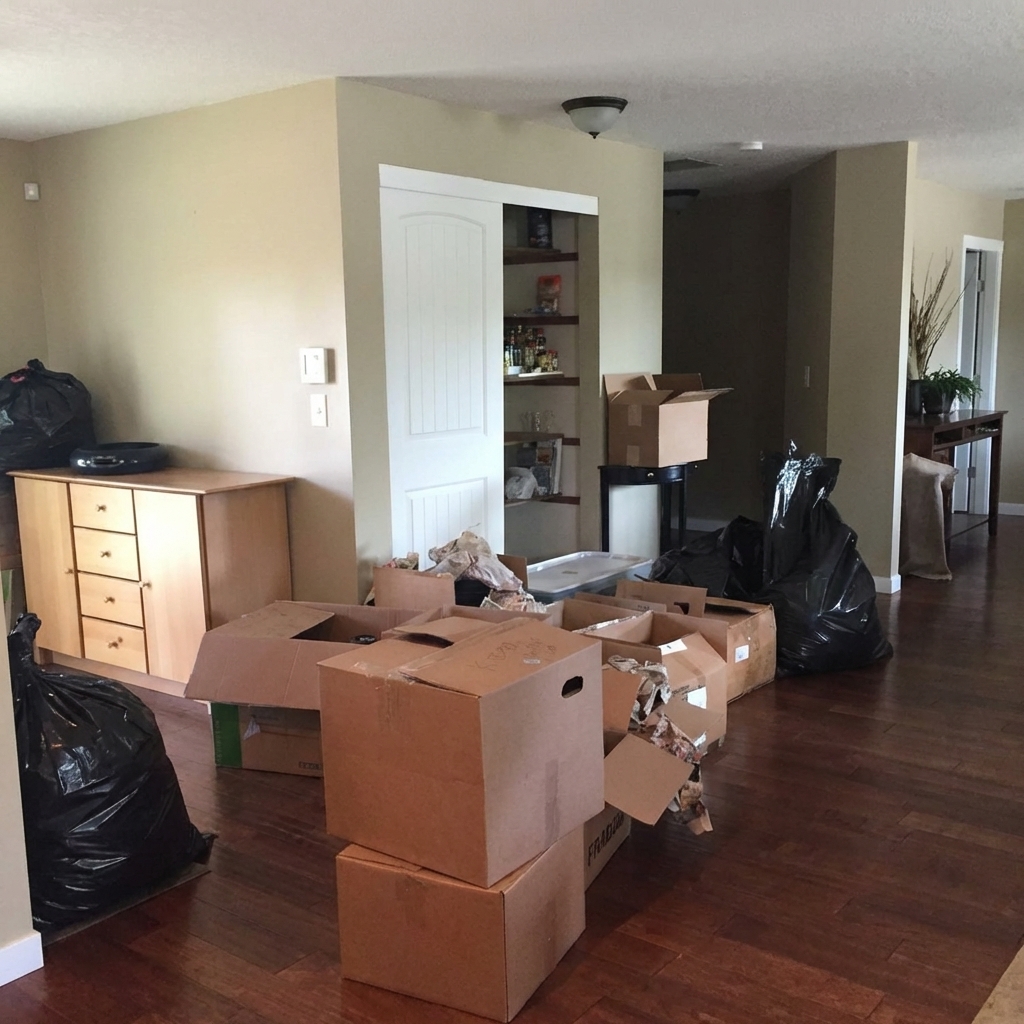
My best friend moved away and told me to take whatever I wanted from her house. I almost left the one thing that mattered. It was sitting in a pile on the hallway floor with the other stuff Rachel was getting rid of — a stack of towels, some kitchen things, a box of books. I grabbed it on my way out the door. An afterthought. The last thing in my arms. And it changed everything. Not the lamp I'd come for. Not the throw pillows. Not the ceramic pitcher or the candles or any of the beautiful things from Rachel's beautiful house that I'd been quietly coveting for five years. The sheets. The ones from her bed. The ones she'd tossed in the giveaway pile because she'd already bought new ones for the new house. I took them because they were free and mine were old. I had no idea what I was holding. Let me back up. Because the sheets don't make sense without Rachel. And Rachel doesn't make sense without understanding what I'd been watching — and wanting — for the last five years. Rachel and I have been friends since our kids were in kindergarten together. Twenty-two years. We've been through everything — divorces, remarriages, teenagers, funerals, menopause. She's the person I call when I can't call anyone else. But somewhere in the last few years, something shifted between us. Not a fight. Not a falling out. Just a quiet, creeping imbalance that I couldn't name but could feel every time we were together. Rachel looks incredible. Not in a "she got work done" way. In a "she sleeps eight hours and drinks water and has the energy to actually live her life" way. She's 54. Same age as me. Same stage of life. Same hormones, same everything. But she doesn't look like me. She shows up to brunch in a white linen top with her hair down and her skin glowing and she looks like she just walked off a terrace in the south of France. She orders a second coffee because she wants to, not because she needs it to stay conscious. She talks about the book she's reading, the hike she did that morning, the dinner she's making for Tom tonight. I show up in whatever I grabbed off the chair. Hair in a clip. Concealer doing nothing. Ordering my third coffee because I was up at 2am again and the bags under my eyes have bags. I love Rachel. But sitting across from her at brunch started making me feel like I was looking at two versions of the same life — the one I was living and the one I was supposed to be living. I never said any of this out loud. I just smiled and sipped and wondered what Rachel had that I didn't. Then Rachel got the job offer. Portland. A promotion Tom couldn't pass up. They'd be gone by June. When she told me at brunch — casually, the way Rachel delivers big news, like she's already processed it and is now just informing you — something cracked in my chest. Not dramatically. A hairline fracture. The kind where the structure is still standing but something fundamental has shifted. Rachel was leaving. The woman I'd been measuring myself against for five years — the woman whose life I wanted, whose energy I envied, whose skin I studied across tables — was moving a thousand miles away. And the first thing I thought — the shameful, immediate, involuntary first thought — wasn't "I'll miss her." It was: "Now I won't have to sit across from her anymore." Then the shame hit. Because that thought was true. And true thoughts that are also terrible are the worst kind. I would miss her. Desperately. But I'd also stop being measured. Stop being compared — by myself, against my will, every brunch, every lunch, every dinner where her face reminded me of what mine used to look like before five years of no sleep took it away. I need to tell you about those five years. Because without them, the move is just a friend leaving. With them, the move is the loss of the only mirror that showed me how far I'd fallen. I hit menopause at 49. Hot flashes every night since. Every single night for five years, my body wakes me at 1 or 2am. Furnace in my chest. Heat climbing my neck. Skin drenching. The sheets seal against me — smooth cotton, pressing flat, trapping every degree. I rip them off. Soaked. Freezing. Pull them back. Too hot. Kick them off. Too cold. Stare at the ceiling until the alarm. Eighteen hundred nights. Five years. You stop caring about things when you're that tired. Not all at once. But slowly. I stopped making the bedroom look nice. Stopped lighting candles. Stopped putting on anything other than the oldest t-shirt before crawling into bed to lose the same fight I lost every night. I stopped wanting to do things with Michael. He'd suggest dinner and I'd already be in my robe by 5:30. He'd ask about the weekend and I'd look at him with that face — the one where your eyes say "please don't ask me to do anything that requires being upright." Eventually he stopped asking. The closeness went too. Just a slow, quiet drift. He'd get into bed on his side. I'd get into bed on mine. Two feet away. Infinite distance. We hadn't really touched in years. That's who was standing in Rachel's half-packed house on a Saturday afternoon in May. A woman who hadn't slept in five years. Watching her best friend leave. Secretly relieved. Deeply ashamed of the relief. Rachel was organized about the move the way Rachel was organized about everything. Three piles in each room: Portland, Storage, Giveaway. She'd invited friends over to shop the giveaway pile before she donated the rest. 'Take whatever you want,' she'd said. 'Seriously. Anything. I'd rather you have it than Goodwill.' Her house was half-dismantled but still beautiful. Even in boxes, Rachel's life looked curated. The ceramic pitcher from the kitchen island — the one that always held farmer's market flowers — was sitting on the counter wrapped in newspaper. I unwrapped it. Ran my thumb along the rim. Put it in my box. The throw blanket from the couch. The one she'd always had folded over the arm, casually, the way things are casually placed in houses where people have energy for casual. I folded it. Put it in my box. The candles from the mantle. Half-burned. Still smelling like her house. In the box. I was collecting Rachel's life. Piece by piece. The artifacts of a woman who had the energy to arrange things beautifully. I was going to put them in my house — the house with the mail pile and the permanent couch dent — and pretend they meant the same thing. As if a ceramic pitcher in my kitchen would give me whatever quality Rachel had that I didn't. I knew it was pathetic. I didn't care. I was taking what I could carry. I walked through the hallway toward the bedroom. The master bedroom — Rachel's room, the room I'd imagined for five years, the room where a woman who slept eight hours got into bed without dreading it. The room was mostly packed. The bed was stripped — just the mattress and the frame, waiting for movers. The nightstands were bare. The reading lamp was already in a Portland box. On the floor by the door: the giveaway pile. A stack of towels. Some kitchen items in a bag. A box of books. And on top of the books — folded, pale, warm-colored — a set of sheets. I recognized the color immediately. Not white. Not cream. Something between sand and stone. The color of Rachel's bed. The bed I'd seen every time I walked past her bedroom door over the last five years — unmade, rumpled, draped in folds that caught the light. The bed that always looked like a photograph. The bed of a woman who slept. I stopped. Looked at the pile. Looked at the sheets. Rachel was giving them away. Putting them in the discard pile with the old towels and the extra kitchen utensils. Because she'd already bought new ones for Portland. Because these were the old set — the ones she'd been sleeping on. The ones that had been on her bed. I almost walked past. I had my box — the pitcher, the blanket, the candles. I had what I'd come for. The sheets were just sheets. Old sheets from a giveaway pile. But I stopped. And I don't know why. Something about the color. Something about the way the fabric sat in the pile — heavy, folded, warm against the pale stack of white towels beneath it. Something that caught my hand the way fabric in a store sometimes catches your hand before your brain engages. I picked them up. Heavy. Heavier than any sheets I'd ever held. The texture — I could feel it through the fold. Not smooth. Not the slippery, sealed surface I was used to. This had grain. Depth. Openness. I ran my thumb across the top fold and the fabric responded differently than cotton — it didn't slide. It held. There was something in the weave — channels, irregularities, a structure I could feel with my fingertips. And it was soft. Not new-soft. The kind of soft that happens to fabric that has been washed hundreds of times and slept on thousands of nights and gotten better every cycle instead of worse. The softness of something that has been loved by a body for years and has recorded every night of it in its fiber. I held Rachel's sheets in my hands and something in my palms said: take these. Not my brain. My brain said: you have sheets at home. These are from a giveaway pile. They're used. They're someone else's old bedding. My hands said: take these. I put them in the box. On top of the candles. Last thing in. 'You're taking the sheets?' Rachel said from the hallway. She'd been watching. 'Is that okay?' 'Of course. Take them. They're the old set — I bought new ones for Portland. Same fabric, just updated color.' 'What fabric?' She said something I didn't fully register. A word or two. I was distracted — Michael was texting about dinner, someone was asking about the bookshelf, Rachel's cat was weaving between my legs. I heard "linen" and "flax" and filed it under "Rachel's fancy stuff" and walked to my car carrying a box of her life. The sheets sat in that box for three days. In my mudroom. On the bench. With the pitcher and the blanket and the candles still stacked inside. I hadn't unpacked any of it. Because unpacking required energy and energy required sleep and sleep required a body that didn't turn into a furnace every night at 1am. Monday night. Tuesday night. Wednesday night. The usual. Cotton. Seal. Flash. Drenched. Fight. Couch by 3am. Up at 5. Coffee. Drag. Thursday morning I was standing in the mudroom looking for my rain boots and I saw the box. Rachel's box. The things I'd taken from her house. The artifacts of a life I'd been envying for five years, sitting in a box on a bench, still wrapped, still unused. I opened it. Put the pitcher on the kitchen counter. Hung the blanket over the arm of the couch. Set the candles on the mantle. And there at the bottom — Rachel's sheets. That warm, sandy color. That texture. I held them up. Unfolded them in the kitchen. The fabric caught the Thursday morning light and something happened that the pitcher and the blanket and the candles hadn't done. The fabric glowed. Not metaphorically — the color, that natural warm tone, literally caught the light and held it. The wrinkles cast shadows. The folds had depth. The sheets looked like Rachel's bed. Even unfolded in my kitchen, spread across my counter, they looked like the bed I'd been watching for five years. The bed that always looked like a photograph. The bed of a woman who sleeps. I thought: I'll put them on the guest bed. For when company comes. Then I thought: what company? Nobody comes. I haven't invited anyone over in two years because the house is a mess and I'm too tired to host and the guest room is where the laundry goes. Then I thought: I'll put them on my bed. Then my brain said: they're used. They're old. They're someone else's sheets. Then my hands said — the same way they'd said it in Rachel's hallway: put them on the bed. That night, after Michael went to sleep on his side of the cotton, I lay in the dark fighting the usual fight. 1:15am. Flash. Drenched. Ripped the sheet off. Lay there soaked. Freezing. Pulled it back. Too hot by 1:30. And at 1:45am — tangled in damp cotton, shivering, furious, staring at the ceiling for the eighteen hundredth time — I got up. Went to the kitchen. Picked up Rachel's sheets from the counter where I'd left them. Carried them to the bedroom. Stripped my bed in the dark, quietly, without waking Michael. Pulled off the cotton — the soaked, twisted, hot, failed cotton. Dropped it on the floor. Put Rachel's sheets on. Fitted sheet. Top sheet. Let it fall. Even in the dark, even at 1:45am, even with my hands shaking from cold and fatigue — the fabric felt different. Heavy. Textured. The fitted sheet settled over the mattress with a weight that wasn't cotton-weight. Something else. Something substantial. I pulled the top sheet over me and got in. And at 1:45 in the morning, in sheets I'd grabbed from a giveaway pile as an afterthought, my body did something it hadn't done in five years. It exhaled. The fabric was cool. Not cold — cool. The way a breeze feels when you didn't know you were warm. Against my arms, my legs, my shoulders. Every point of contact said the same thing: relief. Not the smooth, sealing, heat-trapping touch of the cotton I'd just ripped off. This was open. Air moving through the weave. My skin could breathe. The fabric wasn't sealed against me. I could feel space — channels in the weave where air existed between my body and the fabric. After five years of cotton pressing flat and suffocating by midnight, this was like stepping outside. And the softness. Rachel's sheets had been on her bed for — I didn't know how long. Two years? Three? Every wash, every night of her body heat, every cycle had opened the fibers further. They were softer than anything I'd ever felt on a bed. Not smooth-soft — deep-soft. The kind of softness that only comes from time and use. These sheets had a history. They had Rachel's history. Thousands of nights of good sleep woven into the fiber. My shoulders dropped. Jaw unclenched. Fists opened. The bracing — the nightly preparation for the fight — didn't engage. Because the fabric was different. The signal was different. The story my body was being told was different from the cotton story it had been hearing for five years. I was asleep in minutes. At 1:45am. After an hour of fighting cotton. On giveaway sheets. Asleep in minutes. 4am. Hot flash. The furnace lit. Chest, neck, face. I braced — five years of reflex. But the moisture was leaving my skin before it pooled. Moving through the fabric. Wicking through whatever this weave was — through the channels and the space and the openness I'd felt when I got in. The heat was passing through instead of building. The flash crested and the sheet was still cool and my skin was dry. The cycle didn't start. The drenching didn't happen. The ripping didn't come. I pulled the sheet up. Cool. Fresh. Like the flash had never happened. Back to sleep. 8:45am. I opened my eyes. Saturday. Bright light. Late morning. From 1:45am to 8:45am. Seven hours. On giveaway sheets. After an hour of fighting cotton. Seven hours of the deepest, most uninterrupted sleep I'd had in five years. The linen was still draped over me — warmer now from my body but not hot. Still breathing. Softer than the night before, if that was possible. Softer from one night of my body heat opening the fibers further. And Michael was close. In the middle. His arm near mine. He'd moved toward me — on the new sheets, in the new fabric, because my body wasn't radiating trapped heat. Because the linen was handling it. Because for the first time in five years, my side of the bed wasn't a war zone. I lay there. Running my fingers across the fabric. Rachel's fabric. The fabric she'd put in a giveaway pile. The fabric I'd picked up as an afterthought on my way out the door. The last thing in the box. And I felt two things simultaneously. The first was the physical sensation of being rested. My head was clear. My eyes didn't hurt. My body was mine — not the heavy, dragged, borrowed thing I'd been hauling around for five years. Mine. Light. Present. The second was a grief so specific it had an address. Five years. Every one of them on the wrong fabric. While Rachel slept on this. While Rachel's face glowed. While Rachel had energy and patience and a marriage that functioned and flowers on the table and a life she was actually living instead of surviving. While I sat across from her at brunch wondering what she had. She had this. In a giveaway pile. In a stack of towels and kitchen things and books nobody wanted. The answer was in the giveaway pile. I called Rachel. She picked up on the third ring. Portland noise in the background — boxes, moving, the chaos of a new house. 'Rachel, I need to ask you something.' 'What?' 'The sheets. The ones from the giveaway pile. The ones from your bed.' 'You took them! Good. I was hoping you would.' 'Rachel. I slept seven hours last night.' She went quiet. 'I put them on my bed at 1:45am after fighting the cotton for an hour. And I slept. For seven hours. The hot flash came at 4 and the fabric — Rachel, the fabric did something. It pulled the heat through. The moisture was gone before it formed. I went back to sleep. In minutes. After a hot flash. That has never happened.' 'Donna —' 'What IS this fabric? What are these sheets? I know you said something when I took them but I wasn't listening. I was distracted. I didn't — what is this?' She laughed. Not at me — with recognition. The laugh of a woman who has been waiting years for this conversation. 'They're linen, Donna. Pure European flax. Stone-washed.' 'Linen.' 'Real linen. Not the blended stuff. Not "linen-look." Pure flax. My sister-in-law found the company — she's a textile buyer for luxury hotels. She told me most bedding suffocates your skin. Tight weave, high thread count, seals heat against your body. She said the only fabric that actually thermoregulates is pure linen. Hollow flax fibers that wick moisture before it pools. Open weave that lets heat pass through.' 'Two years. You've been sleeping on this for two years.' 'Three. Those sheets you have are three years old. That's why they're so soft — linen gets softer every wash. It's the only fabric that does that. Cotton peaks the day you buy it and degrades. Linen starts soft and gets better for decades.' 'Three years. While I was sitting across from you at brunch watching you glow and wondering what supplement you were taking.' 'It wasn't a supplement. It was sleep. I was sleeping seven or eight hours because the linen handled the hot flashes. Everything else — the energy, the skin, the patience, the marriage, the flowers, the dinners, the weekend trips — all of it came from sleep. And the sleep came from the fabric.' She paused. And then she said something that cut through everything — all the distance, all the comparison, all the five years of silent measuring. 'I wanted to tell you, Donna. For three years. Every brunch. Every lunch. I'd watch you and I'd see the bags getting deeper and the gray spreading and the energy draining and I'd think: tell her. Just tell her about the linen. But I couldn't find the way. Because how do you tell your best friend "you look exhausted and the answer is my bedding"? It sounds insane. It sounds condescending. It sounds like the friend who has it figured out telling the friend who doesn't that the answer was simple the whole time.' 'So you put them in the giveaway pile.' 'I put them in the giveaway pile and I prayed you'd take them. I knew you'd come for the pitcher and the blanket and the candles — I've seen you looking at them for years. I knew you'd walk through the bedroom and see the pile and I hoped — God, I hoped — you'd pick up the sheets.' 'You WANTED me to take them.' 'I positioned them on top of the books. So you'd see them. So the color would catch your eye. I put them on top because I know you — I know you grab things from the top of piles, not the bottom. I put them right where your hands would go.' 'Rachel, you orchestrated a giveaway pile.' 'I orchestrated a SHEET DELIVERY disguised as a giveaway pile. Because I couldn't hand them to you and say "these will fix your life" without it sounding like I was pitching you a product from my own bed. But I could put them in a pile and let you take them and hope that eventually — on a bad enough night — you'd put them on your mattress and feel what I've been feeling for three years.' 'It took me three days.' 'I was counting.' 'You were COUNTING?' 'I was checking in with Tom every night: "Has she called? Has she said anything about the sheets? It's been two days." He told me I was insane. He said "she took them from a pile, she probably put them in her linen closet." I said "she didn't put them in the closet. She put them somewhere she can see them. And eventually, on a night bad enough, she'll reach for them."' '1:45am on a Thursday.' '1:45am. After fighting the cotton for an hour. That's the moment. That's always the moment — when the cotton has beaten you so badly that anything else seems worth trying. Even used sheets from a giveaway pile. Especially used sheets from a giveaway pile.' I was crying. Sitting on the edge of my bed. On Rachel's linen. At 9 in the morning. Crying. 'The whole time,' I said. 'The whole five years. The gap between us — the energy, the skin, the everything — the whole gap was this fabric.' 'The whole gap. Cotton on your bed. Linen on mine. Same age. Same hormones. Same menopause. Different fabric. Different sleep. Different life. That's it. That's all it ever was.' 'And you're in Portland now. With new linen. And I'm here with your old set.' 'My old set that I stone-washed for three years of my sleep and washed two hundred times and broke in with my body. Donna, those sheets are better than anything you can buy new. Three years of use has opened the fibers to a point that stone-washing can't replicate. What you're sleeping on right now is linen in its prime. You have the best set I've ever owned.' 'And you gave them away.' 'I gave them to YOU. I didn't give them to Goodwill. I put them on top of a pile of books in a spot where your hands would reach and I prayed to the god of fabric that you'd pick them up.' 'I almost didn't. I almost walked right past them.' 'I KNOW. I was watching. From the hallway. When you stopped and picked them up, I exhaled for the first time in an hour. And when you said "is that okay?" I almost said "TAKE THEM AND PUT THEM ON YOUR BED TONIGHT AND CALL ME IN THE MORNING." But that would have been too much. You had to come to it yourself.' 'On a Thursday at 1:45am.' 'On a Thursday at 1:45am. The exact right moment.' 'I need my own, Rachel. These are yours. You should have them back —' 'Don't you DARE send them back. Those sheets are a gift. The best gift I've ever given. Keep them. Sleep on them. They'll keep getting softer for the next twenty years.' 'But I need more. I need a rotation.' 'I know. The company — same one I've been using. Small. Pure European flax. Stone-washed. They make 200 sets at a time. When they sell out, you wait months. King in natural oat goes first — lighter tones are softer after the stone-washing. Price goes up after winter because flax costs three times cotton.' 'I'm ordering today.' 'Order now. Before they sell out.' I went to the website while we were still on the phone. Small site. No flashy anything. Just photos of sheets draped across beds — unmade, rumpled, beautiful. That warm, natural color. The exact fabric draped over my bed right now. King in natural oat. 4 left. I ordered two sets. Natural oat and their limited edition driftwood. On the phone with Rachel. From Portland. At 9am on a Saturday. In giveaway sheets that had just given me the first real sleep of my life. 'Done,' I said. 'Two sets.' 'Good. How many left?' 'Two after me.' 'They'll be gone by Monday.' My sister Diane called that afternoon. I told her everything. The move. The giveaway pile. The sheets. The sleeping. Michael in the middle. She was quiet for a second. 'Wait. You took USED SHEETS from a GIVEAWAY PILE.' 'Diane. Focus. I'm telling you about the sleep.' 'You took your friend's DISCARDED BEDDING. From a PILE. With the KITCHEN STUFF.' 'They were on top of the pile. On top of the books. Positioned there. By Rachel. Intentionally. Because she's been trying to get me to sleep on linen for three years and couldn't find the way to say it. So she put it in a pile and AIMED it at my HANDS.' 'She weaponized a GIVEAWAY PILE.' 'She engineered a fabric delivery system disguised as downsizing. Yes.' 'And the sheets — the USED, GIVEAWAY, DISCARD sheets — gave you the best sleep of your life.' 'Seven hours. One hot flash. The fabric handled it. My skin stayed dry. The sheet stayed cool. I went back to sleep in minutes. After five years of nothing working — the mattress, the pillow, the cooling everything — GIVEAWAY SHEETS from a PILE fixed it.' 'Donna.' 'I know.' 'You've been spending money for five years on bedding and the answer was FREE. In a PILE. On the FLOOR.' 'It wasn't the "free" that mattered. It was the fabric. Linen. European flax. Hollow fibers — they transport heat instead of trapping it. Open weave — air moves through. The cotton I've been sleeping on seals everything. The linen lets everything through. That's the whole difference. That's why Rachel looks like Rachel and I look like me.' 'Looked. You said "looked." Past tense.' 'I slept seven hours, Diane. My eyes are clear. The puffiness is lighter — one night, already lighter. Michael told me this morning I looked different.' 'One night.' 'One night on the right fabric. That's how fast the body responds when you let it rest.' 'Send me the link.' I sent it. She called back in eight minutes. 'Sold out in king. Already.' 'They only make 200 at a time.' 'Of course they do. Because nothing that actually works is ever easy to get. Unless you happen to grab it from a GIVEAWAY PILE at your friend's house.' 'Rachel told me the price goes up after winter. The flax costs three times cotton and the stone-washing takes months.' 'I've spent two thousand dollars on bedding in three years. Bamboo. Cooling. "Performance." Nothing. And the answer was in a pile on a floor for FREE.' 'Get on the waitlist, Diane.' 'I'm on it. And I'm calling every friend who's ever moved and asking if they still have their OLD SHEETS. Apparently the DISCARD PILE is where the ANSWERS LIVE.' I hung up on her. Rachel's old linen became my primary set. Every night — the same. Cool fabric. Breathing weave. Hot flash handled. Seven hours. Eight hours. Sometimes more. The three-year-old fibers, broken in by a thousand washes and Rachel's body, performed better than anything new could have. The softness was extraordinary — a depth of texture that new linen approaches but only time achieves. My new sets arrived the following week. I put them in rotation. They were good — soft from the stone-washing, breathable from the first night, everything Rachel had promised. But the old set — the giveaway set — was still the softest. Still the most broken-in. Still the one I reached for on the worst nights. By the end of the first week, something had shifted. Not just sleep — everything. I had energy. Real energy — not the caffeine simulation. I reorganized the hall closet on a Tuesday. I bought flowers — the farmer's market kind, loosely arranged in Rachel's ceramic pitcher. Her pitcher. On my counter. With her sheets on my bed. The artifacts of Rachel's life finally in mine — not as imitations but as the actual things, doing the actual work, producing the actual results. The candles on the mantle — Rachel's candles. I lit them. The throw blanket on the couch — Rachel's blanket. I used it. The linen on the bed — Rachel's linen. I slept on it. And I finally understood that I'd been collecting the wrong things from Rachel's life. The pitcher and the blanket and the candles were decoration. The sheets were infrastructure. The decoration makes a house look like Rachel's. The infrastructure makes a person function like Rachel. I'd been taking the surface when the foundation was in the pile on the floor. Michael noticed. He didn't say much at first. But he started lingering in the kitchen. Started suggesting walks. Started sitting closer on the couch. One morning I was making coffee and he walked in and stopped in the doorway. 'You look really good today.' Not the autopilot compliment. He was standing still. Looking at me. The way he used to look at me when we were first married and I'd come downstairs and he'd just stop and stare. I almost dropped the coffee. 'I didn't do anything different,' I said. 'Didn't lose weight. Didn't change my hair. I just slept.' 'On Rachel's sheets.' 'On linen. On a fabric that lets my body breathe instead of sealing heat against my skin. Everything you're seeing — the puffiness going down, the color coming back, whatever it is in my face that made you stop in the doorway — that's sleep. That's what happens when you actually sleep. Seven or eight hours. Every night.' He crossed the kitchen. Stood in front of me. 'I missed you,' he said. Not "you look nice." Not "that's good." I missed you. The sentence of a man who's been living with a ghost for five years and just saw the person come back. I told Beth about it at lunch. All of it. Rachel leaving. The giveaway pile. The sheets. The sleeping. Michael. Everything. Three other women at the table. Every single one leaning in. 'She PUT them in the pile for you,' Beth said. 'On top. Where my hands would go. She watched from the hallway to make sure I picked them up.' 'She ENGINEERED the giveaway.' 'She couldn't say "your sheets are killing you." She couldn't hand me linen and explain the science. Too loaded. Too much like the friend who has everything figured out lecturing the friend who's drowning. So she put the answer in a pile of towels and kitchen stuff and prayed I'd grab it on the way out.' 'And you almost DIDN'T.' 'I almost walked right past. I had the pitcher and the blanket and the candles. I had the things that looked like Rachel's life. The sheets were an afterthought. Literally the last thing I grabbed.' 'The afterthought was the answer.' 'The afterthought was the entire answer. The pitcher looks nice on my counter. The candles smell good. The blanket is warm. But the sheets — the sheets changed my sleep, which changed my energy, which changed my face, which changed my marriage, which changed my life. The decoration was irrelevant. The fabric was everything.' The table was quiet. Then: 'I haven't slept through the night since I was 48,' one of them said. 'I've spent a fortune on bedding. Bamboo, cooling, performance — nothing works,' said another. 'My husband and I haven't...' She stopped. Looked at the table. 'It's been a long time.' Every woman at that table was nodding. Beth said, 'Send me the link right now.' I sent it. She looked at her phone. 'Sold out in king.' '200 sets at a time. You have to wait for the next batch.' 'How long?' 'Couple months. And the price goes up after winter. The flax costs three times cotton and the stone-washing takes months.' Every phone came out. One of them got the last queen in natural oat. Held her phone up like she'd won something. The other three got on the waitlist. Beth looked at me. 'Rachel moved to Portland and the only thing that mattered was the GIVEAWAY PILE.' 'The only thing that mattered was the thing I almost didn't take. The afterthought. The used sheets from a stack of towels. Not the lamp. Not the pillows. Not any of the beautiful objects from Rachel's beautiful house. The sheets. The infrastructure. The fabric that made Rachel Rachel.' I think about that pile a lot. Rachel's hallway. The stack of towels. The box of books. The sheets on top — placed there by a woman who knew me well enough to know where my hands would reach. Warm-colored. Textured. Heavy. Catching the afternoon light from the hallway window. I almost walked past. I almost left them. I almost went home with a pitcher and a blanket and candles — the decoration of Rachel's life without the foundation. I took the pitcher to look at. I took the blanket to feel warm. I took the candles to smell nice. I took the sheets because they were free and my hands said yes. My hands knew. The way hands know sometimes — before brains, before research, before anyone explains anything. My hands touched the fabric and said: this. Whatever this is. Take this. All those years I thought the difference between Rachel and me was something I couldn't fix. That she was aging better. That she had more energy because she was built that way. That her marriage was warmer because she and Tom were just luckier. Rachel sleeps. That's it. That's the whole difference. She sleeps on linen that breathes and wicks and thermoregulates. I was sleeping on cotton that sealed and trapped and suffocated. Same age. Same hormones. Different fabric. Different life. And she couldn't tell me. For three years. Because the dynamic of the comparison — the silent, corrosive, one-sided comparison I'd been running at every brunch — made honesty feel like cruelty. She couldn't say "it's the sheets" because I'd hear "I'm winning." So she waited. And when she moved — when the giveaway pile gave her one last chance to deliver the answer without delivering it herself — she put the sheets on top and prayed. My grandmother slept on linen her entire life. She had one set she washed every week for thirty years and she said it felt better at the end than the beginning. She and my grandfather shared the middle of the bed until he died at 81. I spent five years on the opposite edge of my mattress, under cotton that sealed heat against my body like a lid on a pot. Waking up drenched. Waking up freezing. Waking up on my side wondering where my husband went. He was right there. I just couldn't reach him through the exhaustion. Now I pull Rachel's linen up and let it fall however it falls and it looks beautiful. Every morning. The same way it looked on her bed for three years — rumpled, warm, catching light. Except now it's on my bed. In my house. Against my skin. She took the pitcher and the candles to Portland. Bought new ones. I have the old ones and they look nice on my counter and my mantle. But the sheets are the thing that mattered. The thing from the bottom of the pile that turned out to be the top of the list. The afterthought that changed everything. And last Sunday morning I woke up and Michael was already awake. Lying on his side. Looking at me. 'What?' I said. 'Nothing. You just look rested.' I smiled. Pulled the sheet up. Moved closer to him. We lay there for another hour. Not talking. Not checking our phones. Just two people who found their way back to the middle of the bed after five years on opposite sides. My grandmother used to do that with my grandfather. Sunday mornings. Coffee getting cold on the nightstand. Nowhere to be. I finally understand why. Your move.
Like this ad? Make it yours.
Crush rebuilds this exact creative around your product — your brand, your colors, your offer — in about a minute.