
Inactive· since Jan 23, 2026
- 10
- days it ran
- 17
- relaunches
Ad copy
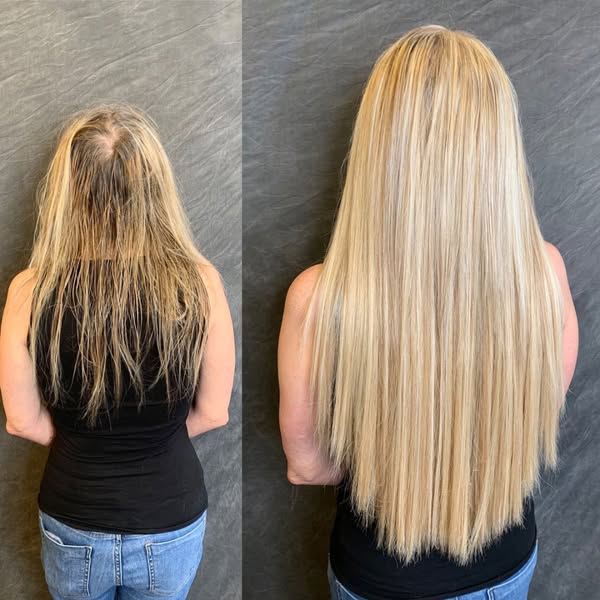
Please STOP trying to regrow your hair on GLP-1 medications. I know that sounds crazy, but every time you take biotin, force down protein shakes, or buy another "miracle" supplement, you might be using solutions that don't address the root cause of what's actually happening. I used to be just like you. Standing in the supplement aisle at Target, reading every label on every biotin bottle, desperately hoping the 10,000 mcg ones would be different from the 5,000 mcg ones I'd already tried. Ordering that $47 bottle of collagen powder from Amazon, mixing it into everything even though it made me gag, because the reviews said it "saved their hair." Tracking my protein intake obsessively on MyFitnessPal, forcing myself to hit 100+ grams every single day even when I had zero appetite, because everyone in the GLP-1 groups kept saying that's what I needed to do. Spending $89 on Nutrafol because surely something that expensive had to work. Watching my bank account drain while my hair kept falling out. I tried everything. I mean everything. Every supplement the GLP-1 forums recommended. Every "miracle solution" someone swore saved their hair. I did exactly what I was told to do. And my hair loss got worse. Not better. Worse. The shower drain clogs got bigger. My ponytail got thinner. My part got wider. Every single day, handfuls of hair on my brush. Clumps in my hands when I shampooed. I lost almost 100 pounds on my GLP-1 medication. My A1C dropped from 7.2 to 5.1. I'm off metformin. I'm off thyroid medication. My doctor called my transformation "remarkable." But none of that mattered when I looked in the mirror and could see my scalp through my hair. I was finally seeing the health wins I'd worked so hard for. My family kept telling me how proud they were. I felt like I'd finally gotten my life back. But the truth was, I'd pull out handfuls every time I brushed. Every shower ended with me staring at the drain, watching my hair collect in clumps. Every time I put my hair in a ponytail, it felt thinner. Looked thinner. I started wearing my hair down all the time, even in the summer heat. Strategically positioning myself in photos so the camera wouldn't catch my part. Avoiding overhead lighting because it made everything so much worse. The worst part? I felt like I was being ungrateful. Here I was, healthier than I'd been in a decade, finally getting my diabetes under control, and all I could think about was my hair. But it wasn't vanity. It was grief. I was watching a piece of myself disappear, and I didn't know how to stop it. Three months in, I got desperate enough to stop my GLP-1 medication entirely. I thought maybe if I just gave my body a break, the shedding would stop. Maybe everyone was right—maybe it was the medication causing it. For six weeks, I didn't take a single dose. I watched my hair like a hawk, counting every strand in the shower, inspecting my brush, checking my part in the mirror five times a day. The hair loss didn't slow down. Not even a little. But I gained back 15 pounds in those six weeks. Fifteen pounds I'd worked so hard to lose. The food noise came roaring back. The cravings. The constant thoughts about eating. All of it returned like I'd never left. I went back on the medication. What choice did I have? My hair was falling out either way, but at least on the medication I could keep my diabetes controlled and maintain my weight loss. I felt trapped. Like I was being forced to choose between my health and my appearance. Between my blood sugar and my self-confidence. Between staying on a medication that was saving my life and keeping the hair I'd had my entire life. I made an appointment with my doctor. Told him everything. He did a full workup—thyroid panel, iron levels, vitamin D, B12, protein levels. Everything. The results came back normal. Every single marker. Even my protein was in the normal range, though on the lower end. "Your labs look great," he said, smiling like this was good news. "Whatever you're doing is working." I wanted to scream. If everything was "normal," why was I going bald? I posted about it on Reddit again, desperate for answers. The responses were the same as always: "It's from the rapid weight loss, nothing you can do but wait it out." "You're probably not eating enough protein, even if your labs say you are." "It's just malnutrition. Your body is in shock from the calorie deficit." "GLP-1 medications don't cause hair loss. It's correlation, not causation." But here's what kept bothering me: if it was malnutrition or protein deficiency, wouldn't my labs show that? If it was just from rapid weight loss, why didn't it slow down when my weight loss plateaued? Why did stopping the medication for six weeks make zero difference? Nothing added up. And I was running out of hope. Then one night—2:34 AM, I remember the exact time because I'd been lying awake for hours—I couldn't take it anymore. I grabbed my phone and started searching. Not the same generic searches I'd done a hundred times before. This time I typed something different: "Why doesn't biotin work for GLP-1 hair loss" That's when I found an article that changed everything. It was about the hormonal effects of GLP-1 medications. Not the weight loss effects. Not the blood sugar effects. The hormone effects. The article explained that GLP-1 medications are synthetic hormones. When you inject them, they don't just affect your appetite or insulin response—they affect your entire hormonal system. They can disrupt your body's natural hormone balance in ways that researchers are still studying. And here's the part that made my stomach drop: when your hormones get disrupted, it can cause something specific to happen. Your DHT levels can increase. I'd never heard of DHT before. I had to keep reading. DHT is a hormone that's already in your body. In normal amounts, it's fine. But when it gets elevated—like it can during hormonal disruptions—it does something terrible to your hair follicles. It literally attaches to them and shrinks them. Makes them weaker. Pushes them into the shedding phase prematurely. That's why my hair was falling out. Not from protein deficiency. Not from rapid weight loss. Not from malnutrition. From hormones. Specifically, from a hormone that was attacking my hair follicles from the inside. And suddenly everything made sense. That's why biotin didn't work. Biotin helps with nutritional deficiencies, but it can't do anything about a hormone that's actively shrinking your follicles. That's why collagen didn't work. Same reason. That's why stopping the medication didn't stop the hair loss immediately. The hormonal disruption was already in motion. That's why my labs were "normal." Blood tests don't measure what DHT is doing to your hair follicles at a cellular level. I wasn't crazy. I wasn't doing something wrong. My body was going through a hormonal process that had nothing to do with my diet or my vitamins. For the first time in months, I felt like I could breathe. Because if the problem was hormonal, that meant there might be a solution I hadn't tried yet. Something that actually addressed what was happening, not just symptoms that didn't apply to me. I spent the rest of that night researching. Reading everything I could find about DHT and hair loss. About what actually works when hormones are the problem, not nutrition. That's when I started learning about moringa. Moringa is a plant that's been used for centuries in traditional medicine. But what caught my attention wasn't the history—it was what modern research was showing. Moringa contains natural compounds that help regulate DHT levels. Not mask them. Not work around them. Actually help your body maintain healthy DHT balance. And here's what else I learned: moringa doesn't just address the hormone issue. It contains 92 essential nutrients—iron, zinc, B vitamins, antioxidants—all the things my body wasn't getting because I wasn't eating as much on my GLP-1. So it was addressing the hormonal disruption AND filling the nutritional gaps. Two problems. One plant. But the key thing I kept seeing over and over was this: you need something that addresses the DHT problem specifically, not just the nutritional problem. Because if DHT is shrinking your follicles, feeding them biotin is like watering a plant that's being strangled by weeds. You have to address what's attacking it first. That's when someone in one of the forums mentioned they'd been using a moringa supplement specifically. Not just a generic hair supplement. Something that was whole-food based, with the natural compounds intact. The brand was called Rosabella. I was skeptical. I'd spent so much money already on supplements that didn't work. But I was also desperate. And for the first time, what I was reading actually matched what was happening in my body. Rosabella Moringa was different from everything else I'd tried. It wasn't a synthetic formula with 47 different ingredients. It was just one thing: 100% pure moringa leaf powder. But that one thing contained natural compounds that help regulate DHT. Plus 92 nutrients to fill the gaps from eating less. And it was designed to work alongside GLP-1 medications—not interfere with them. It wasn't a prescription drug—just a whole-food supplement that supports your body's natural processes. I could take it while staying on my GLP-1 medication. It didn't interfere with anything my doctor had prescribed. I ordered it. Told myself not to get my hopes up. I'd been disappointed too many times. It arrived two days later. Simple capsules. The instructions said to take two every morning with my coffee. Easy enough. The first two weeks, nothing happened. Same amount of hair in the shower drain. Same thinning when I looked in the mirror. I started thinking this was just another expensive mistake. But I'd already bought them, so I kept taking them. What did I have to lose at this point? Week three is when I noticed the first change. It was subtle—so subtle I almost missed it. But one morning after my shower, I looked at the drain and realized there was... less hair than usual. Not dramatically less. But noticeably less. I told myself I was imagining it. That I wanted it to work so badly I was seeing things that weren't there. But the next day, same thing. And the day after that. By week four, I wasn't imagining it. The clumps of hair on my brush were getting smaller. My morning routine that used to involve clearing the drain wasn't taking as long. I was still shedding, but it felt more... normal. Like what shedding used to feel like before all this started. Week six is when my husband noticed. He didn't say anything at first, but I caught him looking at my hair while we were watching TV. Finally he said, "Is it just me, or does your hair look thicker?" I ran to the bathroom mirror. Pulled my hair back. Looked at my part under the light. He was right. My scalp wasn't as visible as it had been. The thinning areas weren't filling in yet, but they weren't getting worse. It was like someone had pressed pause on the hair loss. That's when I started believing this might actually work. By week eight, I could see tiny baby hairs starting to grow along my hairline. Little short pieces that stuck up when I pulled my hair back. I took a photo to compare to the one from the dressing room three months earlier. The difference was undeniable. I wasn't imagining it. My hair was coming back. Month three, my hairstylist said something without me even bringing it up. She was cutting my hair—I'd finally felt confident enough to get it trimmed instead of just hiding it—and she stopped and said, "Whatever you're doing, keep doing it. Your hair feels so much healthier than it did last time." I told her about Rosabella. About learning it was hormonal, not nutritional. About finally finding something that addressed what was actually wrong. She was the one who told me to take another photo. A before and after. She said I'd want to remember where I started. It's been five months now. I still take the capsules every morning. My hair isn't back to where it was before I started losing it, but it's gotten so much better. The shedding is normal now—just a few strands here and there, like it's supposed to be. The thin spots at my crown are filling in. My part looks like a part again, not a highway. But more than that, I feel like myself again. I'm not avoiding photos. I'm not wearing my hair down in 90-degree heat. I'm not spending twenty minutes every morning trying to arrange my hair to hide the thin spots. I can be happy about my weight loss and my health improvements without feeling like I'm trading one problem for another. And I'm still on my GLP-1 medication. I don't have to choose between my health and my hair anymore. If you're reading this and you see yourself in my story—if you're losing hair on a GLP-1 medication and everyone keeps telling you it's just protein or just weight loss, but nothing you try actually works—I need you to understand something. It might not be nutritional at all. It might be hormonal. And if it's hormonal, all the biotin and collagen and protein shakes in the world won't fix it. Because they're not addressing what's actually attacking your hair follicles. I wasted months trying to fix a nutrition problem I didn't have. Months of forcing down protein I didn't want, taking supplements that didn't work, watching my hair continue to fall out while everyone told me I just needed to "be patient." But the moment I addressed the hormone issue—the actual root cause—everything changed. I'm not a doctor. I can't tell you what's happening in your specific body. But I can tell you what happened in mine. And I can tell you that if your labs are normal but your hair is still falling out, maybe it's time to ask a different question. Not "am I eating enough protein?" but "what's happening with my hormones?" The supplement I found is called Rosabella Moringa. It's 100% pure moringa leaf powder—a whole-food supplement with natural compounds that help support healthy DHT levels, plus 92 essential nutrients to fill the gaps from eating less. It's not a prescription—just a supplement that supports what your body's trying to do naturally. They have a 90-day guarantee, so if you don't notice reduced shedding or healthier-looking hair, you're not stuck with it like I was with all those bottles of biotin and collagen that did nothing. I'm sharing this because I spent so many nights lying awake at 2 AM, desperately searching for answers, feeling like I was the only person whose hair loss didn't fit the normal explanations. And I don't want anyone else to waste months like I did, trying to fix something that was never broken in the first place. Your protein might be fine. Your nutrition might be fine. Your body might just need help maintaining healthy hormone balance. And there's something that may help with that. Click below to learn more about what worked for me, and why addressing the hormone issue made all the difference. You don't have to choose between your health and your hair. You just have to address what's actually causing the problem. And for me, that changed everything. https://get.tryrosabella.com/rosabella/glp/sp
Unlock Your Body’s Full Potential
"I was losing so much hair on Ozempic that I was afraid to brush it. My doctor said my labs were fine, so I didn't know what else to try. After 6 weeks on Rosabella Moringa, the shedding has slowed way down. I'm finally seeing baby hairs again."
LEARN MORELike this ad? Make it yours.
Crush rebuilds this exact creative around your product — your brand, your colors, your offer — in about a minute.