
Inactive· since May 26, 2026
- 3
- days it ran
- 0
- relaunches
Ad copy
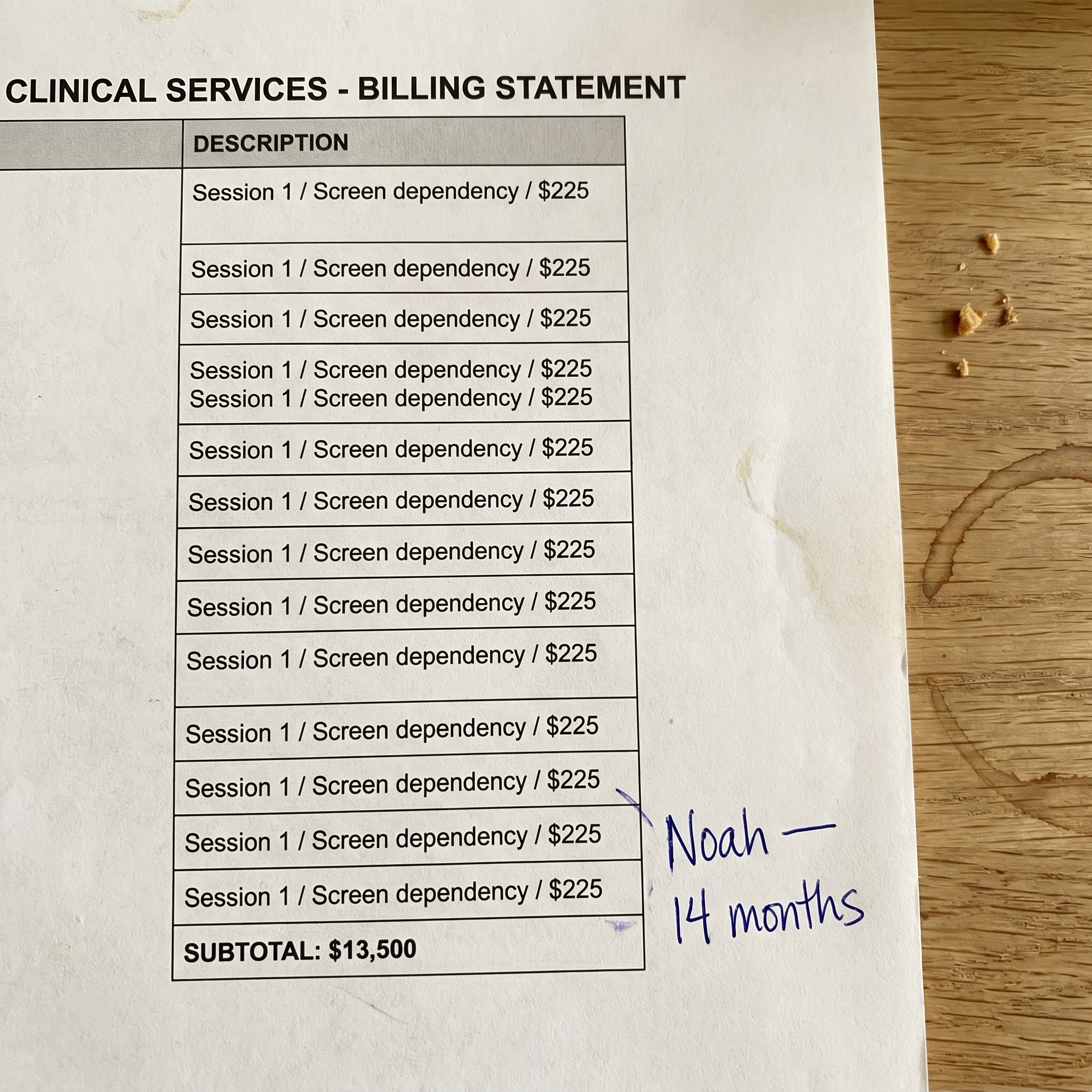
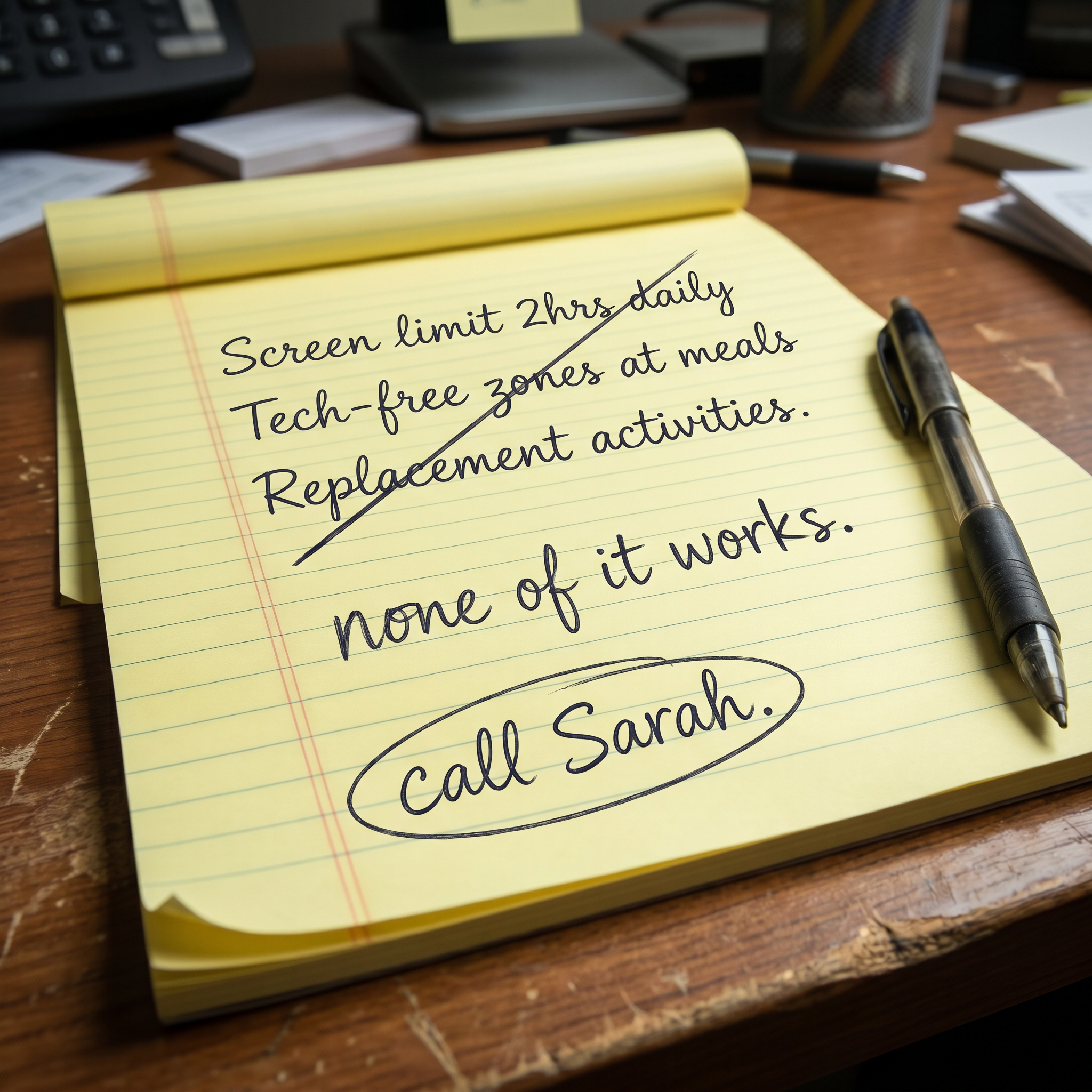
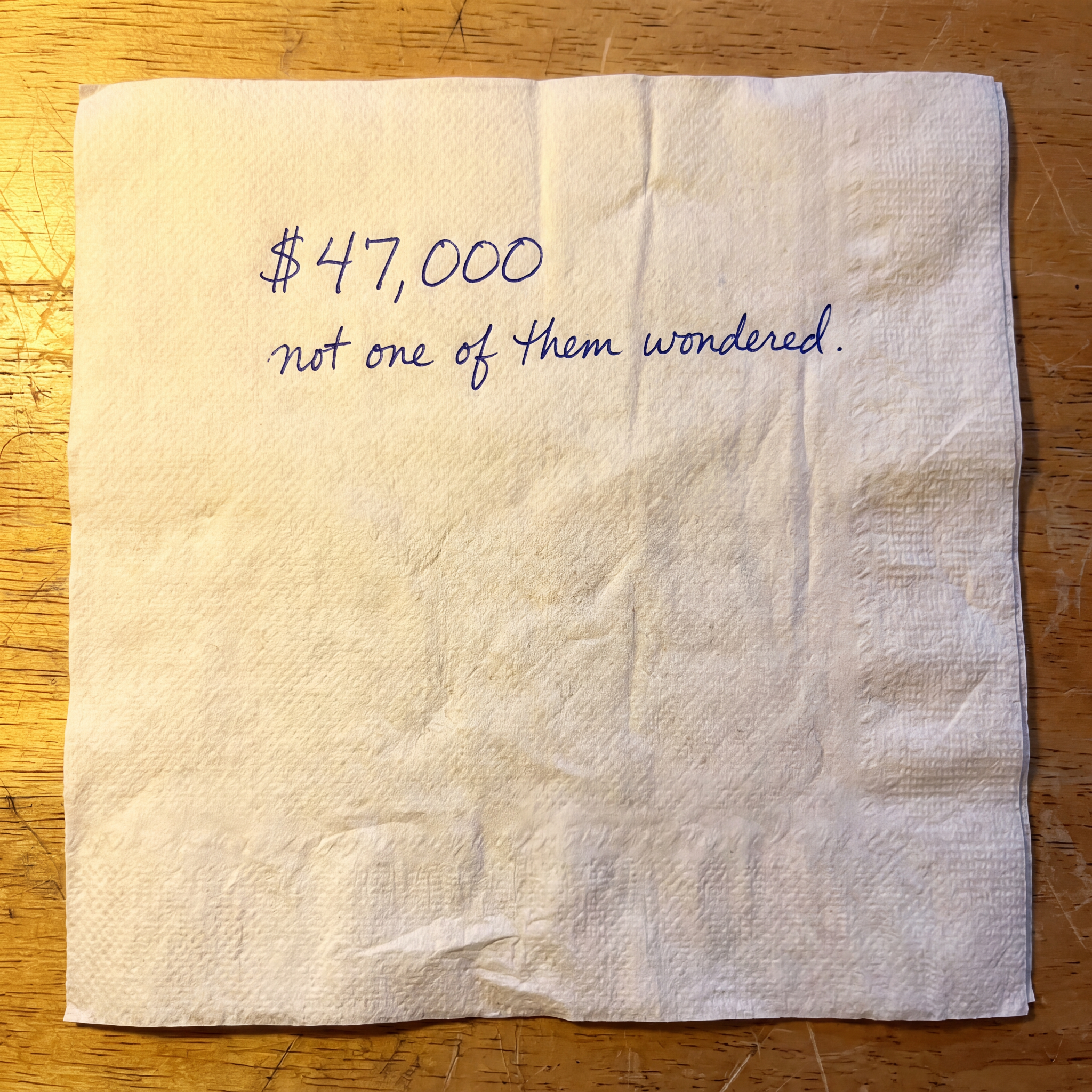
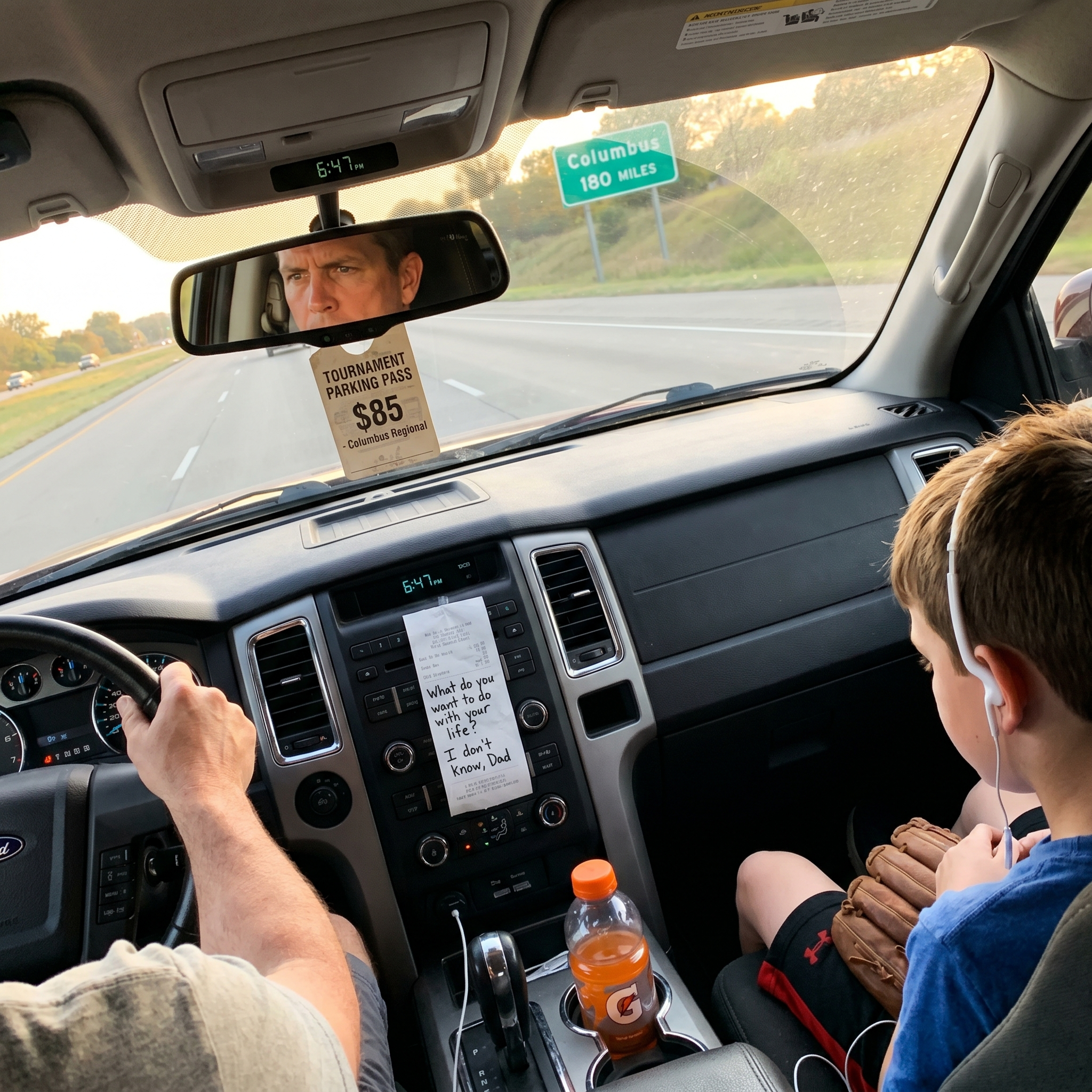
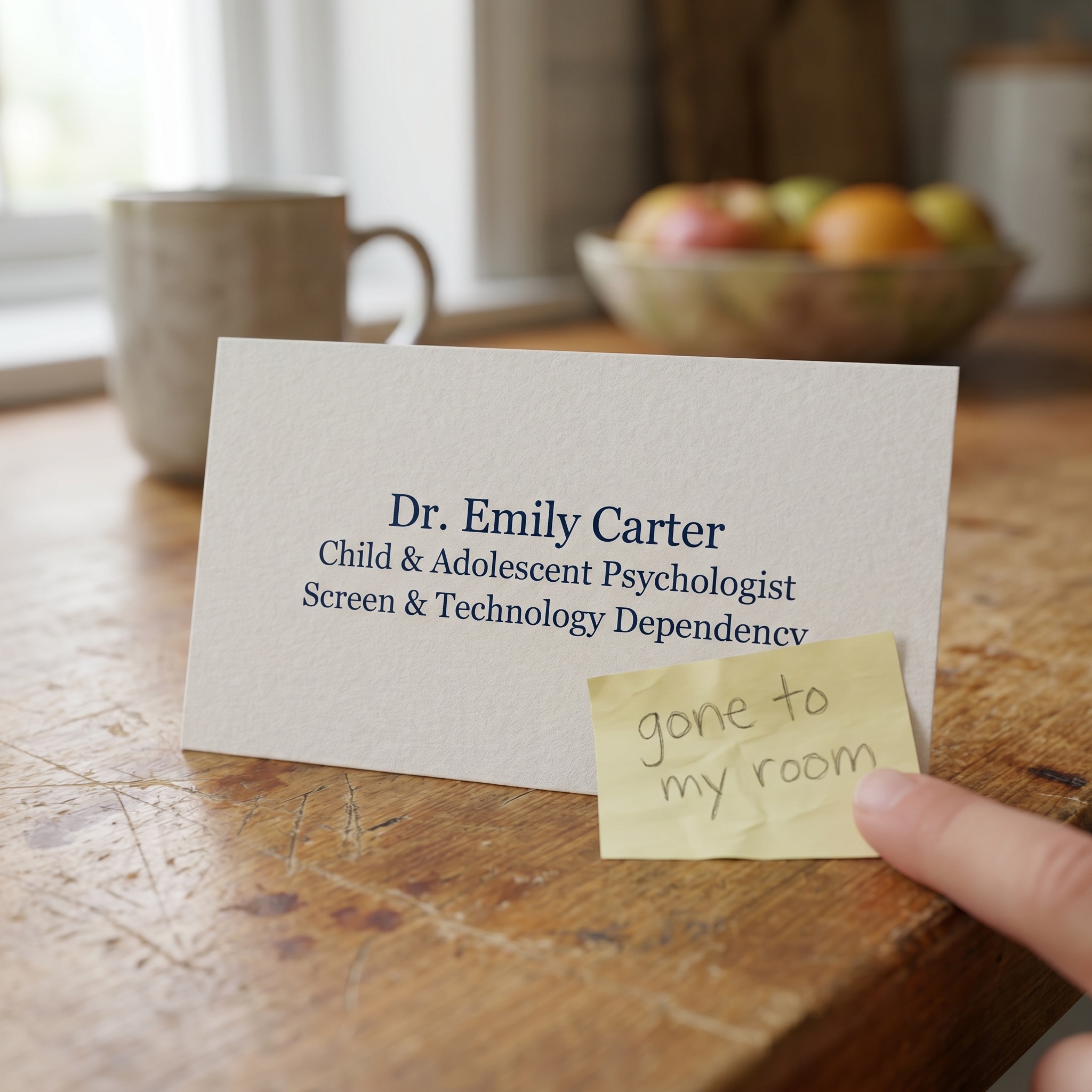
I treat screen-addicted children. Parents pay me to reconnect with their kids. My own son hasn't looked up in weeks. His name is Noah. He is eleven years old. He used to follow me through the house asking things. Why do planes leave white lines in the sky. Why do we get hiccups. Why does the sea look different colours in different places. He used to grab my sleeve before the question came out. Making sure I was listening. I was. I always was. That was fourteen months ago. Last Tuesday I sat across from him at dinner for forty minutes. He looked at his screen the entire time. I said his name twice. The third time I didn't bother. I just watched him. And I thought about the family I had seen that morning. The father sat in the pale blue chair the way all fathers sit in it. Hands on his knees. Slightly forward. "He used to talk to me constantly," he said. "Now I'm invisible." I nodded. Made a note. Gave him the framework. Limit screen time to two hours daily. Establish tech-free zones. Enforce device-free meals. Replace passive consumption with active engagement. He wrote it all down. Thanked me. Left looking like a man with a plan. I watched him go. And I sat at my desk for a moment. And I thought about Noah at the dinner table. My name said twice. The third time I didn't bother. I had just given that father every clinical tool available. And I hadn't used a single one of them at home. That evening I tried. Screen-free dinner. I took Noah's iPad at the table. He looked at me for the first time in days. Not with curiosity. With fury. "That's mine." "Not at dinner." He ate in silence. When he finished he took the iPad back and went to his room without a word. I sat at the empty table. The clinical intervention had worked exactly as designed. The screen was gone. And so was my son. I lay awake that night running through everything I knew. Every method. Every framework. Every evidence-based approach in eleven years of practice. Screen time limits — tried. He complied and disappeared into silence. Tech-free zones — tried. He found the edges of every zone and sat just outside them. Replacement activities — tried. He did them the way prisoners do exercise yards. Present. Absent. Here's why every tool I had failed: Every tool was designed to take something away. Not to give something back. The reason this distinction matters is this: A child who has their screen removed is a child without a screen. A child who forgets their screen exists is a different child entirely. I had been practising the first for eleven years. I had never once achieved the second. Not with Noah. Not with any patient. Because the second is not clinical. It is not a framework or a boundary or an evidence-based approach. Robinson — the education researcher — put it exactly this way: if you can light the spark of curiosity in a child, they will learn without any further assistance. Curiosity is the kind of engine of achievement. And here's the part that stopped me cold: it is a real achievement to put that particular ability out. I had spent eleven years helping families extinguish screens. The screen was winning because the world was less interesting than what was on it. And I had no tool — not one in eleven years of practice — for making the world more interesting than a screen. 2 AM. Still at the table. I was not searching for clinical resources. I was sitting with the most uncomfortable thought of my professional life. The distance required for clinical objectivity — the professional remove I had been trained to maintain — was the exact thing preventing me from reaching my own son. I couldn't be his psychologist. I needed to be his father. Not the father who implemented frameworks at dinner. The father who sat next to him and was genuinely interested in the same things he was interested in. I had not been that father in fourteen months. Because I had been so focused on fixing him that I had forgotten to be curious alongside him. He wasn't broken. He was bored. Bored of a house where nobody wondered about anything. Where his father had eleven years of professional knowledge and used none of it to sit next to his son and say: I don't know either. Let's find out. I put my head in my hands. The next morning I called my colleague Dr. Sarah Henley. Twenty years of practice. The person I trusted most in the field. "I need to ask you something that isn't clinical." "Those are always the important ones." "Noah. Eleven years old. Screen addiction. I've tried everything. Nothing works. He's still gone." She was quiet for a moment. "You've been treating him." "Yes." "Stop." Silence. "Stop treating him. He doesn't need a psychologist. He needs a father who is more interesting than a screen." My throat tightened. "How." "My nephew was exactly like Noah. Twelve years old. Screen in hand every waking moment. My sister tried everything. Rules. Limits. Replacement activities. Nothing." "What changed?" "A book. 100,000 Whys. It's a children's encyclopedia organised by questions kids actually ask. Why does metal rust. Why do we dream. How do planes stay up. Two pages before bed. Fifteen minutes." "A book beat a screen?" "The screen couldn't compete with it. Because it wasn't about restricting the screen. It was about making the world more interesting than the screen. The screen wins when the world is boring. Give him a world that isn't boring." I sat with that. "There's something else," she said. "What?" "Read it with him. Don't give it to him. Sit next to him and read it yourself. Be curious about it. Let him see you wondering about something." "Why does that matter?" "Because a child who sees their parent genuinely curious about the world understands that curiosity doesn't end at childhood. That it is something people do. Not just something children do before they grow out of it." She paused. "When did Noah last see you wonder about something?" I opened my mouth. And I couldn't find an answer. "Send me the link," I said. It arrived Thursday. I left it on the coffee table without a word. I went to bed that night certain it would still be there untouched in the morning. It wasn't. Saturday morning I came downstairs. Noah was on the couch. Book open. iPad on the charger. Untouched. He didn't hear me come in. I stood in the doorway watching my son. His lips moving slightly as he read. His finger tracing a diagram. I thought: one morning is not fourteen months. Do not let yourself feel safe yet. I sat down next to him. Not with a clinical intention. Not with a framework. Just sat down. "I was wondering something," I said. He looked up. Slightly surprised. I couldn't remember the last time I had said those words to him. "Why do we only use ten percent of our brains? Is that even true?" He stared at me. "I don't know." "Neither do I. And I'm a psychologist." Something shifted in his face. "Want to find out?" He moved closer. Week 1: Noah on the couch three mornings in a row. Book open before I came downstairs. iPad on the charger each time. I sat next to him each morning without announcing it. Brought one question I genuinely couldn't answer. He worked through them with me. Not because I asked him to. Because the questions were interesting. One week is not fourteen months. Do not let yourself feel safe yet. But something was different. He had started coming to find me. Not with his iPad. With the book. Week 4: We were reading about why the ocean is blue but a glass of water is clear. Noah sat forward. "So you need billions of molecules stacked together for the colour to show. That's why a cup is clear but the ocean isn't. It's not about the ocean being special. It's just about how many molecules there are." "What do you think? If you had a pool the size of the ocean—" He worked through it out loud. "It would turn blue. Because it's not about being ocean water. It's just about depth. Enough molecules stacked." He looked at me. "I figured that out." He said it quietly. Like someone testing whether they were allowed to say it. I watched my son sit with something he had built himself. Not been given. Built. The screen was in the other room. He didn't notice. Week 8: Noah's teacher called on a Wednesday morning. "Mr. Cole, I wanted to reach out about Noah." "Is everything okay?" "More than okay." I sat down. "This week I asked the class why warm air rises. Most children said because it's lighter. Noah said warm air is less dense because the molecules move faster and spread apart so the same volume weighs less. Then he asked if that was also why hot air balloons work." "He asked why they work. Not whether. Why." "I've been teaching for thirteen years. But something is different now. He is not just answering questions. He is chasing them. He stayed after class to ask me something I had to go home and research." "What did he ask?" "Whether sound travels faster through water or air and why. He said he and his father had been wondering about it." I sat in my car after that call for a long time. He and his father had been wondering about it. He and his father. I thought about the dinner table. His name said twice. The third time I didn't bother. And I thought about what eleven years of clinical frameworks had never once given me. Not a tool for restriction. A reason to sit next to him. A $39 encyclopedia did what eleven years of professional training couldn't. Not because it was smarter than the training. Because it gave us something to wonder about together. Last week I sat across from a mother in the pale blue chair. She described her son. Screen in hand every waking moment. I put down my notepad. "Can I tell you something that isn't in any clinical framework?" She looked up. "Stop trying to take the screen away. Start being more interesting than it." She looked confused. "How?" "Sit next to him. Read something you're both curious about. Bring him questions you don't know the answer to. Let him see you wonder about something." She looked at me for a moment. "That's it?" "That's it. The screen wins when the world is boring. Make the world more interesting than the screen." She left looking lighter than any parent I had given a framework to. Because it wasn't a framework. It was the truth I had learned from my own son. With a children's encyclopedia. After eleven years of getting it wrong. If you have tried every rule and every limit and every screen-free zone and your child is still gone... If you have removed the screen and found silence where your child used to be... If you have been so focused on taking something away that you forgot to give something back... If you have not sat next to your child and said I don't know either — let's find out — in longer than you can remember... The screen is not the addiction. The screen wins when the world is less interesting than what is on it. You cannot restrict your child back to you. You can only make yourself more interesting than the screen. Curiosity is the engine. Not restriction. Not frameworks. Not limits. The engine. The encyclopedia that gave me my son back is called 100,000 Whys. Over 200 topics. From the universe to Earth. From the human body to animals. More than 1,000 illustrated entries organized by the questions kids actually ask. Two pages a night. Fifteen minutes. Not a screen time replacement. Not a clinical tool. A reason to sit next to your child and not know things together. So the world becomes more interesting than anything on any screen. Noah is eleven. Last Tuesday he came to find me. Not with his iPad. With the book. He had a question. He wanted to find out together. Fourteen months of silence. Ended with two pages before bed. You have until thirteen. Not gets harder. Closes. Stop trying to take the screen away. Start giving them something the screen cannot compete with. Now.
read this if you have kids or grandkids 👆
INTELLECTUAL ADVANTAGE DAILY Children's Encyclopedia ➡ Children's Intellectual Development Report Top Educator Exposes the "Cognitive Window": Why Most 8-Year-Olds Lose Their Intellectual Edge (And the "Elite Secret" to Getting It Back) By David Sterling, Retired Academy Director April 01, 2026 at...
SHOP NOWLike this ad? Make it yours.
Crush rebuilds this exact creative around your product — your brand, your colors, your offer — in about a minute.