
Inactive· since May 19, 2026
- 30
- days it ran
- 4
- relaunches
- 24,871
- EU reach
Ad copy
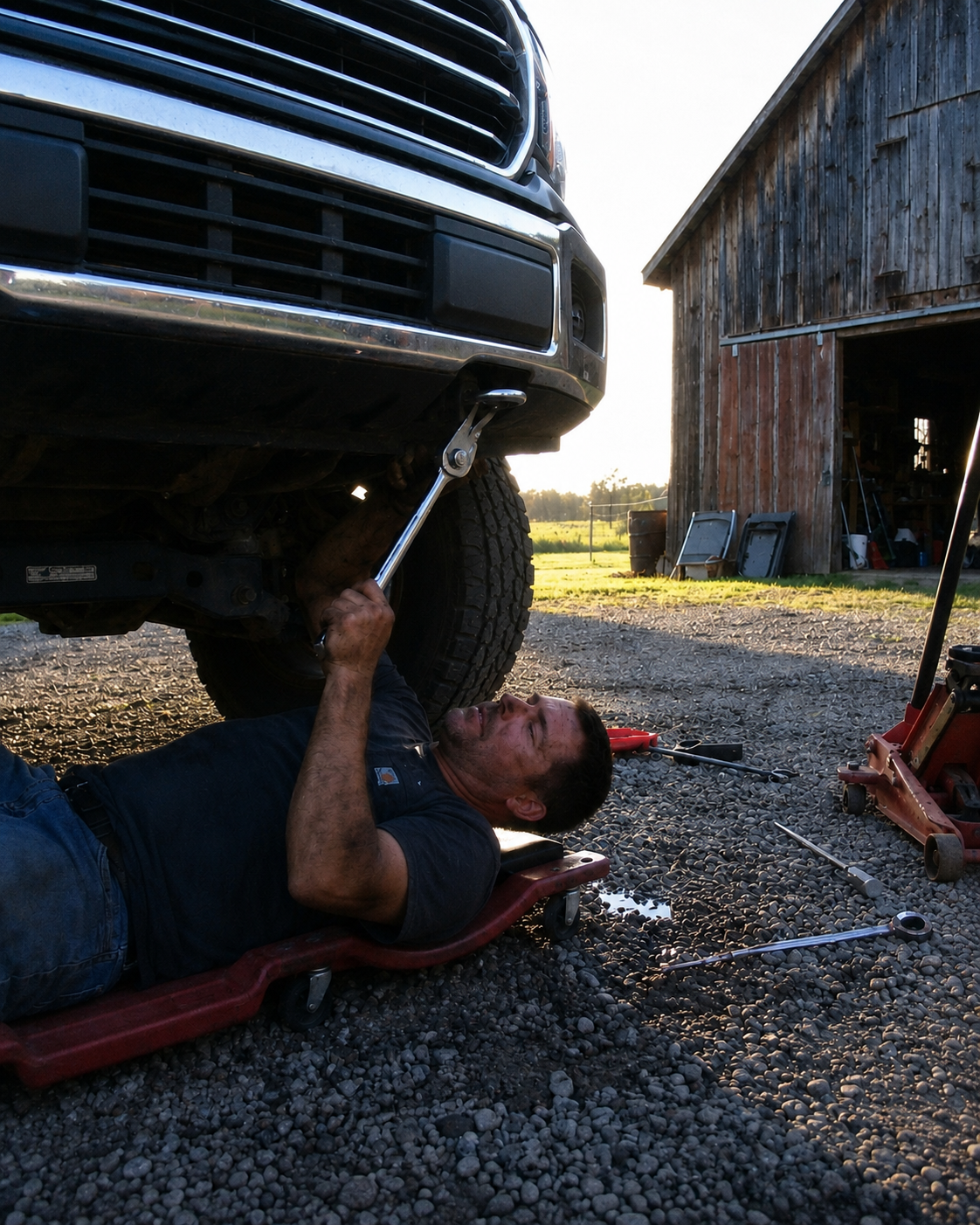
A Young Man in the Lobby of an Assisted Living Facility Asked Me If My Husband Was Alright. He'd Been Watching Us for Six Months. The young man's name was Andrew. He was somewhere around thirty-three. Tall. Soft-spoken. The kind of man who held a folder against his chest the way an older generation of men used to hold a hat. He was in the small front lobby of Highland Oaks Assisted Living on a Sunday afternoon in late April, sitting on the bench across from the reception desk, when I came out from visiting Larry's friend Pete and sat down for a moment to compose myself before going outside to find my husband. Larry was on the bench in the courtyard. He had told me, after we had left Pete's room, that he needed a minute on his own. I had told him I'd be right out. I had needed a minute on my own too. Pete had not known who Larry was that afternoon. We had been visiting Pete every other Sunday for seven months. He had not known Larry's name that afternoon. I sat down in the lobby with my purse in my lap. Andrew was already there. He didn't speak to me right away. He let me have my minute. Then he said, in a soft voice, looking down at the folder in his hands: "Ma'am. I've been wondering for a few months whether I should say anything to you and your husband. I know it isn't my place. But I think I would regret it if I didn't say something today." I looked at him. He looked up. He said: "I've been watching the two of you visit Pete since October. My father lives here. Room 312. I'm here twice a week. I don't think we've ever spoken. But I've been noticing your husband. And I wanted to ask if he was alright." I didn't say anything for a long moment. What I wanted to say was: of course he's alright. He's not the one in the assisted living facility. What I knew, sitting there in that lobby on that Sunday afternoon, was that something in this young man's careful, gentle question had named something I had been refusing to name for eighteen months. I said: "He's not unwell. His doctor is happy with him. But I am not sure he's alright." Andrew nodded once. He didn't smile. He didn't press. He said: "Ma'am. Could I tell you about my father, briefly? And about something I came across while I was learning what was happening to him. I'm not selling anything. I'm not in any business. I'm a high school history teacher. I'd just like to tell you what I've been thinking about, in case it's useful." I told him I'd like to hear it. My husband's name is Larry. We have been married for forty-one years. He is sixty-seven. He retired four years ago from thirty-eight years as a foreman at a small auto-parts plant outside Cincinnati. The plant is gone now. Larry is not. He is on a low-dose blood pressure medication. He has been on it for about eleven years. His doctor — Dr. Murphy, a careful man we have both been seeing for the better part of fifteen years — tells him at every annual visit that his numbers are in the ranges Dr. Murphy wants them in. He walks the loop in our neighborhood with me every morning when the weather is reasonable. He eats the way a man with his numbers should eat, which is to say less than he would prefer and more vegetables than he would choose. He is, by every measure on his chart, a sixty-seven-year-old man in fine shape. That is the part I want you to hold while you read this. The other part I want you to hold is what I'd been watching for eighteen months. Larry had not become unwell. He had become quiet. That is the best word I have for it, after eighteen months of looking for one. He had become quiet inside a body that still looked like Larry's body and inside a life that still looked like Larry's life. He had been the one who carried our dinner-table conversation for forty-one years. He had been the one who made the small jokes about the dog. He had been the one who read the paper cover to cover every morning and underlined things in pencil and brought them up to me at lunch. In the year and a half before that Sunday in the lobby, Larry had stopped carrying the conversation. He had stopped making the small jokes. He had stopped underlining things in the paper. He had been reading the front page only, and not always all of the front page. He wasn't depressed. He wasn't sick. He was just — and I am going to use the word the careful research community uses, because it is the one that fits — flatter than he had been. His doctor's chart did not show any of that, because the chart is not a thing that measures flatness. But I had been watching the man, not the chart. And the man had gone flat in a way I had been doing my best, alongside him, not to acknowledge. That was what Andrew had been seeing in our visits to Pete. Andrew told me, sitting on the bench in that lobby, about his father. His father's name was Henry. Henry had been a high school principal for thirty-one years. He had retired at sixty-eight. He and Andrew's mother had moved into Highland Oaks together last August, after a long year at home in which they had both started to need more help than they could give each other. Andrew told me that in the year before they had moved to Highland Oaks, Henry had been declining the way Larry had been declining. Quietly. Flatter. Less present at the dinner table. Less interested in the small things he used to be interested in. Slower in the mornings. Reading less. Henry had been on cardiovascular medication for many years. His chart had been fine. His doctor had been kind. But Henry had been going quiet, in the way Larry had been going quiet, in his own home, in a marriage that had been forty-six years old by the time he and Andrew's mother had moved to Highland Oaks together. Andrew said: "I'm telling you this carefully, because I want to be clear that I am not telling you my father got fixed by anything. He didn't. He is still here, in Room 312, and he still has the same chart he had a year ago. He is just a little more present than he was when he moved in. I don't know exactly why. But I want to tell you what I added to his routine, three months ago, with the agreement of the facility staff and his doctor." I want to be careful, here, about what Andrew said next, because I went home and did my own reading afterward, and what I want to share with you is what I read, not what he told me he read. But he opened the folder he had been holding. He showed me, very gently, the printouts he had made. What he had eventually added to his father's mornings, three months earlier, was a beetroot supplement. A brand called Rosabella. He told me he had picked it because the small company that made it cold-pressed the beetroot at low temperatures rather than processing it with heat, and because the careful, structure-function research community he had been reading — and he had read carefully — talked about the active compound in beetroot, something called betalains, in the context of supporting healthy circulation, supporting cardiovascular wellness, and supporting the body's own cellular energy. In people whose numbers were already in the range their doctors wanted them in. He used the phrase cellular energy, on the bench in that lobby, with the kind of care a high school history teacher uses when he is trying to be precise about something he has been reading carefully. He said: "That phrase is what made me start reading, ma'am. Not energy in a coffee cup. Cellular energy. The basement-level work the body does to keep doing its work. The quiet engine underneath the day. In men our fathers' age, with numbers their doctors are happy with, that engine sometimes gets quieter than the chart shows. And I had been reading about whether there was anything I could add to my father's mornings that might support that engine. Not fix it. Not boost it. Just support what his body was already trying to do." He looked at me. He said: "Ma'am. I want to say this very clearly. I am not telling you that the supplement is what is making my father a little more present at meals these days. I have no way to know that. There were a lot of things changing in his life at the same time — he had moved here, the staff was paying attention to him, his medication was being managed by professionals for the first time in years. The supplement was one small thing I added to many small things. I have made my peace with not being able to say more about it than that." He closed the folder. He looked at me steadily. He said: "I would like to give you the name of the brand. I would like to ask you, before you do anything with it, to do three things. Talk to your husband. Call your husband's pharmacist. Call your husband's doctor. The pharmacist is the most important one. Your husband is on a blood pressure medication. Beetroot is generally well-tolerated alongside that class of medication, but I am a history teacher in Cincinnati. I am not the person to confirm what is safe to add to your husband's specific routine. His pharmacist is." He pulled a small piece of paper from inside the folder. He had written, in neat block letters: Rosabella. Cold-pressed at low temperatures. 1,300 mg per serving. Two capsules with water in the morning. Please call your husband's pharmacist first. He gave it to me. He said: "Please don't take this from me. Take it as something you might want to look into yourself, with your husband's doctor's blessing. I am not selling anything. I am just a son who has been watching." I put the piece of paper in my purse. I thanked him. I went outside and found Larry on the courtyard bench. I sat down next to him. I put my hand on his hand. I did not tell him about Andrew that day. I want to be clear about something before I tell you what I did next. I am not a doctor. I am not a nurse. I do not have any medical expertise of any kind. I am a retired bookkeeper. I spent twenty-six years at a small accounting firm three blocks from our house, balancing other people's small businesses for a living. I am a wife and a mother and a grandmother. I am sixty-five. What follows is one careful woman's experience after one Sunday afternoon in a lobby. Nothing more. I read for almost two weeks before I did anything. I am a careful reader by training. Twenty-six years of bookkeeping teaches you to be suspicious of any number that arrives loud, and to be suspicious of any conclusion that arrives without a column of small careful work underneath it. What I read confirmed the shape of what Andrew had told me on the bench. The active compound in beetroot is a family of pigments called betalains. They are one of the more potent antioxidants in the food supply. The research community has been studying them for decades, carefully, in the context of supporting healthy circulation, supporting cardiovascular wellness, and supporting the body's own cellular energy. In people whose numbers are already in the range their doctors want them in. Not fixes. Not treats. Not reverses. Just supports. I read about the cold-press chemistry. The betalain pigment is heat-sensitive — that is just the chemistry of the molecule — and most processing methods involve high temperatures, which is the cheaper and faster way. Rosabella cold-presses at low temperatures. It costs them more. It takes longer. They do it anyway, because more of the active compound survives the processing. After twenty-six years of watching small businesses make small decisions when no one was watching, I have come to believe the small decisions an organization makes when no one is watching tell you everything. The other thing I liked was the simplicity. Two capsules in the morning with a glass of water. That is the entire protocol. I am sixty-five years old. I am not interested in another routine. I am not interested in a second routine for my husband. Now I want to tell you the most important part of this letter. Before I added anything to what Larry was already taking, I made two phone calls. Larry is on a low-dose blood pressure medication. He has been on it for eleven years. I would not add anything to that medication without checking first whether the addition was sensible. I am a retired bookkeeper. I am not qualified to determine that. I called Larry's pharmacist on a Wednesday morning. We have been filling his prescription at the same small pharmacy in our part of Cincinnati for the better part of thirteen years. I gave the pharmacist on duty the brand name and the dosage and Larry's current prescription information. She pulled up his profile. She told me she had no concerns about the addition at the dosage on the label, given Larry's specific medication and dose. She told me to have Larry take the capsules in the morning with his coffee, alongside his blood pressure pill, the way the bottle suggested. I called Dr. Murphy's office that afternoon. I left a message with the nurse with the same information. She called me back the next morning to tell me Dr. Murphy had no concerns and to mention it at Larry's next appointment. Both calls together took me less than ten minutes. I want to say something now, plainly, to every reader of this letter. If your husband is on any cardiovascular medication — a blood pressure medication, a cholesterol medication, a blood thinner, anything — please make the call before you add anything new. Those two phone calls are the most important ten minutes of your engagement with any supplement. The people who know what's on his chart will tell you in two sentences whether the addition is sensible for him. I am a retired bookkeeper. I am not the person to ask. His pharmacist and his doctor are. I told Larry that night. I told him about Andrew. About Pete not knowing his name. About the lobby. About the folder. About the small piece of paper in my purse. I told him I had read for two weeks. I had called his pharmacist. I had called Dr. Murphy. I told him I wanted him to try it. He looked at me across our kitchen table the way a man looks at his wife of forty-one years when he understands that something is being asked of him that he is not going to refuse. He said: "Alright. For you." In the morning I set two capsules on the saucer next to his coffee. He took them with his first sip. He started on a Monday in early May. The first two weeks he felt nothing in particular. I had read enough to know not to expect anything dramatic. A supplement is not a drug. It does not switch on the way a drug switches on. It is something the body uses, slowly, in the work the body is already doing. I kept paying attention. What I noticed, I noticed in two specific places. The first one was at our kitchen table. It was a Saturday morning in mid-June. Larry was at the table with his coffee and the paper. He had the paper open to the editorial page. He read for about ten minutes. Then he looked up and he said to me: "You should read this one. The guy is wrong about three different things in one paragraph. I'd like to write him a letter." He had not said anything like that at the breakfast table in over a year. He didn't write the letter. But he held the editorial up. He pointed at the parts that he thought were wrong. He laughed once — a real laugh, low, the kind that comes from a man who has thought something through and arrived at a small private opinion he is enjoying. I made him another cup of coffee. I did not say anything about it. I did not want to make a thing of it. I had read enough not to make a thing of one observation. The second place I noticed was the garage. Larry had not changed the oil in his truck in fourteen months. He had been having the dealership do it. He had told me he just preferred to have them do it now, which was the kind of thing he had told me about other things he had quietly stopped doing. A Saturday morning in early July, about two months after he started, I was in the kitchen and I heard the garage door go up. I looked out the kitchen window. Larry was in the driveway with the truck. He had the hood up. He had a small drain pan from the basement on the concrete underneath. He had the wrench from his old toolbox in his hand. He changed the oil himself. It took him almost two hours. It used to take him forty minutes. He worked carefully, the way a man works when he is reacquainting himself with something his hands used to do without thinking. When he came in he washed his hands at the kitchen sink and he said: "I missed doing that." I asked him if he wanted lunch. He said: "I'd like a sandwich. And then I'd like to take you out to Pete's later this afternoon. I think I owe him a visit." That was the second moment I let myself notice. I want to be careful with what I am saying here. I am not telling you that Rosabella read the editorial or changed the oil on the truck. I had been doing things since the lobby too. I had been listening to Larry differently. I had been making more space at the dinner table for him to find his way back into the conversation. I had been asking him questions I hadn't been asking him for a year and a half. Something had unlocked in me on that bench in the lobby that had nothing to do with a capsule on a saucer. There were several things changing at once, the way there are when a wife finally hears a stranger ask her, gently, in a public lobby, whether the man she has been married to for forty-one years is alright. What I can tell you is that I added one small thing to a list of small things I had been newly doing — and Larry had been newly doing — alongside the blood pressure medication Dr. Murphy has him on, which we did not change. I kept everything else exactly the same. And the months that followed were qualitatively different from the eighteen months that preceded them. We saw Dr. Murphy for Larry's annual physical in September. Bloodwork the week before. Dr. Murphy studied the results. He looked at Larry. He said: "Larry, your numbers are in the same good place they've been for years. But you look like a man who has come back to himself a little. I'm glad." Larry told him about the lobby. About Andrew. About the editorial and the oil change. About the beetroot. Dr. Murphy nodded. He said: "That was the right way to add it. The research on antioxidant support is well-established. Keep doing what you're doing. Keep walking with Barbara in the mornings. Come back in a year." He did not change Larry's blood pressure medication. He did not change anything else. We drove home that afternoon, and Larry told me, in the truck, that he had not realized until that morning how much it had meant to him for Dr. Murphy to look at him and use the word "back." I had to look out the window for a minute. We saw Andrew at Highland Oaks the next Sunday. He was in the lobby again, with his folder, on his way up to Room 312. He saw us. He smiled — really smiled, this time. Larry put his hand out. He said: "I'm Larry. My wife told me about the conversation you and she had in this lobby. I would like to thank you for the careful way you talked to her. I'd also like to tell you that I have been changing the oil in my own truck again. And that I am alright. I wanted you to know." Andrew shook his hand. He held it for a moment. He said: "I'm glad, sir. I'm really glad." He told us about his father. He said Henry had been sitting at the table for meals more lately than he had been when he moved in. He said the facility staff had noticed. He said he could not say for sure what had made the difference and he had stopped trying to attribute it to any one thing. He said bodies are different and his father was one body and Larry was another and he was just glad they were both, on that particular Sunday, a little more present in their lives than they had been six months ago. That was the second time I had to look out a window for a minute that month. I am telling you all of this because I think you might be a wife where I was two springs ago. In a quiet eighteen months. Watching the man you have been married to for thirty or forty years quietly go flat in a life that on paper looks fine. His chart fine. His medication doing what it is supposed to do. His doctor kind. And you sitting next to him at the dinner table, watching the small things that used to make him him quietly disappear. If that is your eighteen months, I want to say a few things plainly. I am not telling you that beetroot will do for your husband what something has done for Larry. I don't know Larry's body and I don't know your husband's body, and bodies are different. Some men notice something within the first month of adding something like this. Some men take much longer. Some men don't notice much at all. What I am telling you is that there is a careful, slow, structure-function corner of the research conversation that talks about beetroot in the language I had been waiting for. Not fixes. Not treats. Just supports. In people whose numbers are already in the range their doctors want them in. If that shape of language interests you for your husband, please make the call before you add anything. Call his pharmacist. Call his doctor's office. If he is on any cardiovascular medication — a blood pressure medication, a cholesterol medication, anything at all — those two phone calls are the most important ten minutes of your engagement with anything you put into his routine. The brand Andrew gave me on a slip of paper, and the brand we use now, is Rosabella. 1,300 milligrams of organic beetroot per serving. Cold-pressed at low temperatures. Grown by a small farming community in Lancaster County. Two capsules with a glass of water in the morning, alongside whatever else he is already taking. It is not a fix for anything. It is not a substitute for a blood pressure medication or a cholesterol medication or any other prescription. It is not a treatment for the quiet eighteen months a man can have between sixty-five and sixty-seven. It is one small thing some wives add to the long list of things their husbands are already doing for themselves, alongside everything else. P.S. Rosabella has a ninety-day satisfaction guarantee. Any reason at all. If you tried it for your husband and you are not satisfied, you are not satisfied. They refund you. That is the whole policy. I appreciated that kind of policy when I was deciding whether to put a bottle on Larry's saucer for the first time. P.P.S. They're a small operation working with a farming community in Lancaster County. The cold-pressing process takes longer than the conventional methods, so they sometimes run out between harvests. I keep an extra bottle in our cupboard now. We learned to stay one bottle ahead. P.P.P.S. I saw Andrew on a Sunday in early October at Highland Oaks. He was sitting in the same lobby seat. Henry was having a bad day upstairs. Andrew had needed a minute on his own. I sat with him for a few minutes without saying very much. Bodies are different and Henry's body was having one kind of day and Larry's body was having another and Andrew and I both knew that. There isn't a story I can tell you about what a careful son does for his father that has a clean ending. There is just the careful son. And the chair across the room in the lobby. And the small piece of paper he gave me in the spring that was sitting in my purse for two weeks before I called Larry's pharmacist. I am grateful for that piece of paper. I will be grateful for it for the rest of my life. https://track.tryrosabella.com/feb71eaf-4594-4b50-b39e-f5e5eeea7537 DISCLAIMER Individual experiences vary. These statements have not been evaluated by the FDA. This product is not intended to diagnose, treat, cure, or prevent any disease.
Support stamina and heart health every day
LEARN MORELike this ad? Make it yours.
Crush rebuilds this exact creative around your product — your brand, your colors, your offer — in about a minute.