Diane Mitchell
 Facebook ad: “The Real Reason You Have Numb Hands”
Ran for 1 day, from November 8 to November 9, 2026, the last day Crush saw it.
Run by Diane Mitchell on Facebook. Crush is not the advertiser and does not verify its claims. See this ad in Meta's Ad Library(opens in a new tab)
Make your own version of this ad
Crush makes it, launches it in your own Meta ad account, scales the winners and pauses the losers.
About this ad
- Meta Ad Library ID
- 2560290651150863
- Platforms
- Facebook, Instagram, WhatsApp and Threads
- Relaunches
- 0
Ad text
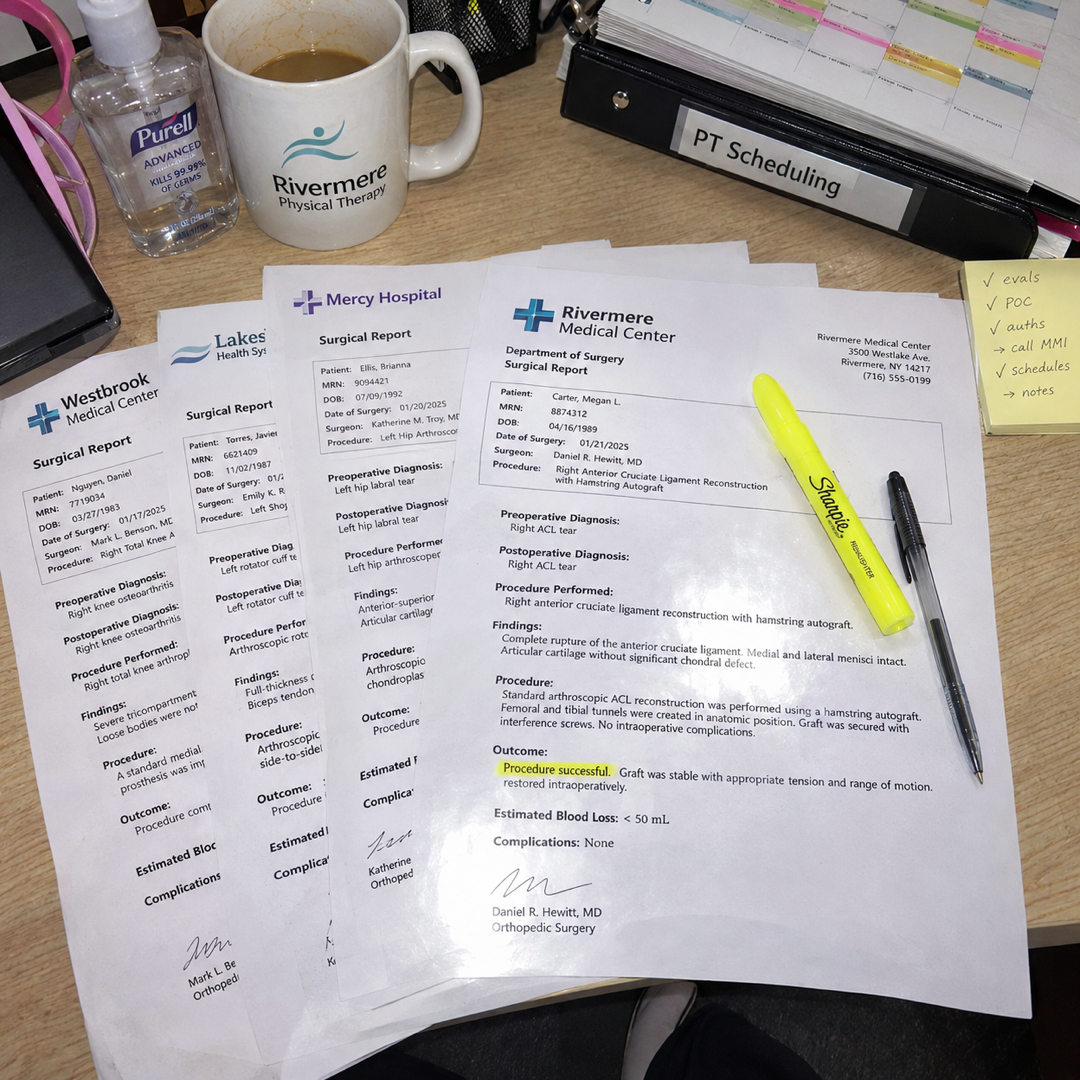
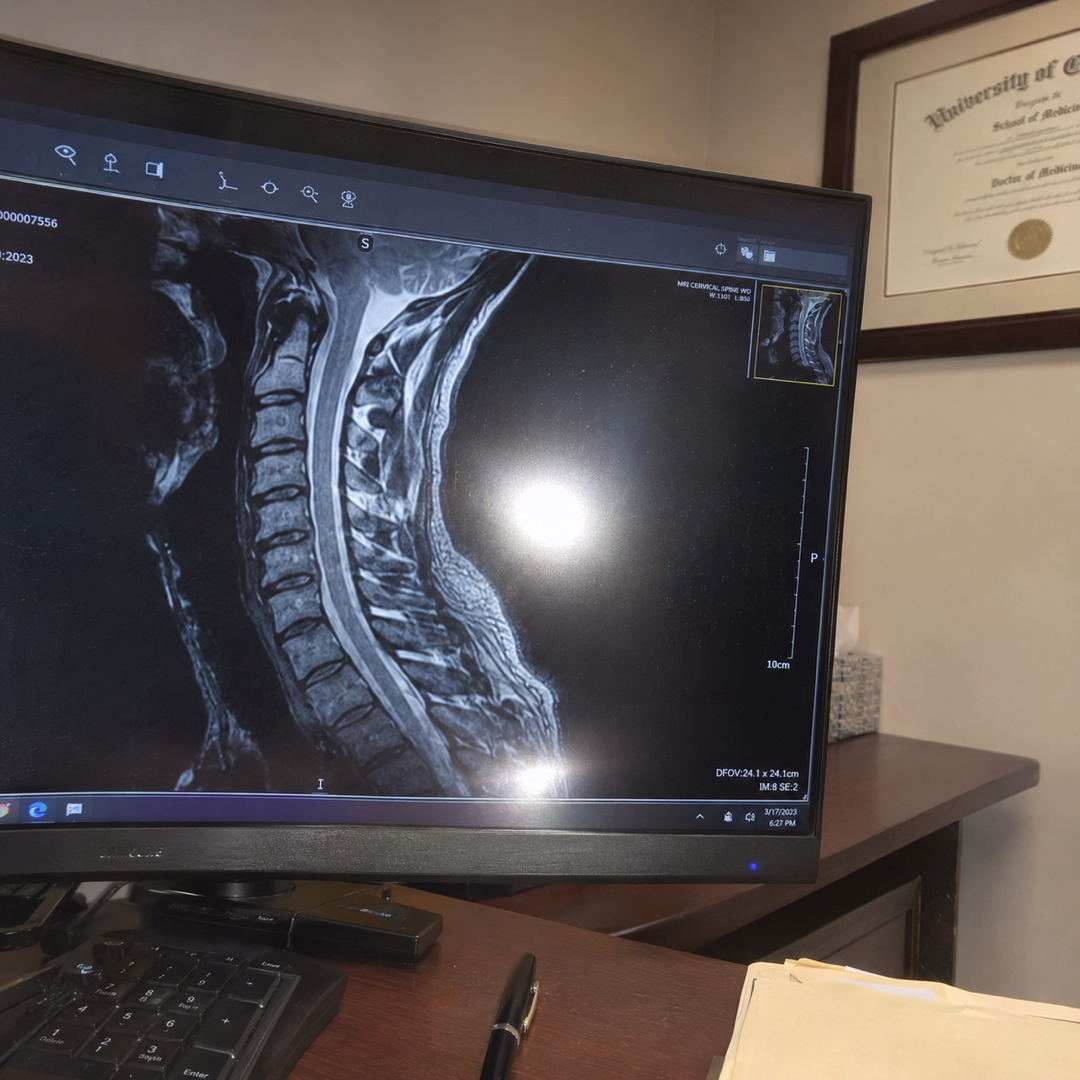
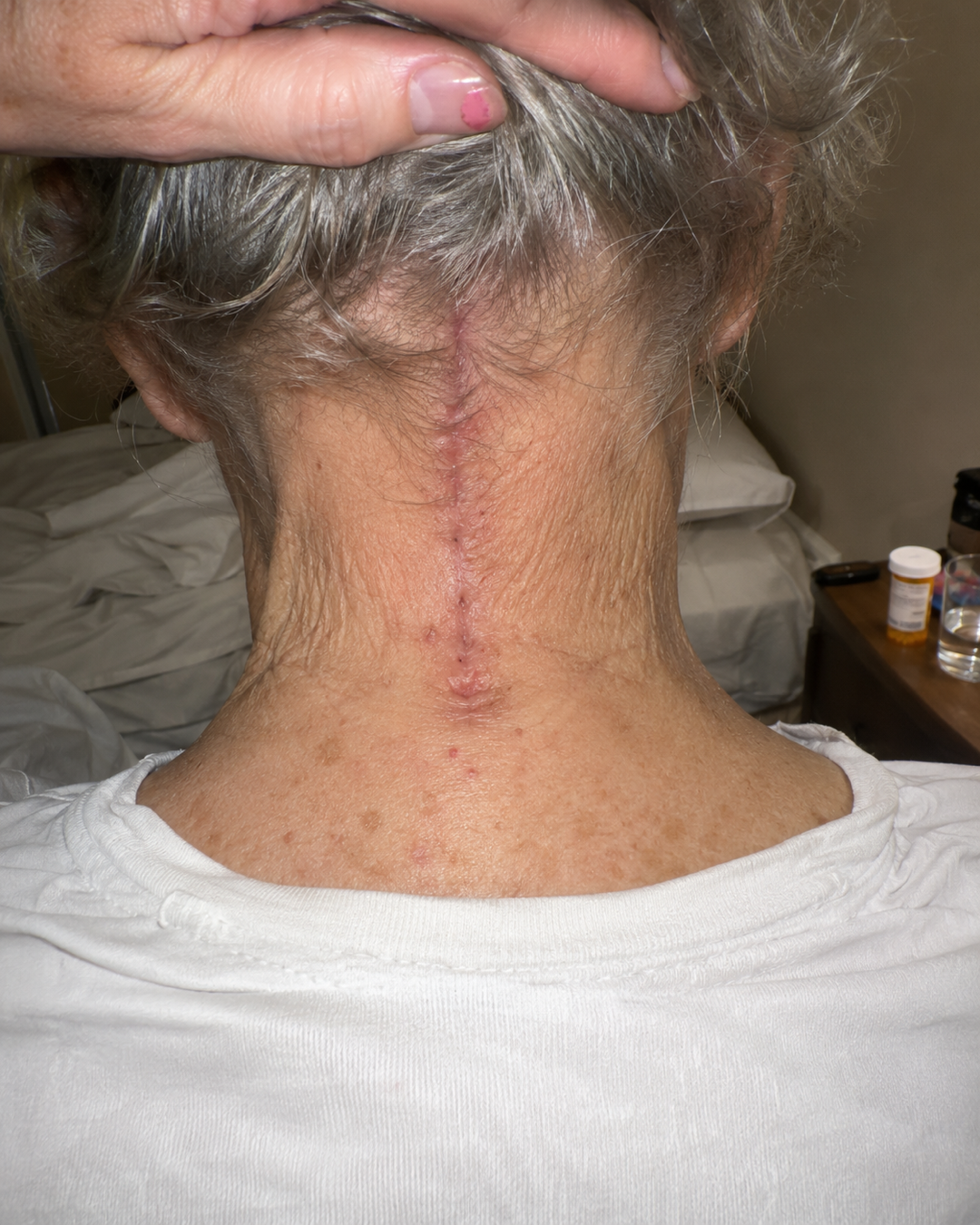
I’m a physical therapist and I’ve been sending patients into ACDF surgery for 22 years, but last month I refused to let my own mother go through with one. I want to explain why. Because there’s a sentence I’ve been legally unable to say in my professional capacity for over two decades. And until three months ago, I kept my mouth shut. I'm not keeping it shut anymore. My name is Diane. I work at a rehab clinic I’m not going to name. 22 years in the same building. I’ve rehabbed more post-op cervical stenosis patients than I can count. Most of them walked in with MRIs that showed a perfectly successful surgery. That’s the part that broke eventually. I just didn’t know it yet. A patient gets diagnosed with cervical stenosis. They do everything they’re supposed to. The neck exercises. The injections. The chiropractor. The gabapentin. The orthopedic pillow at night. Months of it, sometimes years. And the whole time, the numbness keeps spreading. The grip keeps getting weaker. The hands keep getting clumsier. The neck pain crawls up into headaches that never fully go away. Until one day their surgeon looks them in the eye and says this is only going to keep progressing — if we don’t operate, the spinal cord gets compressed, myelopathy sets in, and the damage becomes permanent. ACDF is the only option. So they say yes. Because what do you say when someone tells you your spinal cord is on the clock. Here’s what my job looks like. That same patient walks into my clinic for their first post-op session. They hand me the surgical report. Surgery successful. No complications. Post-op imaging looks clean. Just a few months of rehab to get back to normal. And now they’re standing in my clinic four months after surgery and they still can’t button their own shirt. And they start telling me what it’s actually like. The numbness flooding into both hands just from standing at the checkout. The fingers that won’t close around the coins in their wallet. Same as before. Sometimes faster now. The electric jolt that used to shoot from the neck down both arms every time they reached up into the kitchen cabinet. Still shoots. Same arms. Same jolt. The way their coffee mug slipped out of their hand at a restaurant and everyone at the next table turned around. And they smiled and said I’m so clumsy today. As if it was just today. The dead hands that woke them up at 3am before the surgery. Both arms pins and needles, shaking them in the dark until the feeling crawls back. Still wakes them up at 3am. And now the headache that starts at the base of the skull before they even open their eyes. The dinners she used to cook for the family every evening. Last year a knife slipped out of her hand. Then a pot. Then she stopped cooking altogether. He cooks alone now. And somewhere in that silence they both understood that the person who used to do those things isn’t coming back. And the thing they whisper to me after a few sessions, when they finally trust me enough: I think the surgery made it worse. And every surgical report in front of me said the procedure was a success. The first few times you see it you tell yourself it’s a bad case. Or they’re older. Or they didn’t wear the collar long enough. Or they went back to their desk too soon. By year five you stop telling yourself stories. By year ten you start counting. I started counting in 2009. I keep a number in my head now. I’m not going to share it because it would sound like I’m making it up. Just trust me when I say it’s a lot of people. A lot of grandmothers. A lot of mothers. A lot of men and women in their fifties, sixties, seventies, all who thought they were doing the one thing that would finally fix them. All of them had the surgery. All of them had clean post-op imaging. All of them were told it went perfectly. And now they’re in my clinic, still dropping things they used to hold without thinking, still waking up at 3am with dead hands and a headache at the base of their skull, still not trusting their own legs on the stairs — still losing their life one quiet grip at a time. And some of them go for another surgery. An ACDF that didn’t hold, so they fuse the next level up. That one didn’t hold either, so they fuse another one below it. I watch the same patient go from walking into their first surgery with numb fingers to walking out with a neck that barely turns. Then the legs start going. Then the balance. Then someone else’s arm just to make it down the hallway. And I never said anything. I want to be honest about that. Because you might be reading this thinking I’m some kind of whistleblower hero. I’m not. I’m a physical therapist who has a license to protect, who has a mortgage to pay, whose patients come from surgeon referrals, and who has been told for over two decades that if I question a surgeon’s recommendation out loud in front of a patient I will lose all three. That’s not a metaphor. That’s a real rule. When a surgeon recommends ACDF, my patients ask me first. They’ve been coming to my clinic for months. They trust me. They look at me and say do you think I should do it. And I’m allowed to say your surgeon knows best. I’m not allowed to say what I actually think. I’m not allowed to mention what I’ve seen. I’m not allowed to tell them about the woman who had that same surgery, spent eight months in my clinic after, and still can’t hold a coffee mug without spilling it. If I do, I’m out of a job. Possibly out of a career. So I learned to nod. To smile. To write up the rehab plan. To go home and try to forget. And then I’d come back the next morning and do it again. That was the deal I made for 22 years. Three months ago the deal blew up. My mother had been slowing down for years. I noticed it the way daughters notice. The way she started using both hands to hold her coffee cup. The way she’d ask me to drive even on short trips because her hands kept going numb on the steering wheel. The way she stopped suggesting we cook together on Saturdays and started suggesting we just sit and have coffee instead. She’s 74. I told myself it was just age. She told herself the same thing. Then three months ago she finally went to see an orthopedic specialist. He ordered an MRI. That evening I was sitting in my car after my shift when she called me. Mom, what did they find. She said it like it was nothing. Cervical stenosis. C5-C6. The doctor wants to schedule surgery. She kept talking. I stopped hearing her. I sat in that parking lot for almost an hour after we hung up because I knew exactly what was coming next. Two days later my mother called me again. She’d already had her follow-up with the surgeon. He’d walked her through the MRI images, showed her where the canal was narrowing, and told her if they didn’t operate, the spinal cord could get compressed — and at that point the damage would be permanent. She had a consultation date on the calendar and a stack of pre-op paperwork on her kitchen table. She hadn’t even asked a question yet. It was already moving. 22 years of nodding and smiling collapsed in about four seconds. I drove home from work that night and I sat at my kitchen table and I cried. Not because I was scared of my mother’s diagnosis. Because I knew I was about to watch my own mother walk into the same machine I’d been watching swallow patients for over two decades. And that machine doesn’t fix anything. I have spent 22 years watching it not fix anything. I have spent 22 years watching the endpoint of it. The numb hands. The legs that stop listening. Someone else’s arm just to make it down the hallway. They tell you the spinal cord will get damaged if you don’t operate. They don’t tell you the surgery can do the exact same thing on the way in. I called my mother that night and told her not to sign anything yet. I told her I needed a week. Just one week. She didn’t understand. The doctor said this is the best option, Diane. He said it could be permanent if we wait. I said Mom, I work with people like you every single day. I see them after the surgery. Please. Just give me one week. She’s my mother. She didn’t argue. That week is when everything changed for me. I started doing what I’d never let myself do as a working physical therapist. I started actually reading. Not the surgeon’s post-op protocols. Not the rehab guidelines. The original studies. The stuff buried in the back of orthopedic journals. The research nobody hands you in the clinic because it complicates the story you’re being paid to support. And I learned something I now cannot believe I didn’t know. Removing the disc and fusing two vertebrae does not stop the narrowing. It never did. I want to say that again because it took me a week to actually accept it. The process that narrowed your canal in the first place — the surgery doesn’t slow it down. It doesn’t touch it. It is still running right now, at every level the surgeon didn’t fuse. And it will keep running until there’s nothing left to fuse. Here’s what’s actually happening. Your spine is a stack of vertebrae. Between every two vertebrae sits a disc. When you’re young, those discs are thick and full of fluid. They do two jobs. They cushion every movement your neck makes — every turn of the head, every nod, every glance over your shoulder. And they hold the vertebrae apart, keeping the spinal canal wide open so the spinal cord running through it has all the room it needs. That’s how a healthy cervical spine works. But after decades of daily life — the sitting at desks, the looking down at screens, the thousands of small movements your neck absorbs every single day — the discs start to dry out. Slowly. So slowly you don’t feel it happening. They lose fluid. They lose height. They flatten. Millimeter by millimeter, year by year, the space between your vertebrae shrinks. And here’s the part nobody told me in PT school the way it needed to be said. When that space gets tight, something worse kicks in. The deep muscles in your neck — not the ones you can feel, the ones buried 30 to 50 millimeters beneath the surface — clamp down. Hard. They’re trying to stabilize a structure that’s collapsing. But the tighter they squeeze, the less blood and nutrients reach the disc. The less nutrients reach it, the faster it dries. The faster it dries, the tighter they squeeze. A vicious cycle. Running 24 hours a day. In your sleep. At your desk. While you’re lying awake at 3am shaking your dead hands in the dark. And after years of this, the cells inside your discs — the ones whose job is to absorb nutrients and keep the disc plump — go dormant. Like roots that have been dry so long they’ve forgotten how to drink. They stop rebuilding. They stop absorbing. They just sit there while the disc collapses around them. That’s why last year was better than this year. That’s why next year will be worse. That’s what cervical stenosis actually is. Not a bone problem. Not PURELY a disc-related problem. A suffocation problem. Your discs are being strangled from the inside — by the very muscles that are supposed to protect your spine — and the canal is closing because the discs that were supposed to hold it open are being starved to death. Now here’s why your neck is so much more dangerous than a bad back. In your lower back, a dried-out disc pinches a nerve. One nerve. One leg burns. One foot goes numb. It’s bad. But it’s one line going down. In your neck? Your spinal cord is the main cable to your entire body. Every signal to your hands, your arms, your legs, your balance — all running through one channel the width of your thumb. That’s why your hands go numb from a problem in your neck. That’s the electric jolt that shoots down both arms when you reach into the kitchen cabinet. That’s the coffee mug that slips out of your fingers. That’s the headache that starts at the base of your skull and never fully leaves. The spinal cord that controls your legs runs through your neck too. That’s why your legs feel heavy. That’s why you don’t trust your own feet on the stairs. That’s why your balance disappears and you catch yourself on the wall and pretend it was nothing. It is not five different problems. It is the same suffocating cord in the same collapsing canal showing up in every part of your body below your neck. And when that suffocation goes on long enough, the nerve cells inside your spinal cord start dying. Not irritated. Not inflamed. Dying. Doctors have a name for it. Cervical myelopathy. And spinal cord nerve cells do not grow back. The surgery removes the disc and fuses two vertebrae together with a spacer. That’s the whole idea. Take the collapsed disc out so the cord has space again. And for a few weeks, it works. The pressure eases. The patient feels relief. The surgeon says it went well. The MRI looks clean. But the vicious cycle that destroyed that disc in the first place is still running. The deep muscles are still clamped. The blood flow is still choked. The disc above the fusion is still drying out. Right now. While you’re reading this. The surgery didn’t release the muscles. It didn’t restore the blood flow. It didn’t wake up the dormant cells. It just patched one pipe while the pressure kept building in every other one. And it gets worse. Because fusion doesn’t just leave the problem. It accelerates it. A fused level can’t move anymore. So every movement your neck makes gets absorbed by the discs above it and below it. More stress. More compression. More drying. The research has a name for it — adjacent segment disease. The disc next to your fusion breaks down faster than it ever would have on its own. That’s why the second surgery happens. And the third. Each one faster than the last. And then there’s what the surgery leaves behind. Every incision through the front of your throat creates scar tissue. That’s not a risk. That’s a certainty. And nobody can predict where that scar tissue forms. If it forms near the cord — and it does, because that’s where the cutting happened — it creates a new source of pressure on the same spinal cord the surgery was supposed to free. And the parts nobody brings up at the consultation. Dysphagia — difficulty swallowing that can last months after they’ve gone through the front of your throat. Hoarseness. Voice changes from the nerve that runs right next to the surgical site. General anesthesia on a 65-year-old body. On a 70-year-old body. The cognitive fog that sometimes doesn’t fully lift. The muscle mass that disappears during recovery and never fully comes back. That is a gamble. And the odds get worse every year you wait, because every year you wait the cycle squeezes a little tighter and your discs lose a little more of what they’ll never get back on their own. I have watched this cycle for 22 years. Patient gets diagnosed. They’re handed physical therapy, injections, gabapentin, muscle relaxants, sometimes opioids. Hundreds of dollars a month, year after year, just to manage. None of it releases the deep muscles. None of it stops the cycle. The canal keeps shrinking. The numbness keeps spreading. Until the patient can’t take it anymore and says yes to an ACDF that costs tens of thousands of dollars. Then they wake up from the operation with a scar across their throat and they’re handed physical therapy, injections, gabapentin, muscle relaxants, sometimes opioids. The same cycle. Just with a fused level now. And when it stops working the second time, there’s another fusion waiting. That is not treatment. That is a business model. That week at my kitchen table I went looking for the alternative. I’d already seen the rest of the menu fail. Not just on my patients. On my own mother for the past two years. The neck exercises that help for an hour and wear off by lunch. The epidural injections that numb the nerve for a few weeks until the canal tightens another fraction of a millimeter and the numbness comes right back. The gabapentin that takes the edge off while it turns you into a fog you can’t think through. The chiropractor visits that feel good on the table and mean nothing by the time you get home. The orthopedic pillows. The acupuncture. The voltaren. The cervical traction. Each one treating the symptom. None of them releasing the deep muscles. None of them stopping the cycle. I’ve watched patients try every one. Every single one works on the surface. None of them release the clamp. None of them feed the disc. None of them wake up the cells that have gone dormant. None of them break the cycle that’s been strangling your spine from the inside for years. I was about to give up and tell my mother to go ahead with the surgery when I found a Swiss orthopedic institute’s review of over 20 clinical trials that had tested different ways to restore disc height without surgery. Then an article by an American neurosurgeon who had studied nearly every non-invasive method available and documented measurable disc regeneration on follow-up imaging. In one group, 91% of patients who had been told surgery was their only option no longer needed it after twelve weeks. They were all saying the same thing. You cannot cut your way out of a vicious cycle. You have to break it. And they had all arrived at the same conclusion. It took a combination of three therapies — not to mask the pain, but to release the clamp, feed the disc, and wake up the cells that had stopped rebuilding. After more digging I understood why no single therapy had ever worked on its own. These three do completely different jobs. But when you combine them, they create something none of them can do alone — they break the vicious cycle and bring the disc back to life. The first is deep electrical muscle stimulation. Not the kind you feel on the surface. This reaches 30 to 50 millimeters into your neck — past the skin, past the outer muscles, all the way down to the fist that’s been crushing your discs for years. And it makes that fist let go. Because as long as those deep muscles are clamped, nothing gets in. No blood. No nutrients. No fluid. It’s like trying to fill a sponge while someone is squeezing it with both hands. Deep EMS opens the grip. And for the first time in years, the disc can breathe. The second is calibrated therapeutic heat at exactly 108°F. Because room alone isn’t enough. The disc needs something to absorb. Heat at that temperature opens the blood vessels surrounding the disc and floods it with the nutrients and fluid it’s been starved of for years. The clamp lets go. The blood rushes in. That’s when the disc starts to regain volume. To regain height. To do the job it stopped doing years ago. The third is pulsed magnetic field therapy. And this is the step everyone else misses. Here’s why it matters. After years of being starved, the cells inside your discs — the ones whose job is to absorb those nutrients and rebuild the disc — have gone dormant. You can release the muscles. You can flood the area with blood. But if the cells that are supposed to use it are asleep, the disc will drink for a day and dry right back out by morning. Magnetic pulse therapy reaches those cells at the deepest level and wakes them up. So they start absorbing again. Start rebuilding again. Start doing what they were built to do before the cycle shut them down. Three therapies. Three jobs. Release the clamp so the disc can breathe. Heat so it can refill. Wake the cells so it stays that way. I sat at my kitchen table thinking about every patient I’d rehabbed in that clinic for 22 years. Every grandmother who came in because she couldn’t hold her grandchild’s hand without her fingers going numb. Every retired teacher whose handwriting had gotten so bad she couldn’t sign her own name. Every woman in her fifties, sixties, seventies whose surgical report said successful while she was learning to ask for help with every jar, every button, every door handle. The thing that could have actually broken the cycle that was strangling their spines has existed the entire time. And nobody told them. Nobody. That was the moment I stopped being a quiet physical therapist. I did what any physical therapist would do before recommending something to her own mother. I vetted it. I went looking for a device that could deliver all three therapies — deep EMS, calibrated heat, and pulsed magnetic field therapy — in one session, at home. I wasn’t going to order some generic device from China and put my mother on it. Not for this. The EMS has to penetrate deep enough to reach the muscles 30 to 50 millimeters beneath the surface. The heat has to hold at exactly 108°F to open the blood vessels without damaging the tissue. The magnetic pulse has to reach the dormant disc cells, not just hum against your neck and do nothing. So I went back to the American neurosurgeon’s article. And I read something I’d skimmed past the first time. He hadn’t just studied the combination. He’d built the device himself. Designed it with a team of biomedical engineers specifically for patients with cervical stenosis. Calibrated to the exact specifications the research called for. And he didn’t just build it and sell it. He put it in front of over 300 cervical stenosis patients before he ever made it available to the public. The results were consistent enough that he stopped recommending surgery as a first option. That device is the Orthoveen. I ordered it that same week. Told my mother all she had to do was strap it on for 15 minutes a day. That’s it. No appointments. No driving anywhere. No schedule to follow. Just 15 minutes with the device — on the couch, at the kitchen table, wherever she wanted — and let her body do the rest. I want to be honest about what the first few days felt like. It wasn’t anything. My mother called me after the first session and said I don’t think it’s doing much, Diane. I told her I didn’t expect it to. This isn’t a painkiller. It doesn’t numb anything. It works where the actual problem is — inside the muscles that are strangling your discs, inside the cells that have forgotten how to rebuild — and that takes time to show up anywhere you can feel. So she kept going. 15 minutes a day. Strap it on, press the button, sit back. Some evenings she’d forget she was wearing it. The device shuts off on its own. Then the small things started. End of week one. She called me on a Sunday morning and said something strange. I slept through the night. No dead hands. No waking up at 3am shaking my arms in the dark. No headache at the back of my skull. Just sleep. She said it like she didn’t trust it yet. Like it might be a fluke. It wasn’t a fluke. Week two. She went grocery shopping with my father. She called me from the parking lot. Diane, I held my wallet and counted out the change myself. My fingers worked. I could hear my father laughing in the background. She was laughing too. I hadn’t heard her laugh like that in a long time. Week three. She told me she’d opened a jar of pasta sauce by herself. She hadn’t been able to do that in over a year. Had to hand every jar, every bottle, every lid to my father. She said her hands felt different. Not numb. Not stiff. Just hands. Week four. I drove over on a Saturday afternoon and she was in the kitchen chopping vegetables. Both hands on the knife, steady, no shaking. She looked up at me and smiled and said nothing. She didn’t have to say anything. I stood in the doorway and I had to turn around for a second because I didn’t want her to see my face. Week five. She called me on a Tuesday evening and her voice sounded different. I wrote a letter to your aunt today, Diane. In my own handwriting. Six pages. She hadn’t written anything longer than her name in over a year. My father got on the phone and said she’d been sitting at the kitchen table for an hour with her good stationery, writing like she used to. I want you to know it was her idea, he said. She just sat down and started writing. Week six. She made Sunday dinner for the whole family. The full thing. Roast, three sides, homemade pie crust. Rolling dough, chopping, stirring, lifting a heavy pan out of the oven with both hands. No help. No dropping anything. No asking anyone to open or carry or hold. After dinner she cleared the table herself and I watched her carry the dishes to the sink and I thought about every patient I’d rehabbed for 22 years who never got this chance. Week eight. I drove her to the surgeon’s follow-up appointment. He did his examination. Tested her grip strength. Checked her reflexes. Asked her to open and close her fists as fast as she could. He watched her fingers snap open and shut — fast, smooth, no hesitation. He ran the finger-to-nose test and her hand didn’t waver once. He ordered a new MRI. When the results came back, the canal at C5-C6 had widened. On the same imaging that diagnosed her three months ago. He looked at his notes. He looked at her. Then he looked at me. What has she been doing? I told him. The Swiss review. The American neurosurgeon’s research. The three therapies and what they actually do. How deep EMS penetrates into the muscles that have been clamping down on the discs for years and releases them. How calibrated heat at 108°F floods the starved discs with blood and nutrients so they can refill. How pulsed magnetic field therapy wakes up the dormant cells inside the disc so they start absorbing and rebuilding again. I talked for ten minutes. He didn’t interrupt once. He was quiet for a long time. Then he said I’m not very familiar with these therapies. But her imaging speaks for itself. Let’s hold off on the surgery and reassess in six months. 22 years of biting my tongue. And my mother’s own surgeon just said the words I’d been waiting to hear my entire career. I held it together until we got to the car. Then at a red light she reached over and put her hand on mine and said thank you for making me wait. I pulled into a gas station because I was crying so hard I couldn’t see the road anymore. I cried because my mother was off the hook. I cried because every patient I’d rehabbed in that clinic for 22 years should have been off the hook too. I cried because the answer was a device that costs less than a single epidural injection. And nobody had told them. That’s why I’m writing this. I’m writing this because I cannot keep doing this anymore. I cannot keep nodding and smiling and writing up rehab plans for people whose only crime was trusting their surgeon to give them the full picture. I cannot keep watching cervical stenosis patients walk into my clinic with successful surgical reports and hands that still go numb and arms that still burn and grips that keep getting weaker and lives that keep getting smaller. I cannot keep watching them blame themselves. Thinking their neck is just worn out. Thinking they didn’t try hard enough in recovery. Thinking it’s just their age. When the real problem was never addressed and nobody told them it could be. If you have cervical stenosis and the word surgery keeps coming up at every visit, I want you to read this twice. They will manage your symptoms until you can’t take it anymore. And when you’re desperate enough, they will cut. They will go through the front of your throat, pull out the disc, and fuse two vertebrae together. But the cycle that destroyed that disc is still running. The deep muscles are still clamped. Every disc in your neck is still being squeezed flat, millimeter by millimeter, shrinking the space your spinal cord and nerves need to function. And now the disc above the fusion dries out faster — because it’s absorbing every movement the fused level can’t. That’s why the second surgery happens. And the third. The hands that go numb. The arms that burn. The grip that keeps getting weaker. The headache that never fully lifts. The legs you can’t trust on the stairs. The life that keeps getting smaller. It all starts with a vicious cycle that nobody broke — and surgery doesn’t break it. It feeds it. If you’ve already had the surgery and you’re noticing the numbness coming back, the stiffness that wasn’t there before, the swallowing problems that nobody warned you about, you’re not imagining it. You’re not just healing slowly. That may be scar tissue forming inside your throat where they cut, pressing on the same spinal cord the surgery was supposed to free. A new problem created by the procedure that was supposed to fix the old one. And the hours you spent under general anesthesia — at 55, at 65, at 70 — your body is still paying for that. The muscle mass that disappeared during recovery. The cognitive fog that lingers. The weeks in a cervical collar that made everything weaker. The surgery didn’t just fail to break the cycle. It took something from you on the way out. If you’ve tried the neck exercises, the injections, the chiropractor, the gabapentin, the orthopedic pillows, the acupuncture, the voltaren, the cervical traction, and nothing has changed, that’s because none of them were ever built to do what actually needs to happen. None of them release the deep muscles that are strangling your discs. None of them feed the discs that are starving. None of them wake up the cells that have stopped rebuilding. They were never designed to break the cycle. They were designed to make you comfortable while it keeps running. Orthoveen. 15 minutes a day. Strap it on, press the button, let it work. The device I ordered for my mother. The device that took her from not being able to hold a coffee mug to cooking Sunday dinner for the whole family with both hands. Without a single surgery. Orthoveen was designed by a team led by a neurosurgeon who spent years studying why cervical stenosis patients weren’t getting better after surgery. It delivers the exact combination the research points to — deep EMS to release the muscle clamp, calibrated heat at 108°F to flood the discs with nutrients, and pulsed magnetic field therapy to wake up the dormant cells that have stopped rebuilding — in one 15-minute session, wherever you are, on your own schedule. Orthoveen offers a 90-day money-back guarantee. If you don’t feel a difference, you get a full refund. No questions asked. In 22 years of physical therapy I have never seen a surgeon offer to give your money back if the operation doesn’t work. Think about that for a second. And I need to be direct about something. Orthoveen is not mass-produced. It is made in small batches to keep the engineering tolerances that make the three therapies actually work. That means it sells out, and when it does, the wait time is weeks, not days. If you’re thinking about it, don’t bookmark this page and come back later. Check if it’s available now. If you’ve tried the neck exercises, the injections, the chiropractor, the gabapentin, the cervical pillows, the epidurals — and you’re still dropping things, still waking up at 3am with dead hands, still watching your world get smaller — that’s because none of those things were built to break the cycle that’s strangling your discs. Orthoveen was. And while you’re deciding, the cycle is still running. Right now. Tonight. Tomorrow morning. Every day you wait is another fraction of a millimeter lost. Another fraction of space your spinal cord doesn’t have anymore. The cycle doesn’t pause while you think about it. You still have time. But not forever. You don’t have to be the patient I watch go from numb fingers to hands that won’t grip to legs that won’t listen to someone else’s arm just to make it down the hallway. You don’t have to be the person whose daughter wishes someone had told them sooner. Diane Mitchell, PT, DPT, 22 years https://orthoveen.com/pages/ttd-cervicalstenosis-1 P.S. The 90-day guarantee is the part I keep coming back to. I have watched patients spend thousands on injections, imaging, consultations, co-pays, and surgeries over the course of years. Not one of those came with if this doesn’t work we’ll give you your money back. Not one. Whatever you decide, that detail is worth thinking about.
Where the ad sends people
orthoveen.com
👆 The Real Reason You Have Numb Hands
What your surgeon never told you about cervical stenosis.
Learn more: orthoveen.com(opens in a new tab)