Diane Mitchell
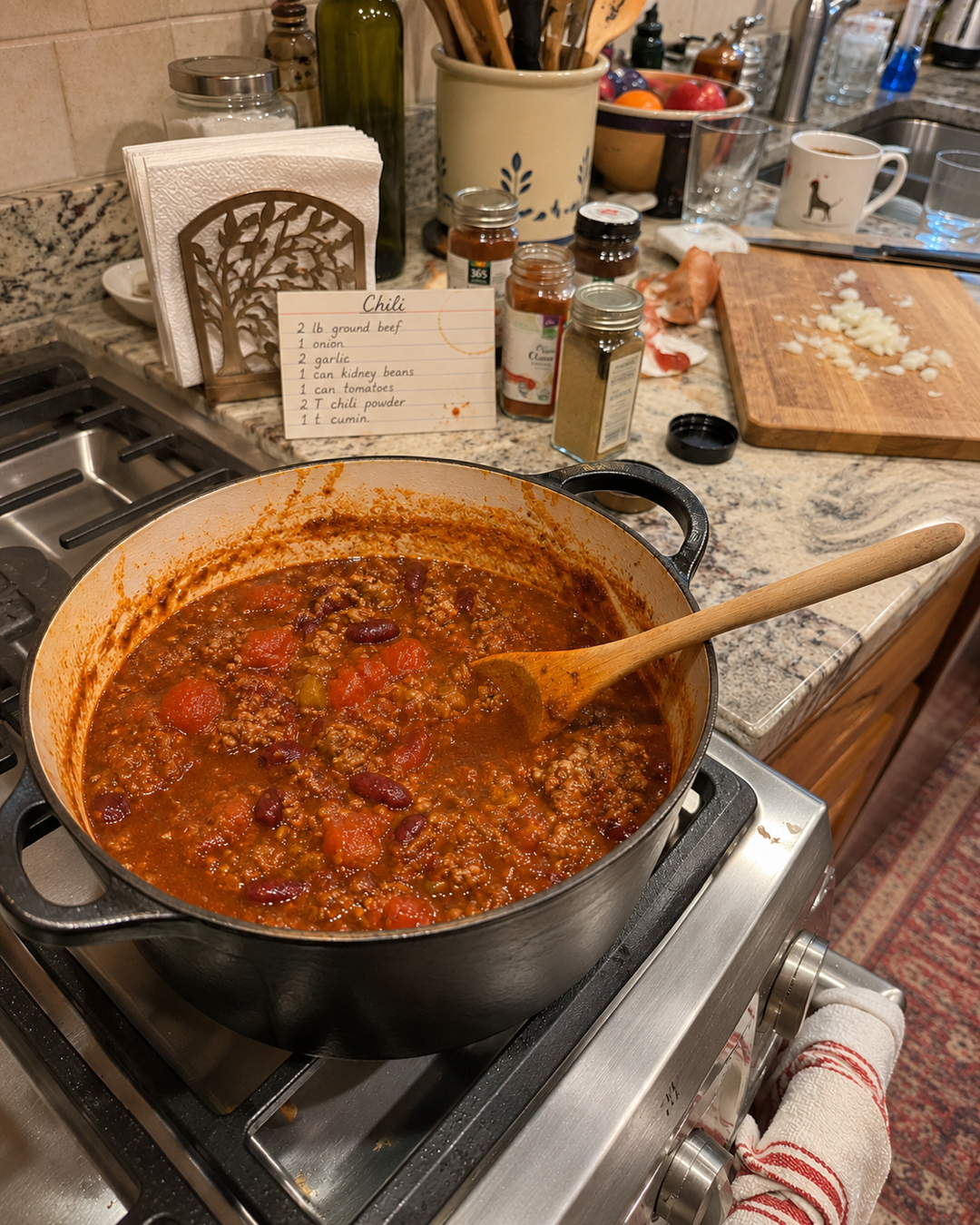
 Facebook ad: “His hands are working again.”
Ran for 1 day, from November 8 to November 9, 2026, the last day Crush saw it.
Run by Diane Mitchell on Facebook. Crush is not the advertiser and does not verify its claims. See this ad in Meta's Ad Library(opens in a new tab)
Make your own version of this ad
Crush makes it, launches it in your own Meta ad account, scales the winners and pauses the losers.
About this ad
- Meta Ad Library ID
- 2750498048700122
- Platforms
- Facebook, Instagram, WhatsApp and Threads
- Relaunches
- 0
Ad text
My father wrote his chili recipe on an index card in 1981 and I found him crying over it last fall. He wasn't crying about the recipe. He was crying because he couldn't open the cumin jar. My name is Diane. I’m 54. I live in a brick townhouse outside Columbus, Ohio with my husband Ray and a golden retriever named Biscuit who is too old and too spoiled and too loved for anyone to do anything about it. My dad’s name is Arthur. Everyone calls him Art. He’s 79 years old and until last October, he was the kind of 79 year old you forgot was 79. He still drove. He still mowed his own lawn. He still walked to the corner store every morning for his newspaper and a black coffee, rain or shine, because in his words that’s what legs are for. And he still made his chili. That chili was his thing. The recipe lives on a stained index card in a tin recipe box my mother bought at a yard sale the year they got married. His handwriting on that card is tight cursive, the way they taught it at the Catholic school in Dayton where he grew up. Three pounds ground beef. Two cans crushed tomato. One can black beans. One can kidney beans. One large white onion, diced fine. Five cloves garlic, smashed. One jalapeño, seeded. Three tablespoons chili powder. Two teaspoons cumin. A half teaspoon cayenne. Salt and black pepper. There’s a faded ring on the card from a coffee mug he set down on it in 1991 and never bothered wiping off because, in his words, “that card’s been through more than most people I know.” He made that chili for every family gathering for 40 years. Super Bowl Sunday. Fourth of July. The first cold Saturday in October when summer finally gave up. Birthdays. Funerals. The night I came home from the hospital with my son Marcus in 1998. When my mother passed in 2014, my dad made chili for the reception and served it in paper bowls to 40 people in the back room of St. Michael’s on Broad Street. He didn’t say much that day. He just kept stirring. People came back for seconds and he kept stirring. The chili was how he showed up. The chili was how he said the things he couldn’t say. Last September, I noticed his hands shaking when he poured my coffee. It was a small shake. A tremor. The mug had maybe a quarter inch of coffee tremble in it before he set it down on the table. I didn’t say anything. He didn’t either. But a week later I watched him struggle to button the cuff of his dress shirt before church and I knew. His hands. The hands that had held my mother’s hand through chemo. The hands that had taught me to ride a bike in the driveway when I was 6. The hands that had built the shelves in his garage with a drill and a tape measure and a stubborn kind of patience. Those hands weren’t working right anymore. I asked him about it on a Sunday after church. We were in his kitchen and I was drying the dishes while he put them away, which he insisted on doing himself because he said he was the only one who knew where things went. I said, “Dad, your hands.” He didn’t look at me. He just kept stacking a plate. “They’re fine.” “Dad.” He put the plate down. Diane, they’re not fine. But there’s no point making a thing of it. He told me he’d been to his doctor. Just once. I’d had to push him for weeks to even go. The doctor bent his wrists, tapped the inside of each one, and said it was most likely carpal tunnel. Gave him a wrist brace and told him to wear it at night. He wore it for six weeks. Nothing changed. His hands got worse. So I pushed him to go back. This time the doctor ordered an MRI — not of his wrists. Of his neck. Three days later the call came. Cervical stenosis. C5-C6. The disc was collapsing and pressing on his spinal cord. It was never his wrists. It was his neck the whole time. His doctor referred him to a spine surgeon. The surgeon looked at the MRI and said Art needed an ACDF — they’d go through the front of his throat, remove the disc, and fuse two vertebrae together. He said if they didn’t, the compression would get worse, myelopathy would set in, and the damage to the spinal cord would become permanent. My father sat in that office and asked one question: “What are the risks?” The surgeon said: nerve damage. Difficulty swallowing. Voice changes. Infection. And a chance he’d need another level fused down the road. My dad looked at him and said: “So you’re telling me the surgery could cause the same things you just told me would happen without it.” The surgeon didn’t have an answer for that. My dad walked out and never went back. He said his fingers were tingling. Sometimes burning. Sometimes numb in patches. The pain in his neck would crawl up into the back of his skull and sit there for hours. Some mornings both arms ached from the shoulders down before he’d even gotten out of bed. He’d dropped a coffee mug in July and it had shattered on the kitchen floor and he’d stood there for a full minute staring at the pieces because he hadn’t felt the handle leave his fingers. He’d just watched it fall. “My hands feel like they belong to somebody else,” he said. “And the somebody else isn’t taking very good care of them.” I drove home that day in a kind of fog. Ray was in the garage when I pulled in. He took one look at my face and he didn’t ask. He just held me by the tailgate of his truck for a long time, the way Ray holds me when there isn’t anything to say, just standing. I cried into his flannel shirt and Biscuit sat on the driveway watching us like he was supposed to be in charge of the situation. That was September. October was the cumin jar. It was the first Saturday in October. I’d driven over to my dad’s house because he’d called me Friday night and said he was going to make a small batch of chili for the two of us and would I come over and bring some cornbread. I knew what that meant. He hadn’t made chili in over a year. The shaking had gotten worse. For him to call me and say he was making chili was him trying to tell me something without saying it. I brought cornbread. I let myself in the front door with my key. I called out, “Dad?” He didn’t answer. I walked into the kitchen and the ground beef was in a cast iron skillet on the stove, half browned, the burner still on low. The onion was diced on the cutting board. The cans of beans and tomatoes were lined up next to the can opener. The recipe card was propped against the napkin holder where he always propped it, even though he hadn’t actually looked at the card in 30 years. He was standing at the counter with both hands wrapped around the cumin jar. He was crying. Not loud crying. The kind of crying men of his generation do when they think no one is watching. Tight jaw. Wet eyes. Shoulders pulled in. The lid wouldn't come off the cumin jar. I stood in the doorway and I watched him for maybe 4 seconds before he saw me, and in those 4 seconds I saw my whole childhood. The man who used to open every jar in the house. The man who’d carry me on his hip through the grocery store and let me pick one candy from the checkout aisle. The man whose hands had been my hands. The first hands I trusted. Those hands couldn’t open a spice jar. I crossed the kitchen and I took the cumin out of his hands and I twisted the lid off with one easy turn and I set it on the counter without looking at him. I said, “Art. Sit down. I’ll finish this.” He sat. He cried. I finished the chili. We ate it in the dining room with the cornbread, with the same red ceramic bowls my mother had brought back from a flea market in 1992, and he didn’t say much. But at the end, he reached across the table and he covered my hand with his and he said, “Dee, I don’t want to be the kind of grandfather who can’t make chili.” He hadn’t called me Dee since I was 10. I went home that night and I did what I always do when I’m scared. I started reading. I sat at my kitchen table with my laptop and Biscuit snoring at my feet and I went down a rabbit hole that lasted four nights. I read about cervical stenosis until my eyes burned. I read about the neck exercises that people said helped for an hour and stopped working by lunch. I read about epidural injections that cost a fortune and wore off in weeks. I read about chiropractors and cervical pillows and orthopedic gadgets that people swore by on one forum and trashed on the next. Everything treated the symptom. The pain. The tingling. The numbness. Nothing addressed why his neck was getting worse in the first place. They were all turning down the volume on an alarm without putting out the fire. That bothered me. Not because I’m anti-medication, but because Ray’s mother was on gabapentin for nine years and at the end of those nine years her hands worked worse than at the start, and the only thing the gabapentin had reliably done was make her forget her own granddaughter’s name at Christmas dinner. I kept reading. I wanted to know what was actually happening inside my father’s neck. Not the diagnosis. The mechanism. Because I figured if I could understand what was actually destroying those discs, I could think about what might actually help. What I found was simpler than I expected, and harder to believe. The discs in your neck — the cushions between the bones — are mostly made of water. They hold the vertebrae apart. They keep the canal open. They give the spinal cord room to do its job. Over the years, from daily life, from wear, from simply getting older, they lose fluid. They flatten. The bones move closer together. The canal narrows. The spinal cord gets squeezed. That’s what they told my father. That’s what the MRI showed. That much I already knew. But then I found an article that explained something none of his doctors had mentioned. The discs don’t just dry out on their own. Something actively destroys them. When the discs lose height, the spine gets unstable. And when it does, the deep muscles in the neck — not the ones you can feel, the ones buried deep beneath the surface — clamp down to hold everything together. They’re trying to protect a structure that’s slowly collapsing. But the tighter they clamp, the less blood reaches the disc. The less blood reaches it, the fewer nutrients get in. The fewer nutrients get in, the faster the disc dries out. The faster it dries out, the more unstable the spine gets. The harder the muscles clamp. A vicious cycle. Running all day. All night. While my father sleeps. While he sits in his chair. While he stands at the stove trying to make his chili. And it gets worse. After years of being strangled like this, the cells inside the disc — the ones whose only job is to absorb nutrients and keep the disc full — go dormant. They stop absorbing. They stop rebuilding. Like roots that have been dry so long they’ve forgotten how to drink. I sat at my kitchen table at 2am and read that sentence three times. Because suddenly everything made sense. That’s why his hands were getting worse every month. Not because he was old. Because the cycle was running and nobody was stopping it. The muscles were squeezing tighter. The discs were starving. The canal was closing. And the cells that could have fixed it had gone to sleep. And suddenly I understood why the surgeon’s plan wouldn’t work. ACDF removes the disc and fuses two vertebrae together. The canal gets wider. The cord gets room. It sounds logical — until you think about it for more than five minutes. The cycle that destroyed that disc is still running. The deep muscles are still clamped. The blood is still choked off. And now the disc above the fusion has to absorb every movement the fused level can’t. More stress. More compression. More drying. The next disc in line to collapse. That’s why the surgeon said some patients need another level fused down the road. Not because the surgery failed. Because the surgery was never designed to stop what’s actually happening. And suddenly I understood why everything else had failed too. The neck exercises didn’t release muscles buried 30 to 50 millimeters beneath the surface. The injections didn’t feed a starving disc. The gabapentin didn’t wake up dormant cells. The chiropractor didn’t break a cycle that runs 24 hours a day. Nothing my father had been given in two years touched the actual problem. It all just made him more comfortable while the cycle kept strangling his spine from the inside. Then I found something that stopped me cold. An article by a neurosurgeon who had asked the same question I was asking at my kitchen table at 2 in the morning: if the problem is a vicious cycle that’s strangling the discs — then the answer isn’t cutting the disc out. It’s breaking the cycle. He wrote that it takes three things. Not one. Not two. Three. And they have to work together. The first is deep electrical muscle stimulation. Not the surface-level kind. The kind that reaches 30 to 50 millimeters into the neck and makes the deep muscles let go. Because as long as they’re clamped, nothing gets in. No blood. No nutrients. No fluid. It’s like trying to fill a sponge while someone is squeezing it with both hands. The second is calibrated heat at exactly 108°F. Because even after the muscles release, the disc needs something to absorb. Heat at that temperature opens the blood vessels around the disc and floods it with the nutrients it’s been starved of. The clamp lets go. The blood rushes in. The disc starts to refill. The third is pulsed magnetic field therapy. And this is the part that made me put my hands flat on the table. Because you can release the muscles and flood the area with blood — but if the cells inside the disc that are supposed to use it have gone dormant, the disc drinks for a day and dries right back out. The magnetic pulse reaches those cells and wakes them up. So they start absorbing again. Start rebuilding again. Three therapies. Three jobs. Release the clamp. Feed the disc. Wake the cells. I closed my laptop at almost 4am. Biscuit was still snoring at my feet. For weeks I hadn’t seen a path that didn’t end with my father on an operating table or getting worse in his chair. Now I had one. The article was written by a neurosurgeon who hadn’t just studied the three therapies. He’d built a device that delivers all three — deep EMS, calibrated heat, and pulsed magnetic therapy — in one 15-minute session. You strap it on, press a button, and the three therapies run in sequence. He’d tested it on over 300 cervical stenosis patients before making it available. The device is called the Orthoveen. I want to stop and talk to you the way I’d talk to my sister, because I know what you might be thinking. “I’ve tried devices before. They don’t work.” I know. Ray bought a cervical traction gadget from Amazon last year that’s been collecting dust on the closet shelf since February. I was skeptical going in. But this isn’t a traction gadget. It’s working on a completely different mechanism — the deep muscles, the blood flow, the dormant cells. It’s not the same conversation. “If this worked, my father’s doctor would have told him.” Maybe. But my dad’s doctor spent six weeks treating the wrong diagnosis. And the surgeon had 15 minutes. Neither of them mentioned the vicious cycle. That’s not what the 15-minute appointment is for. That’s what your kid with a laptop and four nights of insomnia is for. “A device? Instead of surgery?” I asked myself the same thing. Until I looked at what the surgery actually does — removes one disc and fuses two bones together while the cycle that destroyed it keeps running. A device that breaks the cycle sounded less crazy than a surgery that ignores it. “My dad is 79. Isn’t it too late?” That’s the one that broke my heart the most. Because the unspoken assumption is, once you’re old, you’re done. You take your pills. You sit in your chair. You wait. I wasn’t ready to give my dad to that script. I ordered the Orthoveen on a Thursday night in October. I picked it because I went down another rabbit hole about cervical devices and most of them were cheap vibrating pads from Amazon that buzzed against your neck and did nothing. The Orthoveen was designed by the neurosurgeon himself. Deep EMS that reaches 30 to 50 millimeters into the neck. Calibrated heat at exactly 108°F. Pulsed magnetic therapy. Built in the USA. And they have a 90-day money-back guarantee, which mattered to me, because I wanted to be able to send it back if my dad hated it or if it did nothing. The box arrived on a Monday. I drove over after work and set the box on his kitchen table next to his blood pressure cuff and his vitamin D. He looked at the box. He looked at me. He said, “Dee, what is this?” I told him. I didn’t oversell it. I didn’t promise anything. I told him what I’d read about the vicious cycle and the deep muscles and the fact that the discs in his neck were being strangled from the inside and that this might help and might not. I told him about the money-back guarantee. I told him if 90 days went by and he didn’t notice a single thing, I’d send it back myself. He picked up the device and turned it over in his hands like he was inspecting a new tool. He said, “15 minutes a day?” I said, “15 minutes a day.” He said, “I’ll try it.” Week 1, nothing. He told me he felt the same. Week 2, also nothing, but he said he’d slept through the night three times that week without the pain in his neck waking him up, which had not happened for him in two years. Week 4, he texted me a photo. It was a button on his shirt cuff. The text said “got it on the first try.” I sat at my desk at work and I cried for the second time in two months. Week 6, he said the headaches at the base of his skull were quieter. The tingling in his fingers was less. Not gone. Less. But his mornings were different — he could get out of bed without waiting for his arms to stop aching first. Week 8, he made eggs for himself for the first time in 8 months. Cracked them one handed into a hot pan. Didn’t drop the shell. Didn’t burn himself. Week 11, Ray drove over on a Saturday afternoon and the two of them rebuilt the gate on the back fence that had been hanging on one hinge for two years. My dad held the screwdriver. His hand didn’t shake. Week 12 was the first Saturday in December. I drove over with cornbread. My dad was at the kitchen counter. The beef was browned. The onions were diced fine, the way he likes them, not chunky. The cans of tomatoes and beans were open on the counter. The recipe card was propped against the napkin holder where it always is. He held up the cumin jar and looked at me and grinned. He twisted the lid off with one hand. He said, “Dee. I made you chili.” We ate it at the dining room table with my mother’s red ceramic bowls, with the cornbread I’d brought, with Ray and Marcus and my sister Claire who’d driven up from Cincinnati. It was the best chili of his life. Better than 1992. Better than the reception. Better than every Super Bowl Sunday I can remember. I think I knew it was the best because he made it. He’s been using the Orthoveen for 7 months now. 15 minutes a day, every day, without me having to remind him. He keeps it on the kitchen counter next to his recipe box because, in his words, “it’s not going anywhere and neither am I.” His hands aren’t perfect. They tremble a little when he’s tired. He still drops things sometimes. But the headaches are mostly gone. The numbness in his fingers is smaller. The burning in his arms barely shows up anymore. He sleeps through the night four or five times a week. He’s making chili once a month. He’s fixing things again. He’s holding Marcus’s daughter, my granddaughter, who was born in March, with both hands and a steadiness I wasn’t sure he’d ever have back. If you’re reading this and you know an Art — somebody whose hands have been letting them down, somebody who’s been told it’s cervical stenosis and here’s a surgery date, somebody whose grip or numbness or headaches are quietly shrinking their life into a smaller version of itself — here’s what I’d say. Look up the Orthoveen. Read about it. Read about what it does and what it doesn’t do. Read the research on disc dehydration and the vicious cycle. Read about why the deep muscles clamp and why the cells go dormant and what it takes to break the cycle. You don’t have to take my word for it. The 90-day money-back guarantee means you don’t have to take anybody’s word for it. You try it for 3 months and if nothing changes, you send it back and you get every penny refunded. What’s 3 months when the alternative is watching the person you love quietly disappear? The cumin jar is on my dad’s counter right now. His hands are working. I want that for somebody else’s father. Somebody else’s husband. Somebody else’s grandmother. Somebody else’s Art. 👉 https://orthoveen.com/pages/ttd-cervicalstenosis-1 P.S. My dad keeps the Orthoveen on the kitchen counter next to his recipe box now. He calls it his “second recipe.” He said one keeps the chili alive and the other keeps the hands alive that make it. He’s not a sentimental man. That’s the most sentimental thing I’ve heard him say since my mother passed. P.P.S. The 90-day money-back guarantee is the whole reason I let myself order it for him in the first place. I’d watched Ray’s mother throw money at treatments for a decade with no recourse. Orthoveen is different. If it doesn’t do what they say it does, you send it back and they refund you. The system that spent six weeks treating my father for carpal tunnel he never had, then tried to schedule him for a surgery he didn’t need, never offered him a refund when any of it failed. Orthoveen does. That tells you everything about who actually stands behind what they make. P.P.P.S. They’re a small operation and they go in and out of stock. I ordered a second one for our house because I’m 54 and Ray is 56 and I have no interest in waiting until something cracks. If you have someone in your life whose hands are quietly betraying them, get on it. Not next month. Now. Every Saturday my dad couldn’t open the cumin jar was a Saturday he didn’t get back. Don’t wait for your own cumin jar moment to tell you what you already know. P.P.P.P.S. Don’t forget about the 90-day money-back guarantee. 👉 https://orthoveen.com/pages/ttd-cervicalstenosis-1
Where the ad sends people
orthoveen.com
His hands are working again.
What his surgeon never told him about cervical stenosis.
Learn more: orthoveen.com(opens in a new tab)