Simple Choice Insure
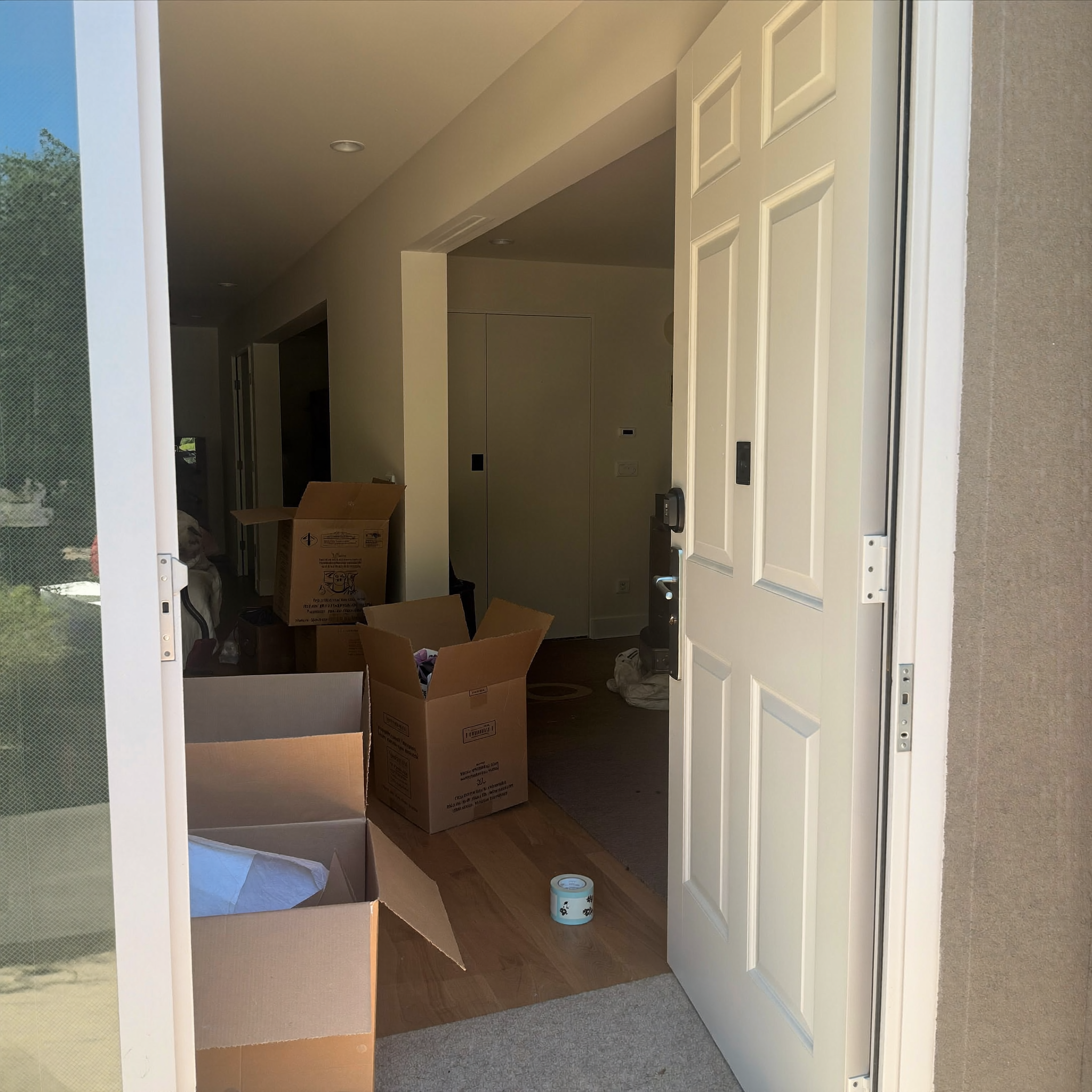
Simple Choice Insure Facebook ad: “New homeowners with kids need to read this”

Ran for 16 days, from April 15 to May 1, 2026, the last day Crush saw it.
Run by Simple Choice Insure on Facebook. Crush is not the advertiser and does not verify its claims. See this ad in Meta's Ad Library(opens in a new tab)
Want an ad like this for your product?
Crush makes new ad images for your product from this ad: your logo, your product photo, your offer.
Trials from $19.95 USD, then $79.95 USD a month. Cancel anytime.
About this ad
- Meta Ad Library ID
- 2584415975320344
- Platforms
- Facebook, Instagram and Threads
- Relaunches
- 0
- Niche
- Insurance
Ad text
How my husband and I protected our 6.18% mortgage without opening a single piece of "URGENT" mail and without a three-hour call with an agent we didn't trust. Our loan officer walked us through flood insurance, PMI, and title protection. Every box on the closing table, checked. But there's one box that doesn't appear on any closing document and when your husband's company starts restructuring, it's the only one that matters. We closed on a Thursday. By Monday, the envelopes started arriving. URGENT. IMPORTANT MORTGAGE PROTECTION INFORMATION. FINAL NOTICE. I threw every single one away. A friend had warned us right before closing. She said as soon as your name hits the public record, companies buy the list and send official-looking mail designed to scare new homeowners. I didn't even open them. Straight to recycling. That part I got right. What I didn't get right was the assumption underneath it. That throwing the envelopes away meant the risk they were pointing at was also gone. Our mortgage payment is 38% of what we bring home. Two kids. The margin we had before closing barely exists now. I knew we were one income away from a problem we couldn't solve. I just didn't want to look at it directly. And then his company announced a restructuring. I sat on the couch that night after the kids were asleep, doing the math I had been avoiding. What would we do with this house if his income stopped? Not someday. What would we do next month? The problem isn't that I never tried to understand it. Every path I tried led somewhere I didn't trust. I remembered the loan officer at the title company, four-inch stack of papers in front of us, mentioning optional coverage somewhere near the end. Not like it was important. Like it was something she was required to say out loud before moving on. We didn't ask questions. We were exhausted. We signed and left. A few weeks later I googled it. Half the results called mortgage protection a scam designed to benefit the lender. The other half were from companies trying to sell it to me. I closed the tab. And then the envelopes. URGENT. FINAL NOTICE. Which I already knew to throw away. So I put the whole thing in the category of things I couldn't trust and I moved on. That worked fine until the restructuring. Now I was back on the couch and the math wouldn't close. We couldn't afford the term life quotes my husband had been given. The ones that came in at $80, $100 a month on top of everything we were already carrying. We couldn't trust the cheap options either, the $5 or $6 a month ones, because something that cheap for something that important felt designed to fail. And I kept circling the same question without landing on an answer: what happens to my kids' bedrooms if something happens to us? The closing table covered a lot of ground. Flood zones. Title insurance. PMI. Hazard insurance. Every risk that could threaten the bank's ability to recover the money it lent us. That's exactly what it was designed to do. Our loan officer wasn't negligent. She wasn't hiding anything. The closing process was built to document every risk that the lender needs to manage. What it was never built to document, what no closing process is designed to surface, is the risk that sits entirely on our side of the table. The question of what happens to this house if we can't make the payments. Not because of a flood. Not because the title is disputed. Because the person making the payments isn't there anymore. That risk doesn't appear in a closing packet because it doesn't protect the lender. The bank gets paid whether we're alive or not. If we die, the lender still holds the note. The house goes to foreclosure and they recover their money. The family is the only party in that scenario with nothing. And here is the part nobody explained to me until I understood it clearly: we didn't just buy a house. We locked in a rate. 6.18% felt high at signing. Today that rate is still lower than what new buyers are paying. If we lost this house and had to come back to the market, we could never buy it back. Not this house, not this neighborhood, not this mortgage payment. What we were carrying wasn't just a debt. It was a financial position our family could never recreate once it was gone. The only thing standing between that position and a foreclosure notice was the assumption that nothing bad would happen. About two weeks after the restructuring announcement, I got a text from Claire, the same friend who had warned me about the envelopes. She asked how we were doing. I told her the truth. She said she'd thought the same thing we thought when we moved in. That the whole category was exactly what those mailers looked like. But she'd eventually gone back and looked at what was actually behind them, not at the companies sending them but at the product itself. She'd found something that had nothing to do with those mailers. The benefit went to her family, not her lender. It didn't decrease over time. She'd been paying less than her streaming subscriptions combined and said she wished someone had shown it to her at the closing table instead. That was enough. I asked her to send me what she had. I want to be honest about how I read it. I was looking for the part where it stopped making sense. The fine print catch. The benefit that quietly went to the bank. I went through it twice looking for the reason to close the tab. I couldn't find one. What it was: a level-term life policy structured specifically for a mortgage. The payout goes to us, not our lender. The benefit doesn't erode as the balance drops. Nothing in it was built around the lender's side of the table. All of it was built around ours. A few people have asked since I posted about the restructuring, so I want to be straightforward about where this came from. Claire had to send me the link directly. I went to look for it on my own afterward and what I found on every platform I checked was standard life insurance organized by coverage amount and term length. Nothing built around the structure she had described, the kind designed around the family's side of the table instead of the lender's. The only reason I have it is because she sent it to me. The company is called Simple Choice Insure. I'm sharing this because I spent weeks doing math that wouldn't close and living with a question I didn't know how to answer. Not because of the envelopes. Because of my kids' bedrooms and what would happen to them. If you closed on your house and threw everything away afterward without ever getting an actual answer, the link is below. Click Learn More. Type SAME below if you closed on your house, threw away every envelope that came after, and still haven't figured this part out. I know how this sounds. I know the version of me from eight weeks ago, standing at the recycling bin with another URGENT envelope, would read this and think: if it were real, someone at the closing table would have said something that actually helped. That's the part that took me the longest to sit with. The closing table wasn't designed to protect us. It was designed to protect the lender. Every document in that stack existed because the bank needed it. The one risk that's entirely ours to carry wasn't on the table because nobody there was responsible for putting it there. The envelopes were the wrong messenger. That's all they were. The thing they were pointing at was real. Claire found it. So did we.
Where the ad sends people
simplechoiceinsure.com
New homeowners with kids need to read this ☝️
Get a free mortgage protection insurance quote in 3 simple steps. Guaranteed acceptance, affordable coverage, and quick approval. Get yours now!
Get quote: simplechoiceinsure.com(opens in a new tab)