
Inactive· since Jun 16, 2026
- 11
- days it ran
- 0
- relaunches
Ad copy
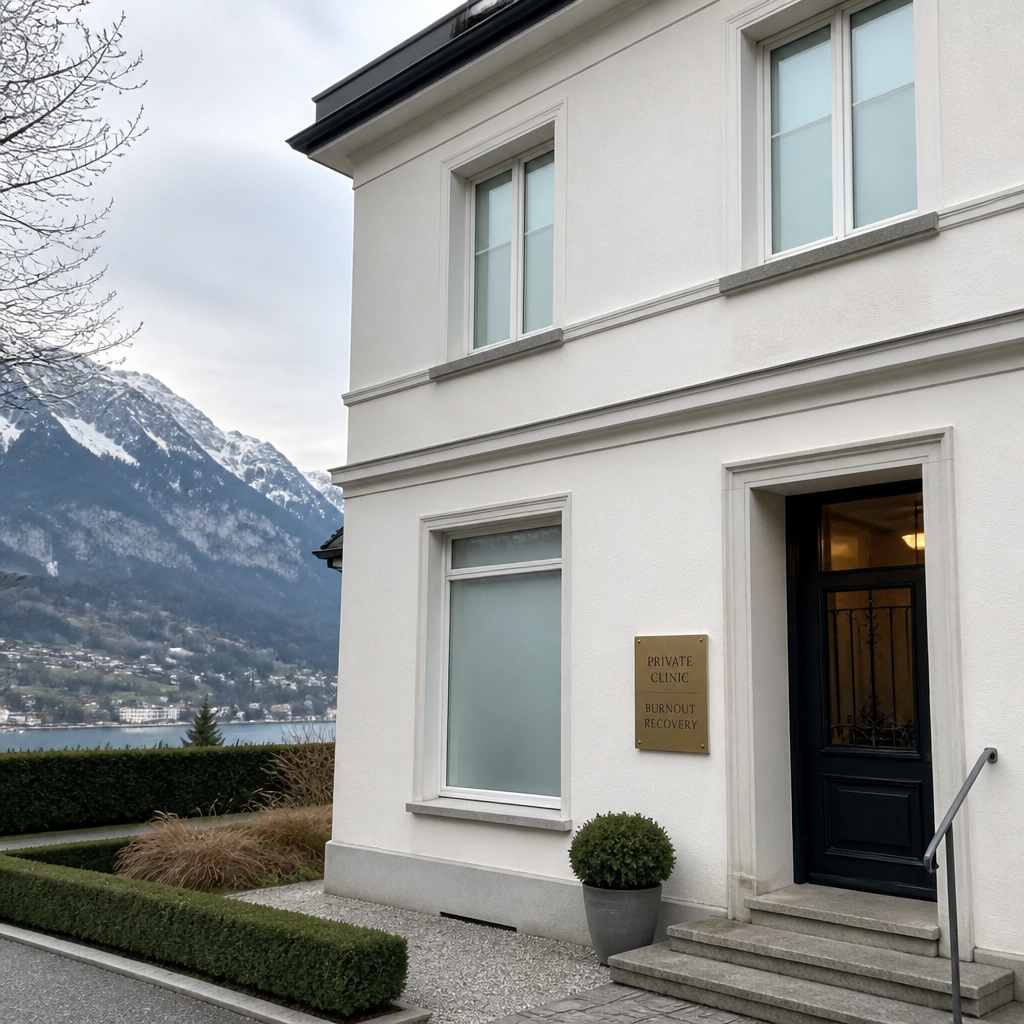
I just spent five days at a burnout recovery clinic in Switzerland. $2,500. And the biggest transformation had nothing to do with the structured rest, the therapy sessions, or finally being forced to stop. I need to back up because this is going to sound ridiculous. I've been dealing with anxiety and sleep issues for about 8 years now. Not the kind where you can't fall asleep. The kind where you fall asleep fine and then your eyes snap open at 3AM and your brain immediately starts running through every single thing you need to do tomorrow and every mistake you made yesterday. You just lay there vibrating with this low level dread that you can't explain or make stop. I've been on Lexapro. I've done therapy. I journal. I meditate. I do the cold plunges. I eat clean. I do literally all the things you're supposed to do. And some of it helps. But that 3AM thing never went away. Not once in 8 years. Until last year I hit a wall I couldn't push through. Not tired — finished. The kind of finished where you sit at your desk and stare at a blank screen for forty minutes and nothing comes. Where you cancel things not because you don't want to go but because you genuinely cannot get yourself there. Where your doctor stops saying "manage your stress" and starts saying "you need to stop. Completely. Now." So I stopped. A colleague had been to a burnout clinic in Switzerland the year before. Not a spa. Not a retreat. A medical facility that treats burnout the way Europeans treat it — as a diagnosable hormonal and neurological condition that requires actual clinical intervention, not a long weekend and some magnesium. Five days. Structured rest. Therapy. Neurological assessment. A medical team that had seen this a thousand times and knew exactly what they were looking at. Day one was quiet in a way I hadn't experienced in years. No decisions to make. No phone. Meals at set times. Sleep in a room with blackout curtains and no alarm. The structure of complete non-doing, which sounds easy and is the hardest thing I have ever done. I slept okay. Nothing crazy. Day two something shifted. I woke up and my jaw wasn't clenched. Which sounds like a small thing but if you grind your teeth at night you know. You wake up every morning and your whole face hurts and your temples are sore. You don't even realize how tense you are until one day you're not. That was day two. Day three I slept through the night. The whole night. No 3AM wake up. No racing brain. I just slept and then it was morning. I figured it was the forced rest finally doing what rest is supposed to do. Or the therapy sessions beginning to discharge something that had been building for years. Or just the sheer relief of being somewhere nobody needed anything from me. Whatever was happening here was working, and I assumed it was the clinical structure. But then at dinner on day three I was sitting next to this woman named Caroline. Late 50s. High powered attorney from Chicago. She leaned over and said, "Okay is it just me or is something happening here that has nothing to do with the rest?" I laughed because I'd been thinking the exact same thing. She said, "I have had insomnia for six years. Six years. And I've slept through the night three nights in a row here. That has never happened. Not with Ambien. Not with anything." We started comparing notes. Both of us felt calmer than we should have after just a couple days. Both of us were sleeping in a way we hadn't in years. Both of us noticed the jaw thing. And the weird low level anxiety that usually hums in the background all day had gone quiet. I thought okay maybe complete enforced rest is genuinely all it takes and I need to figure out how to recreate this at home. But then I noticed something. Every morning the clinic had a supplement station set up alongside the morning check-in — a row of small labeled cups alongside a glass jar with an orange powder you could mix into water. I'd been taking it without even thinking about it. It was just part of the morning routine. An orange scoop next to everything else. On day four I asked one of the nurses what was in it. She said, "Oh that's a cortisol cocktail. Dr. Perrin has us give it to every patient. She says it's the most important part of the whole program but nobody believes her so she just builds it into the morning routine." I almost dropped my glass. I said, "Wait. A cortisol cocktail? I take ashwagandha. I've been taking adaptogens for years and they don't do anything for me." She smiled like she'd heard that a hundred times. She said, "Dr. Perrin says everyone says that. She says the problem is you've been taking one ingredient at a time. Masking just a symptom. Cortisol isn't a single-ingredient problem. You need the whole system working together or nothing moves." That night I couldn't stop thinking about it. I went to my room and pulled up the ashwagandha I'd been ordering on Amazon for three years. Good reviews. Nice packaging. Said "Stress Support" right on the front in big letters. I read the supplement facts. And there it was. "Ashwagandha. 300mg." And that one ingredient just sitting there. Not telling you it does nothing for the cortisol spike at night. Not telling you there's nothing to calm the nervous system. Nothing to handle the inflammation. Just one herb. Like it's no big deal. Three years. I'd been taking this for three years telling myself adaptogens don't work for me when in reality I'd never taken a complete cortisol formula. Just one piece of the puzzle with nothing else around it. My nervous system never stood a chance. On the last night of the program I asked to speak with Dr. Perrin directly. She was exactly what you'd expect from a physician who had spent a career treating burnout as a medical condition rather than a character flaw. Calm. Direct. No nonsense. The kind of doctor who has no patience for the idea that exhaustion is a willpower problem. She said, "Here's what nobody tells you. Cortisol controls your nervous system's ability to downshift. When it's dysregulated your body stays in a stress state." "That's the 3AM wake ups. That's the jaw clenching. That's the anxiety that feels like it has no source. Your body is stuck in fight or flight because the hormone telling it to stand down never gets switched off." She continued. "Most people come here thinking they need the rest and the therapy and the structured recovery and all of that is essential and it works. But if your cortisol rhythm is broken underneath, your nervous system physically cannot calm down regardless of how much rest you give it." "You can sleep twelve hours. You can remove every stressor from your environment. You can sit in the quietest place on earth with nothing to do and nowhere to be and your body will still be in overdrive because the hormone driving it never got the signal to stop." She said, "That's why I give everyone the cortisol cocktail on the first morning. By day two most people feel completely different and they think it's the rest." "It's not the rest. I mean the rest helps. But the cortisol cocktail is doing 80% of the work." I sat there thinking about the $2,500 I just spent and how the most transformative part of the experience was a scoop of powder in a morning glass of water that probably cost a dollar. When I got home I threw away my old ashwagandha. The one I'd been buying for three years. I looked up what cortisol cocktail Dr. Perrin used at the clinic. The full formula. Ashwagandha, Rhodiola, Phosphatidylserine, L-Theanine, all of it working together. No missing pieces. No single ingredient doing the job of ten. I ordered it that night. That was six weeks ago. The 3AM wake ups are gone. Not reduced. Gone. I sleep through the night now like it's just a thing I do. My jaw isn't clenched when I wake up. That background anxiety that used to just hum all day for no reason is either gone or so quiet I don't notice it anymore. I honestly can't tell which because it's just not there. My therapist noticed. She said, "Something changed. You seem regulated." I told her about the cortisol cocktail and she said she's been looking for something like this for clients for years but most of them try one ingredient at a time and then tell her adaptogens don't work. I told Caroline the attorney about it. She ordered it the same day. She texted me a week later and said, "I'm furious. I spent $14,000 on sleep treatments over the last six years and this is what I needed?" Yeah. Same. I found this article that breaks the whole cortisol and sleep connection down way better than I can. Why your stress hormone is the thing keeping you awake. And why going after it as a system — not one ingredient at a time — is the only thing that actually works. And the cortisol cocktail Dr. Perrin uses at the clinic is in there too. I've sent this to basically everyone I know who has hit the wall and been told to rest more — because I'm still angry nobody told me this years ago. 👇 Click below to read more about this product. It's what I wish someone had sent me before I spent $2,500 to find out the answer was in a morning glass of water. https://drinkharmonia.com/cortisol
I slept twelve hours a night. Still woke up exhausted.
Discover Harmonia—the smart cortisol cocktail that lowers stress, balances hormones, improves sleep, and boosts energy. Vegetarian, natural & USA-made.
LEARN MORELike this ad? Make it yours.
Crush rebuilds this exact creative around your product — your brand, your colors, your offer — in about a minute.