Dog Training Tips & Support
 Facebook ad: “Read this if you own a Dachshund”
Running for 82 days since September 2, 2026. Crush last saw it on November 22, 2026.
Run by Dog Training Tips & Support on Facebook. Crush is not the advertiser and does not verify its claims. See this ad in Meta's Ad Library(opens in a new tab)
Make your own version of this ad
Crush makes it, launches it in your own Meta ad account, scales the winners and pauses the losers.
About this ad
- Meta Ad Library ID
- 2642040629560866
- Platforms
- Facebook, Instagram, WhatsApp and Threads
- Relaunches
- 0
Ad text
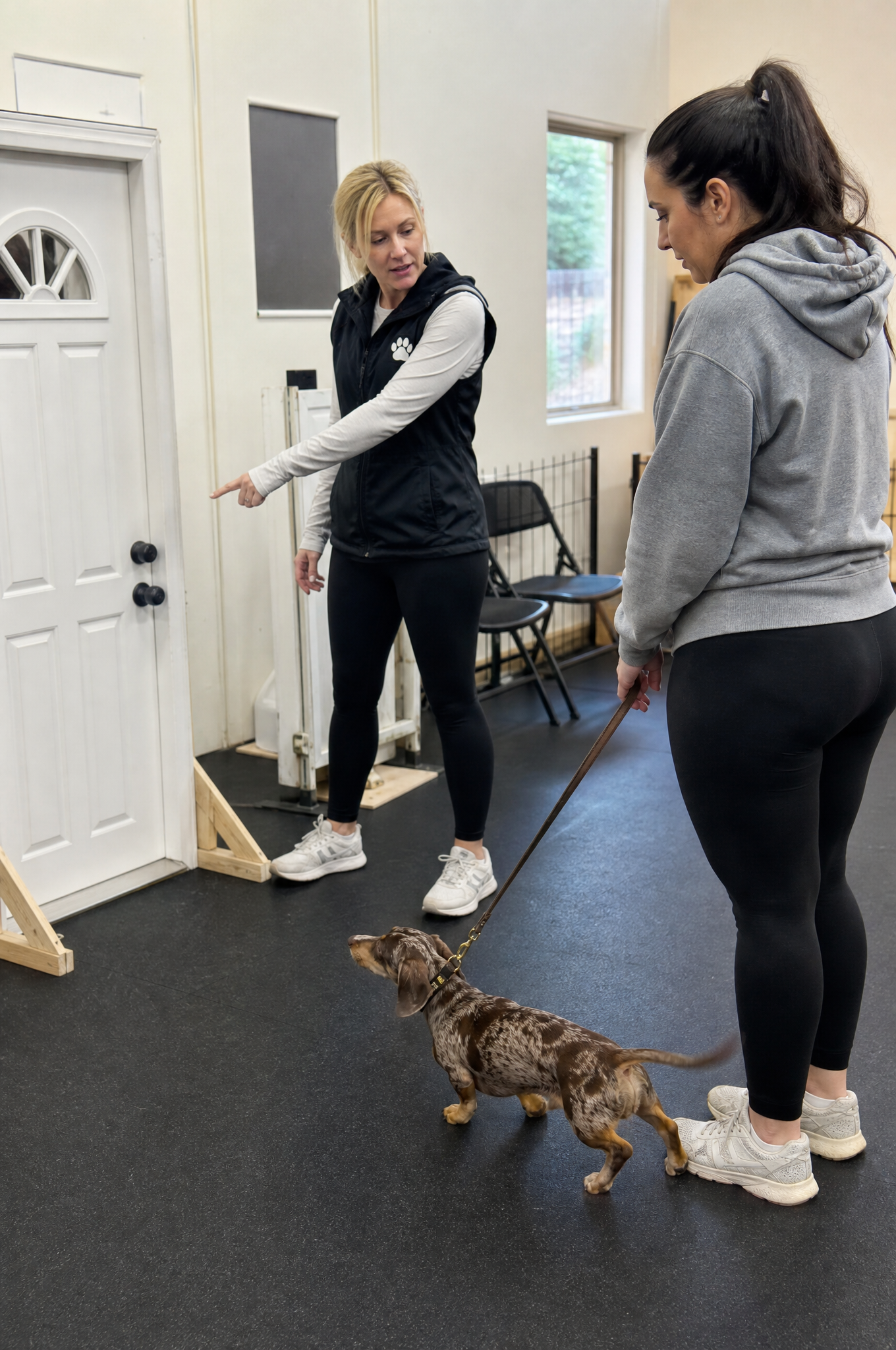
I've spent 15 years training Dachshunds without e-collars, without medication, and without telling a single owner their dog is just "too stubborn to train." When I see what generic trainers are telling Dachshund owners, I cannot believe what I'm hearing. I've worked in canine behavior and breed-specific training for over 15 years. The first 8 years, I trained everything. Labs, Shepherds, Goldens, Bulldogs, Huskies. Standard obedience. Standard methods. Standard results. Then I started getting Dachshunds. And everything I thought I knew fell apart. In my first year working with Doxies, I saw something that kept me up at night. Dachshund owners coming in with dogs that were physically healthy, genetically sound, deeply loved, and completely impossible to live with. Barking so relentless and so loud the neighbors had filed complaints. Separation anxiety so severe the dog had howled for four hours straight after a single trip to the supermarket. Potty training that worked perfectly for six months and then vanished the moment autumn arrived and the grass got damp. Selective hearing so consistent it had owners genuinely wondering if their dog had a neurological problem. And the rain refusal. Dogs that would stand at the back door, look outside, look back at their owner with that look of being offended, and walk to the corner of the living room and squat on the rug. Not because they couldn't hold it. Because the grass was wet and they had decided that this was not a reasonable request. Every single owner said the same thing. "My trainer said to ignore the barking. My vet suggested anxiety medication. We've tried everything. We just keep managing it." Managing it. That word. In 15 years of working with dogs, I have never heard a word that caused more damage than "managing." You don't manage a problem that has a solution. You solve it. And the reason nobody was solving it was that every trainer, every vet, every YouTube video, and every obedience class these owners had paid for was using methods designed for a completely different kind of brain. Generic dog training doesn't fix what's actually happening inside a Dachshund. It only suppresses the symptoms. Here's what your trainer probably hasn't told you about why your Dachshund acts the way it does. There's a concept that most dog trainers have never been taught and most Dachshund owners have never heard. And the real cause behind every behavior problem your Doxie has is not stubbornness. It's not small dog syndrome. It's not that you're too soft or too inconsistent or not alpha enough. It's biology. Specifically, it's what your Dachshund was actually bred to do for hundreds of years before they ended up on your couch. Your Dachshund was bred to go underground. Alone. Into the dark. To find a badger, corner it, and hold their ground until the hunter arrived. Without any human telling them what to do. Without checking in. Without waiting for permission. For hundreds of years, the Dachshunds who listened too readily to human commands were useless in the field. The ones who survived and succeeded were the ones who trusted their own judgment over everyone else's, who made independent decisions under pressure, who held their position even when everything around them was telling them to give up. That's the brain sitting in your living room right now. Not a dog that wants to please you. Not a dog waiting for your approval. A dog running a constant cost-benefit calculation about whether any given request serves their interests at this particular moment. When those two drives, the fierce independence and the enormous depth of feeling, have a job to do and a structure that makes sense to them, the dog is calm. Focused. Settled. When they don't, the brain doesn't idle. It revs. It scans every window. It patrols every room. It barks at the mail, the wind, the neighbor's car, the sound of someone walking past. It howls when you leave because the bond is so deep that your absence registers as a genuine emergency. It refuses to go outside in the rain because a dog who spent centuries making independent decisions underground has decided that wet grass is an unreasonable condition and that decision is final. That's the barking. That's the howling. That's the rain refusal. That's the selective hearing. That's the potty regression. That's the separation anxiety. One neurological profile, manifesting in different behaviors at different times across their entire life. And here's the part that made me furious on behalf of every owner who walked through my door. Every mainstream training method makes this worse. "Ignore the barking and it will stop." This works on breeds with low persistence. Dachshunds were bred for centuries to not give up. They do not extinguish behavior through being ignored. They escalate it. They try harder. They try louder. They add a new variation. Until eventually the owner breaks and reacts, at which point the Dachshund's brain has just confirmed that persistence pays and the behavior locks in deeper than before. "Use corrections. Be firmer. Show them who's boss." Dachshunds do not respond to dominance-based correction the way a Labrador does. What you get is not obedience. What you get is a dog that has now added resentment to independence, and if you push too hard with a breed that was built to corner a badger without backing down, you will not create compliance. You will create a dog that snaps. I have seen this happen repeatedly. Owners who came to me with what they described as sudden aggression that appeared out of nowhere. It didn't appear out of nowhere. It was built, correction by correction, by a trainer who treated a hunting dog like a retriever who needed to be shown his place. "They'll grow out of it. They just need more exercise." A Dachshund's problem is not extra energy. Dachshunds are not high-exercise dogs by design. Their long backs and short legs mean excessive running and jumping creates genuine physical risk. Walking them for two hours does not calm a Dachshunds brain. It tires the body while the brain comes home exactly as unstimulated as when it left. The dog who paced all morning will pace all afternoon with slightly sorer paws. "Medicate. Try anxiety medication." This is where the system completely fails the dog. Because the medication doesn't settle the brain. It suppresses it. The howling stops. The barking decreases. The owner thinks the problem is solved. But the dog isn't calm. They're chemically subdued. There is a difference between a dog that has learned to feel secure and a dog whose entire nervous system has been flattened by medication. One is training. The other is a dog lying on the tiles with glassy eyes who used to do a ridiculous waddling happy dance every morning and doesn't anymore. So the behavior keeps escalating. The methods keep failing. The owner keeps paying. And the dog keeps getting worse. And here's what nobody tells you about where this goes if you don't address the actual cause. It doesn't plateau. It always progresses. First, the barking gets worse. What started as alert barking at the door becomes continuous barking at windows, at sounds, at other rooms, at nothing visible to any human. The owner starts closing blinds. Then stops answering the door. Neighbors stop coming over. Family visits become shorter. Then the separation anxiety escalates. Whining when you pick up your keys becomes howling the moment you close the door. Howling becomes scratching at the door frame. One accident on the rug when left becomes accidents every time you leave. The dog who used to settle within ten minutes of your departure stops settling at all. Then the potty training unravels. One rain-day accident becomes a pattern. The pattern becomes an expectation. The dog who was fully house-trained for a year starts hedging, going outside but not fully, coming back in and finishing on the rug because outside was not to their satisfaction. The owner stops being able to predict anything. They start restricting the dog to certain rooms. They buy more enzymatic cleaner. They stop having people over. Then the owner's life shrinks. They can't work from home because the barking is constant. They can't leave the house without managing their departure around the anxiety. They feel guilty every time they go out. They've replaced their rugs twice. Spent thousands on emergency vet visits. Their neighbors have said something. Their family visits less. The dog they got for companionship has become the thing the entire household is organized around managing. I watched this progression happen again and again in my first years working with Dachshunds. And every single time, the owner had done everything they'd been told. They'd been consistent. They'd been patient. They'd spent the money. And none of it worked. Because every method they'd been given was designed for a brain their dog doesn't have. That's when I understood that the problem wasn't the owners. It wasn't the dogs. It was the method. And that's when I built something different. I spent years developing a system from scratch. Not adapting generic obedience for small dogs. Not repackaging Labrador training with a sausage dog on the cover. Building a complete behavioral framework engineered specifically for how a Dachshund brain processes information, makes decisions, and stores patterns. The core principle is this. A Dachshund's chaos is not a stubbornness problem. It's a communication problem. The brain in front of you is running on a completely different system to the one every mainstream training method was designed for. And until you speak the language that system understands, you are typing in a language your dog does not read. The Dachshund brain runs on self-interest and security. Every behavior, every decision, every refusal is evaluated through one filter: does this serve me, or does it not? Generic training tries to override that filter with authority. With corrections. With repetition. With the assumption that the dog will eventually accept a blocked path and comply. A Dachshund never accepts a blocked path. They reassess it. They wait it out. They find another angle. They outlast you. They have been bred for centuries to not give up, and they will not give up on their assessment of a situation just because you would like them to. What works is changing what their brain calculates as the most rewarding option. Not suppressing what they want. Not punishing what they choose. Making the behavior you want the behavior that pays best according to their own internal logic. When you do that, the Dachshund brain doesn't resist. It complies enthusiastically, because compliance has become the highest-value decision available. That's how you fix the barking. Not by silencing it. By giving the alert drive a job that ends. Acknowledge the bark, redirect to a settled position, reward the quiet. The brain that was bred to alert learns that alerting and then standing down is the complete job. Done. Rewarded. Over. That's how you fix the rain refusal. Not by bribing them to the edge of the step. By building an outside routine so structured and so consistently rewarding that the calculation shifts. The wet grass is no longer the most salient factor. The routine is. That's how you fix the separation anxiety. Not by medicating the panic. By building the security framework that stops the panic triggering in the first place. Specific rituals before you leave that the brain learns to recognize as "she always comes back after this." Specific independence exercises that rebuild confidence in being alone. The panic doesn't need to be suppressed. It needs to become unnecessary. I want to tell you about one Dachshund. Because what happened is what I see when owners finally address the right problem with the right approach. Her name was Margot. A 4-year-old miniature, 10 pounds, a rich chocolate dapple that stopped traffic on walks. Her owner, Claire, had spent over $3,800 in three years trying to manage her. Claire lives outside Melbourne in Florida, in a terrace house with a small courtyard and neighbors on both sides. Claire had two specific problems that were destroying her quality of life. The first was the barking. Margot barked at the mail. She barked at footsteps on the pavement outside. She barked at the neighbors' voices through the shared wall. She barked at Claire's phone ringing. She had a specific bark she saved for the recycling truck that Claire described as "what I imagine a smoke alarm would sound like if it also had opinions." Claire had started working from home two days a week and had missed four calls with clients because she couldn't be heard over her own dog. The second was what happened every time Claire left the house. Margot would start the moment Claire picked up her bag. A low whine, building to a cry, building to a full howl that the neighbors on the left had mentioned twice and the neighbors on the right had mentioned once, in a note, slipped under the door. Claire had tried an anxiety wrap. She'd tried leaving a worn jumper in Margot's bed. She'd tried the television on, a specific playlist her vet had recommended. She'd tried DAP diffusers. She'd spent $210 on a Furbo camera system so she could watch Margot howl in real time from her office, which she described as "the worst thing I've ever done to myself." She came to me after her building manager told her formally that she'd received a third noise complaint and would need to address the issue or risk her lease. Claire sat across from me and said the sentence I've heard more times than any other in 15 years. "I love her more than anything. But I'm genuinely frightened I'm going to have to rehome her. And she hasn't done anything wrong. She's just being a Dachshund." She's just being a Dachshund. That sentence. That sentence right there. Because she was right. Margot hadn't done anything wrong. Margot was doing exactly what Margot was bred to do. Alert to everything. Bond deeply to one person. Panic when that person disappears. Hold her position and keep going and not give up. The problem was that nobody had ever given Margot's brain the framework that made those drives work for her life instead of against it. I asked Claire what Margot was like when she wasn't barking or anxious. Her face changed completely. "She's the funniest creature I've ever met. She burrows under every blanket in the house and then acts shocked when she gets too hot. She has a specific toy she brings me when she wants to play, just that one toy, and if I don't respond fast enough she puts it on my foot and stares at me. She does this ridiculous commando crawl across the floor toward the cat's food bowl like if she moves slowly enough I won't notice." "She sounds like a Dachshund." Claire laughed for the first time since she'd sat down. "She's the most Dachshund Dachshund on earth." "Do you want to keep her?" "More than anything. But I can't keep living like this." "What if the howling stopped?" She stared at me. "I've spent $3,800 and nobody could do that." "Nobody tried to fix it. Everyone tried to cover it. The jumper, the playlist, the diffusers, the camera. None of it addressed why Margot's brain treats your absence as an emergency." I explained what was actually happening. The bond so deep that departure triggers genuine panic. The independent brain that has no framework for understanding where you've gone or when you're coming back. The alert drive running continuously with no off-switch installed because nobody had ever installed one. "Margot isn't anxious in the clinical sense," I told her. "Margot is a dog with a brain built for working alongside one person, underground, in high-stakes conditions, and she's been asked to spend large parts of her day alone in a terrace house without any framework for why that's okay. Her brain fills the absence with alarm because alarm is what that brain was built to do when something important is uncertain." "So what do I do?" "We build the framework. Specific departure rituals that Margot's brain learns to associate with safe return. Independence exercises that teach her that being alone is not an emergency. A settled routine that gives the alert drive a job that ends, so the brain can actually clock out." Claire agreed to try. We worked through the system over six weeks. Week one, we started with what I call the departure ritual. Not sneaking out. Not making a fuss. A specific, identical sequence every single time Claire left. Same words. Same actions. Same order. Every time. Because a Dachshund brain is a pattern-recognition machine, and once it categorizes a sequence as "this always ends with her coming back," the panic loses its trigger. By day four, Margot's whine at departure had shortened from the moment Claire picked up her bag to the moment the door closed. By day eight, it stopped at the door. Claire called me from the car park outside her office. Whispering. "I'm watching the camera. She's on the bed. She's just lying there. I've been gone eleven minutes and she's just lying there." Week two, we added the Quiet Command protocol for the barking. The recycling truck came on Thursday morning. Margot started. Claire followed the protocol. Walked to the source of the alert, acknowledged it, gave the specific cue word, redirected Margot to her settle spot, rewarded the quiet. The bark lasted forty-five seconds. In three years of Thursday recycling trucks, it had never lasted less than twelve minutes. Claire sent me a voice message. She was laughing. "Forty-five seconds. I timed it. Forty-five seconds and she's on her mat. What is happening." Week three, the separation window extended. Thirty minutes. Then an hour. Then ninety minutes. Claire went to a café and worked for two hours on a Wednesday and came home to a dog on the couch who looked up, wagged once, and went back to sleep. She sat down on the kitchen floor and Margot climbed into her lap. "She's not even relieved to see me. She was just fine." That was the goal. Not a dog who survives being left alone. A dog that realizes being left alone is simply a thing that happens sometimes, unremarkable, nothing to report. Week four, Claire's neighbor on the left knocked on her door. Claire braced. "I just wanted to say," the neighbor said, "I haven't heard anything this week. I wanted to make sure everything was okay." Everything was okay. Week six, the building manager sent a formal note. Not a complaint. An acknowledgment that the previous issue appeared to have been resolved. Claire sat down one night and added up what she'd spent on Margot over three years. DAP diffusers, three of them: $180. The anxiety wrap: $55. The camera system: $210. Three different calming supplement brands: $260. The specific playlist subscription the vet had recommended: $96. A consultation with a veterinary behaviorist who recommended medication: $320. Four months of the prescribed medication before Claire stopped it because Margot had stopped being Margot: $180. Two sessions with a trainer who told her to ignore the howling until it stopped, which it did not: $220. One session with a different trainer who said Dachshunds were "notoriously difficult" and some dogs just aren't suited to city living: $110. Enzymatic cleaner for the accidents that happened on high-anxiety days: $95. Two replacement door mats that Margot had worked on during separation distress: $78. The camera system upgrade when the first one's audio wasn't clear enough to hear how bad it was: $190. $1,994. Plus three notes from neighbors. One formal complaint from the building manager. Four missed client calls. And four months of Margot lying on the tiles with glassy eyes because the medication that was meant to help her had taken away the commando crawl and the toy on the foot and the adorable shocked face when she got too hot under the blanket. $1,994 on methods that covered the symptoms while the actual cause, a Dachshund brain with no framework for the life it was living, was never mentioned. Not once. Not by a single vet, trainer, or behaviorist in three years. They told her what to buy. What to plug in. What to dose. What to accept. Nobody told her why it wouldn't work. The why is the brain. Six weeks of the right system with the right approach: $37. Margot is more settled on $37 and the right framework than she ever was on four months of medication and $1,994 worth of things that addressed the noise while the reason for the noise continued unchecked. Because the medication muffled the alarm. The system dismantled the reason the alarm was going off. When I looked at how Dachshunds were being handled across the training industry, I assumed somebody had already built what I could see was needed. They hadn't. Every training program I reviewed, and I reviewed many, was generic obedience with a Dachshund photo on the cover. Same treat-lure methods designed for food-motivated dogs who want to please. Same correction protocols designed for breeds that accept blocked paths. Same "ignore the behavior" techniques designed for dogs with low persistence applied to a breed that has never once in its history accepted "no" as a final answer. Same failure rate. So I built The Complete Dachshund Guide. Every protocol inside it is engineered for how a Dachshund brain actually works. The Quiet Command, which is not about silencing the bark but installing an off-switch on the alert drive. Acknowledging the threat, redirecting to a settled position, ending the job. Because a Dachshund's bark is genetic and you cannot and should not try to eliminate it. You can absolutely teach it to stop. The Confidence Method for separation anxiety, which builds the security framework that stops the panic triggering before you even leave the house. Not a diffuser. Not medication. Not leaving the television on. A specific set of rituals and independence exercises that teach the Dachshund brain that your absence is not an emergency because it always ends the same way. The Weather-Proof Toilet Routine, which addresses the rain refusal not through bribery or coaxing but through a structured sequence so consistent and so rewarding that the wet-grass calculation shifts. Because the rain refusal is not stubbornness. It's a preference that was accidentally reinforced every time you stood on the back step negotiating, and you can stop reinforcing it in ten days. The "What's In It For Me" recall method, which doesn't ask your Dachshund to come because you said so. It makes coming to you the highest-value option available, according to their own internal calculation, so they choose it even with distractions. The Behavior Reset protocol for when training regresses. Because Dachshunds can and do unlearn things, particularly after stressful events, changes in routine, or the arrival of something new in their environment. The reset sequence gets you back to baseline in days instead of months. Plus the full system for potty training that accounts for how Dachshund-specific preferences, including weather, surface texture, and the precise location they have decided is acceptable, interact with the training process. And specific guidance on what to do when a fully trained dog starts having accidents again, because this happens with Dachshunds and it is fixable. And the IVDD Prevention Blueprint, because 1 in 4 Dachshunds will experience back problems in their lifetime and most owners find out the hard way that couch jumping, collar pulling, and certain handling techniques are cumulative risks they didn't know they were taking. All of it included. All of it designed for the dog that is actually in front of you. I made it digital so you get instant access on your device and can access it anywhere anytime, plus it comes with free monthly updates that provide new training exercises, enrichment activities, and behavior solutions at no extra cost. I share this because I've spent years watching the same progression destroy the same families with the same dogs. Dachshund owners told their dogs are "just stubborn" and to be firmer, while the firmness creates resentment in a breed that was never built to accept authority from a position of pressure. Owners told to medicate, while the medication removes the personality they fell in love with. Owners who feel like they're failing. Like they chose the wrong breed. Like their dog is broken. They're not failing. The methods are failing them. The standard training industry treats every dog like a Labrador. But Dachshunds have an independent hunting brain crossed with a fierce loyalty drive and a deeply held sense of their own judgment, and that combination does not respond to any of those methods. It needs something designed from the ground up for how it actually works. That's what The Complete Dachshund Guide is. The only system I've found in 15 years that trains the dog that's actually in front of you instead of the dog the industry assumes you have. $37. 90-day money-back guarantee. If your Dachshund isn't dramatically better, you pay nothing. You've spent long enough doing what you were told with nothing to show for it. It's time to train your Dachshund the right way. pawpowa.com/pages/dachshund-complete-guide P.S. Claire spent $1,994 over three years on diffusers, medication, calming supplements, and trainers who told her Dachshunds were notoriously difficult. Six weeks of a $37 guide fixed what none of it could, because for the first time something addressed why Margot's brain was alarming instead of trying to muffle the alarm. The medication had silenced the howling by silencing everything else too. The commando crawl toward the cat bowl. The toy placed on the foot. The shocked face under the blanket. The system got the howling to stop and left Margot completely intact. Don't spend three years and $1,994 covering a problem that has a solution. Get the guide. Start tonight. P.P.S. If your Dachshund is under 2 and the barking and the anxiety and the rain refusal have just started, you are in the best position possible. The patterns aren't locked in yet. The medication hasn't started. The neighbors haven't complained yet. Start now. Before the howling gets louder. Before the rug accidents become the new normal. Before a trainer tells you your dog is notoriously difficult and some breeds just aren't suited to the life you're offering them. Margot is proof. One owner tried every generic method for three years and spent $1,994 and four months watching her dog disappear under medication. Then she tried $37 and got her dog back in six weeks. The difference isn't the money. The difference is the method. Start today. pawpowa.com/pages/dachshund-complete-guide
Where the ad sends people
pawpowa.com
Read this if you own a Dachshund☝️
Pawpowa
Learn more: pawpowa.com(opens in a new tab)