
Inactive· since Aug 15, 2026
- 11
- days it ran
- 1
- relaunches
- 1,384
- EU reach
Ad copy
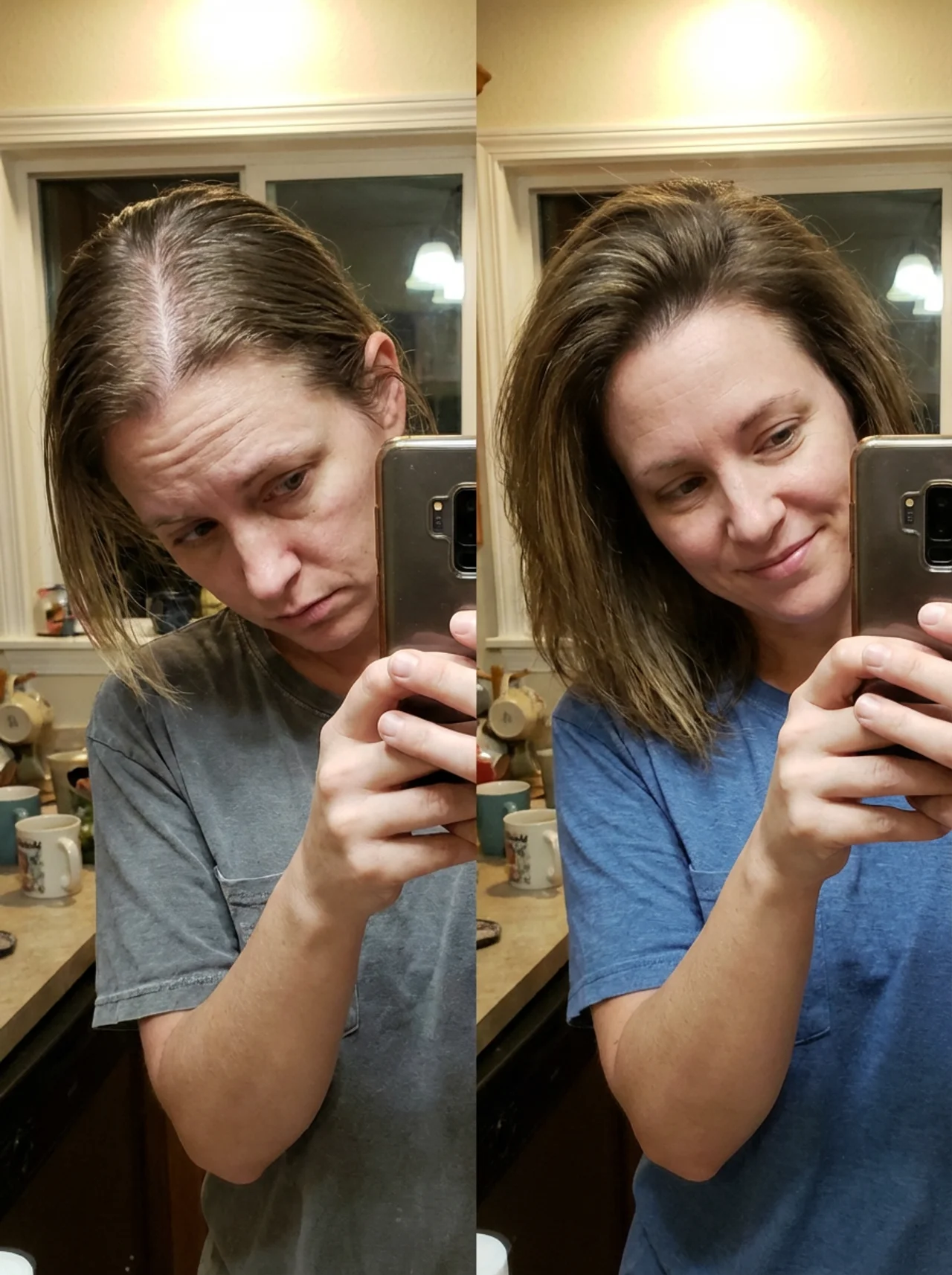
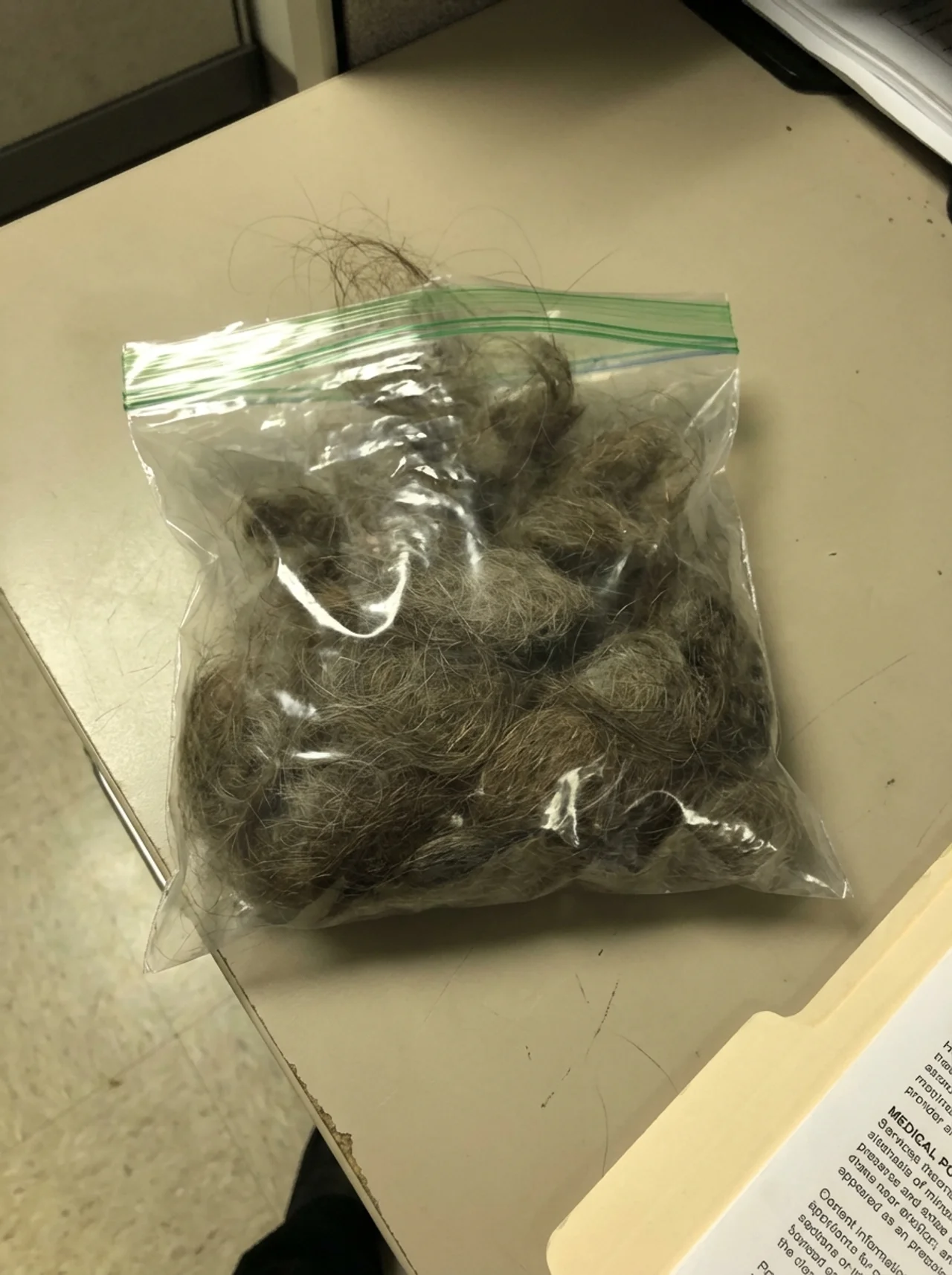
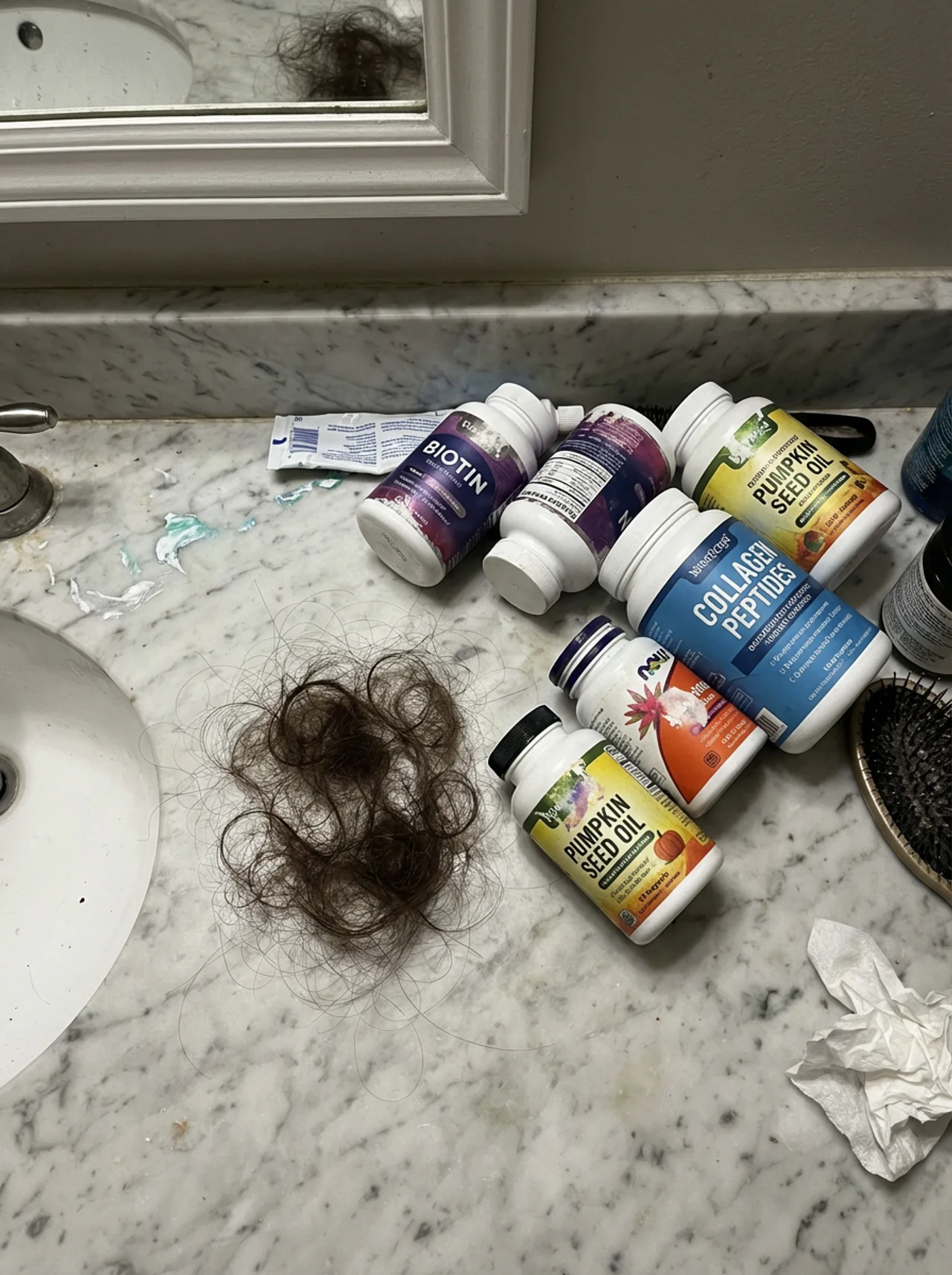
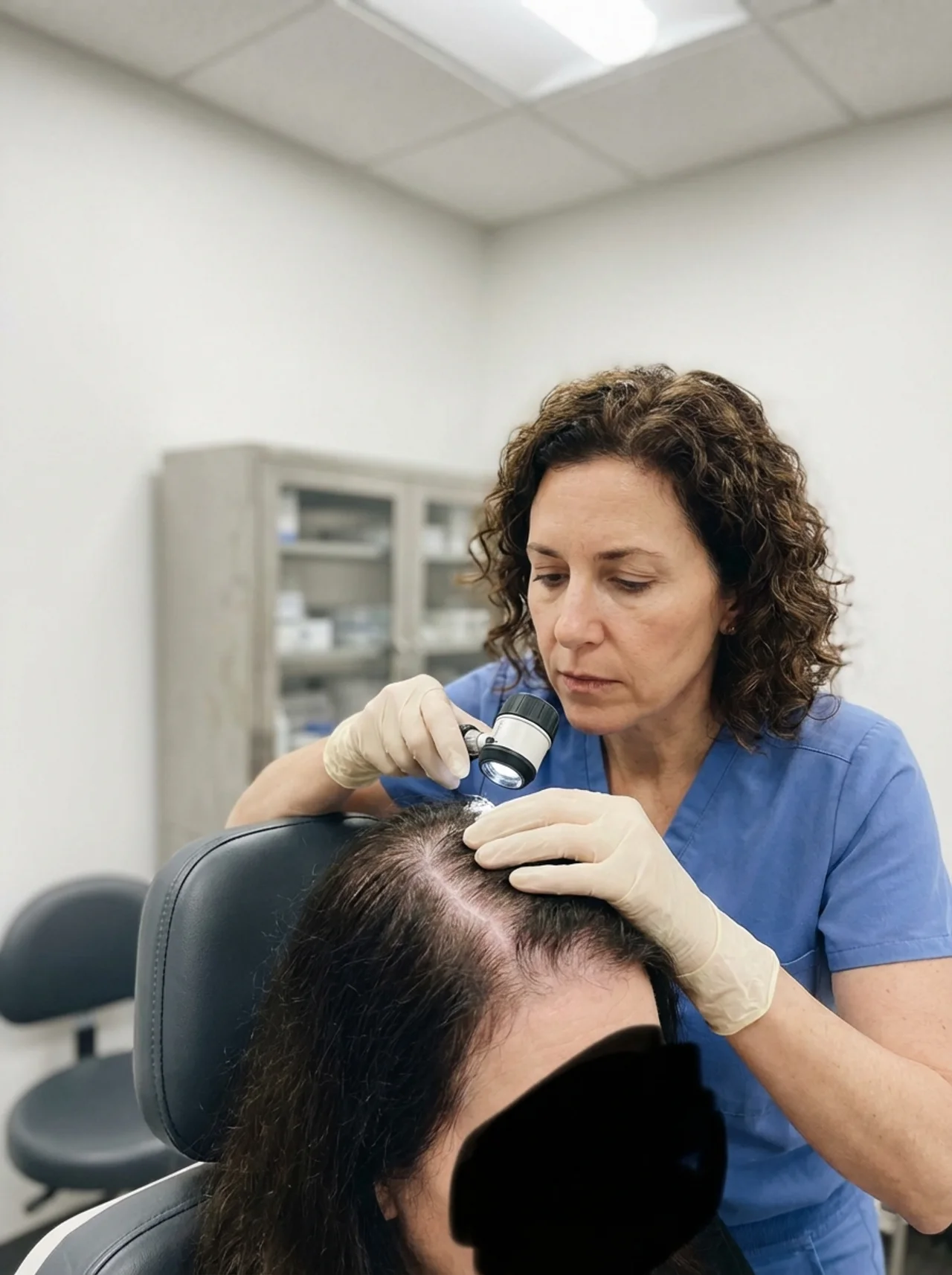
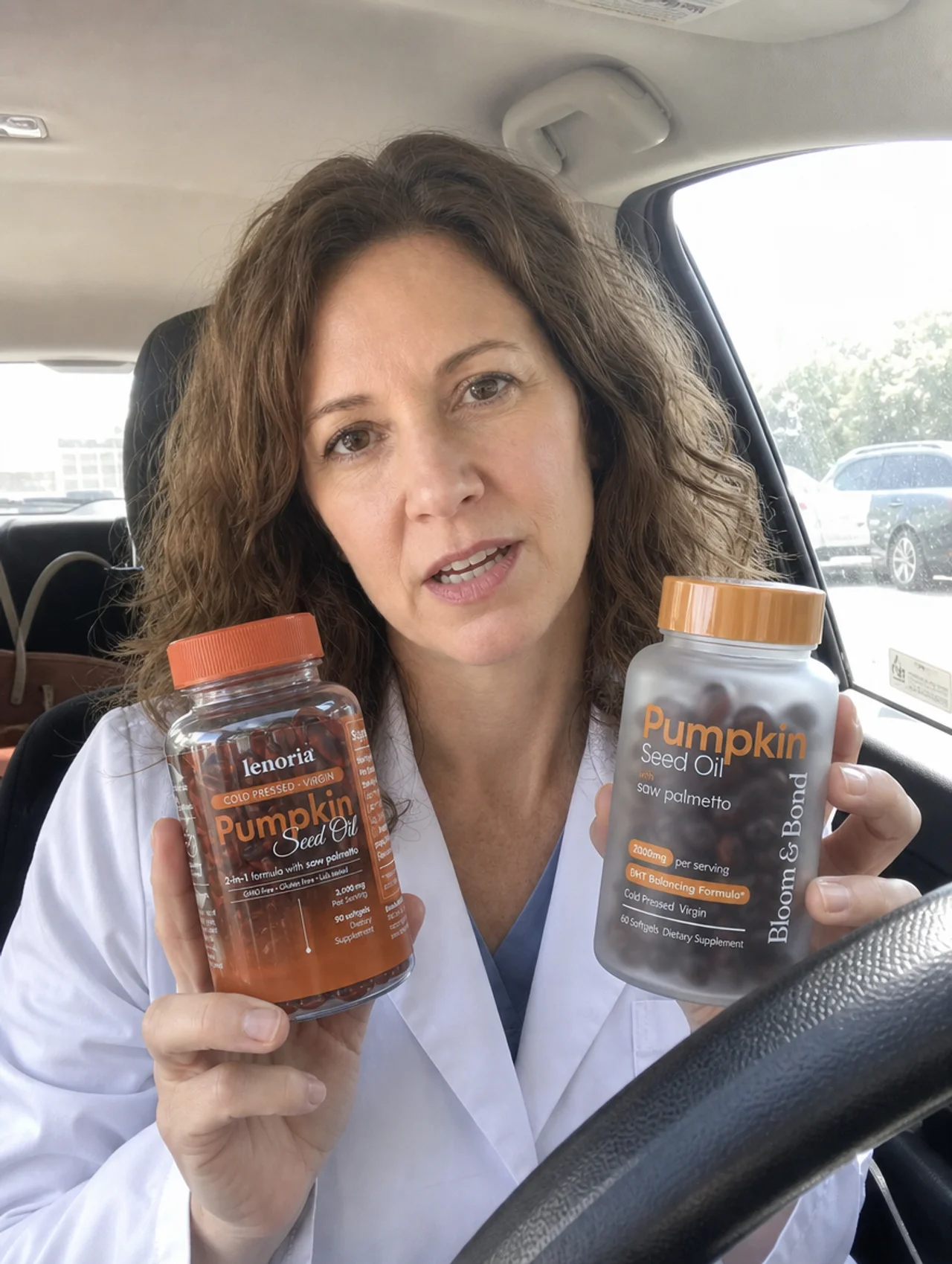
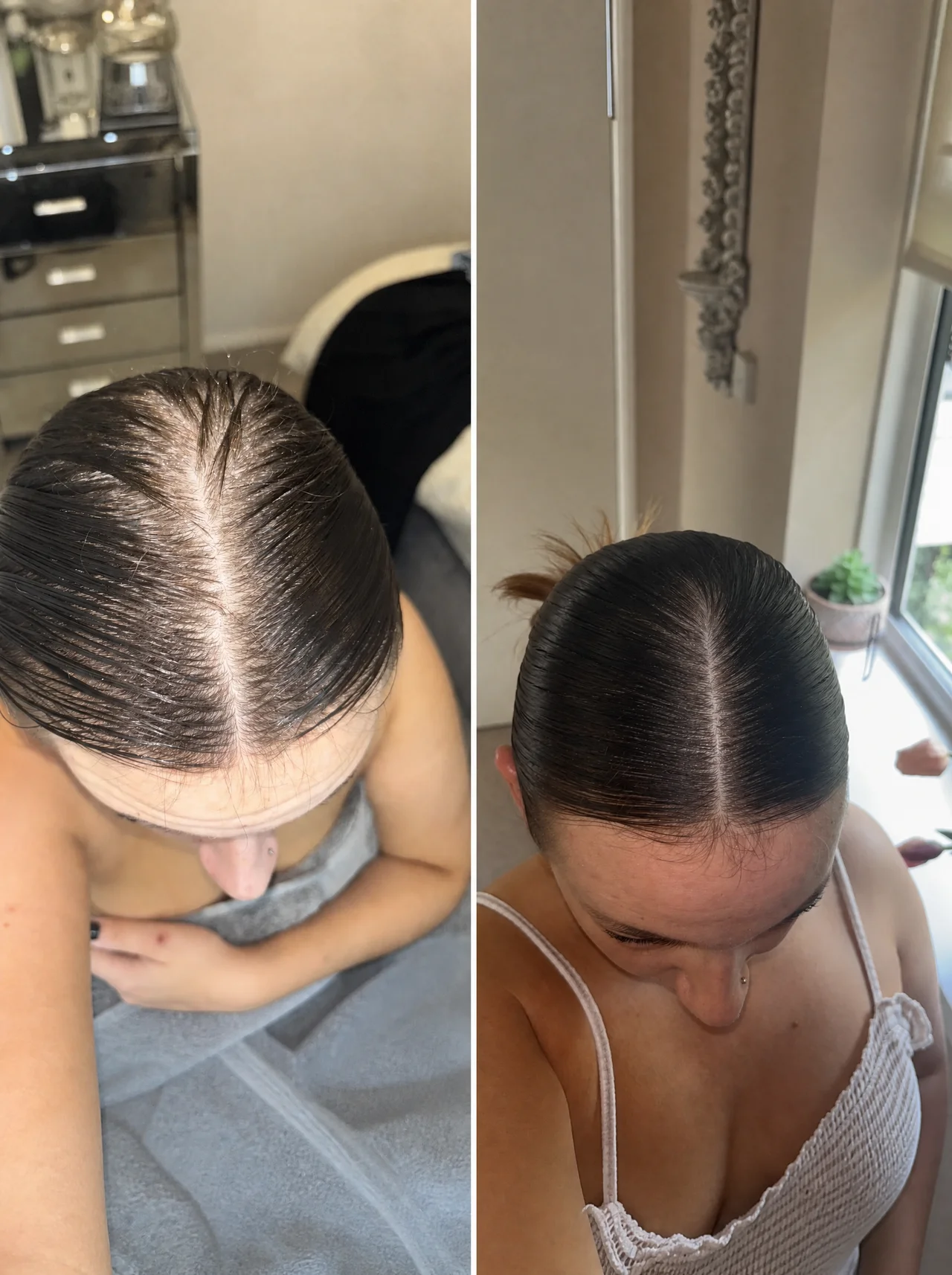
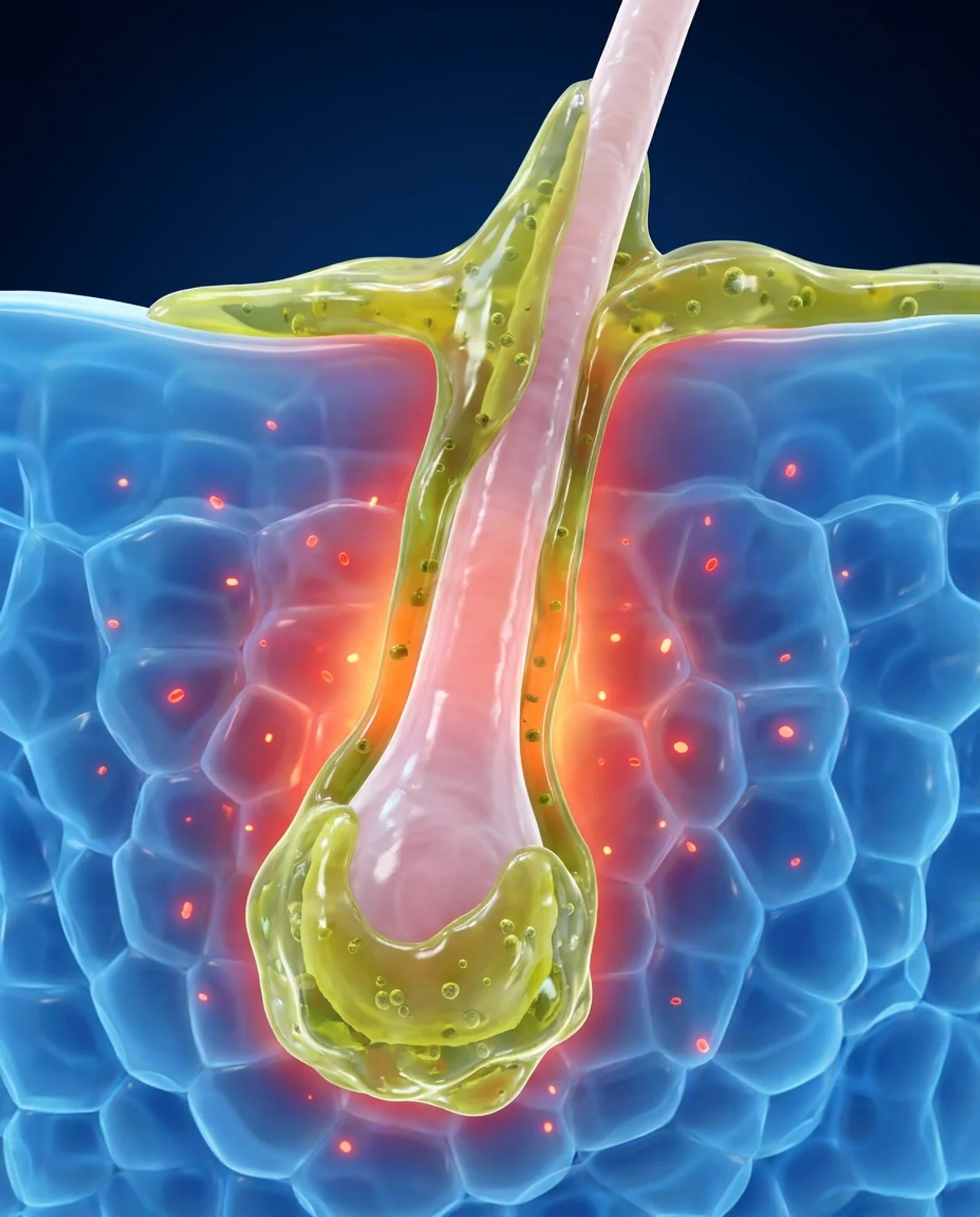
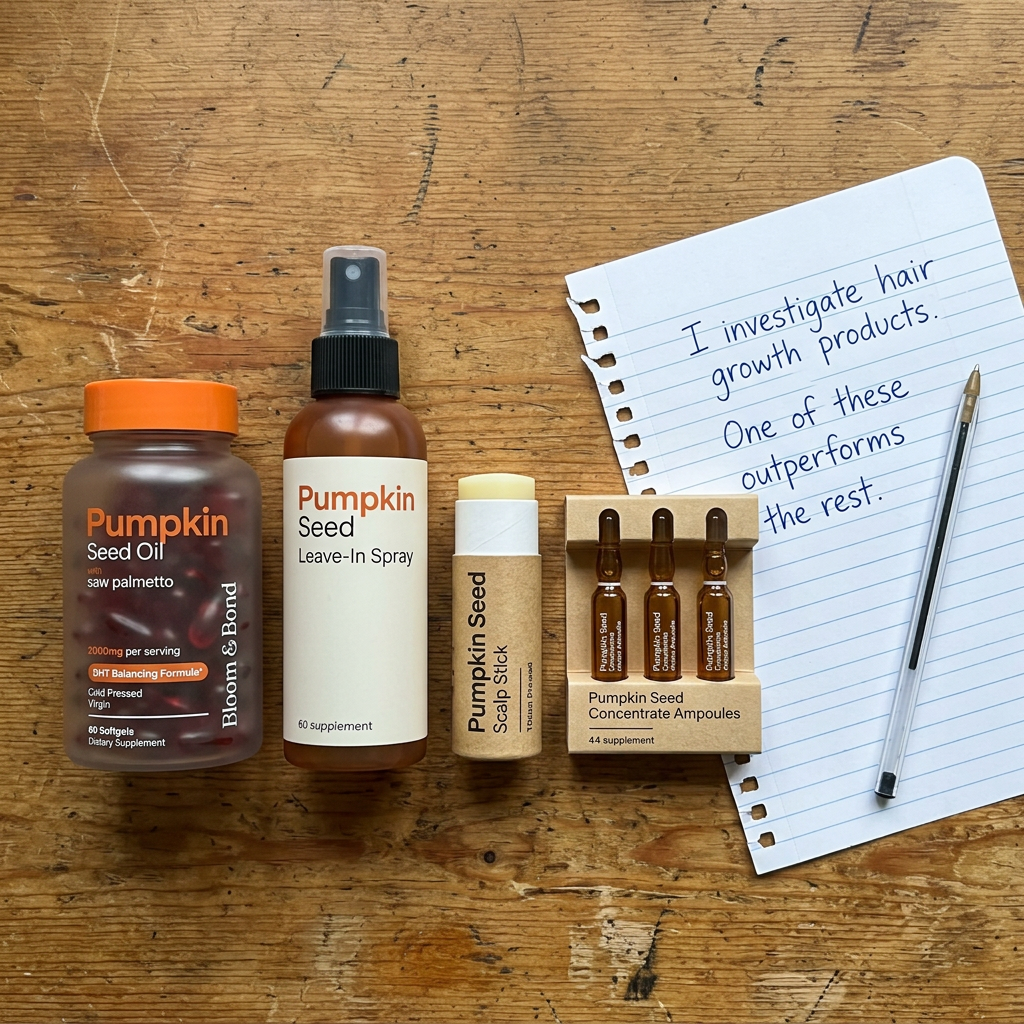
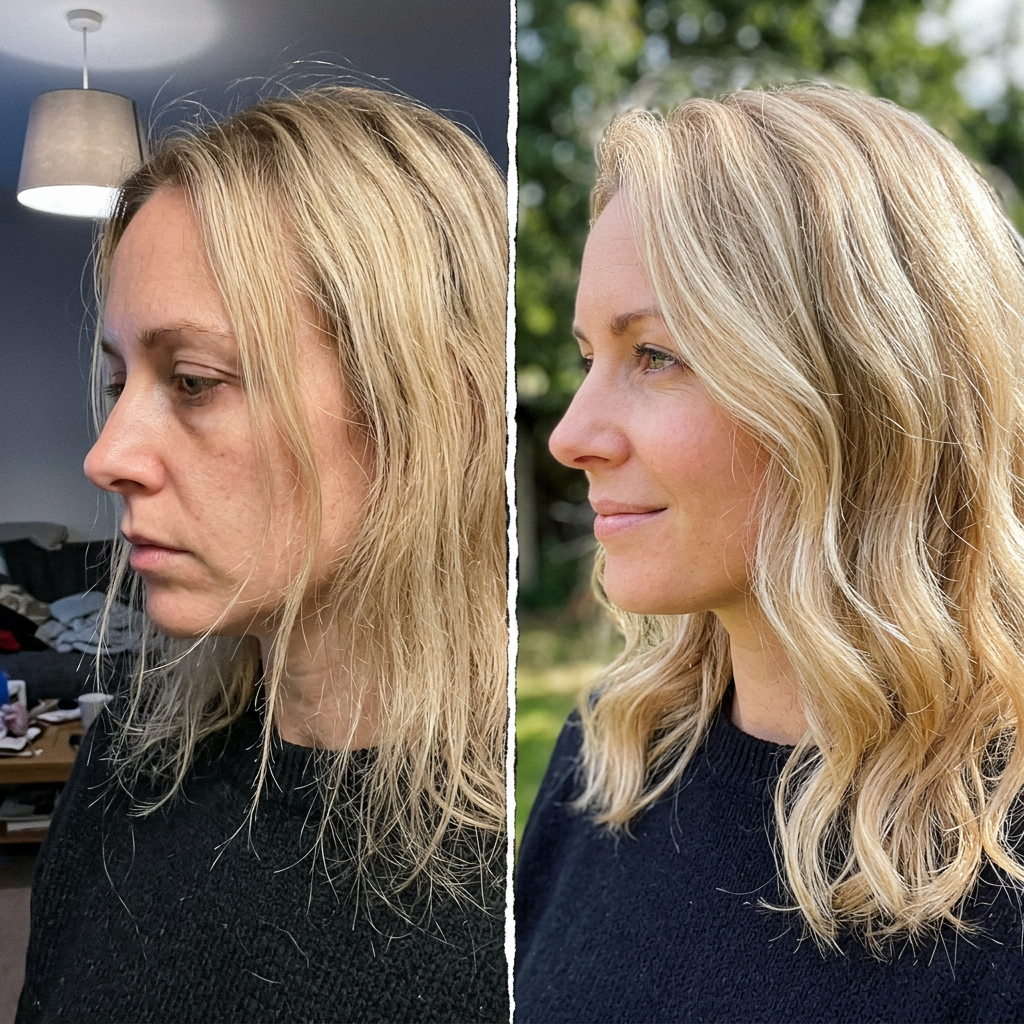
I'm a trichologist. I've diagnosed hair loss in over 4,000 patients, and eighteen months ago I diagnosed it in myself. I ran a 120-day self-experiment to see if anything could move my own density before I accepted a lifetime of "just monitor it." Here's exactly what happened, block by block, with the actual scalp scans. My name is Dr. Patricia Sullivan. I've practiced trichology for nineteen years, and I've diagnosed pattern hair loss in more women than I could count if I tried. Eighteen months ago, at 47, my own trichoscan came back with a crown density of 122 hairs per square centimeter, down from a baseline of 187 just three years earlier. I sat there looking at my own scan the way I'd looked at thousands of patients' scans before, except this time the name at the top was mine. I don't skip my own advice. I take a multivitamin, I sleep close to seven hours, I'd already ruled out thyroid and ferritin with my own bloodwork. That's when it hit me: I'd spent almost two decades telling patients "let's give it another six months," and I had never once run a controlled test on what actually moves the number, because clinic time never allows for it. So I gave myself one hundred and twenty days, one variable at a time, a trichoscan before and after each thirty-day block, the same discipline I'd expect from a proper study. Days one through thirty, I started with the standard first-line advice I give every patient: reduce stress load, add a scalp massage routine, increase protein intake to support keratin production. At day 30, density had moved from 122 to 128 hairs per square centimeter. My daily shed count, counted by hand from the drain, dropped from 210 to 188. A real but modest change, consistent with the actual literature on telogen effluvium recovery, and I knew from nineteen years of watching patients that lifestyle change alone rarely holds a line against a hormonal driver underneath it. At day 30 I added the supplement I'd recommended most often over the years: biotin, 5,000mcg daily, on top of the same protein and stress-management routine. At day 60, density had moved from 128 to 133. Shed count dropped from 188 to 179. A small additional movement, within the range I'd call "not clinically meaningful" if a patient showed me the same scan. Here's what I understood intellectually but had never really sat with until it was my own scalp: biotin supports keratin infrastructure. It's a building material. It does nothing to address what's actually shrinking the follicle from the inside, and it does nothing to interrupt the hormone quietly attacking it. One mechanism, doing one job, and my scan reflected exactly that. I went back to the literature with a different kind of urgency than I'd ever had reading it for patients. The compound I kept coming back to was DHT — dihydrotestosterone, the same hormone we discuss in every androgenetic alopecia consult, because it's the one that binds to follicles and physically shrinks them over time. Estrogen normally acts as a shield, sitting around the follicle and blocking DHT from attaching. Mine, at 47, was already declining. Diet and stress management slow how fast the damage accumulates. They don't remove the hormone doing the damage. Think of it like reinforcing a riverbank while the water level keeps rising behind it — eventually the reinforcement isn't the problem you actually needed to solve. That's the piece biotin alone was never going to address, and it's the piece I'd never explained fully to my own patients either, because a twenty-minute consult doesn't leave room for it. I designed a third thirty-day block: saw palmetto alone, 200mg of a 4:1 extract daily, added on top of the same protein and stress routine. At day 90, density moved from 133 to 142. Shed count dropped from 179 to 151. A genuinely useful improvement, and saw palmetto has solid grounding in the literature — it's understood to block DHT from binding to the androgen receptors on the follicle. But blocking what's already circulating isn't the same as reducing how much your body produces in the first place. Saw palmetto stops the attachment. It doesn't turn down the source. For the final thirty-day block, I combined saw palmetto with cold-pressed pumpkin seed oil at 2,000mg daily, in a single softgel rather than separate capsules. I chose the combined softgel deliberately — I wanted both mechanisms delivered at a dose I could actually verify, rather than guessing at two separate label claims. At day 120, density moved from 142 to 179 hairs per square centimeter. Shed count dropped from 151 to 61. That was, by a wide margin, the largest single-block change across the entire four-month experiment, and the only block that brought my density back within range of my own three-year-old baseline. I ran the trichoscan twice to be certain. Same result both times. Here's the mechanism as I now explain it to my own patients. Pumpkin seed oil's phytosterols inhibit 5-alpha reductase, the enzyme that converts testosterone into DHT in the first place. Saw palmetto blocks the DHT that's already circulating from binding to the follicle, at the same time. Together, you're addressing the hormone from both directions simultaneously, rather than only slowing how fast the damage compounds, which is the structural reason this block outperformed the saw-palmetto-alone block by a wide margin. The protein and stress-management foundation runs on a separate pathway entirely — it supports the raw material the follicle needs to build hair, rather than the hormone deciding whether it gets to keep doing so. Without addressing DHT directly, that foundation alone moves the number slowly, exactly what I'd seen in my own first thirty-day block. I called a colleague, a fellow trichologist I trust, and asked her to check my reasoning before I said any of this out loud to a patient. She confirmed what the literature already showed: pumpkin seed oil's effect on 5-alpha reductase and saw palmetto's effect on DHT-receptor binding both have real, published clinical grounding, and the dual-mechanism approach is a documented pathway, not a wellness-industry invention layered on top of real science. What neither of us could fully explain is why, in almost two decades combined of clinical practice, this specific combination had never come up in a single patient consult. If any of this sounds familiar, here's what I now ask every patient to watch for: → A part line that photographs wider than it looks in the mirror → A ponytail that fits around your wrist in a way it didn't two years ago → Shedding that doesn't track with what actually happened that day → Elevated shedding met with "let's keep an eye on it" and nothing else → Scalp visible under bathroom lighting from across the room → Tangling that's increased even though your routine hasn't changed → New oiliness at the roots you've been blaming on your shampoo → A "normal" annual physical that still leaves an uneasy feeling underneath it This isn't simply aging. It's a follicle signaling a hormonal gap that diet, stress management, and single-ingredient supplements alone often can't close on their own. Since running this experiment on myself, I've discussed it with a number of my own patients, always with the same framing I'd want for myself: this supports what your doctor is already recommending, it doesn't replace it. I'd already watched patients try nearly everything on the market before they found their way to me, and I'd recommended plenty of it myself before I understood what I was actually looking at. Nutrafol (recommended in nearly every hair-loss forum I moderate): a proprietary blend that doesn't disclose exact saw palmetto dosing on the label, which makes it impossible to know if a patient is even near a therapeutic range. Viviscal (the one my own mother used for two years): built primarily around a marine protein complex, with no direct DHT-blocking mechanism at all. Women's Rogaine foam (the one I used myself for four months): a vasodilator, not a DHT blocker, and I watched my own shedding return to baseline within three weeks of stopping it. Standalone biotin gummies (the ones stacked on nearly every patient's bathroom counter I've ever visited): support keratin structure, do nothing to the hormone driving the miniaturization underneath it. Generic rosemary oil blends (the ones patients bring in still in the Amazon box): frequently diluted with carrier oils to the point that the active rosemary content is negligible. Standalone saw palmetto from the vitamin aisle (the one I tried before I understood dosing): often formulated and dosed for prostate support in men, not calibrated for follicle protection in women. I had recommended more than one of these myself, in exactly the confident tone I'd used with hundreds of other patients. I felt like I'd failed them, the same way I'd started to feel like I'd failed myself. At day 90, still short of my own baseline, a colleague who specializes in hormonal hair loss mentioned a formula her own patients kept asking to stay on past their first bottle. At first, I was skeptical. Every specialist has heard "this one's different" more times than we can count. She sent me the sourcing documentation: cold-pressed pumpkin seed oil at 2,000mg per serving, not the heat-processed seed powder I'd seen undercut most competitor formulas, paired with a 200mg 4:1 saw palmetto extract, dosed for exactly the dual-mechanism protection I'd just spent three months proving out on myself, block by block. It's called Bloom & Bond. No proprietary blend hiding the actual milligrams. No separate bottles to guess at timing between. I switched my own final thirty-day block onto it specifically because it was the only formula I found that matched both doses I'd already confirmed were doing the work. My own week 1 on the combined formula: still shedding, still counting, no different from any of the earlier blocks at the same stage. Week 2: shed count down to 118, the first real movement I'd seen inside a single week rather than across an entire month. Week 3: 84. I stopped dreading the shower for the first time in over a year. Week 4 through 8: baby hairs along my temples, the kind I'd pointed out to hundreds of patients as the earliest sign their treatment was finally working. Day 120 trichoscan: 179 hairs per square centimeter, confirmed twice. A patient of mine, Renata, 44, who'd been told by two previous providers to "just wait it out" after starting a GLP-1 medication, saw her own shed count drop by more than half within six weeks on the same combined formula. Another patient, Deborah, 51, postmenopausal and already on Viviscal for a year with no change, had visible new growth at her hairline by her third month. These aren't miracles. This is simply what happens when you give a follicle what it actually needs, in a form and a dose it can actually use. You don't need a specialist referral to start supporting your own follicles today. You don't need to wait for a six-month follow-up to find out whether something is actually working — one hundred and twenty days was enough to see the difference in my own scans, twice confirmed. If your own numbers don't move, Bloom & Bond offers a 90-day money-back guarantee, no forms or photo submissions required. Every month spent on "let's keep an eye on it" without addressing DHT directly is another month for a follicle already miniaturizing to shrink further. I don't receive anything from Bloom & Bond for saying this. I ran a four-month, self-administered experiment on my own scalp because that's the standard I'd expect before recommending anything to a patient, and this was the only block of the four that met it. Nineteen years treating this condition in other people, and it took my own trichoscan to make me actually test it properly. Here are the numbers, and here's what was actually in the block that worked. 👉 https://trybloomandbond.com/products/pumpkin-seed-oil-softgels-home P.S. Every week spent waiting on shedding to "resolve on its own" is another week a follicle already under DHT pressure has to shrink further — and a smaller follicle is harder to bring back than one caught early. P.P.S. I do not get paid by Bloom & Bond to recommend this. After nineteen years and over 4,000 patients, this is the only combined formula I've put my own name, and my own scalp, behind.
Like this ad? Make it yours.
Crush rebuilds this exact creative around your product — your brand, your colors, your offer — in about a minute.