Smile Reset
Smile Reset Facebook ad: “I Tracked 180 Patients on In-Chair Whitening. What…”
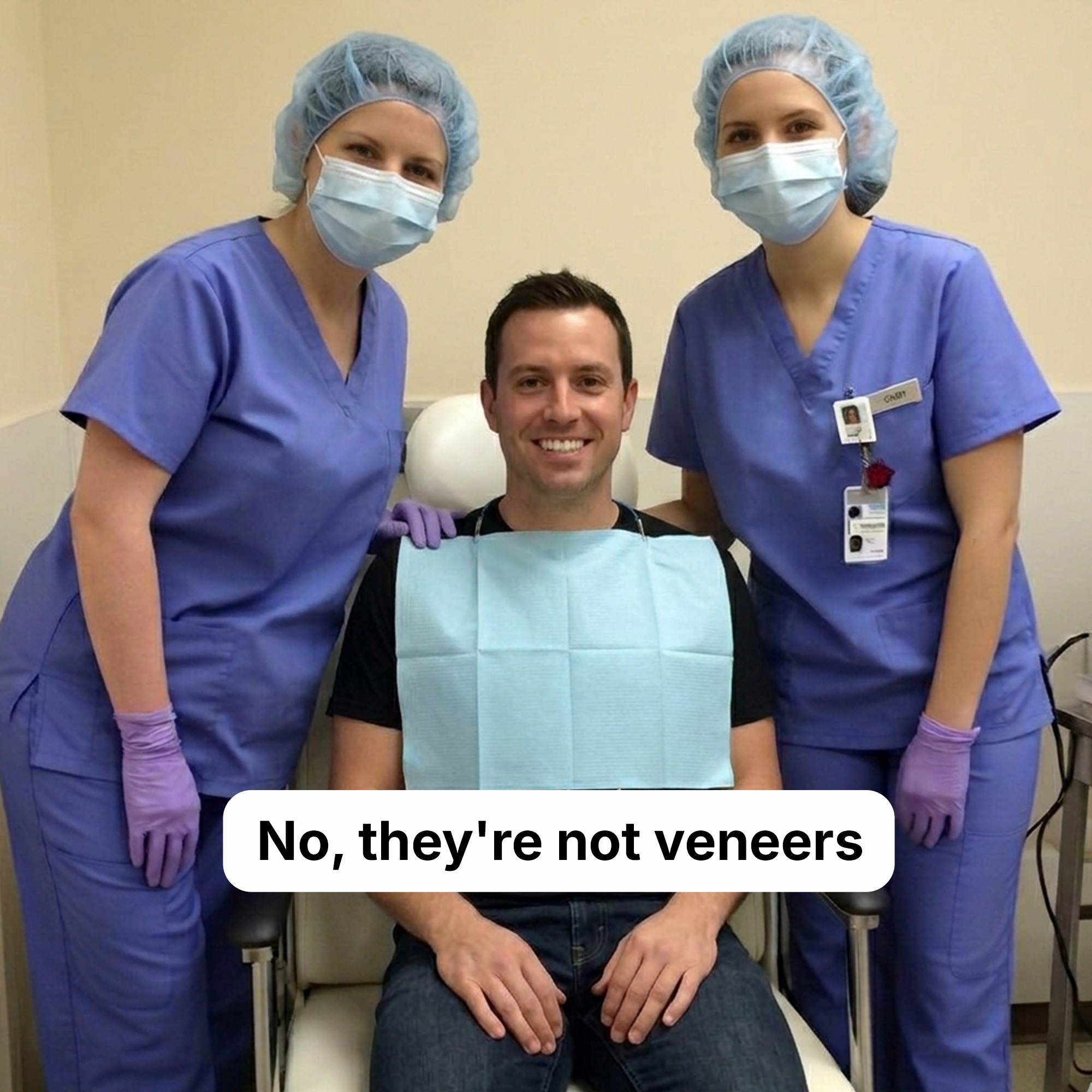
Ran for 29 days, from May 3 to June 1, 2026, the last day Crush saw it.
Run by Smile Reset on Facebook. Crush is not the advertiser and does not verify its claims. See this ad in Meta's Ad Library(opens in a new tab)
Want an ad like this for your product?
Crush makes new ad images for your product from this ad: your logo, your product photo, your offer.
Trials from $19.95 USD, then $79.95 USD a month. Cancel anytime.
About this ad
- Meta Ad Library ID
- 26561919966840900
- Platforms
- Facebook, Instagram, Audience Network, Messenger and Threads
- Relaunches
- 0
- Niche
- Skincare & Beauty
Ad text
In 2023, I tracked 180 patients with chronic tooth staining for six months. 90 on in-chair whitening. 90 on something else. What happened changed everything I tell patients about Zoom whitening. I'm Dr. Jennifer Rhodes. Cosmetic dentist in Sydney. 22 years treating tooth discolouration. And yeah... I was on monthly in-chair whitening too. For four years straight. And it worked. I'm not gonna sit here and lie to you and say it didn't. Because it did. Like... years of watching the staining come back darker every time I stopped. Years of my hygienist looking in my mouth and going "your enamel looks fine" while I'm sitting there like... "I've been whitening monthly for three years and I'm more sensitive now than when I started. How is this fine??" Years of trying charcoal toothpaste. Whitening strips. Hismile LED kits. Every product I could find at Chemist Warehouse. And in-chair whitening fixed all of this in literally two weeks. The stains were actually gone. Like actually gone. First time in years. I remember catching myself smiling in the bathroom mirror and just... stopping. Waiting for the yellow to come back like it always did. It didn't. And I kept thinking... this is it. This is finally the answer. But I had only ONE big problem. I was paying $600 a month. Every month. And my teeth were getting increasingly sensitive. Electric shocks every time I had something cold. And every time I asked about it I got: "That's normal. Perfectly normal sensitivity." But here's what no one told me. The sensitivity isn't just a side effect. It's a signal. Your enamel is thinning. And thinning enamel is a stain magnet. So every session was making the underlying problem worse. I just couldn't see it yet. After four years of monthly sessions I decided to take a break. Maybe my enamel had reset. Maybe I could maintain this on my own now. Maybe I didn't need the sessions anymore. Everything came back. Like... instantly. More staining than before within six weeks. Darker than before the whitening ever started. Same coffee. Same diet. Nothing changed. Except I stopped the sessions. And that's when it hit me. I wasn't whitened. I was just... bleached. Temporarily. Like someone pressed pause on the staining. And the second I unpaused... everything flooded back. Faster and darker than ever before. I was trapped. Monthly whitening = teeth look okay. Stop the whitening = everything comes back worse. $600 a month. Forever. Or watch everything I'd been maintaining collapse. That's when I started looking at my patients. Everyone I'd put on monthly whitening schedules over the past two years. I pulled every file. The ones still coming in monthly? Looking okay. Sort of. But sensitivity complaints were up. Enamel erosion markers getting worse every six months. The ones who'd stopped? Every. Single. One. More stained than when they started. Not some of them. All of them. I felt sick. How many patients had I trapped in a cycle that was quietly destroying their enamel while I charged them $600 a month for it? That's when I started tracking it properly. 180 patients. Six months. 90 on in-chair whitening protocols. 90 on a formula I'd been testing quietly. In-chair group looked great fast. Three to four shades lighter by month two. Genuinely impressive whitening. But everyone who stopped for even six weeks? Crashed. More stained than baseline. Without exception. And the ones still going? Enamel erosion markers worsening every session. The other group? Results came slower. But 84 out of 90 held their result without continuing treatment. And their enamel markers? Improving. Not deteriorating. I needed to understand why. Why does it all come back? What is peroxide whitening actually doing? And why does stopping always make it worse? Here's what I found. Your enamel has these tiny crystal structures. Like microscopic mineral rods packed so tightly together that nothing gets through. When those crystals are dense and intact, stains sit on top of your enamel. Coffee and tea rest on the surface. And a good brush lifts them off. But here's the part nobody explains. Peroxide whitening actually does penetrate your enamel and clear the staining inside. That's why it works. That's why you leave the chair looking genuinely brighter. But in doing so... it also demineralises the enamel crystal structure in the process. The same oxidation that breaks down the stain molecules also breaks down the mineral density of the enamel itself. Makes it more porous. And more porous enamel is a stain trap. Coffee and tea bind faster and deeper after every session than they did before. So the rebound isn't just the staining coming back. It's the staining coming back faster. Into enamel that's now less able to resist it than when you started. Each session: enamel gets slightly more porous. Stains bind slightly faster. The whitening effect lasts slightly less time. That's why it barely lasts a week now. That's why the sensitivity keeps getting worse. That's why "trying a stronger gel" never actually solves it. Because stronger peroxide = faster whitening AND faster demineralisation. You're not maintaining your teeth. You're accelerating the damage. And your hygienist can check your enamel every six months and say "it looks fine" the whole time. Because they're looking at the colour. Not the mineral density. So what's actually happening? You bleach. Enamel demineralises. Stains bind faster. You bleach again to clear them. Enamel demineralises further. Stains bind even faster. You bleach again. That's not a treatment. That's a dependency. And the second you stop? Your now-more-porous enamel hits a week's worth of coffee and tea. The staining comes back. Darker than before. Because your enamel is now a better stain trap than it was before you ever started whitening. That's what I saw in my study. Every single patient who stopped crashed. Not because whitening didn't work. It worked. At the surface. It just left enamel more vulnerable every single time. That's what the formula was. Three things. PAP — a peroxide-free whitener. Lifts the surface stain without demineralising the enamel crystal structure. No new porosity. No new vulnerability. Just clean. 10% nano-hydroxyapatite. Not 2%. Not 5%. Not the version you find in mainstream toothpastes that coats the surface and washes away. The rod-shaped nano particle. Small enough to actually integrate into the enamel crystal structure and restore mineral density from within. Closing the porosity. Making enamel denser and more stain-resistant than before. And proteolytic enzymes. Papain from papaya. Bromelain from pineapple. To dissolve the organic stain matrix that's already bound into the demineralised zones. The stuff peroxide was clearing temporarily but never fully removing. All three working together. Now. Nano-hydroxyapatite. I know. "Isn't that just what's in toothpaste?" I used to think so. Because the version in mainstream toothpaste? 2% concentration. Micro particles. They coat the surface and rinse away. That's not the same thing. But 10% rod-shaped nano-hydroxyapatite. Clinical grade. Studied concentration. That's completely different. That actually integrates into the crystal structure. Restores mineral density. Makes enamel resistant to the staining that previously flooded back after every session. Once the enamel densifies... the staining stops binding the same way. Whatever's lifting off the surface actually stays lifted. I'd been formulating it myself for test patients. Sourcing every ingredient separately. Nearly $500 per batch just to make it. It worked. The study proved it. But I couldn't give this to everyone. I kept thinking about all the patients I'd been putting on monthly sessions for years. All the ones whose enamel I'd been quietly making more porous visit by visit. All the ones who stopped and crashed. I couldn't ring each of them and say "here's a custom formula for $500 a batch." So I started searching. Reddit. The actual teeth whitening forums. The Australian skincare communities where people talked about enamel health. The Facebook groups where people were honest about what actually lasted. And I kept seeing the same name come up. EcoBrightSmile. I looked at the formula. PAP. 10% nano-hydroxyapatite. Rod-shaped. Papain and bromelain enzymes. It was the exact same thing I'd been making for $500. $48.99. I ordered it that night. Week one. Stopped my monthly sessions. Used EcoBrightSmile every morning instead. Waited for the crash. Nothing. Shade didn't go up. Told myself: don't get your hopes up. You've been here before. Week two. This is usually when the crash starts. When everyone in my study crashed. But it... didn't? Same shade as when I stopped. I kept waiting. Week three. Down two shades without any in-chair treatment. No sensitivity at all for the first time in months. Didn't trust it. Week four. Full month without a session. Down three shades total. No crash. Week six. Down five shades. Ran a microporosity assessment on my incisors. Enamel density markers improving for the first time in years. I sat in my surgery and cried. Not because of the whitening. Because I wasn't just off the sessions. I was actually getting better. The enamel was remineralising. I wasn't just bleached anymore. I was actually fixing the problem. Now when patients come to me asking about in-chair whitening... I don't book them straight in anymore. I tell them what I wish someone had told me before I spent four years on a monthly schedule that was quietly making my enamel more porous. If you're thinking about starting in-chair whitening... If you've been looking at the price and the rebound stories. Wondering if you'll be trapped on monthly sessions forever. But still not caring because nothing could be as bad as the self-consciousness you're living with right now. Try this first. 30 days. If it doesn't work — in-chair whitening will still be there. It's not going anywhere. But if it does... you just skipped the trap entirely. 30-day guarantee. Doesn't work, get your money back. That's the only reason I tried it. I need to be honest. This isn't as fast. In-chair whitening is faster. That's true. Takes two to three weeks before you see the shift. You have to use it every morning. It's not magic. But it actually restores the enamel. Instead of demineralising it further. Instead of trapping you on $600 sessions every month forever. I spent nearly $29,000 on four years of sessions that were quietly making my enamel worse. And $48.99 on what actually started fixing it. You haven't booked your next session yet. You still have a choice. Please. Try this first.
Where the ad sends people
ecobrightsmile.com
I Tracked 180 Patients on In-Chair Whitening. What Happened Changed Everything I Tell Patients About Zoom.
I Tracked 180 Patients on In-Chair Whitening. What Happened Changed Everything I Tell Patients About Zoom.
Learn more: ecobrightsmile.com(opens in a new tab)