
Inactive· since May 11, 2026
- 35
- days it ran
- 0
- relaunches
Ad copy
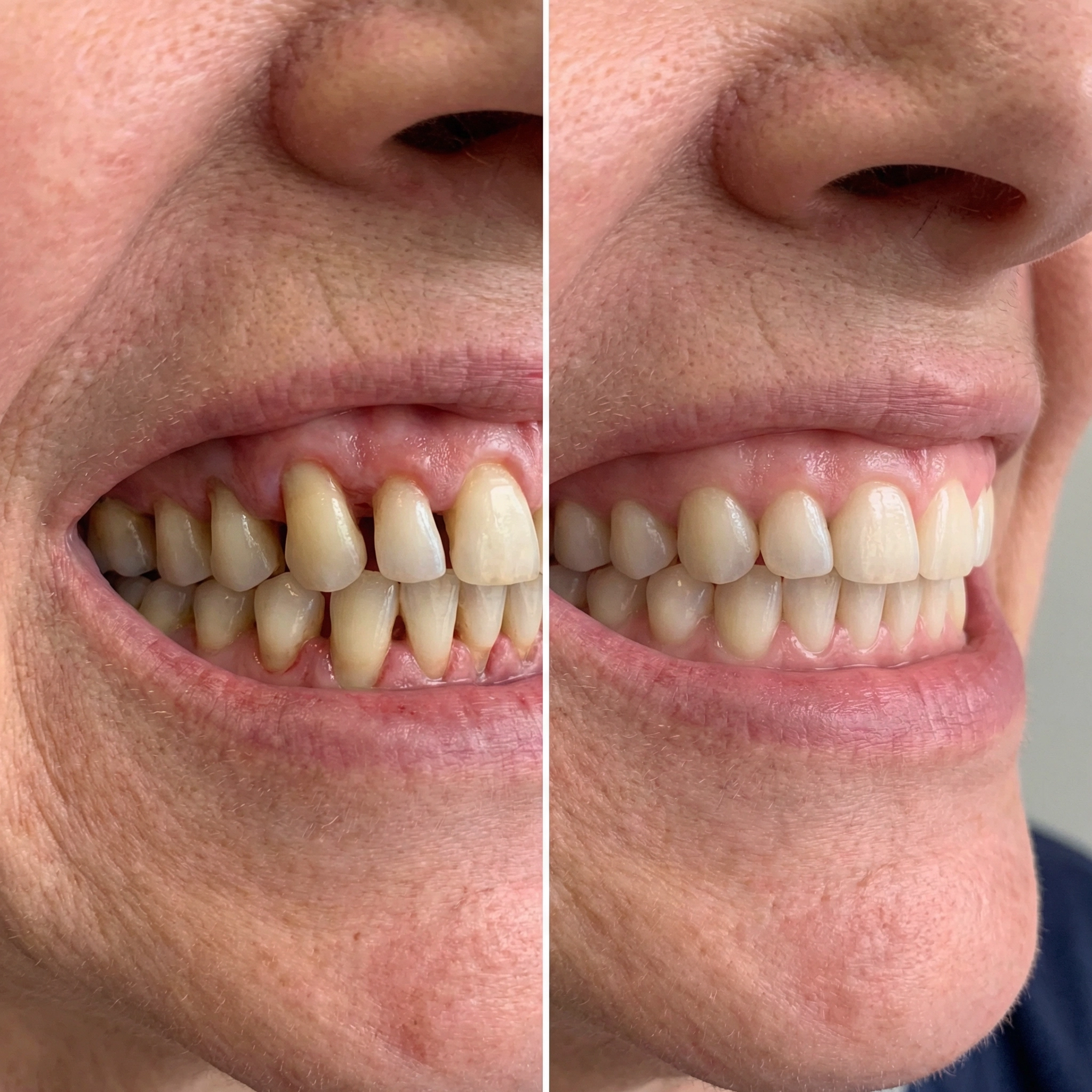
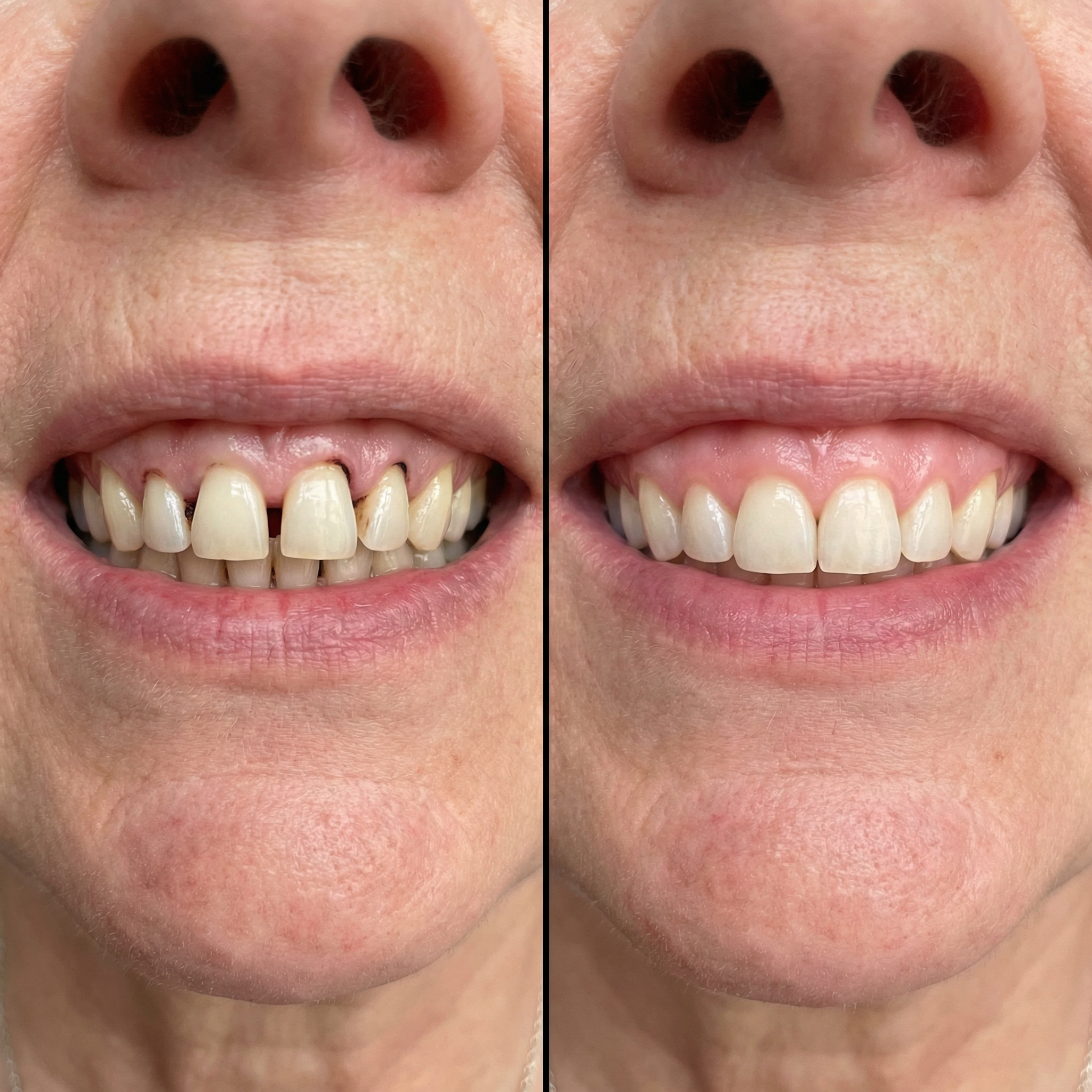
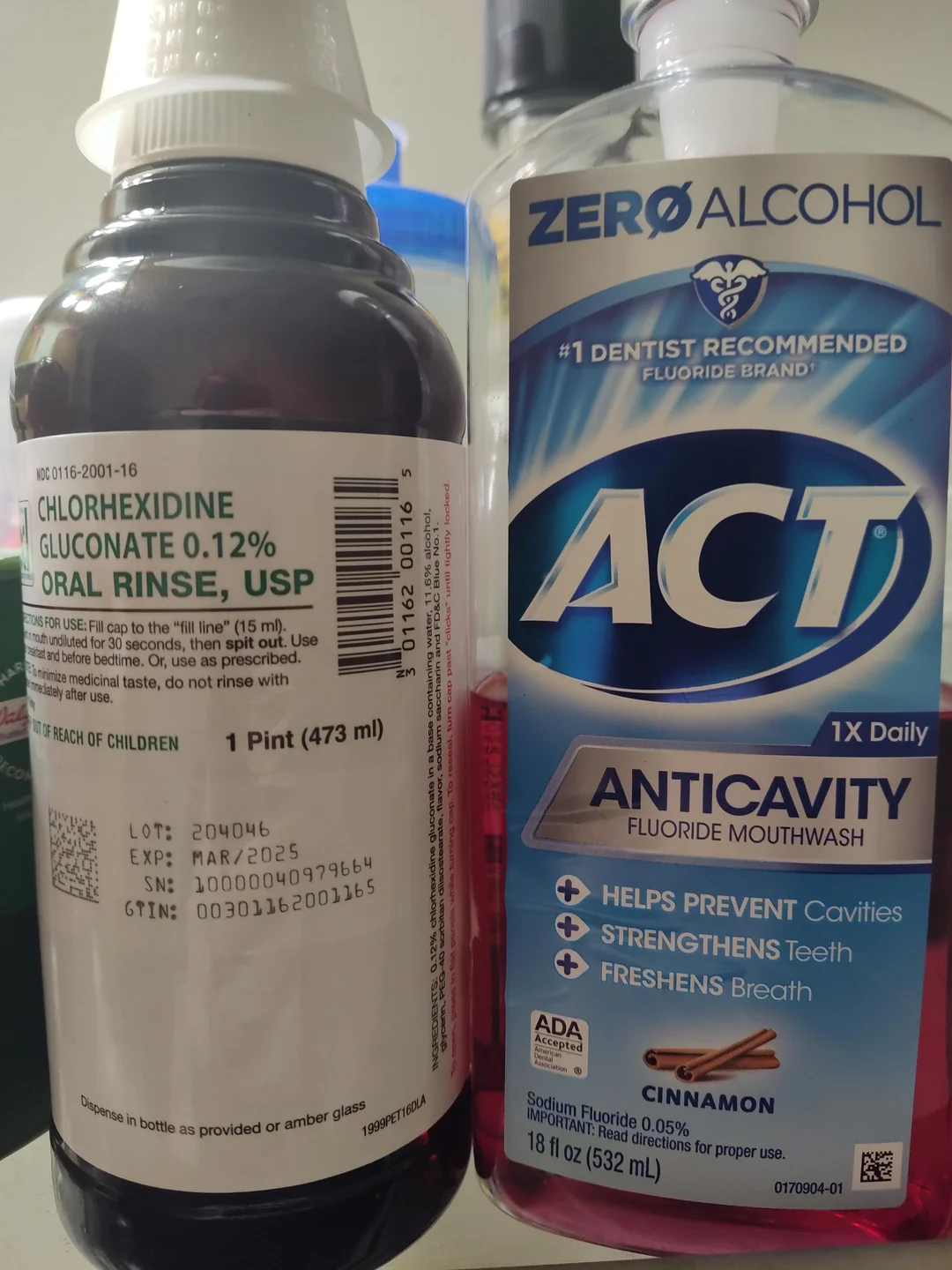
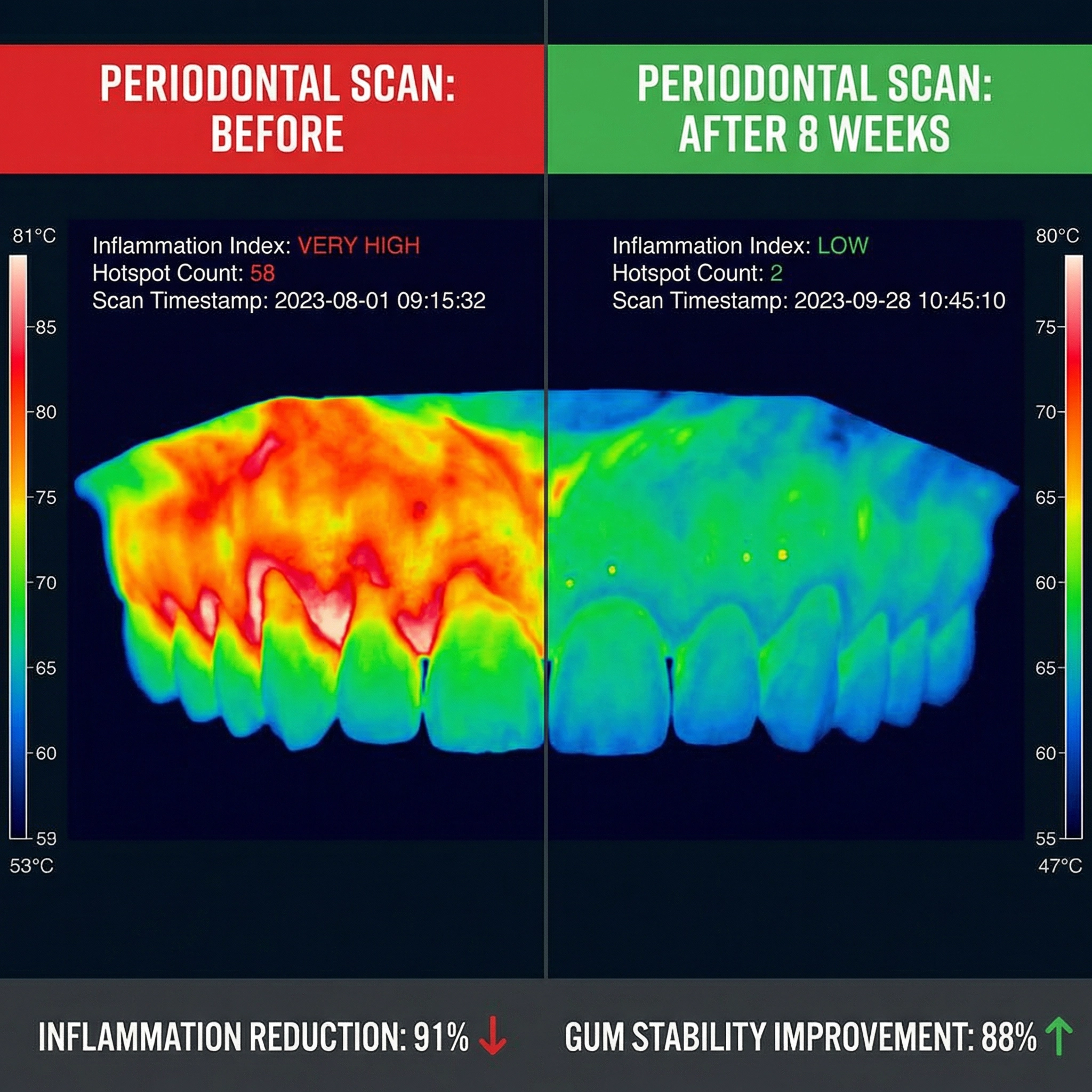
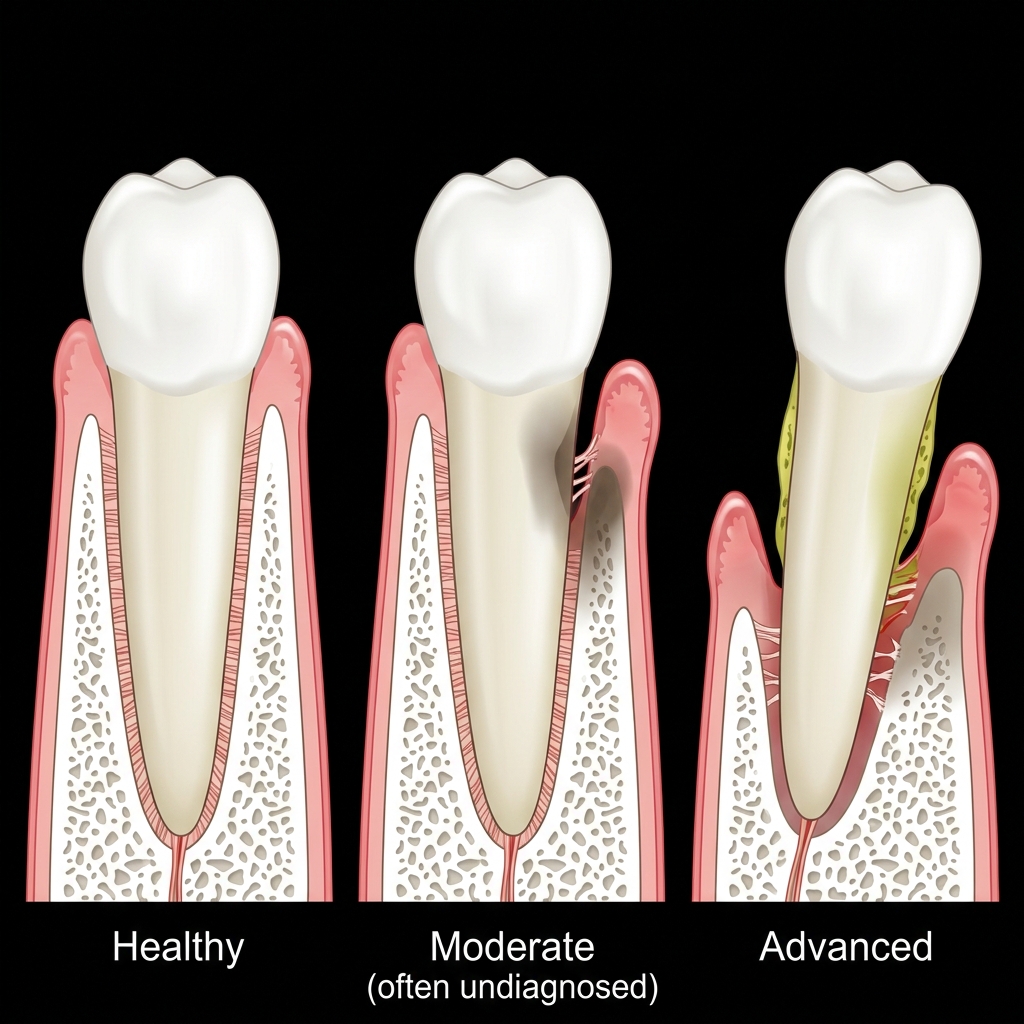
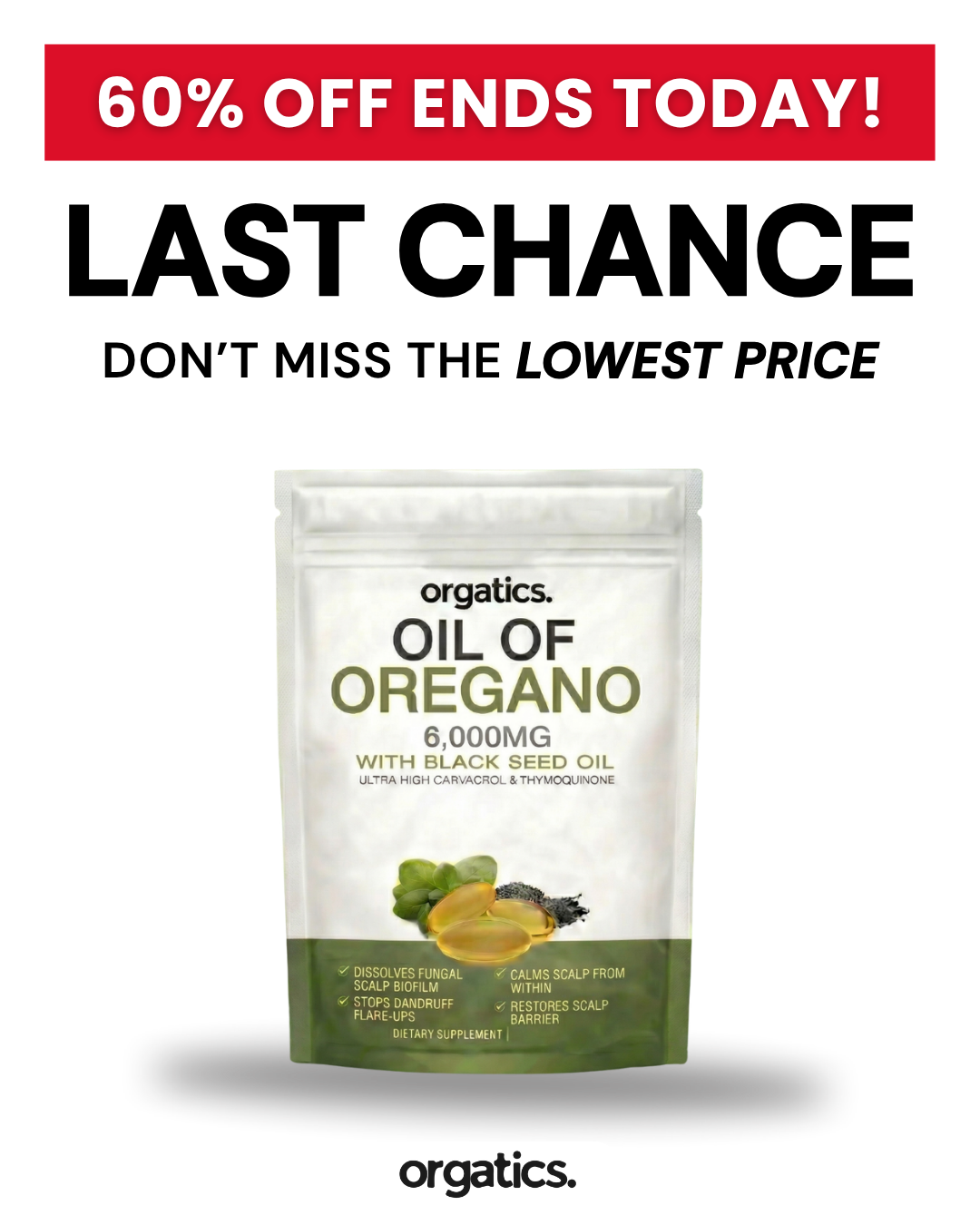
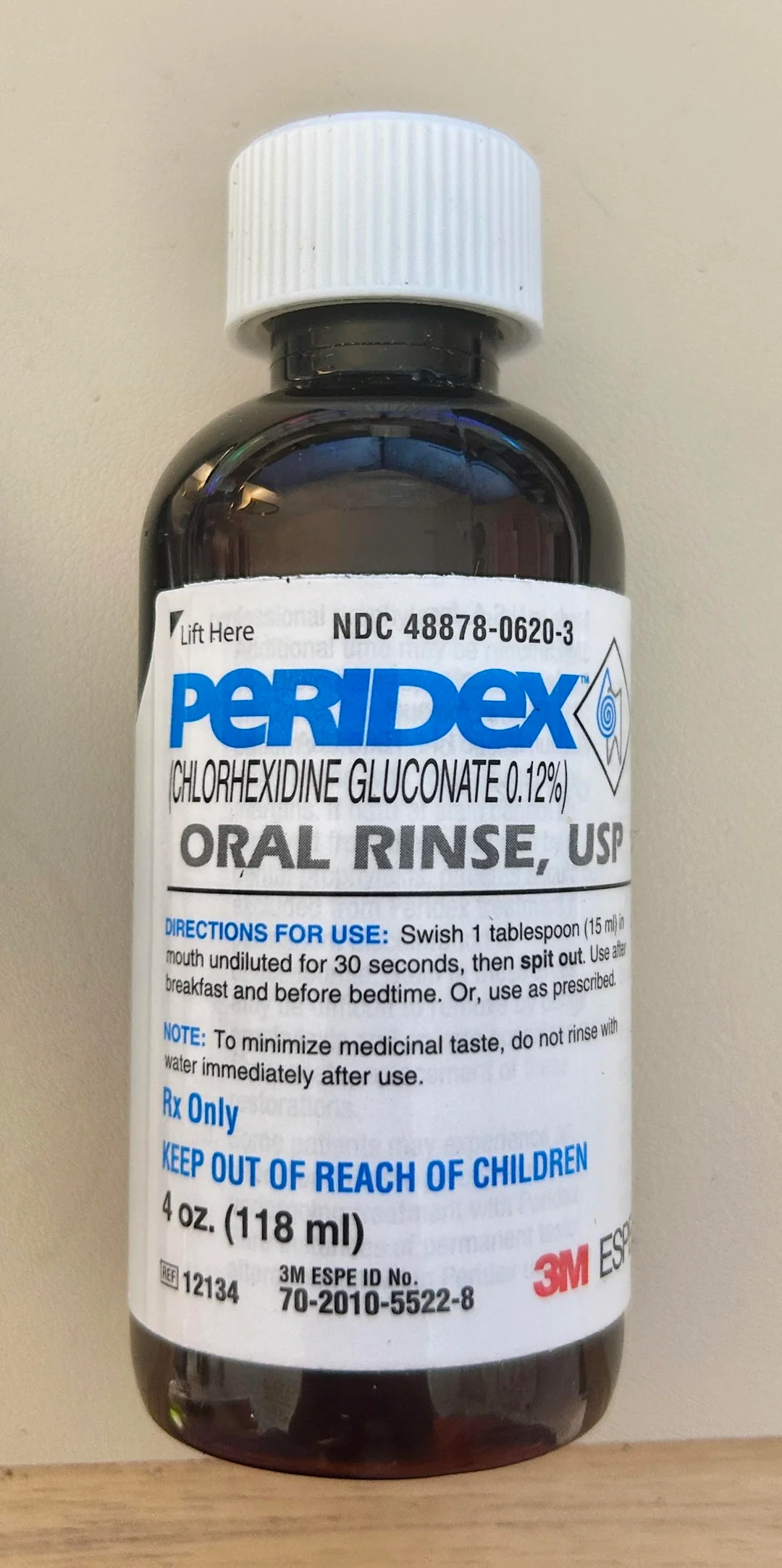
I Refused LANAP Surgery for 3 Years. Here's What Happened to My Pockets. I've been a dental hygienist for 38 years, and chronic gum disease is one of the hardest things I watch patients struggle with. Not because the numbers on the chart are scary. Because the protocol is. The one that haunted me most was Eleanor. She was 67. Pockets at 4mm on chlorhexidine for eleven years. "Stable," her periodontist had written in her chart. Stable. She was eating breakfast — oatmeal, not even anything firm — when her front tooth came out into the bowl. She lost six teeth that year. By the next Christmas she was eating soft food alone in the other room while her grandchildren had dinner at the table. I was the one who had been cleaning her teeth twice a year for those eleven years. That was four years ago. After that, I started paying attention differently. Not to the pocket depth chart. To what was happening to the people next to the chart. About three years ago, it happened to me. My own pockets started creeping. 4mm. Then 5mm. Then 6mm in two sites. All those years of 12-hour shifts, eating whatever was in the break room, sleeping six hours a night — finally caught up with me. My periodontist offered me LANAP. $2,200 a quadrant. Maybe two quadrants if the second pass didn't hold. "It's the gold standard," he said. "The benefits outweigh the risks." I smiled politely and said I'd think about it. But I knew I wasn't going to do it. I'd watched too many of my patients on that surgical track. Not just Eleanor. Richard was a carpenter. 41 years. Built his own house, built his daughter's house, built a deck on his son's house every other summer. By year four on chlorhexidine plus quarterly cleanings, his pockets were at 7mm and he was scheduled for LANAP. The recovery wiped him out. The pockets bounced back in eight months. His son finished the last deck. Richard sat in a lawn chair and pointed. Miriam played piano at her church every Sunday for 30 years. She had two LANAP rounds — one quadrant in the spring, one in the fall. By month eighteen post-surgery she'd lost two molars anyway. She stopped going to church potlucks. Told me once, very quietly, that she'd been the organist since she was 22. She wasn't anymore. Said she didn't want anyone seeing her partial. When I asked Richard's periodontist about the bounce-back, he said, "Some patients require ongoing maintenance. We'll schedule another round." When I asked Miriam's periodontist about the molars, he said, "She's just getting older." I've heard that second line more times than I can count. "He's just getting older." "She's just getting older." It's the thing they say when they don't want to say what the protocol isn't doing. So when Dr. Patel said "the benefits outweigh the risks," I knew exactly what he meant. The benefit is a number on a chart. The risks are a carpenter pointing from a lawn chair and an organist who can't open her mouth in church. I wasn't trading one for the other. So I just dealt with it. Chlorhexidine twice a day. Custom gel trays. Waterpik twice a day. Specialty pastes. Cut the sugar. Cut the bread. Flossed three times a day until my fingertips were sore. My pockets came down to 5mm. Then crept back up to 6. Three years of that. And every time I probed a patient's gumline, I thought about Eleanor's tooth in the oatmeal bowl. Then about two months ago, one of my regular patients came in. Margaret. 71. I'd been cleaning her teeth twice a year for twelve years. Stubborn pockets — 5s, 6s, never under 5 the whole time I'd known her. Nothing worked for her either. She'd tried everything I'd tried, plus a few things I hadn't. But this time she seemed different. Lighter somehow. Sitting up straighter in the chair. I asked her how she was doing. She said something I didn't expect. She said her pockets had dropped from 6mm to 4mm in ten weeks. Without LANAP. She'd found a softgel. Pharmaceutical-grade carvacrol from wild oregano. Been taking two a day with her breakfast. And for the first time in twelve years, her periodontist had told her she didn't need surgery. I'll be honest, I was skeptical. I've heard every miracle-cure story you can imagine in 38 years. Coconut oil pulling. Activated charcoal. You name it. But Margaret is not a miracle-cure person. Margaret is a retired bookkeeper who eats the same breakfast every day and irons her sheets. When Margaret tells me something, it's because she checked it twice. That night I couldn't sleep. My pockets were at 6mm. Dr. Patel had asked me again at my last appointment. "Sandra, it's been three years. Please." So at 2 in the morning I got up and opened my laptop. I typed: "why don't deep cleanings hold long-term." What came back stopped me. A 2020 paper in the Journal of Clinical Periodontology. The bacteria in chronic periodontal pockets aren't floating in the pocket fluid waiting to be killed by a rinse. They've built a hydrophobic biofilm shield around themselves. An oily lipid matrix that physically repels every water-based treatment. I read it three times. Then I went deeper. And what I found rearranged 38 years of what I thought I knew. It turns out chlorhexidine doesn't fail because the prescription is too weak. It fails because chlorhexidine is water-based. The biofilm is oil-based. Water bounces off oil. The bacteria 6mm down behind the shield have never been touched. Not for eleven years of Eleanor's "stable" chart. Not for nine years of mine. Not for the entire careers of every patient I'd watched lose teeth on this protocol. Chlorhexidine is the standard prescription. The number on the chart looks fine. The periodontist nods. But chlorhexidine does nothing — nothing — about the biofilm shield protecting the bacteria. That's why Eleanor lost her teeth with pockets at 4mm. Her chart was the cover of the book. Nobody ever read what was inside. I sat there at the kitchen table and the hair on my arms came up. Then I kept reading. The 2019 meta-analysis in the Journal of Ethnopharmacology. Lipid-soluble compounds — specifically carvacrol from wild oregano oil and thymoquinone from cold-pressed black seed oil — penetrate hydrophobic biofilm at rates 400 to 600 percent higher than water-based antiseptics. The chemistry principle: like dissolves like. Oil dissolves the oil shield. They don't kill the surface bacteria better than chlorhexidine. They reach the bacteria the chlorhexidine couldn't reach. And the recovery time, the bounce-back, the eventual tooth loss I'd watched my patients go through for years? Every prescription, every gel tray, every Waterpik flush had been hitting the surface of a fortress nobody had ever penetrated. The deep colony kept producing inflammatory compounds. The chronic inflammation kept resorbing the bone underneath. Eventually the bone gave up and the tooth fell out. Richard's son finished his deck because Richard's chlorhexidine had never reached the bacteria eating his bone. Miriam stopped playing because her chlorhexidine had never reached the bacteria eating her bone. It wasn't aging. It never was. I ordered a generic oregano oil capsule the next morning. The first bottle I bought was a cheap brand off Amazon. 5 stars, thousands of reviews, "oregano oil extract" on the label. I took it every day for two weeks. My next probing came back at 5.5mm. Down from 6. Better. But not life-changing. I was frustrated. Margaret had dropped 2mm. I'd dropped half a millimeter. So I went back and started reading more carefully. That's when I saw it. Most oregano supplements you can buy online are cooking-grade powder. Modern oregano has been bred for shelf life and color uniformity. Bright green, mild flavor, easy to grind. Some of it is barely 5% carvacrol. Nobody was measuring carvacrol concentration — they were measuring how the powder looked in a capsule and how long it held its color on the shelf. The oregano that used to be medicine became a pizza topping. Then the companies take that pizza-topping oregano, dry it with high heat (heat degrades carvacrol), press it into capsules, and sell it on Amazon for $14.99. Every oregano capsule I'd ever taken felt like nothing because the carvacrol concentration was nothing. The oregano that actually works has to be: - Wild Mediterranean oregano (not modern cultivar) - Standardized to minimum 70% carvacrol concentration (clinical research level) - Cold-pressed (not high-heat dried — heat destroys the active compound) - Combined with cold-pressed black seed oil for verified thymoquinone (the second lipid-soluble compound) - Third-party tested with a certificate of analysis you can actually read I kept seeing one brand in the reviews and the forums. Orgatics. Pharmaceutical-grade wild Mediterranean oregano. Minimum 70% carvacrol concentration. Cold-pressed black seed oil with verified thymoquinone. Third-party tested. Two softgels a day with breakfast. The exact formulation from the published research. I ordered it. It was more expensive than the Amazon bottle. At that point I didn't care. When it arrived, I could tell it was different before I opened the pouch. The softgels were a deep amber, almost mahogany. Not the rust-orange of the cheap ones. I put the pouch on my kitchen counter and set two softgels on the saucer next to my coffee mug. Took them with my first sip. The next morning, I noticed something. I brushed my teeth and spit into the sink. I leaned forward and looked. The pink was lighter. Not gone. But lighter than I'd seen in three years. I stood up and held the toothbrush under the bathroom light. I hadn't seen bristles that color since 2021. I checked my watch. 6:43 AM. I wrote it down. By the end of the first week I probed my own gumline at work — the way you do when you've been a hygienist long enough that you know the spots better than the periodontist does. 6mm sites reading 5.5. Down 0.5mm from a single week. I checked twice because I didn't believe it. Week three: 5mm. Week ten I went in to see Dr. Patel. He probed. Wrote down the numbers. Refreshed the screen. Probed again on the worst sites. 6mm and 5mm sites all reading 4mm. Bleeding on probing dropped from 67% to 12%. Tissue color shifted from dark inflamed red to coral pink. He didn't say anything for a full minute. Then he looked up at me. "Sandra. What are you doing." I told him. The pharmaceutical-grade carvacrol. The thymoquinone. The biofilm research. The systemic delivery through the bloodstream. He didn't roll his eyes. He didn't say "placebo." He was quiet. Then he said, "I want to look at the journal articles. Send me the links." I'd referenced the 2020 Periodontology paper and the 2019 Ethnopharmacology meta-analysis in a journal review years ago. I'd just never seen one of our periodontists actually read them. I said, "I'll email them to you." Three days later he called me. "Sandra. Based on your starting numbers and the trajectory we'd been seeing for three years, your pockets should have been at 7mm by now. You're at 4mm. I've been doing this for 22 years. I don't have an explanation other than what you're describing." He said it twice. Then he said something he had not said to me in 22 years of watching my pockets creep up and trying to get me on the surgical track: "Sandra. I'm not going to schedule the LANAP. Whatever you're doing, keep doing it." I walked out to my car and I sat there for probably ten minutes before I turned the key. It's been three months now. Last Tuesday I worked a 12-hour double shift at the practice. Came home, ate dinner, walked three miles with my grandson around the reservoir. Bit into an apple at the trailhead. Didn't think about which side to chew on. Didn't sit down until nine. I haven't done that since I was 49. Last Sunday my husband looked up from the newspaper and said, "You're humming again. You haven't hummed in maybe five years." I hadn't even noticed I was doing it. And last month I got a phone call. It was Eleanor's daughter — the one whose mother had lost six teeth in a single year, four years ago. I'd sent her a pouch of Orgatics the previous month because her own pockets had started creeping and her periodontist had just mentioned LANAP. She told me she'd been on it for six weeks. Her bleeding had stopped at week two. Her pockets dropped from 5mm to 4mm at her last probing. Then she said something I haven't stopped thinking about. "You found another way. My mom would have wanted this." I've told seven of my patients about Orgatics specifically. Not the Amazon cooking-grade version. The pharmaceutical-grade, third-party-tested one. Five have come back already. Margaret dropped another 0.5mm at her next probing. A man named Carl, 64, whose wife had been begging him to try something different — he canceled his LANAP, pockets at 4mm, first time under 5 in nine years. A woman named Doreen, 68, whose husband told me last week she's "back to being herself" — eating apples again, smiling in photos again. Here's what I know now that I wish I'd known four years ago. The body already has the tools to halt this. Lipid-soluble compounds — the kind in wild Mediterranean oregano standardized to clinical concentration — physically dissolve the exact biofilm shield that protects the bacteria eating your bone. You don't need surgery. You don't need to drain your dental insurance. You don't need to trade a carpenter's deck or an organist's church for another bounce-back protocol. Carl canceled his LANAP. Doreen is humming in her kitchen. Margaret's pockets are tighter than they've been since her 50s. None of them had surgery. All of them are sleeping through the night without the metallic taste that used to wake them up at 3 AM. This is what I'd have given to give Eleanor four years ago. I'd have driven a pouch to her house. I'd have set the softgels next to her coffee mug myself. I can't do that. But her daughter is on it now. Margaret is on it now. Carl and Doreen and four more people I love are on it now. And the door is open. It wasn't four years ago. It is now. If you're on chlorhexidine, custom gel trays, ioRinse, or any prescription rinse — or if your periodontist just offered you LANAP and you're sitting on the fence the way I was for three years — I'd take the softgels first. You'll see lighter bristles inside of a week. The first morning. That lift in the sink — pink turning paler instead of darker. You'll see it before your probing confirms it ten weeks later. It's two softgels. It's once a day. It's on the saucer next to your coffee. That's the whole protocol. Try it. See what happens. If I'm wrong, you get your money back. If I'm right — and after 38 years as a hygienist, and 13 weeks of my own numbers, and Eleanor's daughter calling me last month, I know I'm right — you get your mouth back. 👉 https://tryorgatics.com/pages/mucus — Sandra K. P.S. — A few things I wish I'd known before I ordered. Orgatics has a 90-day money-back guarantee. Every penny back, no questions asked. Periodontists don't do that with LANAP. If it doesn't work for you, you're not out anything but time. And you'll know whether it's working in a week. That lighter pink in the sink the first morning. The metallic taste fading by week two. You'll know. P.P.S. — Here's what my numbers did, for anyone who wants the diary version. Week 1: pockets 6mm → 5.5mm. Week 3: 5mm. Week 10: 4mm. Bleeding on probing dropped from 67% to 12%. Tissue color shifted from dark inflamed red to coral pink. Metallic taste gone by week two. White bristles consistent by week three. No raw scraped roots. No two-week recovery. No "we'll discuss surgery if this doesn't hold." Just my numbers getting better and me getting myself back. P.P.P.S. — Seven patients, five reported back already. Margaret 2.5mm down total. Carl canceled his LANAP at pockets of 4mm. Doreen's husband says she's "back to herself." I'll update this if the other two check in. P.P.P.P.S. — I keep two pouches in the house now. Orgatics is a small company. The wild oregano they use is harvested twice a year from Mediterranean fields. They can't rush it. The last time I ordered, it took 9 days to arrive — they were waiting on a fresh batch from the harvest. If you're going to try it, I'd grab it while it's in stock. They're running a buy-3-get-2-free right now, which is how I stock up. I went 38 years as a hygienist without recommending a supplement to anyone. This is the one. P.P.P.P.P.S. — One more thing. If you're reading this and your spouse is the one with the disease — your husband's pockets are creeping, your wife is hiding her smile in photos, your mother is eating soft food alone at family dinners — order it for them. Set it on their saucer next to their coffee. Don't ask. Just put it there. Eleanor's daughter said something to me on the phone that I keep coming back to. She said she wishes she'd just put the pouch on her mother's kitchen table four years ago without explaining anything. Just put it there. Let her mother find it. Some windows close. This one is open. — SK
Support Your Gums and Halt Bone Loss Every Day
"Best customer support ever. My issue was resolved quickly and professionally. I so love how these softgels are helping me halt my gum disease."
LEARN MORELike this ad? Make it yours.
Crush rebuilds this exact creative around your product — your brand, your colors, your offer — in about a minute.