
Inactive· since May 26, 2026
- 86
- days it ran
- 6
- relaunches
- 17,971
- EU reach
Ad copy
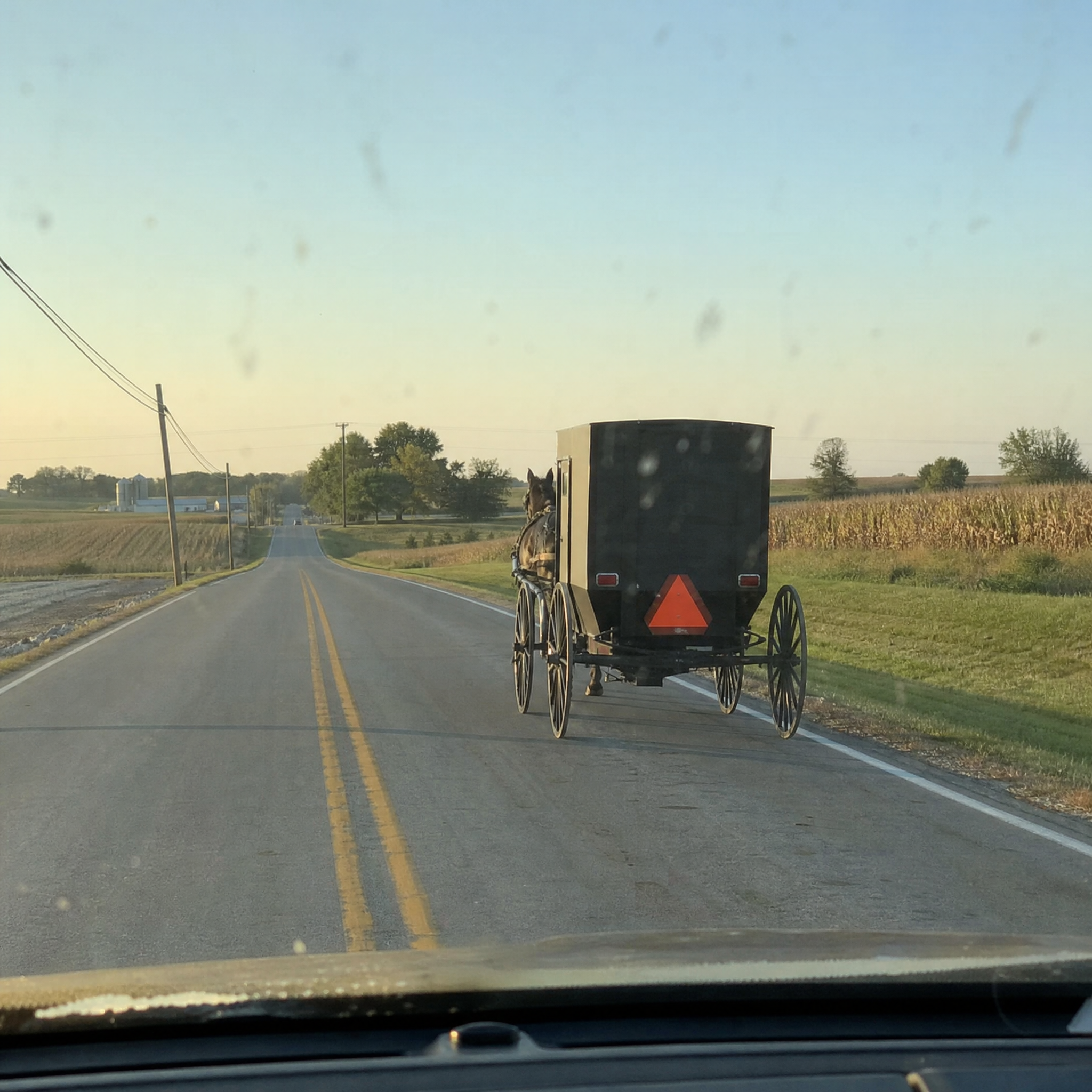
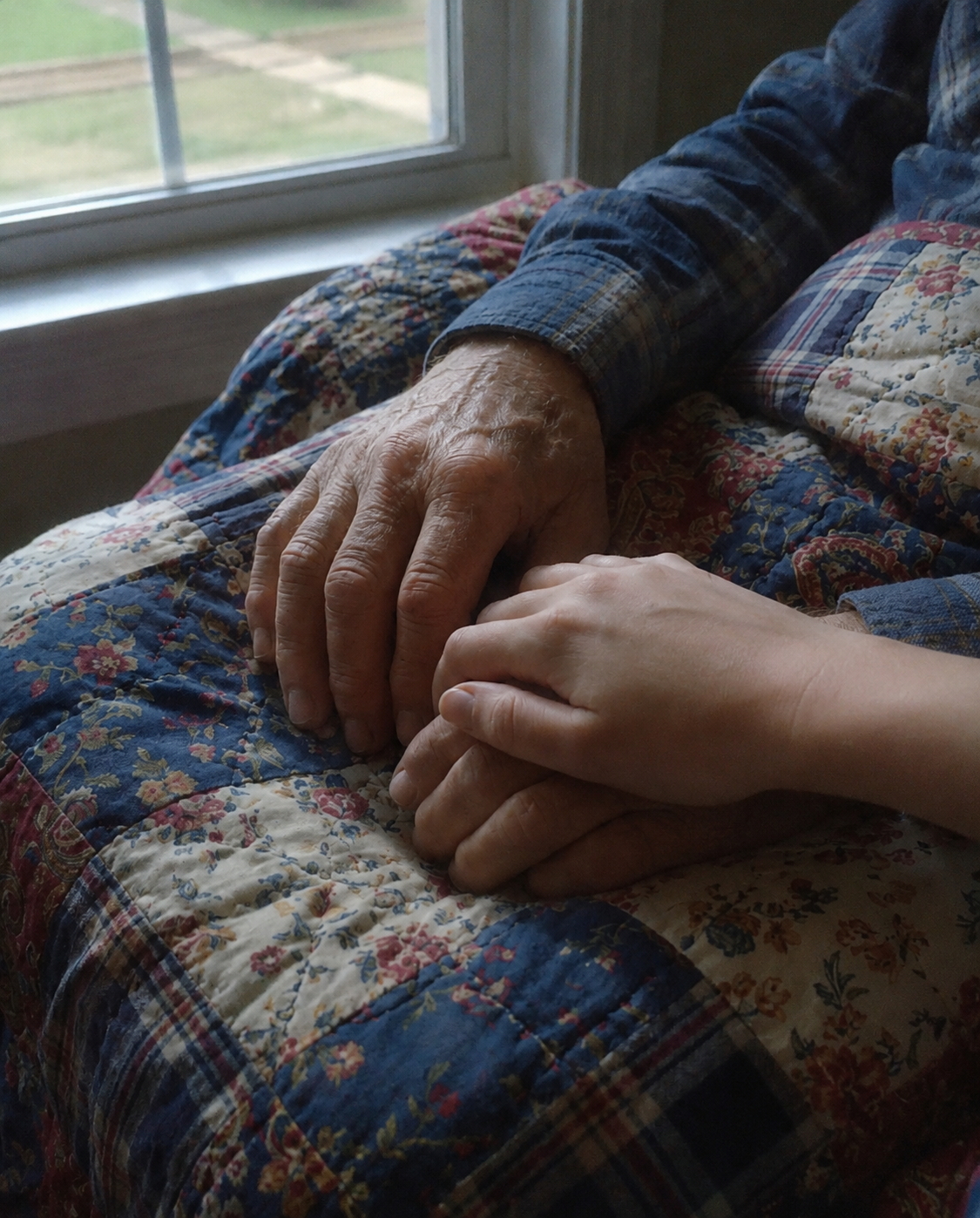
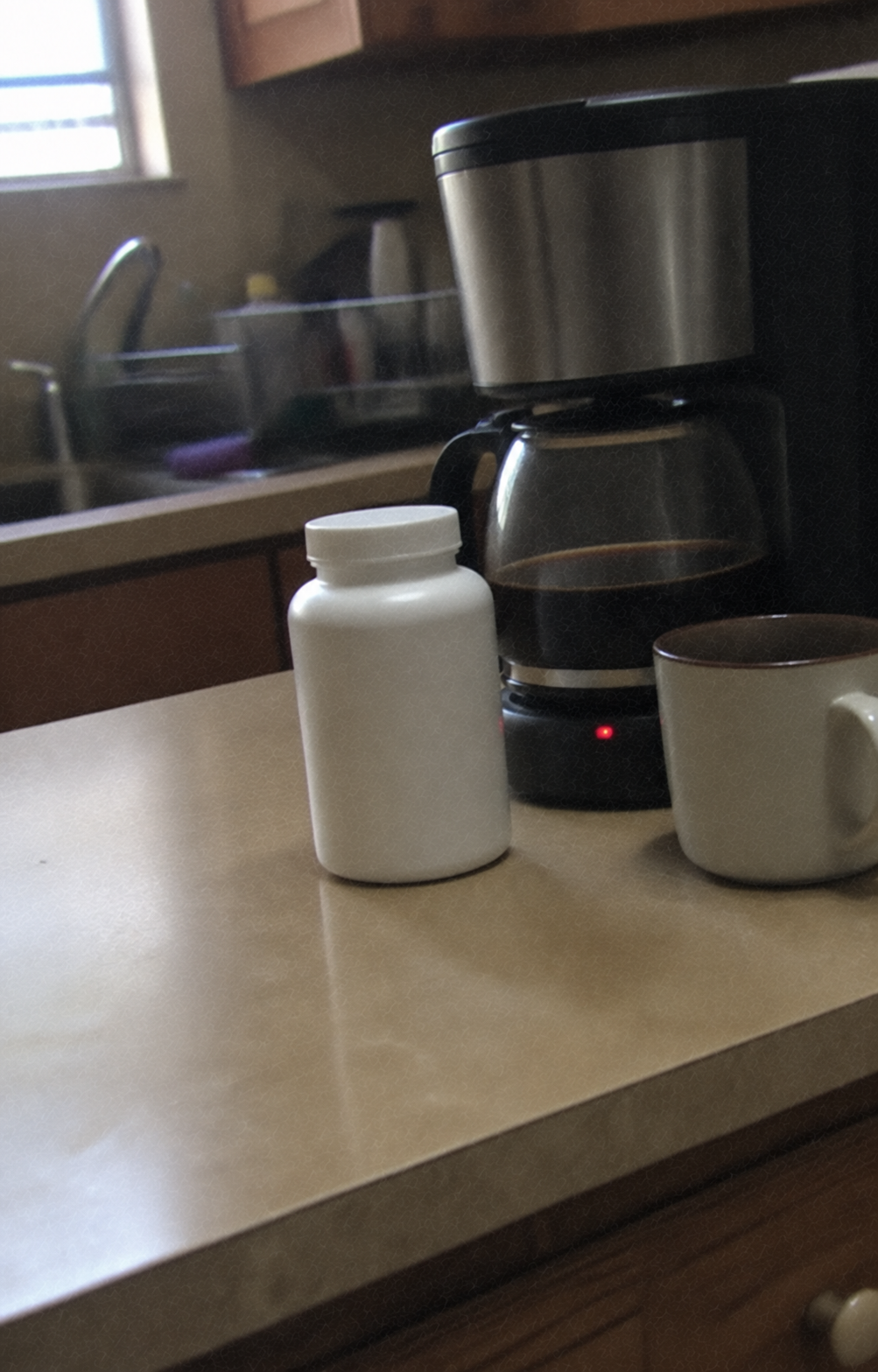
I Found a Photograph from Our Vacation in Maine in 2021 and Almost Didn't Recognize My Husband. He'd Been in My House Every Day Since. I Hadn't Seen Him in Three Years. I'm 60. My husband Bill is 63. We've been married thirty-eight years. The kiss on the back of my neck — for thirty-something of those years — was the way every morning of our marriage started. I would be standing at the coffee maker in my robe. The coffee would be dripping. The kitchen would be dark. He would come down the stairs. He would walk up behind me. He would put one hand on the small of my back and he would kiss me at the base of my hairline, right where the skin gets thin. Then he would pour himself a cup and sit down at the table. That was the morning. For thirty-something years. I want to tell you about the morning I realized he hadn't done it in a long time. It was a Tuesday in March of last year. I was making coffee. I was thinking about something else — I don't remember what, probably the grocery list. He came down the stairs. He walked past me to the cabinet. He got his mug out. He poured his coffee. He sat down at the table. He didn't touch me. I stood at the counter with my hand on the coffee pot. Something in me said: when was the last time. I genuinely could not remember. I stood there trying. I went back through the months. I went back through the seasons. I could not remember the last time my husband had kissed the back of my neck while I was making coffee. It had been over a year. I am sure of that. It might have been closer to two. I picked up my mug. I sat down across from him. He smiled at me. I smiled back. I did not say anything. I drank my coffee. He read the news on his phone. I drank my coffee. When he got up to take his mug to the sink, I went into the living room and I sat on the couch in my robe and I looked at the wall and I tried to figure out how I had not noticed. I'm going to back up and tell you about Bill, because if you don't know Bill the rest of this isn't going to land. Bill is a contractor. Was a contractor. He ran his own small framing crew for thirty-one years. Three guys most of the time, six on a big job. He retired in 2021, when he turned sixty. He didn't really retire. He just stopped taking new contracts. He still went out every week or so to look at a job for somebody. He still gave estimates for our daughter Rachel's friends when they were buying houses. He still kept his tools sharp. Bill is — was — a man whose hands are the thing about him. Big hands. Calloused. Capable. The kind of hands you put on the small of a woman's back at a coffee maker. The kind of hands a woman doesn't realize she's been measuring her marriage by until she stops feeling them. Bill is 5'11". He was 180 pounds when we got married. He's 200 now, more or less. He has gray hair that he keeps short. He has a beard he's had since 2009 that I think makes him look like Sam Elliott but he doesn't believe me. He is — was — a romantic. Not in a flowers-on-Valentine's-Day way. In a kiss-on-the-neck way. In an evening-walk way. In a Saturday-morning-in-bed way. I want to be careful here, because I am a 60-year-old woman writing about her marriage on the internet, and there are things about my marriage that aren't for the internet. But I will say this much, because it is the whole point of what I am about to tell you. Bill and I had what I would call a present marriage. We were present with each other. In all the ways adult married people are present with each other. Sometime in 2022 the presence started fading. It didn't go all at once. It dimmed. By 2023 there were stretches of weeks where Bill seemed to be in our marriage from the room next door. By the spring of 2024 — the Tuesday at the coffee pot — he had been in the room next door for so long I had forgotten what it was like when he was actually in the room. I want to list a few of the things, because "in the room next door" is too abstract. The boat. We have a small day-sailer at a lake an hour east of our house. Bill's father bought it in 1971 and gave it to Bill when his father stopped sailing in 1998. Bill has taken it out every weekend, weather permitting, since 1998. Sometime in 2023 he stopped wanting to. He didn't say he stopped wanting to. He just always had a reason. He was tired. His back was tight. The wind wasn't right. The forecast looked iffy. The truck needed an oil change first. By the summer of 2023 we hadn't been on the water in three months. By the summer of 2024 we hadn't been on the water in eight months. The boat sat at the dock. Our slip fee was $640 a year. I paid the slip fee in February of last year without saying anything. I paid it because I refused, even to myself, to admit that we weren't going to take the boat out that year. The evening walks. Bill and I have walked, almost every evening of our marriage, after dinner. Around the block. Forty-five minutes. We walked when our daughter was a baby in a stroller. We walked when she was in high school. We walked when we were trying to figure out whether to take out a second mortgage in 2008. We walked. Bill stopped offering to walk in late 2022. I'd say "let's go for a walk" and he'd say "you go ahead, hon, my knees are bothering me." I went alone for about six months. Then I stopped going alone. Walking alone after dinner, for a woman who has walked next to her husband after dinner for thirty-six years, is not a walk. It is a confirmation. I confirmed for six months. Then I stopped confirming. The hands. This is the one I noticed in bed, and I want to write about it carefully because it is the truest description I have of what was happening. Bill's hands had always been warm. Big and warm. A contractor's hands. They held heat the way a brick wall holds heat. Sometime in 2023, Bill's hands got cold at night. He started wearing socks to bed. He'd never worn socks to bed in his life. He started keeping his hands under the covers all the way up to his shoulders. When he'd reach for me — and the reaching had been getting less frequent for a while, which I am not going to talk about further because that is not what the internet gets — when he'd reach for me, his hands would be cold. It surprised me the first few times. After a while it stopped surprising me. After a longer while the reaching mostly stopped. I want to be honest. I had begun, by the spring of 2024, to wonder whether I was watching my husband leave our marriage one degree at a time. Not for someone else. Not in any way I could name. He was just going somewhere I couldn't follow. And the going was so gradual I had not been able to point at any one thing and say "here. This is the thing." The kiss at the coffee maker was the thing. When I sat on the couch that Tuesday morning and tried to remember when he had stopped — and could not — I understood that there was no one thing. There were forty things. He was leaving us by forty degrees at once. I'm going to tell you about book club because book club is where the story turns. I host a book club every other month. Five of us. We've been doing it since 2014. We rotate houses. We rotate book picks. It was my pick that month. I had picked Crossing to Safety by Wallace Stegner. I had picked it because I'd read it in 1989 and loved it and I'd been wanting to revisit it for years. I had not been thinking about Bill when I picked it. I had been thinking about it as a book about long friendship. When I sat down with it in late January to read it again before the meeting, I realized about thirty pages in that the book is not about long friendship. It is about watching your husband get sick and not being able to do anything about it. It is about the moments in a long marriage when one of you becomes a different person and the other one has to make peace with the new person without losing the old one. I read the book in five evenings. I cried at most of them. I did not tell Bill what I was reading. He saw the book on my bedside table. He picked it up one night. He read the back. He said: "Oh, you've read this before." I said: "Yes." He said: "You always loved this one." I said: "I did. I do." He put the book down. He went to sleep at 9:15. I read for two more hours. I lay there next to him afterward and I watched him breathe. I want to tell you what I thought lying there, because it was the night I think the decision actually started. I thought: I am going to lose him in pieces if I don't do something. I did not know what to do. I did not know how to do anything. I went to sleep. Book club was three weeks later. Susan came first. She always comes first. Susan is the kind of woman who shows up half an hour early and helps you cut up the cheese. Then Janet. Then Trish. Then Theresa. Theresa is the newest member of the group. She'd joined six months earlier, after Susan met her at a Pilates class and invited her. Theresa was 58. She and her husband Mike had moved to our town in 2022 from a suburb of Cleveland. They'd moved to be closer to their grandchildren. They lived three streets over from me. I'd liked Theresa from the first meeting. She was a quiet listener. She had a way of waiting until the conversation had gone all the way around the room before she said anything, and then she'd say one specific thing that would change the temperature of the discussion. That night we got into Crossing to Safety after dinner. Susan loved it. Janet thought it was slow. Trish hadn't finished it but said she would. When it came around to Theresa, she put down her wine glass. She said: "I don't want to say what I'm about to say if it's going to make anyone uncomfortable. But I want to say it. So I'm going to say it." Everybody got quiet. She said: "This is a book about a woman watching her husband become a person she does not recognize. And about her trying to figure out what is hers to do about it. And what is not. And about how the not-knowing-which is the hardest part." She said: "I think it is the most accurate thing I have ever read about being married to a man in his sixties." Nobody said anything for a second. Janet — who is married to a man in his sixties — said: "Theresa. That's a lot." Theresa said: "It is. I'm sorry. The book made me cry the whole way through." Susan asked Theresa, gently: "Is Mike alright?" Theresa said: "Mike is alright now. He wasn't, for a while." She didn't say anything else. Susan let it go. We talked about something else. But Theresa caught my eye across the room while Susan was talking, and she held my eye for a second too long. I looked back at my wine glass. I knew she had seen me. I don't know how. But I knew. Everyone left at about ten. Theresa stayed. She said: "Lynn, let me help you with the dishes." I said: "You don't have to." She said: "I want to." We went into the kitchen. She rolled up her sleeves. She started rinsing wine glasses at the sink. We didn't say anything for about five minutes. Then she said, without looking up from the sink: "Lynn. Is Bill alright?" I want to write the next five seconds exactly the way they happened, because they are five seconds I will remember for the rest of my life. I was holding a serving plate. I was drying it with a dish towel. I looked at the back of Theresa's head. I said: "What makes you ask." She kept rinsing. She said: "I saw him at the hardware store last Saturday. He didn't see me. I was at the end of the paint aisle. He was looking at sandpaper. He stood there for a long time. He was not picking anything up. He was just standing." She said: "I knew that stand." I set the plate down on the counter. She turned off the water. She turned around. She said: "Mike used to do that stand. For about two years. I'd see him in our garage doing the same thing. He'd go in there to do something and twenty minutes later he'd be standing in the middle of the floor looking at the wall." I said: "What was that." She said: "I don't know exactly what it was. I never got him to name it. He couldn't. I'm not sure anyone could. But it was a kind of — disappearance. Where the man you knew is still in there, but he's behind something, and you can see him but you can't reach him." I said: "Yes." That was all I said. Yes. She nodded. She said: "I want to tell you what we did. If you want to hear it." I said: "Yes." We sat down at my kitchen table at 10:35 p.m. She left at 12:50 a.m. I'm going to compress what Theresa told me, because the conversation went for two hours, and the texture of two hours of two women talking in a kitchen at midnight is not for the internet either. What she told me was this. Mike had started doing what Bill was doing in 2020. Pulling back. Getting quieter. Losing the small ways he'd been present in their marriage. The hands cold at night. The boat — they had a boat too, on a different lake — left at the dock all summer. Theresa had spent a year and a half pretending it was nothing. Then her oldest daughter visited from Cleveland for a long weekend and said, on the way to the airport on Sunday, "Mom. Is Dad okay? He's different." Her daughter had said it kindly. But it had landed like a verdict. Theresa had gone home and sat at her kitchen table and started crying, and Mike had come in and asked her what was wrong, and she had told him. She had said: "Mike. You are not in our marriage right now. I don't know where you are. But I miss you." Mike had sat down across from her. He had been quiet for a long time. Then he had said: "I know. I miss me too." That had been the conversation that started it. The next week Mike had called his doctor. His doctor had run a panel. His numbers weren't terrible. His blood pressure was a little high. His cholesterol was creeping. His PSA was in range. Everything else was normal. The doctor had said something Theresa told me she'd remembered word for word. He had said: "Mike. What you're describing isn't on the panel. It is real. But it is not on the panel. What I'm going to suggest is some basics, because the basics are sometimes more powerful than they sound." The doctor had suggested walks, weight, sleep, and a conversation with Theresa about whether there were things they hadn't been doing that they could start doing again. Together. Mike had done the basics for a few months. The basics had helped some. Not enough. Theresa's sister in Pittsburgh had called sometime that summer. Her sister's husband, Carl, had been through what sounded like the same thing two years earlier. He had taken a supplement. He had felt better. Theresa's sister had sent her the bottle. It was called Rosabella. Theresa told me about it the same way her sister had told her. She said it was a beetroot supplement, made by a small operation in Lancaster County, Pennsylvania. Cold-pressed at low temperatures. She said the thing that had mattered, when she had read about it, was that beetroot has been studied for a long time for things related to cardiovascular wellness and to general vitality — and that the compounds in beetroot, called betalains, are heat-sensitive. Most beetroot products are processed in ways that degrade them. Rosabella does it the slow way. She told me she'd called Mike's doctor before they'd added it. She told me the doctor had said yes — it's a food-based supplement, there's good research on antioxidant support, go ahead, tell me how it goes. She told me Mike had taken it. Alongside the walks. Alongside the weight he was losing. Alongside everything they had decided to do differently together. She said: "I'm not telling you the supplement is what brought him back. I am telling you that the combination brought him back. I cannot tell you which capsule, which walk, which night of sleeping with him under the same covers tipped him." She said: "What I can tell you is that the man who took me out on the boat last summer was the man I married." I asked her how long it had taken. She said: "About four months before I'd say I noticed it clearly. About six months before he did." I asked her one more thing. I said: "Theresa. The neck-kiss thing. Did Mike — did that come back." She looked at me across the kitchen table. She said: "Yes." She didn't elaborate. She didn't need to. I called my doctor's office on Wednesday. I told the nurse — Renee, who I've known for fourteen years — what I wanted to ask. I said: "I want to ask the doctor whether a supplement is alright for me to add to what I'm doing. And — I want to ask the same question for my husband. Should I have him call too?" Renee said: "Yes. Have him call his own doctor's office. They'll have his chart in front of them. I'll ask Dr. Sutton about you." Dr. Sutton called me back Thursday morning. She said: "Lynn, it's a food-based supplement, there's good research on antioxidant support, and there's no reason you can't add it. Tell me at your next visit how it's going." She paused. She said: "Lynn. Is everything alright?" I said: "I'm asking for me and for Bill." She said: "Bill should call his own doctor's office. I imagine they'll tell him the same thing. But he should ask. They have his chart." I said: "I know. Thank you." She said: "Is everything alright?" I said: "Some things have been hard. We're working on it." She said: "Okay. Call me if you need to." She didn't push. Some doctors don't push. I was grateful for that. Bill called his own doctor's office on Friday. I want to be clear that I did not ask him to call. I had not yet told him about Theresa. I had been sitting with the supplement and with the conversation for two days. I had been trying to figure out how to bring it up. He called on his own. He came into the kitchen Friday afternoon and he said: "Lynn. I made a doctor's appointment for next week." I said: "What for?" He said: "I want to talk to him about — about how I've been." I sat down at the table. I said: "What do you mean by that." He said: "Lynn. I haven't been here. I know I haven't been here. I don't know how to talk about it. But Theresa called me yesterday." I looked up. He said: "She called the house. She asked to talk to me. She said she'd been at book club. She said she didn't want to overstep. She said her husband had been through something a couple of years ago that sounded familiar. She told me about it. She said she'd told you too. She said she wanted me to know she'd told you." He paused. He said: "She said: 'Mike asked me to make this call. He wanted me to tell you that whatever you've been carrying, it does not have to be permanent. You can call your doctor. You can talk to your wife. You can come back.'" Bill sat down across from me. He said: "Lynn. I didn't know how to start." I said: "Start now." He started. I'm not going to tell you everything Bill said that night. That is between Bill and me. What I'll tell you is what we did next. Bill saw his doctor — Dr. Kessler — the following Wednesday. He asked Dr. Kessler about the supplement before he asked him about anything else. Dr. Kessler said the same thing Dr. Sutton said. Food-based supplement, good research on antioxidant support, no reason not to add it, tell me how it goes. Then they had a longer conversation. Bill didn't tell me everything they talked about. I didn't ask. Some conversations a man has with his doctor stay with the man and the doctor. What he told me was that they had agreed on three things. Bill would lose fifteen pounds. Bill would walk every morning before breakfast. Bill would take the supplement and they would re-check his numbers in three months. Bill came home from the appointment. He sat down across from me at the kitchen table. He said: "Dr. Kessler told me to tell you something." I said: "What." He said: "He said to tell you he's glad you and I are talking. He said sometimes wives notice things husbands don't." I started crying at my kitchen table. It was the second time in three weeks I had cried at the kitchen table. Bill got up. He came around behind me. He put his hand on the back of my neck. He didn't kiss it. But he put his hand there, and he held it there, for what felt like a long time. I felt the warmth of his hand at the base of my hairline. That was the first warmth I'd felt from him in over a year. I want to tell you about the anniversary. Bill and I have an anniversary in October. We were married on October 11, 1986. He'd planned to take me to dinner that year. He'd planned it weeks in advance. He didn't tell me where we were going. That morning he came down the stairs. I was at the coffee maker. He walked up behind me. He put his hand on the small of my back. He kissed the back of my neck. I closed my eyes. I had been waiting for that kiss for almost two years. He didn't say anything about it. He didn't make a thing of it. He just kissed me on the back of the neck and then he reached past me for his coffee mug and he poured himself a cup and he sat down at the table. I stood at the counter for a minute with my hand on the coffee pot. I thought: he's here. That night he picked me up at the door of our own house, the way he picked me up for our first date in 1984. He had a small bouquet of cosmos in his hand. From our front garden. He drove me to a restaurant called Marchetti's — the restaurant where he proposed to me on a Saturday night in 1986. The maître d', a man in his seventies named Vincent who has been there since 1985, recognized us. He said: "Mr. and Mrs. Hartley. We've been waiting for you." He took us to a table in the corner by the window. Bill had asked them to play a song that had been playing the night he proposed. He had called Vincent the week before to arrange it. The song played around 8:30. Bill stood up. He said: "Lynn. Would you dance with me." I said yes. He led me to a small space at the back of the room where a couple had been dancing earlier in the evening. He put his hand on the small of my back. I put my head against his shoulder. We danced for about three and a half minutes. He led me. He turned me under his arm twice. He pulled me close. When the song was over, he didn't let go right away. He held me there for another minute. He said into the side of my hair: "I'm sorry I was gone for a while." I said: "I'm so glad you're back." He said: "Me too." We went back to our table. I cried a little into my napkin and tried to hide it. Vincent saw me. He brought over a clean napkin and a small glass of grappa I hadn't ordered. He said: "On the house. For coming back." I have no idea how much Vincent knew. Probably more than I think. The food was wonderful. We drove home in the kind of silence Bill and I drive home in, which is to say we didn't fill it. He held my hand on the gearshift for the whole drive. That hadn't happened in two and a half years either. I want to be careful about what I'm claiming, because I've been careful about it throughout, and I want to land somewhere honest. Bill added the supplement to a bigger set of changes. He lost the fifteen pounds. He started walking before breakfast. He started seeing his doctor. He started talking to me about what he'd been carrying. I cannot tell you which part did what. What I can tell you is that the combination got us to a coffee maker on the morning of our thirty-eighth anniversary. I cannot tell you which capsule, which morning walk, which doctor's visit, which conversation at our kitchen table tipped him. I know the kiss came back. I know the boat went back in the water in May. I know that the man who put his hand on the small of my back at Marchetti's was the man I had been waiting for since sometime in 2022. If anything in this story sounds familiar — if there is a kiss at a coffee maker that has gone quiet in your house, if there is a walk you used to take that you don't take anymore, if there is a man you have been waiting for who is still in the room next door — the only thing I would encourage you to do is what I did. Find a Theresa. Or be one. Theresa's husband made her call me. Mike made his wife pick up the phone for a woman she had only known for six months. Mike did that because he had been on the other side of it. I'm writing this because I have not yet had the chance to be a Theresa to anyone else. If I'm yours — if you needed this — then this is the part where I'm making the call. The book club, the kitchen sink, the question. Is your husband alright. If he isn't, the path back is real. It is not fast. It is not a single thing. It is a combination of things, and the first thing in the combination is the conversation. If you are a wife who has been watching her husband get smaller and you do not know how to start the conversation — start with one sentence. Theresa's sentence at my sink was: "Lynn. Is Bill alright?" That's it. That's the whole question. You don't have to know what comes after. I'm not a doctor. I'm not in healthcare. I'm a 60-year-old retired bookkeeper from a small town in southern Indiana, married thirty-eight years to a contractor who got quiet for almost two of them. The quiet was real. The coming back was real. If you find yourself standing at a coffee pot one Tuesday morning trying to remember the last time he kissed the back of your neck — please don't wait the way I almost waited. Don't wait for someone else's Theresa. Be your own. ~ Lynn H. P.S. — Rosabella has a 90-day money-back guarantee. If you're not satisfied for any reason, every penny back, no questions asked. That's a sensible policy. Bill says he didn't feel anything for about three weeks. He noticed something around week five — a steadier energy in the afternoons. I noticed something around week six — that he was driving us to the lake on a Saturday afternoon without my asking. Give it at least six weeks before you decide. Bodies are slow. The kind of coming-back I'm describing is slower than the supplement industry generally admits. P.P.S. — Theresa and I have lunch every other Thursday now. We do not always talk about our husbands. Sometimes we talk about books, or our daughters, or what's blooming in the yard. But when we do talk about our husbands, we talk the way I had never talked to anyone about Bill before. She is the second-closest friend I have made in my adult life. I have been her friend for eleven months. I am sixty years old. The number of women you make a real friendship with in your sixties is small. I am lucky. Mike and Bill have started taking the boat out together on Sundays. They were not friends before October. They are friends now. There is a thing about married men in their sixties that I want to write down, because I think it's true. Married men in their sixties do not have many friends. Most of their friends from their twenties and thirties have drifted. Most of their work friends were work friends and stopped being friends when one of them retired. Their wives have friends. They do not. When a married man in his sixties finds another married man in his sixties who has been through the same quiet — that is a friendship that goes very deep very fast. Bill and Mike on Lake Whitmer on a Sunday afternoon are two men with a thing between them that they did not have to explain to each other. They were both in the room next door. They both came back. That is what they have between them. I think it is its own medicine. P.P.P.S. — Rosabella is a small operation. They harvest and bottle on their own schedule. I waited fourteen days for our second bottle because they were between bottlings. I keep an extra one in the cupboard now. Bill's. And one for me, because I started taking it too about two months after he did — I figured what was good for the antioxidant balance for him couldn't be a bad thing for me. If you decide to try it, that's worth knowing. P.P.P.P.S. — Rachel — our daughter — came home for a long weekend in November. She had not seen her father since the previous Christmas. She walked into the kitchen on Friday afternoon. Bill was at the stove making a chili. She stood in the doorway. She set her bag down. She looked at me. She said: "Mom. What did you do." I said: "I didn't do anything, honey." She said: "Dad is — Dad." I said: "I know." She walked over to Bill at the stove. She put her arms around him from behind and she put her cheek against his shoulder blade. He kept stirring the chili. He didn't make a thing of it. He just stirred. I watched them from the doorway. I thought: my husband is making chili and my daughter has her face against his back and we are a family again. That was a Friday in November. We are a family again. We were a different kind of family for two years, and we are this kind of family now. The kinds of family you can be are not infinite, but they are more than one. We had been the quiet kind for a while. We are the chili-making kind now. We will probably be different kinds again, as we age. I am 60 and Bill is 63 and the years coming are not the years behind us. But the kinds-of-family thing — I didn't know about that until this year. The kind you are right now is not the kind you have to be. You can be a different kind. The path between kinds is real. It is not a single thing. It is a combination of things. And the first thing in the combination is the conversation at the kitchen sink. P.P.P.P.P.S. — One more thing, and then I'm done. If you are reading this and you are the wife of a man who has been gone for a while in the way Bill was gone — gone-but-in-the-house, gone-but-still-eating-dinner-with-you, gone-but-not-reaching-for-the-back-of-your-neck — I want to say one thing to you that nobody said to me, because I had not yet found my Theresa. It is not your fault. You did not stop being the woman he wanted to kiss on the back of the neck. You did not become someone he is no longer present with. You did not change in the ways you might be afraid you have changed. He is in his sixties. The body of a man in his sixties goes through some things. The mind of a man in his sixties goes through some things. The marriage of a man in his sixties goes through some things. What is happening is not about you. It is about him. And what is about him can sometimes be supported. Sometimes it can be supported by the basics. Sometimes it can be supported by a combination. Sometimes it cannot be supported and you grieve the kind of marriage you used to have and you build a different kind, and that kind is good too, in its own way. But before you grieve — before you assume the going is permanent — please ask the question. Is he alright. You can ask him. You can ask his doctor. You can ask a friend who has been there. Some of the going is permanent. Some of it isn't. You have to ask to find out. The path back to a kiss on the back of the neck on a Tuesday morning at a coffee maker is real. I'm here to tell you. It happened to me. It can happen to you. https://track.tryrosabella.com/4a8944d3-6841-4daa-bcd5-c063901eeae6 Individual experiences vary. These statements have not been evaluated by the FDA. This product is not intended to diagnose, treat, cure, or prevent any disease.
Support stamina and heart health every day
LEARN MORELike this ad? Make it yours.
Crush rebuilds this exact creative around your product — your brand, your colors, your offer — in about a minute.