
Active· since Jul 2, 2026
- 76
- days running
- 1
- relaunches
Ad copy
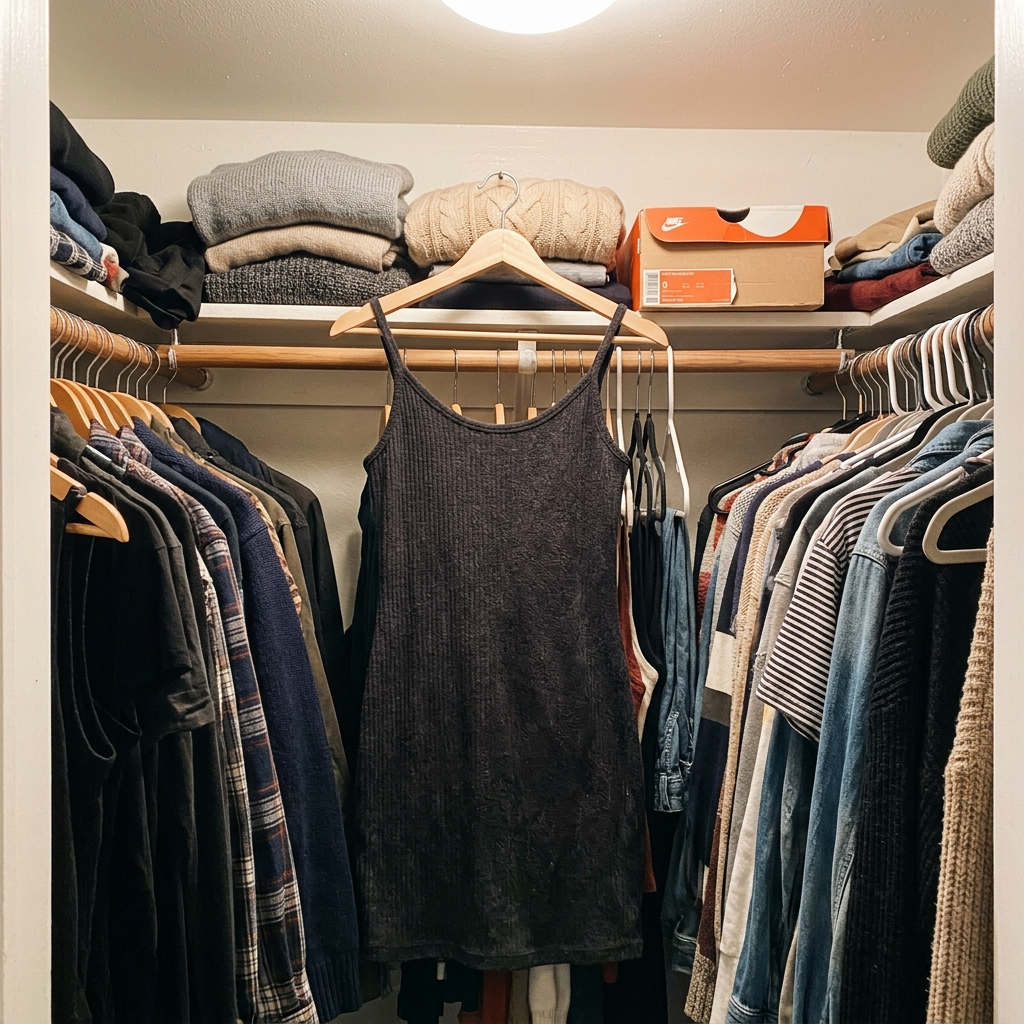
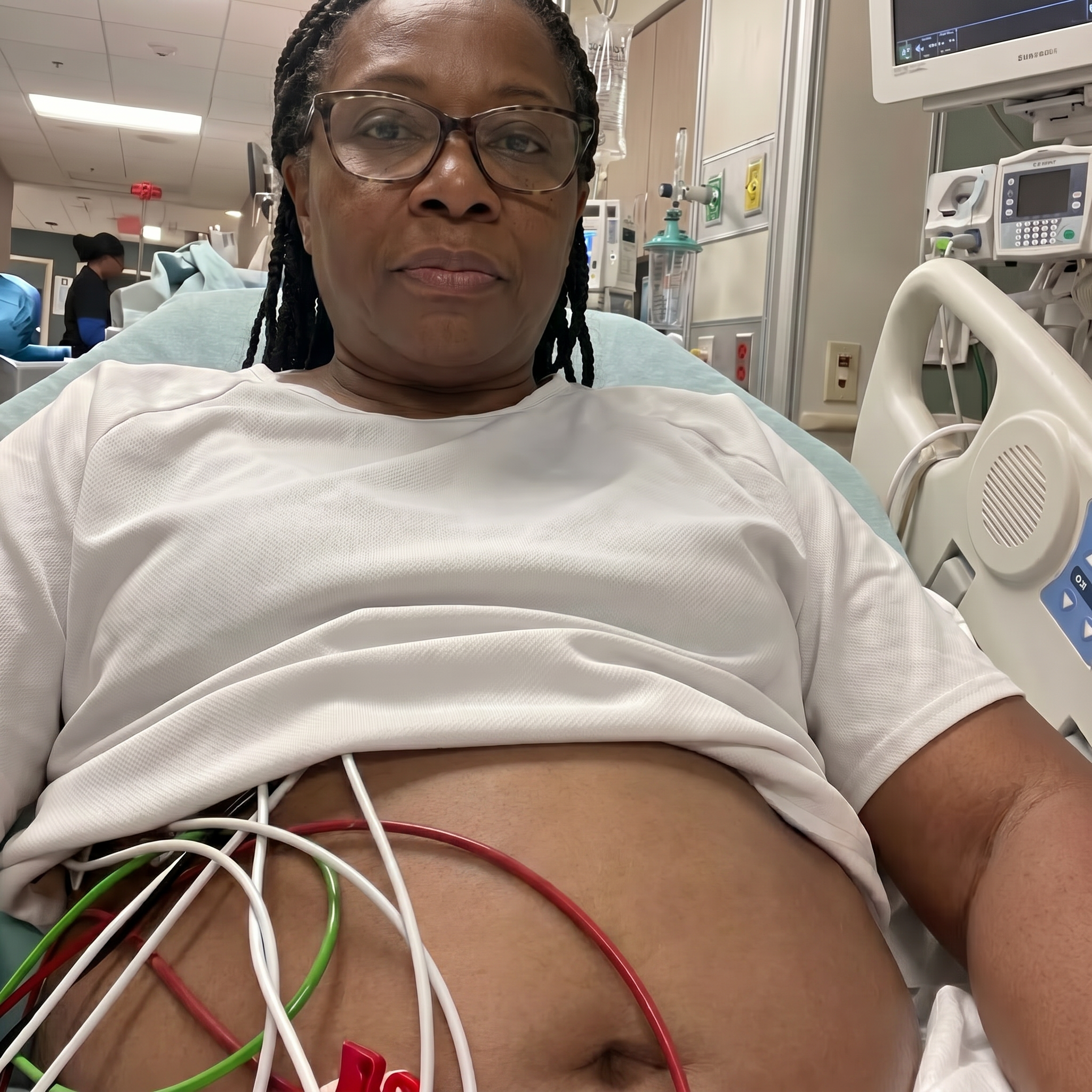
I pulled my class reunion dress out of the closet on a Thursday afternoon in late September, and I stood there holding it for a long time. Not because it didn't fit. Because it fit exactly the same as it always had. I was about to go to my 40th high school reunion in Biloxi, Mississippi, in the same dress I'd worn to my 30th, and the 25th before that, and I was not the same size I'd been at any of those reunions. I was heavier now. By a fair amount. But I had stopped losing weight two and a half years ago, even though I was trying. I had stopped gaining it too. I had just... plateaued somewhere in the middle and couldn't get off. The dress fit because it was a stretchy dress. A forgiving dress. A dress that had more give than I'd like to admit. I put it on anyway. Smoothed it down. Looked in the mirror for maybe 4 seconds and then looked away. I was 61 years old. I had been watching my body do things I didn't understand for most of my adult life and I'd mostly made peace with it. But I hadn't made peace with the fatigue. Or the crashes. Or the cravings that showed up every single afternoon like they had a standing appointment. Or the way I woke up some mornings feeling like I hadn't slept at all, even after 8 hours. I'd been told it was my age. I'd been told it was my thyroid, then told my thyroid was fine. I'd been told to eat less and move more, which I was already doing. My doctor was a kind woman. She never made me feel bad. But she'd started every appointment for the past two years with the same phrase, and I'd started dreading hearing it. "Your numbers are trending in the right direction." They were not trending in the right direction. They were trending sideways, which I guess is technically a direction, but not the one I had in mind. I drove to the reunion by myself because my husband Gary had a men's group thing on Friday nights that I never make him skip, and the reunion was in a ballroom at a hotel on the beach and it started at 7:00 PM. I got there at 7:22. Told myself I had a good reason for being late. I didn't. I just didn't want to stand around alone in a ballroom full of people I hadn't seen in 40 years. The first hour was what you'd expect. Name tags with old yearbook photos on them. A DJ playing songs from 1984 that I did not miss as much as I apparently was supposed to. People had aged. People had aged well. People had aged in ways that made you quietly grateful for your own situation. The usual. I got a glass of sparkling water and found a table near the back and started doing the thing I always do at events I'm not sure I should have come to, which is watch people and try to figure out their stories from a distance. That's how I spotted Diane Broussard. Or, more accurately, that's how I almost didn't recognize Diane Broussard. We had been in the same friend group from about 10th grade through senior year. We lost touch after I moved to the coast. I'd seen her at the 30th reunion and she'd looked like I remembered. A little older. Same face, same build, same laugh. The woman standing by the bar in a green dress was not the Diane I remembered from the 30th reunion. I mean, she was. But she wasn't. There's a thing that happens sometimes where you can see in a person's face that they've been doing something right for a while. Not just looking thinner or younger, though that was part of it. It was more in the way she was standing. Like she wasn't tired of standing. Like she had weight to spend. I sat there for a while deciding whether to go over. We hadn't talked in 10 years. What do you say? You say what you always say. You say hi. She saw me coming and her whole face opened up. "Carol Thibodeaux. Lord have mercy." We hugged like women who were genuinely glad to see each other, which we were. "Diane. I need to say something and I hope it doesn't come out wrong." She laughed. "Just say it." "You look completely different from the last time I saw you. In a way I can't explain." She didn't deflect the way a lot of women would. She nodded like she'd been hearing it all night. "I know," she said. "I know I do. Come sit with me." We found a table in the corner away from the DJ and I ordered another sparkling water and she got a club soda and we just started talking the way old friends do when they haven't seen each other in a decade, which is to say we skipped all the small talk and went directly to the real conversation. I told her about the plateau. The fatigue. The way my body had stopped responding to anything I tried. "The crashes," I said. "That 2, 3 o'clock thing every afternoon. It's been with me for years." She tilted her head like she recognized something. "Can I tell you something without sounding like I'm one of those people?" "What people?" "The kind who ambush their old friends at a high school reunion to talk about a supplement they're taking." I laughed out loud. Because I know those people. I have been those people at various points in my life. "I promise I won't think that," I said. "But only if it's actually interesting." She nodded once and leaned forward a little. "Okay. So. My daughter-in-law, Priya, she works in clinical nutrition. She's not a doctor, she's a registered dietitian, and she's worked in hospital settings for about 12 years. And she started telling me about a year ago that my situation, the fatigue and the crashes and the way my weight had been stuck, was probably not a food problem." I waited. "She said the food is downstream," Diane said. "That's her word for it. Downstream. You eat a meal. The meal comes in. Something in your body decides how fast that meal turns into sugar. She said that process is like a gate. When you're younger, the gate opens slowly, and your body gets time to process the sugar as it comes in. And somewhere along the way, for a lot of people, the gate starts opening faster. The sugar rushes in all at once. Your body scrambles to deal with it. That's the spike. That's why you feel wired right after you eat and then fall off a cliff an hour later. That's the crash." "That is exactly what it feels like," I said. "Right. And Priya said the reason it keeps happening is that the gate itself has been worn down. By stress. By processed food over the years. By oxidative stress, which is basically cellular rust that builds up in the body over time. And the more worn down the gate gets, the worse the pattern becomes. And here's the part that I kept thinking about: she said you can change what you eat all you want, but if the gate is damaged, the food almost doesn't matter. The problem isn't the food. The problem is the pathway." I had heard about metabolic health before. I had done low-carb twice and gone keto for about 6 weeks in 2019 and quit after I dreamed about a piece of bread for 4 nights in a row. And none of it had touched the crashes. "So what did she tell you to do?" I asked. "That's the other part. She'd been looking into something for a while and had started recommending it to some of her patients. She got interested in it through some research on pomegranate of all things." I must have made a face. Because Diane laughed. "I know. That was my reaction too. She showed me the research." "What did it say?" "So pomegranate has always been interesting to researchers because it has this phytochemical in it, particularly concentrated in the peel, called punicalagins. And punicalagins have been studied in a lot of different contexts, but one of the things Priya kept coming back to was the research on how they interact with the process that controls carbohydrate breakdown. The specific pathway where your body decides how fast food turns into sugar." "The gate," I said. "The gate. What the research suggests is that punicalagins may help support the enzymes involved in that process. Slowing the gate back down. Not stopping it, not blocking it the way some drugs do, but supporting it. So sugar can trickle in more gradually, the way it did when that system was younger and healthier." She said there was also a separate piece of it, which is that punicalagins are some of the most studied antioxidant compounds in any food. And that matters because it's the oxidative stress, the cellular rust, that wore the pathway down in the first place. So the thinking is that you're not just supporting the gate. You're also clearing some of the rust that damaged it. "Same meals," Diane said. "Same food. Your body starts handling them differently." I looked at her for a second. "And that's what happened for you?" "Yeah," she said. Not triumphantly. Not in the way somebody says something when they're trying to sell you on it. Just quietly, like she was still a little surprised by it herself. "The afternoons changed first. The crash just... softened. And then a few weeks later I started noticing I was sleeping better. And then the weight started moving again. Slowly. But moving." She'd been taking it for about 14 months at that point. "What is it called?" I asked. She took out her phone. Pulled up a website. Showed me the bottle on the screen. Alevia Pomegranate. Organic concentrated pomegranate peel extract. Made in the USA. "2 capsules in the morning," she said. "That's it." I took a photo of the bottle name with my phone before the DJ started playing Toto and half the people in the room lost their minds. We danced for a while after that. And I'm going to be honest with you. I had more fun at that reunion than I expected to. Diane and I stayed until almost midnight, which is not something I do anymore. I'm usually in bed by 9:30 and fighting sleep by 9:00. I don't know if it was just the night. Just the occasion. Just seeing old friends and being somewhere other than my house. But I drove home feeling something I hadn't felt at the end of a night out in a long time. Not exhausted. Alert. The kind of alert where you're tired but your brain is still running clean. I ordered Alevia Pomegranate the next morning before I made coffee. And here is where I have to be careful, because I've told this story to a few people and the thing they want to hear is the dramatic part. The before and after. The number of pounds. What I can tell you is that the crashes got softer inside the first 2 weeks. Not gone. But softer. The 3 PM wall that used to feel like hitting a screen door became more like walking through a light curtain. By week 3 or 4, I was noticing I was eating dinner and not immediately wanting to raid the pantry afterward. That's been a pattern of mine for years. Dinner, then the scouting mission. The crackers, the handful of cereal, the whatever's in the cabinet. It quieted down. By the 6 week mark Gary noticed before I did. He said something at dinner one Sunday about how I seemed more like myself lately. I didn't know what to say to that, so I just said thank you. It's been just over 5 months now. I want to say I have some dramatic number to share with you. I don't. What I have is a body that feels like it's working with me in a way that it hasn't for a long time. Morning energy that doesn't evaporate before 9 AM. Afternoons that don't require a compromise. And a number on the scale that has been moving, slowly, in a direction it hasn't moved in almost 3 years. I'm still wearing the reunion dress. It still fits. But I don't think it's going to fit the same way by the time the 45th rolls around. And I'm okay with that. If you want to look into Alevia Pomegranate, this is where to go. They make it here in the United States from organic concentrated pomegranate peel extract, which is exactly where the punicalagins that Priya was talking about come from. 2 capsules a day is all it is. And if you try it and decide it's not for you, they have a 90-day money-back guarantee. You send the bottle back within 90 days and they refund you every penny. No runaround. I wouldn't have written this out if I didn't think it was worth your time. 👉 https://alevia.com/pom/5 P.S. I know the thing that sounds too good to be true here is the idea that a fruit extract could do something that years of dieting couldn't. I understand that skepticism because I shared it. But the way Priya explained it, the pathway that controls how food becomes sugar was never the food's fault in the first place. The food is just downstream. If the thing that needed support was the pathway itself, and you were only ever changing the food, it makes sense that nothing ever fully worked. I'm not saying this is a replacement for eating well. I still eat the way I eat. It's just that my body seems to know what to do with that food again in a way it didn't before. P.P.S. There are a lot of pomegranate supplements on the market and Priya was specific about this when I asked her: most of them are standardized to something called ellagic acid, which is in a lot of fruits and is not specific to pomegranate. The research she was referencing was mostly on punicalagins, which are specific to pomegranate and concentrated mostly in the peel. Alevia uses organic concentrated pomegranate peel extract, which is why I chose it over a few others I looked at. That distinction matters, according to her. P.P.P.S. The reunion dress is still hanging in my closet. I look at it sometimes and think about Diane standing by that bar in her green dress, looking like herself but more so, and I think about how she almost didn't say anything. How she didn't want to be one of those people. I'm glad she decided to be one of those people. If this sounds like something you've been looking for, give it 90 days. You've got nothing to lose. 👉 https://alevia.com/pom/5
Like this ad? Make it yours.
Crush rebuilds this exact creative around your product — your brand, your colors, your offer — in about a minute.