
Inactive· since Jul 15, 2026
- 14
- days it ran
- 0
- relaunches
Ad copy
I am a retired neurologist. I practiced for thirty-eight years. In those thirty-eight years I diagnosed approximately eleven hundred women with mild cognitive impairment, and approximately four hundred and twenty with Alzheimer's disease, and an unknown but very large number with cognitive complaints that I told them were within normal range for their age. I am 71 years old. I retired in October of 2023. I am writing this letter because I am no longer in a position to lose anything by telling you what I am about to tell you, and because in the eighteen months since I retired I have been reading the literature my profession does not require its practitioners to read, and what I have read has changed my opinion of the work I did for thirty-eight years. My name is Margaret Hennessey. I trained at the University of Michigan in the 1980s. I practiced in Cincinnati for thirty-five years. I was board-certified in neurology and behavioral neurology. I sat on the medical advisory board of two memory care facilities. I was, by any reasonable professional measure, well-qualified to do the work I did. I want to be clear about that, because what I am about to write is not the result of my having been an inadequate neurologist. It is the result of my having been an adequate one, inside a system that does not require its adequate practitioners to read the literature that would tell them what I am about to tell you. The patient I think about most often is a woman named Elizabeth, who I saw for the first time in 1998, when she was 56. Her chief complaint was word-finding difficulty. She had been a high school English teacher. She told me she had been losing words for three years. I administered the standard cognitive screen of the era. She scored within normal range. I told her this was within normal range. I told her to try crossword puzzles and to monitor her symptoms. I told her to come back in six months. She came back four years later, in 2002, with significantly worse symptoms. I administered an updated screen. She had progressed to mild cognitive impairment. I prescribed Aricept, which had been approved in 1996 and was the standard of care. Elizabeth passed away in 2014, sixteen years after our first appointment, with advanced Alzheimer's disease. In 2001, between Elizabeth's first appointment and her second, a paper was published in a journal called Phytotherapy Research. The lead author was T. Mori. The paper reported a clinical trial in which fifty adults aged 50 to 80 with mild cognitive impairment were given a Lion's Mane mushroom fruit body extract for sixteen weeks. At the end of the trial, the group taking Lion's Mane showed significant cognitive improvement on the validated cognitive function scale used in the study. I did not read this paper in 2001. I did not read it in 2002, when Elizabeth came back with progressed symptoms. I did not read it in 2014, when Elizabeth died. I read it for the first time in February of 2024, four months after I retired. I read it because my granddaughter, who is in her medical residency, sent it to me and asked me what I thought of it. What I thought of it, after reading it three times and then reading the seventy-two related papers it has spawned in the twenty-three years since, is that I should have read it in 2002 and I should have changed my advice to Elizabeth. I want to explain to you, as a neurologist who practiced for thirty-eight years and is no longer practicing, what the science actually says, because the science is not contested and yet most practicing neurologists in this country are not currently incorporating it into their advice to patients. At menopause, estrogen drops sharply. Estrogen is a regulator of a brain protein called Nerve Growth Factor (NGF). NGF is the signal that allows the brain to repair its own damaged neurons during sleep, on a nightly cycle, the way the body repairs muscle tissue after exercise. When estrogen drops, NGF goes quiet. The repair cycle slows. Damaged neurons are not maintained. Synaptic connections weaken. Beta-amyloid plaque, the protein associated with Alzheimer's disease pathology, accumulates more quickly than it would in the presence of robust NGF activity. This is the mechanism. It is not contested in the literature. Compounds in Lion's Mane mushroom (hericenones, found in the fruit body, and erinacines, found in the mycelium) cross the blood-brain barrier. They stimulate the production of NGF. The Mori 2001 study, the University of Queensland 2023 super-resolution microscopy work, and a body of related literature all support the claim that Lion's Mane fruit body extract increases NGF activity. The 2001 study showed that this increase translates into measurable cognitive improvement in the population that needs it most. I want to be careful not to overstate. Lion's Mane is not a cure for Alzheimer's disease. It does not reverse advanced neurodegeneration. What it does is restart the overnight repair cycle that menopause turns down. For a woman in early decline (the woman I told to try crossword puzzles for thirty-eight years), restarting that cycle is the difference between a trajectory of further decline and a trajectory of stabilization or partial recovery. Why did I not tell my patients this for thirty-eight years? Several reasons, all of them structural. First, the 2001 paper was published in a journal that most American neurologists do not read. I have never had a Phytotherapy Research subscription. Most of my colleagues do not. Second, you cannot patent a mushroom. There is no pharmaceutical company funding the sales representatives, journal advertisements, or continuing-medical-education seminars that would have brought Lion's Mane to my attention in the way that Aricept (Pfizer/Eisai) and Namenda (Forest Laboratories) were brought to my attention. I attended dozens of CME seminars over thirty-eight years. Every single one of them was funded, directly or indirectly, by a pharmaceutical company with a patented product. None of them mentioned Lion's Mane. Third, the medical school curriculum does not include a formal module on the menopause-NGF mechanism in the context of cognitive decline. Medical students are taught about estrogen, and they are taught about NGF, and they are taught about cognitive decline, but the connection between the three (the connection that the Mori 2001 study and its successors make so clearly) is not part of the standard board-examination content. Practicing physicians who graduated medical school before 2010 are unlikely to have been taught it. Practicing physicians who graduated after 2010 may have been exposed to it in a single elective lecture, but it is not in the standard curriculum. The result of these three structural facts is that thirty-eight years of practicing neurologists, including me, have been telling women in their early sixties that their word-finding difficulty is within normal range and to try crossword puzzles, while the literature that would have changed our advice has been sitting in a journal we do not read, supported by a body of research nobody pays our continuing-education sponsors to bring to our attention. The decline is not just one system. It is five. I want to walk you through them as a neurologist, not as a copywriter. Brain repair stops, addressed by Lion's Mane. Slow-wave sleep architecture collapses, addressed by Reishi mushroom through GABAergic and adenosinergic pathways that produce restorative sleep without the disinhibition profile of benzodiazepines or the next-day cognitive cost of Z-drugs. Systemic inflammation rises (this is well-documented; CRP and IL-6 elevate measurably after menopause), addressed by Chaga, which has the highest documented antioxidant capacity of any food substance ever measured. The gut microbiome is disrupted (also well-documented), and ninety percent of serotonin is produced enterochromaffin-cell-mediated in the gut, which is why mood and sleep both deteriorate; Turkey Tail mushroom, which has been an approved prescription medicine in Japan since 1977 and has decades of pharmacovigilance data behind it, addresses gut function directly. Bone density drops, addressed by Maitake. These five interventions multiply through each other. Better sleep allows brain repair. Lower inflammation enables gut function. Better gut function lifts serotonin. Higher serotonin deepens sleep. The system is closed-loop. Removing any one mushroom breaks the loop. I want to address one final point that is not in the literature but is very important commercially. Most mushroom supplements sold in the United States are mycelium grown on rice. They contain ground-up grain with five percent or less active mushroom compound. The Mori 2001 study used fruit body extract. If your friend tried a mushroom complex from a pharmacy and reported no benefit, your friend was not wrong. Mycelium-on-rice does not contain enough hericenones or erinacines or polysaccharides to replicate the studied effect. Fruit body extract at clinical dosages is what the literature is about. In March of 2024 I purchased a bottle of Sky Nutrition Ultimate Mushroom Daily Gummies, https://skynutrition-us.com/products/ultimate-mushroom-daily-gummies, two gummies a day, ninety-day full refund. I started myself on the gummies because I was 71, I had been retired for five months, and I had been forgetting words at a rate that would have placed me in the diagnostic category I had administered to so many of my own patients. Week 3, my sleep architecture changed. I have a Garmin watch. The deep-sleep minutes per night went from approximately 30 to approximately 70. Week 6, I read a neurological textbook chapter I had been meaning to finish for two years. I read it in a single sitting. I retained it. Week 10, I sat down with my granddaughter and walked her through the mechanism behind a complex case she was working up. I had not given a clinical lecture in eighteen months. The lecture I gave that afternoon was, by my granddaughter's report, unusually clear and well-organized. Week 14, I called the daughter of Elizabeth, the patient I saw in 1998 and 2002 and whom I have thought about for years. Elizabeth's daughter is 64 herself now and lives in Cincinnati. I told her what I am writing to you. She was quiet for a long time. She thanked me. She asked me whether I would be willing to talk to her own primary care doctor about her own symptoms. I told her I would. I am writing this letter because I owe it to Elizabeth. I cannot give her back the years she lost. I can write to the women I would have advised differently if I had read the right paper at the right time, and I can ask them to read what I have written and to act on it. Sky Nutrition Ultimate Mushroom Daily Gummies, https://skynutrition-us.com/products/ultimate-mushroom-daily-gummies. Two gummies a day. Ninety-day full refund. P.S. Forward this to your daughter. Forward it to your sister. Forward it to your friend who has been told her cognitive complaints are within normal range. The reason this information is not common knowledge is that the people who would have made it common knowledge are paid by companies whose products this would compete with. The forwarding mechanism is the only distribution channel this letter has. P.P.S. I am not affiliated with Sky Nutrition. I am a retired neurologist. I do not benefit financially from your purchase of any brand of mushroom supplement. I care that the brand you choose is fruit body extract, all five mushrooms, at clinical dosages. If you find another brand that meets that standard, buy that one. Just do not let another six months pass on the standard of care you are currently being offered.
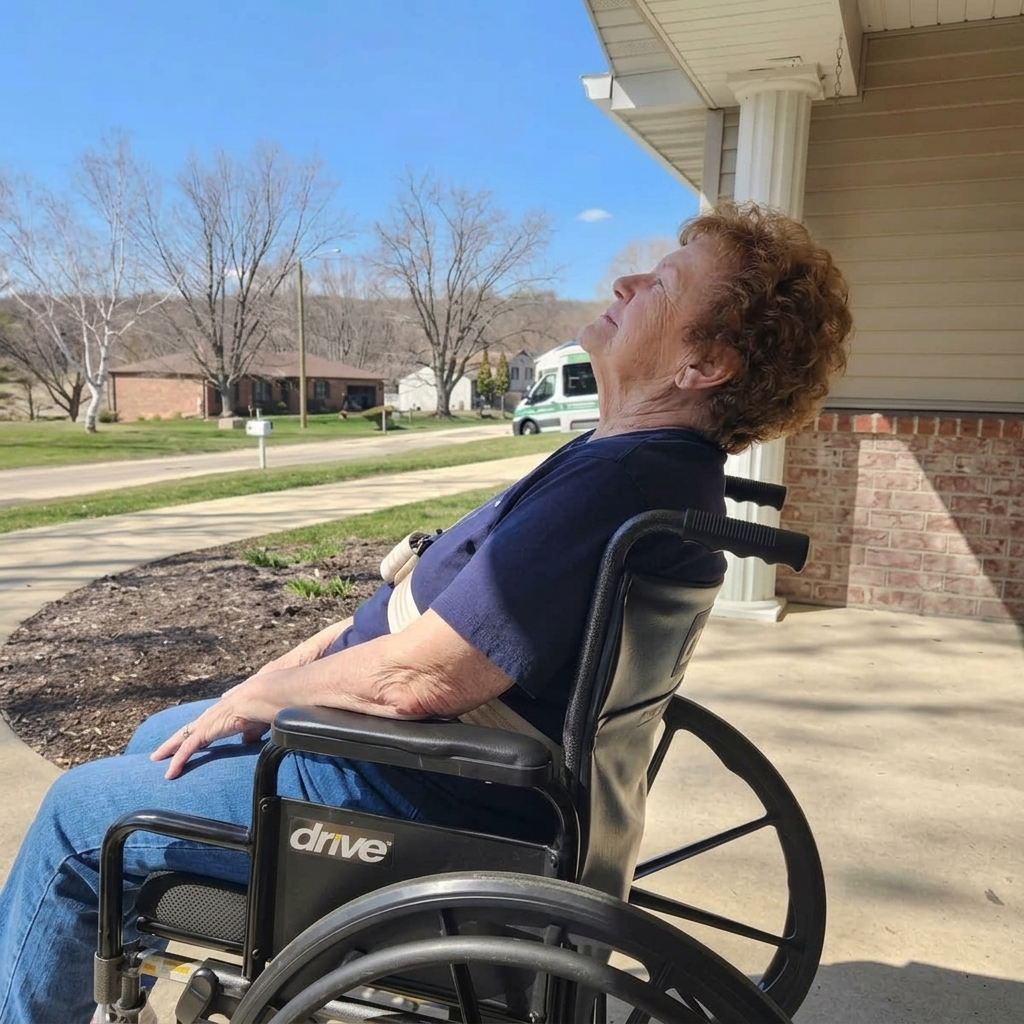
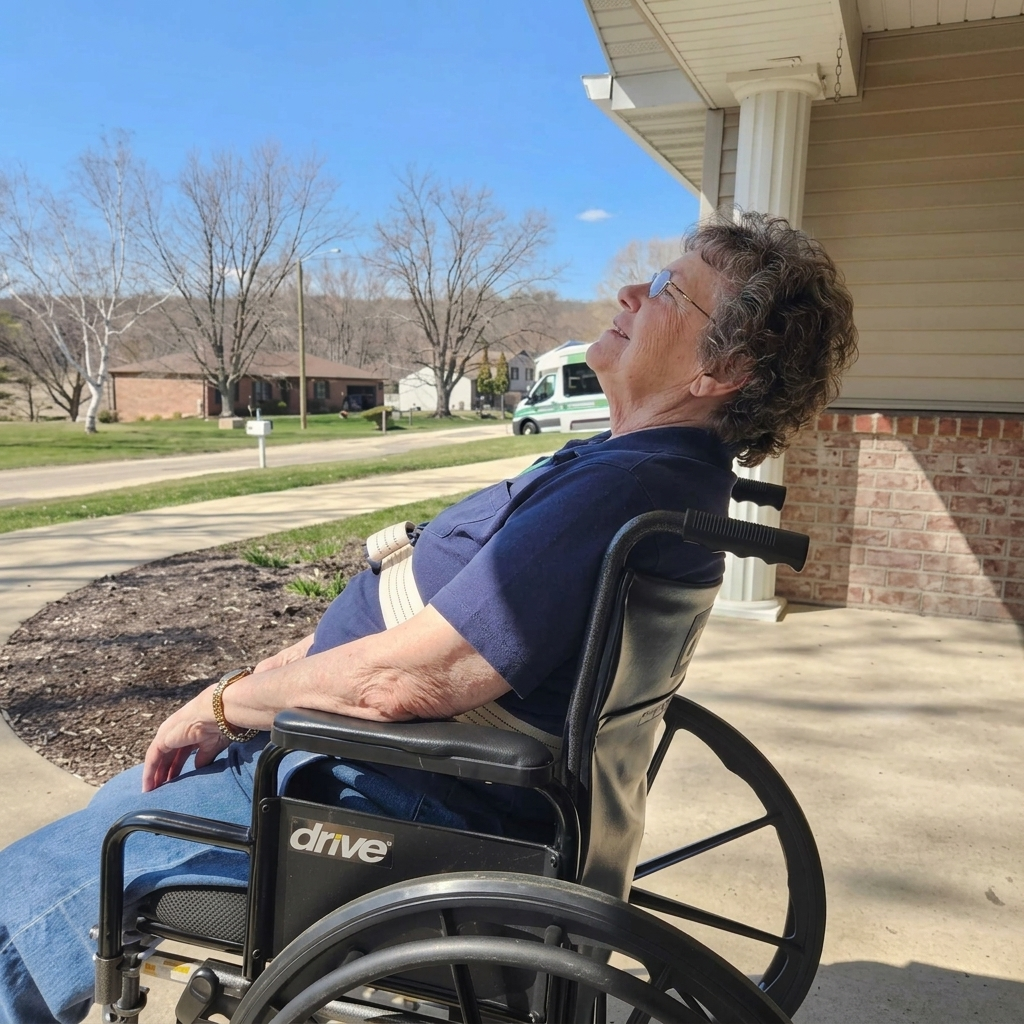
The retired neurologist who read the 2001 paper and could not stop thinking about her own patients....Read This☝️
Discover Sky Nutrition Mushroom Gummies – a unique blend of tradition and innovation. Our premium mushroom-based gummies offer a delicious and convenient way to incorporate the benefits of nature into your daily routine. Shop now for quality gummies crafted with care and transparency.
LEARN MORELike this ad? Make it yours.
Crush rebuilds this exact creative around your product — your brand, your colors, your offer — in about a minute.