
Active· since Jul 21, 2026
- 56
- days running
- 0
- relaunches
- 6,293
- EU reach
Ad copy
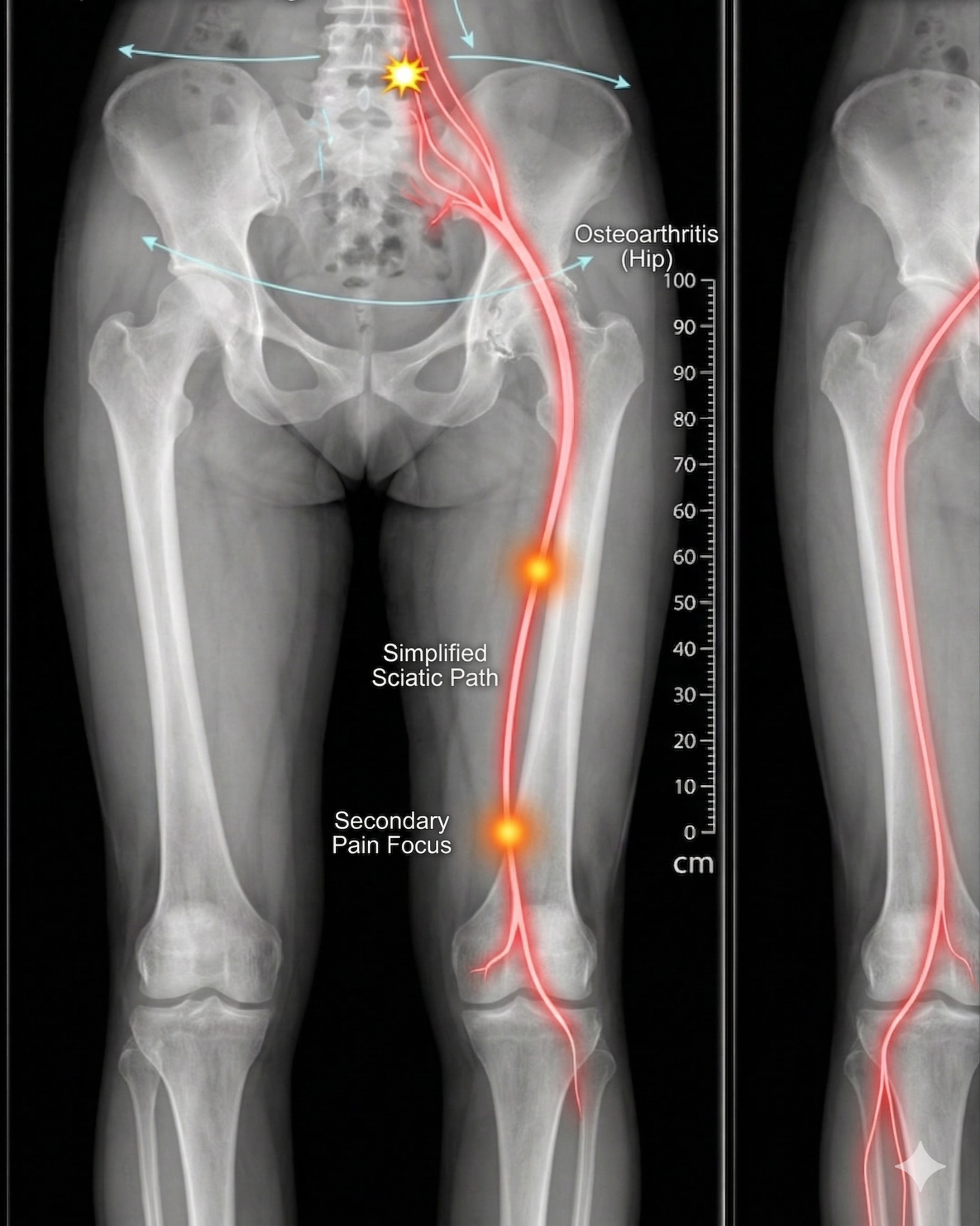
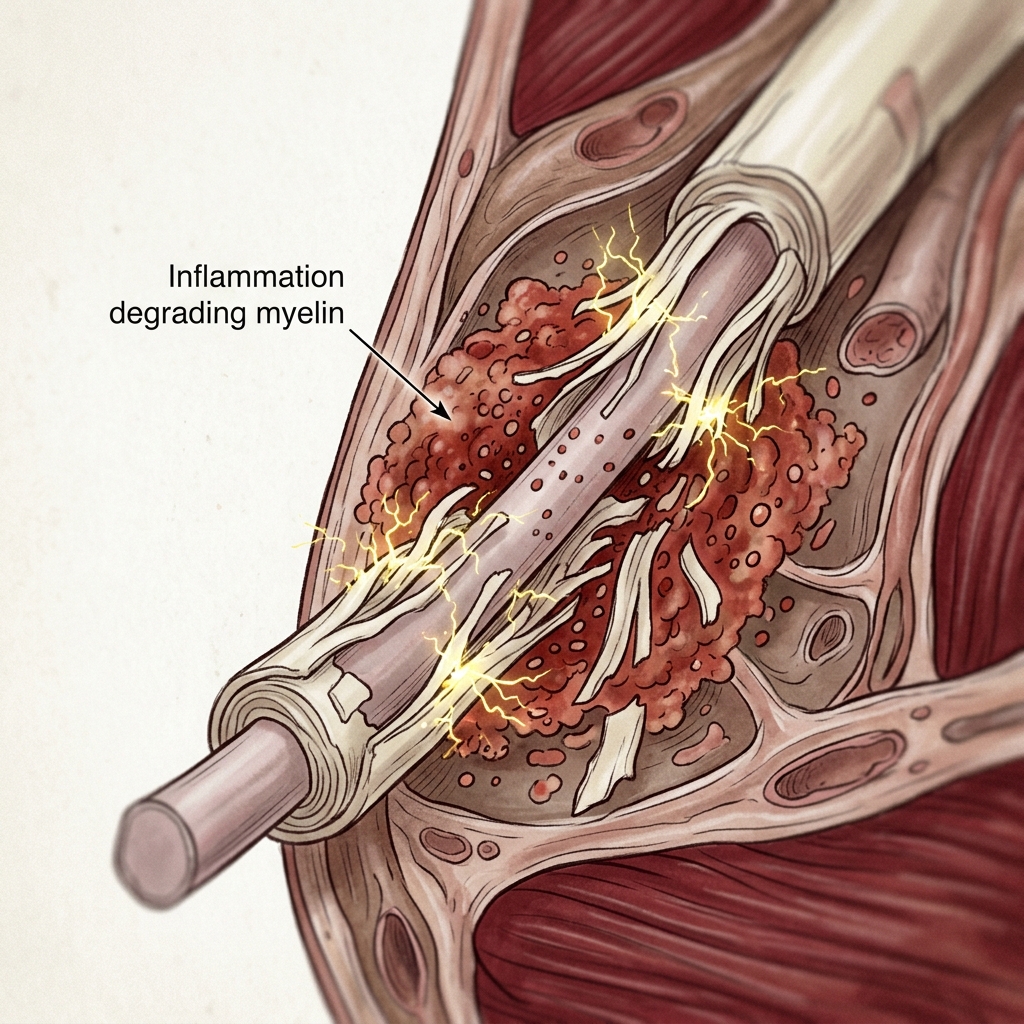
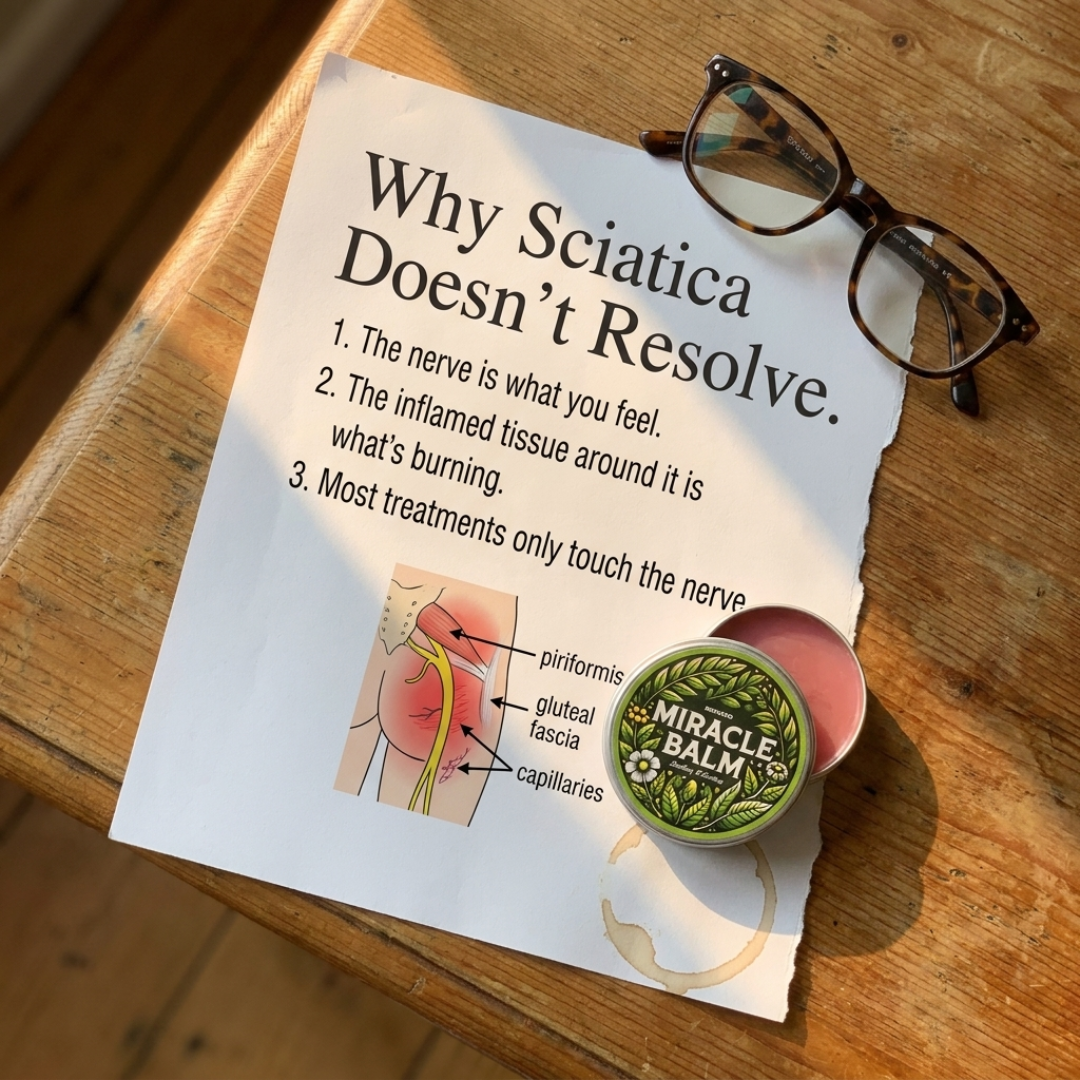
I know that sounds wrong. Sciatica is a nerve condition. The pain shoots down your leg like an electric current. The burning wakes you at three in the morning. How can the nerve not be the problem? ⠀ Because the nerve is not the source of the fire. It is what is burning. ⠀ In over two decades of treating chronic pain, I have watched thousands of patients cycle through anti-inflammatory pills, steroid injections, physical therapy, chiropractic adjustments — all targeting the nerve — and return to my office with the same pain. Sometimes worse. ⠀ The reason is straightforward: the actual driver of sciatica is almost never fully addressed. ⠀ That driver is inflammation. Specifically, the deep tissue and vascular inflammation that builds up in the muscles, connective tissue, and small blood vessels surrounding the sciatic nerve — compressing it, starving it of blood flow, and keeping it hypersensitive to even minor pressure. ⠀ Once that inflammation becomes chronic, standard treatments lose their edge. NSAIDs dilute across the whole body before reaching the target tissue in useful concentrations. Steroid injections suppress the immune response temporarily but leave the underlying inflammatory environment untouched. ⠀ Physical therapy addresses mechanical compression — not what is happening at the cellular level inside inflamed tissue. ⠀ That is the wall most sciatica patients hit. It is the wall I spent years trying to get past. ⠀ What Is Actually Happening Inside Your Lower Back ⠀ The sciatic nerve is the longest in the human body. It originates in the lumbar spine, runs through the pelvis, down the back of each leg, and into the foot. When compressed by a herniated disc, bone spur, inflamed piriformis, or narrowed spinal canal, its signals scramble. You feel the result in your back, glute, hamstring, calf, and foot simultaneously. ⠀ But the nerve is not the only structure in distress. ⠀ The surrounding tissue — muscles, fascia, and connective tissue of the lumbar and gluteal region — is also inflamed. That inflammation increases pressure on the nerve, restricts blood flow to the area, and sustains pain signals long after any mechanical trigger has been resolved. ⠀ Research published in Spine Journal confirmed that chronic sciatica patients show measurably elevated inflammatory cytokines in the surrounding musculature — not just at the nerve root [Brisby H et al. Spine, 2002]. The cycle is self-reinforcing: inflamed tissue produces more inflammatory signals, which produce more inflammation. The pain becomes its own engine. ⠀ Stopping that engine requires something that works at the cellular level of the inflamed tissue itself — not systemically, not temporarily, but directly at the site. ⠀ "The sciatic nerve does not inflame itself. What inflames is the tissue around it — and that tissue has been almost entirely ignored by conventional sciatica treatment." ⠀ The Three Targets Most Treatments Miss ⠀ Lasting sciatica relief requires addressing three interconnected problems simultaneously. Most treatments touch only one. ⠀ 1. Deep Tissue Inflammation ⠀ The piriformis, gluteal muscles, and deep fascial layers of the lower back are chronically inflamed in most sciatica patients. Oral NSAIDs attempt to block the chemical mediators driving this — but they disperse systemically before reaching target tissue in meaningful concentrations. Topical delivery changes that equation entirely. ⠀ 2. Restricted Microcirculation ⠀ Nerves depend on blood flow. A sciatic nerve deprived of adequate circulation becomes hypersensitive and prone to misfiring pain signals even without mechanical compression. The muscular guarding sciatica patients develop in response to pain compounds this — constricting the small vessels supplying the nerve further. Restoring microcirculation is not secondary to reducing inflammation. It is equally essential. ⠀ 3. Tissue Tightness and Nerve Mobility ⠀ The sciatic nerve must glide freely through surrounding soft tissue during movement. When that tissue is inflamed and guarded, the nerve loses its ability to slide. Every step, every bend, every transition from sitting to standing creates traction on a nerve with nowhere to go. Reducing tissue tightness is the third piece of the puzzle — and the one most commonly skipped. ⠀ For years I had no single solution addressing all three simultaneously. That changed when I started examining the evidence base behind traditional Asian herbal medicine. ⠀ What Asian Herbal Medicine Got Right — Centuries Before Clinical Science Caught Up ⠀ Traditional Chinese and Southeast Asian medicine has used topical herbal preparations for musculoskeletal pain, nerve pain, and circulatory problems for over two thousand years. I was skeptical of this for most of my career — not out of dismissiveness, but because my training demanded double-blind controlled trials, and the evidence base was historically thin. ⠀ That has changed substantially in the past decade. A growing body of peer-reviewed pharmacological research has identified the precise biochemical mechanisms behind these traditional preparations. What was once anecdotal is being validated at the molecular level. ⠀ Here is what the evidence now shows, ingredient by ingredient. ⠀ Comfrey (Symphytum officinale) ⠀ Comfrey's primary active compound, allantoin, is a cell-proliferating agent shown to accelerate tissue repair and reduce inflammatory markers in musculoskeletal tissue. A randomized controlled trial in Phytomedicine found topical comfrey extract produced a 95% reduction in pain scores versus placebo — with zero systemic side effects [Staiger C. Phytomedicine, 2012]. In sciatica, where chronic nerve compression sustains a cycle of tissue damage and inflammation, this matters. ⠀ Angelica Sinensis (Female Ginseng) ⠀ Ferulic acid and ligustilide — the primary active compounds in Angelica sinensis — have demonstrated vasodilatory effects in peer-reviewed research, relaxing and opening blood vessels to improve circulation to surrounding tissue. A study in the American Journal of Chinese Medicine found the extract significantly increased microcirculatory blood flow in oxygen-deprived tissue [Ko WC. American Journal of Chinese Medicine, 1980]. In sciatica, where restricted nerve perfusion drives hypersensitivity, this mechanism is directly relevant. ⠀ Frankincense (Boswellia serrata) ⠀ Boswellic acids block 5-lipoxygenase — an inflammatory pathway NSAIDs miss entirely and one that is particularly active in nerve tissue inflammation. Research in the Indian Journal of Pharmaceutical Sciences demonstrated significant reduction of inflammatory cytokines in joint and nerve tissue with boswellic acid [Siddiqui MZ, 2011]. Covering both the prostaglandin and leukotriene pathways simultaneously is something no standard NSAID achieves. ⠀ Myrrh (Commiphora myrrha) ⠀ Myrrh's active sesquiterpenes reduce inflammatory signaling and have demonstrated analgesic properties in nerve pain models. The traditional pairing of frankincense and myrrh reflects an empirically discovered synergy that modern pharmacology has since confirmed — the two compounds amplify each other's anti-inflammatory effects. ⠀ Peppermint Oil (Mentha piperita) ⠀ Menthol activates cold-sensitive receptors in skin and underlying tissue, but its role here goes beyond the familiar cooling effect. It directly reduces pain signal transmission in peripheral nerve fibers. A study in the European Journal of Pain found topical menthol produced measurable pain reduction in chronic musculoskeletal pain patients [Johar P et al., 2012]. For sciatica, the effect is twofold: peripheral nerve signal reduction, plus improved local circulation through menthol's vasodilatory action on small blood vessels. ⠀ Radix Angelicae Dahuricae (Bai Zhi) ⠀ Traditional medicine specifies this herb for 'hot pain' — the burning, electric quality sciatica patients consistently describe. Modern research identifies the mechanism: coumarin compounds in the root reduce vascular permeability, calming inflammatory fluid buildup in tissue that contributes directly to nerve compression. It is the cooling agent in the formula. ⠀ Fenghuang (Camellia sinensis — Black Tea Extract) ⠀ Theaflavins and thearubigins — the polyphenols in black tea — scavenge the free radicals generated by chronic tissue inflammation, preventing oxidative damage to nerve tissue and reinforcing the anti-inflammatory environment created by the other compounds. They are the formula's clean-up mechanism. ⠀ Beeswax — The Delivery System ⠀ Beeswax is not filler. Most active herbal compounds are lipid-soluble, not water-soluble — they require a fat-based carrier to cross the skin barrier and reach deeper inflamed tissue. Beeswax forms a semi-occlusive layer over the application site, creating a reservoir of active compounds directly above the target area while slowing carrier oil evaporation to extend the absorption window. Studies on topical drug delivery consistently show beeswax-based formulations achieve significantly deeper tissue penetration than water-based creams for lipid-soluble compounds. Bioavailability is the mechanism. Beeswax is what makes the rest of this formula reach its target. ⠀ Why the Combination Matters More Than Any Single Ingredient ⠀ Frankincense alone addresses one inflammatory pathway. Angelica sinensis alone improves circulation. Peppermint oil alone reduces surface-level pain signaling. None of them, individually, addresses the three biological targets driving sciatica simultaneously. ⠀ Traditional Asian medicine practitioners discovered through centuries of clinical observation what modern pharmacology now calls synergistic bioactivity: these compounds work in combination in ways that exceed the sum of their individual effects. The formula is not incidental. It is the mechanism. ⠀ When all eight compounds — comfrey, angelica sinensis, frankincense, myrrh, radix angelicae dahuricae, fenghuang, peppermint oil, and beeswax — are cold-processed into a single balm and applied directly to the inflamed tissue surrounding the sciatic nerve, deep tissue inflammation, restricted microcirculation, and nerve hypersensitivity are all addressed in the same application. That is what separates Senzio Miracle Balm™ from a single-ingredient supplement or a standard pain cream. ⠀ How to Use It ⠀ Apply a small amount directly to the lower back, glute, and down the back of the leg along the sciatic nerve's path. Massage until absorbed. You will feel mild warmth or cooling as the compounds penetrate — that is the formula working. ⠀ Use twice daily — morning and before sleep. Most users report a noticeable shift in the burning and heaviness of their pain within the first few days. ⠀ Sciatica that has been chronic for months or years will not resolve in days. The compounds need consistent application to reset the inflammatory environment in the tissue. The clearest shift tends to come at four to six weeks. Durable change comes at sixty to ninety days. ⠀ What Patients Report ⠀ "I had sciatica for three years. Two epidural injections, a round of physical therapy, a drawer full of prescription NSAIDs — nothing held for more than a few weeks. By week three of using this balm twice daily, the shooting pain down my leg had dropped by around seventy percent. I am not saying it cured me. I am saying it did more than anything else I tried." — Margaret L., Boise, Idaho ⠀ "The burning in my left leg kept me awake every night. Within four days of using this, the burning was noticeably milder. After three weeks I was sleeping through the night. I had tried other topical creams before. This is genuinely different." — Patricia F., Savannah, Georgia ⠀ "I have had sciatica on and off for years from construction work. In winter it gets bad enough I can barely get in and out of my truck. Two weeks on this balm and I am moving better than I have in two years. I order by the three-pack now." — Derek A., Spokane, Washington ⠀ Masking Pain vs. Addressing It ⠀ Painkillers block the sensation of the pain signal. They do not change the inflamed tissue producing it. When the pill wears off, the signal returns — because nothing has changed. ⠀ Steroid injections are more powerful. They are also temporary, and repeated use carries documented risks to bone density and connective tissue integrity. ⠀ The compounds in Senzio Miracle Balm work differently. They do not block signals — they work to change the inflammatory state of the tissue generating those signals. Beeswax and sesame oil deliver the active compounds into the target tissue directly. Frankincense and myrrh interrupt multiple inflammatory pathways at once. Angelica sinensis and peppermint oil restore circulation to a nerve that has been underserved. Comfrey initiates tissue repair — the process that allows the area to resolve rather than simply be managed. ⠀ This is not temporary relief. This is addressing the problem at its biological source. ⠀ No Fillers. No Compromise. ⠀ Full ingredients: Organic Comfrey, Fenghuang (Black Tea), Angelica Sinensis, Radix Angelicae Dahuricae, Frankincense, Myrrh, Sesame Oil, Peppermint Oil, Beeswax. ⠀ Eight ingredients. Every one with a documented purpose. No water — water dilutes bioavailability. No parabens, no synthetic preservatives, no petrochemical fillers. Cold-processed in small batches to preserve the biological activity of each plant compound. ⠀ A formula loaded with water and cheap fillers can smell like herbs. It will not deliver herbs to tissue in concentrations that produce results. Senzio sacrifices nothing for shelf appeal or cost efficiency. ⠀ "If you are still waking at three in the morning because of that burning line of pain running down your leg, the inflammation has not been addressed. It has only been quieted — temporarily. There is a better option." ⠀ The 60-Day Guarantee ⠀ Senzio offers a 60-day, no-questions-asked money-back guarantee on the Miracle Balm. Not a store credit. A full refund. ⠀ If consistent twice-daily use over 60 days does not produce meaningful improvement in your sciatica, you get your money back. That kind of guarantee is only viable when a company is confident in what it has formulated. ⠀ For anyone currently spending hundreds of dollars monthly on prescriptions, injections, or chiropractic visits that are not resolving the problem — a 60-day trial at a fraction of that cost, fully backed, is the lowest-risk option available. ⠀ A Final Word ⠀ I have practiced pain medicine for over two decades. I have seen what works and what does not. The pattern I keep seeing with sciatica is patients cycling through treatments that each address one piece of a three-part biological problem — and never getting lasting relief because no single treatment addresses all three. ⠀ What is clinically interesting about this formula is not any individual ingredient. It is the fact that it targets all three drivers simultaneously — deep tissue inflammation, microcirculatory restriction, and nerve hypersensitivity — using compounds with genuine pharmacological evidence behind them, delivered via a mechanism that actually gets them where they need to go. ⠀ If your sciatica has become chronic — if you have been managing it rather than resolving it — this is worth sixty days. Twice daily. Direct application to the affected area. ⠀ You either get relief. Or you get your money back. ⠀ That is a reasonable offer for something that may work when other things have not. ⠀ — Dr. Rachel Simmons, MD Pain Medicine Specialist | Board Certified | 22 Years in Clinical Practice ⠀ DISCLAIMER This advertorial is for informational purposes only and does not constitute medical advice. This product has not been evaluated by the Food and Drug Administration and is not intended to diagnose, treat, cure, or prevent any disease. Results vary. Always consult a qualified healthcare professional before beginning any new health regimen, particularly if you are pregnant, nursing, taking prescription medications, or managing a diagnosed medical condition.
Sciatica Isn't a Nerve Problem — Here's What's Really Driving the Pain
Relieve sciatica pain with our revolutionary treatment. Get back to living pain-free and active again.
LEARN MORELike this ad? Make it yours.
Crush rebuilds this exact creative around your product — your brand, your colors, your offer — in about a minute.