
Active· since Aug 10, 2026
- 39
- days running
- 0
- relaunches
Ad copy
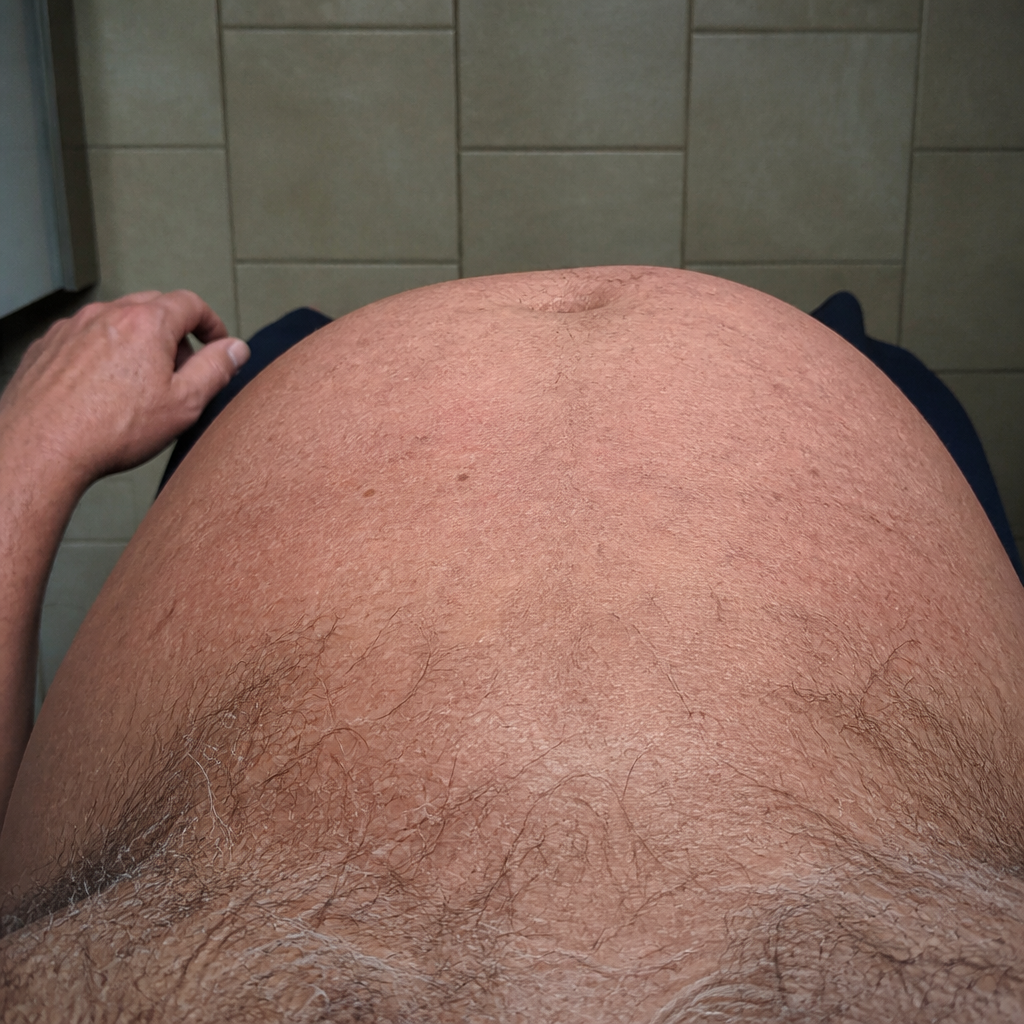
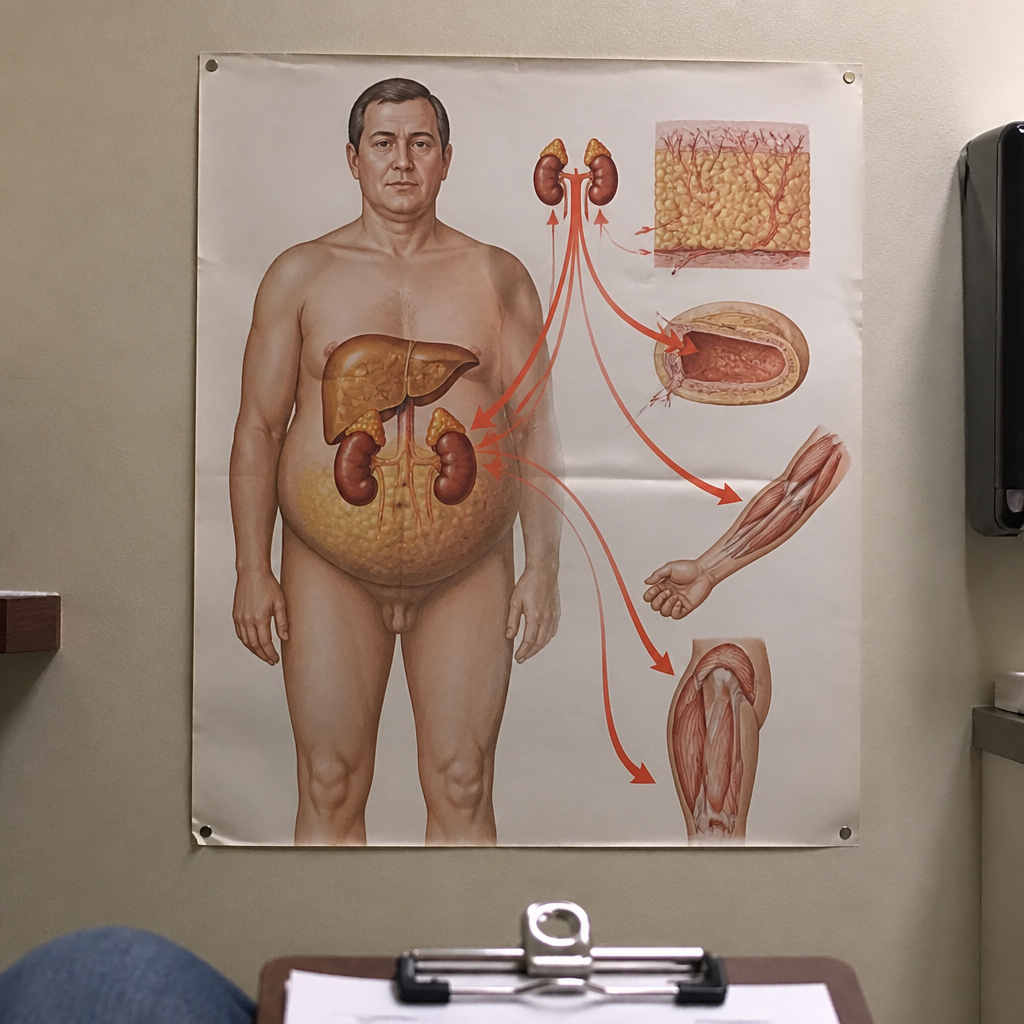
HRT keeps your estradiol in perfect range but the belly keeps growing. The progesterone fixed your sleep but the scale keeps climbing. If you've been gaining weight on hormone therapy despite doing everything right — here's what's actually blocking your body from responding and what I give my patients instead. For THREE YEARS my sister Laura was watching her body become unrecognizable. She hit perimenopause at 47. Fought for a year to get a doctor to actually prescribe HRT instead of telling her to "just wait it out." Finally got the transdermal estradiol patch, then micronized progesterone. Her doctor told her the combination would handle it. Within the first year the hot flashes eased. The sleep came back. And she gained 14 pounds anyway. By year two the belly was the thing she scheduled her mornings around. Ten minutes every day figuring out what would hide it. She stopped wearing half her wardrobe. Clothes she'd owned for years sitting in the back of the closet because she couldn't button them and couldn't bring herself to donate them because that would mean accepting this was permanent. By year three she was tracking 1,300 calories. Gym three times a week. Pilates twice. The scale went up anyway. And along with the belly came everything else. The "matronly" feeling she hated admitting to herself. A body that had shifted shape without her recognizing the turning point. The way nothing fit the way it used to, even on weeks she hadn't gained a pound — like the shape itself had rearranged around her waist. The frustration of the one thing HRT was supposed to fix, sitting there unfixed. She'd tell people the patch had changed her life — the sleep, the hot flashes, all of it — and then quietly wonder why the belly hadn't gotten the memo. Her estradiol was in range. Her FSH looked appropriate. Her doctor looked at that panel every six months and told her everything looked great. She was gaining weight on 1,300 calories, five workouts a week, and everything looked great. And every single doctor told her some version of the same thing. "Your levels are exactly where we want them. The HRT is working." "Some midsection weight is just part of this transition." "Try tracking your calories more carefully." "Have you thought about a GLP-1? A lot of my patients your age are doing really well on it." One of them — and this makes me want to put my fist through a wall — told her that once hormones are replaced, the rest comes down to diet and exercise. She had a trainer. She had a food log. She was the most disciplined person I knew, and a doctor with her labs in front of him made it sound like she just wasn't trying hard enough. She went through three different providers in three years — a gynecologist, a menopause specialist, and a telehealth service — and not one of them ever looked beyond estradiol and FSH and asked why the belly kept growing on a "perfect" panel. So here's what they kept telling her to do. And I need you to pay attention because you've probably tried all of this too. 1,200 to 1,400 calories, gym three times a week, Pilates twice — for months. "How do I kick-start my dead metabolism?" she asked me, almost verbatim what I've since read from a dozen other women going through the exact same thing. Intermittent fasting — six weeks, strict. An inch off in the first two weeks. Nothing after that. A well-known cortisol supplement from the pharmacy — one of the ones every menopause forum recommends — two months. Helped her stress levels, by her own account. Did nothing for the belly. A second cortisol product, a different brand, three months. Same story. Calmer. Unchanged waistline. Between the HRT itself, the menopause telehealth subscription, the gym membership, the Pilates studio, and two different cortisol supplements — she'd spent over $4,600 in three years. Still growing at the middle. Still "matronly" in her own words. Still exhausted by workouts that used to work. And every doctor telling her the hormone levels were exactly where they should be. At this point I'm not frustrated anymore. I'm angry. Because I'm watching my sister — who fought for a year just to get HRT prescribed, who trains five days a week, who tracks every meal — get told her labs are perfect while her body keeps doing the opposite of what "perfect" should mean. Managing the panel. Not fixing the pattern. Not fixing it. Not reversing it. Not even asking why a woman with textbook estradiol and FSH was still gaining at the waist at a rate no gym schedule could explain. Just suggesting GLP-1s. Reassuring her the levels were fine. Checking the panel. Calling it managed. And that's when I started asking the questions nobody wants you to ask. Why does every menopause follow-up focus on estradiol and FSH — hormones being directly replaced — when neither one says anything about the stress hormone that governs where fat lands on the body? Why does every "meno belly" supplement on the market target cortisol alone, in isolation, when nobody asks what's happening to sleep, insulin, and the estrogen-cortisol relationship all at once? Why do doctors call a panel "exactly where we want it" without ever asking why the one symptom she came in for in the first place — the belly — never actually got better? And why does NOBODY talk about what's happening at the three specific points where cortisol and declining estrogen combine to drive midsection weight — right underneath a panel that looks perfect? So I went down a rabbit hole. A deep one. I started researching not how to manage menopause — that had been tried seven different ways — but why a woman on properly dosed, properly monitored HRT was still gaining specifically at the waist. And then I found something that actually surprised me: a large Cochrane review of 28 clinical trials and over 28,000 women found no evidence that HRT prevents the weight gain that happens at menopause — none, whether the estrogen was given alone or combined with a progestogen. That's not a fringe claim. That's the closest thing to a definitive answer in the research, and it says HRT was never designed to solve this particular problem in the first place. So if the hormone replacement itself isn't the answer to the belly, what is? I kept reading. And found the piece nobody explains at the HRT follow-up. Here's what I learned. Checkpoint one. As estrogen declines through the menopause transition, fat storage itself shifts — away from the hips and toward the visceral depot around the abdomen — and the body's resting energy expenditure and fat-burning capacity both drop at the same time. HRT restores estrogen levels in the blood. It doesn't automatically undo where the body has already decided to store fat, or restore the metabolic rate that shifted with the transition. Checkpoint two. Menopause disrupts sleep — independent of whether hot flashes are controlled — and disrupted sleep activates the stress-response system. That activation shows up as elevated evening cortisol, which drives fat storage specifically at the abdomen. HRT can improve hot flashes and help sleep quality in general, but it isn't built to directly manage the stress-axis piece running underneath. Checkpoint three. Cortisol and declining estrogen interact — the combination amplifies central fat accumulation beyond what either one would cause alone. Estradiol coming back "in range" tells you the hormone being replaced is where it should be. It tells you nothing about the cortisol rhythm running in parallel. Three checkpoints. None of them measured by estradiol or FSH, because those tests were built to track hormone replacement — not the stress axis and metabolic shift happening alongside it. That's why her estradiol was perfect and the belly kept growing anyway. That's why the workouts that used to work, didn't anymore — resting energy expenditure had shifted, and no amount of Pilates alone reverses that on its own. That's why the cortisol supplements calmed her stress but left the belly untouched — they addressed cortisol in isolation, with nothing accounting for the estrogen-cortisol interaction or the sleep-linked evening spike specifically. She wasn't gaining weight because she'd stopped trying. She wasn't "matronly" because of aging in some vague, unfixable sense. She had three specific, documented mechanisms running underneath a hormone panel that was never built to catch any of them. And here's the part that made my blood boil. The Cochrane review on HRT and weight gain is publicly available, peer-reviewed, and about as unambiguous as research gets: no evidence that HRT prevents menopausal weight gain. The connection between declining estrogen and visceral fat redistribution is documented. The link between menopause-disrupted sleep and elevated evening cortisol is documented. The interaction between cortisol and falling estrogen in driving central adiposity is part of the literature. But the standard HRT follow-up doesn't include a sleep or stress-axis assessment. Doesn't ask about evening cortisol. Doesn't address the metabolic-rate shift that happens independent of the hormones being replaced. Because there's no simple prescription for "recalibrate cortisol and metabolic rate at midlife" the way there is for estrogen replacement itself. There IS money in GLP-1 conversations for weight gain that isn't purely caloric. There's a crowded shelf of single-ingredient "meno belly" cortisol pills that address one piece and leave the rest of the picture untouched. There are specialist appointments every six months checking a panel that was never designed to explain the belly in the first place. Manage the panel. Never address the whole picture. Keep the patient returning indefinitely. So I kept digging. Looking specifically for something built for what was actually happening — not another isolated cortisol pill, but something that could sit alongside her HRT and address the metabolic and stress-axis piece it was never designed to touch. The research kept circling the same handful of mechanisms: ashwagandha and rhodiola for the stress-response system, phosphatidylserine specifically for blunting an elevated evening cortisol curve, L-theanine and magnesium for the nervous system and sleep, and — because insulin sensitivity also drifts at midlife, independent of menopause itself — inositol and chromium for the metabolic side. Not one ingredient. A system, meant to run alongside HRT, not instead of it. My sister had already tried two single-ingredient cortisol supplements from the pharmacy. Both helped her stress. Neither touched her waistline. She went back to the research. The studies that showed real metabolic change combined several of these mechanisms — the stress-response system, the evening cortisol spike specifically, and the insulin-sensitivity piece — all at once. A cortisol pill alone, however well-formulated, was still only reaching one part of what was actually going on. Between the HRT, the telehealth subscription, the gym, the Pilates studio, and two different cortisol-only supplements — she'd spent over $4,600 in three years. I was scrolling through my phone late one night — because her next follow-up was coming and her doctor had started mentioning GLP-1s for a weight problem that had nothing to do with appetite — and I saw a woman in a menopause community mention a small company called Harmonia. Different woman. Different city. Same story. Same "perfect" estradiol. Same belly that ignored 1,300 calories and five weekly workouts. Same single-ingredient cortisol pill that helped her stress and did nothing for her waist. She'd started taking it alongside her HRT. Posted what happened. Down eight pounds at eight weeks, specifically at the waist — on the same estradiol and progesterone dose she'd been taking the entire time. Someone in the thread asked what was actually different about it. "It's not just cortisol in isolation. KSM-66 ashwagandha and rhodiola for the stress-response system, phosphatidylserine for the evening cortisol spike specifically, L-theanine and magnesium for sleep and the nervous system, plus inositol and chromium because insulin sensitivity drifts at midlife too, hormones or not. The single-ingredient pills only ever touched one piece. This is built for the whole picture." I went to their site. Ready to be disappointed like I had been every other time. KSM-66® Ashwagandha, backed by 22+ randomized controlled trials, at a clinical dose. Rhodiola Rosea. Phosphatidylserine specifically to blunt an elevated evening cortisol curve — the ingredient almost every "meno belly" pill on the shelf leaves out. L-Theanine and magnesium for the nervous system and sleep. Myo-inositol and D-chiro-inositol, plus chromium, for the insulin-sensitivity drift that shows up at midlife independent of menopause itself. One scoop into water every morning, natural orange taste, zero sugar. Third-party tested. Made in the USA. No proprietary blends. Every amount listed. Not a replacement for her HRT. Not a claim to treat menopause. A formula built to support the cortisol, sleep, and metabolic piece her hormone therapy was never designed to touch — sitting alongside it, not instead of it. My sister started taking Harmonia alongside her HRT. After two weeks? Falling asleep faster, staying asleep longer — on top of the sleep improvement HRT had already given her. A second layer she hadn't expected. After three weeks? The 3pm energy crash she'd stopped even noticing because it had become normal — softer. She texted me: "I made it through the whole afternoon meeting without needing coffee. That hasn't happened in two years." After six weeks? The scale moved. Down five pounds. She called me not because of the number but because of what it felt like. "It doesn't feel like diet weight loss," she said. "It feels like something that's been fighting me finally eased up." After eight weeks? The belly. She sent me a photo. Not a before-and-after. Just a photo of herself in a dress she hadn't zipped in two years. Standing in her kitchen. No caption. I knew what it meant. Down eight pounds specifically at the waist — the exact spot every workout for three years had failed to touch. After twelve weeks? She went back for her regular HRT follow-up. Estradiol — still exactly in range, because that was never the problem. What had changed was everything the panel never measured: waist circumference down, sleep quality up, energy holding through the afternoon. Her doctor looked at her. "Your levels look the same as always. But you look different. What changed?" My sister explained it. The Cochrane finding that HRT was never shown to prevent this exact weight gain. The cortisol and sleep piece running independent of estrogen replacement. The metabolic-rate shift that no hormone panel captures. A formula built specifically for that gap — sitting alongside her HRT the whole time, not replacing any of it. Her doctor typed notes slowly. "That's a fair point about what estradiol actually tells us versus what it doesn't. The sleep and stress piece isn't something we typically address directly in a hormone follow-up." "There isn't a prescription for that piece," my sister said. "There's a formulated one. And it's what was missing." Long pause. "Whatever you added — keep doing it. I'd like to see how your numbers track at the next visit, for my own curiosity as much as yours." She walked to her car. Got in. Then she called me. "My levels are the same as always — that was never the issue. Down eight pounds at the waist. Sleeping through the night on top of what the patch already gave me. Three years. Three providers. $4,600. On HRT the whole time. Every single one of them telling me the levels were perfect while nobody ever tested the piece that was actually driving the belly." Total improvement at five months: Down 17 pounds, concentrated at the waist. Sleep noticeably deeper on top of what HRT already provided. Afternoon energy steady without the 3pm wall. Clothes fitting the way they used to. The "matronly" feeling gone — not because anything about her hormone panel changed, but because the piece the panel never measured finally got addressed. Not from another isolated cortisol pill managing stress while the metabolic piece ran underneath. From finally covering the whole picture HRT was never built to cover alone. This is what they don't want you to know. Because the second you support the cortisol, sleep, and metabolic piece running alongside your HRT, you're not fighting your hormone therapy anymore — you're finally giving it a fair chance to do the rest of what it can do. You don't need a GLP-1 for weight gain that was never purely caloric. You don't need another single-ingredient cortisol pill that only ever reaches one part of the problem. The evening cortisol spike eases. Sleep deepens further. The insulin-sensitivity drift that shows up at midlife gets addressed directly. The metabolism your HRT alone was never designed to restore gets the support it actually needs. The weight responds. The waist responds. The energy holds. The way it might have three years ago — if someone had explained that estradiol "in range" was never going to be the whole answer to the belly in the first place. Now here's what I need you to understand. The cortisol and metabolic piece doesn't resolve itself. Every month it runs unaddressed is another month of evening cortisol driving storage specifically at the waist, regardless of how perfect your hormone panel looks. Another month of a metabolic rate that shifted at the menopause transition, still unsupported. Another month of the "matronly" feeling, the workouts that stopped working, and the clothes that don't fit compounding. And every month your doctor gets closer to a GLP-1 conversation for a weight problem that was never purely about food. So if you're dealing with ANY of this — a belly that grew despite HRT doing exactly what it was supposed to do everywhere else, hormone levels that keep coming back "perfect" while the waist tells a different story, workouts that used to work and suddenly don't, a single-ingredient cortisol pill that helped your stress but not your shape — this is the time. Not next month when you've gained another pound at the middle. Not when your doctor suggests a GLP-1. Not when you're standing in another appointment being told the levels look fine. Right now. Harmonia. KSM-66® Ashwagandha, Rhodiola Rosea, Phosphatidylserine, L-Theanine, Magnesium, Myo-inositol, D-chiro-inositol, and Chromium. One scoop into water every morning, natural orange taste, zero sugar. Third-party tested. Made in the USA. No proprietary blends. Every amount listed. 30-day money-back guarantee. Use every scoop. If your waist doesn't start moving, if the energy doesn't hold, if sleep doesn't deepen, if you don't feel the difference — full refund. No questions asked. Because your HRT was never designed to solve this piece on its own. There's no simple prescription for it. You have to support it yourself. Click below.
The Piece Your HRT Never Fixes
Discover Harmonia—the smart cortisol cocktail that lowers stress, balances hormones, improves sleep, and boosts energy. Vegetarian, natural & USA-made.
LEARN MORELike this ad? Make it yours.
Crush rebuilds this exact creative around your product — your brand, your colors, your offer — in about a minute.