
Inactive· since Apr 9, 2026
- 5
- days it ran
- 0
- relaunches
Ad copy
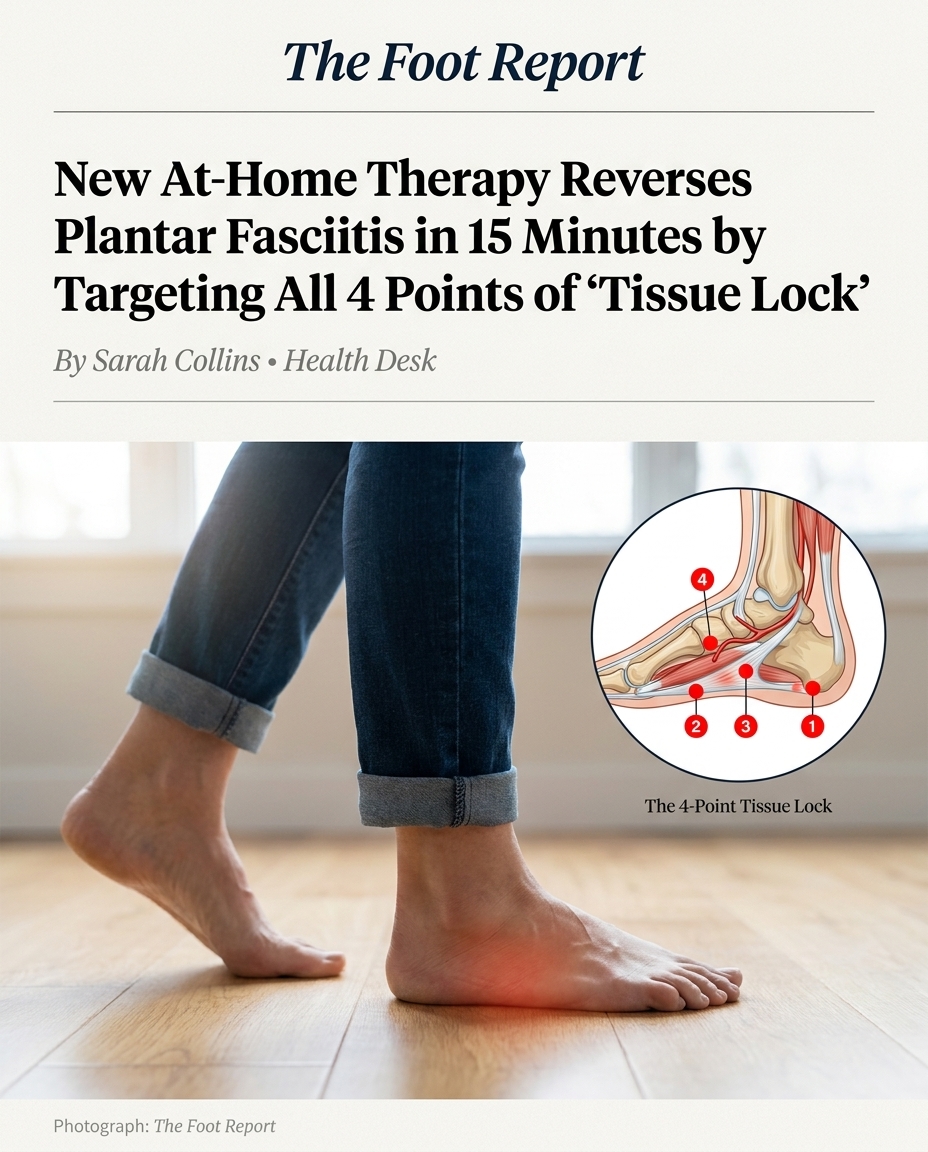
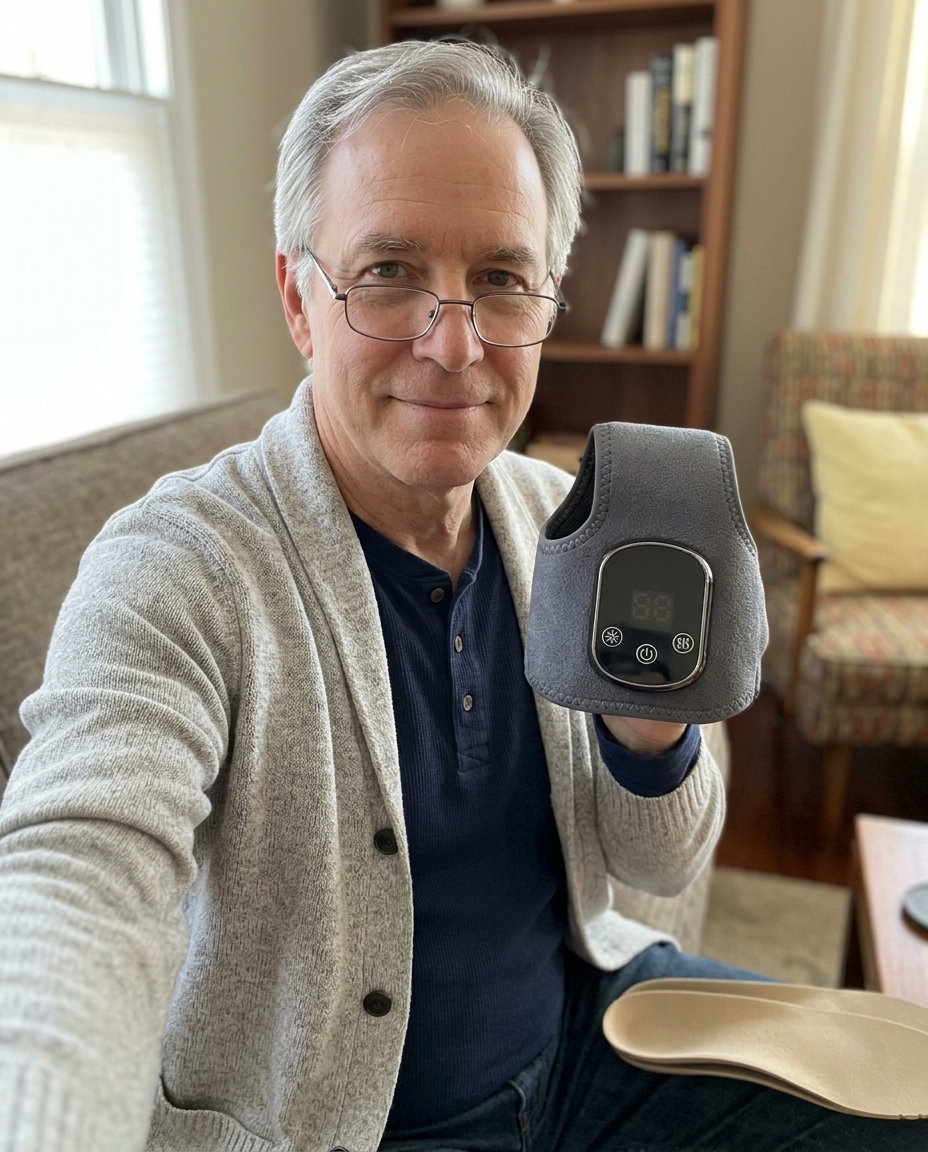
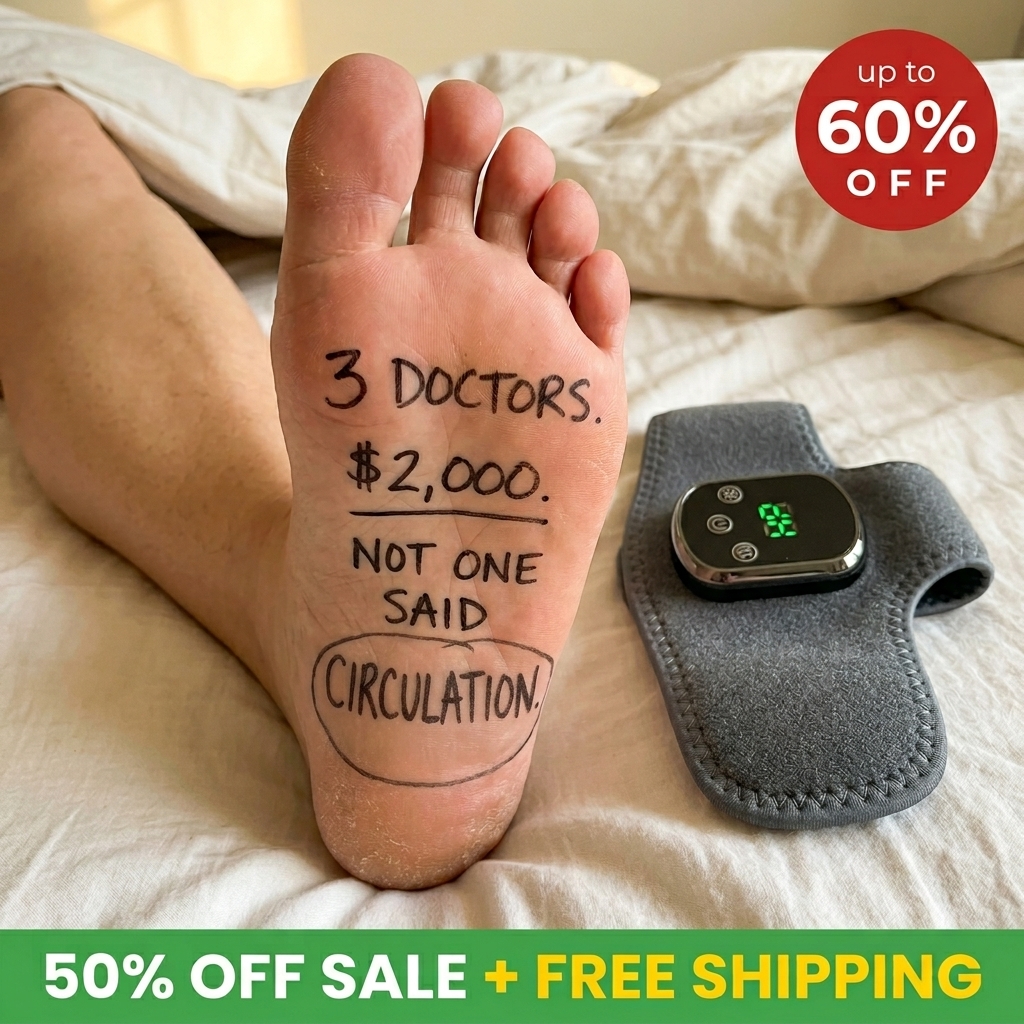
For nineteen years, Dr. Marcus Webb prescribed custom orthotics to every plantar fasciitis patient who walked into his clinic. Most of them felt better within a week. Some within days. And for almost two decades, that was enough for him. "If a patient came in on Monday morning barely able to walk, and by Friday they were back to their routine -- I considered that a win," he says. "I never questioned it. Why would I? They felt better." What changed was a spreadsheet. In 2021, Dr. Webb started tracking something most podiatrists don't bother tracking -- what happened to his patients' foot strength over time. Not their pain levels. Not their satisfaction scores. Their actual muscular function. He used a simple pressure plate test. Stand on it barefoot, activate your arch, hold. He measured it at the initial visit, then again at six months, twelve months, and twenty-four months. "The results made me sick to my stomach," he says. Patients who had been wearing custom orthotics for more than a year showed measurably weaker intrinsic foot muscles than when they first came in. Not a little weaker. Significantly weaker. The arch muscles that are supposed to support the plantar fascia were doing less work than before treatment started. The orthotics were doing the job for them. And the feet were letting them. He describes it like this: "Imagine you broke your arm and wore a cast. The cast protects the bone while it heals. But if you never took the cast off -- if you wore it for two years, three years, five years -- that arm would be useless. The muscles would atrophy. Everyone understands this about a cast. Nobody talks about it with orthotics." The uncomfortable parallel is even simpler than that. When someone with anxiety drinks to calm down, it works. Immediately. The relief is real. But no responsible doctor tells that patient to drink every day for the rest of their life. Because the relief becomes the dependency, and the dependency makes the underlying problem worse. That, Dr. Webb realized, is what he had been doing with orthotics. Not for every patient. But for far too many of them. "I was treating the symptom in a way that deepened the root cause. The better the orthotic felt on day one, the less their foot was learning to do on its own." The root cause, in most plantar fasciitis cases, isn't a lack of cushioning. It's a lack of circulation. The plantar fascia has one of the poorest blood supplies of any tissue in the body. It sits at the lowest point of your circulatory system, farthest from the heart. When circulation slows -- from age, from inactivity, from spending years in supportive shoes that do all the work -- the fascia doesn't get the blood it needs to repair itself. So it stays inflamed. It stays tight. And every morning when you take those first steps, it tears again at the micro level. Orthotics don't address this. Compression socks don't address this. Cortisone shots definitely don't -- they just mask the signal so you can't feel the damage continuing underneath. What actually addresses it is restoring blood flow to the fascia and reactivating the nerve pathways that have gone quiet from oxygen deprivation. Dr. Webb started recommending a different approach to his patients in late 2022. Not instead of everything else overnight. But alongside it -- and eventually, for many patients, as the primary intervention. The approach combines three therapies. Heat to dilate the micro blood vessels around the plantar fascia -- opening pathways that have narrowed over time. Rhythmic compression to mechanically push blood through those opened vessels. And low-level electrical nerve stimulation to activate the peripheral nerves that have gone dormant. "Instead of propping the foot up from the outside, you're helping it rebuild its own capacity from the inside," he says. "You give it blood flow. You wake up the nerves. You let the foot start doing its job again." The device that delivers all three is called the SOLEUS Foot Therapy System. It's a soft wearable wrap -- not a slipper, not a mat, not another insole. You wrap it around the foot and use it for fifteen minutes a day, usually lying in bed before sleep. "I almost didn't try it," he admits. "I've seen a hundred devices come and go. Most of them are gimmicks with a clinical-sounding name and nothing behind them." What made him look twice was the combination. Heat alone isn't new. Compression alone isn't new. Nerve stimulation alone isn't new. But the three together, in a sequence designed to open, push, and activate -- that matched what his own data was pointing toward. He gave it to eleven patients initially. All had been on custom orthotics for at least a year. All still had recurring morning pain. "By day five or six, eight of the eleven reported that the first-step pain had dropped noticeably. By week three, four of them had stopped wearing their orthotics entirely. Not because I told them to. They just forgot. Their feet didn't remind them." One patient -- a 63-year-old retired mail carrier named Donna -- had spent over $2,400 on custom orthotics, cortisone injections, and physical therapy over four years. She told Dr. Webb she had accepted that she would manage plantar fasciitis for the rest of her life. Eight weeks later, she texted his office: "Walked the entire farmers market Saturday. No orthotics. No pain. Didn't even think about my feet until I got home and realized I hadn't thought about them." Dr. Webb still has a shelf full of orthotic molds in his office. He hasn't thrown them out. But he reaches for them less and less. "I'm not anti-orthotic," he says. "There are cases where they're the right call. But for the majority of plantar fasciitis patients I see, they were a well-meaning band-aid on a problem that needed blood flow, not cushioning. I just wish I'd seen it sooner." The SOLEUS Foot Therapy System is currently 50% off with a 30-day money-back guarantee. If your orthotics are the only thing standing between you and pain -- it might be worth asking why your feet can't stand on their own yet.
Like this ad? Make it yours.
Crush rebuilds this exact creative around your product — your brand, your colors, your offer — in about a minute.