
Active· since Jun 17, 2026
- 92
- days running
- 0
- relaunches
Ad copy
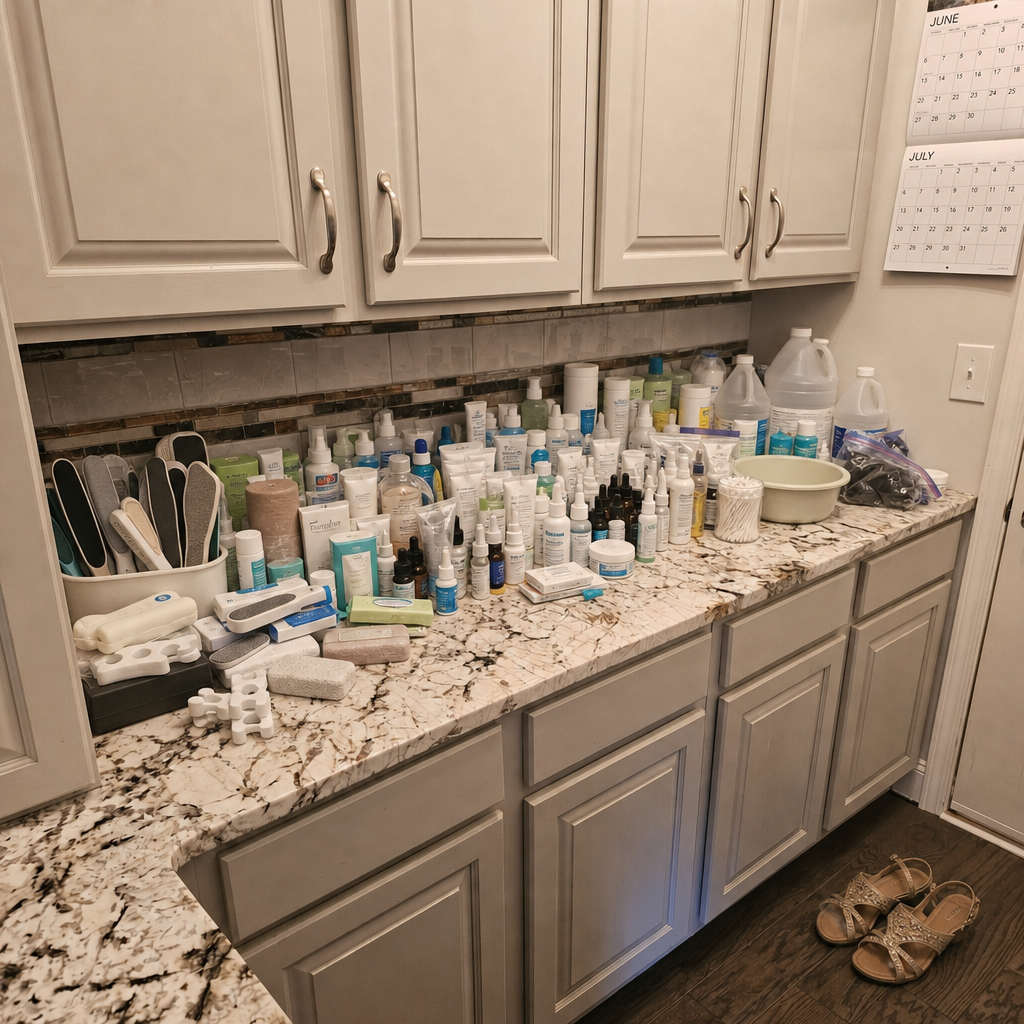
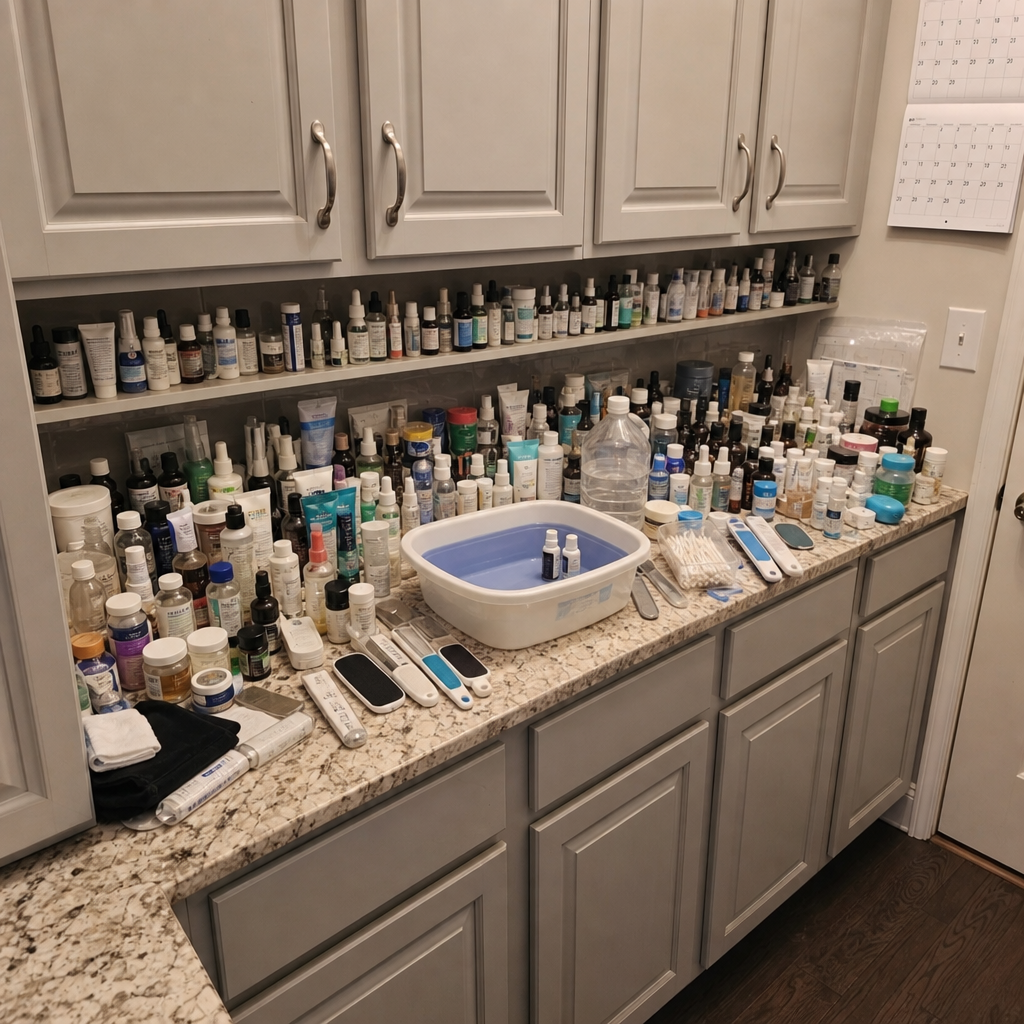
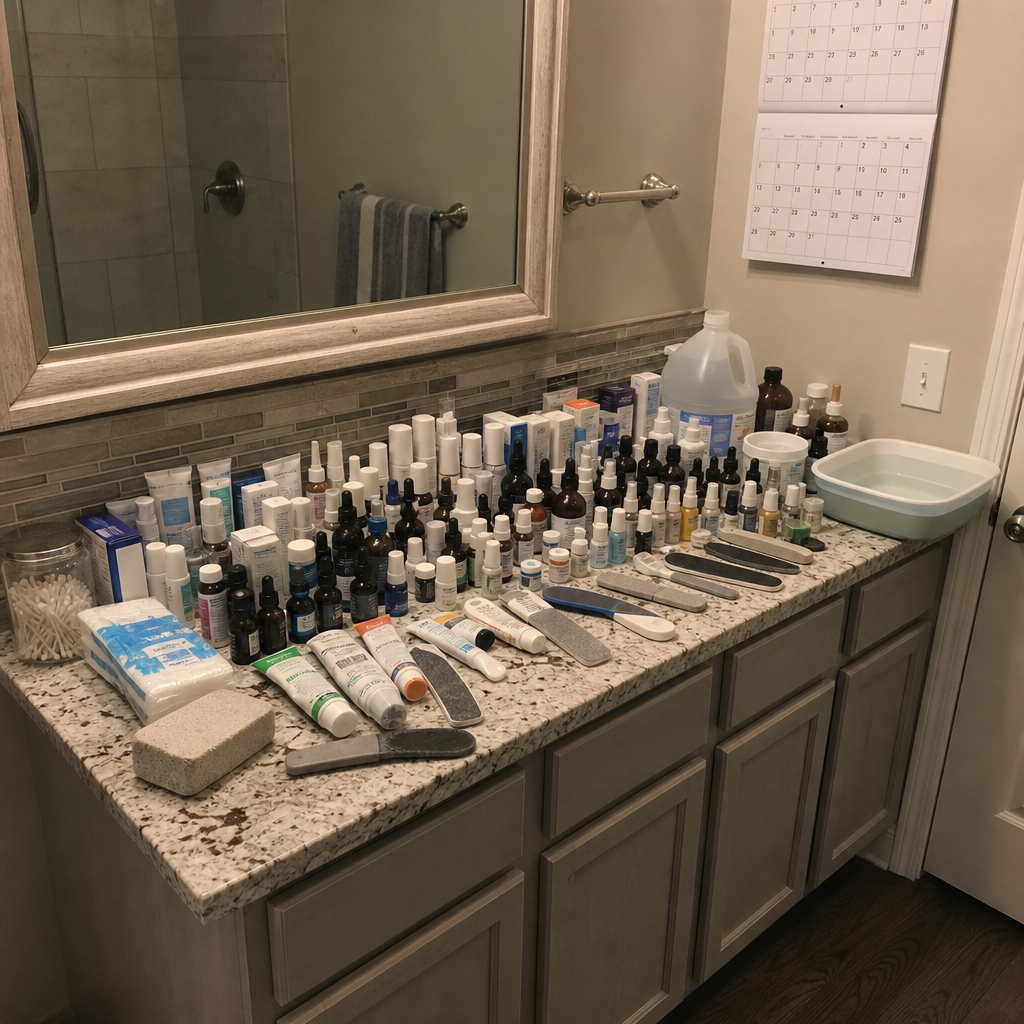
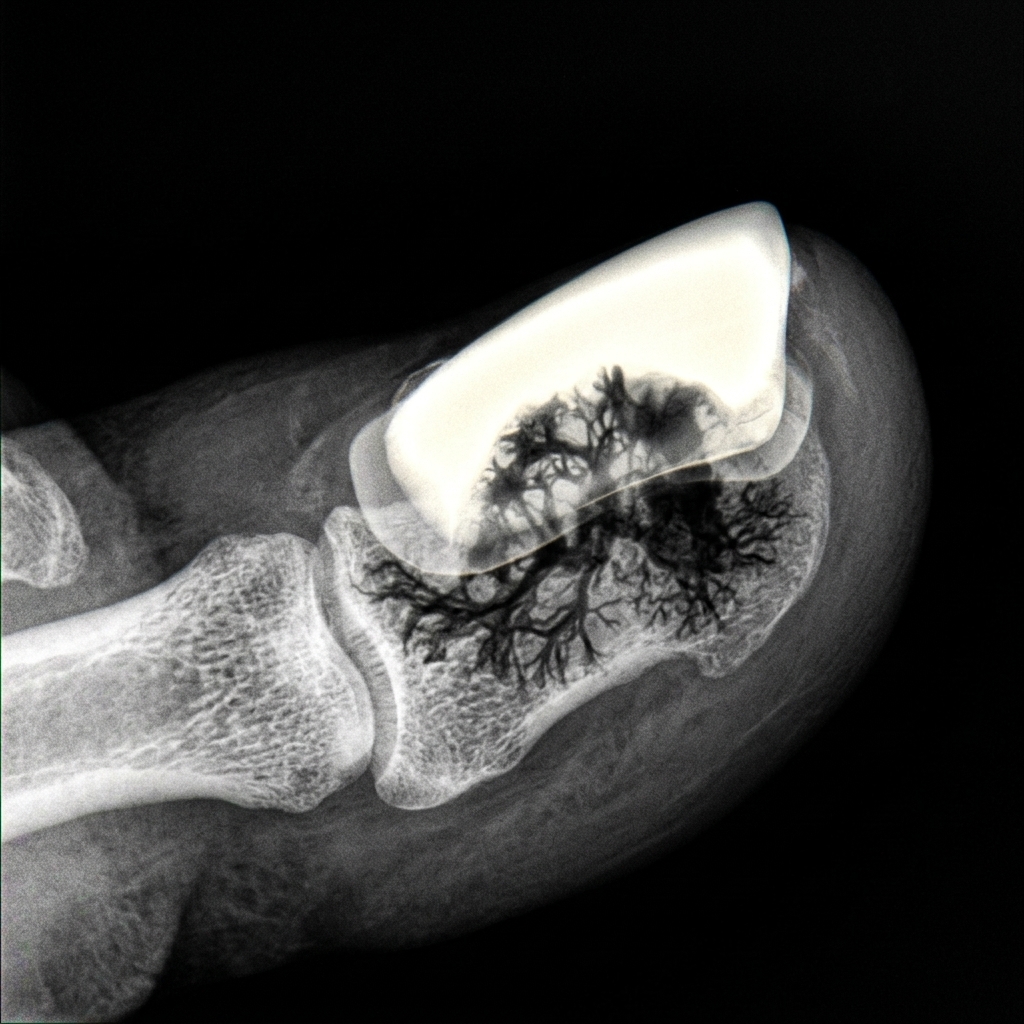
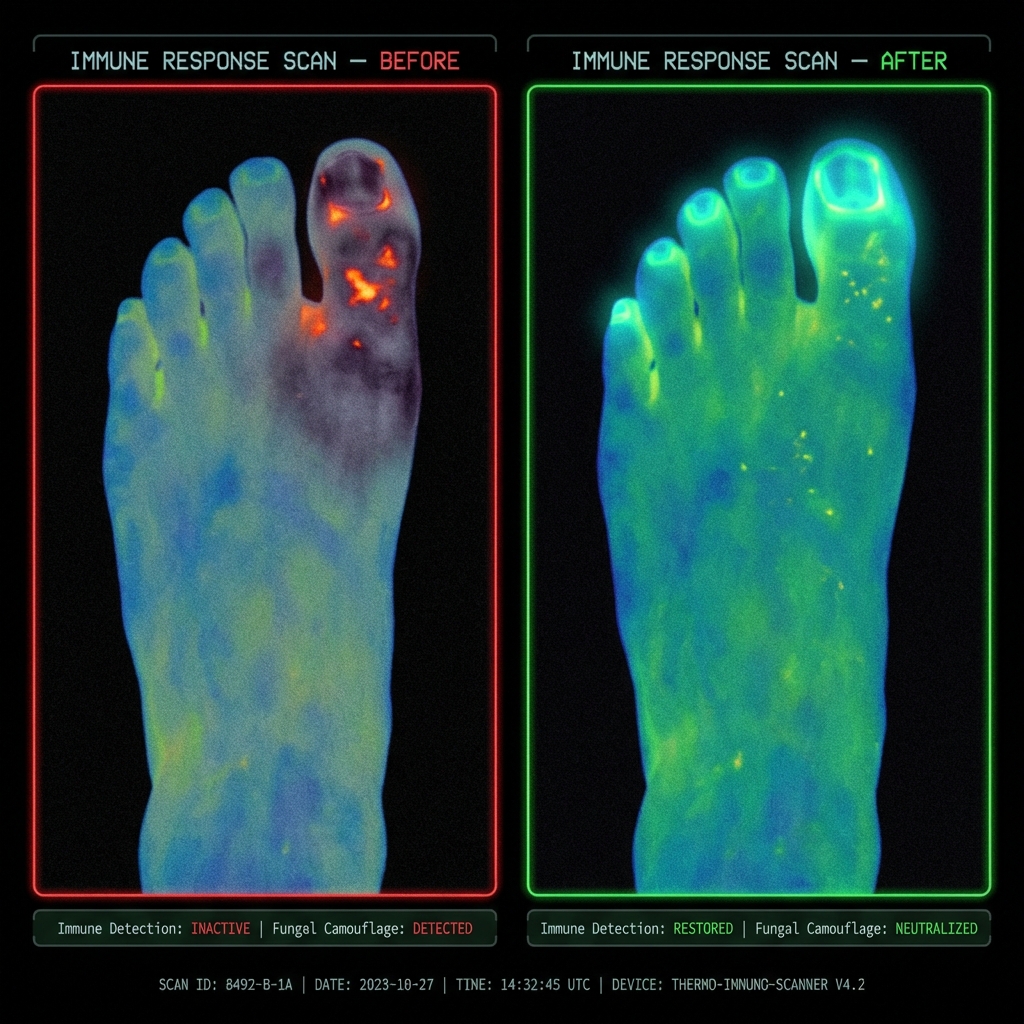
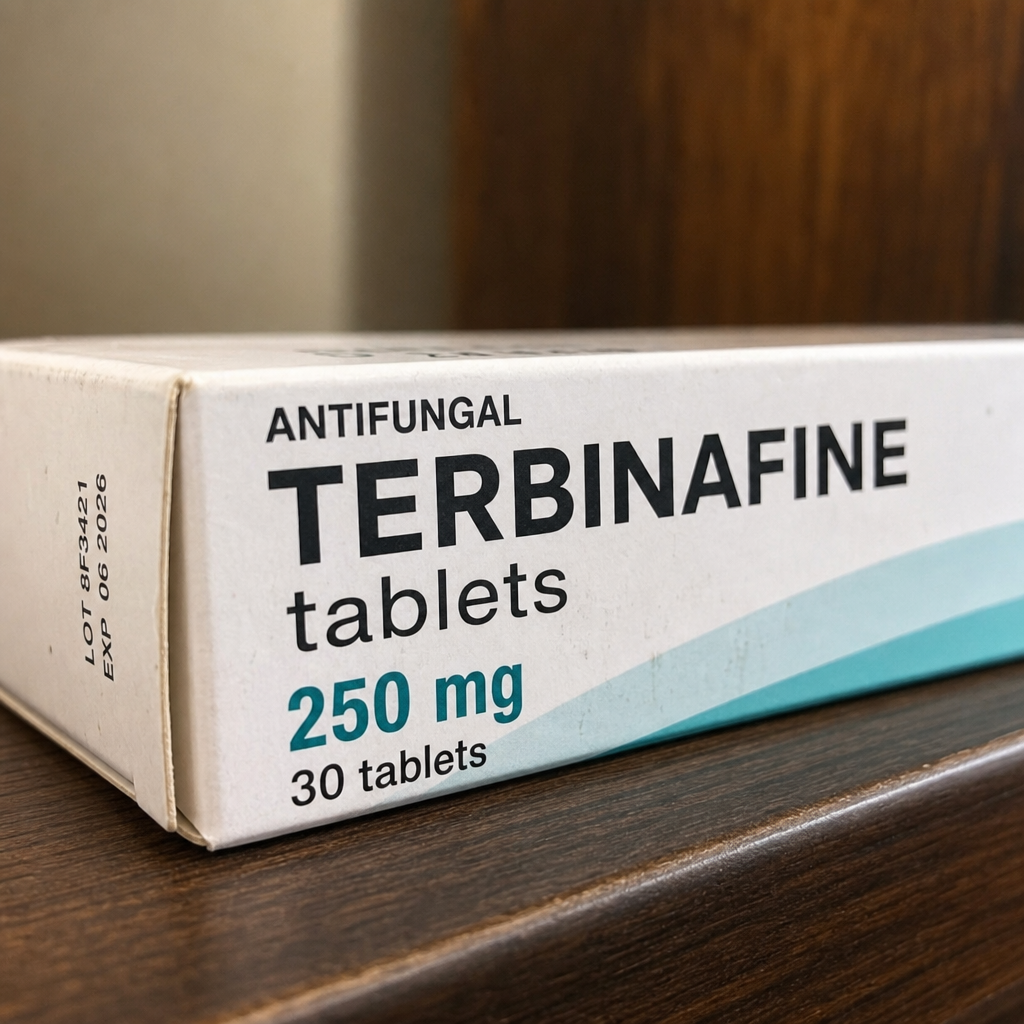
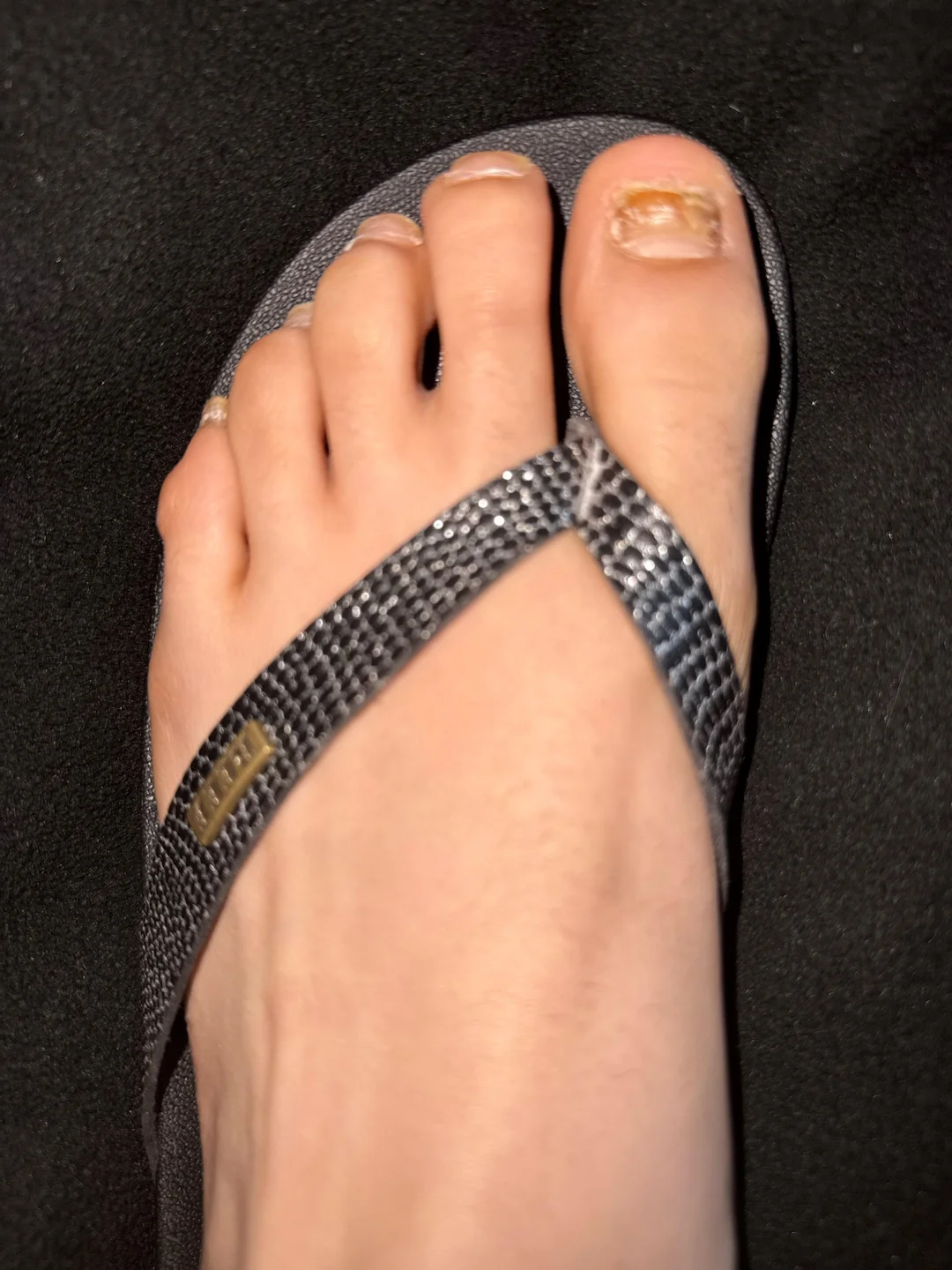
I spent $4,500 on nail fungus treatments over six years. I was SO determined to finally clear my nails and wear sandals again. I bought three pairs before I even found the right treatment. I've worn none of them. My podiatrist never mentioned the biofilm. She was prescribing lacquer while the fortress underneath got thicker every month. I'm 58. I first noticed nail fungus at 52. By year three I had seven infected nails and I was doing the full nightly ritual — filing, painting, soaking, wrapping — forty-five minutes every evening. I bought the sandals in June of year four — strappy, open-toed, the kind I hadn't worn in four years. I remember holding them up in the store and almost crying because I was going to BE that woman again. The one with normal feet. Then I checked my nails under the bathroom light that evening. Same yellow. Same crumbling. Same angry red cuticles despite painting lacquer every single night for four years. I stood there staring at feet I didn't recognize. Not the feet I'd imagined when I bought the sandals. Feet that had gotten WORSE during treatment. Seven nails that looked more destroyed than the day I started. I called my podiatrist the next morning. She said "give it more time — some infections are slow to respond." She was wrong. And she didn't know why she was wrong. ======== I became an expert in things that don't work on chronic nail fungus. Ciclopirox lacquer — painted every night for fourteen months. The first thing every podiatrist prescribes. 97% bounced off my waterproof nail. The infection spread from one toe to three during treatment. Jublia at $580 per bottle — eight months. "Stronger formulation," my podiatrist said. Same waterproof nail. Same biofilm underneath. Same yellow. Spread to five toes. Tea tree oil — twice a day for a year. Evaporated on the surface. Stained my socks green. My nails looked exactly the same. Vicks VapoRub — packed under the nails with cotton swabs every night. The menthol felt like something was happening. Nothing was happening. Vinegar soaks — thirty minutes every other evening. Water hitting a waterproof barrier. My feet smelled like salad. Filing protocols — rotary tool every Sunday. Thinning the roof of the fortress. The fortress underneath untouched. Three generic oregano supplements from Amazon — six to eight weeks each. 20-30% carvacrol. Blood levels never crossed the biofilm disruption threshold. Six years. Eleven products and treatments. $4,500. Every single one was designed for SURFACE infections. Not one of them was designed for what actually happens underneath a waterproof nail when a biofilm fortress is intact. Nobody told me these were two completely different problems. And every month I spent on the wrong treatments, the biofilm underneath was continuing to mature. I wasn't just wasting money. I was wasting a window I didn't know existed. ======== Three weeks ago, I was at a women's health expo in the city. One of those big open-floor events with booths everywhere. I was walking past a natural health section — already skeptical, already exhausted — when a woman at a small booth called out. "Free nail infection assessment. Two minutes." Her name was Dr. Keller. German. Mid-sixties. Sharp eyes, quiet manner. She had a dermatoscope and a clipboard and she was examining women's nails. I almost didn't stop. Another person to confirm what I already knew. But I stopped. Because at this point what did I have to lose except two more minutes. She held my big toenail under the dermatoscope. Examined the cuticle. Examined the nail plate. Examined the tissue around the nail. She looked at me. Not at my nail. At me. "How long have you been treating this?" Not "how bad is it." Not "have you tried Terbinafine." How long have you been treating. Nobody had ever asked me that. "Six years. Lacquer every night. Eleven products. Nothing works." She nodded slowly. "May I see your other foot?" I took off my sock. She examined every infected nail. Same expression. "This isn't a resistant infection," she said quietly. "This is biofilm maturation." ======== Dr. Keller had been a podiatric mycologist in Munich for nearly 30 years — specializing in what happens to fungal infections when the biofilm goes unaddressed. She pulled a pen and a notepad toward her. "When a nail infection is caught early — first few months — the biofilm is thin. Immature. At that stage, even topicals have a narrow window of partial effectiveness." She drew a slow rising line. "But when you treat the surface for months or years without dissolving the biofilm, two things happen at once." She drew a second line, steep, climbing. "The biofilm matures — gets denser, thicker, more impenetrable every month. And the colony behind it uses that time to produce spores that colonize adjacent nails." She tapped the steep line. "Your podiatrist told you the infection was 'resistant.' She's thinking about the surface — the lacquer isn't killing the fungus she can see. That's true." She examined my cuticle again under the dermatoscope. "But what happened to you isn't a surface problem. The biofilm — the waterproof fortress underneath your nail — has been maturing for six years while you painted the surface. Lacquer can't reach it. Tea tree oil can't reach it. Vinegar can't reach it. That's why eleven products did nothing." ======== Then she said the thing that made my stomach drop. "From the onset of chronic infection — which for you started six years ago — there's a progression where the biofilm gets increasingly difficult to dissolve. The longer it's been intact, the denser the matrix becomes." She looked at my nails. "Year one to two: the biofilm is forming. This is the easiest window. A properly concentrated carvacrol protocol would likely dissolve it quickly." "Year three to five: the biofilm is mature. Dense. But still dissolvable with pharmaceutical-grade carvacrol at 70%+ concentration through the bloodstream." "Year six and beyond: the biofilm is heavily established. Still dissolvable — but requires consistent delivery over a longer period. And the nail matrix has been sustaining damage from prolonged colonization." She paused. "Beyond eight to ten years of unaddressed biofilm, matrix damage can become permanent. The infection may be clearable. But the nail may never grow in completely normal." I'd spent six years celebrating my "compliance" while the biofilm underneath was maturing. And nobody — not my podiatrist, not a single product I bought — mentioned that the fortress was getting harder to dissolve every year I spent on surface treatments. ======== "The women I've seen clear chronic biofilm-protected infections," she said, writing on the notepad, "addressed three things simultaneously." Systemic delivery — the compound has to enter the bloodstream and reach the nail bed from INSIDE. No topical can penetrate a waterproof nail at therapeutic levels. The treatment has to bypass the keratin barrier entirely. Biofilm dissolution — pharmaceutical-grade carvacrol at minimum 70% standardized concentration. Lipid-soluble. Merges with the oily biofilm matrix and dissolves it from within. At 20-30% — the concentration in generic supplements — the blood levels don't cross the threshold. The fortress doesn't notice. Immune reactivation — thymoquinone from cold-pressed black seed oil. The biofilm suppresses the local immune response at the nail bed. After years behind the fortress, the immune system has gone dormant around the infection. You need to wake it up so your body attacks the exposed colony once the biofilm dissolves. "All three. At the same time." She circled where they overlapped on the notepad. "Lacquer addresses the surface. Filing addresses the roof. Generic supplements address the right compound at the wrong concentration. None of them reach the biofilm layer where the actual barrier lives. You need systemic dissolution at the site of the fortress." I stared at the notepad. Three requirements. Six years of products that met zero of them. ======== I went home that night and sat on my bed with the three pairs of sandals still in my closet, tags still on two of them. Furious. Not at my feet. Not at the fungus. At every podiatrist who prescribed lacquer without once mentioning that a biofilm fortress was maturing underneath. At every product that promised "antifungal" without disclosing that it couldn't reach the barrier protecting the infection. And terrified. Because the biofilm Dr. Keller described had been maturing for six years. Getting thicker. Getting denser. Getting harder to dissolve every month I spent on surface treatments. I started searching nail fungus forums. Not for "best nail fungus treatment." For women who'd been treating for years with nothing to show for it. Patricia, 55, seven nails, five years of lacquer: "Every firming cream — I mean every lacquer — did nothing. Eight weeks with Orgatics and my cuticle inflammation was gone. Clear crescents on five toes. My daughter grabbed my foot last week and said 'Mom, it looks different.' She was right." Sandra, 61, nine nails, six years of treatment: "My podiatrist told me the infection was resistant and time would help. It didn't. It got worse. I found Orgatics after six years of failed products. The crumbling stopped by week three. I wore sandals to my son's graduation. First time since before the fungus." Michelle, 52, four nails, three years: "I was more self-conscious about my feet at 'treated' than I was at 'untreated.' Nobody warns you that the treatment does nothing while the infection gets worse. Orgatics was the only thing that changed the nails — not moisturized them, not temporarily calmed the inflammation — actually changed them. Like the nail was regrowing from underneath." They all mentioned the same product. Orgatics Oregano & Black Seed Oil. ======== I checked it against Dr. Keller's three requirements. ✅ Systemic delivery: Oil-based softgels — enters bloodstream, bypasses waterproof nail entirely. Reaches nail bed from inside where no topical can go. ✅ Biofilm dissolution: 70%+ standardized carvacrol — pharmaceutical-grade. The threshold documented in peer-reviewed research for biofilm matrix degradation. Not the 20-30% in generic supplements that can't cross the line. ✅ Immune reactivation: Cold-pressed thymoquinone — wakes up the dormant immune response the biofilm has been suppressing for years. Your body starts attacking the exposed colony. All three. Working together. Not a lacquer designed for surface infections. A capsule formulated for biofilm-protected infections — the exact condition Dr. Keller described. $35 per pouch. 90-day money-back guarantee. Full refund if no clear growth. I ordered that night. The three pairs of sandals were still in my closet. I looked at them while I clicked "confirm order." ======== The pouch arrived two days later. Softgel capsules. Two with breakfast. Sixty seconds. No ritual. First morning: I took them with coffee. Sat at the kitchen table. Waited for the forty-five-minute ritual to start out of habit. Then realized — there was no ritual. No filing. No painting. No soaking. No wrapping. Just capsules and coffee. Day five: I checked my cuticles. The inflammation — that angry red border that had been constant for six years — was calmer. Not temporarily calmer the way lacquer made them feel for a day. Sustainably calmer. Every morning. Consistent. Week two: I was checking under the flashlight and saw it. At the cuticle of my big toenail. A thin crescent. Pink. Smooth. Not yellow. Six years. Eleven products. $4,500. Not one millimeter of clear growth. Ever. Two weeks of Orgatics and there it was. I measured: approximately 1.5mm of clear nail growing in from the root. ======== Week three. I was getting dressed for Saturday errands. Not thinking. Autopilot. Reached into my closet and grabbed one of the three pairs of sandals — the tan leather ones. Put them on. Looked in the mirror. And didn't reach for the sneakers. For six years — through the entire treatment journey, through eleven products, through every single day since I'd seen the yellow spreading — I had covered my feet before leaving the house. Every time. Without exception. Closed-toe shoes. Thick socks. Automatic. Like breathing. But that Saturday I stood there in sandals with my toes visible and I didn't move to cover them. I didn't think "my nails look amazing." They didn't — still yellow at the tips, still growing out. But the cuticles were clear. The crumbling had stopped. New nail was coming in pink. And for the first time in six years, I didn't feel the need to hide. I drove to the farmers market with the windows down and my feet in sandals. ======== Eight weeks in, I measured again. Big toe: over 4 millimeters of clear growth from the cuticle. Pink. Smooth. Normal thickness. Five additional toes showing clear crescents. No new infections. Zero spreading. Crumbling stopped entirely. I looked at the numbers. Then at my nails. Six years of biofilm maturation. Eleven products that couldn't reach the barrier. And in eight weeks of systemic dissolution, more clear growth than all of them combined produced in seventy-two months. Dr. Keller had said the biofilm was still dissolvable at year six. She was right. ======== My friend Diane started two months ago. She'd had nail fungus on eight nails for seven years. Seven years of lacquer and filing and hiding. She'd told me she hadn't worn sandals since her youngest child's elementary school graduation. Five years of closed-toe shoes. She texted me last week. A photo. Sandals. Toes visible. Standing in her driveway, not posing. "I'm wearing sandals. In my own driveway. With the neighbors out. I haven't done that in five years. I forgot what it felt like to just... have feet." Her clear growth was over 3 millimeters on her big toe at week six. Crumbling stopped. Spreading stopped. She told me she cried in the car after her first open-toed grocery run. Not because her nails looked perfect. Because she forgot to check them in the car mirror before getting out. The shame was just... gone. ======== If you're reading this because you've been painting lacquer for years and your reward is nails that are still yellow, still crumbling, still spreading — if you're still hiding your feet at your goal weight — wait, wrong ad. If you're still hiding your feet despite years of perfect compliance — if you traded hopeful treatment for hopeless ritual — understand this: You don't have a "resistant infection" that needs "more time." You have biofilm maturation. Early infection = biofilm thin, some topical effect possible Chronic infection = biofilm mature, no topical penetrates, fortress blocks everything They look similar on the surface. They are completely different conditions. And they require completely different approaches. Lacquer addresses the surface. You need systemic dissolution at the biofilm layer. ======== The biofilm has a maturation timeline. Every month you spend on surface treatments is another month the fortress gets denser. Year 1-2: easiest to dissolve. Year 3-5: still dissolvable with right concentration. Year 6+: requires consistent delivery, matrix damage accumulating. Year 8-10+: matrix damage may become permanent. Your biofilm isn't dead. It's just getting harder to dissolve every month you wait. Every month you spend on lacquer — on filing — on generic supplements at the wrong concentration — is another month closer to the point where even clearing the infection may not restore normal nail growth. Don't waste your window the way I almost wasted mine. ======== Orgatics does what Dr. Keller said was necessary for biofilm-protected infections: ✅ Systemic delivery — oil-based softgels through the bloodstream, bypassing the waterproof nail ✅ Biofilm dissolution — 70%+ pharmaceutical-grade carvacrol that dissolves the oily fortress from inside ✅ Immune reactivation — cold-pressed thymoquinone that wakes up the dormant defense system All three. Simultaneously. Every morning. The only product I found designed for systemic biofilm dissolution — not surface management. $35 per pouch. 90-day guarantee. Full refund if no clear growth. 👉 https://tryorgatics.com/pages/nail-fungus ======== Every month you wait is another month the biofilm matures. Every week is another week closer to matrix damage. Every day is another day hiding feet you're exhausted from hiding. I wasted six years. I almost missed my window completely. You did the hardest thing — you showed up every night for years. You painted. You filed. You soaked. You wrapped. You were more disciplined than anyone your podiatrist has ever seen. Now you know about the biofilm. The fortress is still dissolvable. But it won't stay easy forever. ======== P.S. Eight weeks in, second pouch. Total cost: $70. Compared to $4,500 on lacquers, creams, oils, and supplements that couldn't reach past the waterproof nail? I want to scream. Last weekend I took the tags off all three pairs of sandals. Wore the tan ones to the farmers market. The strappy ones to a friend's birthday dinner. The third pair is by the front door ready for Saturday. I didn't spend six years painting a waterproof nail to live in sneakers. And neither did you. P.P.S. I went back to my podiatrist last month. She examined my nails and paused. "Your proximal growth has improved significantly. Whatever you're doing — keep doing it." I told her about Dr. Keller. About biofilm maturation versus surface resistance. About the three requirements. About systemic dissolution versus topical management. She wrote it all down. Said she had dozens of patients on lacquer with the same progression and no protocol beyond "be patient." She prescribed lacquer to manage my infection. She just didn't know the second half of the story. 👉 https://tryorgatics.com/pages/nail-fungus
$4,500 Worth Of Failed Treatments In The Trash
The secret to clear, healthy nail growth. Pharmaceutical-grade carvacrol dissolves the biofilm fortress from inside through your bloodstream — reaching the infection that six years of lacquer never touched. $35 per pouch. 90-day guarantee.
LEARN MORELike this ad? Make it yours.
Crush rebuilds this exact creative around your product — your brand, your colors, your offer — in about a minute.