Dr Jennifer Miller
Dr Jennifer Miller Facebook ad: “GLP-1 gave you your body back. Then it took your crown.”
Ran for 34 days, from July 16 to August 19, 2026, the last day Crush saw it.
Run by Dr Jennifer Miller on Facebook. Crush is not the advertiser and does not verify its claims. See this ad in Meta's Ad Library(opens in a new tab)
Want an ad like this for your product?
Crush makes new ad images for your product from this ad: your logo, your product photo, your offer.
Trials from $19.95 USD, then $79.95 USD a month. Cancel anytime.
About this ad
- Meta Ad Library ID
- 28177564875184352
- Platforms
- Relaunches
- 0
Ad text
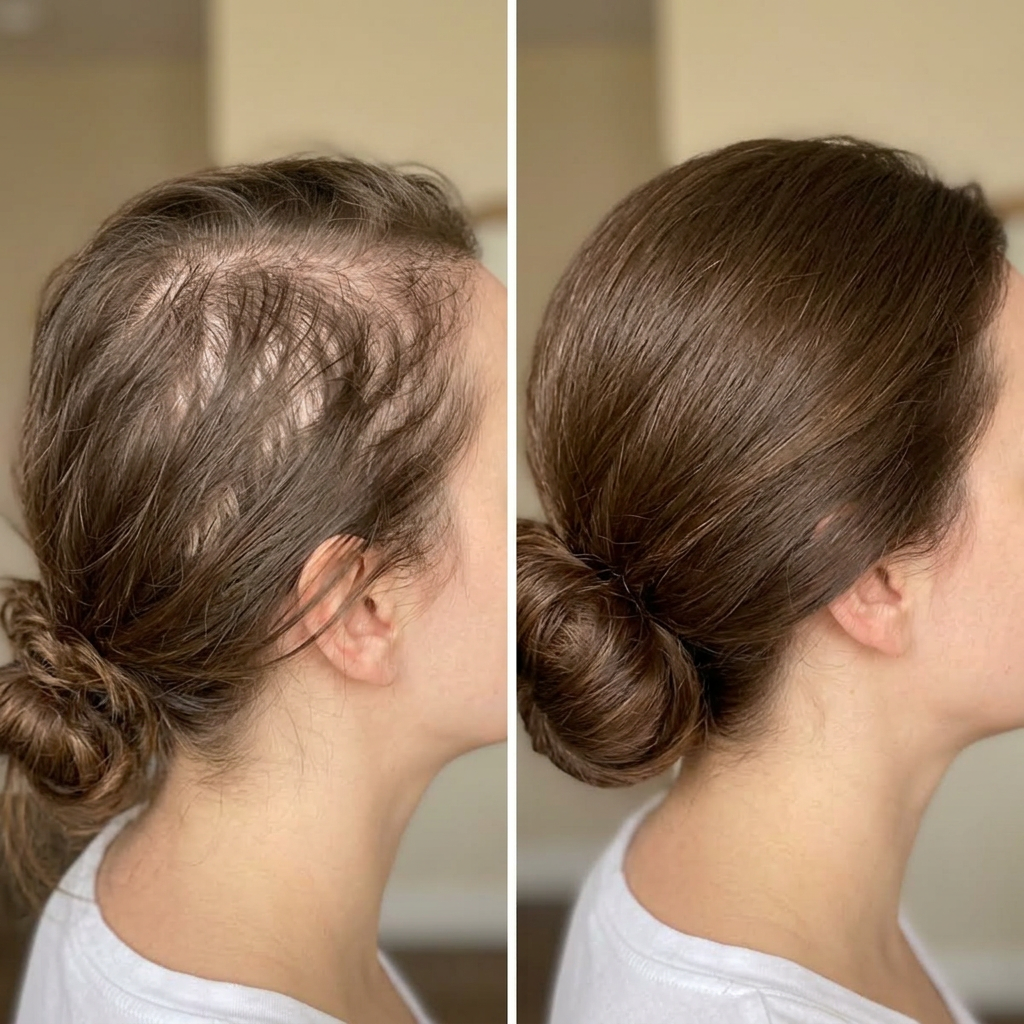
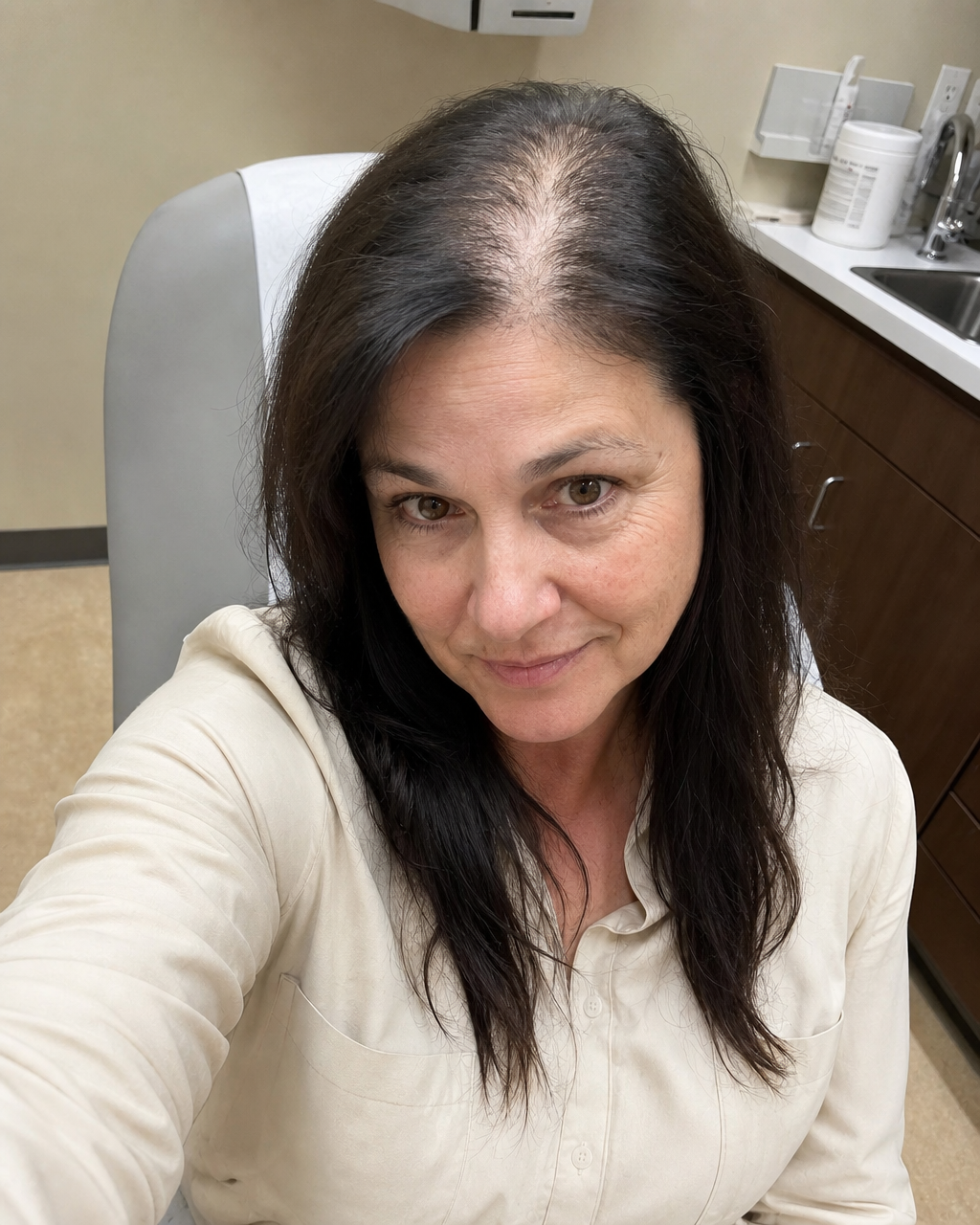
If you started a GLP-1 in the last year or two, and the weight came off the way you had been quietly praying it would come off for a decade, and you finally felt like your body was your body again, and then four or five months in your shower drain started looking like a small crime scene, and someone told you it was telogen effluvium and to eat more protein and take a biotin and give it six months, and you did all of that, and the shedding eventually calmed down, but your crown never actually came back, and now the part in your hair is wider than it used to be and there is a specific angle in the bathroom light where you can see your own scalp and you keep tilting your head so you do not have to look at it… I want to walk you through what is actually happening to your hair, because I have been watching this in my practice for about 18 months now, and more recently I have been watching it on my own scalp, and I owe you a more complete explanation than the one you have gotten so far. The short version is this. The advice you were given about telogen effluvium is not wrong. It is just addressing one of two things that are happening to your hair at the same time. The second thing, the quieter one, is what leaves your crown looking the way it does now. By the end of this I want you to understand the endocrine piece nobody has spelled out to you, and why "give it time and eat more protein" was never going to be enough to fix it. I am 52. I am an MD. I have spent almost 20 years running a general medicine practice, mostly women in their 40s, 50s, and 60s, which means for the last two years my exam room has essentially been ground zero for this problem. I write GLP-1 scripts. I see the weight come off. I have seen the results transform patients who had spent 20 years in a body that would not respond to anything they did, and I want to be clear before anything else that I still believe in these medications. What I am about to explain is not an argument against them. It is an argument for understanding a downstream effect that I underestimated for a long time and that I am now watching happen inside my own scalp. I am going to be honest with you about my own hair because I think it matters that you hear it from a physician who is not narrating this from a comfortable distance. I started tirzepatide 14 months ago. Not for cosmetic reasons. My fasting glucose had crept into the pre-diabetic range, my A1C was flagged for the first time, and I had watched my mother go through the full metabolic cascade of type 2 in her late 50s and I did not want to walk that road. Within about six months I had lost 34 pounds. My labs normalized. My knees stopped hurting when I walked upstairs at the office. I felt, genuinely, like I had bought myself another decade. Then around month five, I started finding hair in my brush that I did not remember losing. Not clumps. Just more than there had been. I did what most of my patients do. I told myself I was imagining it. I upped my protein. I bought a fancy biotin. By month seven the shedding had actually slowed down. And I thought, fine, that was the telogen effluvium episode, we are through the woods, the hair will come back. It did not. At month nine my part looked wider. At month eleven my daughter, who is 24 and does not go out of her way to point things out to me, said something about the light hitting my crown weird in a photo and did I want her to send me a different one. At month twelve I stood in my own bathroom looking at the top of my head in a hand mirror the way I have watched patients do in my exam room a thousand times, and I understood exactly what they had been trying to describe to me. The hair had not fallen out. It had just gotten thinner. Wispier. Like it had lost its density from the inside out. That is where I lived for about two months. A physician who had been giving her GLP-1 patients half-correct advice about hair for the last two years, watching the same thing happen to her own scalp and not being able to explain it any better than what I had been telling them. Which was, essentially, be patient, eat protein, this is stress shedding, it will pass. It did not pass. I want to walk you through what I finally figured out, because there are three things happening in your body right now that nobody has bothered to explain to you. One — the hair you shed in months three through six after starting a GLP-1 is a stress response and it is temporary. That part of the standard advice is correct. Two — while that shedding was happening, a second, completely separate process was also happening, and it did not resolve when the shedding slowed down. It is still going. Three — the protein, the biotin, the collagen, the fancy shampoo, none of them touch the second process. They feed a hair follicle. They do not protect it from what is actively shrinking it. Let me explain the second process, because once you understand it, the last year of your hair will finally click into place. DHT is a hormone. Dihydrotestosterone. It is a metabolite of testosterone, and it has been in your body your whole life at low levels. In a woman with healthy estrogen, DHT does very little to your scalp because estrogen essentially shields the hair follicle. Estrogen occupies the space around the follicle and prevents DHT from binding to the androgen receptors that would otherwise tell the follicle to shrink. That shield is why most women do not lose their hair the way men do, even though DHT is in both bodies. Here is what almost no one is telling GLP-1 patients. Fat tissue is not inert storage. Fat tissue is an endocrine organ. It produces estrogen, specifically through an enzyme called aromatase, which converts androgens into estrogen out in the periphery of the body. In a woman past 45, whose ovaries are already producing less estrogen than they used to, that peripheral production is doing a much bigger share of the total estrogen work than most patients realize. When you lose 30, 40, 50 pounds of fat quickly, you are not just losing weight. You are losing an endocrine organ. You are dismantling a meaningful portion of your body's estrogen production capacity in a matter of months. And the DHT, which has been sitting there quietly your whole life, held back by that estrogen shield, is now facing a much smaller shield. It gets through. It attaches to the androgen receptors on the follicles at your crown and your temples and the top of your part — because those are the follicles that carry the receptor density that makes them sensitive to DHT in the first place — and it begins to miniaturize them. Slowly. Methodically. Each growth cycle the follicle produces a slightly thinner, slightly shorter, slightly weaker hair. If nothing interrupts the process, eventually the follicle produces something that barely qualifies as hair at all. Then it stops producing anything visible. This is androgenic alopecia. It is the same mechanism that causes male pattern baldness. It has been in your genetic deck your whole life. In most women it stays dormant for decades because the estrogen shield holds. In some women it activates in menopause when ovarian estrogen drops. And in an increasing number of women I am now seeing in my practice, it is activating early, in their 40s and even late 30s, because a GLP-1 has pulled the peripheral estrogen out from under it years ahead of schedule. I sat with this for a long time after I finally put the pieces together, because for the previous year I had been telling patients — and telling myself — that this was telogen effluvium and it would resolve. Telogen effluvium was real. It did resolve. But it was the loud process. It was the one you could see in the drain. Underneath it, quietly, an androgenic process was taking hold, and that process does not resolve on its own because it is not a stress response. It is a hormonal shift. "Eat more protein" does not restore your peripheral estrogen production. "Give it six months" does not stop DHT from binding to your follicles. "Take a biotin" does not un-miniaturize a follicle that has been shrinking for eleven months. Those pieces of advice are not wrong. They are just answering a different question. I want to be specific about what standard advice actually accomplishes, because I gave that advice for years and I want to give it its fair credit. Protein supports the amino acid pool your body draws from to build the keratin structure of new hair. Biotin, if you happen to be deficient, corrects a nutritional gap. Collagen provides substrate. These things help the follicle build hair when the follicle is capable of building hair. The problem is that a follicle under active DHT miniaturization is not fully capable of building hair. You can hand it all the raw materials in the world. If the signaling at the receptor is telling that follicle to shrink, the output will keep getting weaker no matter how much protein you eat. It is, and I am borrowing an analogy from a colleague, like watering a plant while somebody pours a small amount of herbicide on the roots. The watering is not the problem. The watering is the right instinct. But it will not overcome what is happening at the root. So the question that actually matters is: how do you interrupt the DHT process? I want to spend a minute here because most patients I talk to have already heard the two conventional answers, and they have already run into the reasons neither one is a great fit. Finasteride and dutasteride are 5-alpha reductase inhibitors. They shut down the conversion of testosterone into DHT at the enzyme level. They work. They also carry a warning label that specifically flags them as unsafe for women of childbearing potential, and while a 52 year old physician is not exactly the target demographic for that warning, most of the women in my practice who are watching this happen to their hair are in their 40s and are, appropriately, cautious about a systemic hormonal medication that has been through less long-term study in women than in men. Spironolactone is a potassium-sparing diuretic that has anti-androgen activity as a secondary effect. It is prescribed off-label for female pattern hair loss. It also affects blood pressure, electrolyte balance, and menstrual cycles, and it is not a small ask for a woman who is already navigating the metabolic shift of rapid weight loss to add a systemic hormone-altering medication on top of that. Minoxidil is a vasodilator. It widens blood vessels to the scalp. It is a legitimate tool. But it does not block DHT. So the follicle continues to be damaged the entire time you are on it. You are stimulating a follicle while it is being actively miniaturized. And the moment you stop using it, you lose whatever gains you made. It is a lifelong twice-daily commitment for most of my patients, and honestly, most of them do not stick with it past the six month mark. None of these is wrong. They are just heavier tools than a lot of women want to reach for when the underlying problem is essentially a hormonal shift caused by fat loss and could arguably be addressed at the same level it originated. Which brings me to the piece I want to walk you through carefully, because it is the piece I did not fully understand a year ago. There are two botanical compounds with actual clinical data behind them for DHT modulation in women, and they work through two different mechanisms. Together they cover the same territory that finasteride covers pharmacologically, without the systemic hormonal footprint. The first is pumpkin seed oil. Not raw pumpkin seeds. Not a spoonful of oil on a salad. A concentrated extract that delivers phytosterols, specifically delta-7 sterols, at a dose that inhibits 5-alpha reductase. This is the enzyme that converts testosterone into DHT. Pumpkin seed oil inhibits it. Less enzyme activity, less new DHT production. There is a trial out of South Korea, published in Evidence-Based Complementary and Alternative Medicine, that showed measurable hair count increase in male androgenic alopecia patients on pumpkin seed oil versus placebo over six months. The mechanism translates cleanly to women because the enzyme it targets is the same enzyme in both bodies. Pumpkin seed oil reduces how much new DHT your body makes. What it does not do is anything about the DHT already circulating and already attached to your follicles. That is where saw palmetto comes in. Saw palmetto is a competitive inhibitor at the androgen receptor. It sits on the receptor site on the follicle and blocks DHT from binding there. So even the DHT that already exists in your scalp cannot attach and cannot send the shrinking signal. There is data behind saw palmetto going back to the 1990s in prostate research, which is what most people know it for, but the receptor mechanism is the same at the follicle. Together they cover the two halves. Pumpkin seed oil turns down the production. Saw palmetto blocks the attachment. This is what a lot of the functional medicine and hair loss dermatology literature calls dual-pathway DHT modulation and it is the closest thing to a mechanistic answer for what GLP-1 has done to your hair. I want to be careful here because I know exactly what happens next. You go to Amazon. You buy a bottle of pumpkin seed oil capsules and a separate saw palmetto supplement. You take them for four months. You see very little change. You conclude that this whole line of reasoning was wrong. I have had patients do exactly this. I have watched it not work for them. And here is why. Most standalone pumpkin seed oil capsules on the retail market are raw seed powder or unrefined seed oil at low concentration. The delta-7 sterol content is well below what the trials used. You would need to consume something like two pounds of raw pumpkin seeds a day to approach the phytosterol dose that actually inhibits 5-alpha reductase meaningfully. A single capsule of loose seed powder is not going to get you there. And most saw palmetto on the retail shelf is packaged for prostate support, at doses formulated for men, using extraction methods that do not necessarily optimize the receptor-binding fraction. Some of it is fine. A lot of it is not. And the labeling almost never tells you which extraction method was used. So you end up with two supplements neither of which is delivering a therapeutic dose, taken alongside each other with no clinical logic to the combination, and four months later you have essentially confirmed for yourself that natural approaches do not work. When what you have actually confirmed is that under-dosed supplements bought separately do not work. This is the point at which I want to tell you what I actually take now, because I would feel dishonest walking you through all of this and not telling you what changed the trajectory of my own scalp. I was reading a thread on a private physician forum, one of those late-evening rabbit holes you fall into when you have been quietly obsessing about something you have not figured out yet. A dermatologist I did not know was answering a question from another internist whose own hair was thinning post-Ozempic. She explained the peripheral estrogen mechanism roughly the way I have laid it out for you, and then she mentioned a specific product she had started her patients on, and I saved the thread and did not act on it for a week. The product was GLOV Pumpkin Seed Oil, their Advanced Hair Loss Complex Softgels. I looked at the formulation over about three evenings before I ordered anything. I was tired of buying bottles. Concentrated pumpkin seed oil extract at a dose in the therapeutic range for phytosterol delivery. Saw palmetto standardized for the receptor-binding fraction, not the loose prostate-formula extraction. Biotin at a rational supportive dose, not the megadose that mostly just turns your urine bright yellow. A broader DHT complex including additional botanical support. All in a softgel. Two a day. I could not tell you the doses were each dialed perfectly to my body. What I could tell you was that it was the first formula I had looked at that mapped onto the mechanism the way it had been explained to me. Pumpkin seed oil for production, saw palmetto for the receptor, supportive nutrients for the follicles that were still going to try to regrow. The 60 day money-back guarantee was frankly the reason I ordered. I had spent close to $300 across various hair supplements over the previous six months, and my willingness to believe in any of them had run out. Two months of return window on a bottle I was already skeptical of felt reasonable. I put the bottle in the drawer next to my toothbrush and took the two softgels every morning with my coffee and my thyroid pill. The first three weeks I noticed nothing. Which, again, is what I would tell any patient to expect from a follicle-level intervention. Hair grows in cycles. Nothing at the follicle changes in a week. Somewhere around week four I noticed my brush was quieter. I had been finding hair on my pillow every morning and pulling it off in a familiar little ritual, and one morning I realized I had not done it. I did not think much of it. I chalked it up to a good hair week. By week six my husband, who does not comment on my appearance in any structured way, said the top of my hair looked different. He said he could not describe how. He said it looked like it had before. He does not know I take supplements. He does not know I read hair loss research on my phone in bed. He noticed something and said something. By week eight there were baby hairs along my part that had absolutely not been there before. Short. Fine. New. The kind of hair you get when a follicle wakes back up and starts producing again. At about the ten week mark I took a photo of my crown in the same lighting I had taken the discouraging one at month twelve, and the part was narrower. Not dramatically. Not restored. But narrower. And in a bathroom mirror, that is the kind of difference you notice every day. I want to be very careful about what I am claiming here. I am not telling you a supplement grew back the fifteen percent density I lost over fourteen months on tirzepatide. I am telling you that the trajectory reversed. I stopped losing ground. I started gaining a small amount back. And in the timeline of hair, where you are counting three-month growth cycles, that is what movement looks like. Since I made this change I have started talking about it with my patients. Not from a script. Not as a prescription. I bring it up in the same way I would bring up any lifestyle intervention that I think has meaningful evidence behind it and that I have personally found helpful. I tell them the mechanism. I tell them about pumpkin seed oil and saw palmetto and why they need to be together and why the dose matters. I tell them what I take. Most of my GLP-1 patients over 40 are now on it. Enough of them have come back at the six month mark with visibly restored density that I have stopped treating it as a hunch and started treating it as part of my standard counseling when I start someone on tirzepatide or semaglutide. I want to add one more thing, because I know this comes up. A lot of you are going to read this and wonder if it is worth stopping the GLP-1 entirely and letting your body slowly reconstitute its peripheral estrogen and hoping the hair follows. I have had this conversation with patients probably 20 times in the last year. My answer is almost always no. And I want to explain why. The metabolic benefits you got from the medication are real. Your fasting glucose, your triglycerides, your visceral fat, your inflammatory markers, your joint pain, your cardiovascular risk profile — those changes are not cosmetic. They are the reason you started the medication in the first place, and they are the reason a lot of you have felt like you got a decade of your life back. Stopping the GLP-1 to try to recover hair through gradual fat regain is trading a well-documented longevity benefit for a plausible but uncertain hair benefit, and I do not think that trade is a good one for most of my patients. The better approach, in my opinion after 18 months of watching this play out, is to keep the medication, accept that the peripheral estrogen shift is a real consequence, and intervene at the DHT step directly. Which is what pumpkin seed oil and saw palmetto do. That is the leverage point in the mechanism where you can actually change something without giving up everything else you gained. The other question I get, and I want to address it because it is fair, is whether starting this earlier — before you see the shedding, before you see the crown thinning — is worth doing. The honest answer is I think so, for most women over 40 starting a GLP-1, and the earlier you catch the miniaturization process the less ground you lose. But I do not want to be the physician who tells you that you should have started six months ago. If you are reading this now and you are eight, ten, twelve months into your GLP-1 with a wider part than you had before, you have not missed the window. Follicles that have miniaturized but not scarred can absolutely respond to DHT modulation and produce visibly thicker hair on subsequent cycles. That is what has happened in my own scalp and in most of the patients I have started on this. It just takes the cycle length to see it. If you are in the place I was in a few months ago — off the shedding phase, past the acute panic, staring at a crown that never came back and quietly wondering whether this is just what you look like now — I want you to know that the endocrine explanation for what happened to your hair is more complete than the one you have been given, and there is a mechanistic response that maps to it, and you do not have to choose between your GLP-1 and your scalp. You just have to interrupt the DHT process before another six months goes by. thanks for reading EDIT: A lot of you have messaged asking what the actual product is called and where I get it, and looking back at what I wrote I realize I buried it. Sorry. It is GLOV Pumpkin Seed Oil — Advanced Hair Loss Complex Softgels. It is on the GLOV Beauty site. There are other pumpkin seed oil products on Amazon with similar naming that are not the same formulation and do not carry the saw palmetto or the concentrated extract dose. Go directly to the GLOV site. They are running a buy 2 get 1 free right now, which is what pushed me from a one-bottle trial to a three-month supply. And realistically, given that we are talking about a follicle-level intervention with a cycle length of about three months, one bottle was never going to be enough time to know. Buy the three months. Give it the runway. 60 day money-back guarantee. If nothing shifts in two months you send it back. That is the only reason I tried it in the first place, and I want to be transparent about that. 👉 https://glovbeauty.com/products/pumpkin-seed-oil-advanced-hair-loss-complex-softgels
Where the ad sends people
glovbeauty.com
GLP-1 gave you your body back. Then it took your crown.
Our Advanced Hair Loss Complex combines cold-pressed Pumpkin Seed Oil with Saw Palmetto - two clinically studied ingredients that work together to naturally balance DHT levels, the leading cause of hair thinning and loss.
Learn more: glovbeauty.com(opens in a new tab)