
Inactive· since Jul 18, 2026
- 37
- days it ran
- 0
- relaunches
Ad copy
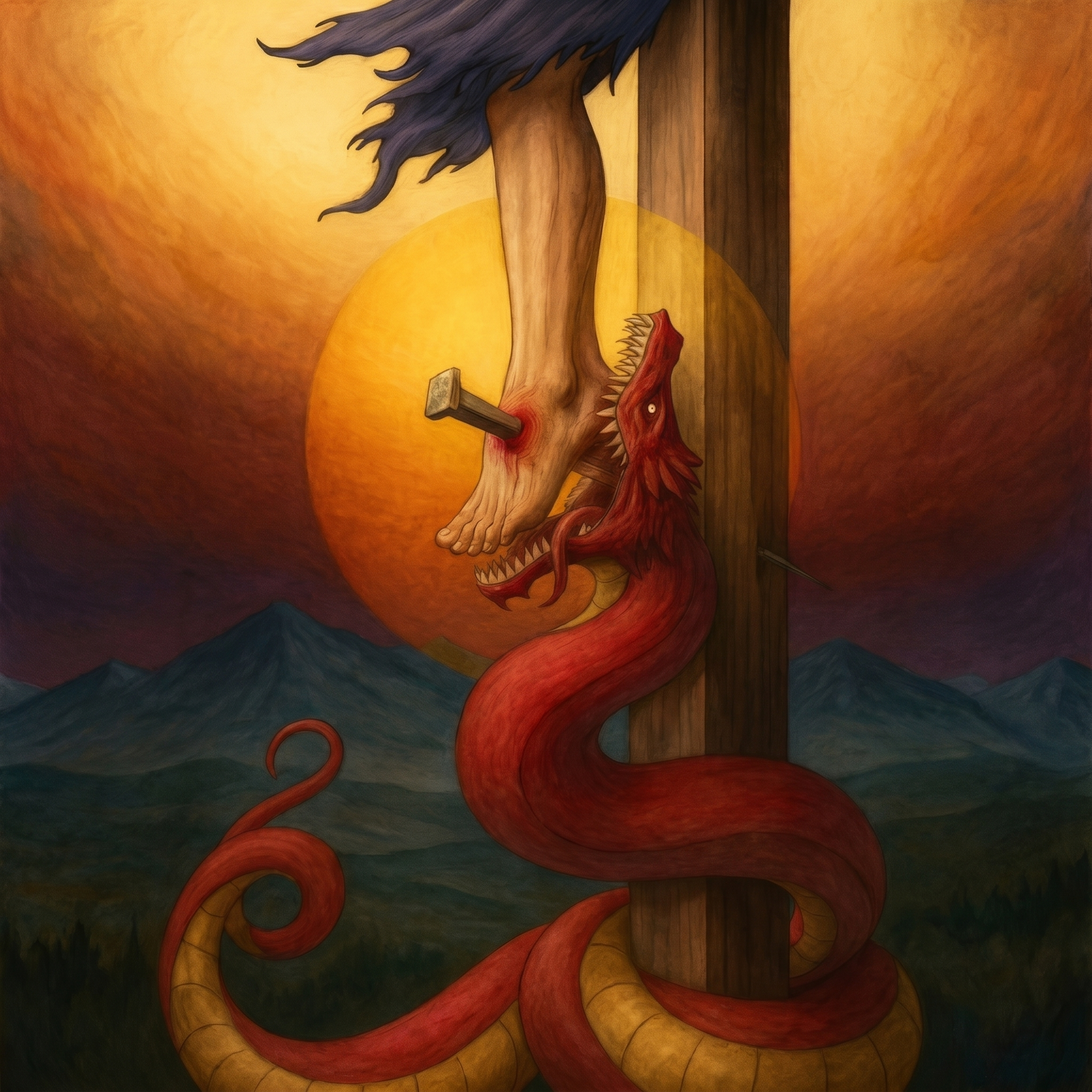
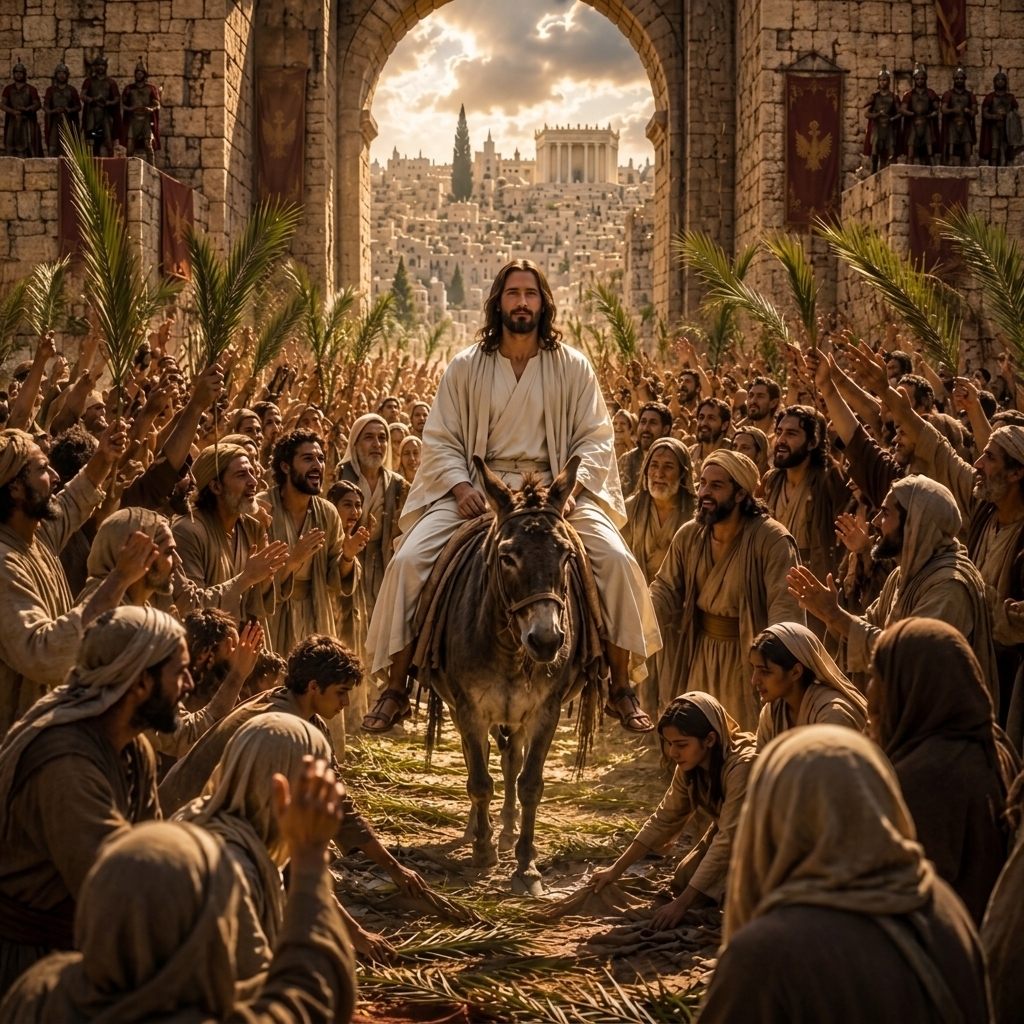
One Old Testament prophet wrote four specific details about the final week of Jesus's life. The animal He would ride into the city. The exact price He would be sold for. What would happen to the money. And the precise moment His closest friends would run. All of it written roughly five hundred years before it happened. His name was Zechariah. Most Christians have never opened his book. Here is what he wrote. And here is what happened — five centuries later — inside a single week. FIRST. Zechariah 9:9. "Rejoice greatly, Daughter Zion. See, your king comes to you, righteous and victorious, lowly and riding on a donkey, on a colt, the foal of a donkey." A king entering Jerusalem. Not on a warhorse. On a donkey. This is not a loose metaphor. It is a specific prophecy about a specific animal at a specific entrance. Now read Matthew 21:1-7. Before entering Jerusalem on what we call Palm Sunday, Jesus sent two of His disciples ahead to a village. He told them they would find a donkey tied there with her colt beside her. He told them to untie them and bring them back. He told them exactly what to say if anyone questioned them. He did not stumble upon a donkey on the road. He arranged it. Jesus deliberately choreographed His entrance into Jerusalem to match a prophecy written five centuries before He was born. He was staging the fulfillment in real time. And anyone in that crowd who knew their Zechariah would have understood exactly who was claiming to be king. SECOND. Zechariah 11:12-13. "So they paid me thirty pieces of silver. And the LORD said to me, 'Throw it to the potter' — the handsome price at which they valued me! So I took the thirty pieces of silver and threw them to the potter at the house of the LORD." Three details buried in two verses. A specific price. A specific action. A specific destination. Now read Matthew 26:15 and Matthew 27:3-10. Judas went to the chief priests and asked, "What are you willing to give me if I deliver him over to you?" They counted out thirty pieces of silver. Thirty. Not twenty. Not fifty. The exact number written in Zechariah five hundred years earlier. And that number carried a meaning the original audience would have recognized immediately. Under the Mosaic law, thirty pieces of silver was the legally mandated compensation paid when an ox gored a slave to death. Thirty shekels was the codified price of a dead slave. Zechariah's sarcasm cuts through the centuries: "the handsome price at which they valued me." God, speaking through His prophet, noted that they would price Him at the value of a dead slave. After the crucifixion, Judas was seized with remorse. He threw the thirty coins back into the Temple. The priests refused to return the money to the treasury because it was blood money. Instead, they used it to buy a potter's field — a burial ground for foreigners. The amount. Thrown back. Into the house of the Lord. Used for the potter. Four details from two verses. All fulfilled in a single week. THIRD. Zechariah 12:10. "They will look on me, the one they have pierced, and they will mourn for him as one mourns for an only child." Read that again. Pay attention to the pronouns. "Me." "They have pierced." "Him." "An only child." This verse is spoken in God's own voice. The chapter opens with "The LORD declares" and continues in the first person. And God says, "me, the one THEY have pierced." God is speaking about Himself being pierced. Five hundred years before a Roman soldier drove a spear into Jesus's side. John 19:37 explicitly cites this verse as fulfilled at the crucifixion. When the spear pierced Him, John writes: "These things happened so that the scripture would be fulfilled... 'They will look on the one they have pierced.'" Zechariah recorded God — in His own voice — describing His own piercing. And then the mourning: "as one mourns for an only child." The weight of that phrase reaches all the way back to Genesis 22, where God asked Abraham to sacrifice "your son, your only son, whom you love." And all the way forward to John 3:16: "For God so loved the world that He gave His only Son." The grief of a father losing his only child — written into the prophecy itself. FOURTH. Zechariah 13:7. "Strike the shepherd, and the sheep will be scattered." This prophecy carries a weight the others do not. Because Jesus did not simply fulfill it. He quoted it. The night before the crucifixion, in the Garden of Gethsemane, Jesus turned to His disciples and said: "You will all fall away, for it is written: 'I will strike the shepherd, and the sheep of the flock will be scattered.'" Matthew 26:31. He stood in front of the men who had followed Him for three years and told them — using a five-hundred-year-old prophecy — exactly what they were about to do. He told them they would run. He told them He knew. He quoted the script to their faces. And then He walked deeper into the garden and waited for the arrest. Every single one of them fled. Matthew 26:56. "Then all the disciples deserted him and fled." He knew. He always knew. He read Zechariah. He saw the week laid out on the page — the donkey, the silver, the piercing, the scattering. And He walked into it anyway. One prophet. Four prophecies. Five hundred years. One week. The donkey was arranged. The silver was counted. The spear was driven. And the shepherd was struck while the sheep ran exactly as the script had written. Zechariah did not predict vague spiritual themes about a future deliverer. He wrote the stage directions for a week that had not happened yet — down to the animal, the price, the weapon, and the moment the inner circle would break. That is what I realized sitting across from a woman named Diane last fall. Diane had attended church her entire adult life. She went to Good Friday services every year. She knew Palm Sunday. She knew the betrayal. She knew the cross and the tomb and the resurrection morning. She had read the Passion narrative more times than she could count. She sat in my office one afternoon and said, "Pastor, I know the Easter story backward and forward. But I have never once read the prophets behind it. I did not know there was a script underneath the story." I opened to Zechariah 9 and asked her to read verse 9. Then I showed her Matthew 21. Then Zechariah 11. Then Matthew 27. One prophecy, one fulfillment. One prophecy, one fulfillment. When we got to Zechariah 13:7 — and I showed her that Jesus quoted the verse Himself the night before — she closed her Bible and put both hands flat on the table. "He knew," she said quietly. "He knew the whole time. He read Zechariah. He knew what was coming. And He walked into it." She could not see it. And it was not her fault. Nobody had ever given her the roots. The next morning I started writing. And I quickly realized this was bigger than me. So I reached out to a group of Bible teachers and pastors I have trusted for years — people who have spent their lives teaching Scripture in plain language. Together, we started with Genesis. Everything someone needs to know before they read each book. Who wrote it. When. Why. What was happening. The main themes. How it connects to the larger story. Not a commentary. Not a devotional. Just the roots. Every page was written, checked, and rewritten by multiple teachers until my teenage son could read it and understand it completely on his own. Sixty-six pages. One page per book. Three months of combined decades of study distilled into plain language any believer could use on their own. No pastor required. Did you know that the prophet Micah, writing around the same era, named the Messiah's birthplace by name? Micah 5:2: "But you, Bethlehem Ephrathah, though you are small among the clans of Judah, out of you will come for me one who will be ruler over Israel." The town. Named. Centuries before Mary and Joseph traveled there for the Roman census. Did you know that King David wrote in Psalm 41:9, "Even my close friend, someone I trusted, one who shared my bread, has turned against me"? Jesus quoted this verse at the Last Supper — about Judas — while they were literally sharing bread. A betrayal by a trusted companion over a shared meal, described a thousand years before the table was set. Context changes everything. Every single time. I call it FaithSprout. The 66 Roots Journey. 66 pages. One for every book of the Bible. Each page gives you what you need before you read. Who wrote it. When. Why. What was happening. The key themes. The symbolism. And how it connects to your actual life today. Written in plain language. No seminary terms. No complicated theology. Just the roots that make everything you have already read suddenly land with the full weight God intended. One prophet. The donkey. The price. The piercing. The scattering. Written five centuries before the week it all came true. And the man who fulfilled every word quoted the script the night before — to the very men who were about to abandon Him. He knew. He always knew. And He walked into it anyway. If you have ever read the Easter story without seeing the ancient script that was running underneath it. If you have ever wondered what you would find in God's Word if someone just gave you the context first. This is what you have been looking for. Get closer to God by actually understanding His Word. Not just the Gospels. All of it. The whole story. That is what The 66 Roots Journey was created for. And you can start yours by clicking below.
Read this if the Bible feels harder than it should. ☝️
Understand all 66 books of the Bible more easily
SHOP NOWLike this ad? Make it yours.
Crush rebuilds this exact creative around your product — your brand, your colors, your offer — in about a minute.