
Inactive· since May 20, 2026
- 7
- days it ran
- 0
- relaunches
- 16
- EU reach
Ad copy
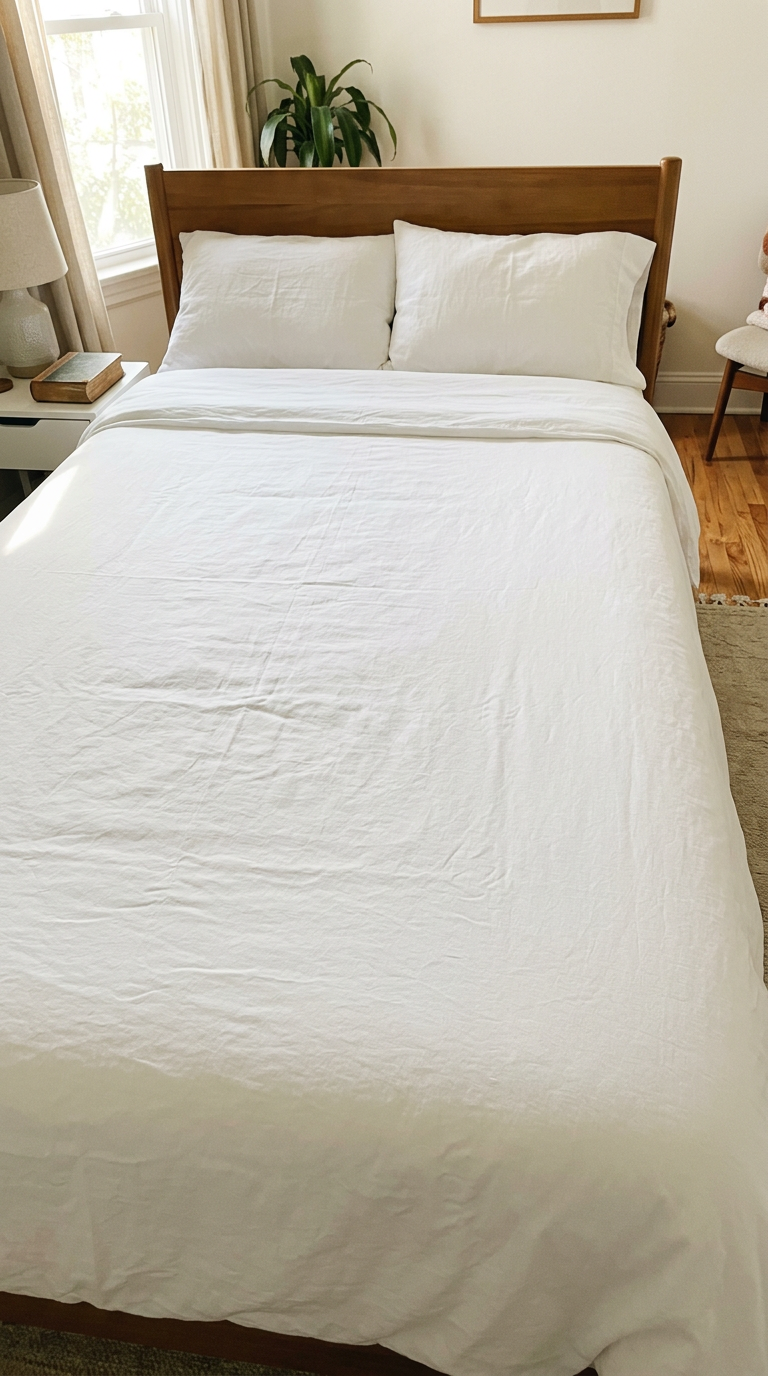
I sleep on a slope now. My side of the bed is flat. His side sinks. The mattress has a memory — not the marketing kind, the real kind. It remembers that the body sleeping on it has been getting heavier for four years. And the memory is a dip. A valley. A gravitational shift that tilts me toward his side every night. The slope started so gradually I blamed the mattress. "We need a new mattress." He agreed — because agreeing meant the mattress was the problem, not the body. We bought a new one. Firm. Expensive. The kind that promises equal support and flat surfaces and the specific sleep engineering that marketing departments dream about. Within eight months, his side was sinking again. The new mattress had the same memory as the old one — it remembered his body the way bodies remember a bad year. Deeply. Permanently. And the slope returned. My husband was a 32 waist at 37. He's a 39 at 44. The mattress knows this better than the doctor. The doctor sees him once a year for eleven minutes. The mattress holds him for eight hours every night and registers every pound in foam memory and topography. At 38, the dip was slight. My body barely noticed. A hint of gravity pulling me toward center but not enough to interrupt sleep. Not enough to name. At 40, the dip was definite. I'd wake up in the middle of the night closer to center than where I started. My body migrating toward his in the dark. Not affection — physics. The mattress angled toward his weight and my sleeping body followed the angle. At 42, the dip was a feature. I could see it in daylight — the depression on his side visible when the bed was made. My side: flat. His side: a subtle bowl. The visual evidence of four years of gaining, pressed into foam, six inches from where I sleep. I never said anything. Because what do you say? "Your side of the bed is sinking"? Every sentence about the bed is a sentence about the body. The bed is the body's confession made in foam. You can't discuss the foam without discussing the weight. And the weight was the thing he was already fighting and losing. His doctor said "metabolism." He wasn't entirely wrong. But the mattress was telling a more honest story than the metabolism explanation could cover. The mattress was measuring something continuous — not once a year at a physical, but every night, eight hours, cumulative. The mattress was the most accurate scale in the house. And the mattress said: this body is heavier. Month by month. The dip doesn't lie. He tried everything the dip years recorded. The gym phase. The mattress still sank. He'd come home from 5 AM training and sleep on a surface that measured the training's failure every night. The gym was supposed to reduce the body that was pressing the foam. The foam got deeper. The diet phase. 1,800 calories, tracked, measured. The mattress kept its records too — and the records showed no change in the dip during the entire calorie-counting period. The body weighed the same pressing the foam whether it ate 1,800 or 2,200. The mattress didn't care about the app. The running phase. Three miles before work. Destroyed knees. The mattress recorded a body that was sore, exhausted, and the same weight. The foam held the same man at the same depth regardless of the miles. Each failed strategy pressed into foam memory. The mattress as archive. The mattress as the one honest surface in the house — you can angle past a mirror, avoid a scale, skip a photo. You can't avoid the bed. Every night, the body confesses to the mattress. And the mattress remembers. At 43, I started sleeping with a pillow behind my back. Not for comfort — for position. To prevent the gravity migration toward his side. The pillow was a dam. A physical barrier between my body and the slope. The fact that I needed a dam to sleep flat in my own bed — that was the moment I knew the weight wasn't just his problem. It was our bed's problem. The shared space was tilted by a body in crisis. He noticed the pillow. "New pillow?" "Just trying something." The conversation that wasn't a conversation. The pillow that wasn't a pillow. The dam that held the slope at bay while the man on the other side of it fought a body that the mattress measured better than any doctor. At 43, he stopped fighting. The gym lapsed. The apps went dark. The scale disappeared. The mattress continued its recording — same depth, same dip, same slope. The mattress doesn't know about giving up. It only knows about weight. And the weight stayed. One night — the pillow behind my back, the slope pulling me toward his side, 1 AM — I lay in the dark thinking about the bed. Not the marriage. The bed. The physical surface we share. The fact that the surface was no longer flat. That the bed had been changed by a body the bed had no power to fix. I searched. On my phone. In the slope. At 1 AM. Not for mattresses. For the body pressing the mattress. For why nothing worked. For the thing underneath the weight that the gym and the diet couldn't reach. The article. The nervous system. Cortisol. Survival mode. The body holding weight because the operating state says HOLD. The gym adding cortisol. The diet irrelevant to the state. The state overriding everything and pressing the same body into the same mattress at the same depth every night while the man on the mattress tries everything and changes nothing. Liven. Micro-Cycle Method. Five minutes a day. For the state. The operating system pressing the mattress. I showed him Sunday morning. In bed, ironically — sitting in the dip, coffee in hand. "The bed knows before the scale," I said. "And the bed is telling me the gym isn't working. But this might." He read the article sitting in the depression his body had created. The metaphor was so literal it wasn't a metaphor. He took the quiz. Started Liven. Week 1: sleep itself changed before the sleep surface changed. The 3 AM jolt eased. His body rested IN the dip instead of running THROUGH the dip. The depression was the same but the man in it was starting to sleep differently. Week 2: the morning was different. He woke up without the look — the flat, already-defeated look of a man whose first conscious thought is his body's weight. The look was softening. Something was changing in the state before it changed in the foam. Week 3: I noticed — maybe imagined it, maybe not — the slope was slightly less. The migration toward his side was less pronounced. My pillow dam didn't need to work as hard. The body was lighter by an amount the mattress detected before the scale confirmed. Week 4: "Nine pounds," the scale confirmed. The mattress knew first. The foam knew first. The surface I sleep on every night had been quietly adjusting to a body that was adjusting to a nervous system that was adjusting to five minutes a day. I removed the pillow that night. Slept without the dam. My body stayed on my side. The slope had reduced enough that the gravity migration stopped. Week 6: the dip was visibly different when I made the bed. Not gone — reduced. The bowl was becoming a dish. The depression was shallowing. The foam was losing its memory of the heaviest version because the heaviest version was receding. Week 8: a Saturday morning. Both of us in bed. Coffee. I looked at the surface between us. The slope was nearly flat. Not perfectly — four years of dip don't erase in eight weeks. But the surface was approaching level. My side and his side were converging. "The bed is flatter," I said. He looked at me. Looked at the surface. Pressed his hand into his side — testing the resistance. The foam pushed back more than it had in two years. The mattress was meeting his hand instead of swallowing it. "There I am," he said. Sitting in a bed that was starting to forget the heaviest version of him. It's been five months. The bed is nearly level. The pillow dam is gone. I sleep flat. He sleeps flat. The mattress is losing its memory — the foam reforming around a lighter body, the dip filling in the way dips fill in when the weight that created them recedes. He's a 36 waist. Not at his 32 yet. But the bed tells me every night — and the bed is more honest than the scale and more continuous than the doctor and more intimate than any measurement a man takes in a bathroom alone. The bed shares the story with the wife. And the story is changing. It wasn't just metabolism. There was a state pressing the mattress that the gym couldn't address. The mattress recorded the state every night — faithfully, silently, in foam. Once the state changed, the recording changed. And the bed got flat again. If your bed slopes toward his side. If you've bought a new mattress and it sinks again. If you sleep with a pillow dam you don't talk about. If the foam has a memory you wish it didn't. The mattress is measuring the right thing. The body pressing it might be running a state nobody checked. And the state can change. Liven has a quiz. A few minutes. Doesn't cost anything. Show it to him. Tell him: "The bed knows before the scale does. And this might fix what the bed has been measuring." Link is below. 💙
THIS IS what you need to do
LEARN MORELike this ad? Make it yours.
Crush rebuilds this exact creative around your product — your brand, your colors, your offer — in about a minute.