How Things Break
How Things Break Facebook ad: “I Blamed Pet Hair For the Musty Smell… It Wasn't the Hair”
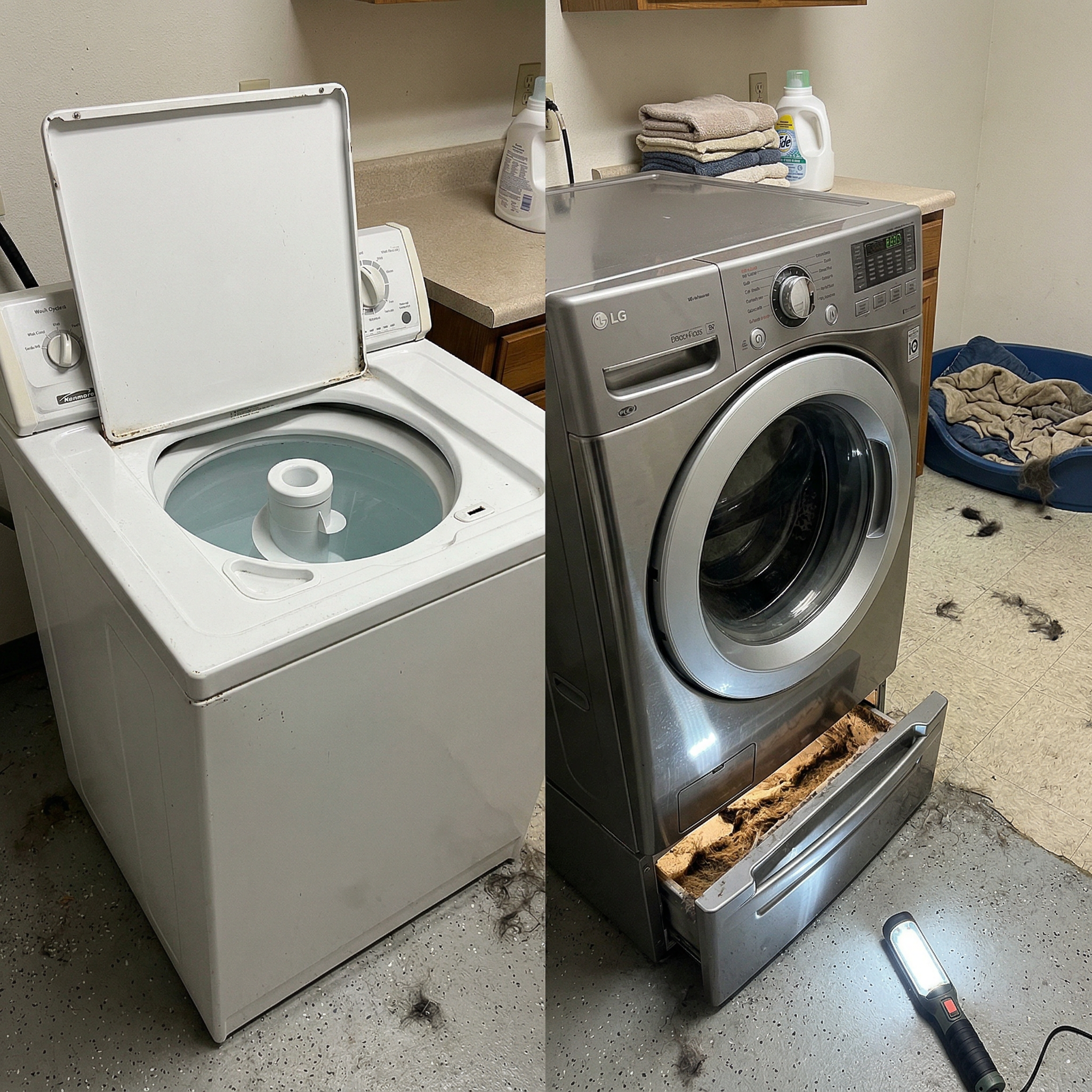
Ran for 7 days, from April 10 to April 17, 2026, the last day Crush saw it.
Run by How Things Break on Facebook. Crush is not the advertiser and does not verify its claims. See this ad in Meta's Ad Library(opens in a new tab)
Make your own version of this ad
Crush makes it, launches it in your own Meta ad account, scales the winners and pauses the losers.
About this ad
- Meta Ad Library ID
- 2912451062297315
- Platforms
- Facebook, Instagram and Messenger
- Relaunches
- 3
- Niche
- Pets
Ad text
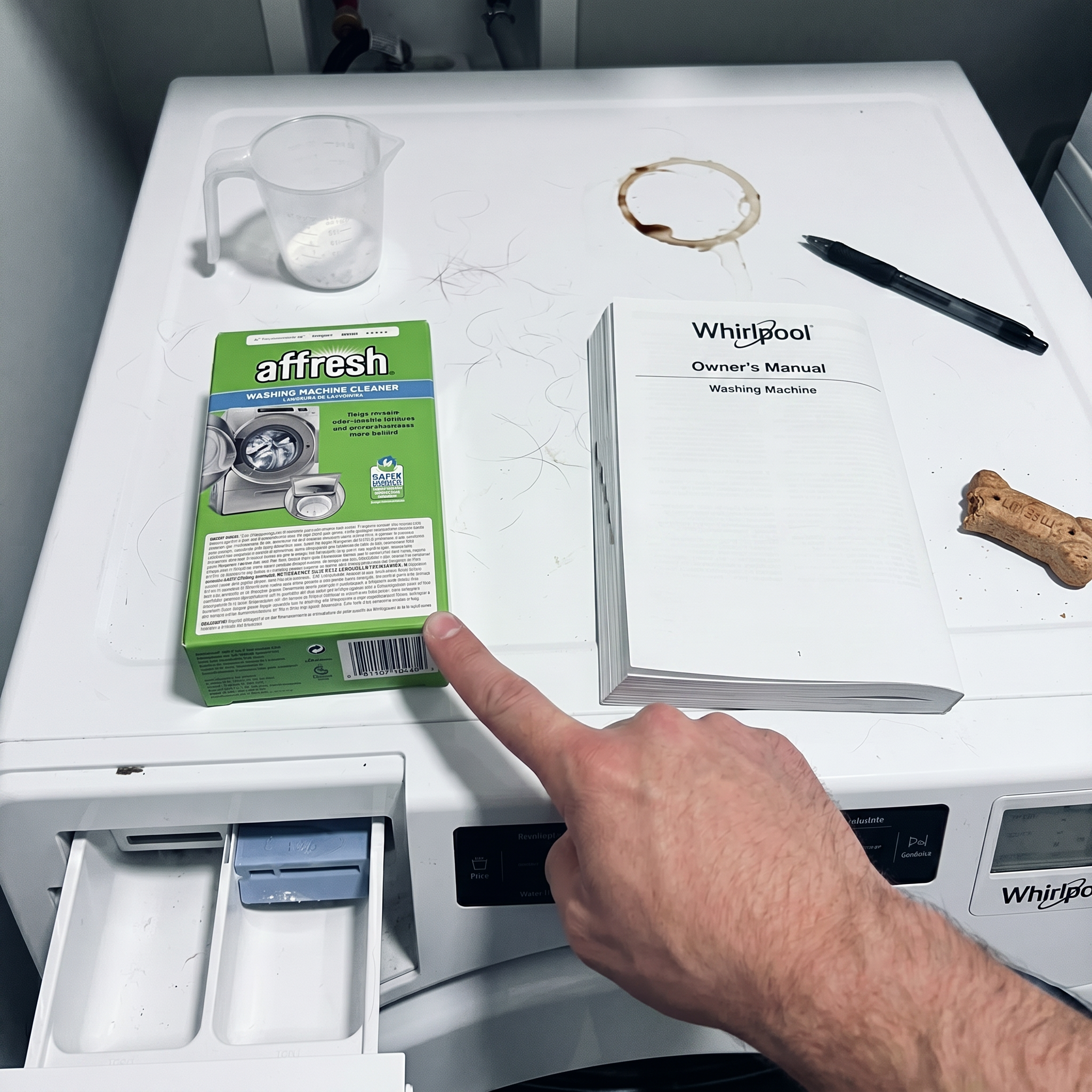
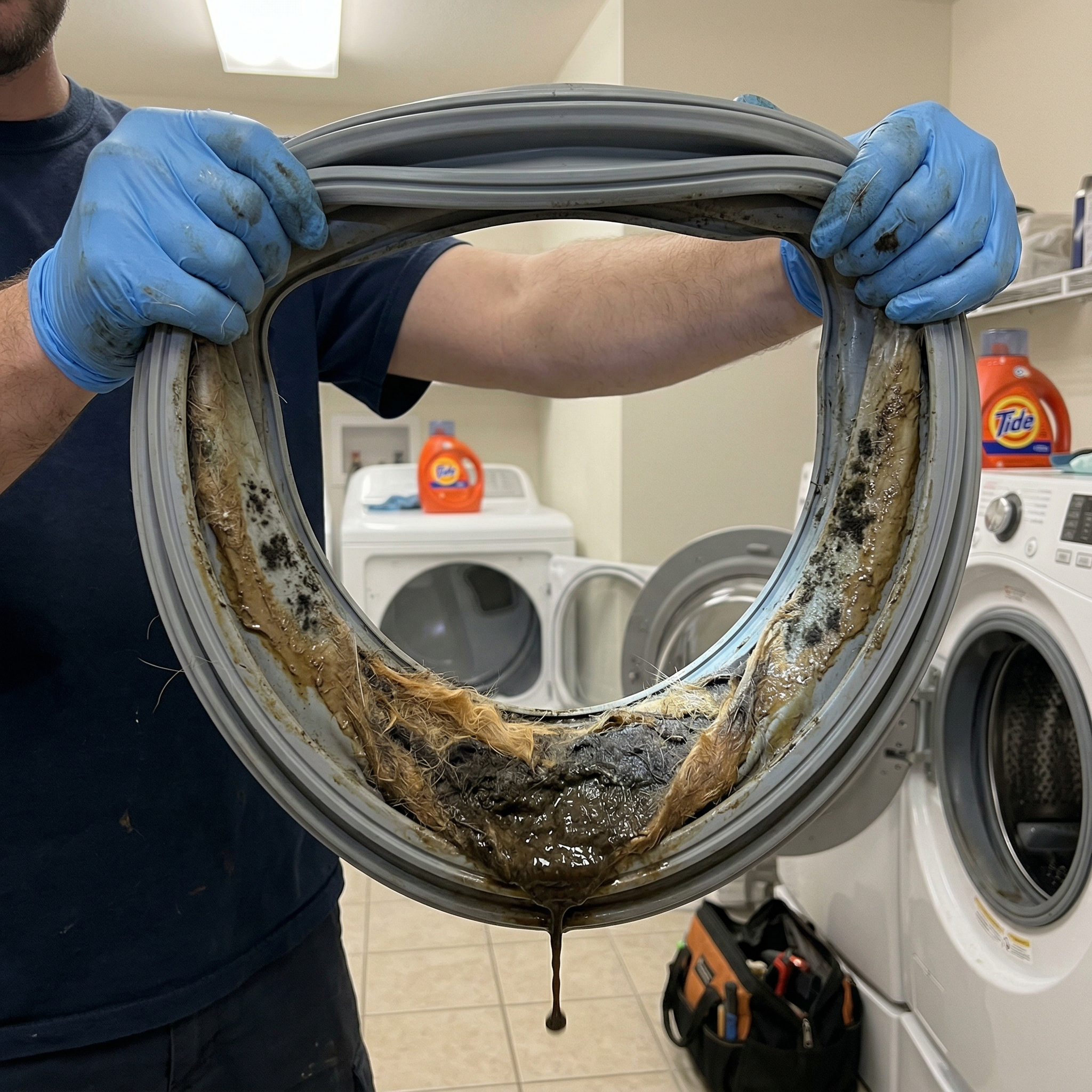
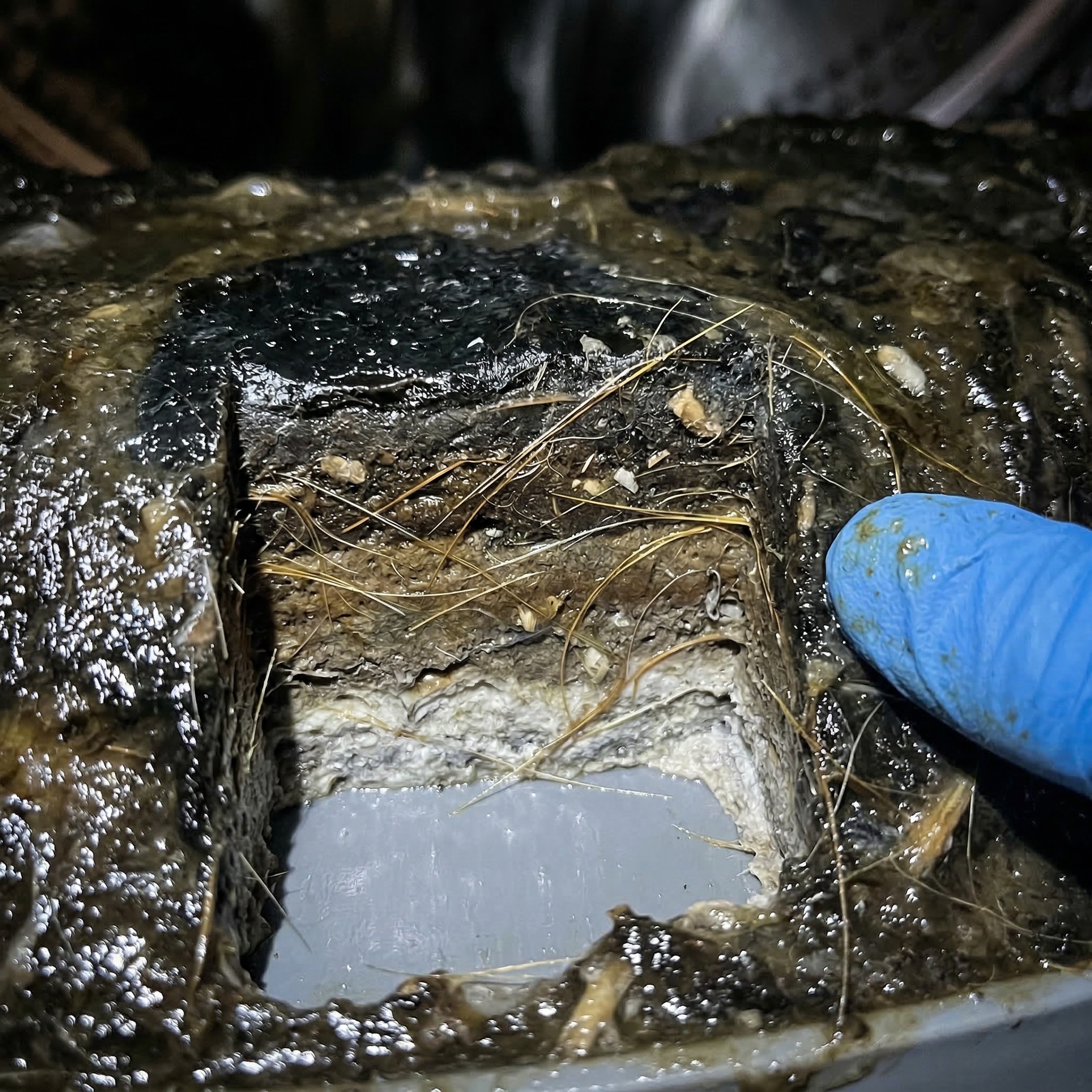
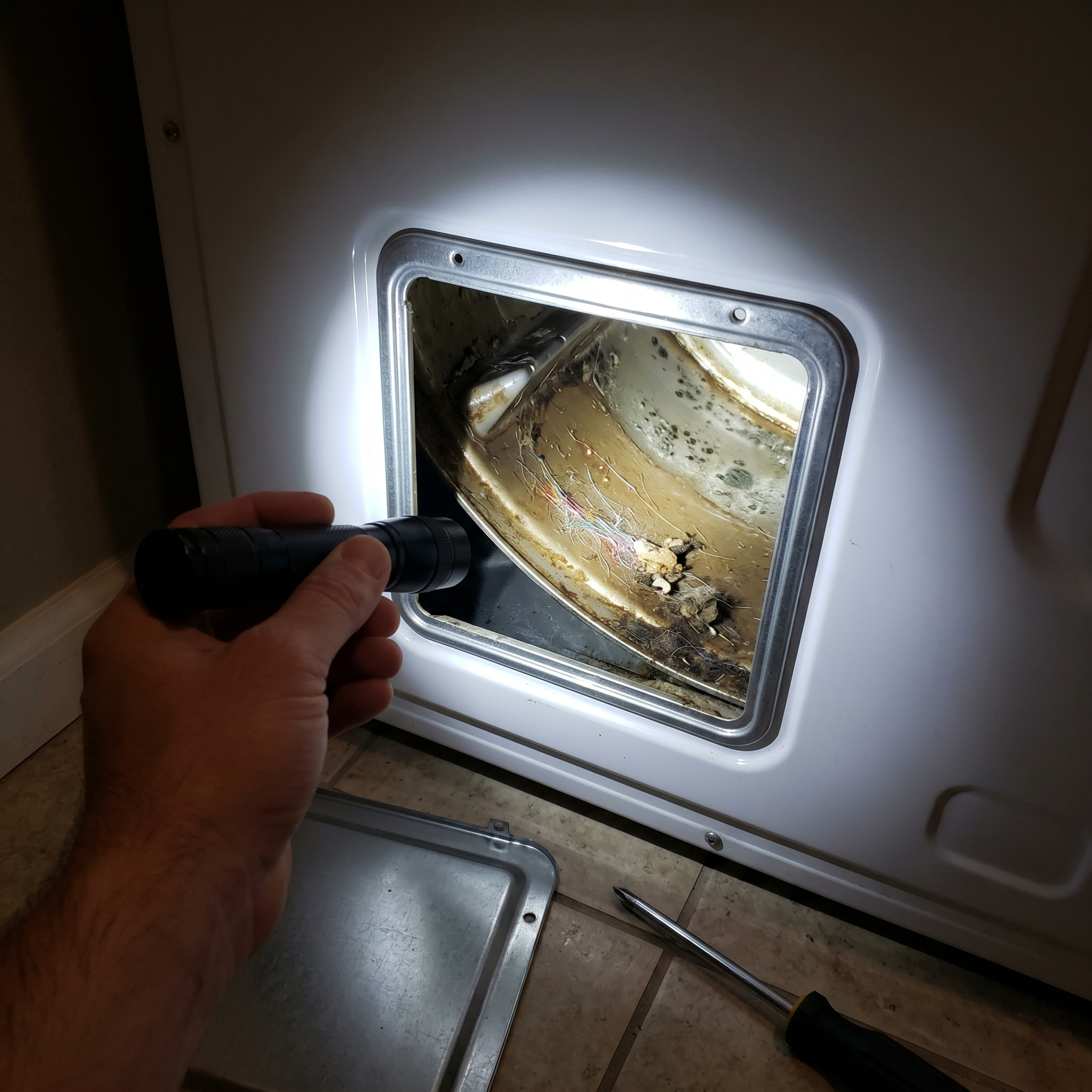
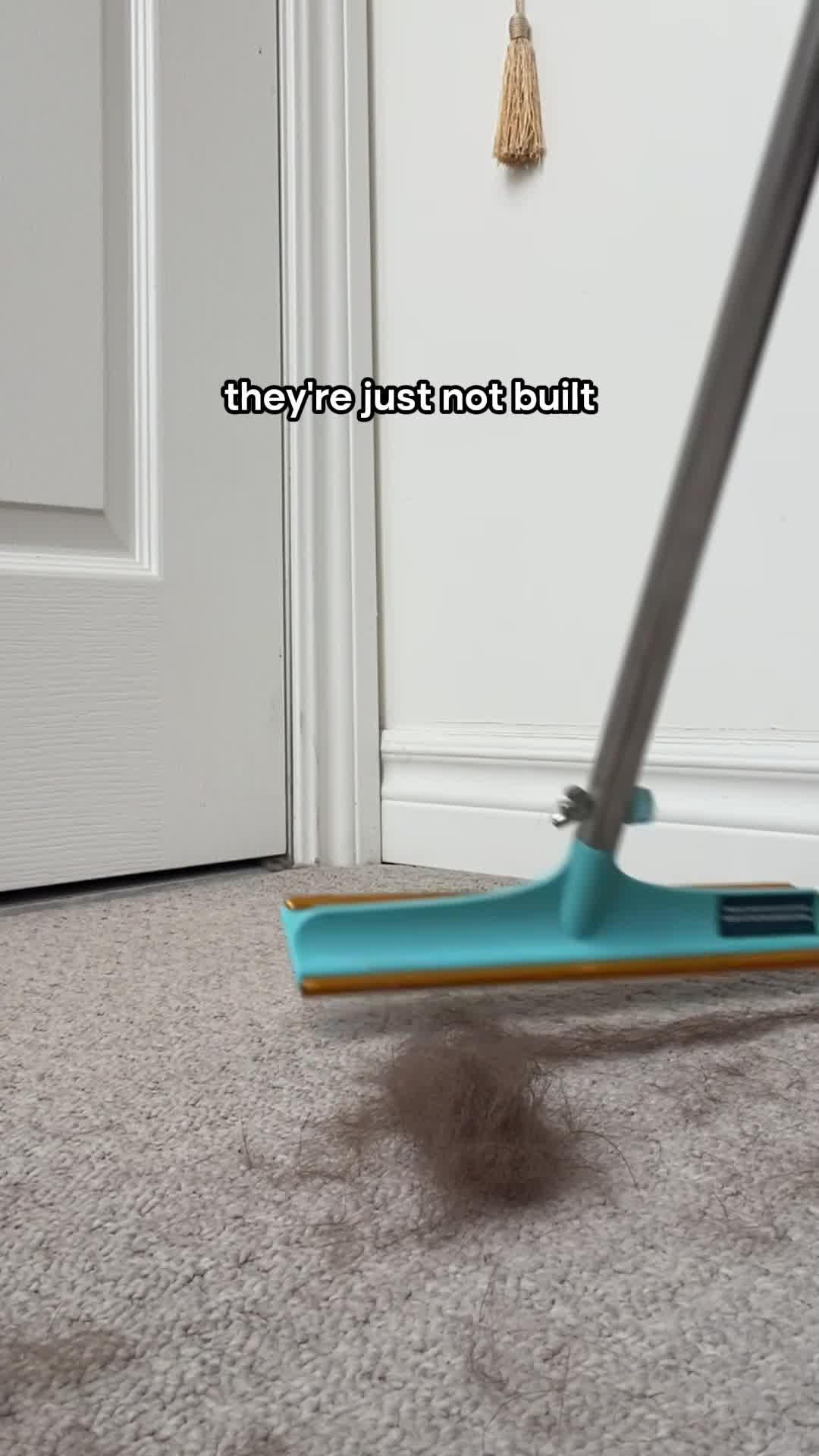
I've opened over 6,000 washing machines in 19 years. Not one product I've ever seen under a pet owner's sink was designed for what's actually growing inside their machine. I work out of a van in Jacksonville, Florida. I've been doing in-home appliance repair for about 19 years now, mostly washers and dryers, and I've pulled the panels off of somewhere north of 6,000 machines at this point. And I need to tell you something that's been bothering me for a while, because I don't think anyone else is going to say it. If you have dogs or cats in your home and you've noticed that your laundry has this musty, sour smell to it, almost like wet dog baked into the fabric even after a full wash and dry cycle, your washing machine is working against you. Not because it's broken, not because you're doing anything wrong, but because of how these machines were actually built. Let me explain what I mean by that. About fifteen years ago, the federal government started requiring washing machine manufacturers to use a lot less water. The old top-loaders, the ones your parents probably had, used around 40 to 45 gallons per load. That water flooded every surface inside the machine, basically flushed the whole thing clean every time you ran it. The new machines, the high-efficiency ones that almost everyone has now, use about 7 to 15 gallons. Some of them are as low as 7. And they seal up tight, they recirculate that small amount of water over and over through the same load, and they rarely fully drain. Now, for a regular household, that design already causes problems. I see buildup inside nearly every machine I open. There's a gap between the inner drum where your clothes sit, and the outer tub that holds the water. There, residue collects because there simply isn't enough water to flush it away anymore. That's where the musty smell comes from in most homes. But in a house with pets, it's a completely different situation, and this is the part that took me years to fully understand. I started noticing it around 2016, maybe 2017. I'd get a call from someone complaining that their laundry smelled like wet dog, or like a musty towel that got left in the washer overnight even though it didn't, and the second I walked in and saw a dog bed in the corner or a Lab trotting up to greet me, I already knew what I was going to find when I opened that machine. Every single time, the pet households were significantly worse. More buildup, darker residue, and a smell that was thicker and more pungent than anything I'd find in a home without pets. For a long time, I just figured it was the hair. Dog hair gets everywhere inside a washer. It clumps up in the gasket folds, it clogs the little drain holes in the drum, and it wraps around the pump filter. I'd pull clumps of it out of machines on almost every visit to a pet home. But the hair wasn't the real issue. The hair was just the visible part. About a year and a half ago, I was on a service call at this woman's house in Orange Park, Florida. She had two Golden Retrievers and a front-loader that was maybe two and a half years old. Beautiful machine, by the way, she kept the outside of it spotless. But when I pulled the panel, the smell that came out of the gap between the drums was so strong that she actually stepped back from me and covered her mouth. And she said something I hear all the time. She said, "I run vinegar through it every two weeks. I use Affresh once a month. I don't understand how it can still smell like this." I didn't have a great answer for her that day. I told her what I always told people: leave the door open between loads, wipe down the gasket, and maybe try running a bleach cycle. And I knew while I was saying it that none of that was going to fix her problem, because it never does. At least not in the pet homes. But that call stuck with me, because she really was doing everything right. She was following every piece of advice that the manufacturers, the cleaning blogs, and the product labels tell you to follow - and it didn't matter at all. So I started paying closer attention. I started that log I mentioned. Every call where the customer had pets, I wrote down what machine they had, how old it was, what they'd already tried, and what I found inside. After four months, I had over 80 entries, and the pattern was impossible to ignore. Pet households were dramatically worse than non-pet households. And every single one of those pet owners had tried multiple cleaning solutions. Vinegar, baking soda, Affresh, Tide Washing Machine Cleaner, bleach cycles, and the self-clean setting. Some of them had tried all of those, in that exact order, more than once. None of it was working for them. And I finally started asking myself why. That's when I started reading. Not the blog posts and the manufacturer tips. But the actual research on what happens inside these machines at a biological level. And what I found changed the way I think about every call I go on now. You see… Dog skin produces an oil called sebum. Every animal produces it, humans too, but canine sebum is chemically different from ours in a really important way. A veterinary researcher I came across a while back described it like this: Dog skin oils sit to the left of butter on the rancidity scale, meaning they start going rancid almost immediately after the glands produce them. That's actually what creates that "doggy smell" you notice on your dog between baths. It's basically rancid oil building up on their skin and coat. Now, every time your dog lies on a blanket, rubs against your couch cushion cover, sleeps on your bed, or even just sits in your lap, those oils transfer onto the fabric. And it's not just pet beds and blankets. It's your jeans after your dog leaned against your leg. It's the hoodie you wore on the couch while your dog was next to you. It's every piece of clothing and linen that has even a little contact. When you wash any of those fabrics, the oils come off into the water. And here's the problem. In a modern HE machine with only 7 to 15 gallons of water, those oils don't get diluted and flushed away as they would have in an old 40-gallon top-loader. They get carried by that small amount of recirculating water into every gap and crevice inside the machine. Into the sealed space between the drums, into the gasket folds, into the pump housing, into the drain hoses, and then they just sit there. The hair makes it even worse, because dog hair doesn't dissolve in water. It breaks apart into smaller and smaller fibers during the wash, and those tiny fibers migrate into every space where moisture collects. They trap the rancid oils against the machine's surfaces and create this sticky layer that just accumulates load after load after load. A study out of the University of Yamanashi in Japan identified a specific bacterium called ‘Moraxella osloensis’ that produces the exact musty smell people complain about The researchers found that this bacterium is incredibly resilient - it survives washing, it survives drying, and it even resists UV light. And inside your washer, between the drums, where it's dark and wet and sealed shut, this bacterium has everything it needs. Rancid pet oils to feed on, moisture that never dries out, and nowhere for any of it to go. So it thrives and builds a protective layer called biofilm, basically a living shield that blocks detergents and disinfectants from reaching it. And this is the part that finally made everything click for me, after so many years of not having an answer. Every single product people use on their washers fails for the same fundamental reason: None of them can break down the biofilm. Vinegar is acetic acid. It can kill some surface bacteria and neutralize odors temporarily, but it cannot dissolve a biological film made of polysaccharides and protein. You're pouring salad dressing into a machine and hoping it dismantles a living colony. The biofilm sits there untouched, the bacteria keep multiplying, and within a couple of days, the smell is right back. Baking soda dissolves in the water, gets diluted to almost nothing, and has zero mechanism for breaking apart an organic film anchored to surfaces you can't even reach with your hands. Affresh is made by Whirlpool, which is worth sitting with for a second. The same company that designed the sealed-tub, low-water system that creates this problem sells you a $9 tablet every month to manage it - and its active ingredient is sodium percarbonate, basically oxygen bleach. Fine for soap scum and mineral deposits in a normal household, but it was never formulated for the rancid-oil-fed, hair-reinforced bacterial colonies that form in pet homes. Bleach can kill bacteria on contact, I'll give it that. But the outer layer of biofilm absorbs and neutralizes bleach before it reaches the living colony underneath. You kill some on the surface, the smell fades for 48 to 72 hours, and then it regenerates. And the self-clean cycle on your washer is just a hot water rinse. Moraxella osloensis survives temperatures well above 140 degrees. In a pet home with established biofilm, that cycle does almost nothing. So here's the situation every pet owner with a modern washer is actually in, even if nobody has explained it to them before. Your machine was built to use very little water in a sealed environment. Your dog's skin oils go rancid almost immediately. Every load of laundry that touches your dog or your dog's favorite spots carries those oils into your machine, where they collect in spaces you can't see or reach. Those oils feed a specific odor-causing bacterium that builds a protective fortress around itself. And every product you've been told to use was formulated for general household residue, not for the biological reality of a pet home. That's why the musty smell keeps coming back. That wet-dog, sour-towel odor that hits you when you pull your laundry out of the dryer and hold it up to your face and think, how is this still here? It's not that you aren't cleaning your machine enough. It's that nothing you've been given to clean it with was ever built for your household. I didn't know any of this 19 months ago. I was giving people the same useless advice everyone else gives. Wipe the gasket, leave the door open, run some vinegar. And I was watching those same people call me back four or five months later with the same complaint, or worse. What changed was that log I started keeping, and a rabbit hole it sent me down one night when I couldn't sleep. I was reading a paper from a research group in Japan, the same team that identified Moraxella osloensis as the primary source of the wet-laundry musty smell. In it, they mentioned that the only reliable way to eliminate established biofilm from non-sterile surfaces was through enzymatic degradation. Not chemical disinfection, not heat, not acid, enzymes. They said that protease, amylase, and lipase enzymes disassemble the extracellular matrix of the biofilm. It basically takes apart the protective structure from the outside in, exposing the bacteria to being washed away by normal water flow. And I remember reading that at about one in the morning and thinking, okay, so why isn't anybody making a washing machine cleaner that does this? I started searching. And almost everything I found was the same stuff I already knew about. Citric acid tablets, oxygen bleach tablets, and essential oil pods. All of them were designed for general maintenance, but not a single one was built around enzymatic action targeting biofilm. Then I came across a company called Uproot Clean. I'd actually heard of them before, because they make a pet hair remover that a lot of my customers own, that little carpet tool with the rubber edge - so they were already a pet-specific company. But they had developed a washing machine cleaning tablet that was specifically formulated for pet households, and when I looked at what was actually in it, I stopped scrolling. It contained protease enzymes, amylase enzymes, lipase enzymes, and a targeted surfactant blend. Protease to break down the protein structure of the biofilm matrix. Amylase to break down the starch and carbohydrate compounds that help the biofilm anchor itself to surfaces. Lipase to dissolve the rancid pet oils trapped inside it. And surfactants designed to carry all of that dissolved material out through the drain cycle. That was the first time I'd seen a washing machine cleaner that matched what the actual research said was necessary to deal with this problem. Not mask it, not temporarily knock it back, but structurally break it down at the biological level. I went back to the woman in Orange Park with the two Golden Retrievers - the one whose machine had made her gag when I pulled the panel. I told her about the enzymes, about the biofilm, about why everything she'd tried couldn't work, and I gave her a box of these tablets to try. I told her to run one on an empty hot cycle and just look at the water that drains out. She called me three days later. She said the water that came out of the first cycle was a dark brownish gray and smelled so bad her husband came in from the garage to ask what was going on. That was everything the enzymes had broken loose from between the drums on a single cycle. She ran a second tablet later that week. Lighter water, less smell. By the third tablet, the water was almost clear, and she said for the first time in over a year, her towels just smelled like towels. That's when I started telling other customers about it. And I want to be very clear about something here. I don't work for Uproot Clean. I don't get a commission. I don't get a kickback. Nobody is paying me to talk about this. I'm a repair technician who got tired of not having a real answer for the pet owners who kept calling me back with the same problem. At this point, I've recommended these tablets to somewhere around 130 or 140 customers with pets, and the feedback has been almost the same across the board. In the first cycle, the water comes out dark and foul. In the second and third cycles, it gets progressively cleaner. And after that initial deep clean, one tablet a month keeps the biofilm from re-establishing itself. Look, I know you've probably tried a lot of things already. I know you've probably spent money on products that promised to fix this and didn't. I get it, because I've been in your laundry room and I've seen the lineup of bottles and tablets under your sink. But if your laundry still smells like wet dog after everything you've tried, it's because you've been using products that were never formulated for your home. The enzymes are the only thing I've found that actually match the science of what's happening inside your machine. And right now, they’re running a buy two, get two free deal - backed by a 60-day money-back guarantee. So you can run the full initial deep clean, use the maintenance tablets for two months, and if that musty, wet-dog smell isn't noticeably gone, you get your money back There's genuinely zero risk in trying it. Click the link below this video to go to their site and grab the tablets while that deal is still running. And when you run that first cycle, pay attention to the water that drains out. That dark, foul-smelling water is what's been sitting between your drums and soaking into your laundry every single time you run a load. Once you see it, you'll understand exactly what I've been trying to tell you. ➡️https://order.uprootclean.com/wmt008-l4v2-mustyclothes
Where the ad sends people
order.uprootclean.com
I Blamed Pet Hair For the Musty Smell… It Wasn't the Hair
After reviewing university research, government sanitation reports, microbiology papers, and archived NASA data, one conclusion stood out:
Shop now: order.uprootclean.com(opens in a new tab)